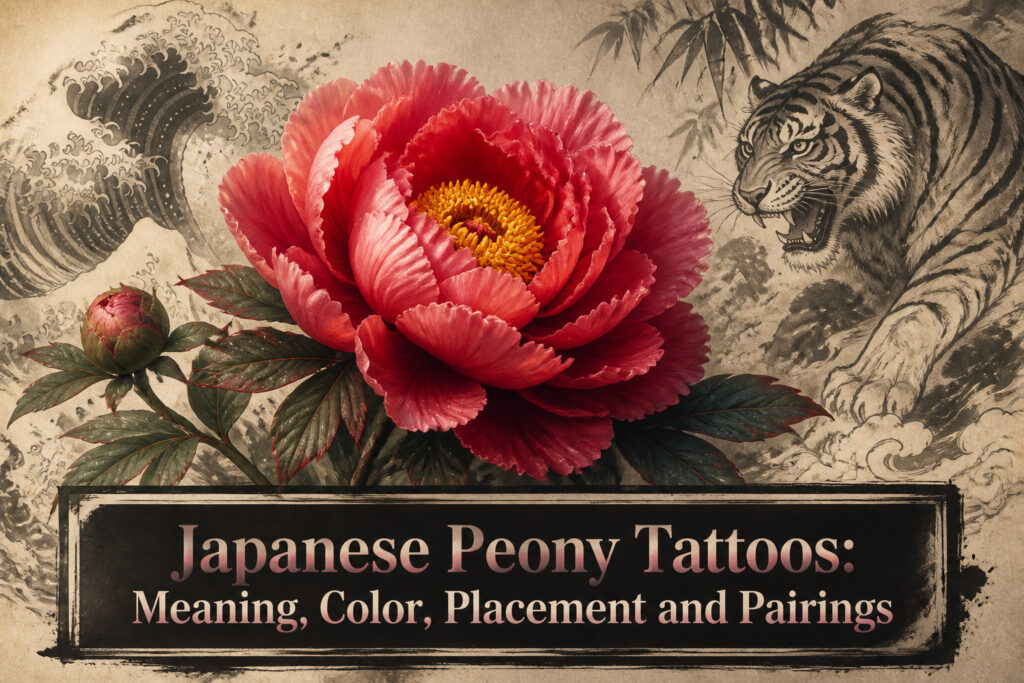
A Japanese peony tattoo is a single flower motif with four stacked meanings: wealth, nobility, bravery, and good fortune. The catch is that color changes the message entirely. Red carries love and strength, while yellow reads as open optimism, and white signals a reset rather than a declaration. The flower earned its place in Irezumi through Utagawa Kuniyoshi’s 19th-century Suikoden prints, where outlaws wore peonies alongside tigers and dragons as marks of masculine power.
What Peonies Mean at Their Core
The peony carries weight across nearly every culture that grows it. Wealth, good fortune, success, beauty, and resilience are the meanings that surface again and again, rooted in the flower’s actual behavior in the garden. Its petals layer thick and lush, but the plant itself survives winters that kill softer blooms, returning each spring from dormant roots. That contrast between soft appearance and hardiness gives the symbolism its depth: strength beneath beauty, not despite it.
In Chinese art, where the peony appeared first, the flower held the force of life itself. Painters and potters used it across media, from embroidered screens to clothing, with color carrying specific freight. White peonies marked the virginal purity of maidens; red signaled female eroticism. The meanings were precise, not decorative.
The Japanese adoption kept the prosperity and beauty threads but added courage to the bundle. The same flower that reads as delicate in a kimono pattern withstands the weather that breaks lesser plants, and that fact mattered enough to earn the peony its standing as queen of flowers in Japanese culture. By the time Utagawa Kuniyoshi was designing prints for his Suikoden series in the early 1800s, the peony was already embedded in the visual vocabulary as a mark of masculine power, worn by outlaws and heroes alike alongside tigers, dragons, and koi.
Botan in Japanese Culture
The Japanese peony carries the name botan, and that single word holds four distinct blessings: wealth, nobility, bravery, and good fortune. Tattooers working in Irezumi lean on these meanings when they place the flower beside a dragon or a tiger, letting the botan soften the beast’s aggression without weakening it.
Some call it the "king of flowers," others the "queen." Either title fits. By the 18th century, the image had moved off skin and into every corner of Japanese craft: tapestries, pottery, paintings, kimonos. Utagawa Kuniyoshi’s Suikoden prints, those outlaws bristling with lions and dragons and koi, sealed the botan’s place in tattoo culture. The peony in those prints stood for masculine power, a meaning that still travels with the design today.
What Color Changes
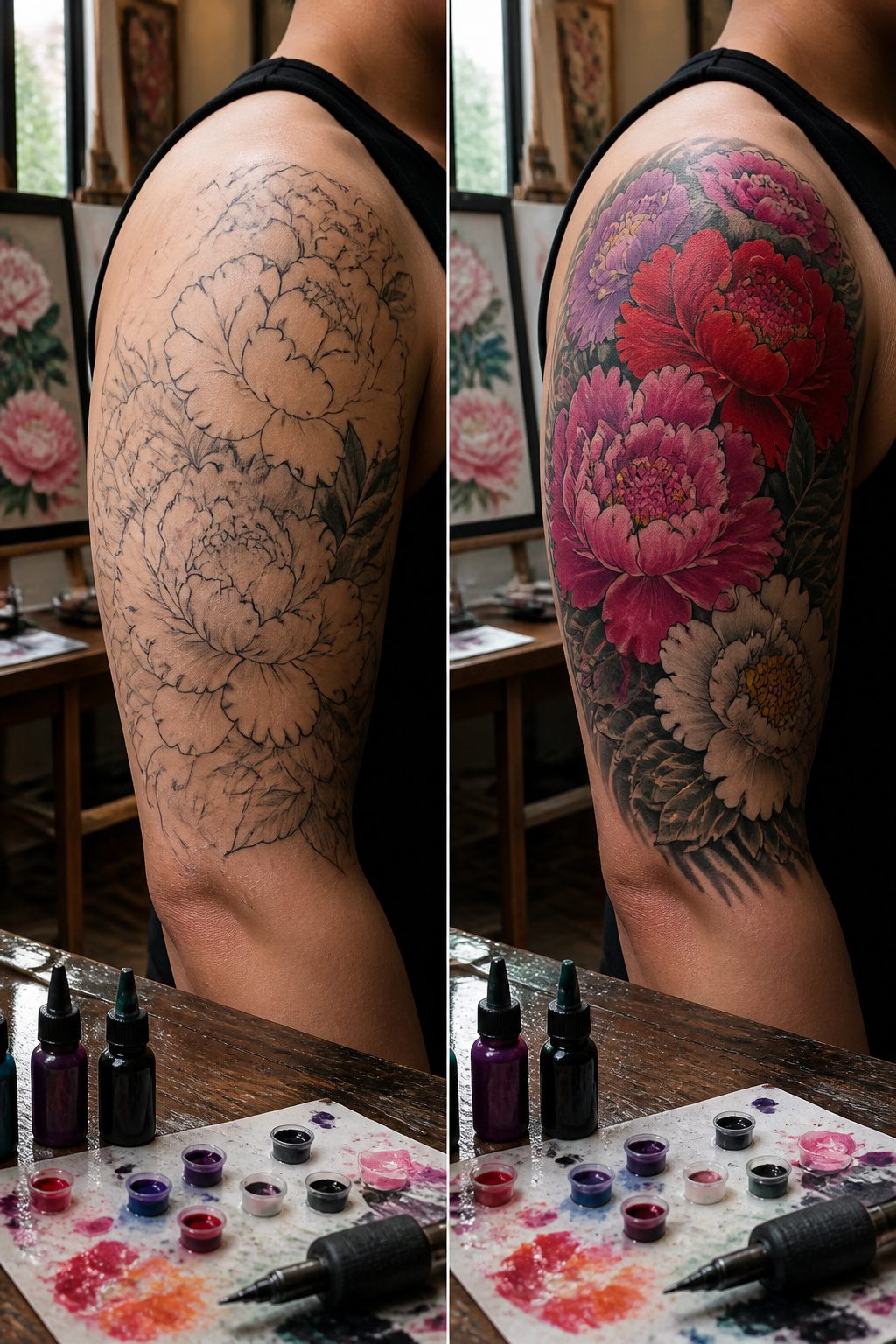
The color you pick for a Japanese peony tattoo shifts the meaning as directly as switching words in a sentence. Red carries love and strength, the boldest pairing in the palette and the one most people ask for first when they want the flower to read as passionate rather than delicate. Pink narrows that down to romance and femininity, a softer register that still keeps the peony’s full shape. White moves the symbolism toward purity and new beginnings, which suits placement where the wearer wants the flower to feel like a reset rather than a declaration. Purple adds royalty and spiritual growth into the mix, a less common choice that tends to attract people who already have a few tattoos and want this one to mark a shift in intention. Yellow or gold rounds out the range with prosperity and good fortune, the option that reads most openly optimistic without tipping into sentiment. The color does not decorate the meaning. It is the meaning, and choosing one over another is the single most consequential decision after settling on the peony itself.
Where the Body Holds Them
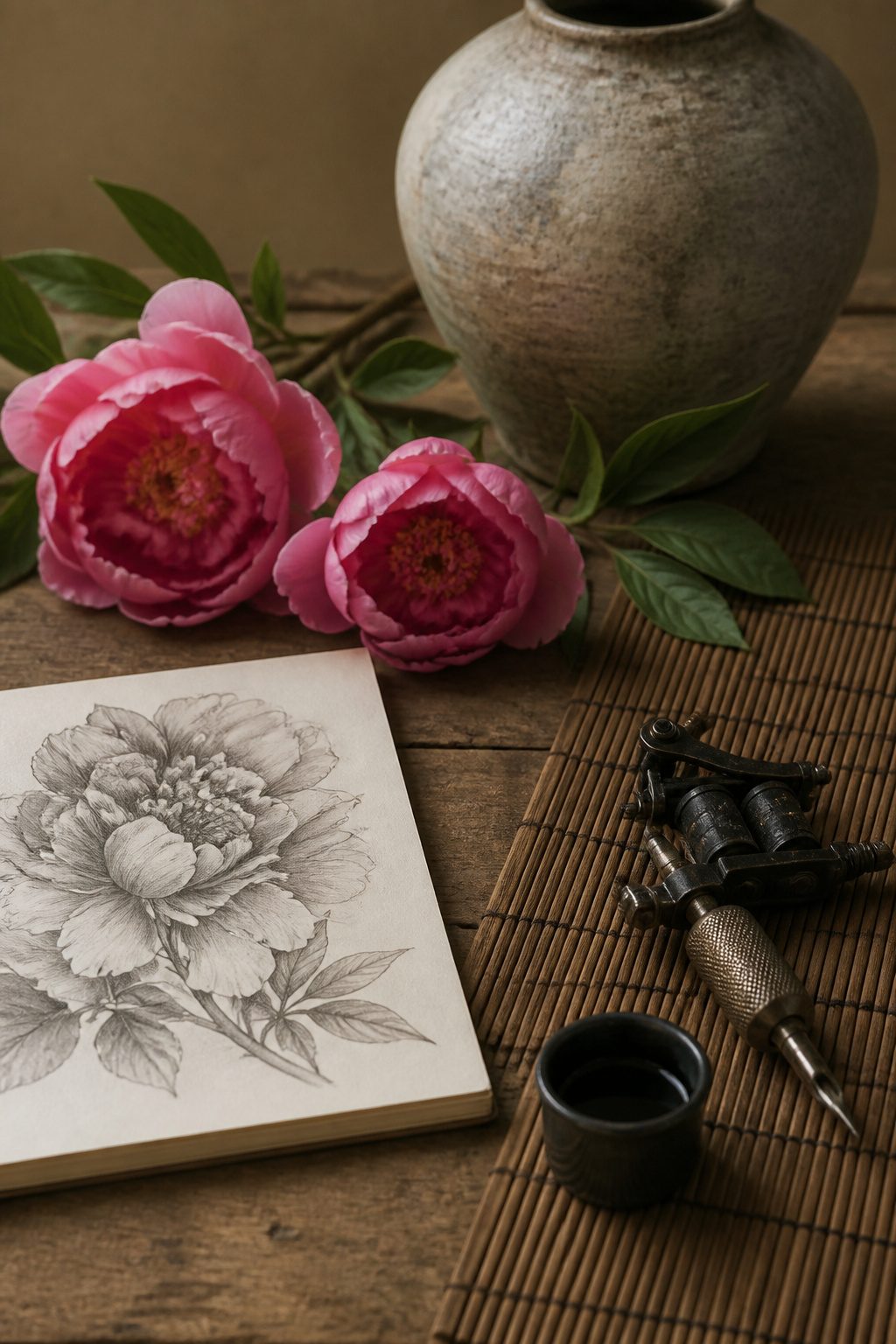
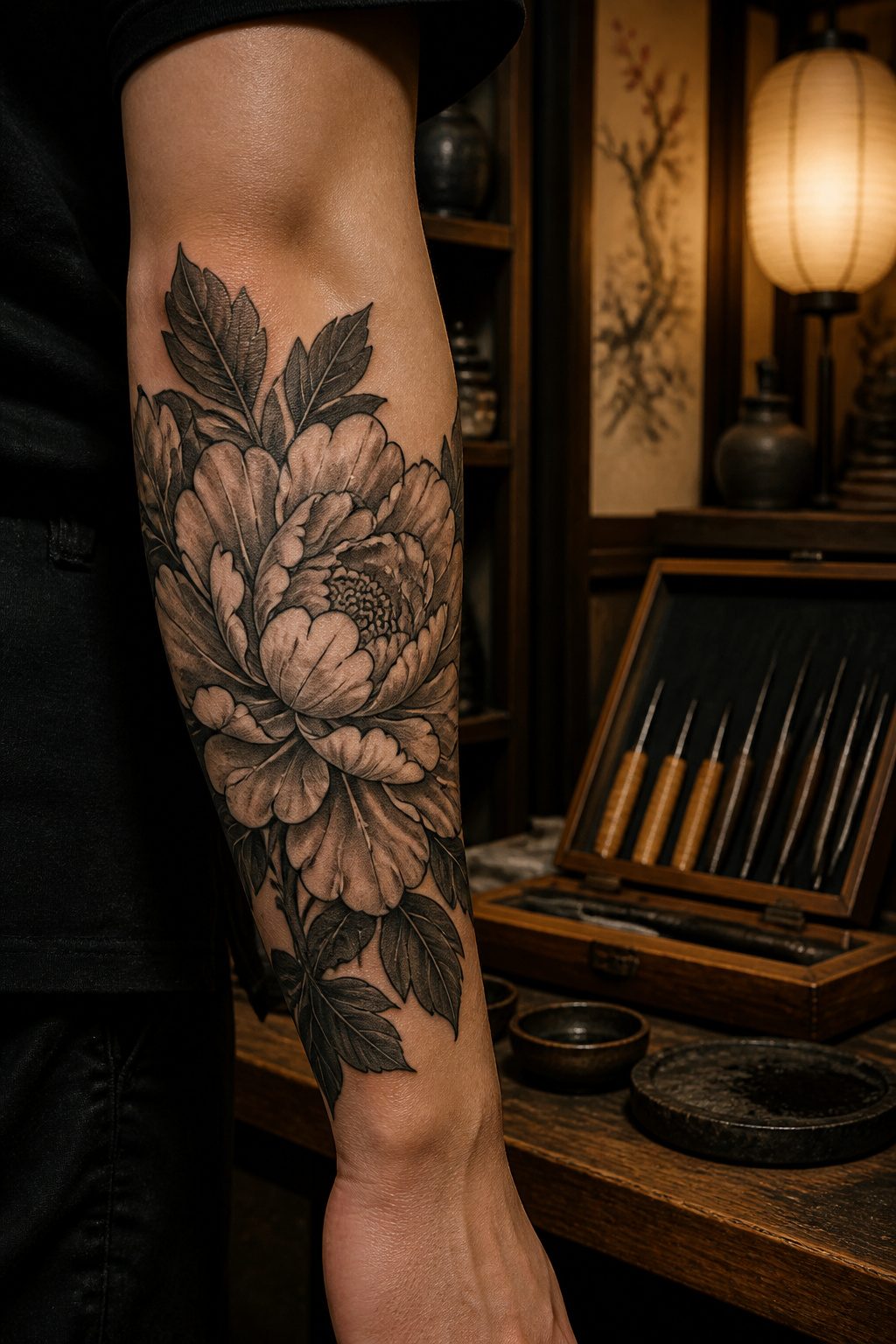
The peony’s oversized petals and flowing shape give it a natural advantage on large surfaces. A full sleeve or back piece lets the bloom open to its full scale, with each layer of petals given room to curve and taper the way Japanese tattooing demands. Thighs and shoulders work similarly; they offer flat, broad territory where a single peony can dominate or where several can cascade without crowding.
Smaller placements force harder choices. Ribs compress the design vertically, so most artists stack the bloom rather than let it spread, and the constant shift of breathing skin makes fine linework harder to hold over time. Chest pieces split the difference: enough width for a centered bloom, but the sternum’s bone sits close to the surface and the skin there tends to blur color faster than fleshier areas.
Visibility shapes the decision too. Sleeves and shoulders stay public in a tank top. Thighs and ribs stay hidden unless the wearer chooses otherwise. A back piece is the most private of the large placements; it requires a mirror or another person to see at all. That privacy suits collectors building full Japanese bodysuits, where the peony often serves as a filler between larger narrative elements, adding movement and visual impact without demanding center stage.
What Sits Beside the Flower
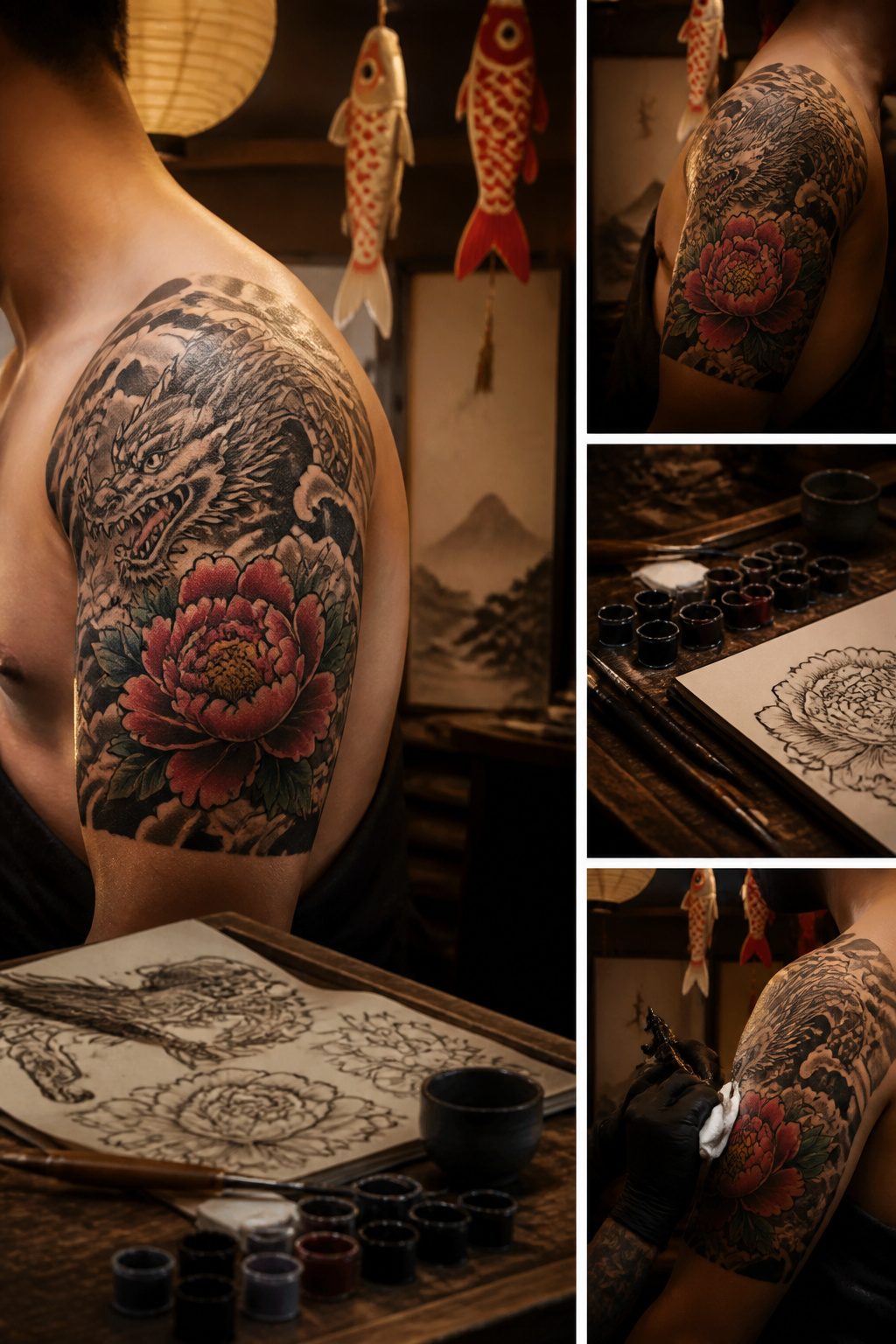
Dragons, tigers, and koi fish sit beside the peony in Japanese tattoo tradition for a reason that goes deeper than visual contrast. These pairings grew out of Irezumi itself, where the Botan’s elegance softens the ferocity of its companions without weakening either half.
A peony and dragon pairing speaks to balance between power and beauty: the dragon carries force and authority, while the flower keeps the composition from reading as pure aggression. The tiger works differently. Next to a peony, the tiger’s courage reads as tempered, almost held in reserve by grace rather than denied by it. Koi fish add another layer entirely, their message of perseverance trailing into the flower’s association with good fortune so that the tattoo becomes a narrative about struggle leading to reward.
The peony earned its place through centuries of use. Utagawa Kuniyoshi’s prints of the 108 Suikoden heroes, circulating in the 19th century, showed these outlaws wearing exactly this mix: lions, tigers, dragons, koi, and peonies intertwined across skin. That visual vocabulary still governs how artists build sleeves and back pieces today. What reads as decorative to an untrained eye is actually structural, the flower acting as a visual rest between heavier symbols while carrying its own weight in meaning. Wealth, nobility, bravery, the "King of Flowers" against the beast or the swimmer: neither element dominates, and that mutual respect is what makes the combination hold up over decades on skin.
A Flower in Japanese Art History
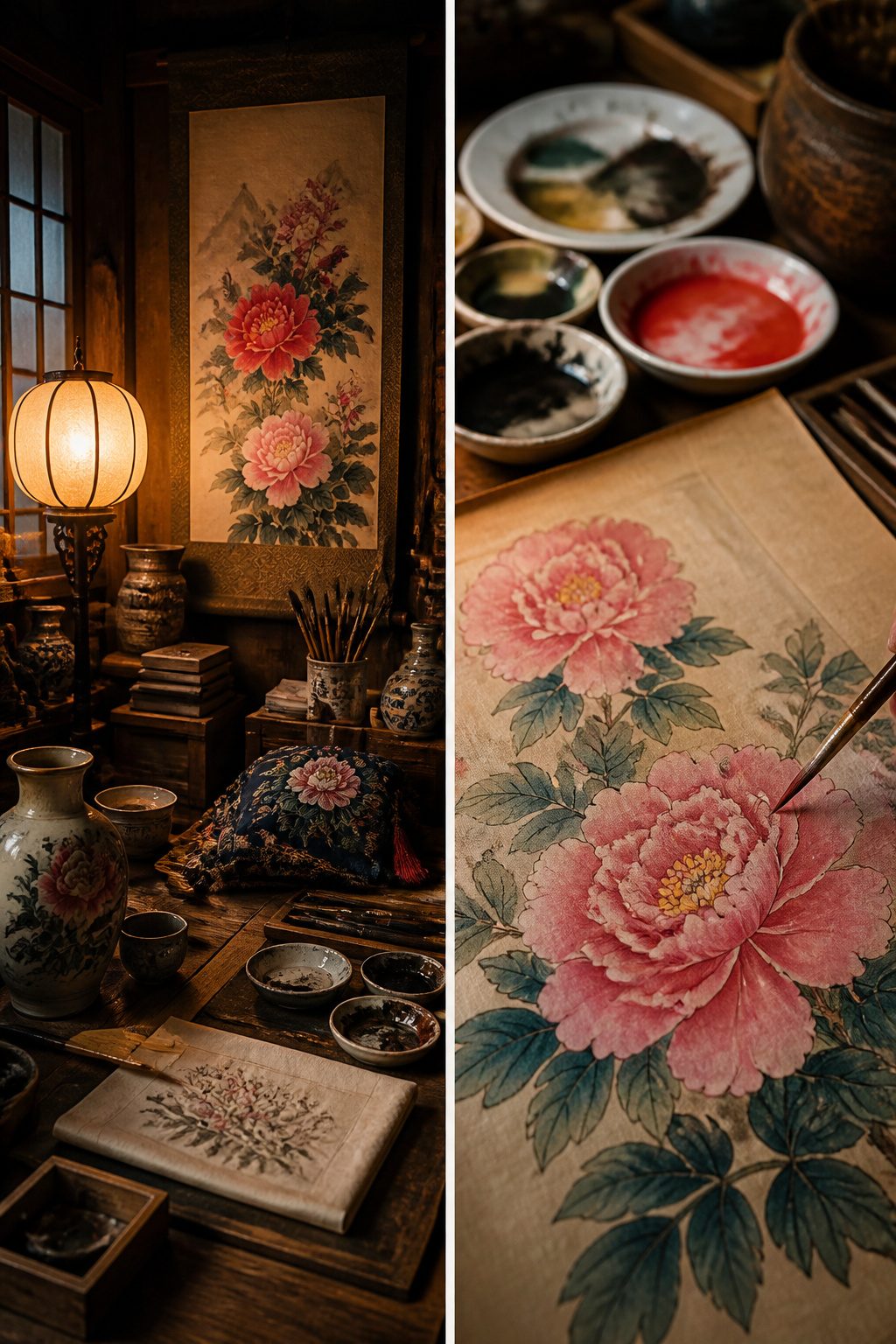
Peonies entered Japanese visual culture through Chinese art, where the flower first stood for the force of life and appeared in paintings, pottery, embroidery, and painted screens. The white peony carried associations with virginal purity; the red, with female eroticism. By the 18th century, the image had become widespread in Japanese handicrafts, turning up in tapestries, paintings, pottery, and kimonos as a standard decorative element.
Shinto’s animist roots meant flowers occupied real space in folk legends and poems from the 17th century onward, and the peony’s place in that tradition gave it cultural weight before tattooing claimed it. Utagawa Kuniyoshi’s prints of the 108 Suikoden heroes, published in the early 1800s, showed outlaws covered in peonies alongside lions, tigers, and dragons. That visual record helped shift the flower toward masculine power in tattoo symbolism, even as its earlier associations with beauty and good fortune persisted in screens and robes. The peony’s decorative prominence in 18th-century crafts and its survival through Kuniyoshi’s popular prints gave it the staying power to become one of Japanese tattooing’s most recognizable motifs.
How the Petals Are Built
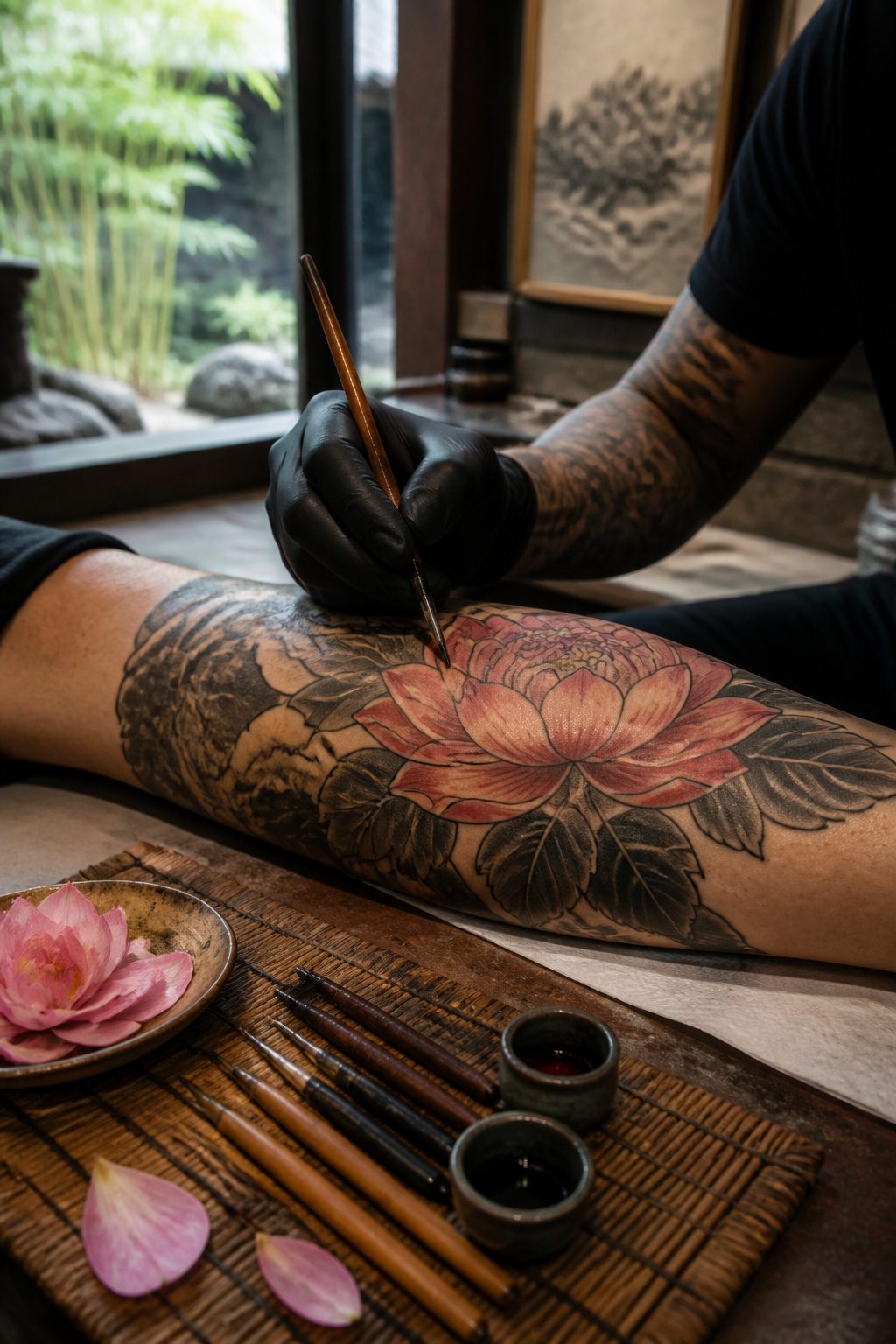
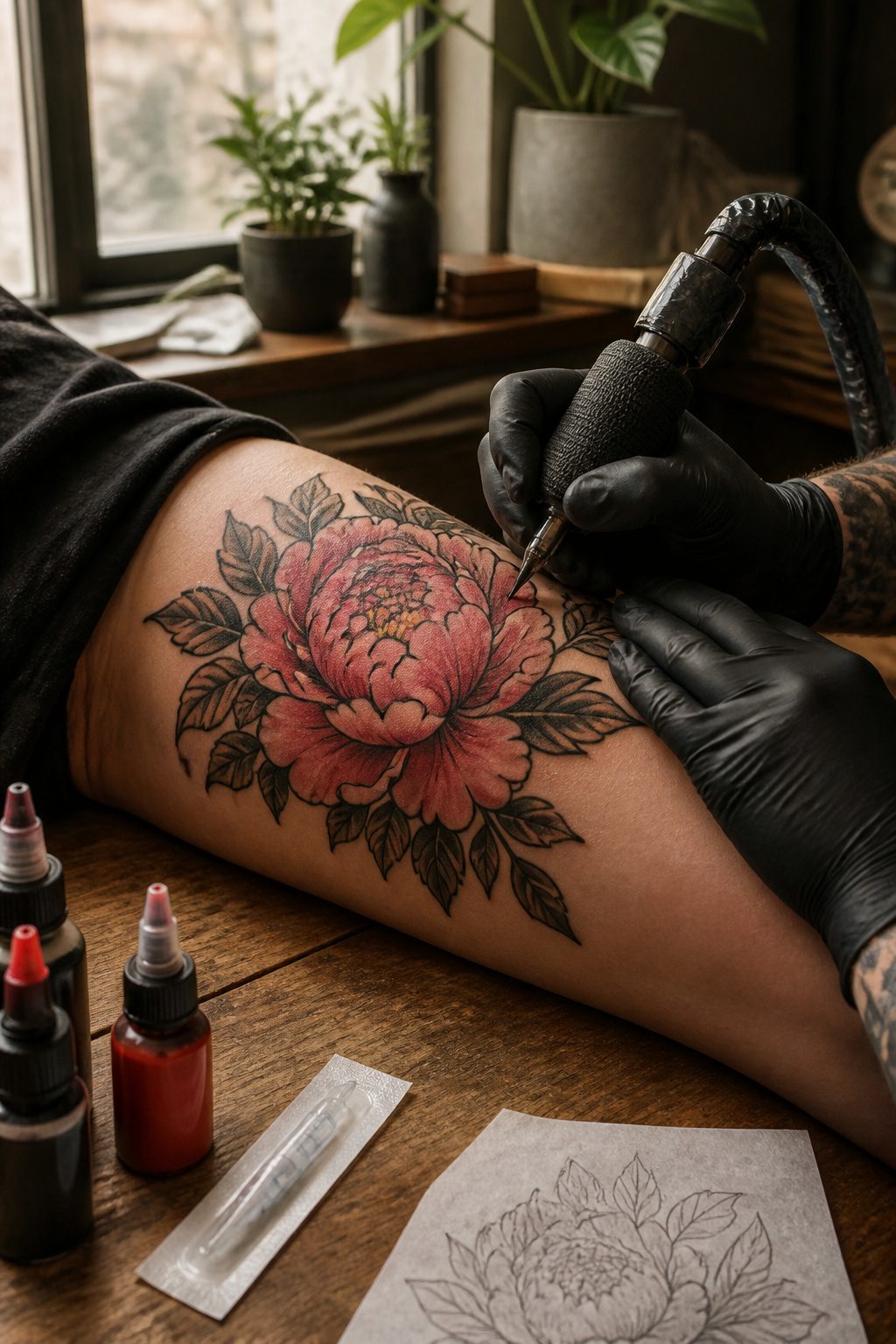
A Japanese peony tattoo lives or dies on how the artist handles the softness of the petals against the strength of the outline. The traditional approach leans on bold, black linework to hold the flower’s structure, then uses tebori or machine shading to build depth between those lines. Without the outline, the bloom collapses into a pink blur. Without the shading, it reads as flat graphic art rather than something with weight and volume.
The layered form is what makes this tricky. Each petal sits behind or in front of another, and the skin is not paper: the artist must decide which layers catch light and which fall back into shadow. I have watched sessions where the tattooer builds from the outer petals inward, laying down a wash first, then coming back with tighter stippling or whip shading to separate one curl from the next. The best work lets you read the flower’s depth without squinting, even from across a room.
Color, when it enters, usually stays restrained. A gradient from deep magenta at the petal’s base to near-white at the tip does more than any saturated flat fill. The technique is slow, and cheap work skips it, which is why so many peony tattoos age into muddy roses instead of holding their architecture.
Frequently Asked Questions
What does a peony tattoo symbolize?
A Japanese peony tattoo carries wealth, nobility, bravery, and good fortune, with the flower’s hardiness through winter grounding its meaning in strength beneath beauty. In Irezumi tradition, it also signals masculine power through its historical pairing with outlaws and heroes in Kuniyoshi’s Suikoden prints. The core symbolism stays consistent across cultures: prosperity, success, and resilience that outlasts harsh conditions.
What are the meanings of different colored peony tattoos?
Red peonies stand for love and strength, pink for romance and femininity, white for purity and new beginnings, purple for royalty and spiritual growth, and yellow or gold for prosperity and good fortune. The color is not decoration; it is the meaning itself, and choosing one over another is the most consequential decision after picking the flower. A gradient from deep magenta to near-white at the petal tip does more work than any flat saturated fill.
Where are popular placements for peony tattoos?
Sleeves, back pieces, thighs, and shoulders offer the broad surfaces where a peony’s layered petals can open to full scale. Chest pieces split the difference with enough width but faster color blur over bone. Ribs force vertical compression and stack the bloom while fighting the movement of breathing skin. Many collectors use peonies as filler between larger narrative elements in full Japanese bodysuits, where they add movement without demanding center stage.