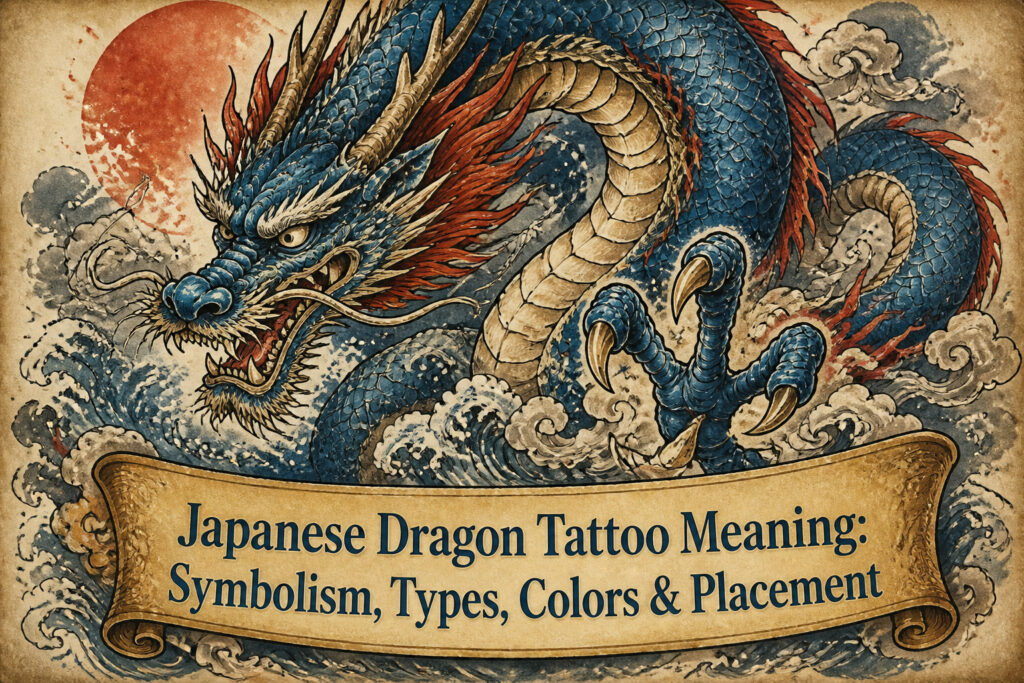
Japanese dragon tattoos carry eight layered meanings, from protection and wisdom to transformation, but the design only reads correctly if the claw count is right. Three toes mark the Japanese tradition; four or five toes slip you into Chinese symbolism without warning. The toe detail started as Imperial Chinese court protocol, and in a shop today it still separates a piece that knows its roots from one that misses them.
The Meanings Behind Japanese Dragon Tattoos
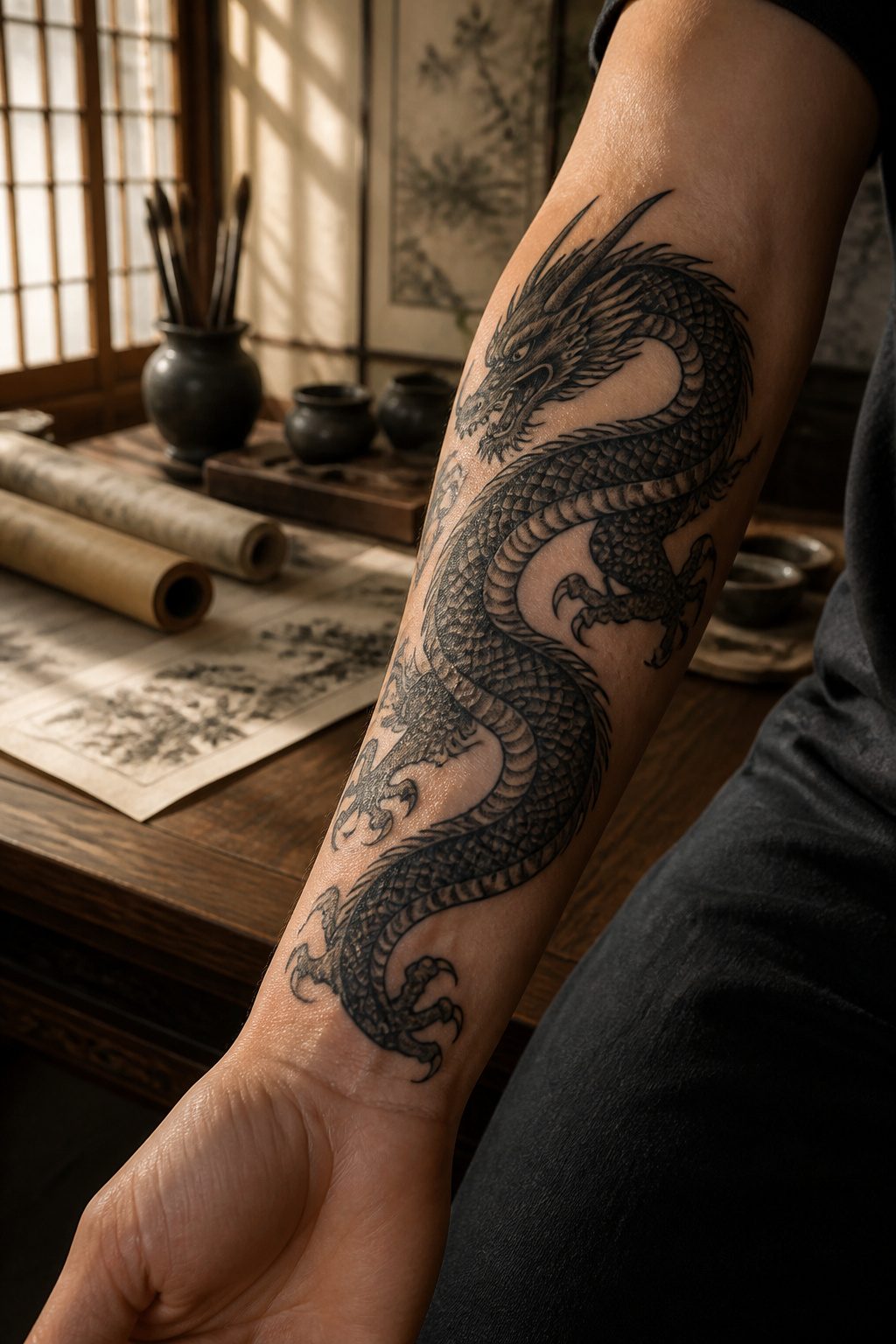
Someone walks into a shop wanting a dragon for a reason they can usually name in one sentence. The symbol carries eight distinct meanings that layer together in a single design, and the best pieces let them overlap rather than pick one.
Protection from misfortune sits at the core. Japanese dragons are guardians, not threats; the tattoo acts as a shield against bad luck. Wisdom and knowledge run parallel, since dragons in this tradition are revered for intellect, not just muscle. Strength combined with compassion is the pairing that separates these creatures from Western depictions. They are fierce but kind, powerful without cruelty.
Balance between opposing forces reflects the dragon’s place in natural elements, water and wind and rain held together. Blessings and prosperity, good fortune, and courage in the face of adversity all thread through the same imagery. Transformation and personal growth rounds the set, the dragon as a marker of change survived.
These meanings do not compete. A sleeve or back piece can hold protection and growth together, the wisdom shading into courage as the dragon coils. The body placement shapes which meanings read strongest, but the symbol itself carries the full set.
Cultural Roots and Historical Context
Japanese dragons trace back to Chinese mythology, arriving in Japan through the spread of Buddhism and settling deep into the culture as protectors rather than threats. The difference from Western dragons matters: where European lore casts them as hoarding, fire-breathing beasts to be slain, Japanese dragons guard temples, bring rain, and bless the people below them.
The toe count is the quickest way to spot which tradition you’re looking at. Japanese dragons carry three claws; Chinese dragons hold four or five. That detail started as a court protocol in Imperial China, a visual ranking of status that Japan adopted and simplified. A Japanese dragon tattoo with the wrong claw count reads as a miss to anyone who knows the distinction.
StyleCraze puts the cultural role plainly:
Japanese dragons, also known as Ryu or Tatsu, play a special role in the country’s mythology. They are believed to be benevolent and malevolent creatures that act as guardians of people, as against their fearsome depiction in Western mythology.
That guardian role is why the symbolism carries weight in a tattoo. The dragon you choose is not a monster to conquer but a force that watches your back, and that shift in meaning only makes sense once you know where these creatures came from.
The Six Dragon Types
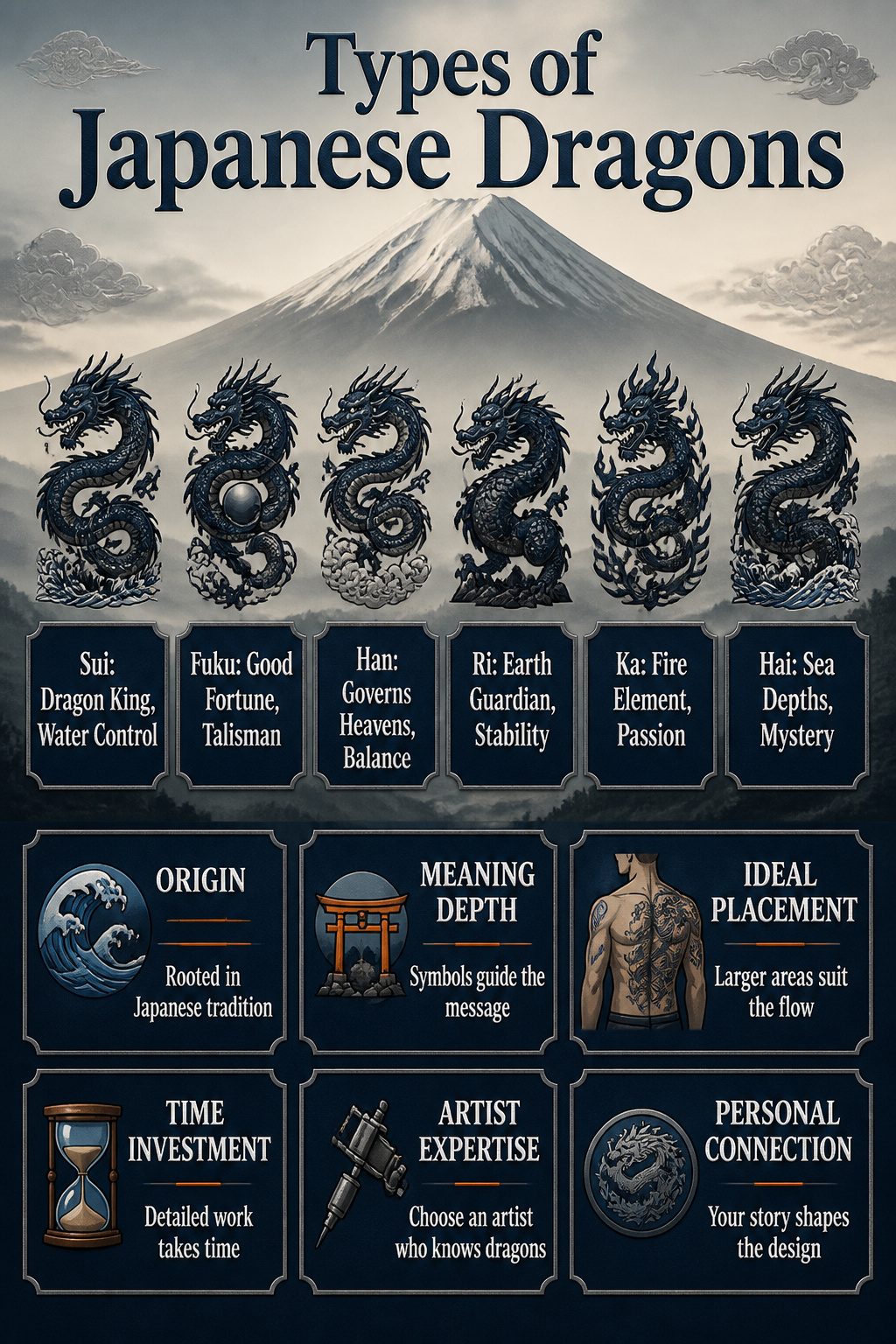
Japanese tradition sorts its dragons into six named types, each with its own temperament and reason for being chosen.
Sui sits at the top as the dragon king, the one associated with rain and water control. A Sui dragon tattoo tends to carry authority and command, the kind of piece someone picks when they want the image to read as leadership rather than raw force.
Fuku, the dragon of good fortune, works almost as a talisman. Wearers drawn to Fuku usually want the luck to point somewhere specific: prosperity, longevity, or protection for family. The meaning stays practical, not abstract.
Han governs the heavens, Ri the earth. Ka and Hai fill out the system with their own domains: Ka with fire, Hai with the sea’s darker depths. These four get less specific attribution in most tattoo work, which makes them flexible but also less immediately readable to anyone who knows the vocabulary. Someone choosing Han or Ri is usually after balance symbolism, the sky-earth pairing, rather than a single dominant trait.
The distinction matters when you sit in the chair. Sui and Fuku give a viewer something specific to read. The others leave more room for the artist to build personal meaning into the surrounding elements: the clouds, the claws, the direction the head turns.
What Dragon Colors Signify
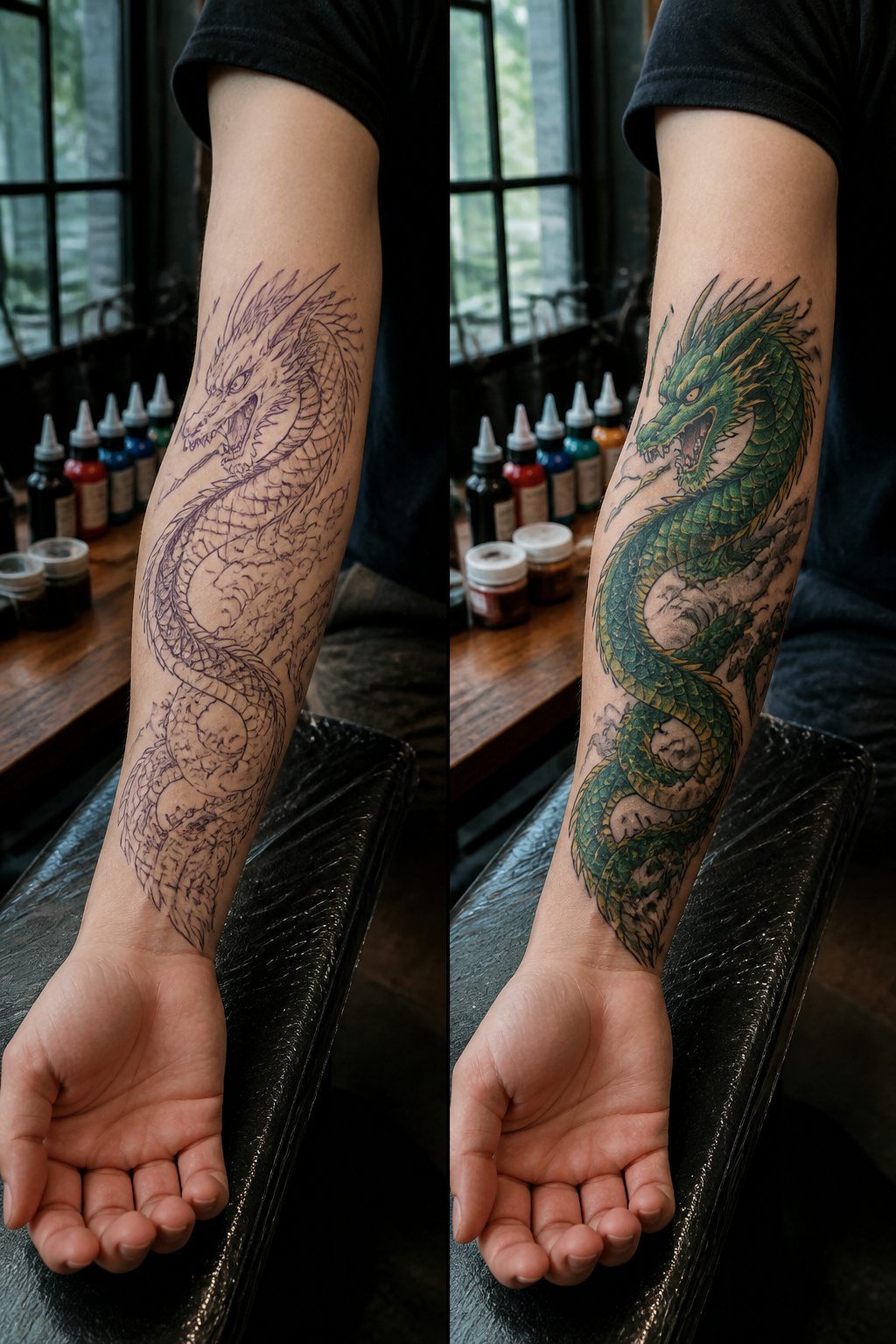
Black ink reads as wisdom and experience, the kind that comes from surviving rather than studying. A client of mine sat through forty hours for a full back piece in solid blackwork, and the dragon looked older than the twenty-six-year-old wearing it. Red carries strength, passion, courage, the same qualities that make a dragon tattoo read as protection rather than ornament. Blue shifts the meaning toward serenity, compassion, forgiveness, a cooler register that some wearers choose after they have outgrown the aggression of their first design. Green ties the dragon to nature, growth, renewal, and gold marks prosperity, success, divine power, value and virtue both. The form stays identical; only the color changes what the dragon communicates. A green dragon curled around the same bicep that once held a red one tells a different story without redrawing a single scale.
Design Styles That Carry the Symbol
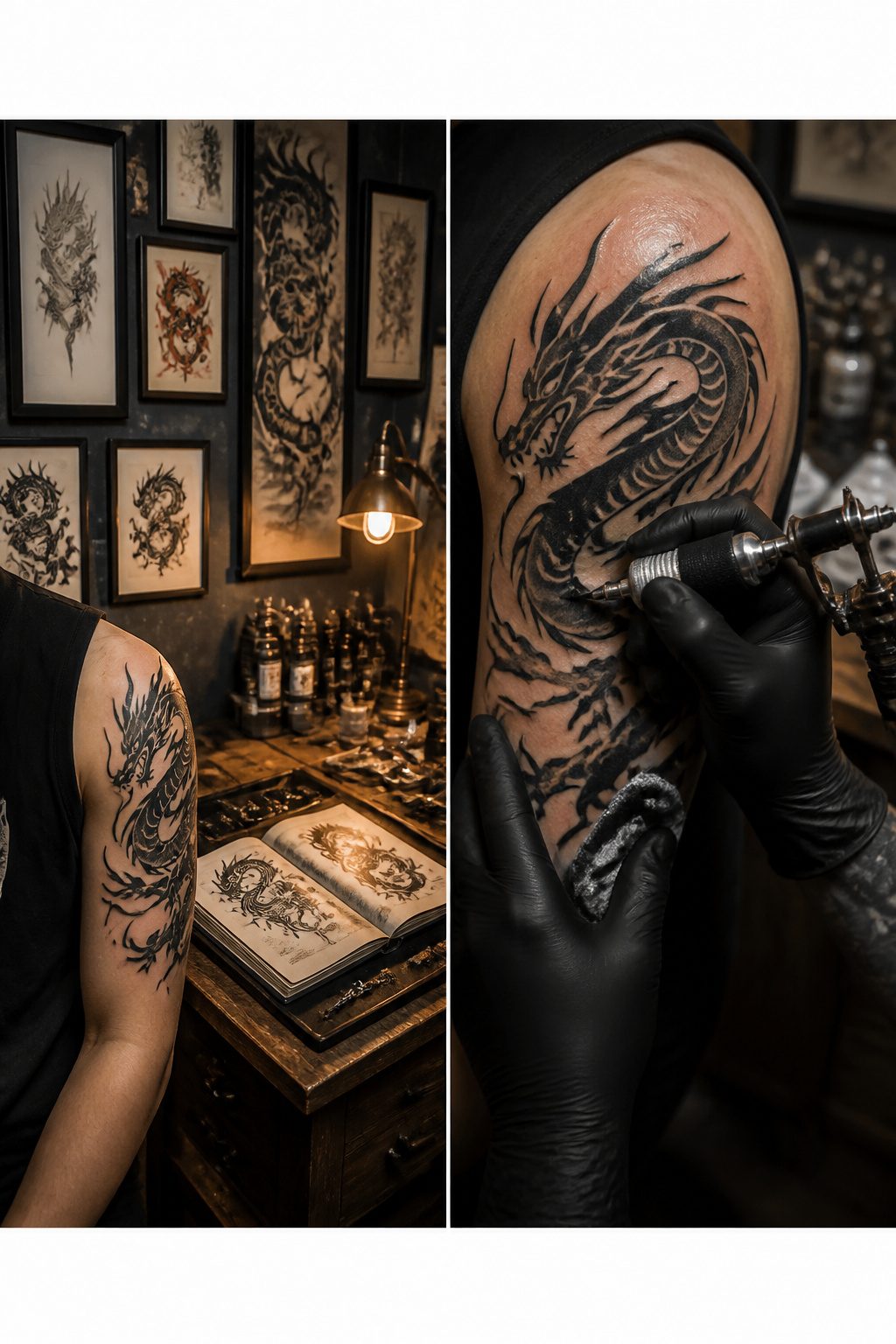
Traditional Japanese dragon tattoos carry that heavy, saturated look of tebori hand-poking or the bold machine work that replaced it: thick outlines, flat color fields, the dragon winding through clouds or waves with three claws visible exactly where the passages specify. The symbol stays benevolent and wise, but the style throws weight behind it, the kind of piece that covers a back or a full sleeve and reads as commitment.
Tribal work strips that same dragon down to black silhouette and geometry. No scales, no whiskers, just the suggestion of sinuous movement in negative space. The meaning does not change, but the feel shifts from storytelling to stamp, something closer to armor than illustration.
Realistic dragons borrow the Japanese form, that slender wingless sea-serpent body, and render it in dimensional shading and skin texture. The creature looks like it could move. What was mythic becomes almost biological, and the balance the dragon represents starts to feel personal, a thing you chose to wear rather than inherit.
Minimalist lines take the opposite path. A few strokes suggest the horn, the claw, the coil. The dragon is barely there, which makes the viewer work, and that quietness suits someone who wants the symbol without the theater.
Fusion designs mix any of these, traditional Japanese structure with modern technique, Eastern form with Western handling. The passages note the creativity this opens, and in the shop I have seen it work when the client knows which element they are keeping and which they are bending. The dragon symbol holds through any of these translations. The question is which version of yourself you are asking it to speak for.
Where the Tattoo Sits on the Body
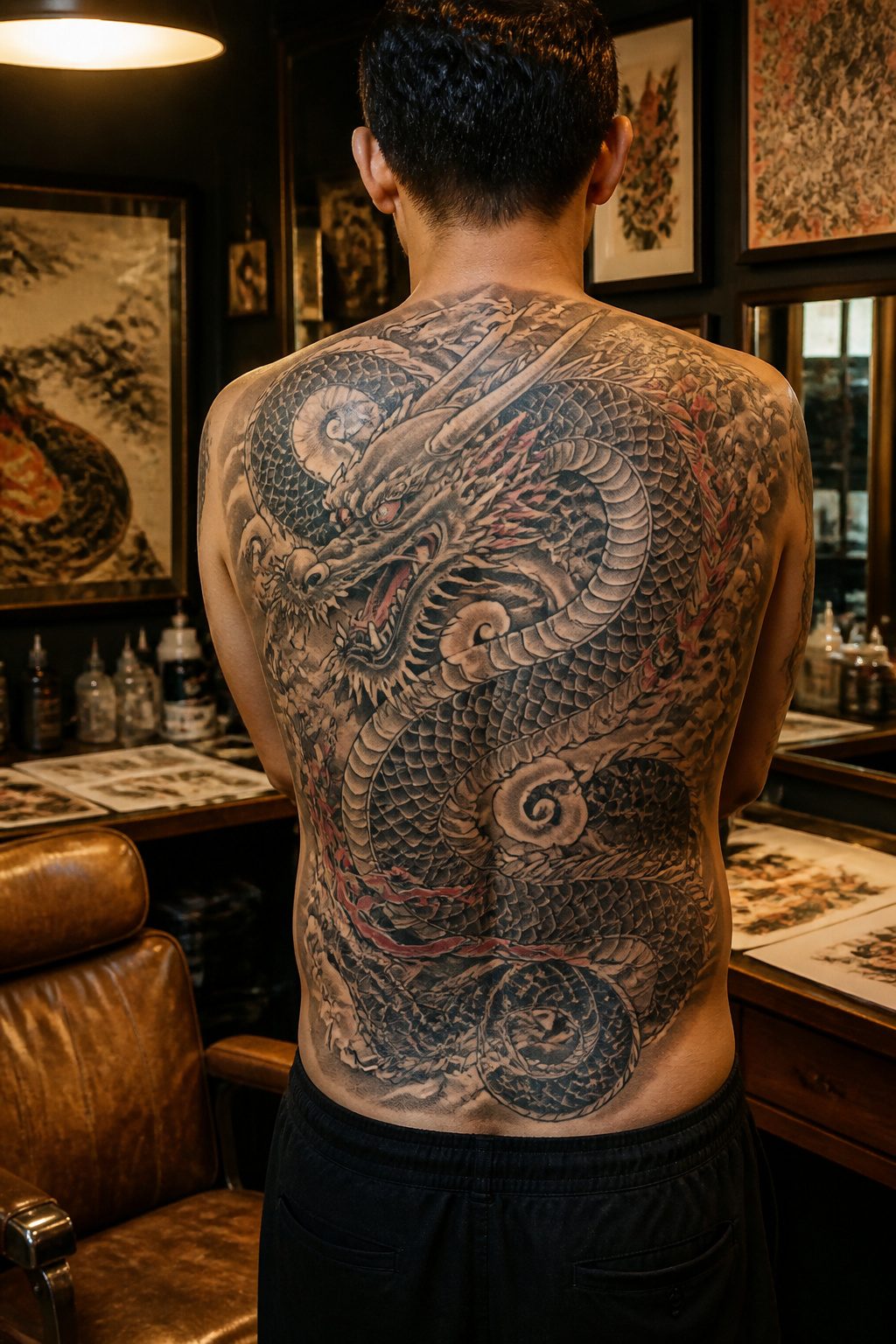
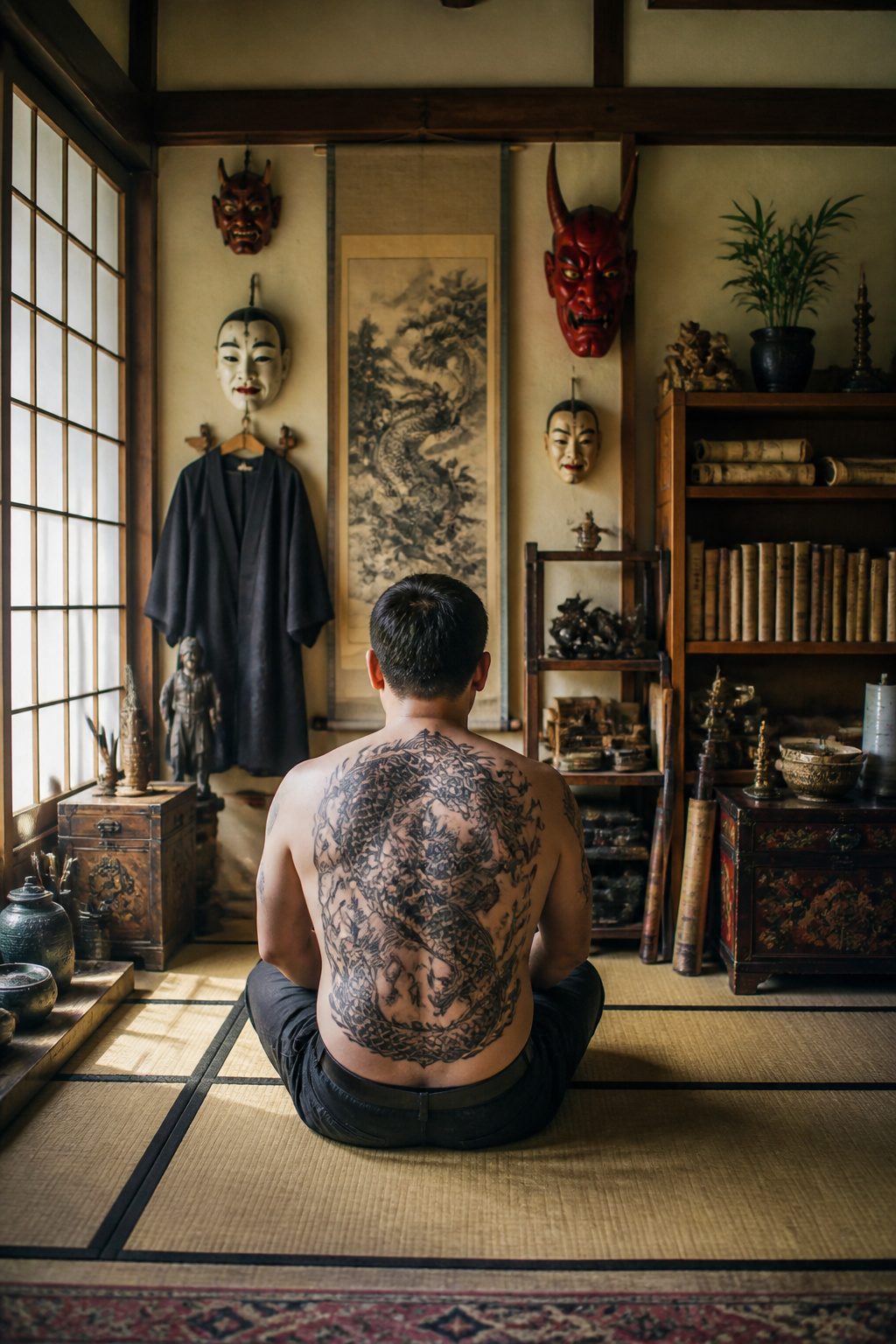
A full back piece gives the dragon its most commanding presence, the spine and shoulder blades becoming the literal backbone of a design that reads as strength and dominance the moment the shirt comes off. The scale of the canvas matches the scale of the ambition: the full body of the creature can coil, the claws can extend, the scales can carry every layer of texture without crowding.
Sleeves work differently. The arm wraps the dragon around the wearer, creating movement that a flat back cannot, and the symbolism shifts toward courage and the willingness to face what comes head-on. The forearm or upper arm carries this well; the full sleeve commits to the narrative completely.
Chest panels sit over the heart. The symbolism here is protection and guidance, the dragon watching from the pectoral muscle as eyes that follow the wearer’s own path. These pieces often extend over the shoulder and down the arm, turning a chest panel into something larger than its starting point.
The ribcage is harder. Less space, more bone, more pain for the sitting, and the dragon must compress without losing its identity. Sources do not give this placement much symbolic weight, and the practical reality is that most artists will push a client toward the back or thigh for a design this detailed.
Thigh pieces carry a similar logic to the back: strong muscle, large canvas, room for the full body of the dragon. The symbolism here is determination and the hope for developing strength, the thigh’s own power reinforcing the creature’s.
Japanese Versus Chinese Dragon Tattoos
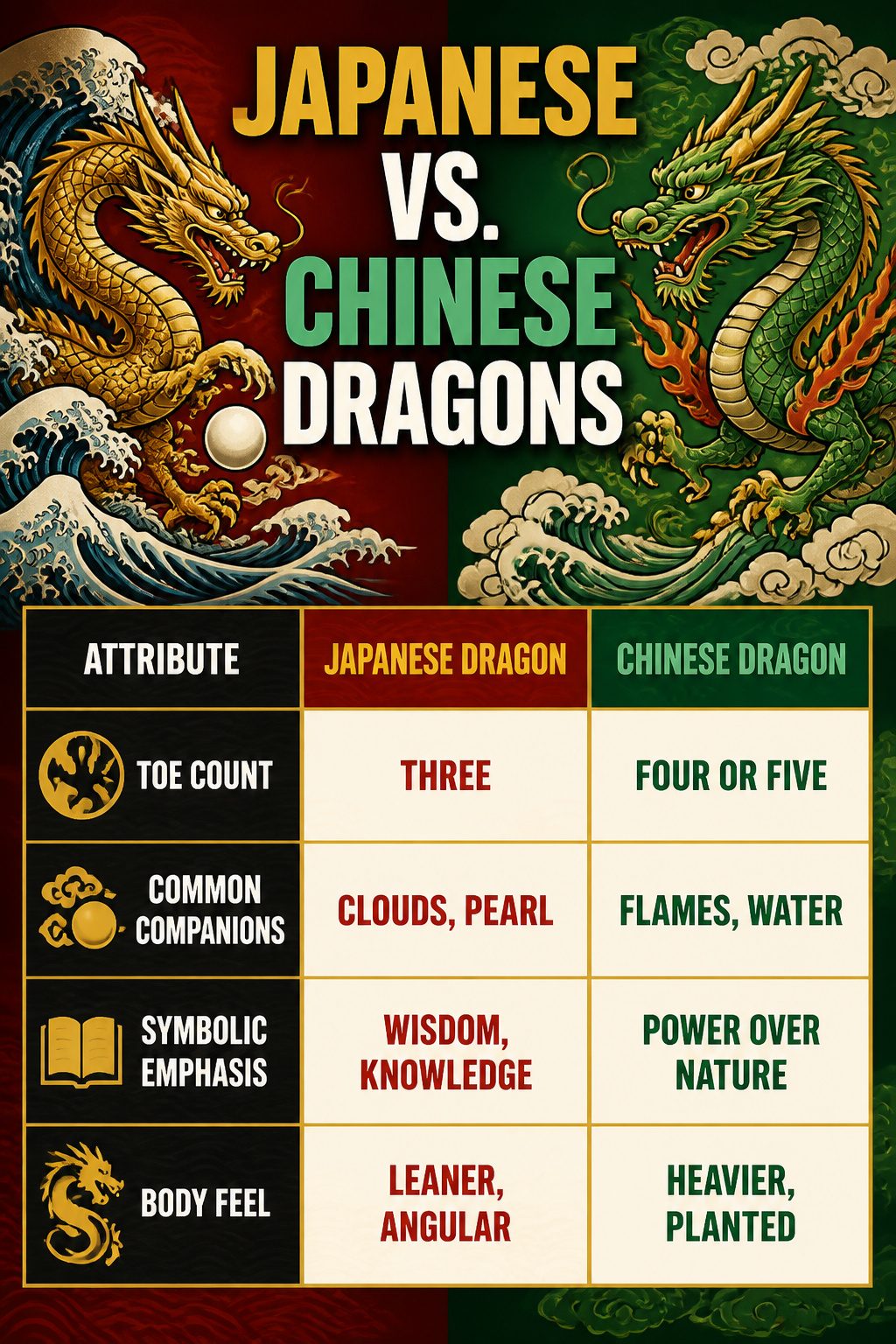
The toe count is the fastest way to tell the two traditions apart in a tattoo shop. Japanese dragons carry three toes; Chinese dragons show four or five. That single digit changes the whole silhouette, pulling the Japanese body toward a leaner, more angular claw and giving the Chinese form a heavier, more planted stance.
Japanese depictions also lean toward clouds or a pearl, a pairing that reads as pursuit and intellect on skin. Chinese versions more often move with flame or water, stressing raw elemental power. The difference is not better-or-worse; it is which symbolic register you want living on your body for decades.
| Attribute | Japanese Dragon | Chinese Dragon |
|---|---|---|
| Toe count | Three | Four or five |
| Common companions | Clouds, pearl | Flames, water |
| Symbolic emphasis | Wisdom, knowledge | Power over nature |
| Body feel in tattoo | Leaner, more angular | Heavier, more planted |
Most clients who walk in asking for "an Asian dragon" have not settled this yet. Three toes reads subtler on a forearm or rib piece. Four or five toes holds more visual weight across a back or thigh. The choice shapes the rest of the design more than people expect.
Choosing What Your Dragon Will Say
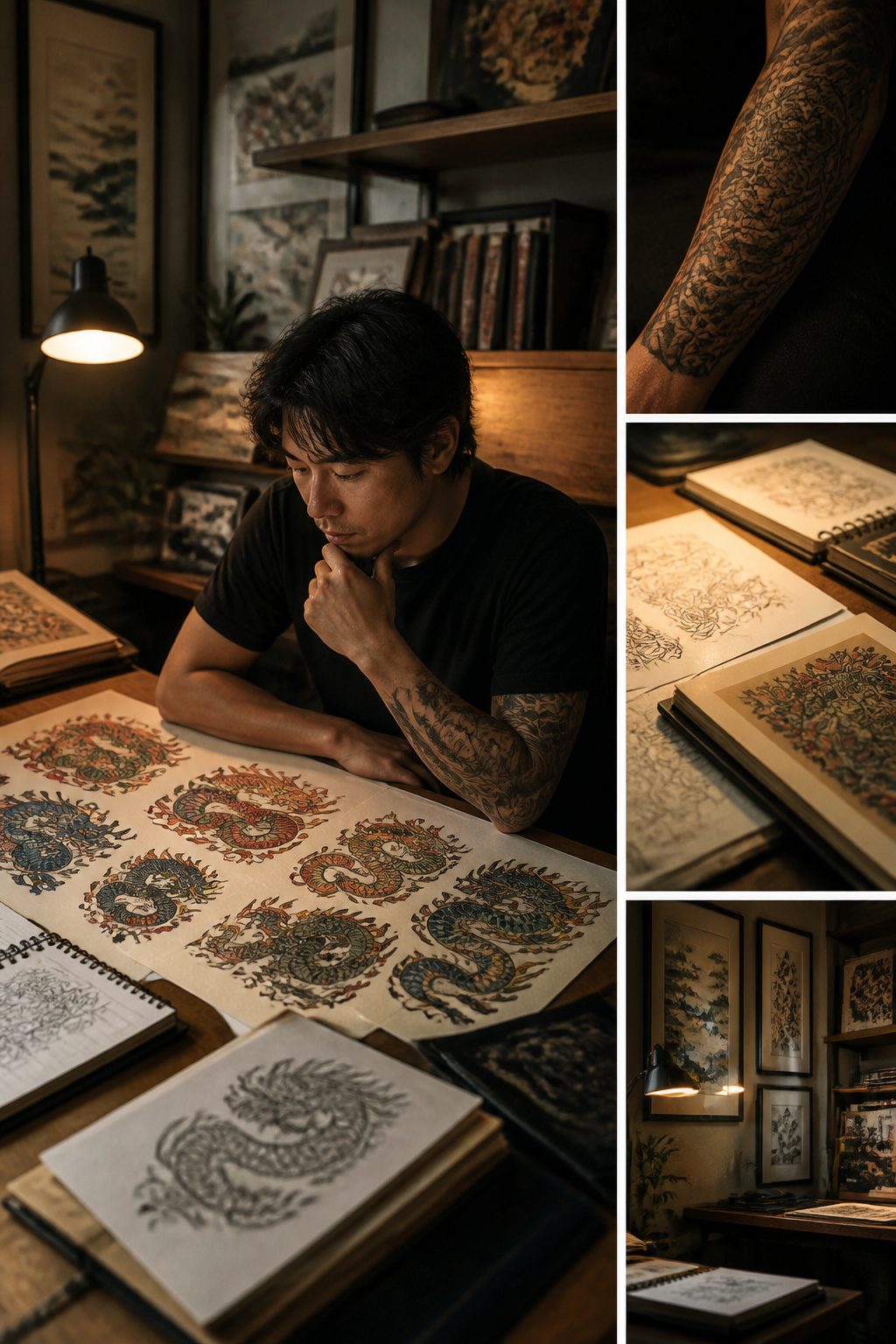
The flash sheet on the wall is not where a Japanese dragon tattoo starts. The real work happens in the conversation before the needle touches skin, when the type, color, and placement get matched to something the wearer actually means.
A black dragon for wisdom or a gold one for prosperity sits differently on a body than it reads on paper. The back opens space for the full winding form and the detail these designs demand, while the arm or thigh keeps the symbol visible, carrying courage into ordinary rooms. A sleeve can wrap the dragon’s movement around the limb so the body becomes part of the story.
What convinced me, reading through how these pieces come together, is that the color and placement should argue with each other, not repeat the same point. A red dragon for strength on the back makes one kind of statement; the same red on the forearm, where the wearer sees it daily, makes another. The chest reads as protection kept inward. The leg, toward foot or ankle, leans toward freedom and motion.
Artists tend to push large areas for Japanese dragons: back, thigh, full sleeve. The scale serves the intricacy. But the choice that matters is not where the tattoo fits the body best; it is where the body fits the meaning the person brought in.
Frequently Asked Questions
What does a Japanese dragon tattoo mean?
A Japanese dragon tattoo carries eight core meanings: protection from misfortune, wisdom and knowledge, strength combined with compassion, balance between opposing forces, blessings and prosperity, good fortune, courage in the face of adversity, and transformation or personal growth. These meanings overlap in a single design rather than competing with each other.
What is the difference between Chinese and Japanese dragon tattoos?
Japanese dragons have three toes, while Chinese dragons have four or five. Japanese depictions also tend toward clouds or a pearl, reading as wisdom and pursuit, where Chinese versions favor flames or water, stressing raw elemental power. The Japanese body is leaner and more angular; the Chinese form is heavier and more planted.
What do the colors of Japanese dragons mean?
Black signals wisdom and experience, red stands for strength, passion, and courage, blue shifts toward serenity, compassion, and forgiveness, green ties to nature, growth, and renewal, and gold marks prosperity, success, and divine power. The dragon’s form stays the same; only the color changes what it communicates.