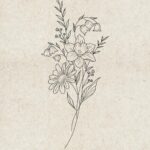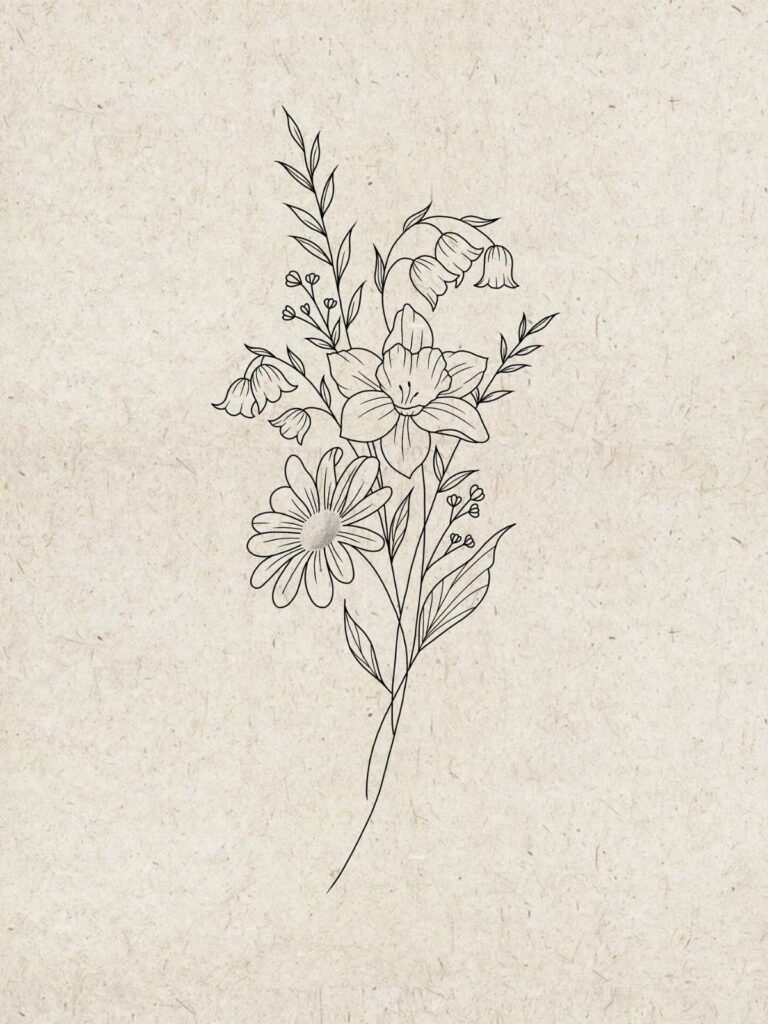
A flower tattoo can stay small as a single behind-the-ear bloom or grow into a sleeve that takes months to finish; the list below covers the styles that get you there, plus what each one asks of your skin and your schedule.
Fine line work and watercolor both tend to fade faster than saturated traditional pieces, so the style you choose sets how often you will sit in the chair again.
1. Lotus Flower
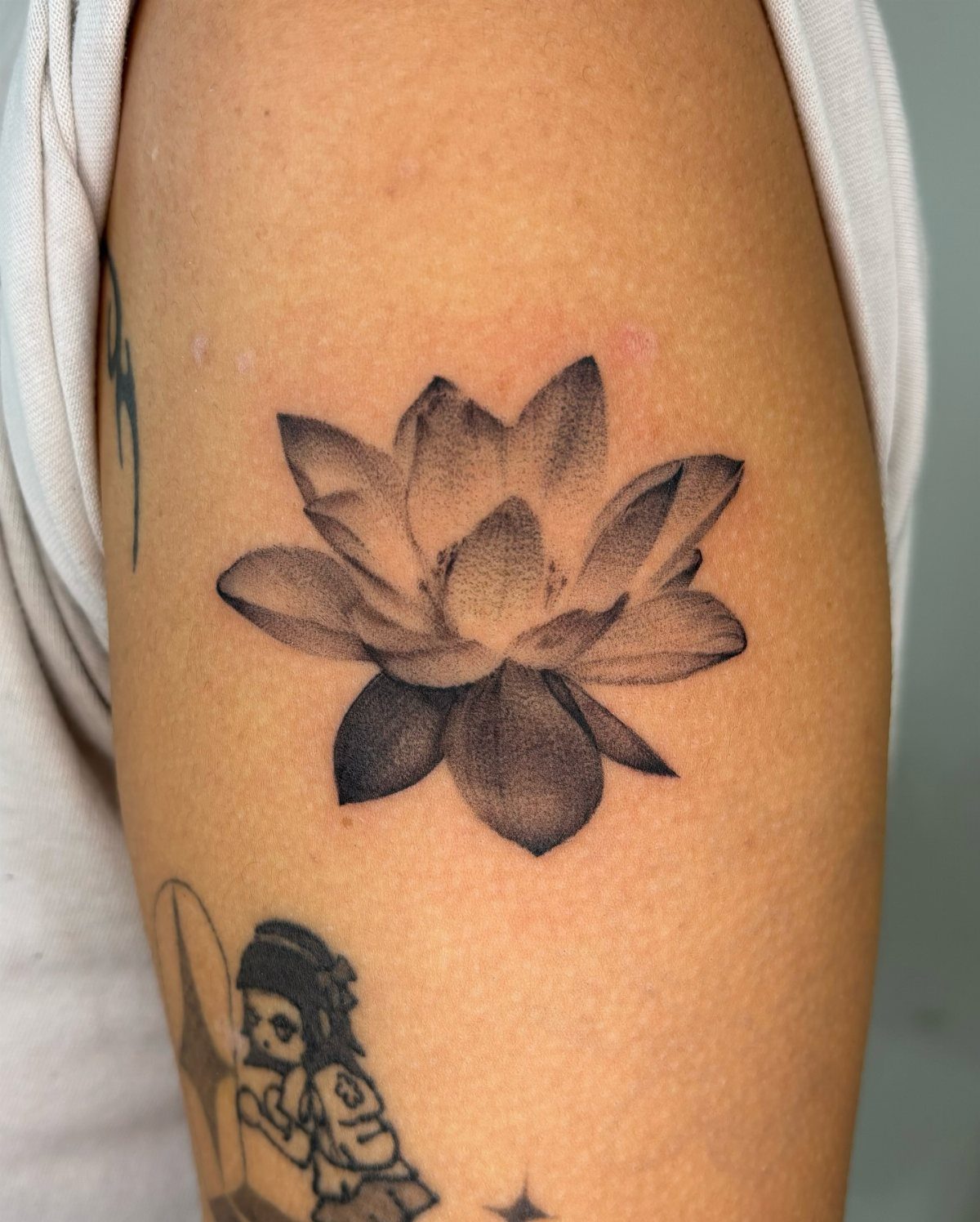
The lotus starts in mud and still opens clean, which is why people who have been through something tend to ask for it.
Fine-line drawing with line-shading gives the petals an almost translucent quality, though any intense color will lighten as it heals and ages. A touch-up appointment down the line is normal, not a failure.
A small to medium lotus on the upper arm or ribs keeps the detail readable. I’d steer first-timers toward black and grey; the contrast holds up better over time than bright washes.
2. Cherry Blossoms
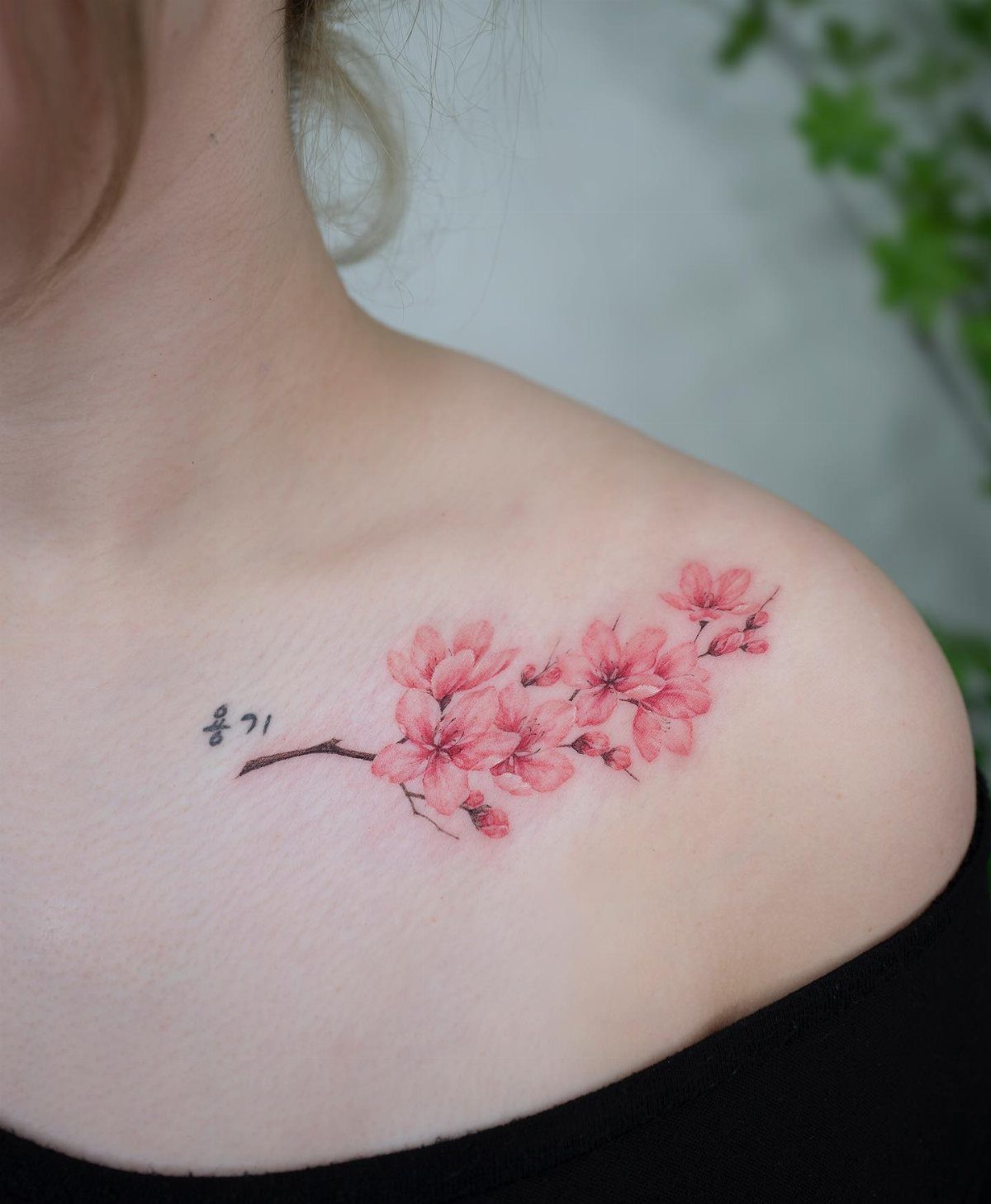
Cherry blossom branches wind well across arms or the length of a torso, trailing petals that read as movement rather than still life.
The style pulls from classic ink painting: thin dark branches, bright touches of pink or white for the bloom, sometimes a few characters worked in.
Placement on the shoulder or forearm gives the cascading effect room to breathe, though the bicep works if you want the branch to wrap.
A healed piece by the same hand still carried its color at roughly a year and a half post touch-up. Long exposure to sun and water will pull that saturation faster than age alone.
3. Rose Tattoo
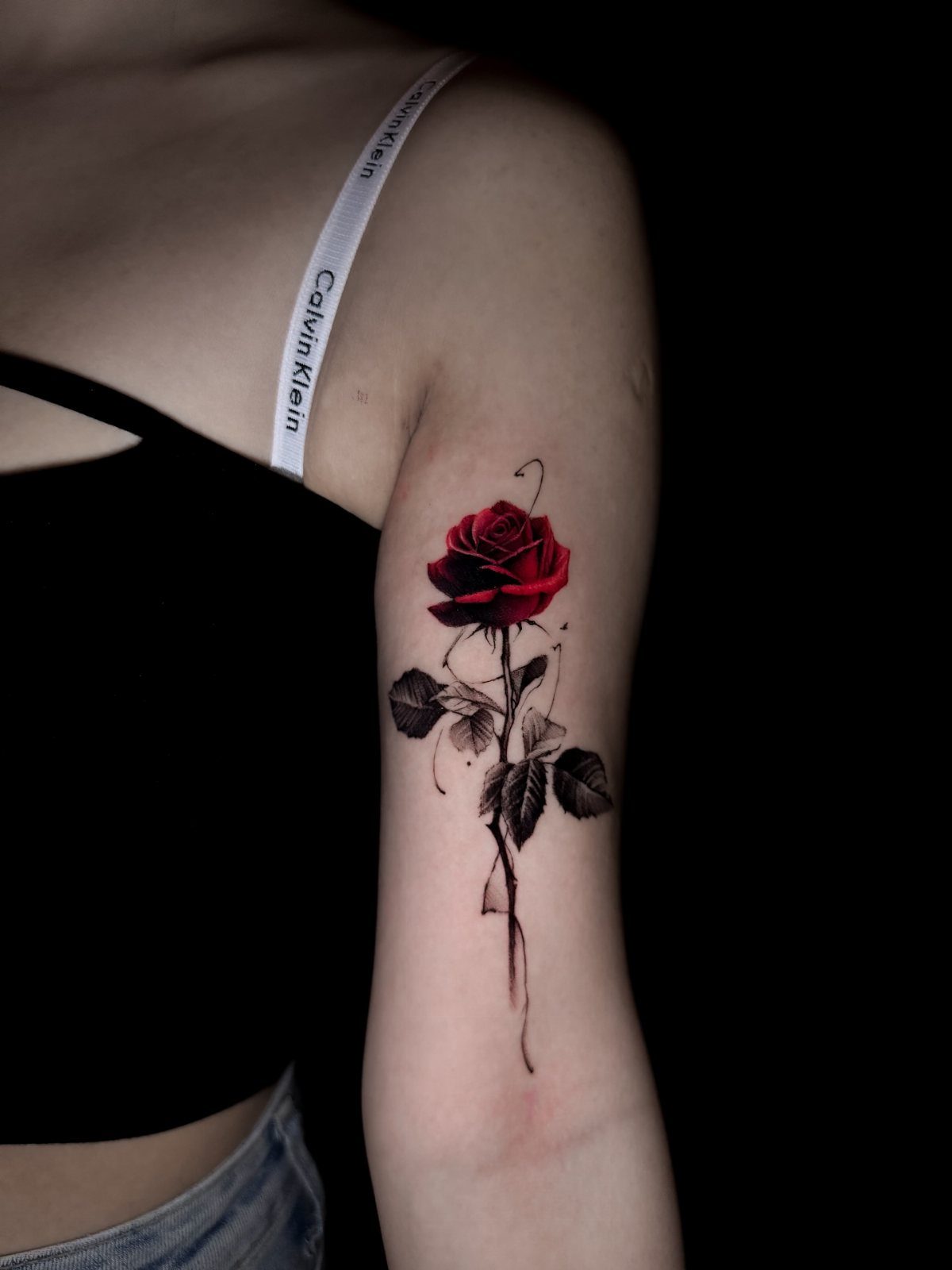
A red rose with a black stem and leaves is one of the most adaptable images in tattooing, holding its meaning across almost any style you put it in.
Color matters. Red carries the classic weight of love and passion, but a yellow rose shifts to friendship, white to new beginnings, black to loss or defense.
The thorns add that second layer if you want it. Superbright shades like these will fade some as they heal; booking a touch-up later is standard practice, not an emergency.
For placement, the upper arm gives the bloom enough space for the dark background to frame the red without crowding.
4. Sunflower Tattoo
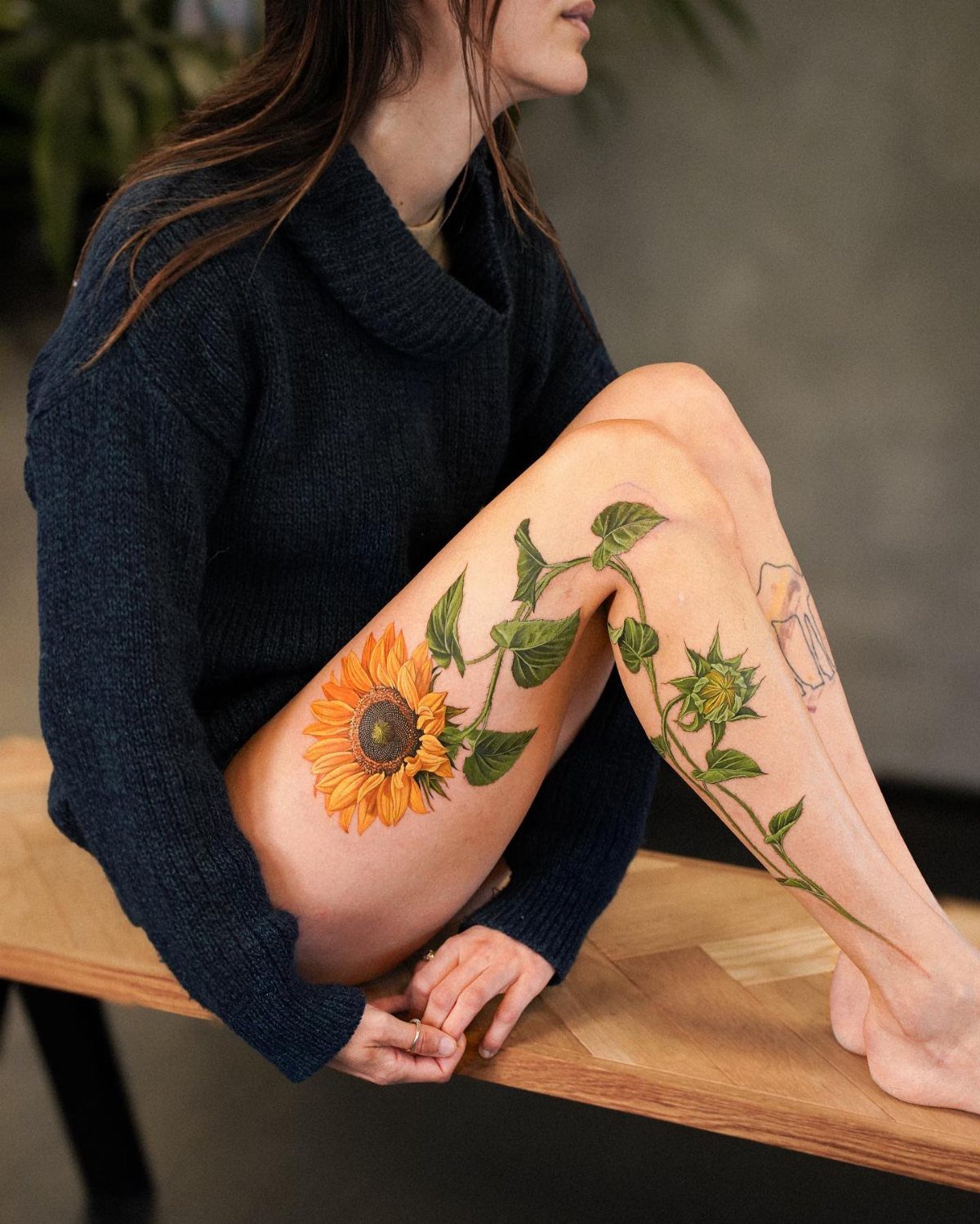
Sunflowers turn to follow light, so the tattoo tends to land on people who want a reminder of that instinct.
The thigh or side gives the large petals and green stem room to open fully, though a smaller version on the ribs works if the detail is kept bold enough to read at distance.
Color saturation is the thing to watch; long soaks and UV exposure will dull the yellow faster than black ink fades. Subtle shading on the petals needs that protection to hold.
I’d point the stem upward if you want the growth reading, or let it trail down the leg for something more rooted.
5. Peony Tattoo
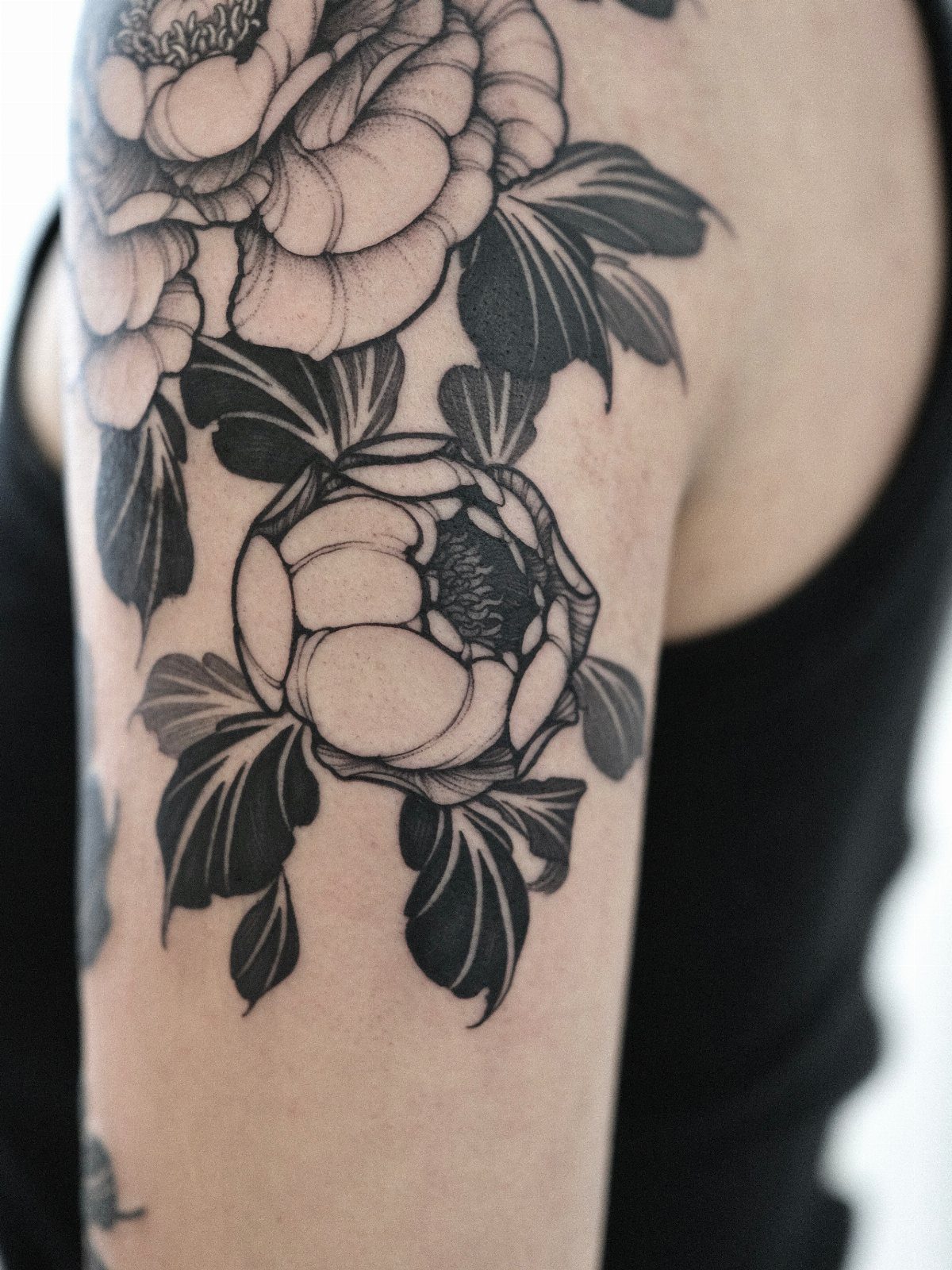
The peony carries the title "King of Flowers" in Japan, and the tattoo version usually goes large enough to earn it.
Black and grey reads as elegance and old money; color pushes toward prosperity and risk-taking, since the same flower means reward comes only with gambles.
The smaller flower tucked inside this piece was already healed at about a year and a half after its touch-up.
A single peony, smaller, works for a first piece if you accept that the detail will simplify as it shrinks.
6. Orchid Tattoo
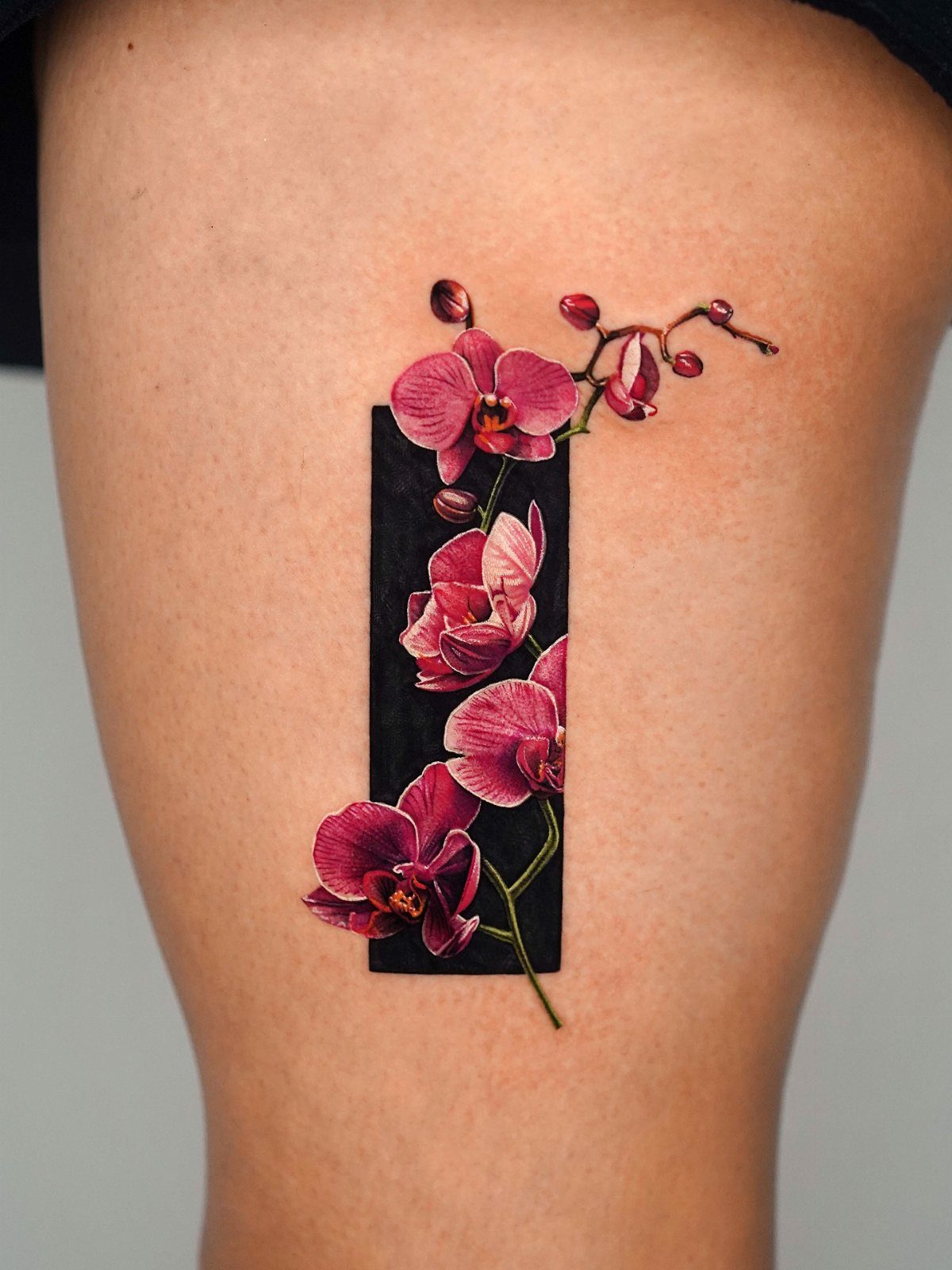
Orchids carry different weight depending on whose language you ask: courage for Japanese warriors, power in Aztec work, refinement and fertility in Chinese tradition.
The pink blooms layered over a black rectangle here show one way to handle the stem, letting the negative space do structural work while the flowers float.
With over 25,000 varieties, finding a species that matches your specific meaning takes some looking, or you can choose by shape alone. The vertical format suits the forearm or the side of the ribs.
Color choice shifts the read more than with most flowers. Pink leans love and luxury; white, elegance; deep purple, respect and admiration.
7. Hibiscus Tattoo
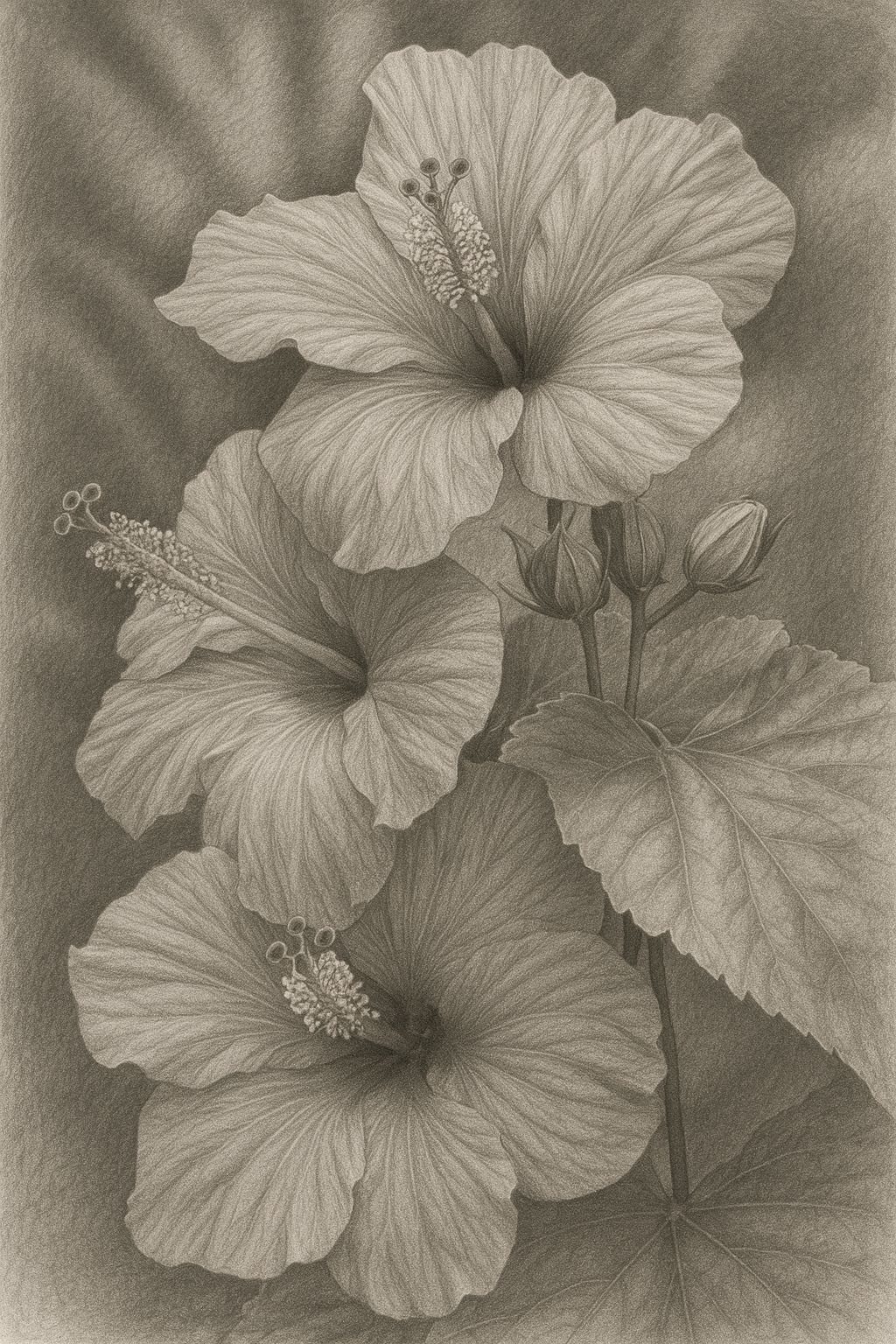
A hibiscus tattoo carries different weight depending on where you place it.
In Japanese tattooing, the flower means gentle, almost light, a soft counterpoint to bolder imagery on a sleeve. In Hawaiian tradition, the same bloom stood for royalty and power, worn by rulers of the islands.
The single hibiscus works small on a wrist or ankle.
Grouped 3 across a shoulder, it reads more ceremonial, closer to those older meanings. Color shifts the signal too: red or pink leans Hawaiian, a single pale bloom reads more Japanese in context.
For a first tattoo, the hibiscus offers this: clear symbolism without heaviness, a flower most people recognize even if they cannot name it.
8. Magnolia Tattoo
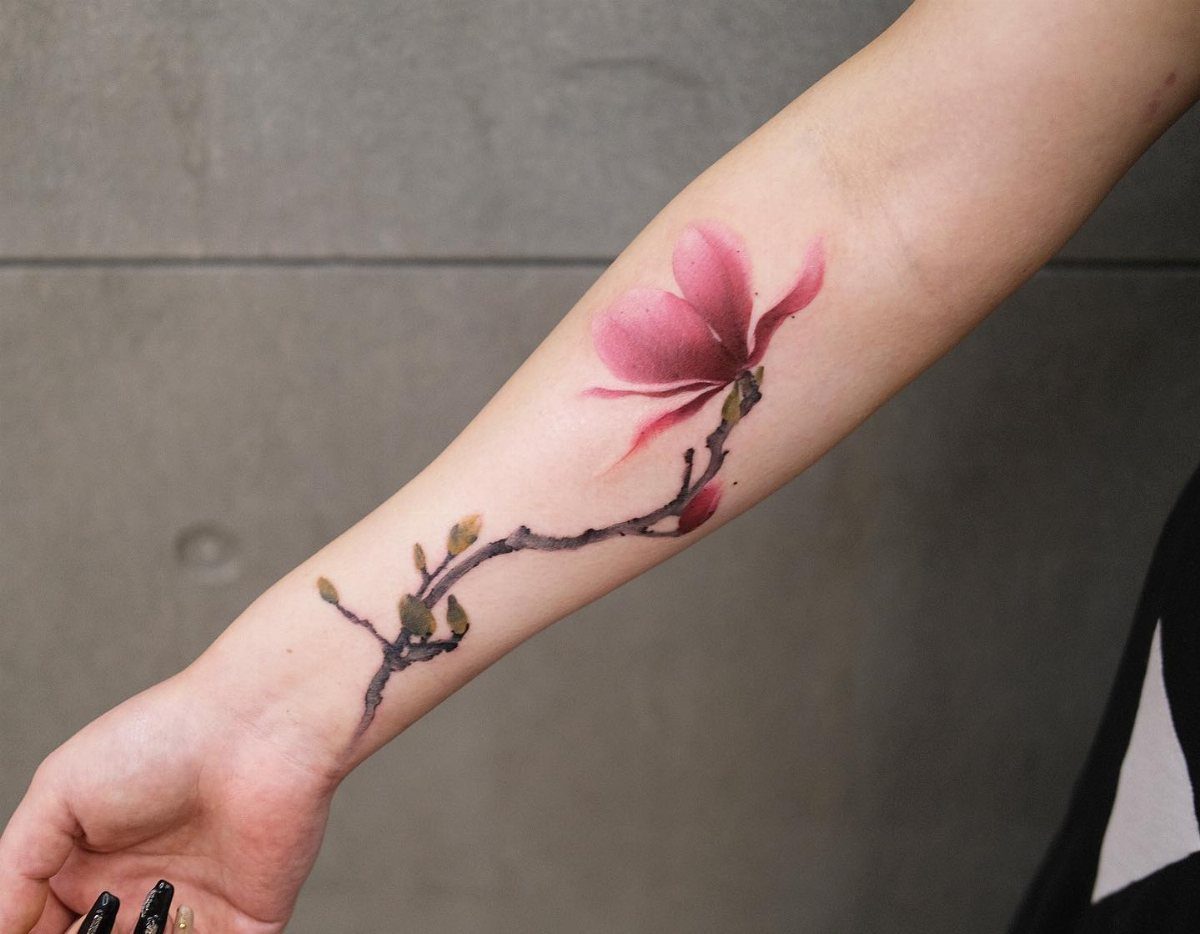
The magnolia builds its flower inside its flower, layer after layer of petal that keep opening inward. That structure alone makes it a natural for tattooing, giving an artist real depth to work with on flat skin.
Ancient China saw this bloom as beauty built on strength, soft petals over wood that does not split easy.
A magnolia tattoo suits someone who wants that particular balance, dignity without hardness. Pink ink carries that feeling; a black and grey version would read more architectural, more about the layering itself.
Placement matters for size.
The bloom opens wide, and a small magnolia loses the detail that makes it matter. Forearm or thigh minimum, or let it spread across a shoulder where those nested petals can keep unfolding.
9. Chrysanthemum Tattoo
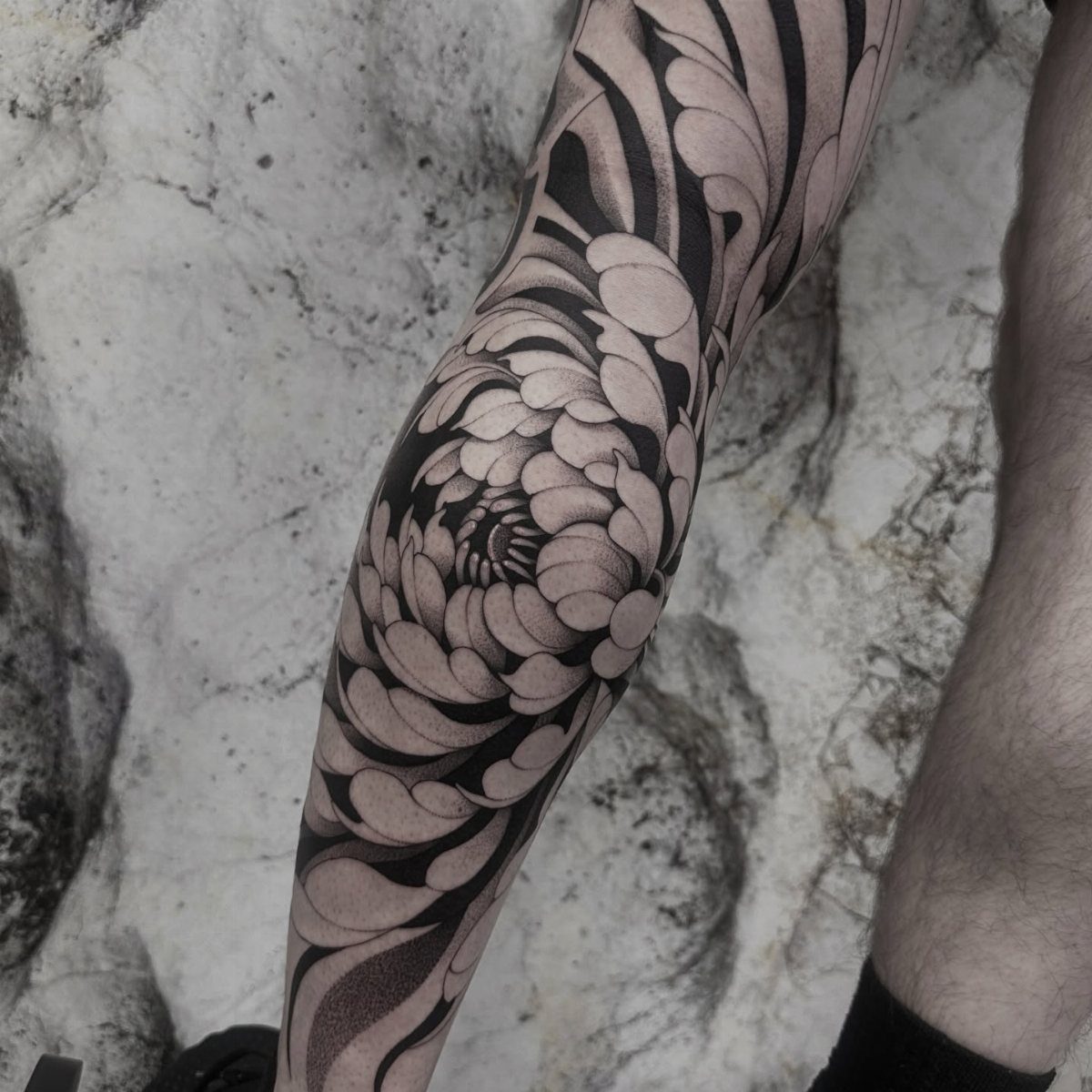
The chrysanthemum is November’s birth flower, but that is almost the least of it.
In Japan, the emperor’s throne took its name from this bloom, and the association with royalty still holds. More practically, the flower’s radiating structure, dozens of petals curling from a tight center, gives a tattoo artist geometry to build around.
Color versions lean cheerfulness, the "just because" gift the flower also signifies. Bold outlines hold the petal shapes against skin, the weight of ink giving the bloom its gravity.
For someone marking a friendship or a November birthday, the chrysanthemum carries both personal date and broader meaning without crowding.
10. Blackwork Floral Tattoos
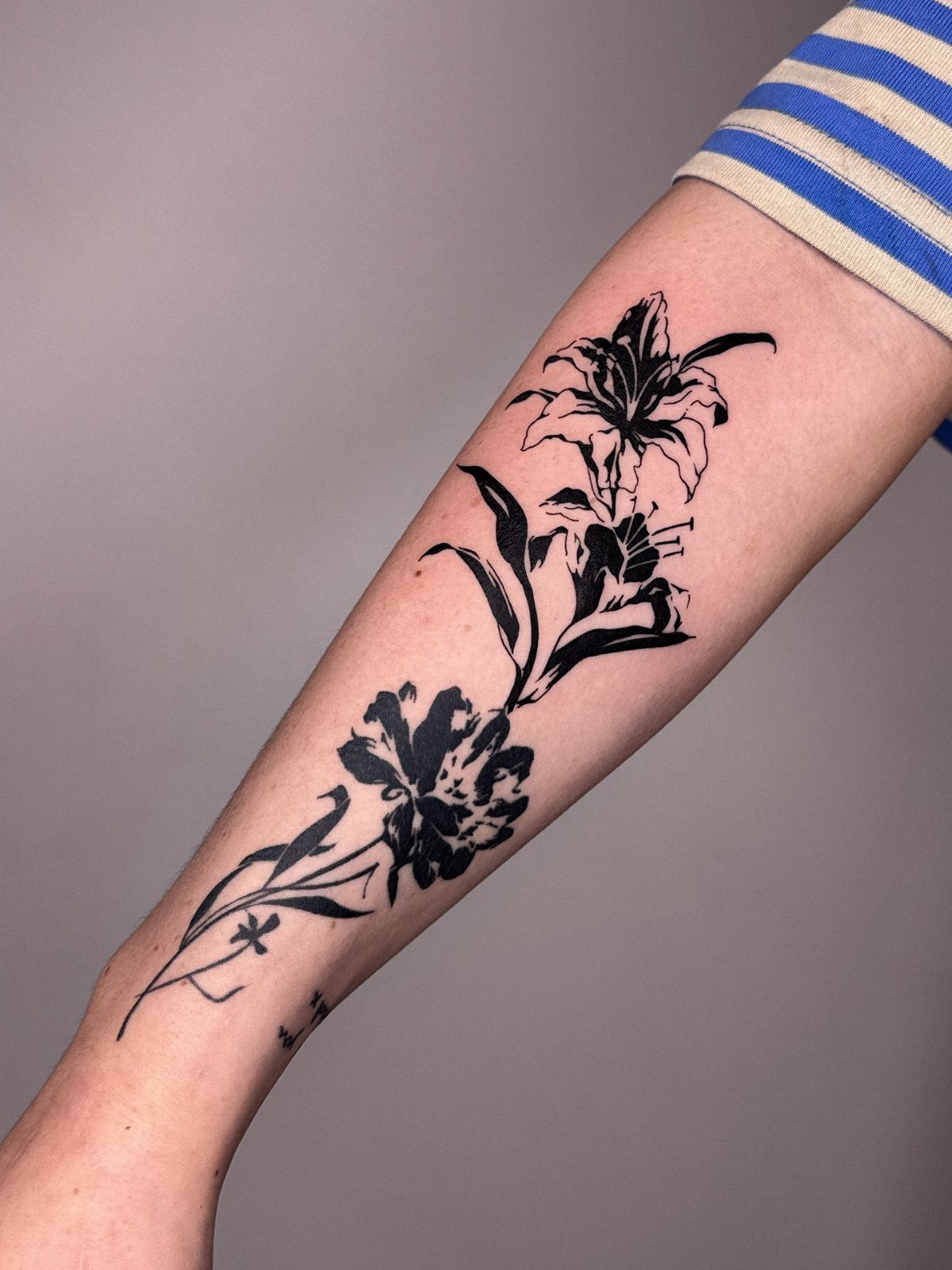
Blackwork florals strip away color until only form remains. A petal’s curve, a seed head’s geometry, the way chrysanthemum petals radiate from center to edge: without hue to guide it, the eye reads each shape on its own terms.
The style draws from traditional tattooing’s bold lines, then replaces color fills with black shading. A single-needle study can run delicate, almost botanical illustration.
This suits someone who wants a floral tattoo that reads as design first, flower second. The trade is warmth; what you gain is graphic power and, often, better aging as the ink settles.
11. Forget-Me-Not Tattoos
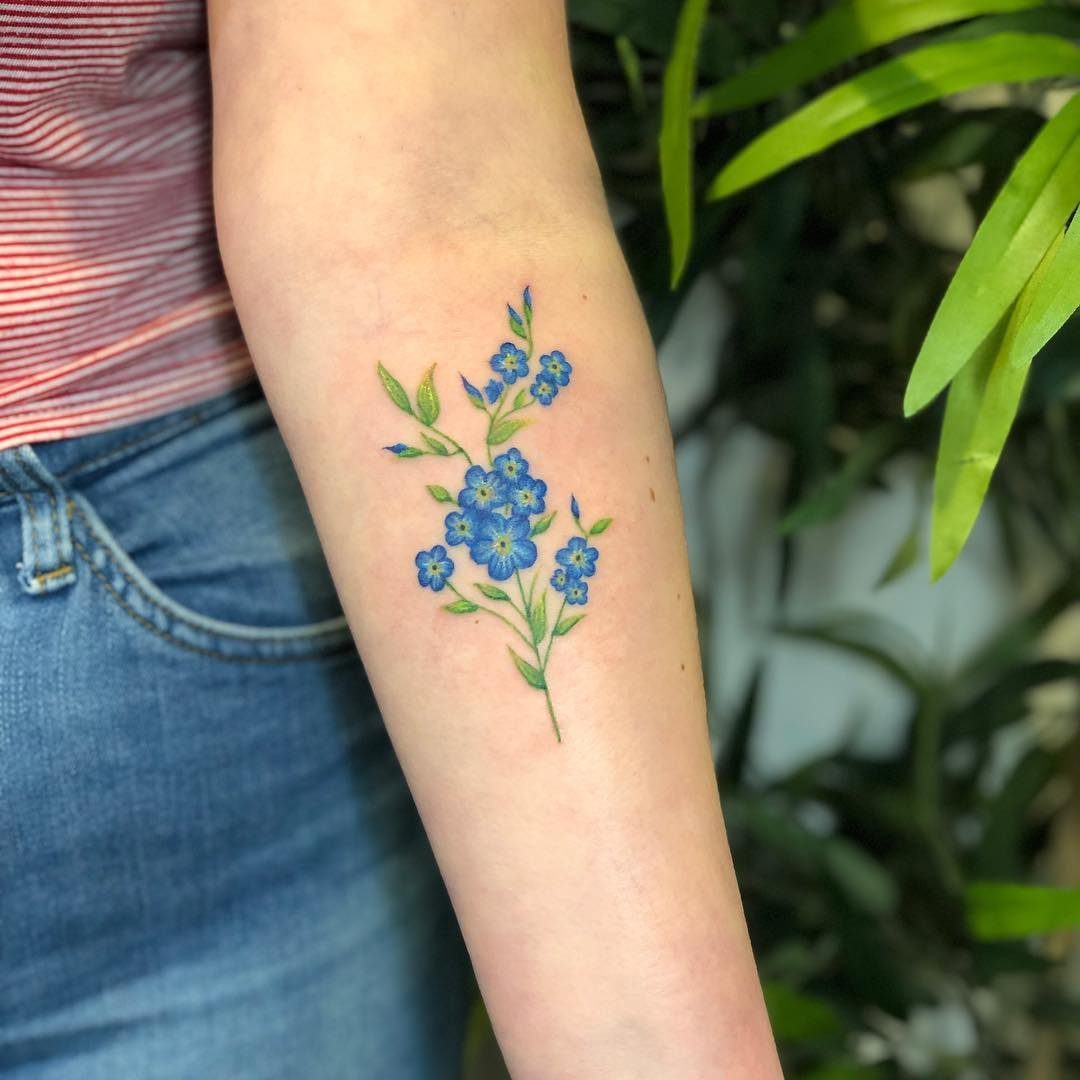
The name does the work. A forget-me-not tattoo is memory made visible, small enough to hide or to place where you will see it daily.
The blue is the flower’s natural color, and most versions keep it, though a black outline alone would still read clearly for what it is.
Size is the practical question. These blooms are small by nature, and the tattoo follows.
A cluster of three or five on a forearm, a single flower behind an ear, a line of them tracing a collarbone like a scattered necklace. The straightforward approach is blue petals, green stem, no complication needed.
For a first tattoo, this is low commitment, high sentiment. For someone experienced, it layers into a larger piece without demanding attention.
12. Fine Line Flower Tattoos
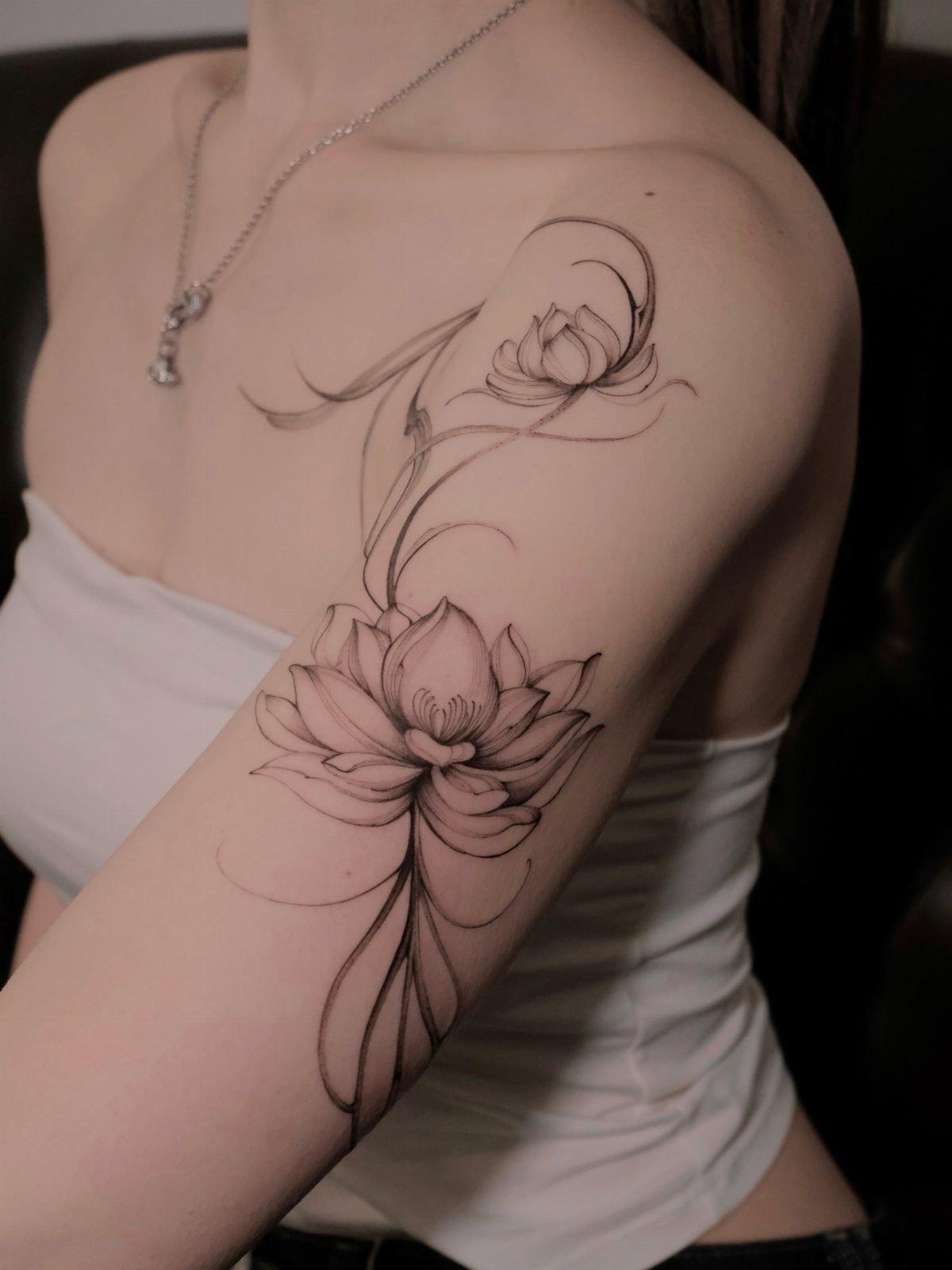
Fine line tattooing runs a single needle, building an image from hair-thin strokes that read as drawing more than traditional ink.
A lotus, a peony, a rose in this technique keeps its structure but loses weight; the flower floats on skin rather than pressing into it.
Swirling lines replace solid outlines, negative space does work that black fill would handle in bolder styles. The result demands precision from the artist and good aftercare from the wearer; lines this thin can blur if neglected or poorly executed.
This style suits someone who wants their floral tattoo to read as personal, almost private, visible but not announcing. The trade is longevity; fine line work may need touch-up sooner than heavier styles.
13. Watercolor Flower Tattoos
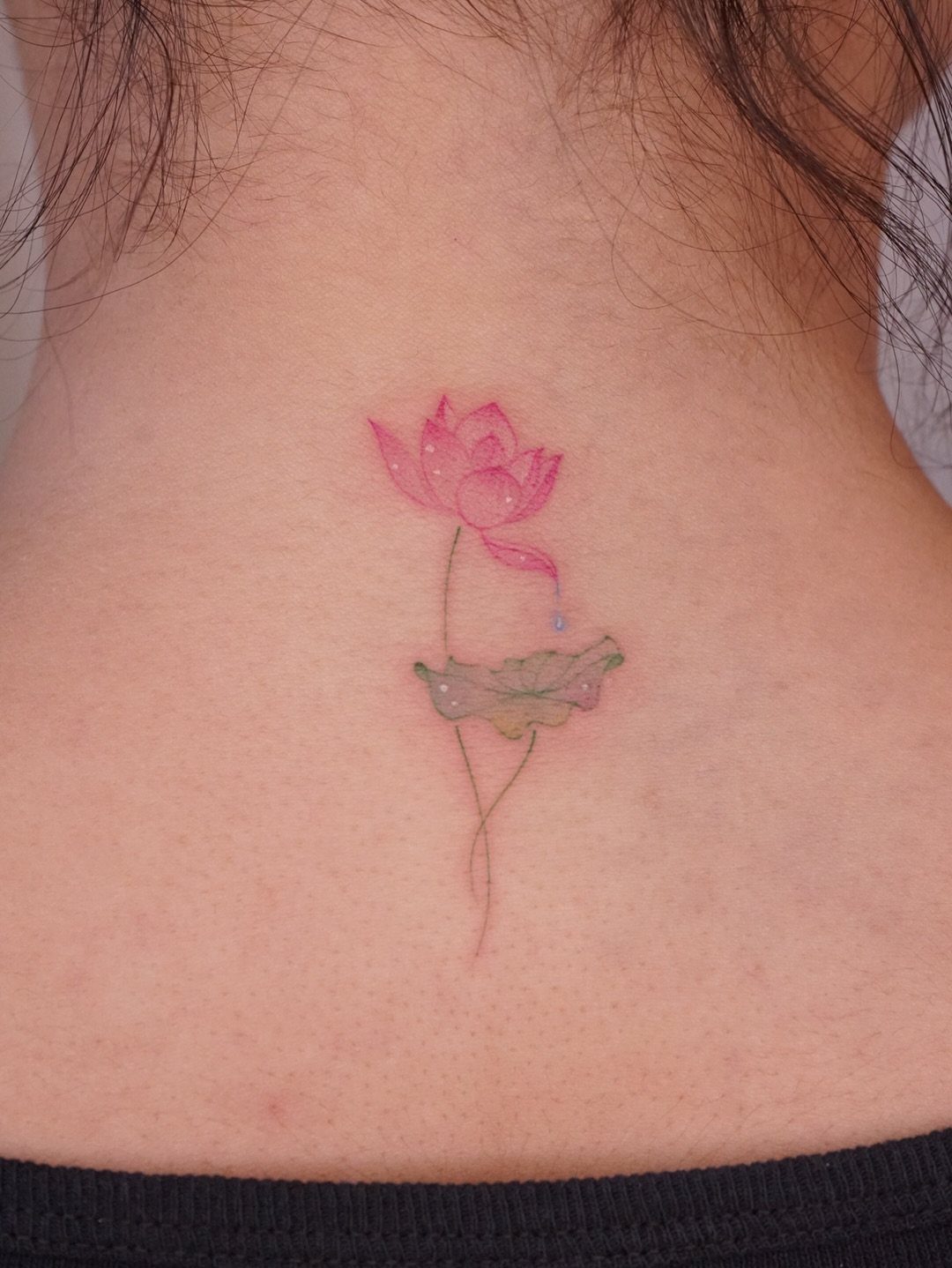
A watercolor flower tattoo bleeds pigment like wet paint on canvas, no hard edge to contain it.
Amanda Wachob built her reputation on this technique for darker skin, where color can turn muddy if the artist treats every tone the same.
The saturation has to be deliberate, layered while the skin is still receptive, or the wash goes flat before long.
I would not let a generalist attempt it; the healing behaves differently than a line-based piece, and the touch-up rate runs higher.
Plan for 2 sessions minimum, and budget for a third.
14. Realistic Flower Tattoos
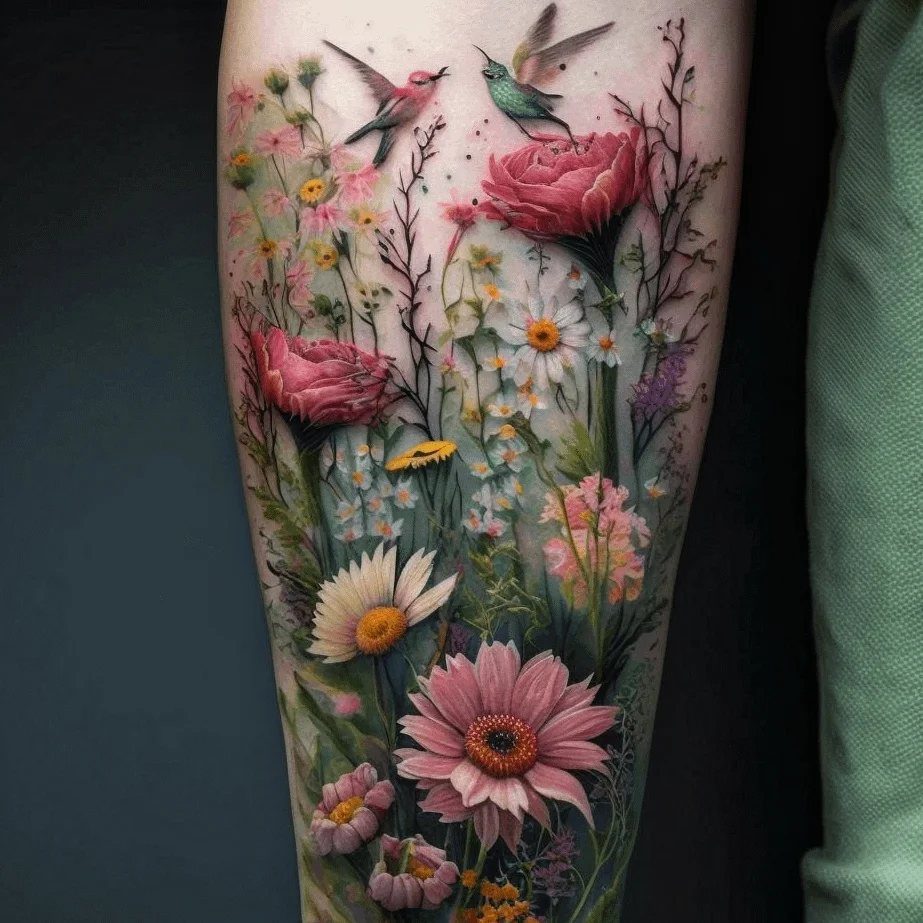
Realistic flower tattoos ask the artist to copy what a camera sees, petal by petal, shadow under shadow.
A leg piece running from ankle to knee with ranunculus and 2 kinds of daisy, plus hummingbirds mid-flight, means the composition has to account for muscle movement distorting the stems.
Summer and Steve at Mr. Ink Wells both work this style; their pieces hold detail at postcard size that other artists lose to blending.
A single bloom of this density takes long enough that most people split the session. A garden’s worth across a limb takes twenty or more, usually split across months.
15. Traditional Flower Tattoos
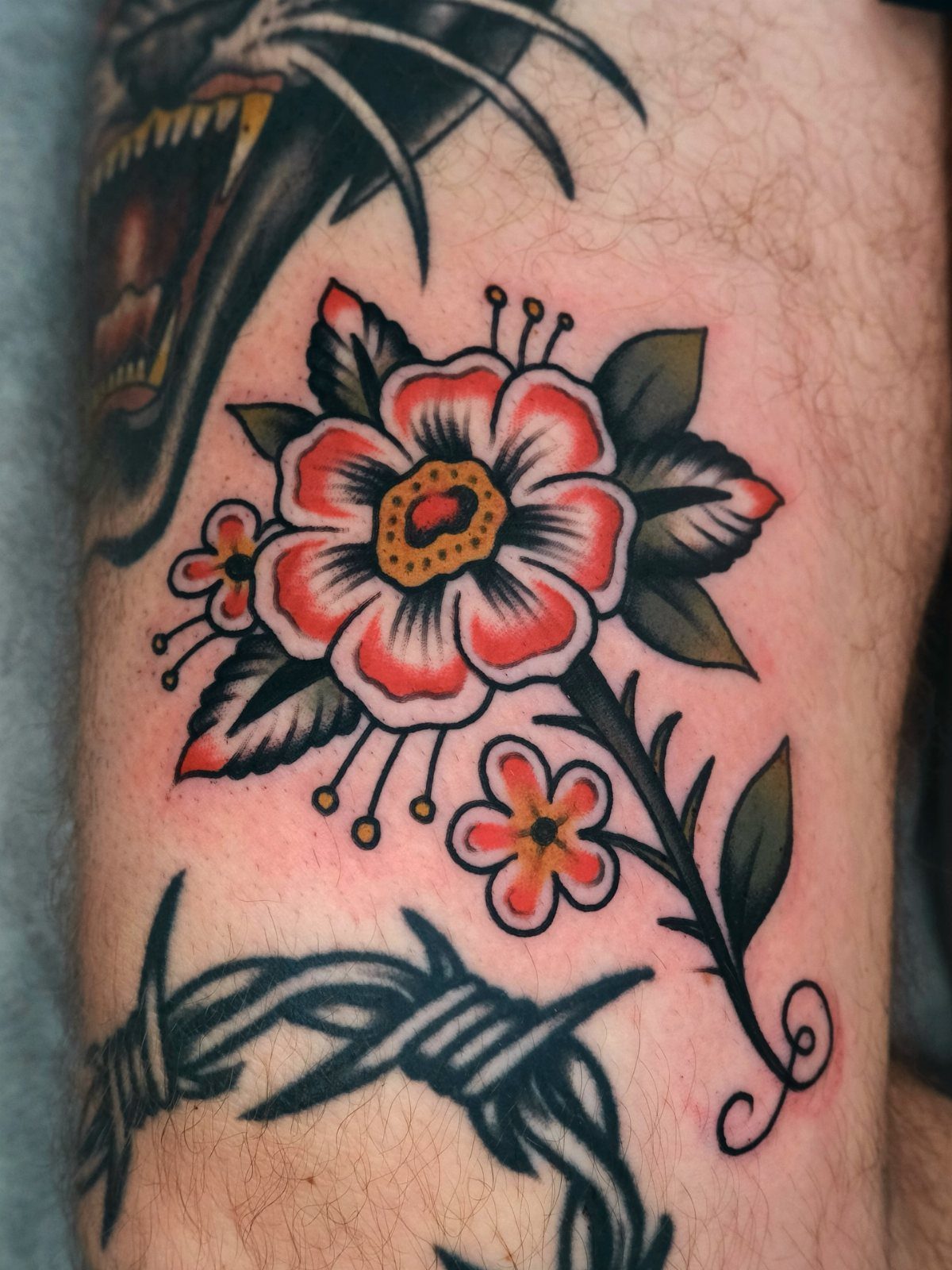
Traditional flower tattoos run on rules established in the early twentieth century: thick black outline, limited palette, no gradient where a solid block of color will do.
The tell is red petals and a yellow center locked in by those dark borders.
Sarah at Mr. Ink Wells does a blackwork variant, same bold lines but no color at all, just black shading, which ages cleaner on skin that takes pigment poorly.
The style stays legible from across a room long after the work is done. That matters if this is your first tattoo and you are nervous about how it will settle.
16. Flower Tattoos with Stems Made of Words
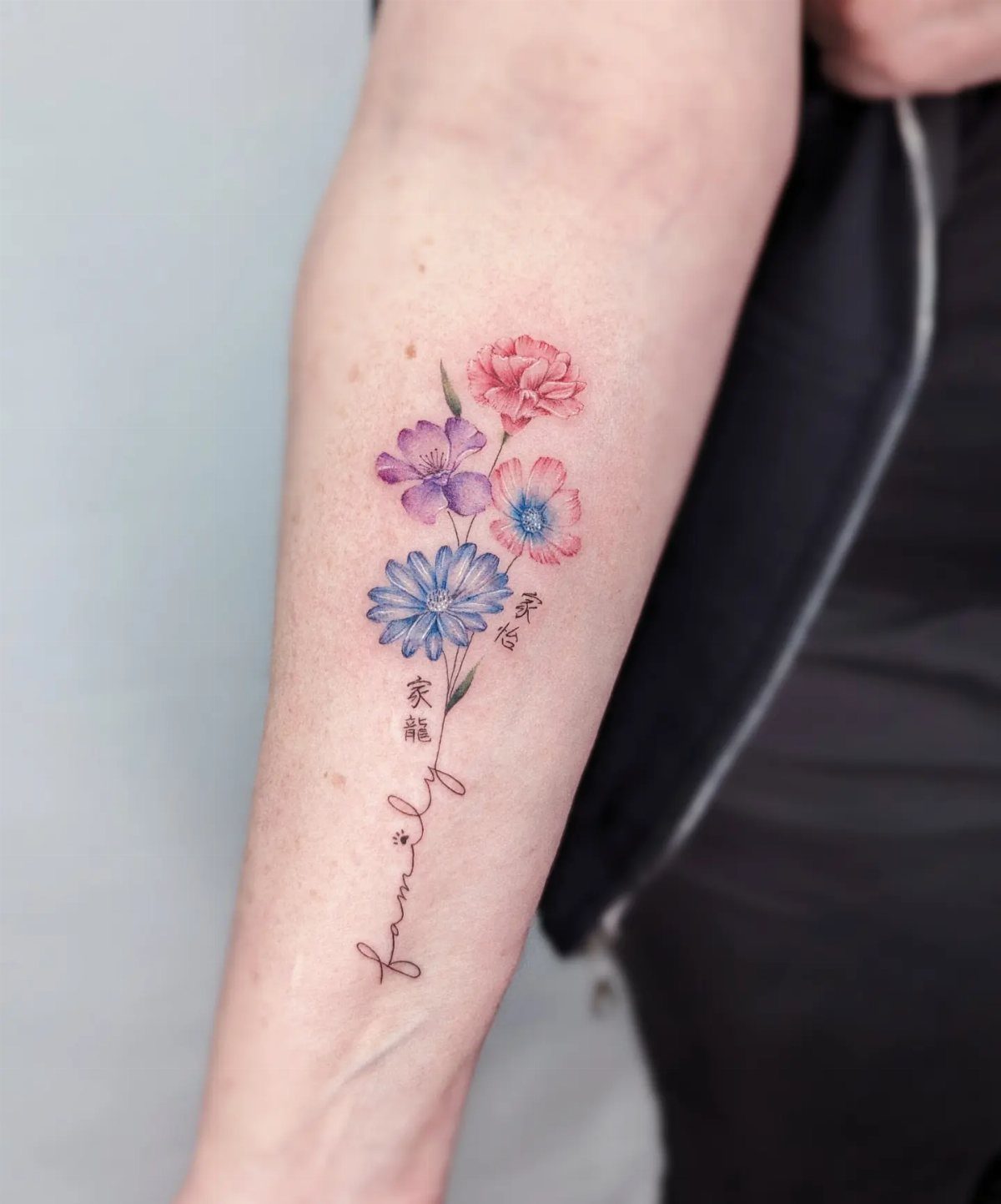
Flower stems lengthen into text in this variation, the lettering replacing what would normally be green vine.
A forearm mixing cursive with small Chinese characters needs the transition where petal meets stem planned around word count before the flower size is fixed.
Too long a phrase and the stem has to snake unnaturally; too short and the design looks like an afterthought.
Summer at Mr. Ink Wells has done names, single words, full sentences. I would keep it to one line of text per stem, and pick a flower whose natural shape gives the letters room to breathe.
17. Color Only Flower Tattoos
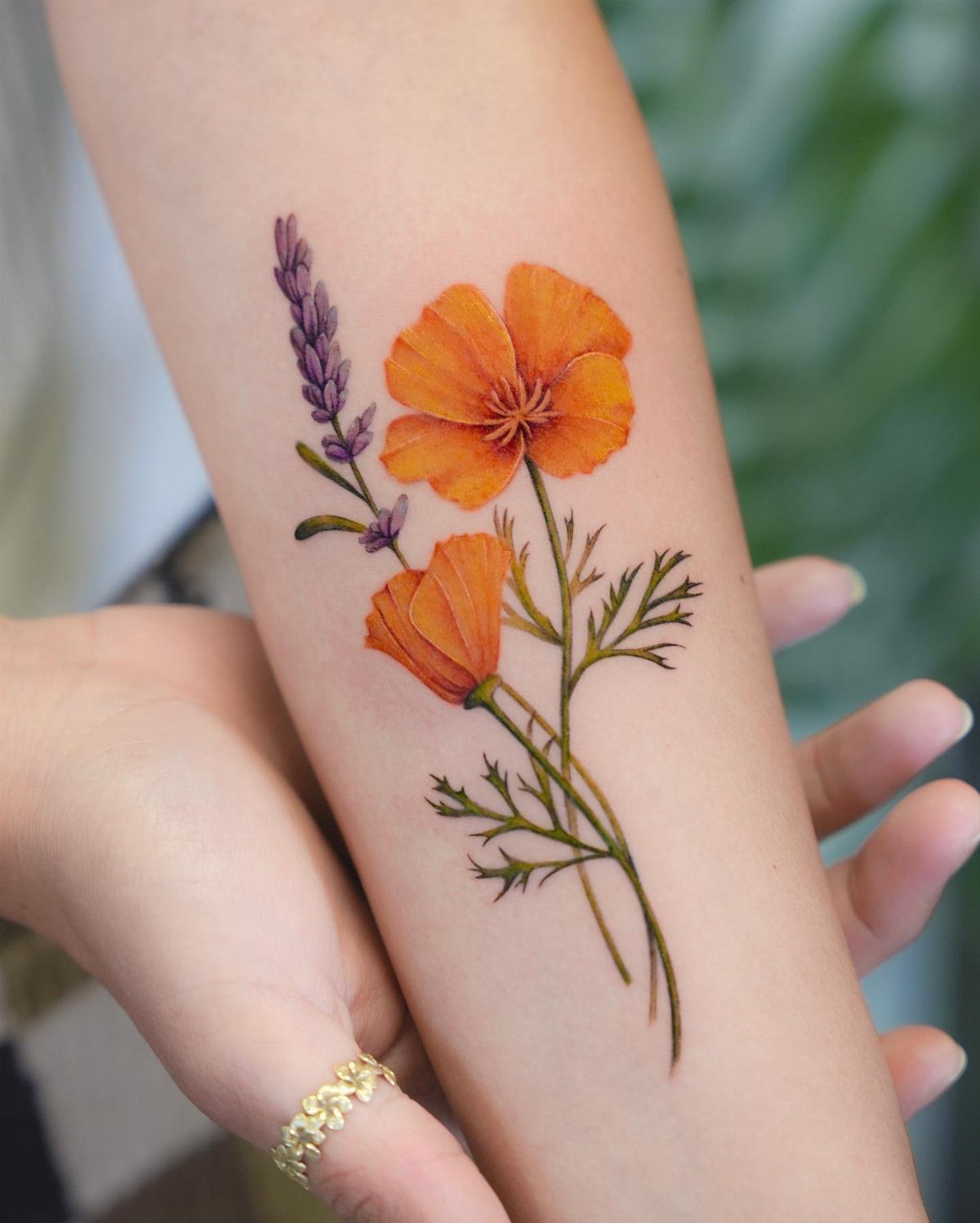
Color-only flower tattoos drop the black outline entirely, letting orange poppy and purple lavender sit directly on skin tone with nothing boxing them in.
The effect is softer than any other style here; from any normal distance the piece reads as a stain or a birthmark rather than a declared image.
Tacho at Mr. Ink Wells works this way, and the cost is real: without that dark border to hold shape, the color migrates more easily over decades, and lighter pigments can disappear into darker skin.
A touch-up is almost guaranteed somewhere down the line. For someone who wants the tattoo to whisper instead of announce itself, that maintenance is worth the result.
Tips for Getting a Flower Tattoo
Style and placement deserve real thought before the appointment goes on the calendar. A small flower tattoo and a large floral design carry different demands, and your artist needs to know which direction you’re heading.
Size and color preferences should be settled before the appointment, not figured out in the chair.
I’d put my money toward an artist at the top of my price range, especially one with flower work already in their portfolio. Similar designs in their past mean fewer surprises in your future.
A real meal and water beforehand make the session easier on the body.
A tattoo appointment is hard on the body even when everything goes smoothly. Bring your exact idea, then let the artist fine-tune it into something that actually suits your skin and your frame.
Flower Tattoo Meanings
Every flower carries its own weight across cultures, and that weight shifts depending on who’s wearing it.
A lotus in one hand might mean spiritual awakening; in another, survival through mud. Cherry blossoms mark the Japanese awareness of impermanence, while roses split their reputation between love and secrecy depending on color and context.
The personal layer matters more than the dictionary definition. A sunflower tied to a grandmother’s garden holds meaning no chart printed online can touch.
I’d tell anyone to read up on their flower’s history in at least 2 cultures before committing.
What reads as simple beauty here might signal grief or warning somewhere your skin might travel. The tattoo lasts longer than your current address.
Match the flower to the story you actually own, not the one that photographs well.
Frequently Asked Questions
What is the prettiest flower to get tattooed?
That depends on what you want the flower to do on your skin. A magnolia builds real depth with its nested petals, and a lotus in fine-line with line-shading turns almost translucent.
Cherry blossoms trail across a limb with movement that still life cannot match. I’d pick based on how the flower’s structure suits the body part you have in mind, not on a photo seen out of context.
What tattoo is for anxiety?
The lotus grows from mud into something clean and open, so it lands on a lot of people who have come through something hard. That survival-through-difficulty reading lands for anxiety as well as for grief or recovery.
What are some meaningful flower tattoos?
The lotus carries survival through difficulty, the rose splits between love and secrecy by color, and cherry blossoms mark impermanence in Japanese tradition.
Peonies carry the old idea that nothing worth having comes free, and forget-me-nots make memory literal right there in the name.
What a flower means to you beats anything a symbol chart says; a sunflower from your grandmother’s garden outranks every official definition.
What are the most painful areas for a flower tattoo?
Ribs and the side of the torso hurt more than forearm or shoulder work, though that long stretch of skin does let a botanical piece travel with the body’s shape.
Any area with bone close to skin, or where the needle passes repeatedly to build color saturation, will ask more of you.
What flowers are good for tattoos?
Lotus, rose, sunflower, cherry blossom, peony, orchid, hibiscus, magnolia, chrysanthemum, and forget-me-not all appear regularly in tattoo portfolios for good reason.
Each carries distinct structure and symbolism, and each ages differently depending on color choice and placement. I’d match the flower to your story and your skin’s behavior with ink, not to popularity alone.
What is the best flower tattoo placement?
A single fine-line bloom sits well on the forearm, and that spot tends to heal without much trouble.
A bigger composition can travel the ribs and side, following the body’s lines, though that area costs more in pain than the arm.
The thigh or side gives sunflowers and magnolias room to open fully, while the ankle and wrist work for small single flowers like hibiscus or forget-me-nots.