
A patchwork tattoo is a collection of individual pieces placed across the body with intentional gaps of bare skin between them, each design standing alone rather than blending into a continuous sleeve. The style costs around $150 per piece but builds across years of separate appointments, which means the real investment is time as much as money. Sailers started the approach by collecting mismatched souvenirs from port to port; contemporary artists now treat that scattered quality as the entire aesthetic, often mixing American traditional flash beside fine-line botanicals on the same arm.
What Patchwork Tattoos Are
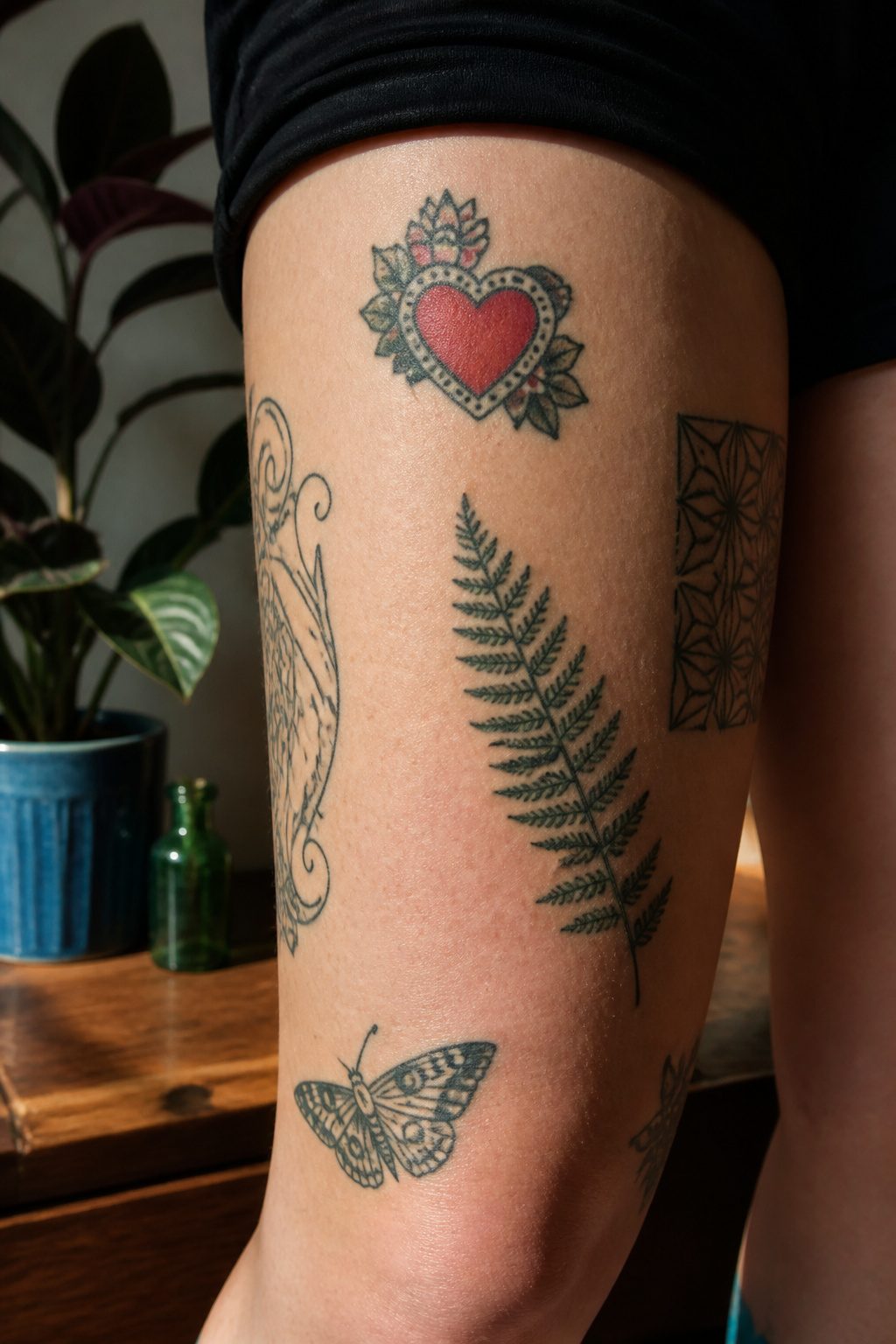
A patchwork tattoo is a collection of individual pieces placed across the body without connecting them into a single cohesive design. The bare skin between pieces is as much a part of the aesthetic as the tattoos themselves, and that negative space is what separates this style from a traditional sleeve, where designs blend together. Each piece stands alone, yet together they create something that reads like a visual autobiography.
The roots trace back to sailors collecting tattoos as souvenirs from port to port, accumulating diverse designs without any expectation of thematic unity. Contemporary patchwork tattooing has turned that accidental quality into a deliberate aesthetic. A single arm might hold an American traditional piece beside a fine line botanical beside a blackwork geometric form, and the contrast between styles becomes part of the visual interest rather than a problem to solve.
What draws me to the approach is the lack of pressure. There is no filler, no background to plan, no requirement that everything match. The collection grows one piece at a time, sometimes across months or years, sometimes with different artists. That accumulated quality, built gradually rather than designed whole from the beginning, is what makes the result feel genuinely personal.
Styles That Work
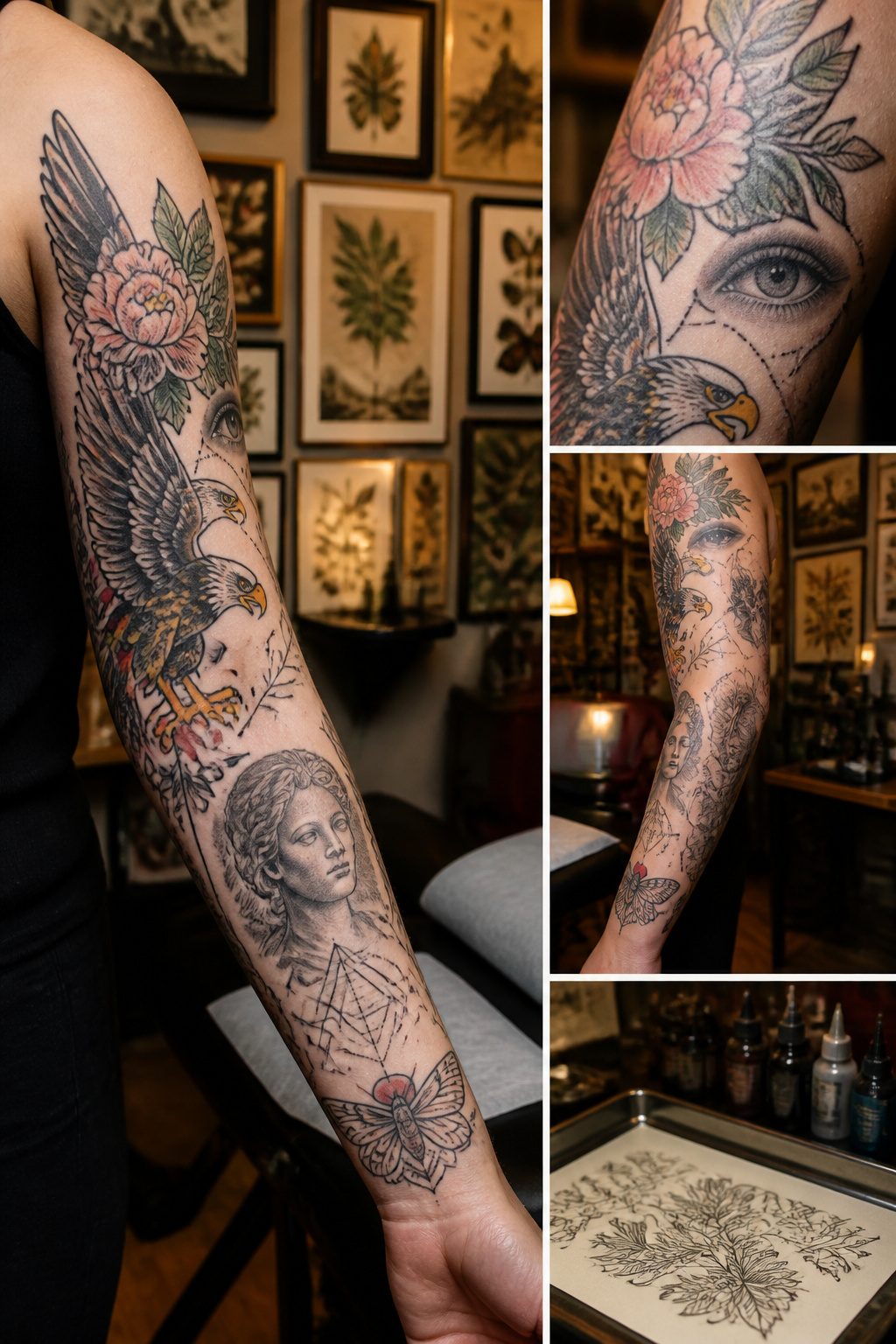
Traditional and micro-realism are the styles most often cited for patchwork work, but the list runs wider than that. Each has a reason it sits well in a scattered layout.
- Traditional – bold outlines, limited color palette, readable from a distance. The gaps between pieces read as intentional negative space rather than missing ink, which is why this style started the whole patchwork sleeve trend.
- Neo-traditional – heavier linework than American traditional with art nouveau and art deco influences, more complex color, more variation in line density. Animals, plants, and people are common subjects.
- Micro-realism – small enough to fit the patchwork scale without losing detail. A portrait or animal study can sit alone on a forearm and still read clearly.
- Fine line – delicate enough to pair with bolder neighbors. A botanical or geometric piece in fine line next to traditional flash creates the visual tension that makes patchwork sleeves feel collected rather than random.
- Blackwork – solid blacks and patterns hold their shape as standalone pieces. They anchor busier sections.
- Watercolor – works only if you commit to it across the whole sleeve. Mixed with black and gray realism, it turns chaotic fast.
- Illustrative – looser than neo-traditional, more drawing-like. Black and gray illustrative sleeves are common; color illustrative pieces pair well if the line weight stays consistent.
Two ways to play the mix. Keep one style throughout and let the subjects vary, or deliberately contrast styles and trust the spacing to keep order. The second approach demands more planning, but the energy is harder to get any other way.
Themes People Choose
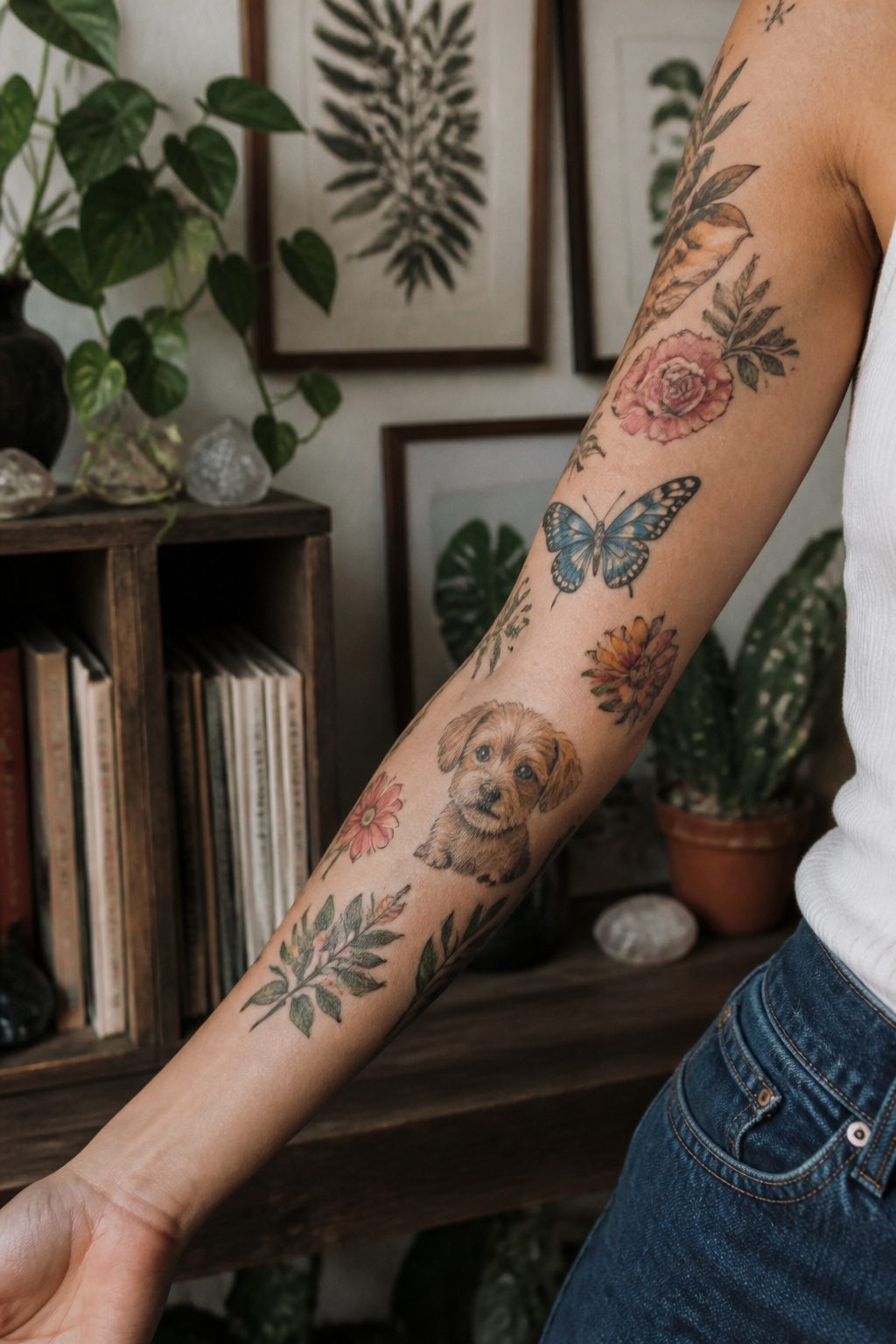
Animals and flowers dominate patchwork tattoo choices by a wide margin, with lettering, stars, and personal symbols filling the gaps between. The format itself shapes what works: each piece stands alone like a sticker on skin, rarely touching the next, so a single flower or animal portrait reads clearly without needing to connect.
The real draw is the accumulation. A patchwork sleeve becomes a visual autobiography, each piece collected at its own time for its own reason, sometimes from different artists working in different styles. Traditional, illustrative, fine-line, micro-realism, color, black and gray, all of it can coexist.
What separates patchwork from planned sleeves is this built-in storytelling. The gaps and varied styles aren’t a flaw; they mark the timeline. A dog done in 2019 sits three inches from a flower done in 2024, both true to different phases of the same life.
Start with personal meaning for the first piece, then plan empty space around it. Future tattoos need room to breathe, and the best collections leave deliberate gaps rather than crowding the arm in one go.
How to Start Your Collection
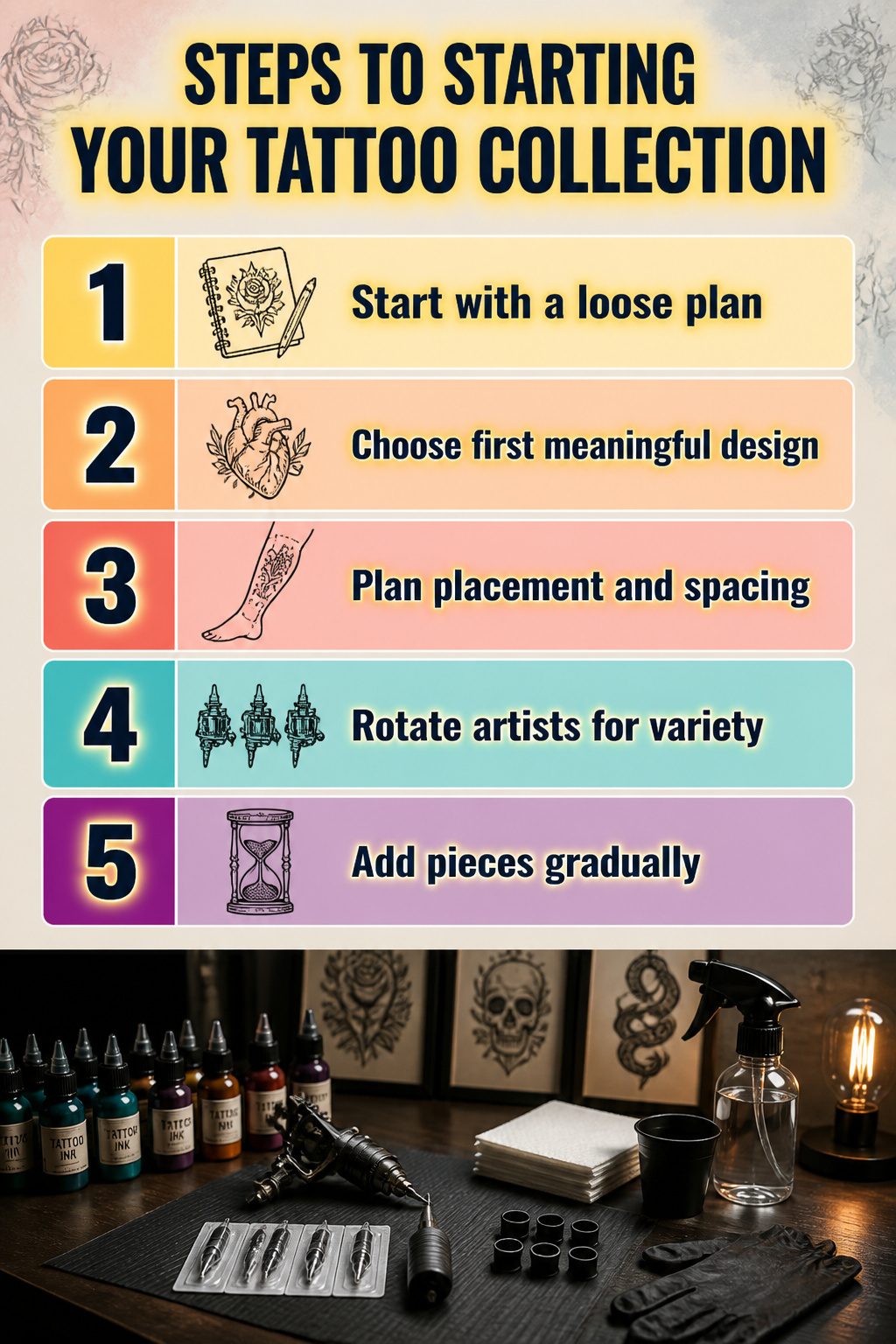
- Start with a loose plan, not a blueprint. Pick the general territory you want to cover, full sleeve or half sleeve or leg, and the styles that pull you in, then leave gaps for the pieces you have not met yet. The best collections grow sideways from impulse, not forward from a grid.
- Your first design should mean something specific to you. A patchwork sleeve is a slow autobiography; the opening chapter sets the tone.
- Placement and spacing decide how the collection ages. Size each piece so future work can slip between without crowding, and treat the empty skin as negative space that lets every tattoo breathe. An experienced patchwork artist will map this with you.
- Rotate artists. Different hands give the collection its texture; each piece carries the personality of its maker, and the contrast is the point.
- Add gradually, years if needed. The sleeve fills when passion and timing line up, not on a schedule.
Patchwork Against Traditional Sleeves
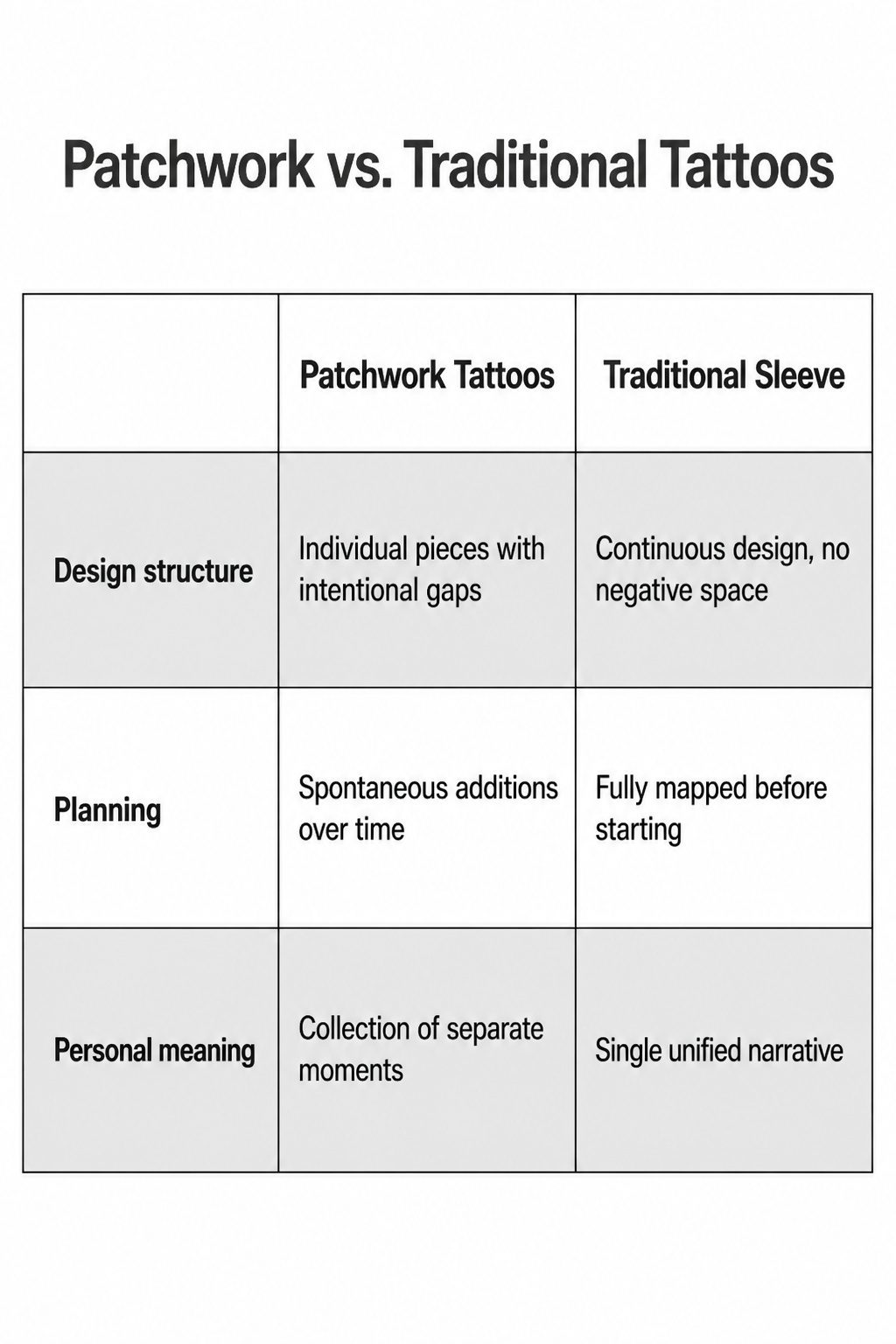
A traditional sleeve is built as one continuous piece, skin filled edge to edge so no negative space shows. Patchwork tattoos do the opposite: each piece sits in its own frame of bare skin, close enough to read as a collection but never touching. The gaps are part of the design.
Planning follows from that difference. A sleeve demands the full layout before the first needle hits, because every section must flow into the next. Patchwork grows over years; you add a piece when the idea comes, and the open space between old and new tattoos is not a problem to solve but the point.
Personal expression splits the same way. A sleeve tells one story, start to finish. Patchwork records a journey in chapters: each tattoo marks its own date, its own reason, and the collection carries meaning because the timeline is visible.
| Patchwork Tattoos | Traditional Sleeve | |
|---|---|---|
| Design structure | Individual pieces with intentional gaps | Continuous design, no negative space |
| Planning | Spontaneous additions over time | Fully mapped before starting |
| Personal meaning | Collection of separate moments | Single unified narrative |
What Patchwork Tattoos Cost
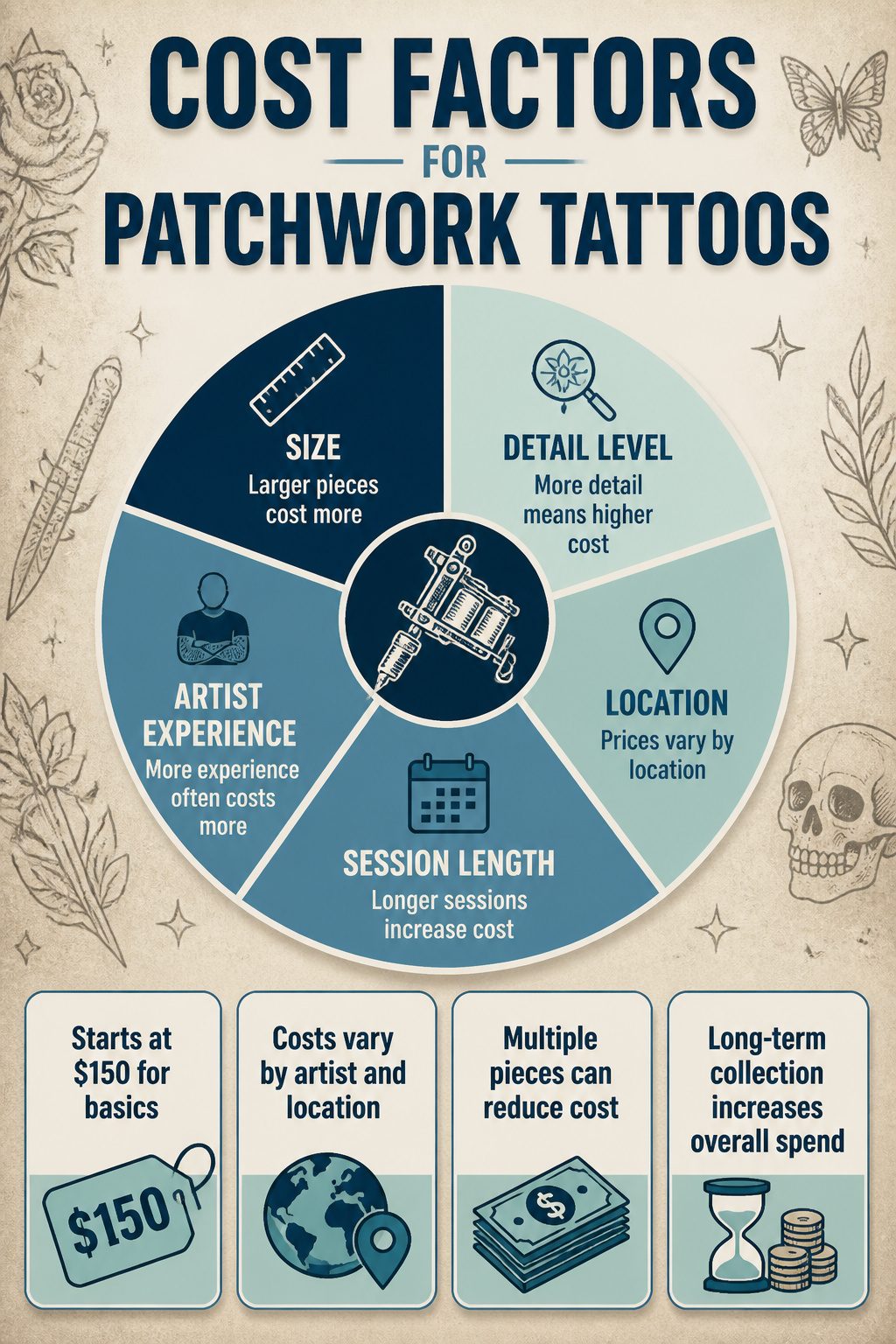
A single patchwork piece starts at around $150, though the final number swings with size, detail level, and who holds the machine. That baseline is useful for budgeting the first piece, but patchwork builds differently than a planned sleeve. Each session adds another discrete charge, and the gaps between pieces mean the total investment stretches across months or years rather than hitting all at once.
Prices start at $150 at minimum for many patchwork tattoos, though costs vary by location and artist, especially if you plan on getting a couple of pieces in one sitting.
— PopSugar
Booking multiple small pieces in one session can trim the per-piece cost, since the artist saves setup time and you pay one sitting fee. Still, the cumulative nature of patchwork tattoos means the total spend grows with each addition. What looks like a modest first appointment becomes a longer financial commitment as the collection fills in, something worth mapping out before piece three or four starts calling.
Pain by Placement
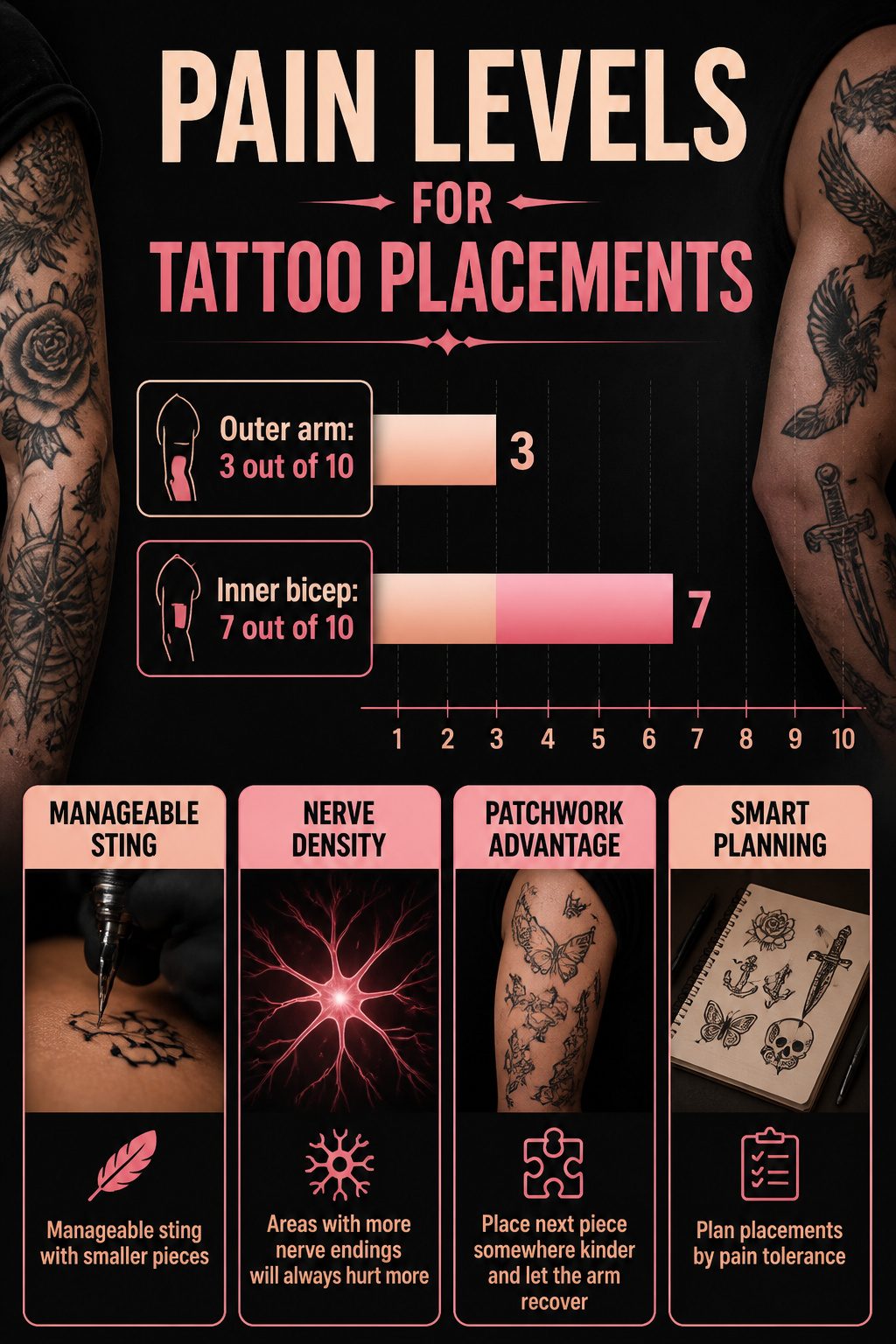
Smaller patchwork pieces mean shorter needle time, which keeps the overall sting manageable even on tender spots. The outer arm rates about a 3 out of 10 for most people, comparable to a persistent cat scratch, and that relative calm makes it a common starting point for a first session. Move around to the inner bicep and the thin skin there, dense with nerve endings, jumps the sensation closer to a 7 out of 10. Patchwork’s advantage is that you are not committed to hours in that zone; you can place the next piece somewhere kinder and let the arm recover. Areas with more nerve endings will always hurt more, so planning the order of your collection by tolerance, not just aesthetics, keeps the experience from turning into a test of endurance.
Where to Place Them
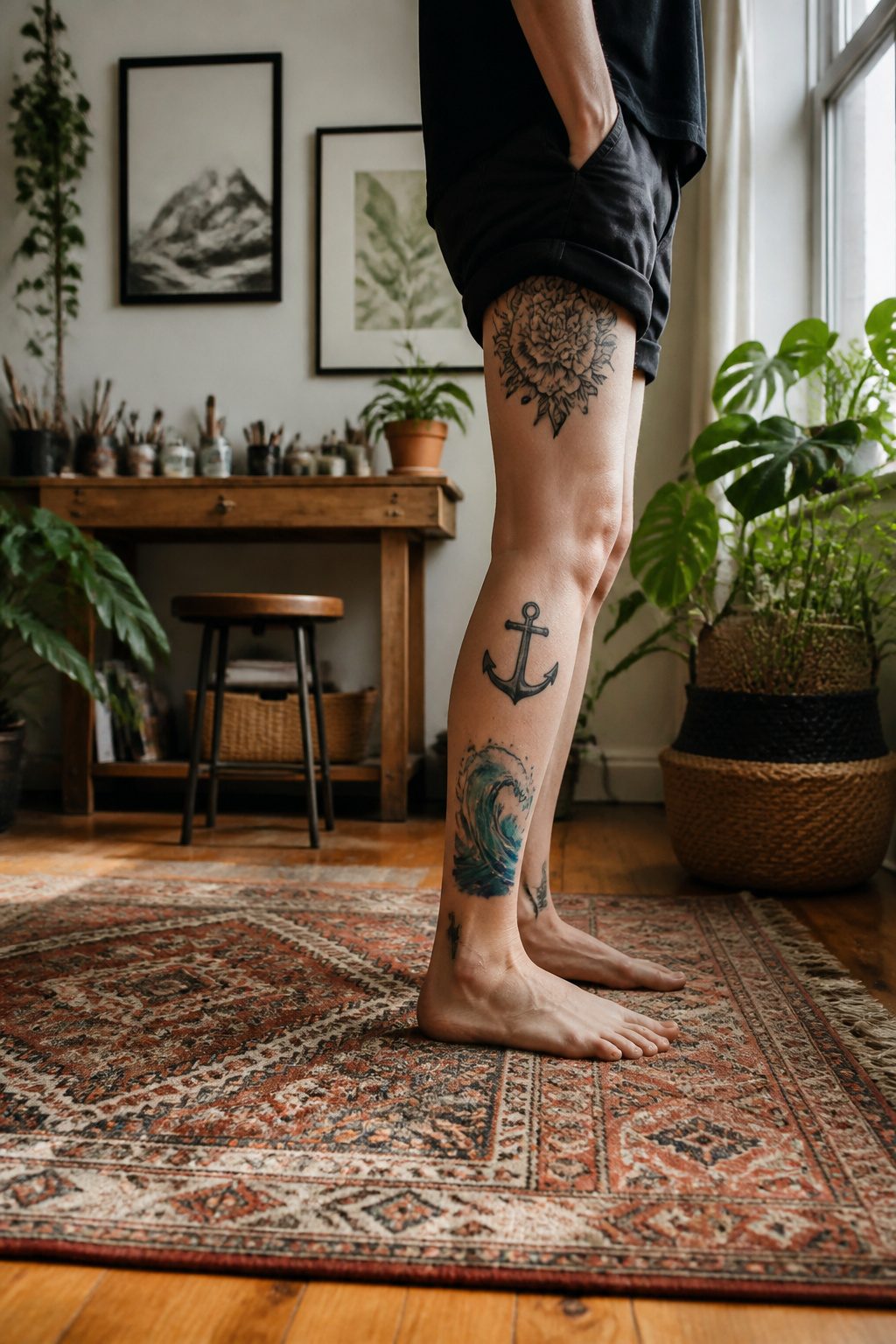
Arms carry most patchwork tattoos for a reason: the flat planes of the outer bicep and forearm let a 5-inch anchor piece sit cleanly, which matters when you’re building around it for the next 6 to 18 months. Legs work too, and the same logic of separation applies there, with black ink in a Classic American style holding the look together across both limbs. Hands get patchwork ink as well, though the smaller canvas changes what fits.
The 1-2 inch gap between pieces is what keeps this from looking like a sleeve that got interrupted. Start too tight and you lose the patchwork effect; leave too much open skin and the collection reads as accidental rather than built. That spacing also decides what you can add later. A medium satellite piece near your anchor still leaves room for gap fillers, stars or small text, once the major shapes are set. An arm with the real estate already unevenly filled forces the next tattoo into whatever awkward corner remains.
Visual balance means thinking about the whole limb, not just the spot that caught your eye this month. The anchor on the outer bicep sets weight high; the next few pieces should answer it lower or across, not cluster nearby and leave the rest empty. Same artist helps, since the line weight and style stay consistent even when the images have nothing to do with each other. Black and gray dominates what you’ll see, though color patchwork sleeves exist if you commit to them from the start.
Frequently Asked Questions
What are patchwork tattoos?
Patchwork tattoos are individual tattoo pieces placed across the body without connecting them into one continuous design. The bare skin between each piece is intentional negative space, and each tattoo stands alone while the collection as a whole reads like a visual autobiography. This differs from a traditional sleeve, where all the ink blends together without gaps.
How much does a patchwork tattoo cost?
A single patchwork piece starts at around $150, though the final price depends on size, detail, and the artist. Because patchwork builds gradually across multiple sessions rather than all at once, the total investment spreads across months or years. Booking several small pieces in one sitting can lower the per-piece cost since you pay one sitting fee.
What is the difference between a patchwork tattoo and a sleeve tattoo?
A patchwork tattoo consists of separate pieces with intentional gaps of bare skin between them, while a traditional sleeve is a continuous design with no negative space. Patchwork grows spontaneously over time with each piece marking its own moment, whereas a sleeve is fully mapped before the first needle touches skin and tells one unified story from start to finish.
How do I start a patchwork tattoo?
Start with a loose plan for the general territory you want to cover, pick a first design that holds personal meaning, and leave gaps for pieces you have not imagined yet. Size and space each tattoo so future work can slip between without crowding, and consider rotating artists to give the collection visual texture. Add gradually; the best collections grow over years, not on a schedule.