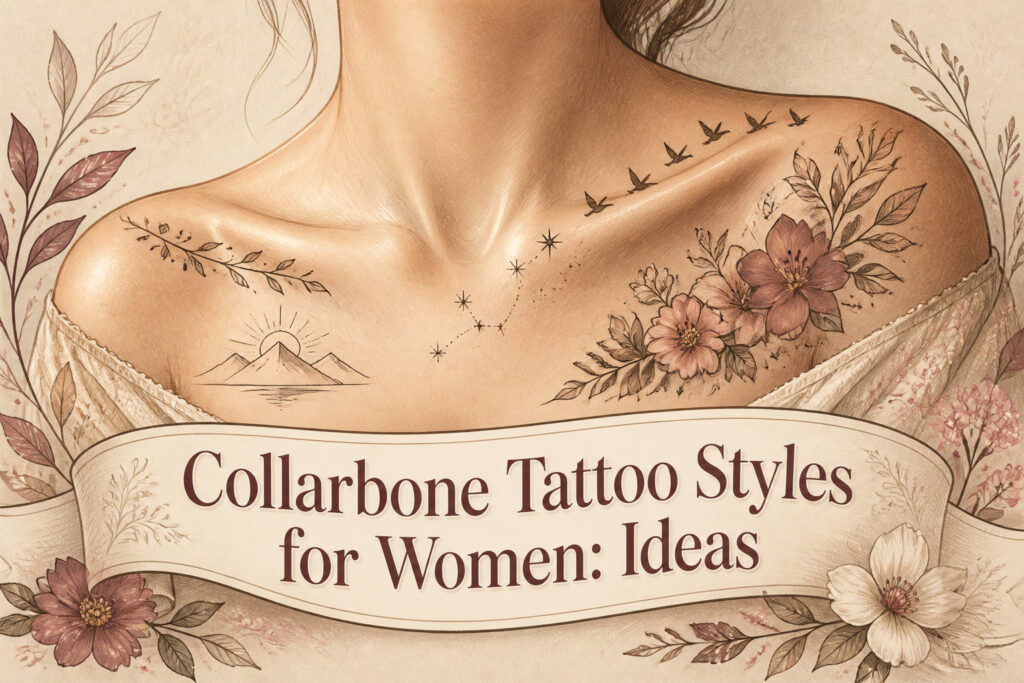
Collarbone tattoos for women range from single clean lines to full floral chest pieces, and the deciding factor is not design alone but how close the ink sits to bone.
Thin skin over the clavicle stings more than fleshier spots, so placement an inch above or below the ridge changes both the pain level and how the piece ages.
Gabriela Mora’s birds-in-flight piece under a client’s clavicle works because the flock follows that bone structure; stray from it and the motion breaks.
1. Quote Tattoos
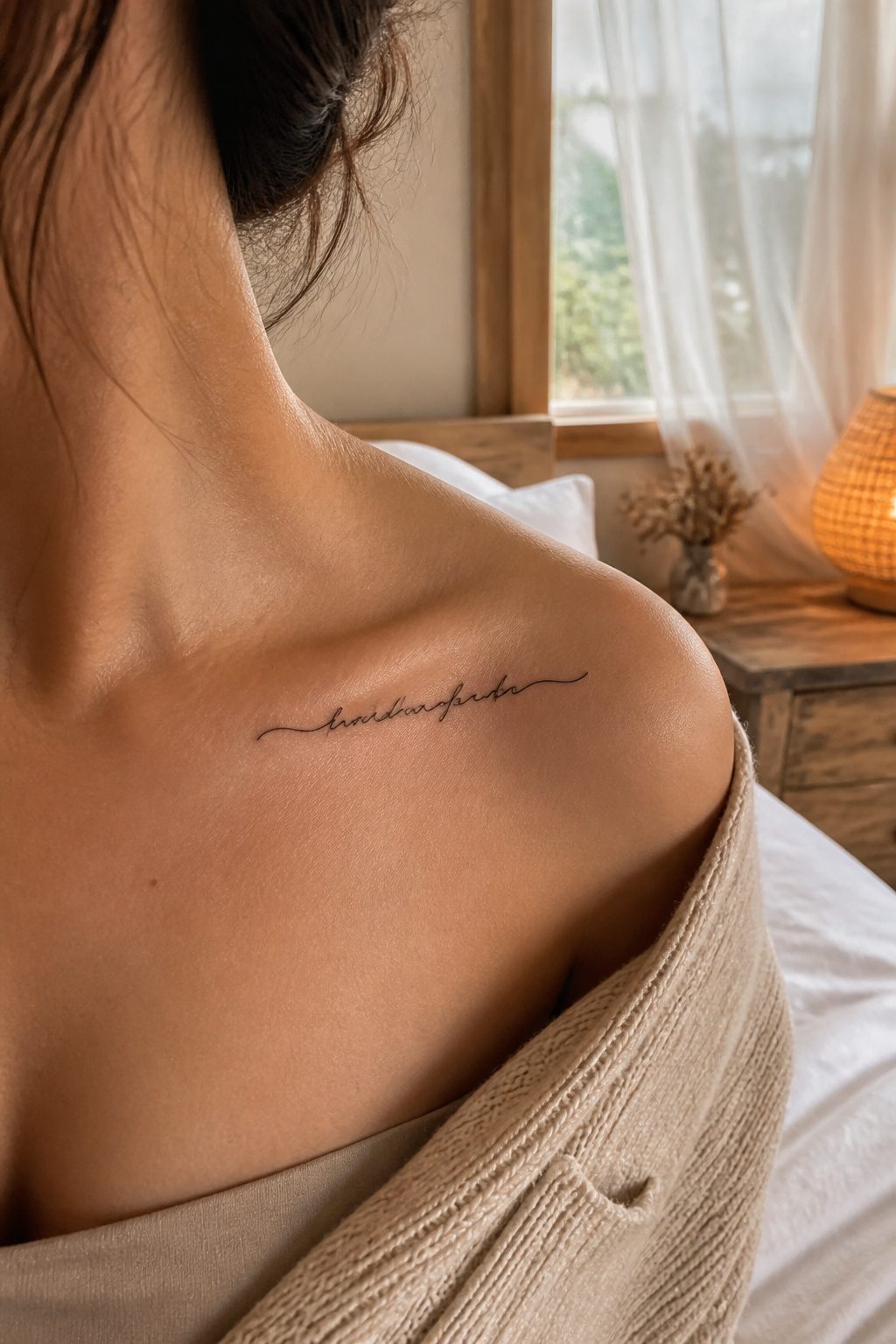
Words along the collarbone line read like a whisper someone has to lean in to hear. The natural curve of the clavicle guides short phrases, single lines, or a pair of words stacked just above or below the bone.
Placing the ink slightly off the bone itself, either toward the shoulder or the chest, spares some of the sharper sensation, since thin skin stretched over bone tends to sting more than fleshier ground.
Font choice matters for aging, not just aesthetics. I have watched fine, hair-thin scripts blur within a few years as the skin shifts; a slightly heavier line weight, still elegant but not spidery, holds its shape longer.
Serif or sans matters less than legibility at small scale. One woman I spoke with had her grandmother’s signature traced just beneath her left collarbone, close enough to the shoulder that a tank strap covered it for work.
The tattoo took under an hour, and the placement let her keep the dainty, alluring quality collarbone tattoos for women are usually chosen for, without sitting directly on the most tender point.
2. Floral Designs
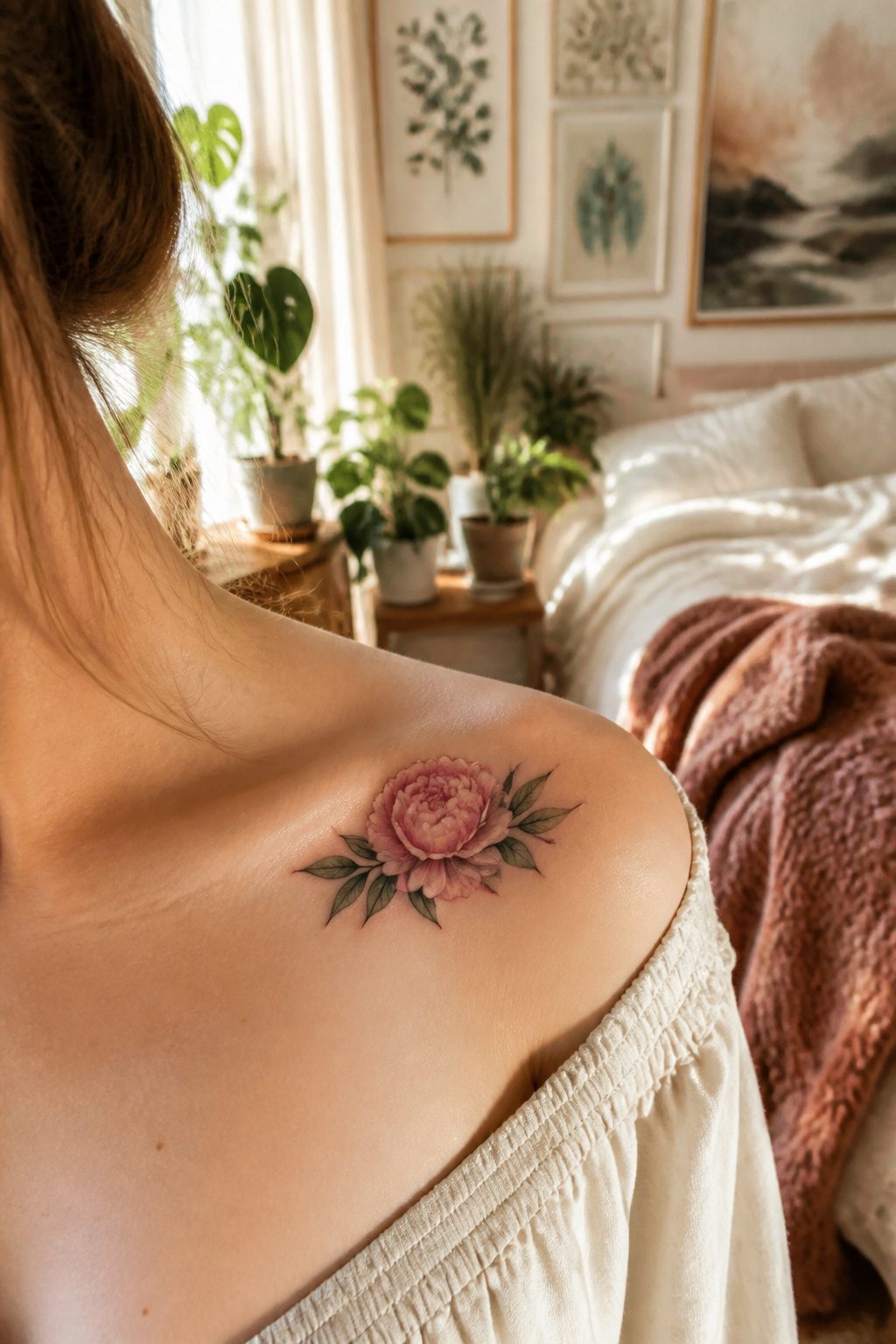
Roses, peonies, wildflowers and trailing vines all share one advantage on the collarbone: the bone’s natural curve gives the design a built-in shape to follow.
A single peony or rose, sized at two to three inches, keeps its detail intact for years.
Go smaller and the petals blur together; go larger, across four inches or more, and the tattoo can climb the shoulder and run down the arm as a single piece rather than stopping awkwardly at the collarbone’s end.
Wildflower bouquets read as lighter, more delicate, but they need the same minimum scale to hold their detail over time.
Vines work especially well here because they can branch either direction: trace the bone toward the sternum for something contained, or let them extend into larger chest pieces that frame the whole area.
What convinced me, looking through portfolio after portfolio, is how often a collarbone floral starts as a simple clavicle accent and the wearer comes back to build it out. The placement almost invites expansion.
"I love to create poetic, fairy-like things, inspired by nature and the power of love."
— Allure
That impulse toward the poetic and nature-driven is exactly what makes floral collarbone tattoos worth the commitment: they age with you in a way that feels intentional rather than accidental.
3. Symbolic Tattoos
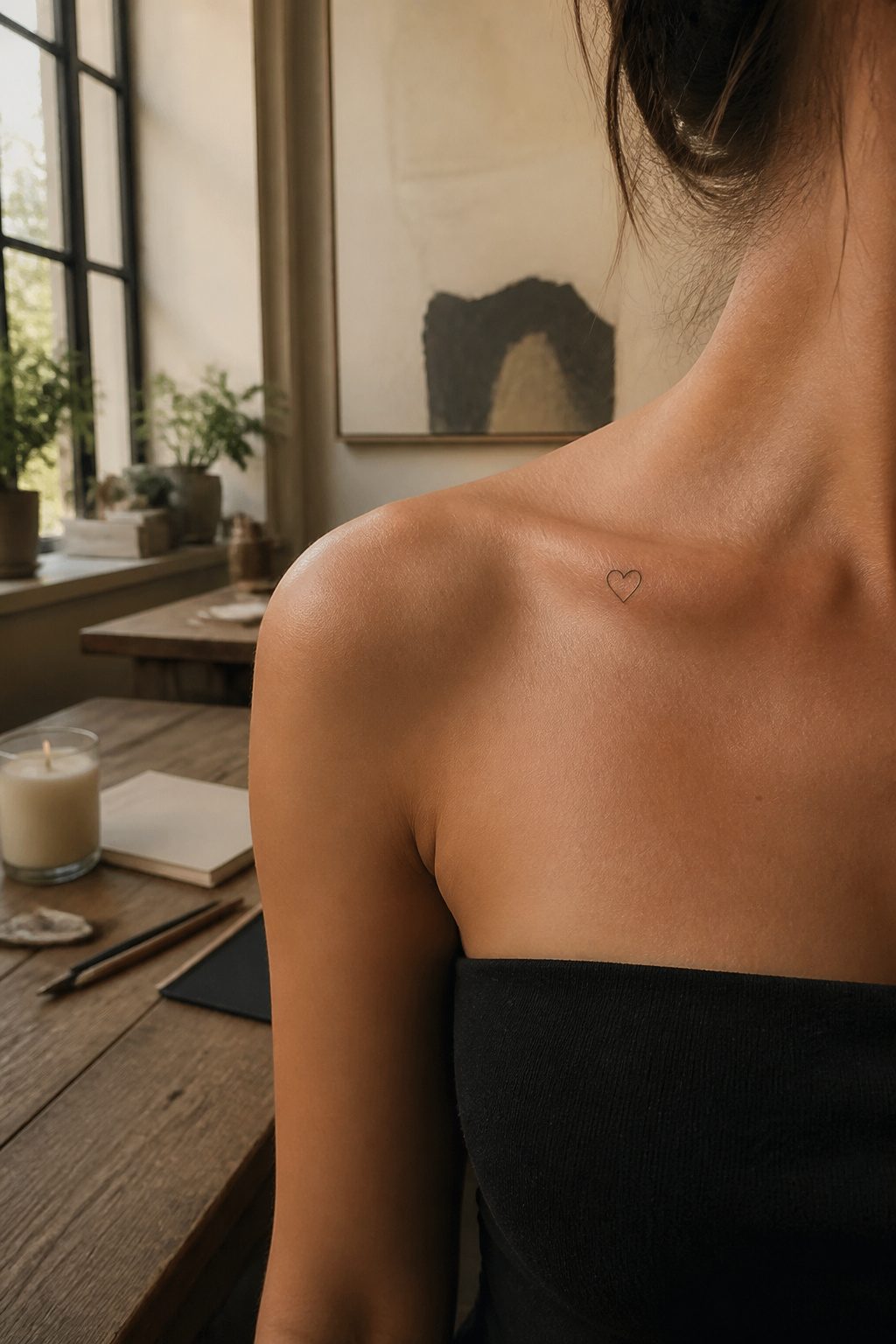
A heart at the center of the collarbone sits almost like a pendant, visible with a V-neck but easy to hide under a crew neck.
Stars and moons work the same way, though their real strength is in placement: clustered tight, they read as one deliberate shape; scattered toward the shoulder, they turn a tank-top strap into a frame.
Off-center placement, an inch or two to either side of the bone, keeps the tattoo from looking like a label and moves with the body in a way centered ink does not.
The visibility question shapes every decision. A constellation creeping up toward the neck will show in almost anything but a turtleneck, which is the point for some and a dealbreaker for others.
Fine-line hearts drawn by someone you love carry meaning that justifies the placement, but the line weight matters more than the symbol: too heavy, and the collarbone turns the design into a stamp rather than a whisper.
4. Animal Tattoos
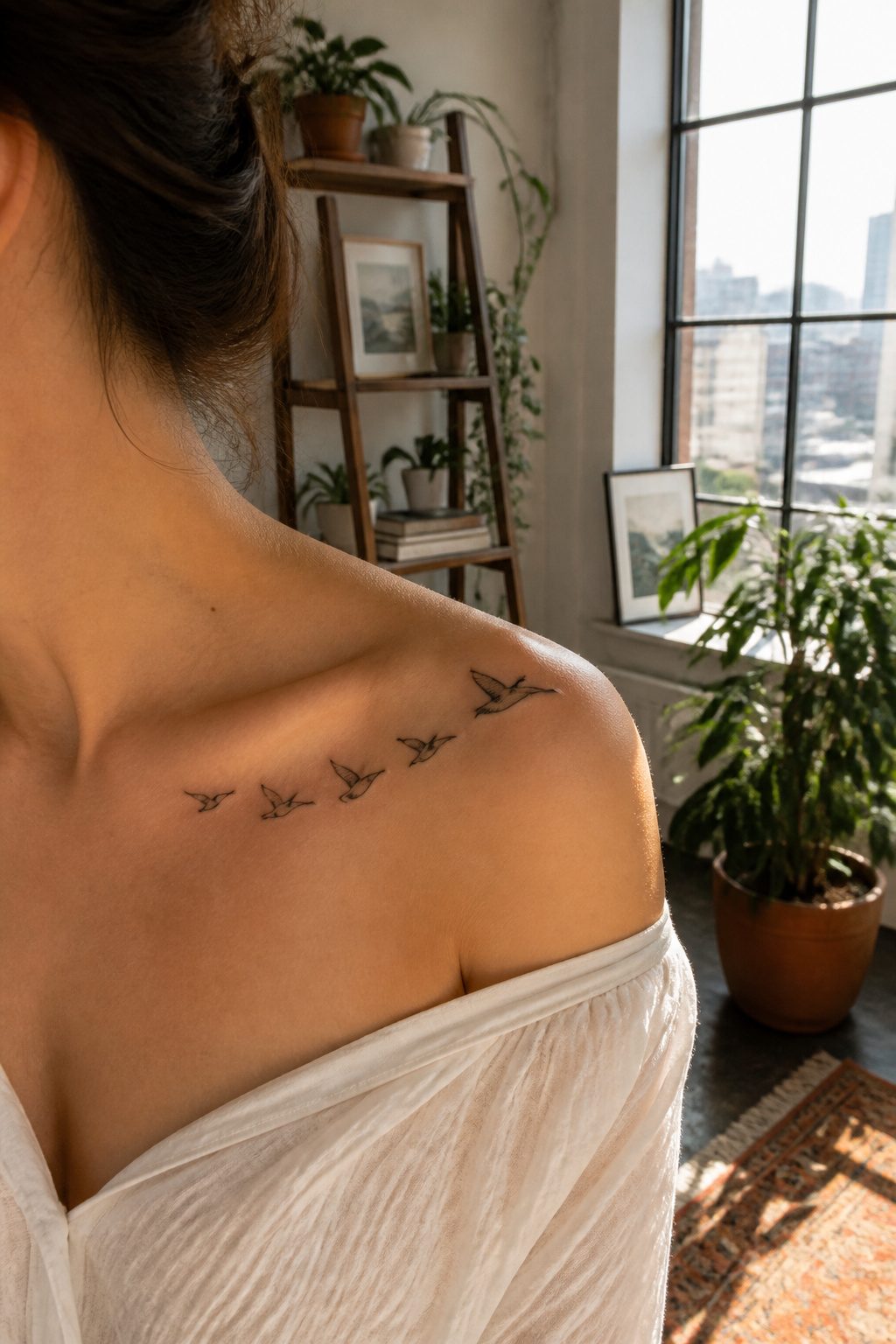
Birds in flight settle along the collarbone better than most subjects because the bone itself points outward like a low horizon.
Queens-based artist Gabriela Mora placed delicate birds under a client’s clavicle where the line work and shading make the wings look like they are lifting right off the shoulder.
That placement only works because the flock’s path follows the bone structure; stray too far above or below and the motion breaks.
A single bird or a scattered few reads as whimsy, while a full flock tends toward the symbolic: freedom, adventure, the old desire to leave.
Snakes offer the opposite logic. Their natural S-curve mirrors the collarbone’s own shape, and two artists have played this almost symmetrical, placing near-mirror snakes on each clavicle with deliberate differences that reward a second look.
The bone becomes the spine, or the snake becomes the bone; either way, the body does half the design work.
Butterflies share the bird’s gift for movement, but carry a different weight. Illustrated butterflies along the collarbone read as transformation and renewal, the fluttering line suggesting growth rather than escape.
The collarbone’s horizontal stretch gives them room to seem mid-flight, which is the only way a butterfly tattoo works; pinned still, they go decorative fast.
Other creatures can succeed here, though the sources keep returning to these three. The common thread is motion: an animal that looks trapped against the collarbone fails, one that looks passing through turns the bone into a stage.
5. Abstract or Geometric Designs
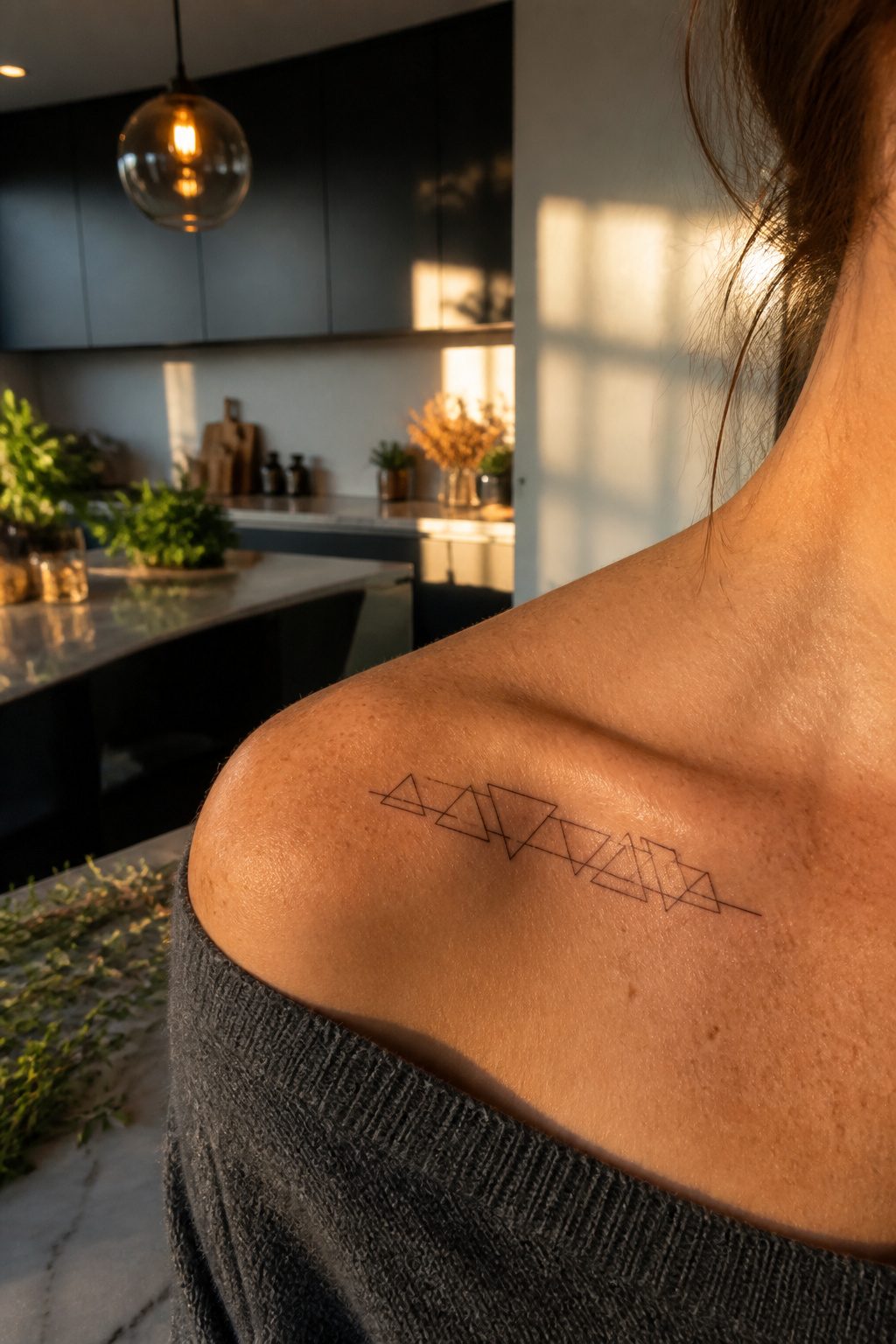
Lines, dots, and shapes can hold a collarbone without borrowing a single image from nature.
A row of triangles marching toward the shoulder, a mandala of stippled dots, circles that overlap or stay deliberately apart: these build structure from pure geometry. The effect is architectural, not narrative.
The catch is the bone itself. Collarbone skin is thin and the bone sits right beneath it, so any waver in a straight line shows immediately.
Geometric precision here demands an artist with a steady hand and experience on prominent bone placement. Dotwork especially, where texture and depth come from nothing but the density of tiny dots, leaves no place to hide a slip.
The source material notes delicate dotwork and geometric patterns as options for this area, and the precision required is what separates the pieces that hold their shape from those that soften into blur within a few years.
Color is an option, though many women in this placement stick to black. Overlapping triangles, squares, circles, or shapes that never touch at all: the dimension is in the arrangement, not the shading.
Simple in concept, unforgiving in execution.
6. Whimsical or Cartoon Designs
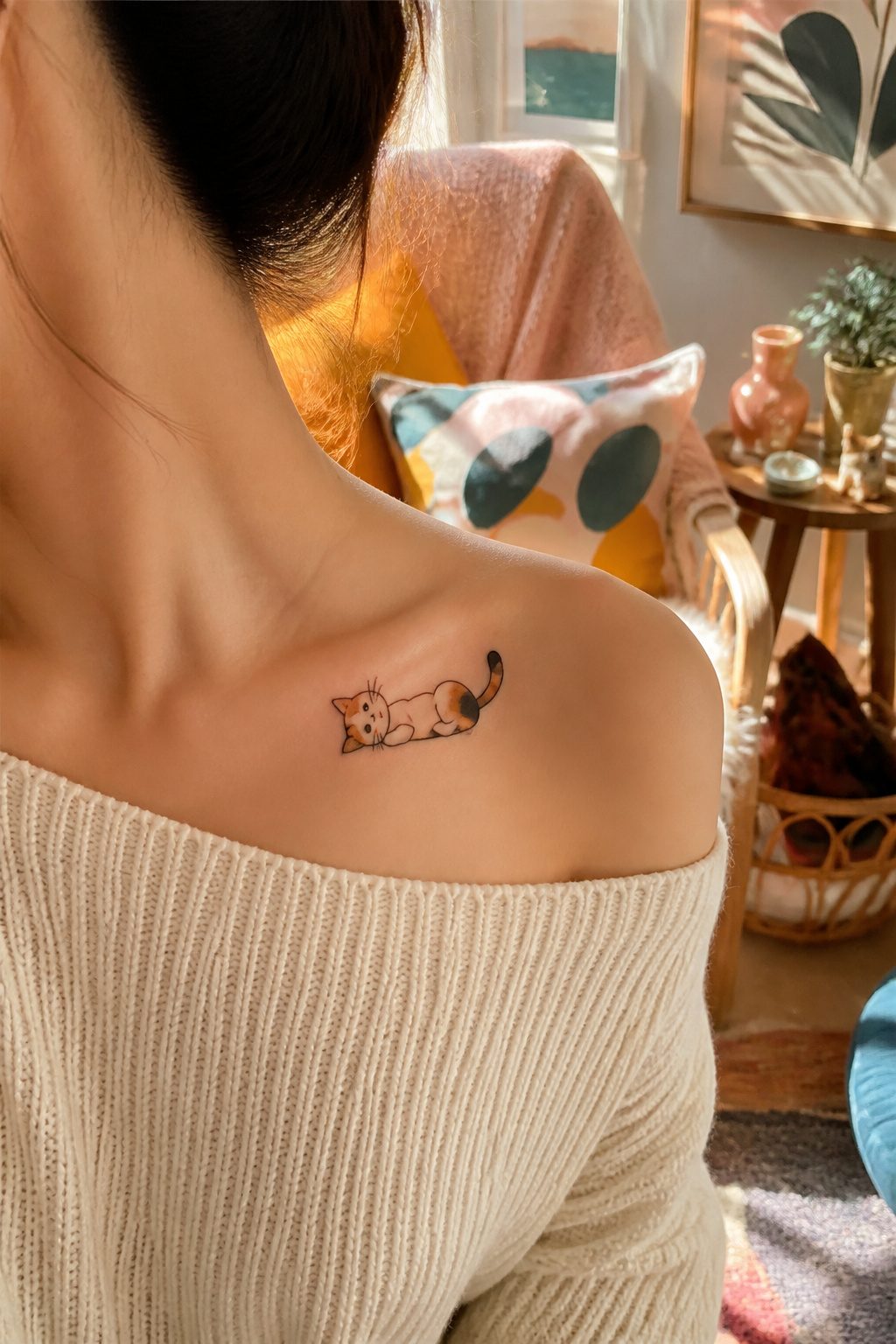
Cartoon moons and personified crescent shapes sit on the collarbone with a lightness that more serious designs rarely pull off.
The appeal is in the deliberate lack of weight: a tiny star cluster floating along the bone, a simple cat silhouette paired with a flower, a butterfly drawn in loose colored lines.
These smaller images read as doodles rather than statements, and that is exactly why some women choose them.
The tradeoff is longevity. A fine-line star or miniature character can blur faster than bolder work, and touch-ups may be needed within a few years rather than a decade.
The colored collarbone doodle style, with its mix of cats, flowers, and butterflies, celebrates playfulness directly. It does not ask to be interpreted.
Placement matters for this aesthetic. Tiny hearts and stars work best when they look accidental, scattered along the collarbone rather than centered.
The cartoon sun or cloud that sits too formally reads as a sticker; the same image tilted slightly off-axis reads as a sketch. If your routine leans toward natural fabrics and minimal jewelry, this style offers contrast without demanding attention.
If you already wear bold patterns, it may compete rather than complement.
7. Nature-Inspired Tattoos
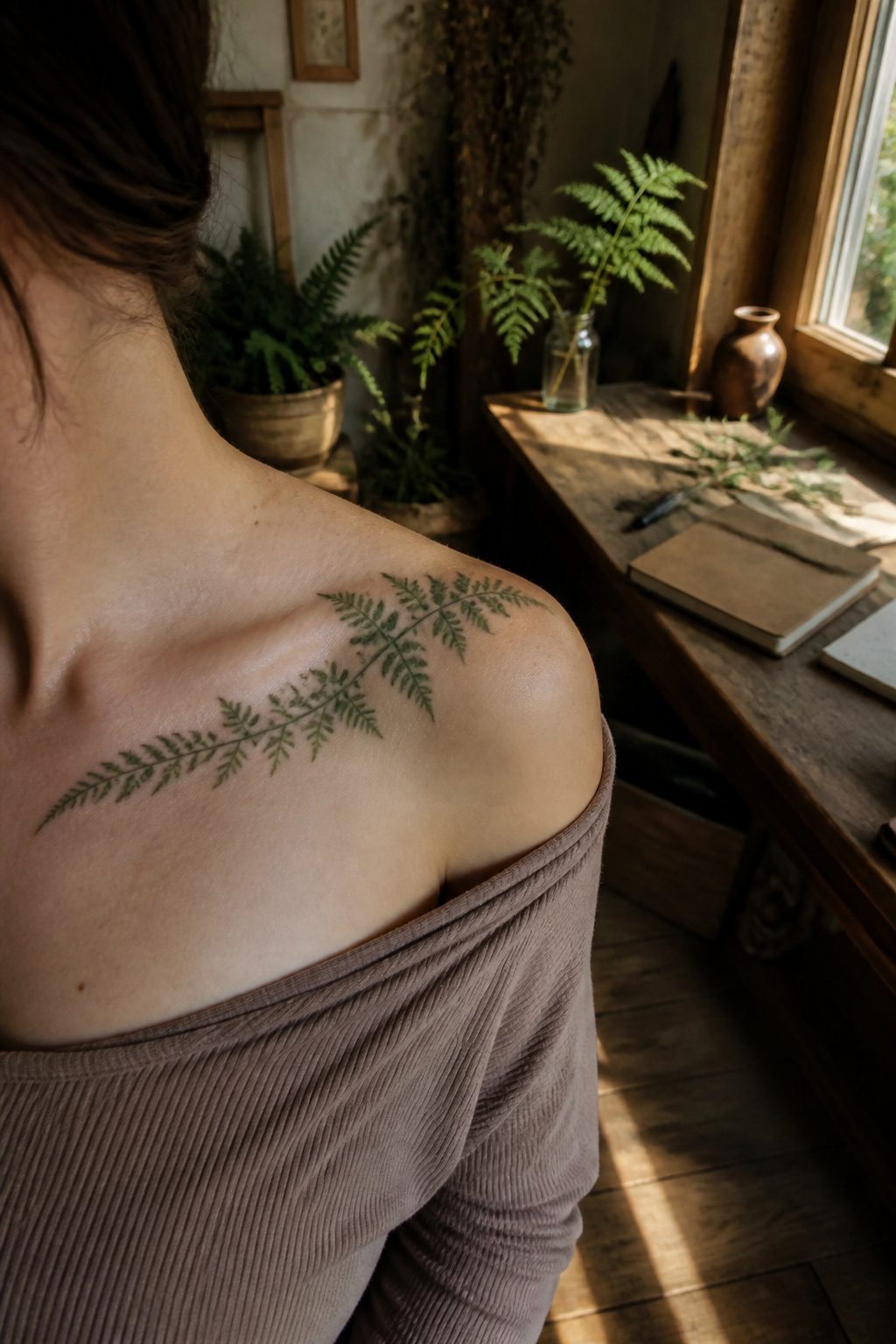
Leaves and branches settle along the collarbone differently than flowers do. The bone itself already sketches a kind of branch line, which makes non-flowering forms read as an extension of your own structure rather than an ornament pinned on top.
A single fern frond starting at the shoulder and reaching toward the throat can look like growth continuing from under the skin, the way Lauren Potts’s piece did for a client in Long Beach, the leaf seeming to emerge from the back onto the collarbone itself.
Matching simple leaves on either side keep the symmetry the bones give you, but the real advantage is seasonal flexibility.
Bare twigs in winter, unfurled foliage in spring, the same placement carries a different meaning without changing the shape of the tattoo.
Mountain silhouettes work the same way, the ridgeline echoing the collarbone’s horizontal sweep, though they read more as backdrop than growth.
The detail to negotiate with your artist is where the line ends. Leaves that stop short of the sternum keep the design to the visible bone, which means it ages with the skin you actually show.
Branches that cross the center move into softer tissue and shift as posture changes. The fern Potts designed kept to the back and collarbone junction for exactly that reason, the growth direction following a harder plane.
8. Personal Symbols
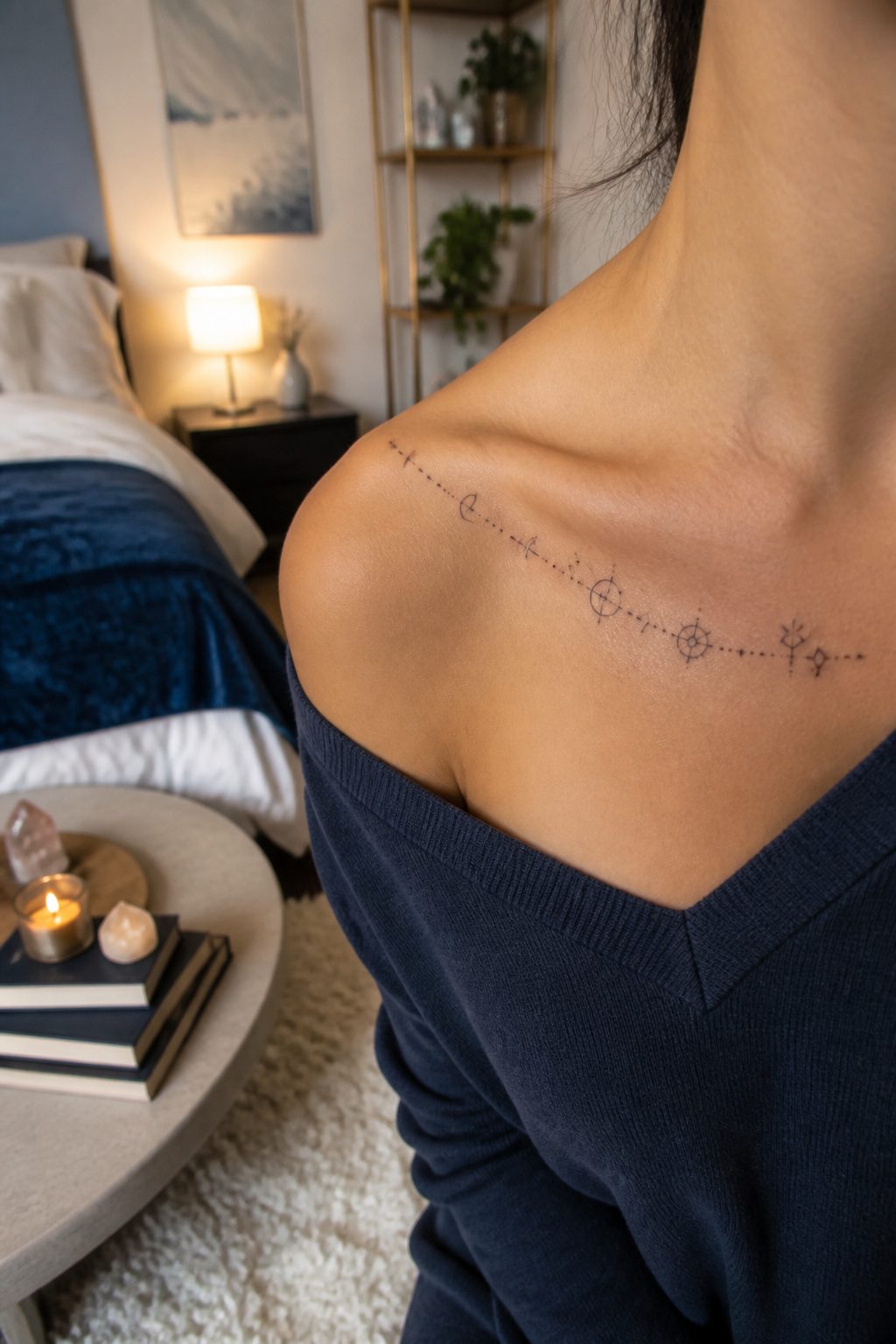
Zodiac constellations sit well along the collarbone because the line of the bone mirrors the horizontal spread of most star patterns.
A constellation can run thin enough to read as delicate, or you can swap it for the sign’s symbol if the full star map feels too busy for the space.
Either way, the collarbone gives a zodiac tattoo the visibility of a statement piece without the size.
Angel numbers work here for similar reasons. The sequence 111 or 444 fits in a short line that follows the bone’s curve, and the placement means you see it in the mirror every morning.
That matters for a number you chose because you keep noticing it.
Initials and commemorative dates are the quieter option. A date in Roman numerals or a pair of initials can sit at the inner end of the collarbone, near the throat, where a necklace would fall.
The personal story behind the tattoo usually stays private unless you offer it, which is part of the point.
Most galleries of collarbone tattoos for women lead with the image and skip the backstory, but the people wearing these know the difference.
9. Matching or Couple Tattoos

Paired collarbone tattoos carry a different weight than imagery chosen alone.
The placement itself becomes the connection: two people carrying the same mark at the same height, visible when they face each other and mirrored when they stand side by side.
The bone makes the commitment visible in a way ankle or wrist pairings rarely achieve.
Designs that work here tend toward the spare. A single line, a small constellation, a word split between two bodies.
The collarbone’s shallow curve gives each half a natural frame, and the proximity to the face means the tattoo is seen in conversation, in intimacy, in conflict. That is the point.
I have watched friends choose coordinates of a shared apartment, partners choose the phase of moon from a first date, sisters choose the outline of a childhood dog.
What fails is anything too large for the bone’s real estate or too detailed for the thin skin. The collarbone does not hold shading well; it blurs over time, and matching tattoos that blur unevenly lose their purpose.
The pain is worth mentioning because it affects the decision. Collarbone work hurts more than fleshier spots, and doing it twice, on two people, in one session or two, requires planning.
Some shops will book pairings back to back for this reason. The aftercare matches any collarbone tattoo: loose collars, no swimming, the usual vigilance against sun.
The difference is only that two people are healing the same image at the same rate, checking each other’s progress, which is partly why the choice is made at all.
10. Minimalist Designs
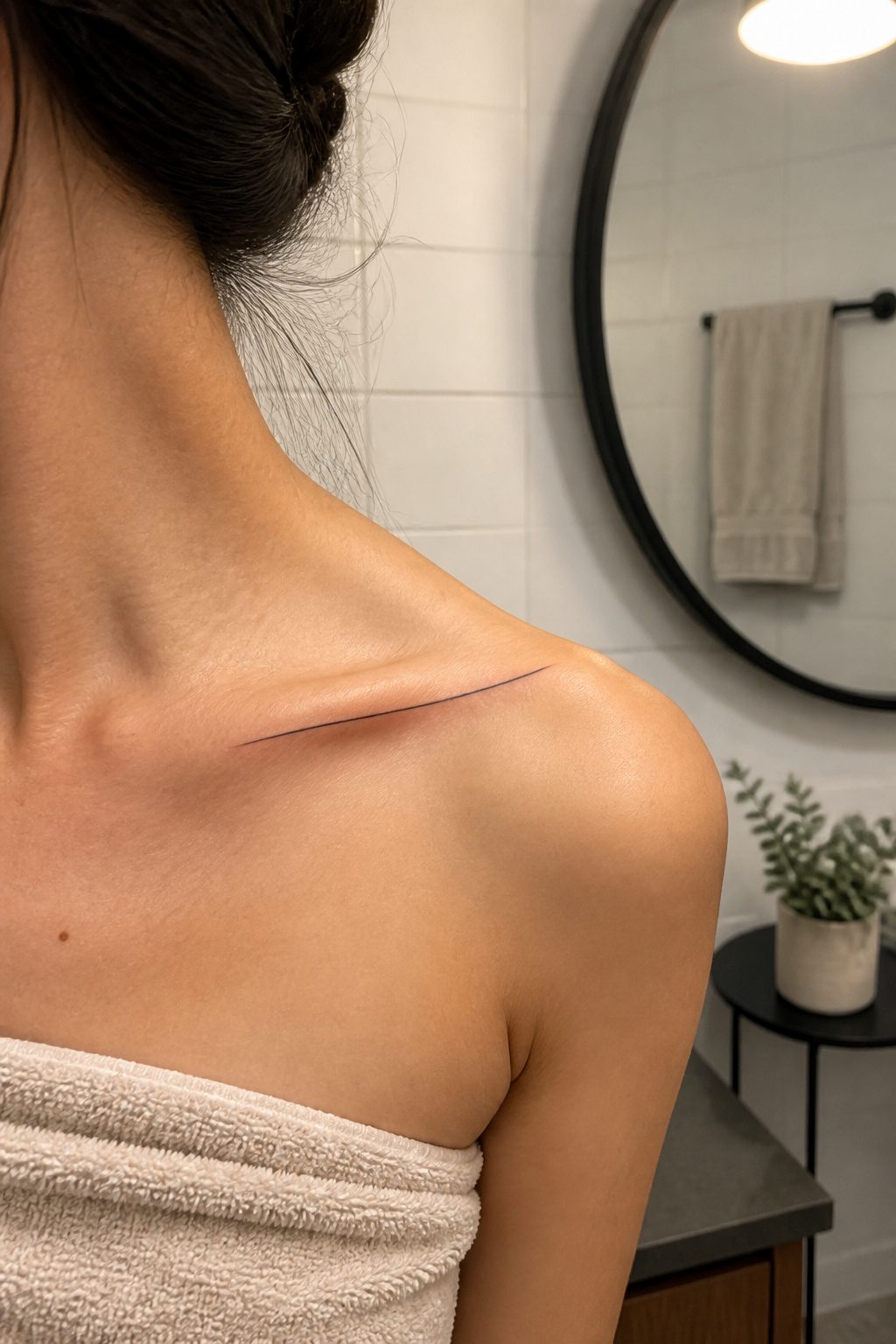
A single clean line traced along the collarbone sits right at the edge of visibility. Makeup covers it in minutes when a strapless dress or a job interview calls for blank skin.
The needle time runs short too; most fine-line work finishes in under an hour, which keeps the cost down and the skin trauma minimal.
Tiny dots and negative-space marks play the same game. They read as texture from a few feet away, not as a declared statement, so the eye passes over them unless someone is already close enough to matter.
That asymmetrical flower branch works because it follows the bone’s natural angle, but strip away the shading and it becomes even easier to hide, even quicker to sit through.
The collarbone’s flat plane and thin skin make it unforgiving of heavy ink. Minimal designs work with that limitation rather than against it.
Less pigment means less swelling, less peeling, and a healed result that looks like it belongs there rather than sitting on top.
What the Pain Actually Feels Like
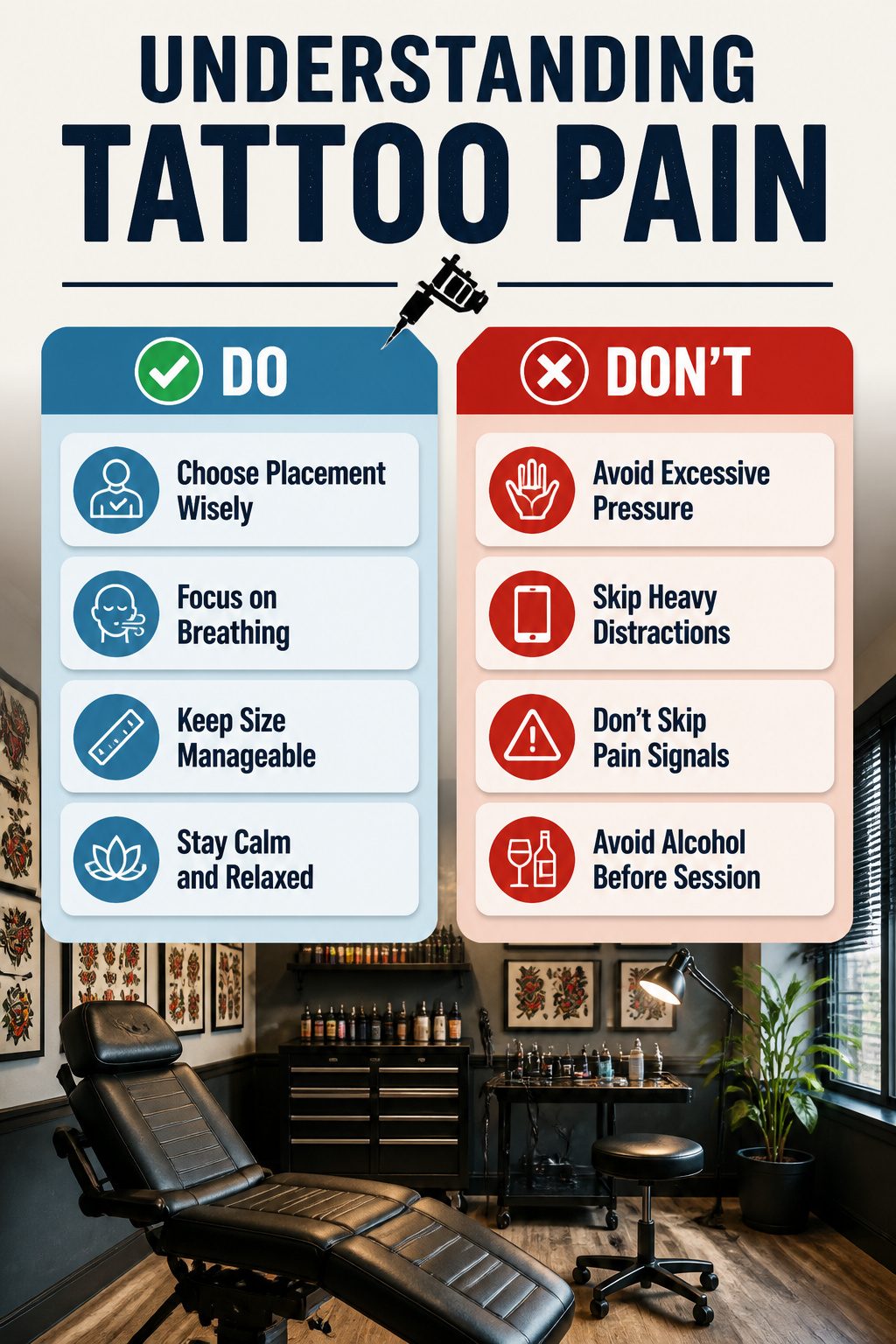
Collarbone tattoos do hurt. There is not much tissue between skin and bone, so the needle finds hard resistance and the vibration travels straight into the nerves.
The closer the ink sits to the bone itself, the sharper the sensation.
Two placement choices soften the experience. Work placed just above or below the collarbone sits where muscle and fat create a small buffer, and the difference is immediate.
Right on the ridge, the feeling is a hot, rapid scratching that deepens into a dull ache as the session wears on.
Move an inch off the bone and the same needle registers as pressure and heat, still present but no longer the star of the show.
Size matters for duration, not intensity. A simple word or short quote finishes before the body floods with stress hormones, which is why smaller collarbone pieces feel manageable where large ones can become a test of stillness.
The skin here is thin and tight, so the artist stretches it hard and the sensation stays surface-level and insistent rather than sinking into the deeper burn of a thigh or upper arm.
I have watched clients brace through the first ten minutes, then find a rhythm of breathing that carries them through.
The ones who choose placement carefully, who let the design drift toward shoulder or chest rather than hugging the bone, finish calmer and book their next piece sooner.
Healing Timeline and Aftercare
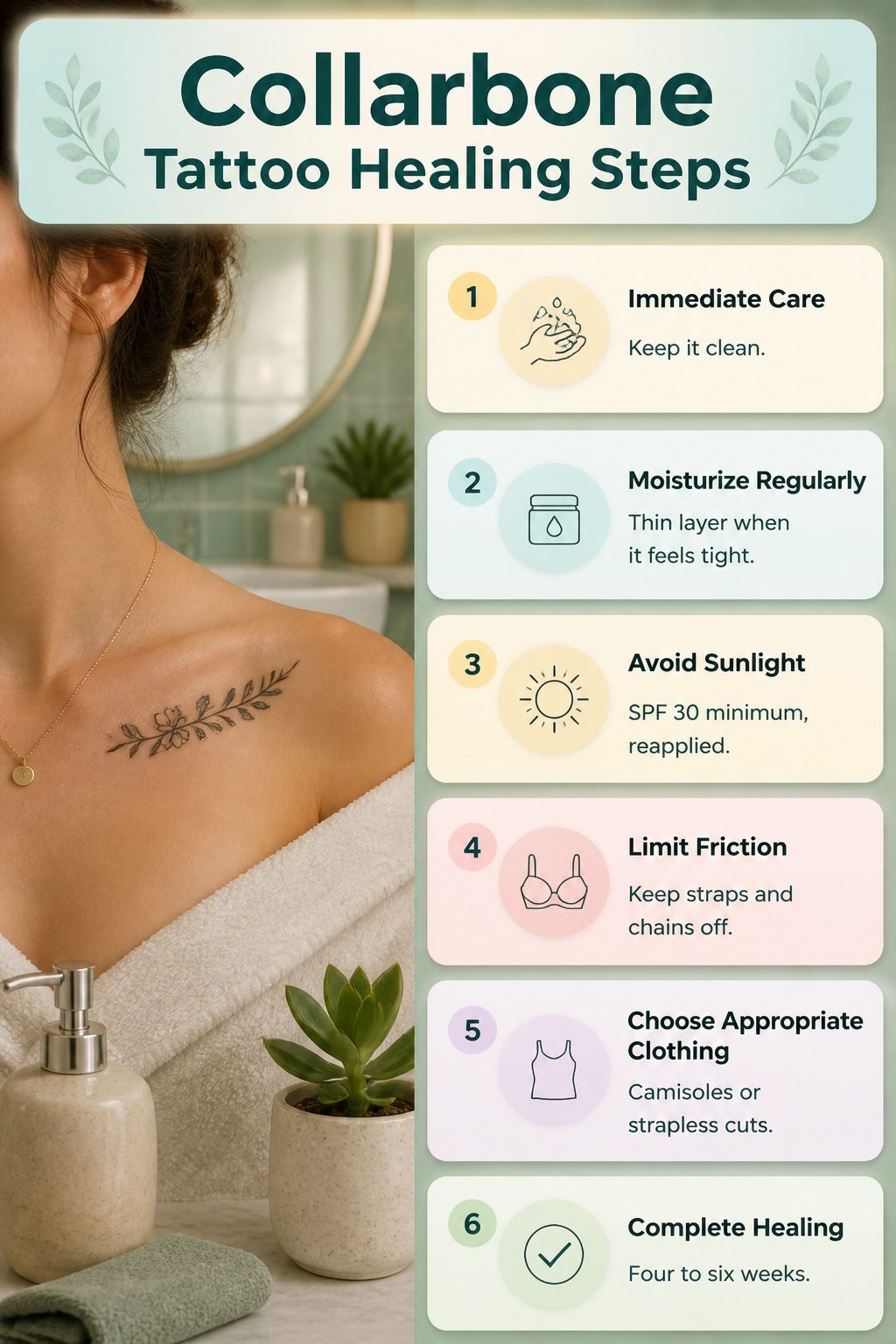
A collarbone tattoo needs four to six weeks for complete healing, though the surface settles faster than what happens underneath.
The skin in that zone sits thin over bone and moves every time you breathe or reach, so the real work is protecting it from the small daily friction other placements skip.
Moisturizer matters more here than on fleshier spots. I learned that watching clients whose healing went sideways; the ones who treated it like a lip balm habit, thin layer whenever it felt tight, kept the color where it belonged.
Slathering traps bacteria, skipping it lets the skin crack.
Sunlight is the enemy that whole first month. A fresh collarbone catches rays from below, from reflection off water or pavement, not just overhead.
SPF 30 minimum, reapplied, or the pigment shifts before it seats.
Bra straps and necklace chains are the collarbone-specific headache. A band riding right across the fresh line turns a two-week heal into six.
Camisoles or strapless cuts for that first stretch, and whatever pendant you wear daily stays in the drawer until the surface is dull and flat again.
Placement Decisions That Affect Daily Life
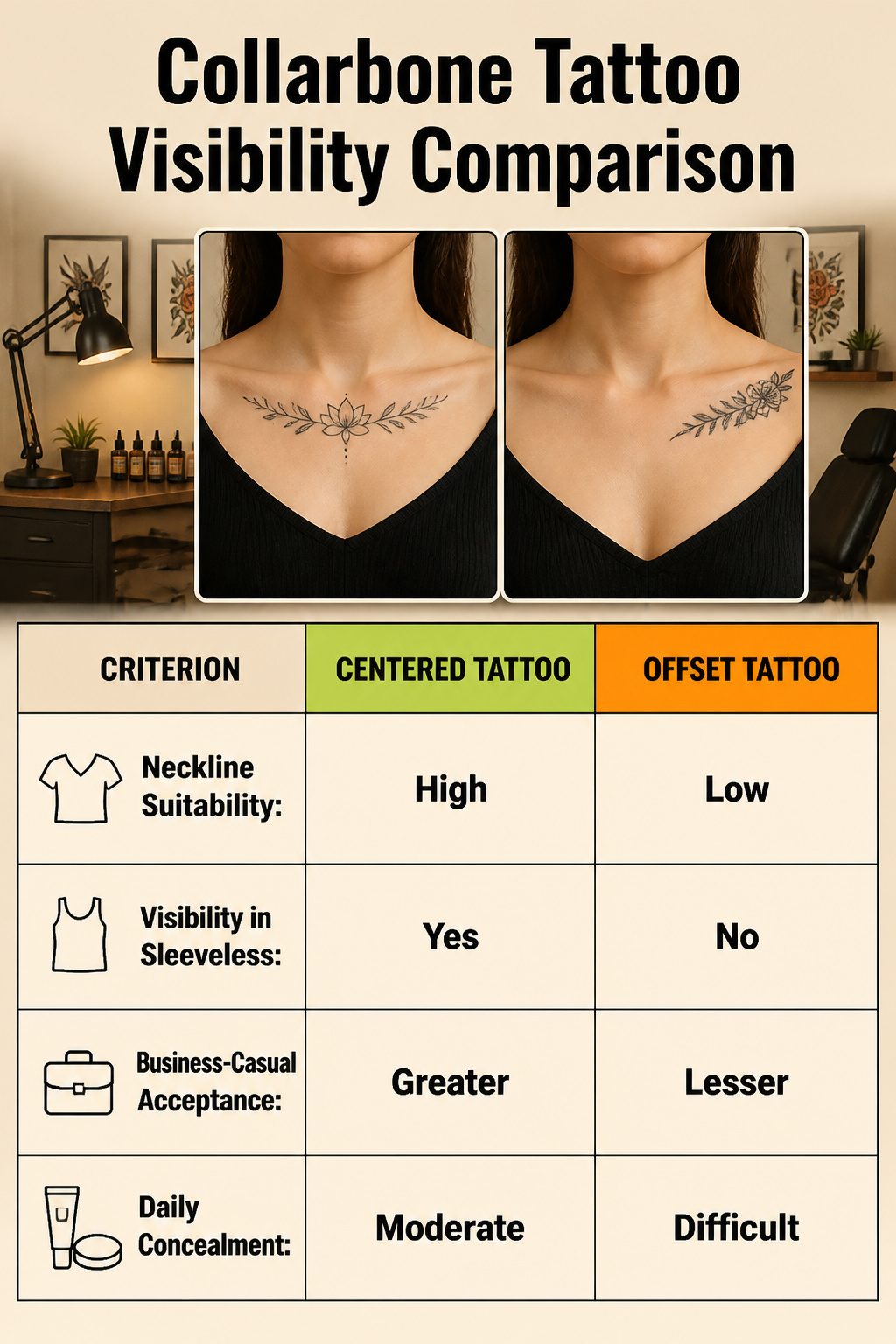
Centered collarbone tattoos show under more necklines than offset ones, which matters if you work somewhere with a business-casual dress code.
A piece sitting dead center peeks out of a standard V-neck or a button left open at the collar; shift it toward either shoulder and you suddenly need a wider, deeper cut to see it at all.
That same shoulder drift also changes what happens in sleeveless tops.
The closer your tattoo gets to the deltoid, the more likely a tank strap or the edge of a cap sleeve will slice across the design in a way that looks accidental rather than framed.
Full coverage versus occasional visibility is a judgment call that depends on whose eyes are in the room.
In some workplaces, a tattoo that flashes only when you reach for a coffee mug reads as personal; one that stays on display through every meeting reads as a statement you may not have meant to make.
The test is the mirror with your three most-worn work tops on: if the ink shows in all of them, decide whether that is the choice you want to make every morning, because covering collarbone skin with concealer wears off on collars and needs reapplication by lunch.
Social contexts are easier but still worth weighing.
A design that hides under a crewneck but appears at a party when you switch to something off-shoulder gives you control; one that never hides means you never get to choose the moment.
Design Meanings Across Cultures
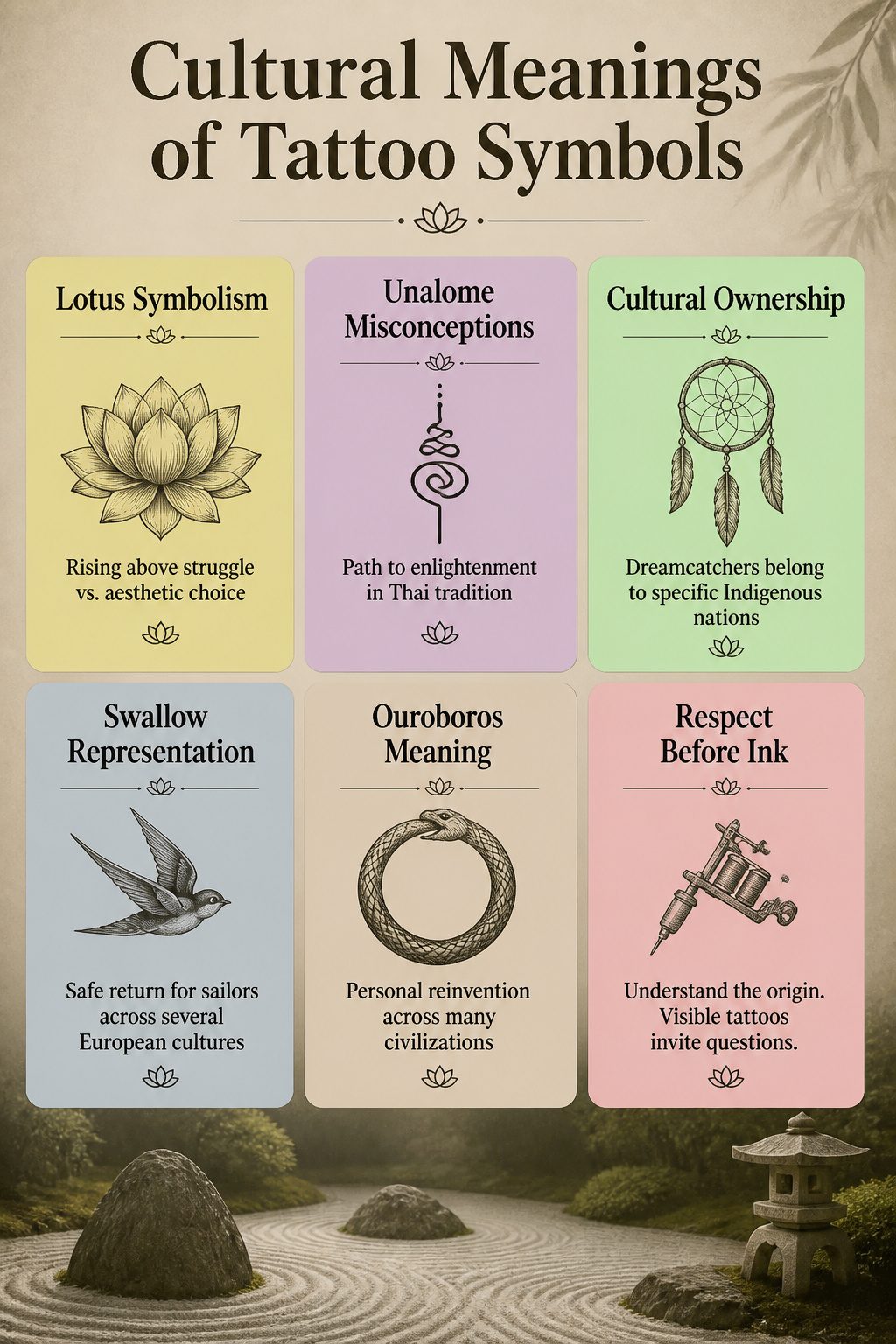
A lotus climbing toward the collarbone carries one meaning in a Kyoto temple and another on a Pinterest board.
I have drawn the flower for clients who wanted the Buddhist reading of rising above struggle, and for others who simply liked how the petals filled the space.
Both are valid, but know which story you are wearing before the needle starts.
The unalome, that spiral-and-line symbol, gets mistaken for a generic wellness mark. It maps the path to enlightenment in Thai tradition, and wearing it without that context sits wrong with people who do understand it.
Same with dreamcatchers, which belong to specific Indigenous nations and were never a pan-Indian symbol.
Some images travel cleanly. A swallow meant safe return for sailors across several European cultures, so the meaning is broad enough that most wearers connect to the idea of homecoming rather than any single navy.
A snake eating its own tail, the ouroboros, has looped through enough civilizations that personal reinvention reads as the primary meaning now.
My own rule is simple: if a symbol’s origin is tied to a living culture that has been colonized or suppressed, I ask the client what they know about it.
Not to gatekeep, but because a collarbone tattoo is visible every time you wear a V-neck. You will be asked.
Having no answer is a choice too, and not the flattering kind.
Frequently Asked Questions
Are collarbone tattoos painful?
Yes, collarbone tattoos hurt more than placements on fleshier areas because thin skin sits directly over bone, so the needle meets hard resistance and vibration travels into the nerves.
Moving the design an inch above or below the collarbone puts it where a small buffer of muscle and fat softens the sensation. Smaller pieces also help, since shorter sessions end before stress hormones build.
How long does a collarbone tattoo take to heal?
A collarbone tattoo needs four to six weeks for complete healing, though the surface may look settled sooner.
The thin skin over bone moves with every breath and reach, so the real work is protecting it from daily friction, bra straps, and necklace chains that other placements avoid.
Moisturizing thinly and often matters more here than on fleshier spots.
What are popular designs for collarbone tattoos for women?
Quotes, florals, animals, and abstract or geometric art all rank high for this placement.
Words follow the bone’s natural curve; flowers and vines use it as a built-in shape to climb; birds and butterflies turn the horizontal line into a horizon or flight path; and clean geometry plays against the bone’s architecture.
Minimalist single lines and personal symbols like zodiac constellations also suit the area’s visibility and scale.