Japanese tattoos for men, called irezumi, are large-scale narrative works built around symbolic figures like dragons, tigers, and koi fish rather than scattered individual pieces. The commitment is substantial: a full back dragon demands 30 to 50 hours across 12 to 18 months, and traditional hand-poked tabori hurts more than machine work by design. What separates authentic irezumi from imitation is the background; waves, wind bars, and cloud bands are not filler but the environment the subject actually lives in.
Japanese Dragon Tattoo
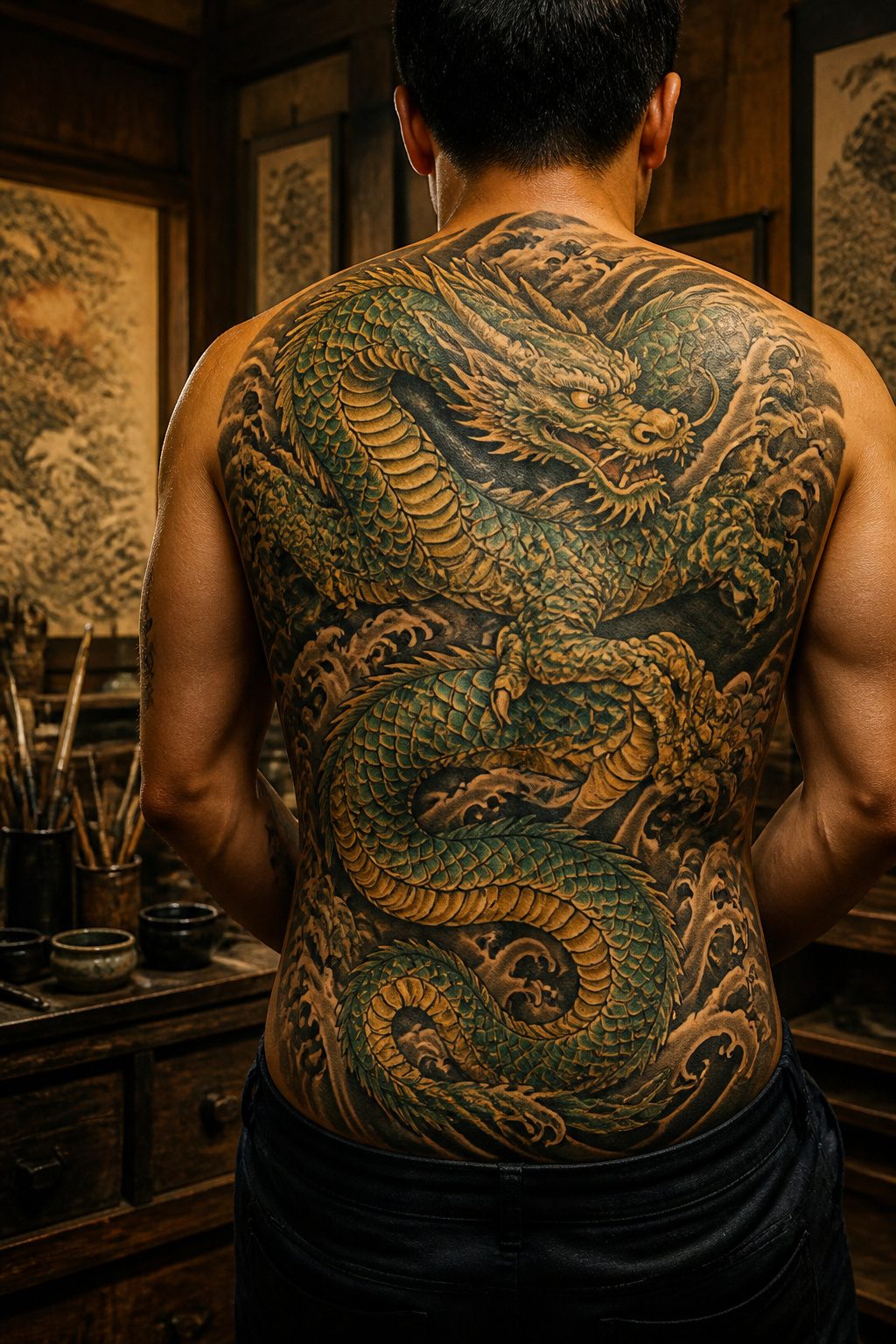
A Japanese dragon tattoo carries weight in any shop that builds irezumi by hand. The dragon ranks in what working artists call the "Big Three" masculine designs, alongside the tiger and the oni mask. Where the tiger reads as raw power and the oni as protection, the dragon holds the middle ground: strategic wisdom, strength, and the kind of good fortune that comes from knowing when to move and when to wait.
Japanese dragons keep three toes, a detail that separates them from Chinese dragons at a glance. The scales and claws carry their own language of resilience, and the creature’s tie to water rather than fire shifts its meaning away from destruction and toward adaptability.
Placement matters more with dragons than with most subjects because the body has to cooperate. A full back piece gives the dragon room to arc and coil across 30 to 50 hours of work spaced over 12 to 18 months, the spine becoming the center of a narrative the wearer keeps private. Sleeves move differently: the dragon flows with the arm’s musculature, head at the shoulder, tail toward the wrist, turning the body into a linear story that shows in short sleeves. The choice between them comes down to whether you want the work visible daily or reserved for moments you choose to reveal it.
Japanese Koi Fish Tattoo
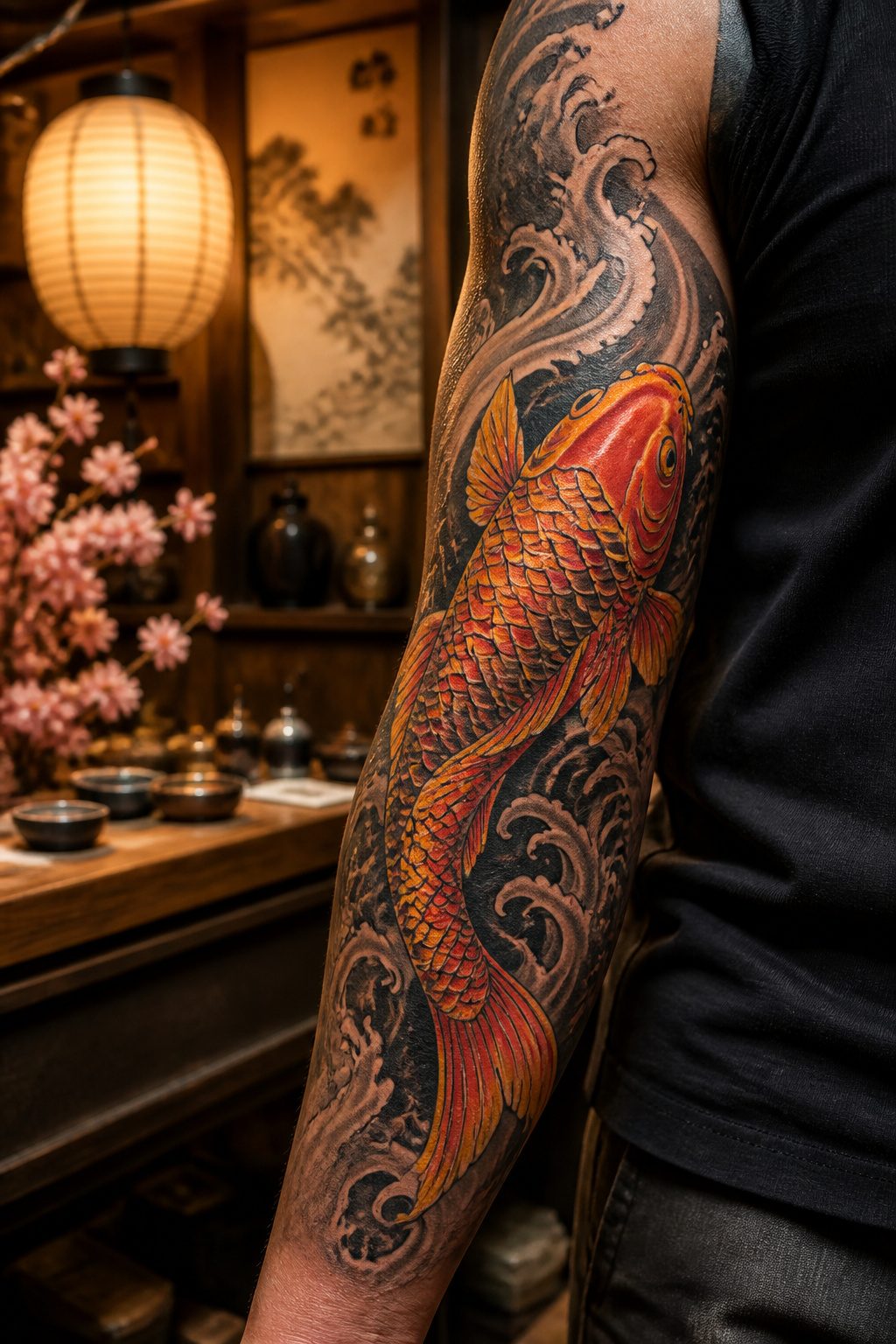
The koi fish carries one of the oldest stories in Japanese tattooing. According to the legend of the Yellow River, a single koi swims upstream against the current, braving every danger, until it reaches the top of the waterfall and transforms into a dragon. That journey makes the koi a symbol of perseverance and courage, the kind earned through endurance rather than claimed without cost.
For men drawn to this meaning, the design rewards placement where the body itself suggests motion. On a forearm or calf, the koi can appear to swim against gravity, the line of the muscle carrying the current. The back or thigh works for a larger piece, enough room to show the waterfall and the transformation still ahead. Color adds another layer: different shades carry their own meanings, from luck to prosperity to longevity.
The koi is strongly masculine in irezumi tradition, though women sometimes pair it with the lotus. What matters for the design is direction. A koi swimming upstream still fights; a koi swimming downstream has already achieved what it set out to do. Choose based on where you see yourself in the story, not which image looks stronger in the flash book.
Japanese Tiger Tattoo
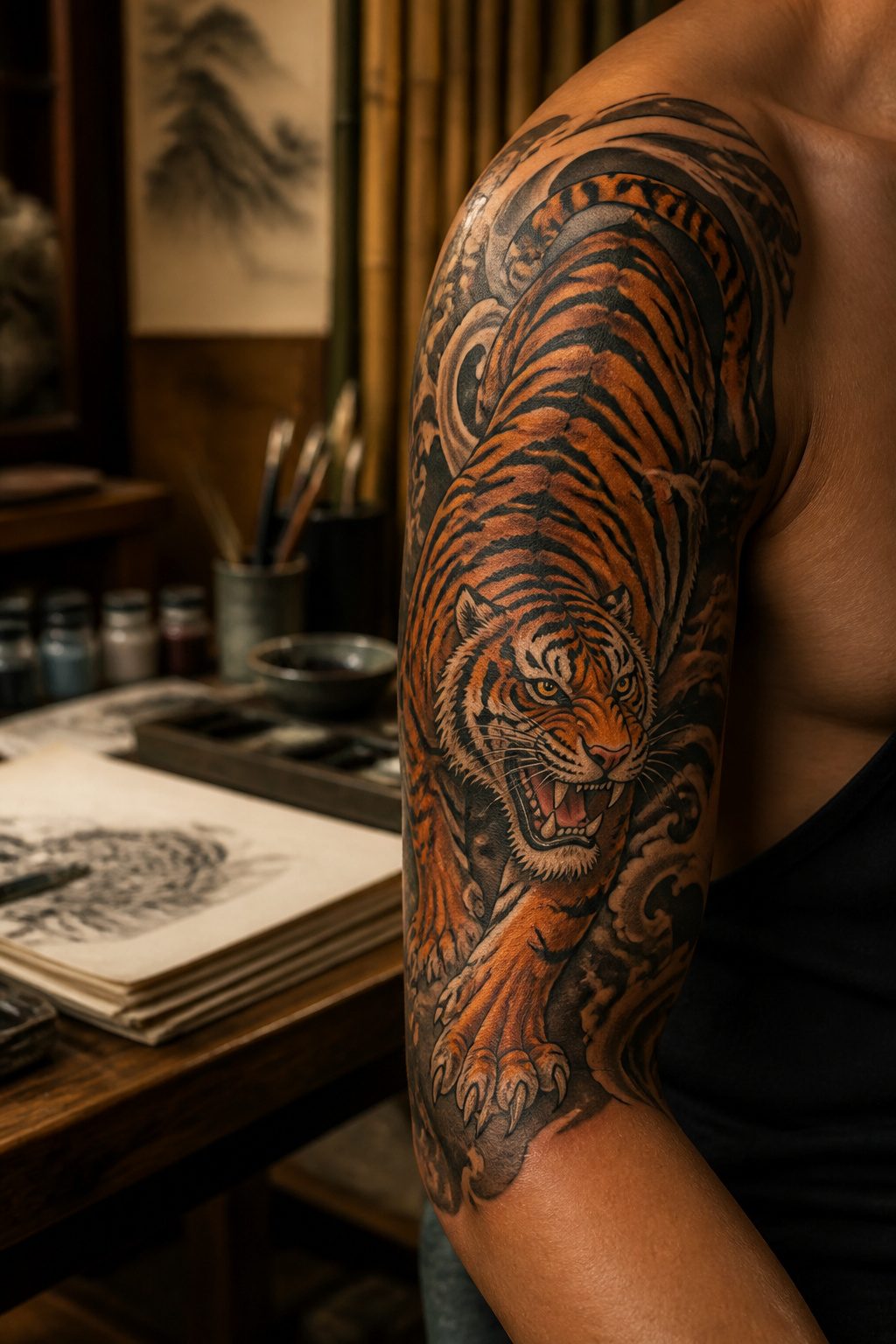
The tiger holds its place in the Big Three of masculine Japanese tattoo designs alongside the dragon and the koi. In Japanese tradition, this animal carries weight as a guardian symbol, worn for courage and as a shield against bad luck and evil spirits. Some accounts add long life to that list, while others emphasize protection from disease specifically, a difference worth noting if you are choosing between a tiger and another guardian figure like the lion.
Placement follows the body’s natural lines. A tiger wraps around arms and legs so the muscles seem to power the animal’s movement, or it stretches across the back where the full body can open in a pounce. Direction matters: a tiger climbing upward carries a different energy than one descending, and an experienced artist will place the head facing a point of strength, not toward the ground or the body’s edge. The design needs room to breathe, which is why sleeves and back pieces remain the standard formats rather than isolated patches of fur and stripe.
Japanese Cherry Blossom Tattoo
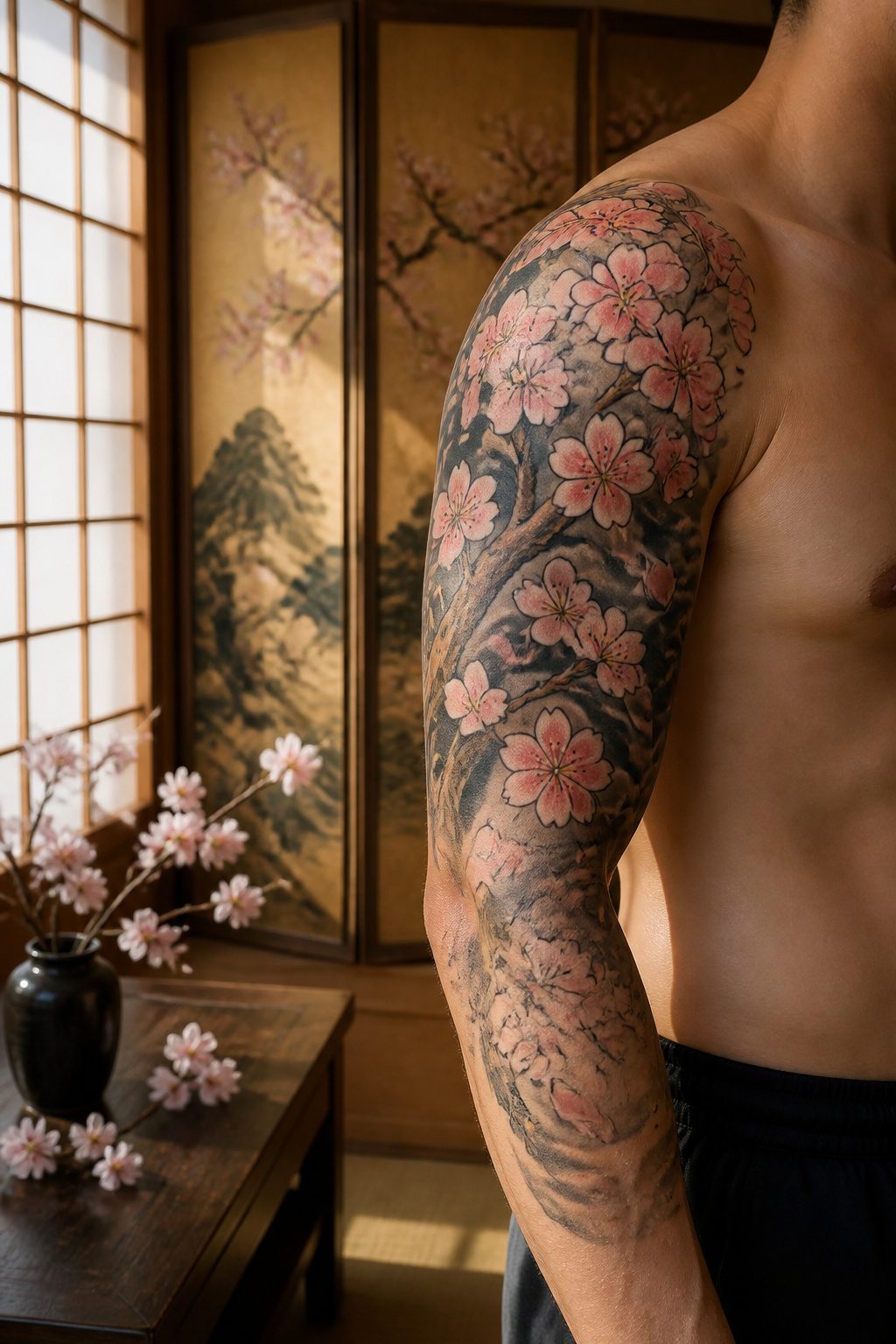
The cherry blossom, or sakura, carries a weight in Japanese tattoo art that runs deeper than its delicate appearance suggests. For the samurai, the bloom represented the acceptance that death could come at any moment, a reminder that beauty and mortality arrive together. That same principle draws men to the motif today, not in spite of its softness but because of the contrast, the pairing of strength with the acknowledgment that nothing lasts.
In traditional irezumi, sakura most often appears as gakubori, the background elements that frame the primary design. Clouds, wind, and scattered petals create depth around a dragon or koi, giving the main subject room to stand out the way a frame gives a painting its presence. The cherry tree can also anchor a piece on its own, branches sweeping across a shoulder or forearm, the brief bloom held in ink while the actual season passes.
What convinced me, reading through how these pieces are built, is that the flower’s reputation for femininity misses the point. The samurai chose it precisely because fragility and resolve were not opposites. A man wearing sakura carries the same signal: life is short, the work of living is to recognize that, and the tattoo stays after the bloom has fallen.
Japanese Snake Tattoo
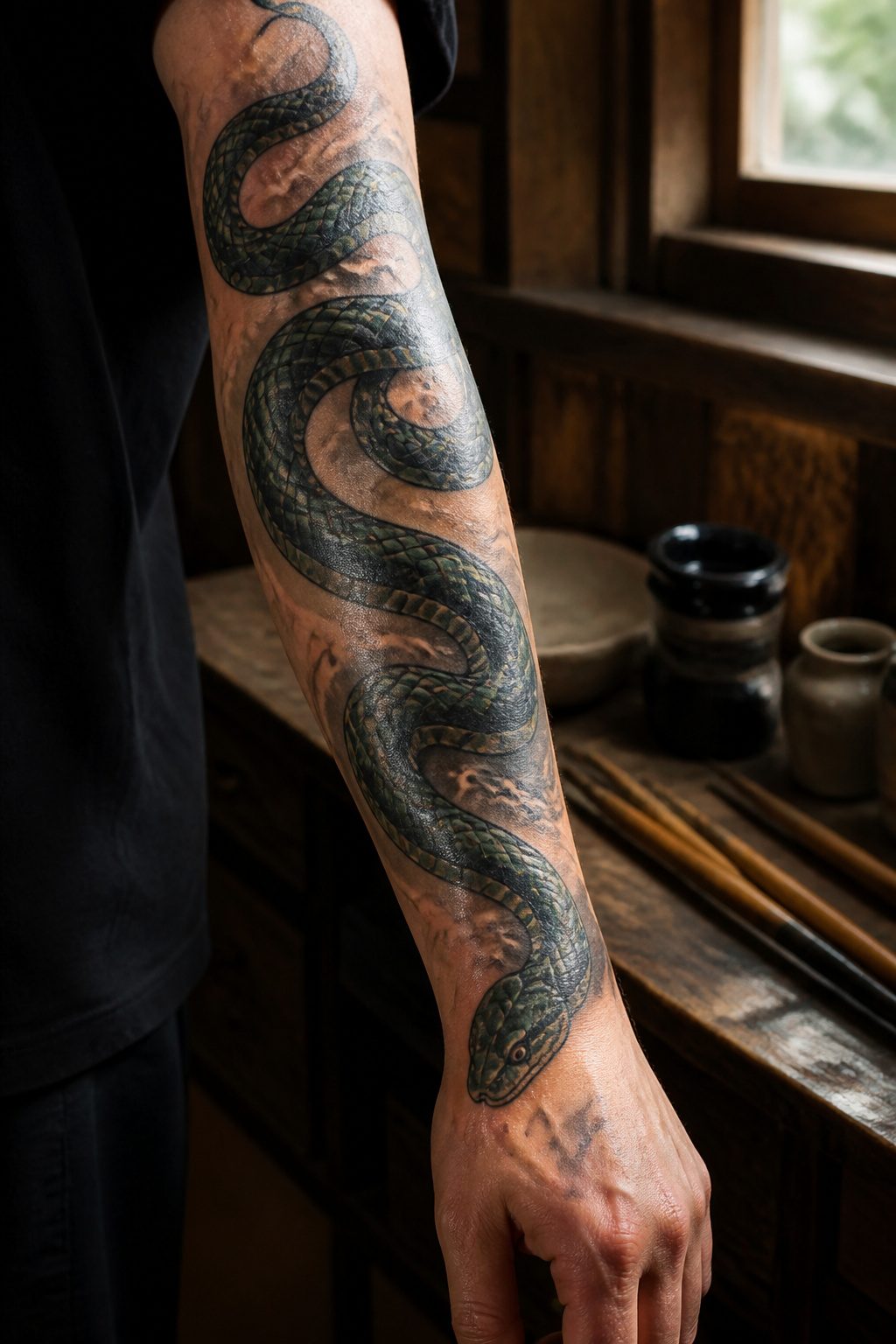
A snake coils around the arm or leg with a purpose Japanese tattooing figured out centuries ago. The body becomes terrain the design has to read across, and the hebi’s winding form follows muscle and bone the way water follows a riverbed. On a forearm the head can sit at the wrist while the tail disappears toward the elbow, each scale catching light differently as the arm turns.
The meanings layered into this image run deeper than the Western suspicion of snakes. In Japanese tradition the snake guards against illness, offers protection to those facing recovery, and carries the weight of regeneration and rebirth. Wisdom and the full cycle of life sit in the same scales that suggest change and transformation, not as abstract ideas but as lived support for someone working through something.
Placement matters less for symbolism than for how the coiling reads in motion. The leg gives a longer canvas for a full body wrap, the arm keeps the head visible in most daily positions. Either way the detail work in the scales, the depth of layering that makes a Japanese snake tattoo immediately recognizable, comes from the tradition of building image across time and sittings rather than rushing to closure.
Japanese Phoenix Tattoo
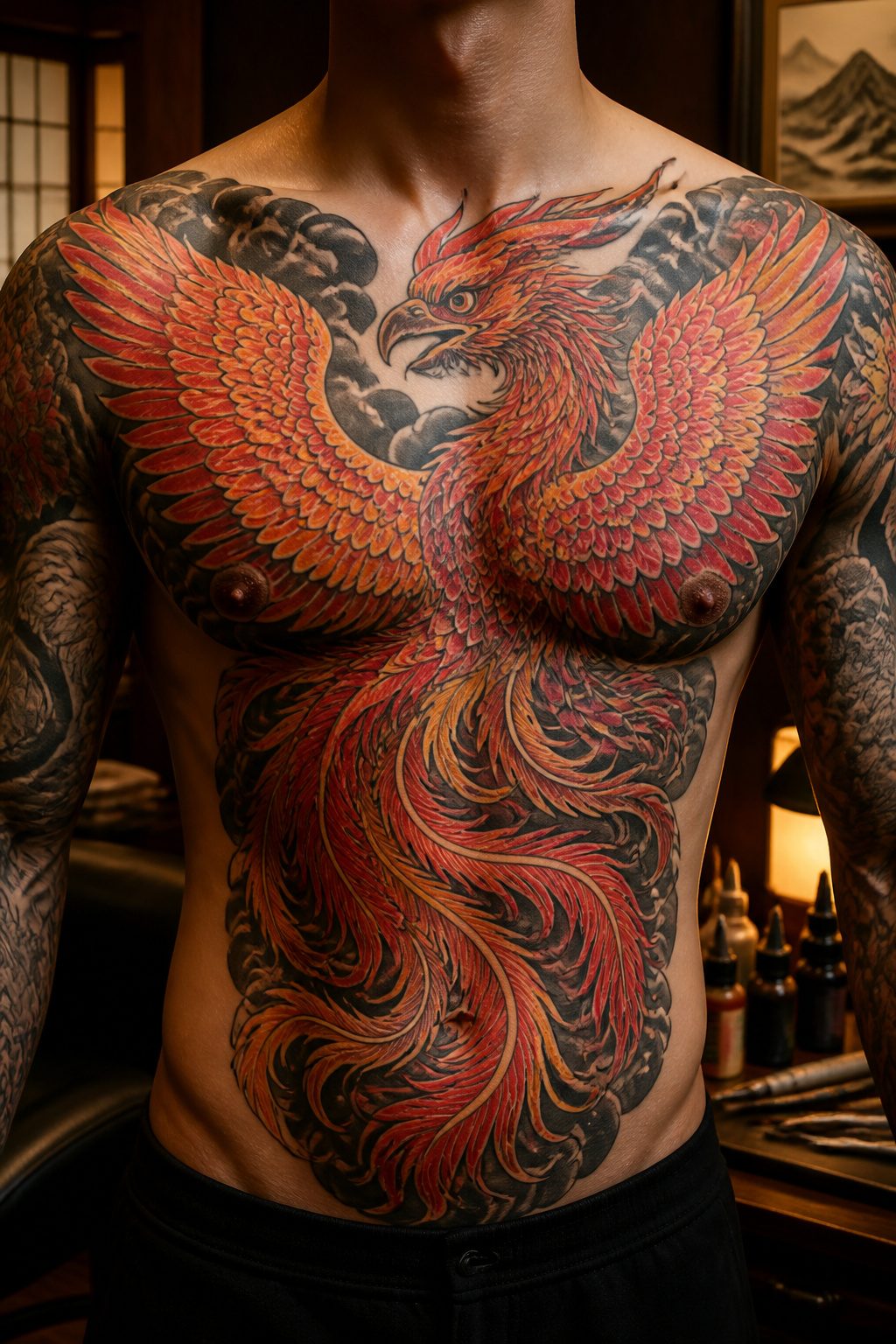
The hou-ou carries a weight in Japanese tattooing that the Western phoenix only partly overlaps. Both birds rise from ashes, but the Japanese rendering ties that rebirth to renewal and good fortune in a single image. A client who sat for one years back had just ended a twenty-year career in shipping to start over as a carpenter, and the motif made sense without anyone having to explain it.
The chest and back are where this design earns its keep. Wingspan demands flat, broad muscle, and a hikae placement, running one to two inches from the center of the chest and up along the collarbone, frames the pectorals the way a sleeve alone never quite does. Deep hikae covers the full pectoral region and around the nipples, following the muscle form; shallow stays above. Either option gives the bird room to open across the torso. The back offers even more territory for the tail feathers to trail and the wings to reach, though the commitment to a full back piece is a different conversation.
Men who have walked through divorce, recovery, or a complete career wreck tend to ask about this design more than you’d expect. The hou-ou does not promise the change was easy. It marks that the change happened.
Japanese Samurai Tattoo
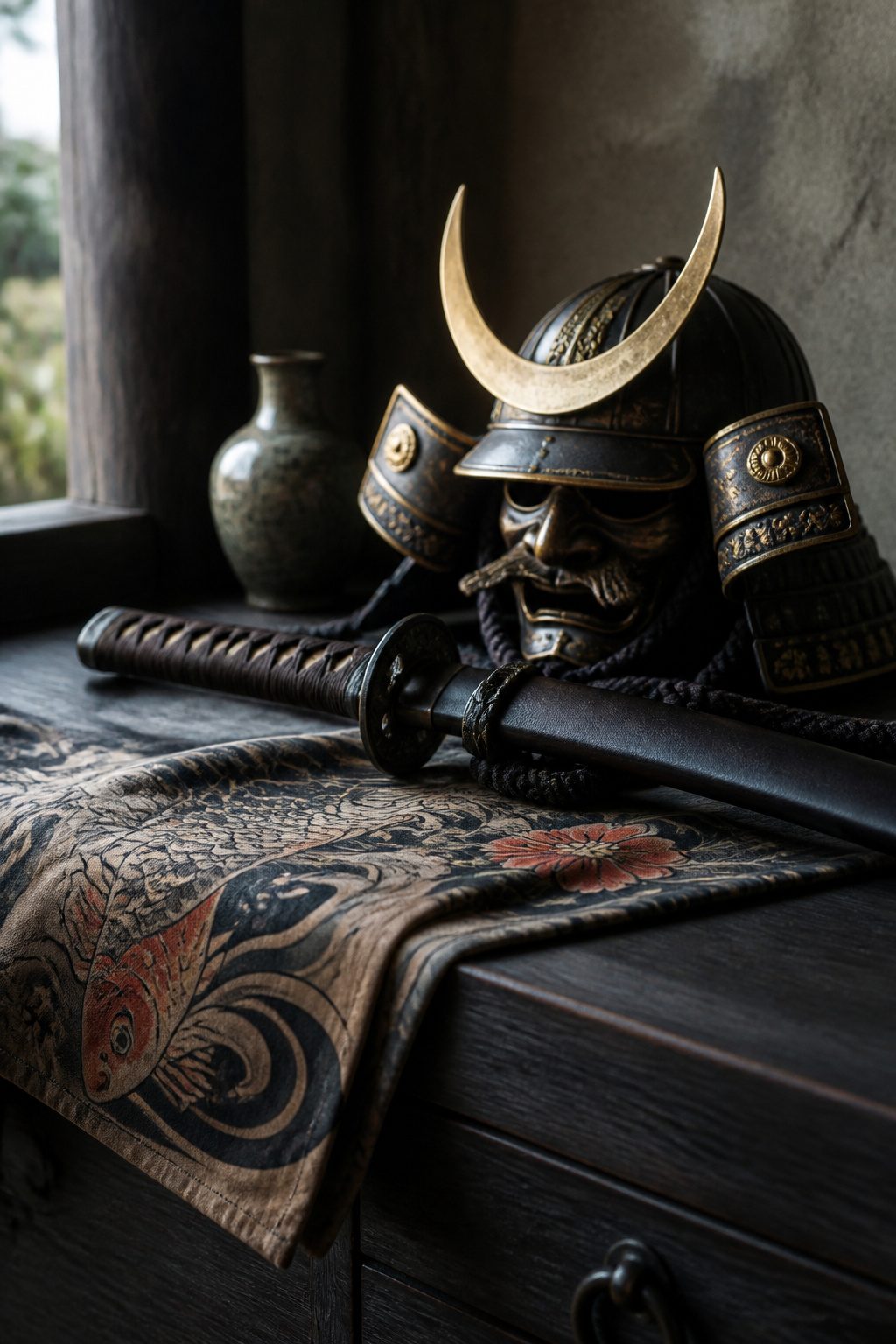
A samurai design carries the weight of bushido, the warrior code that shaped Japan’s military class from the 12th century onward. Honor, loyalty, and discipline are not abstract ideals in this work; they are the specific reason men choose this figure when they want their skin to reflect a personal code rather than a passing style.
Historical context matters for placement. Full-figure samurai require the flat canvas of a back panel or thigh to hold the armor’s detail and the posture that signals readiness. A portrait, cropped to face and helmet, can read as more intimate, but the same rule applies: without room for the line work to breathe, the discipline the image represents collapses into visual noise.
Some pair the warrior with temple architecture to build narrative, a choice that frames the figure as defender rather than solitary symbol. Cherry blossoms appear too, though their presence softens the severity in a way that not every wearer intends. Two paths, then: the stoic portrait that keeps the focus on the code itself, or the fuller scene that places the samurai in context. The portrait wins if the discipline is yours rather than a story you are borrowing.
Japanese Oni Mask Tattoo
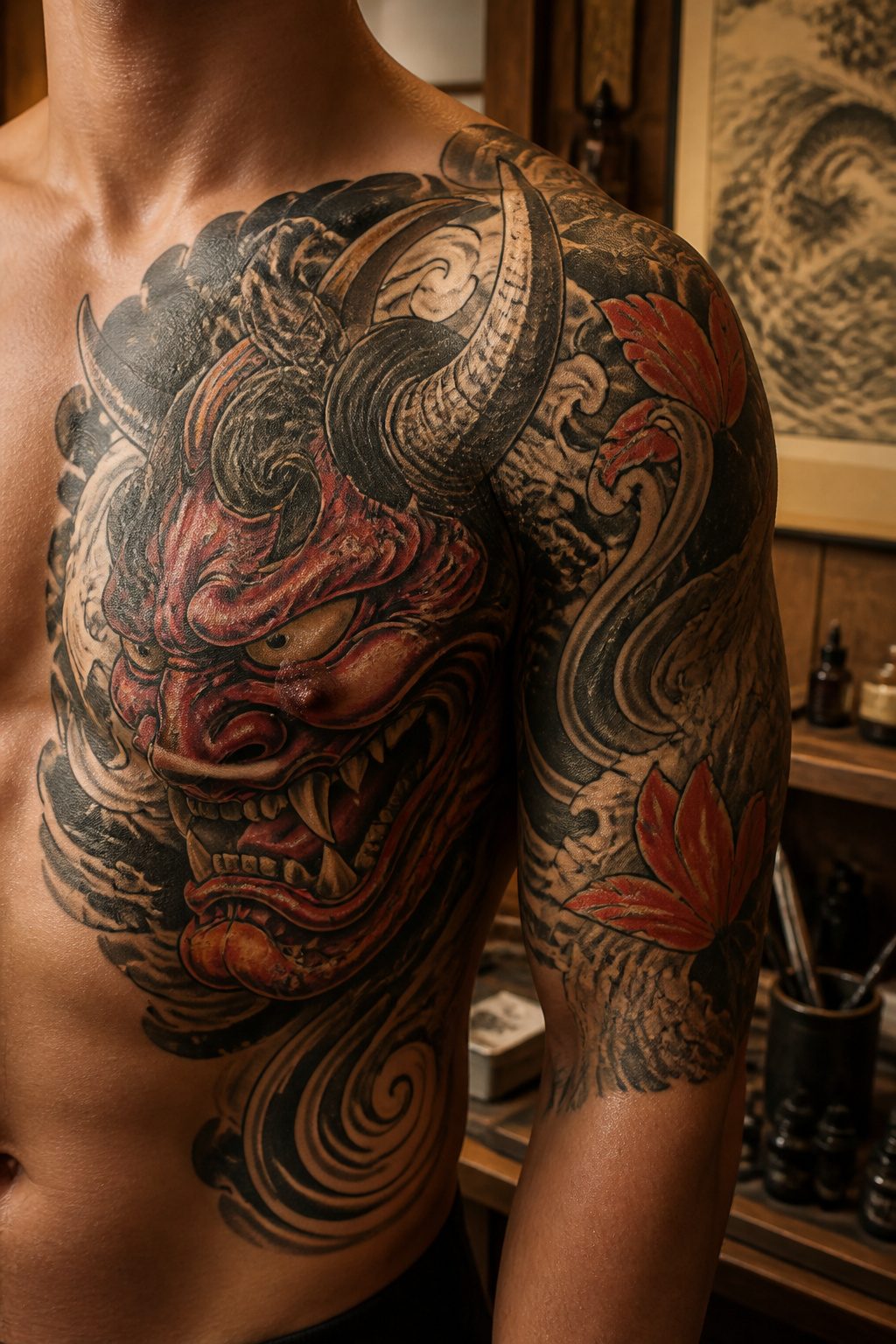
An oni mask sits alongside the tiger and the dragon as one of the three masculine designs that dominate Japanese tattooing for men. The horns and fangs look demonic, but in irezumi tradition the figure works as protection against evil spirits rather than an emblem of evil itself. The idea is to wear the face of what you fear, turning its own power back against misfortune.
Chest and shoulder cap placements act as a shield. The mask channels warrior ferocity, and that aggressive surface becomes the point: what looks outwardly threatening guards the person beneath it. I’ve seen clients wrestle with whether the oni’s cruelty in folklore makes the tattoo too dark. The folklore runs one way; the tattoo logic runs the opposite. The same viciousness that makes oni dangerous in stories makes them useful as guardians when inked on skin.
Inner strength works the same way. The mask does not deny darkness; it occupies it. That distinction matters for men drawn to Japanese work but wary of symbols that glorify violence. The oni answers a specific need, a design that acknowledges ferocity without celebrating it.
Japanese Geisha Tattoo
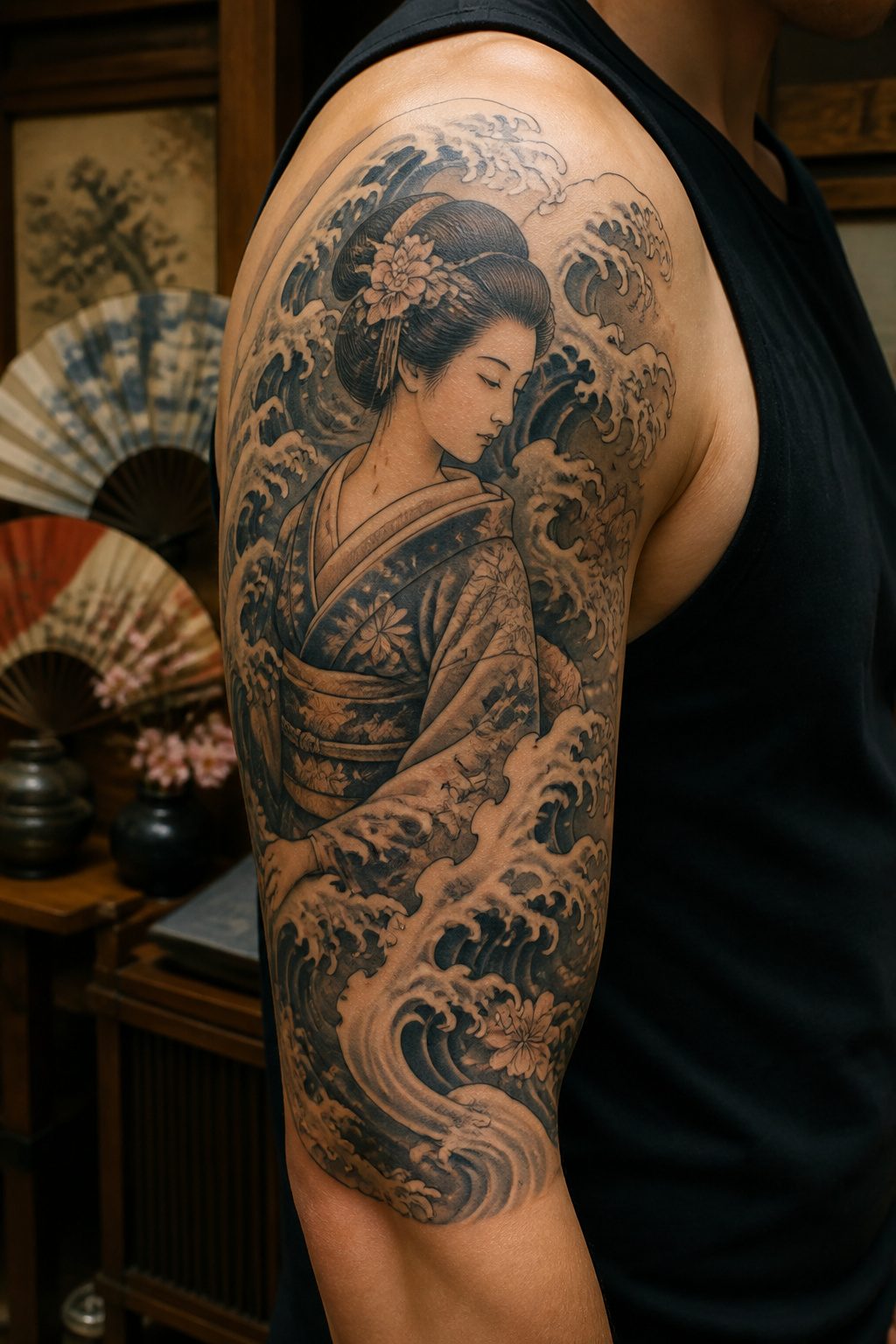
A geisha in irezumi carries the full weight of ukiyo, the floating world, where beauty and transience share the same breath. Men who wear this design are not reaching for ornament; they are marking an appreciation for discipline. The geisha trains for years in music, dance, and conversation. That rigor translates across gender. What reads as feminine subject matter on paper becomes, on male skin, a nod to earned refinement rather than inherited status.
Pairing solves the remaining tension. A geisha backed by crashing waves or a coiled dragon grounds the figure in masculine visual grammar without undercutting her symbolism. The sleeve placement helps, too: the geisha reads as one element in a larger narrative, not a standalone portrait. I have seen half-back pieces where she kneels beneath a cherry branch, the composition balanced so that neither figure nor flora dominates.
The color choice matters more than the subject. A full-color geisha can feel decorative, almost poster-like. A muted palette, or a single red accent on the kimono, keeps the piece sober. Men wear this best when the design acknowledges the tension openly, rather than pretending the geisha is something she is not. The tattoo works when the wearer knows why she is there.
Japanese Peony Tattoo
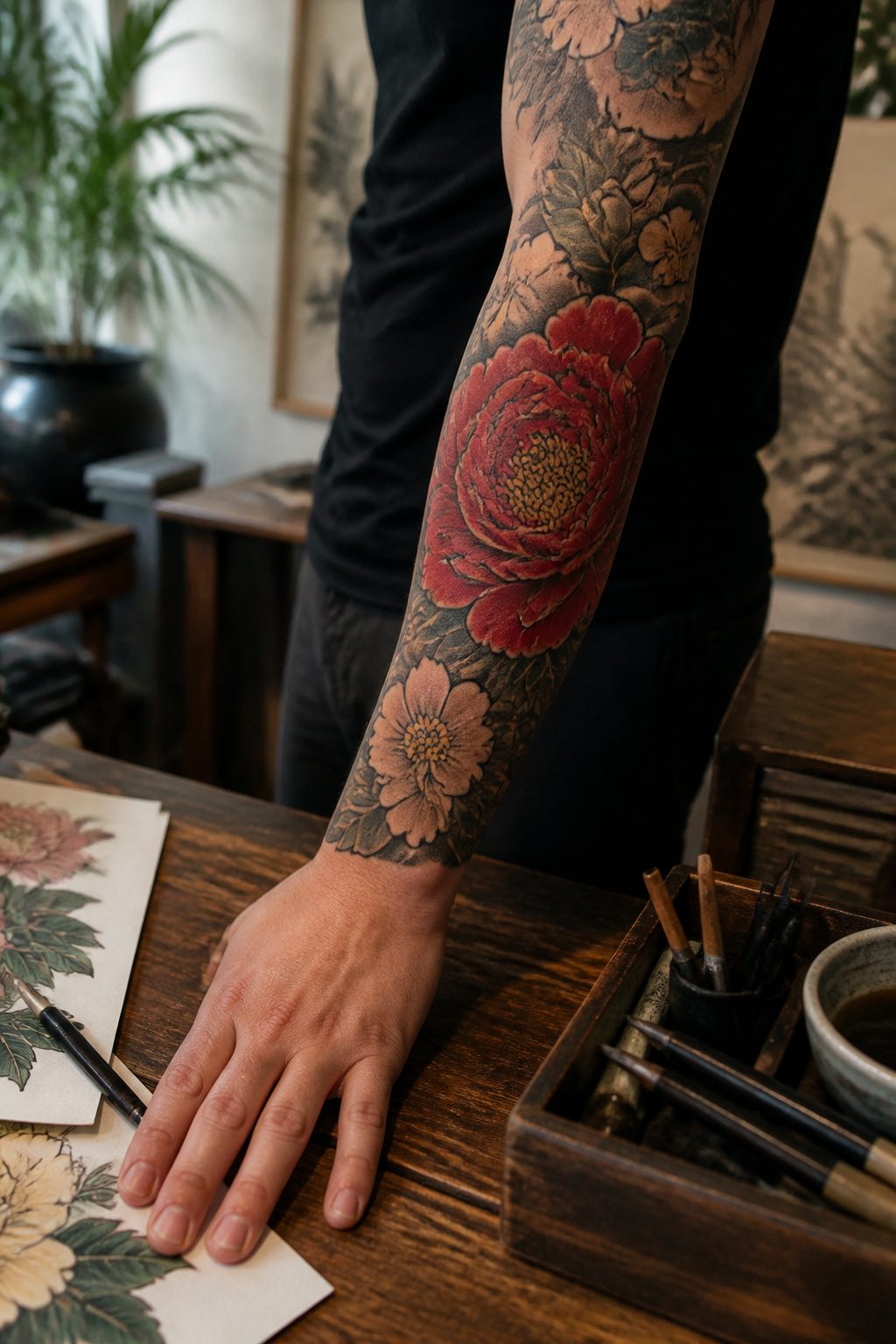
The botan carries weight in Japanese tattooing that its soft petals do not suggest. Sources consistently place it as a mark of wealth, prosperity, and the confidence that follows earned success, not inherited ease. What surprised me, reading through how these designs are built, is how often the peony serves as secondary muscle in a larger piece rather than standing alone. It fills space between primary figures, a supporting actor that still reads as masculine honor, particularly in its long association with samurai rather than any delicacy the flower might imply elsewhere.
Color work tends to push the botan’s reputation for prosperity into literal golds and deep reds. Black and grey shifts the same form toward severity and permanence, stripping away the obvious and letting the structure carry the meaning. Neither approach is wrong, but the choice changes what the peony says about the wearer: celebration of gain, or quiet certainty in having earned it.
Japanese Wave Tattoo
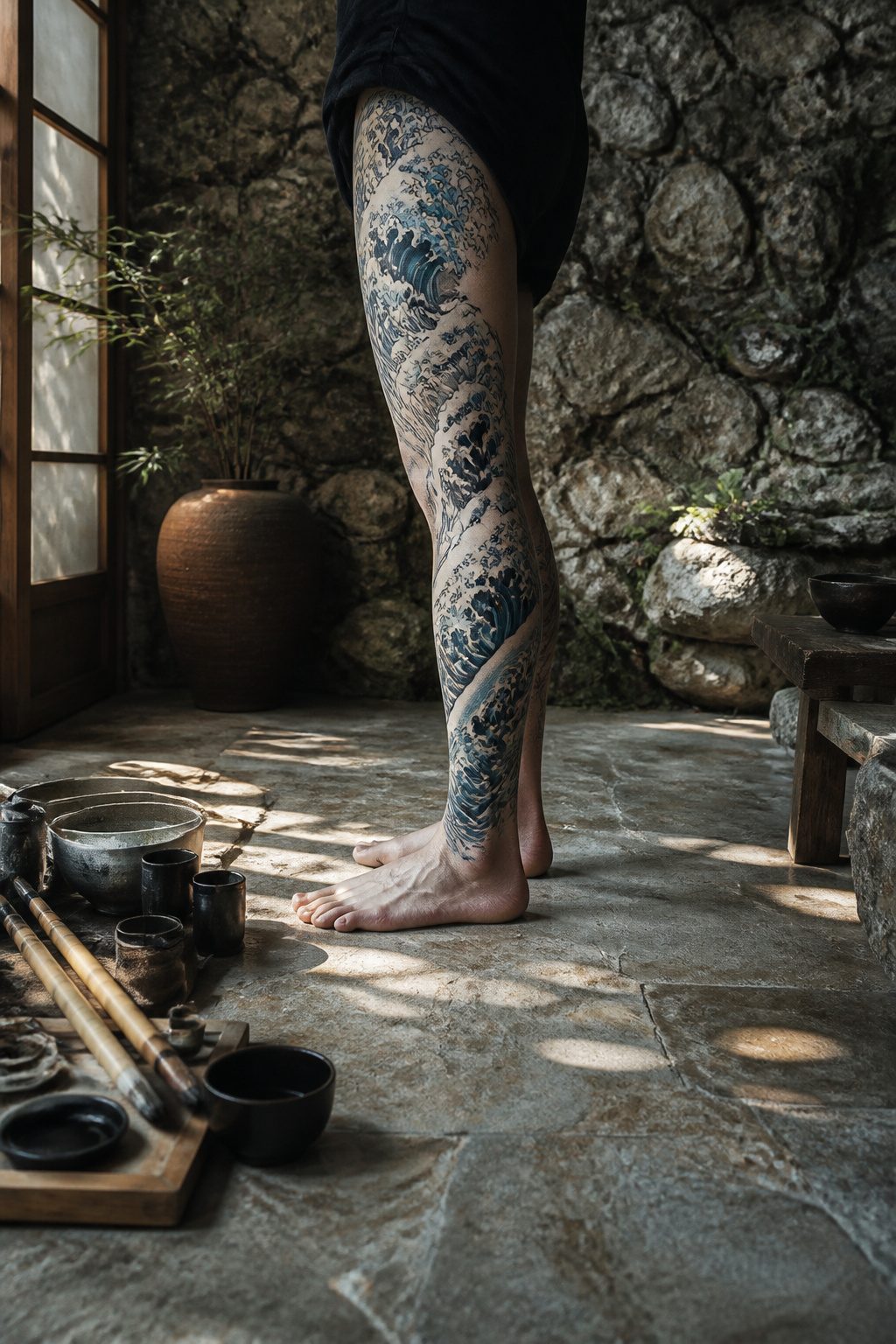
Hokusai’s Great Wave off Kanagawa gave the nami its global face, but in irezumi the wave had already stood for centuries as a working symbol: the power of nature, the certainty of change, life’s constant motion. The tattoo reads as a reminder that you adapt or you take the hit.
That same wave pattern serves a practical function in larger pieces as gakubori, the background framework that ties a sleeve or a back piece together. Waves, clouds, smoke, wind bars (kaze): these elements frame the main subject the way a mount frames a painting, giving the eye a path through the design and keeping the central image from floating in empty skin. A dragon without waves behind it looks placed; with them, it lives in weather.
The wave motif carries this flexibility of placement too. It wraps naturally around a forearm or shoulder, fills the negative space between larger figures on a chest panel, or runs the full length of a leg. The shape of the body becomes part of the composition rather than a limit on it. What starts as background can also stand alone: a single wave curling around a wrist or across a rib panel keeps the meaning without the commitment of a full scene.
Japanese Crane Tattoo
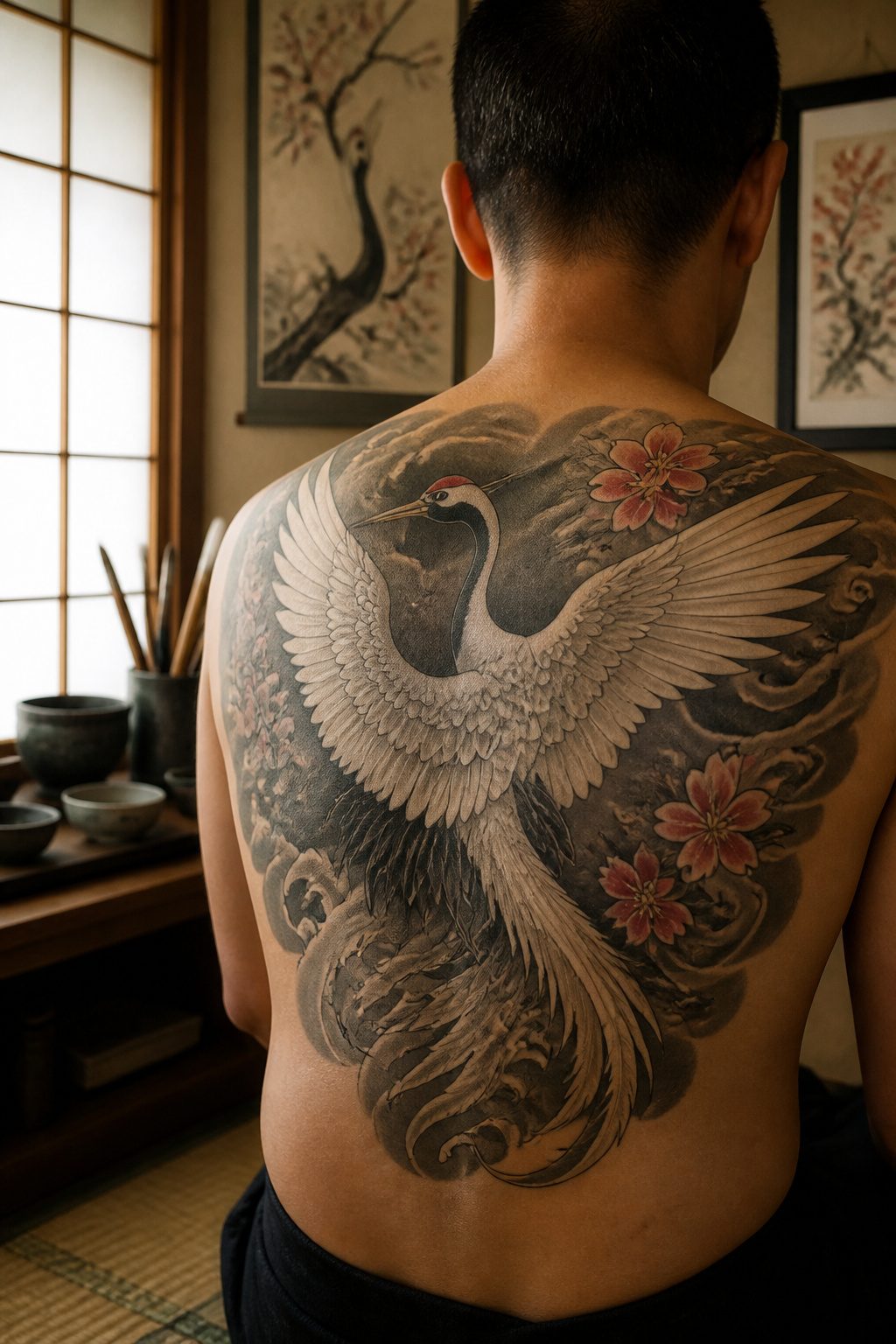
The crane, or tsuru, carries weight in Japanese tattoo work that goes beyond its elegant silhouette. Sources describe it as a mystical creature, the "bird of happiness," with a fabled thousand-year lifespan that makes it a direct symbol of longevity and good fortune in ink. That same thousand-year thread ties to the senbazuru tradition, the folding of a thousand paper cranes, where the act itself is believed to grant a wish or heal; the image in skin carries that accumulated hope.
A crane tattoo needs room. The long neck and the full spread of wings demand placement where the body gives space to stretch: the shoulder cap flowing into chest or back, the full back as a single composition, or the outer arm where the wing can sweep toward the elbow or shoulder. Pin it too small or tuck it into a spot that clips the wings, and you lose the gesture that makes the bird readable as Japanese-style work.
Fidelity is the quieter meaning here. Cranes mate for life, and in irezumi that pairs the design with loyalty, often worked alongside family pieces or as a counterweight to more aggressive imagery. The men I see choosing this motif are usually past the stage of picking something that looks cool in a flash book; they want the meaning to hold up at fifty.
The thousand-year lifespan is the anchor detail to get right in the consultation; artists who treat the crane as just another pretty bird miss the point entirely.
Japanese Foo Dog Tattoo
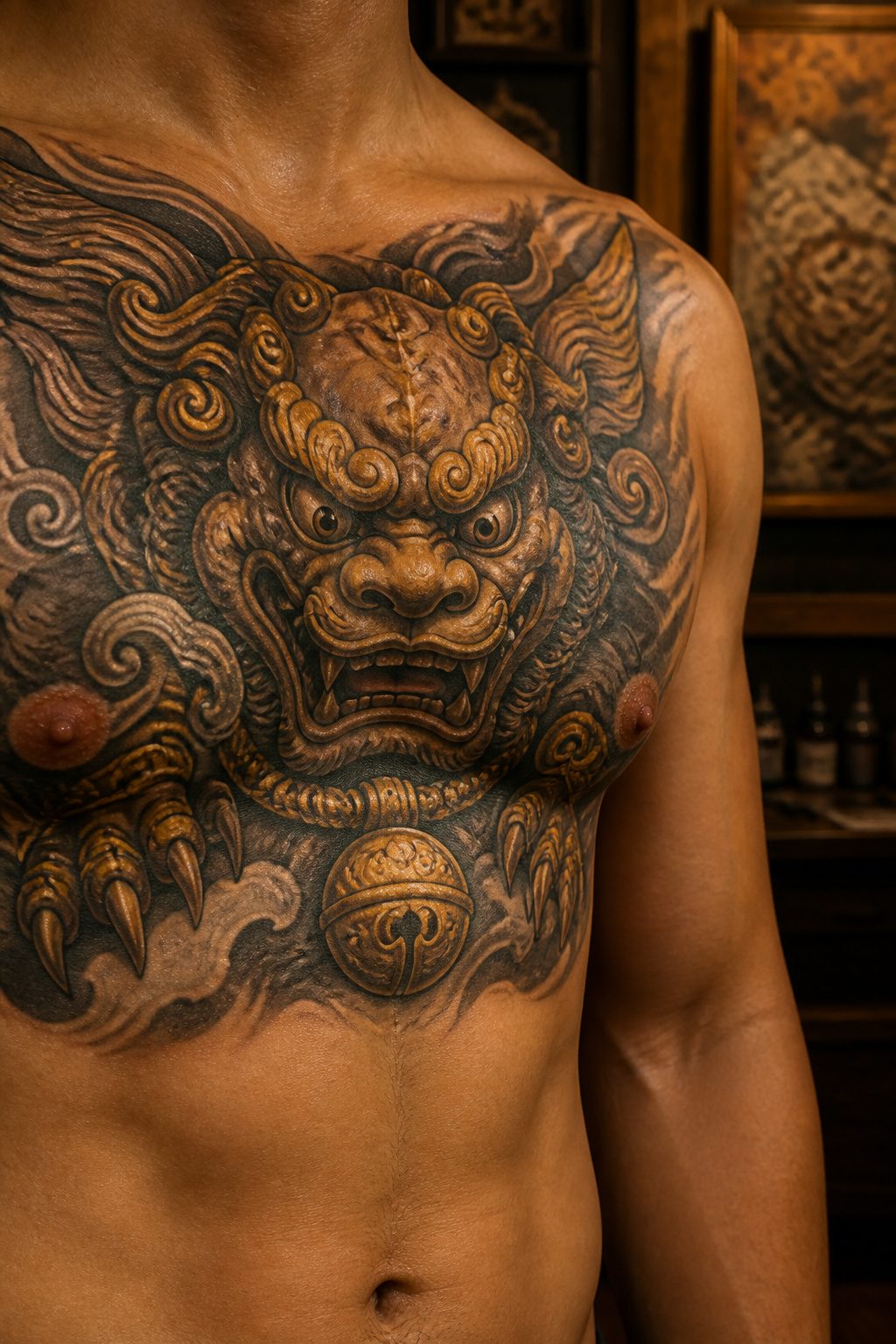
Foo dogs, or komainu as they’re called in Japan, have stood at Shinto shrine entrances for centuries as paired guardians against evil spirits. The design translates to body art as a protective emblem worn on the chest or thighs, where the broad canvas suits the figure’s natural bulk and stance.
The tattoo typically works as a single bold statement or as a matched pair flanking a central element, mirroring the temple tradition. What draws me to the motif is the visual weight it carries; the mane, the curled lip, the paw that supposedly suppresses demons. It reads as armor without needing to look like armor.
The creature is actually a lion, not a dog, a confusion that came west through Chinese terminology. That distinction matters less on skin than in a folklore seminar, though Japanese artists tend toward a more leonine face than the stylized Chinese version. Either way, the meaning holds: strength, vigilance, warding off misfortune.
Placement on the chest keeps the guardian over the heart; on the thigh, it moves with the stride. Both locations let the piece breathe at scale. A small foo dog loses the detail that makes the expression read, so the commitment is as much about real estate as it is about symbolism.
Japanese Octopus Tattoo
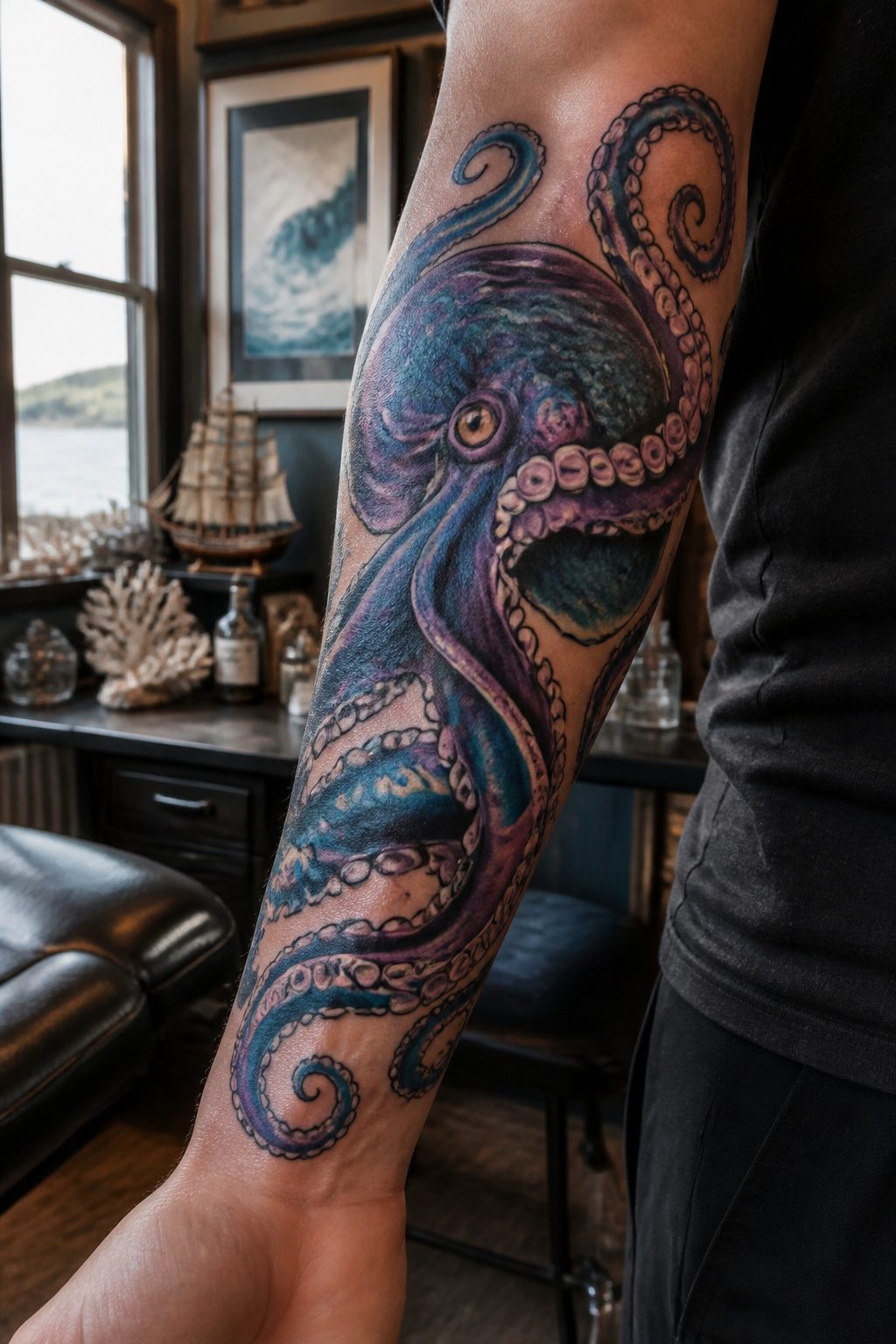
The octopus, or tako, carries a stranger weight in Japanese tattooing than the dragons and koi everyone expects. Intelligence and adaptability are the first readings, the eight arms giving a natural symbol for someone who handles more than most at once. What pulled me toward looking into it was the lesser-known thread: the Ainu and Shinto stories of Akkorokamui, a giant octopus said to hold healing power and wisdom but also a fickle, dangerous edge. That tension between helpful and unpredictable makes the design land harder than a straightforward power symbol.
Placement is where the octopus earns its keep. Arms, legs, or the full torso work because the tentacles need room to wrap and flow. A forearm piece can spiral toward the wrist; a thigh or ribcage gives the full body enough stretch to look like it is actually moving. I have seen attempts that compress the form into too small a space, and the result looks cramped, more like a squid in distress than something that belongs in deep water.
Men drawn to irezumi but wanting distance from the usual choices find the octopus occupies a useful middle ground. It is Japanese in origin, technically demanding for the artist because of the negative-space suction cups and the gradation work, and still uncommon enough that it reads as a deliberate decision rather than a default. The tradeoff is finding an artist comfortable with the form; not every shop that lists Japanese work has actually built one from reference rather than imagination.
What Irezumi Means
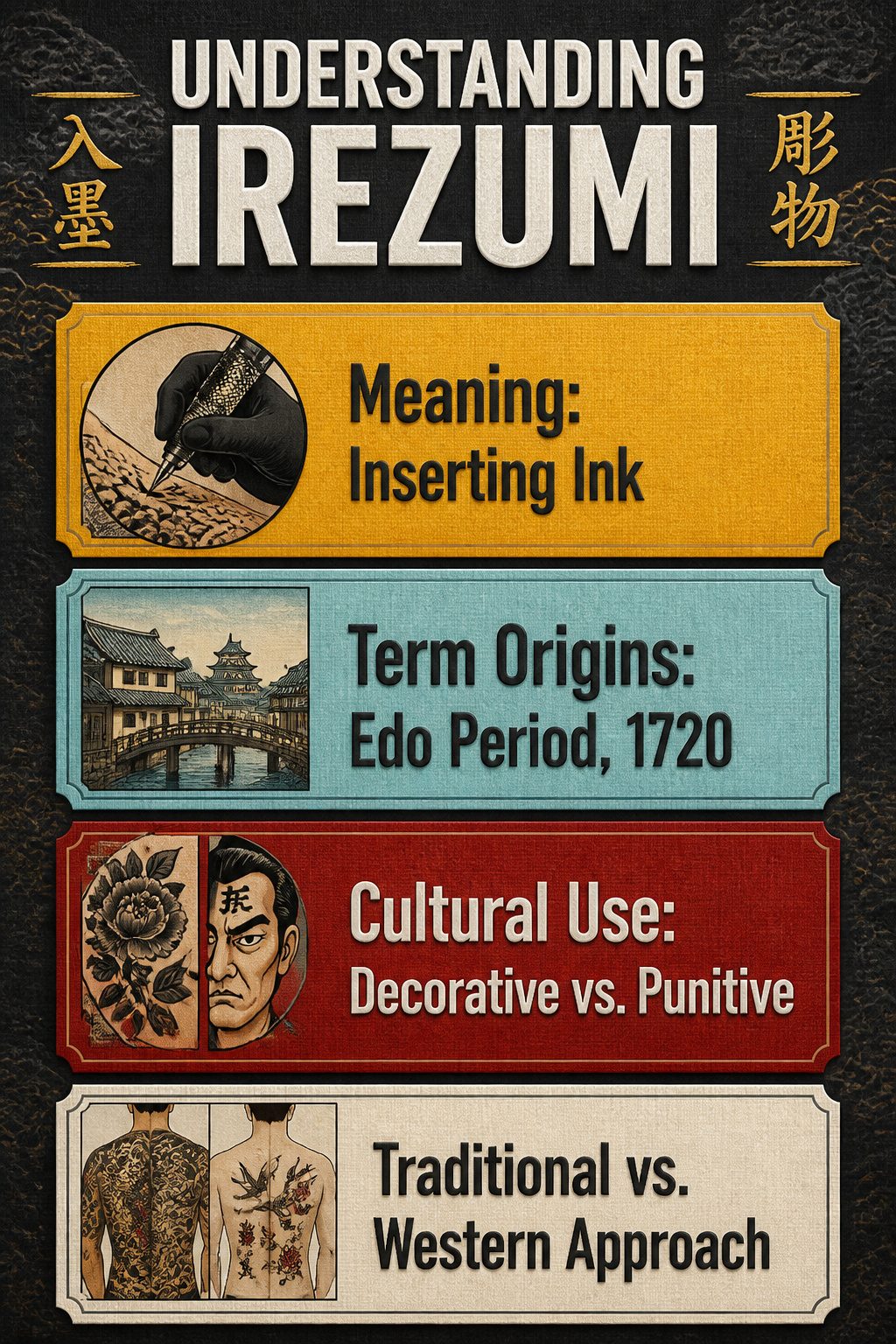
The word irezumi breaks apart literally: ire means to insert, and zumi means ink. Put together, it is the act of inserting ink beneath the skin. The term did not become common speech in Japan until 1720, the year tattooing shifted toward a punitive function during the Edo period. That historical turn still colors the word today, which is why many Japanese tattoo artists prefer horimono, a term tied more closely to the craft itself and, for some wearers, to the practical matter of hiding work beneath a kimono sleeve.
Traditional irezumi differs from Western tattooing in scope and intent. Where Western studios often build a collection of smaller, separate pieces over time, irezumi typically constructs a single coherent garment across large areas of the body, the back, a full sleeve, the chest as integrated panels. The background matters as much as the figure: waves, wind bars, and cloud bands are not filler but the environment the subject inhabits.
The history carries two tracks. Decorative irezumi appears in the spiritual and social tattooing of the Ainu people, protective marks with aesthetic purpose. The punitive thread runs through the Edo period’s criminal branding, a legacy that left the word itself stigmatized for centuries. Modern Japanese wearers, particularly younger generations, are slowly splitting that word away from its heavier history, but the tension between irezumi and horimono still signals whether you are naming the art or carrying its baggage.
Tabori and Hand Tattooing
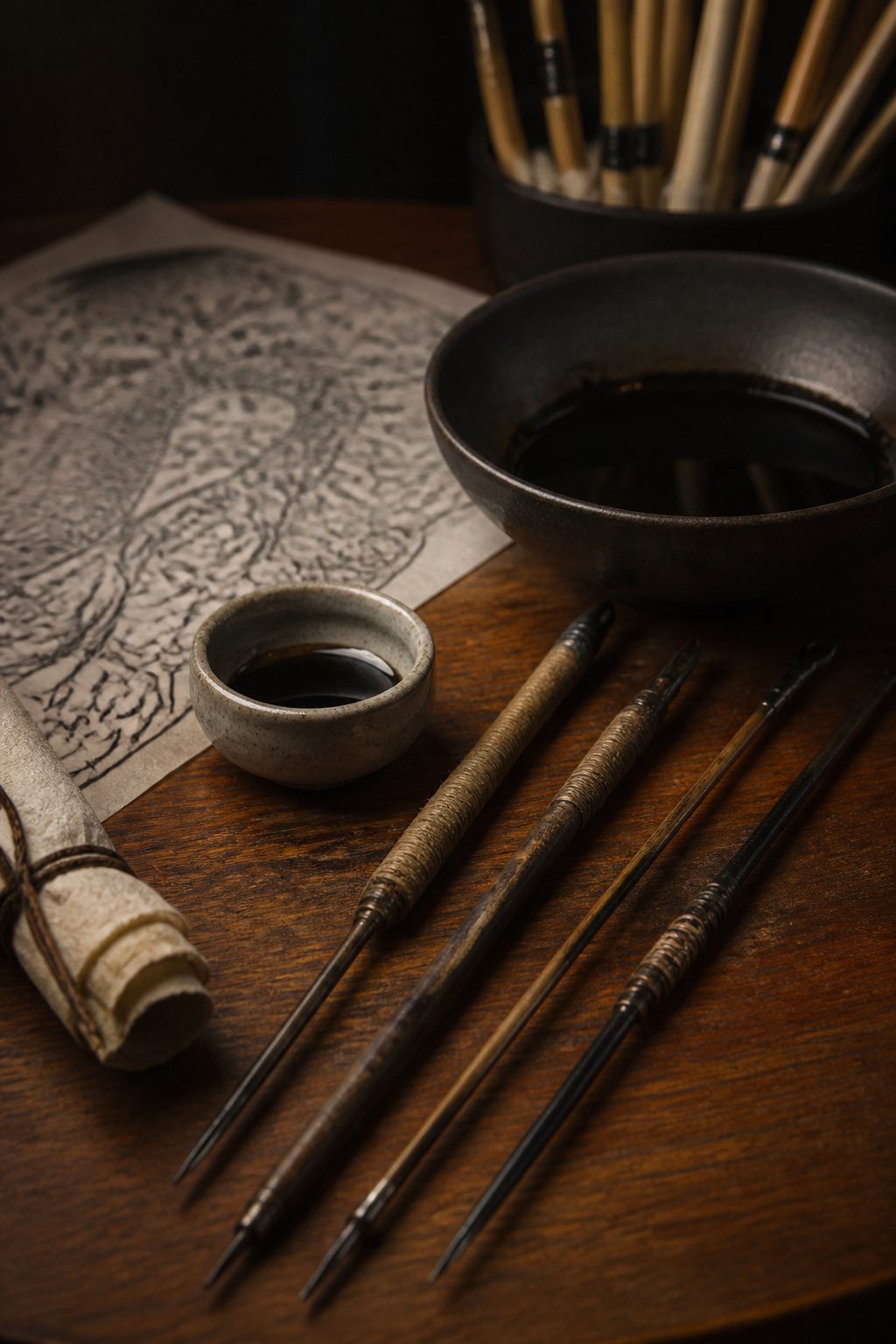
Tabori, the traditional hand-tattooing method, still gets used by a small number of artists who work with a bamboo needle bar and a metal needle grouping at the tip. The artist punctures the skin one mark at a time, while a modern machine drives roughly a hundred punctures per second. That gap in speed translates directly to time in the chair and, for most people, to pain. The slower pace of hand tattooing tends to hurt more, and the clients who choose it often treat that endurance as part of earning the work.
A full bodysuit done by tabori can stretch across 12 to 18 months, with each session needing about two to three weeks to heal before the next round. Pain varies sharply by placement. The ribs, sternum, and inner thigh generally rank higher on the scale than the outer arm or calf, though individual tolerance shifts those boundaries. Machine work is far more common now, even for Japanese designs, but the small group still seeking out hand tattooing usually does so for the tradition itself rather than speed or comfort.
How Placement Changes the Design
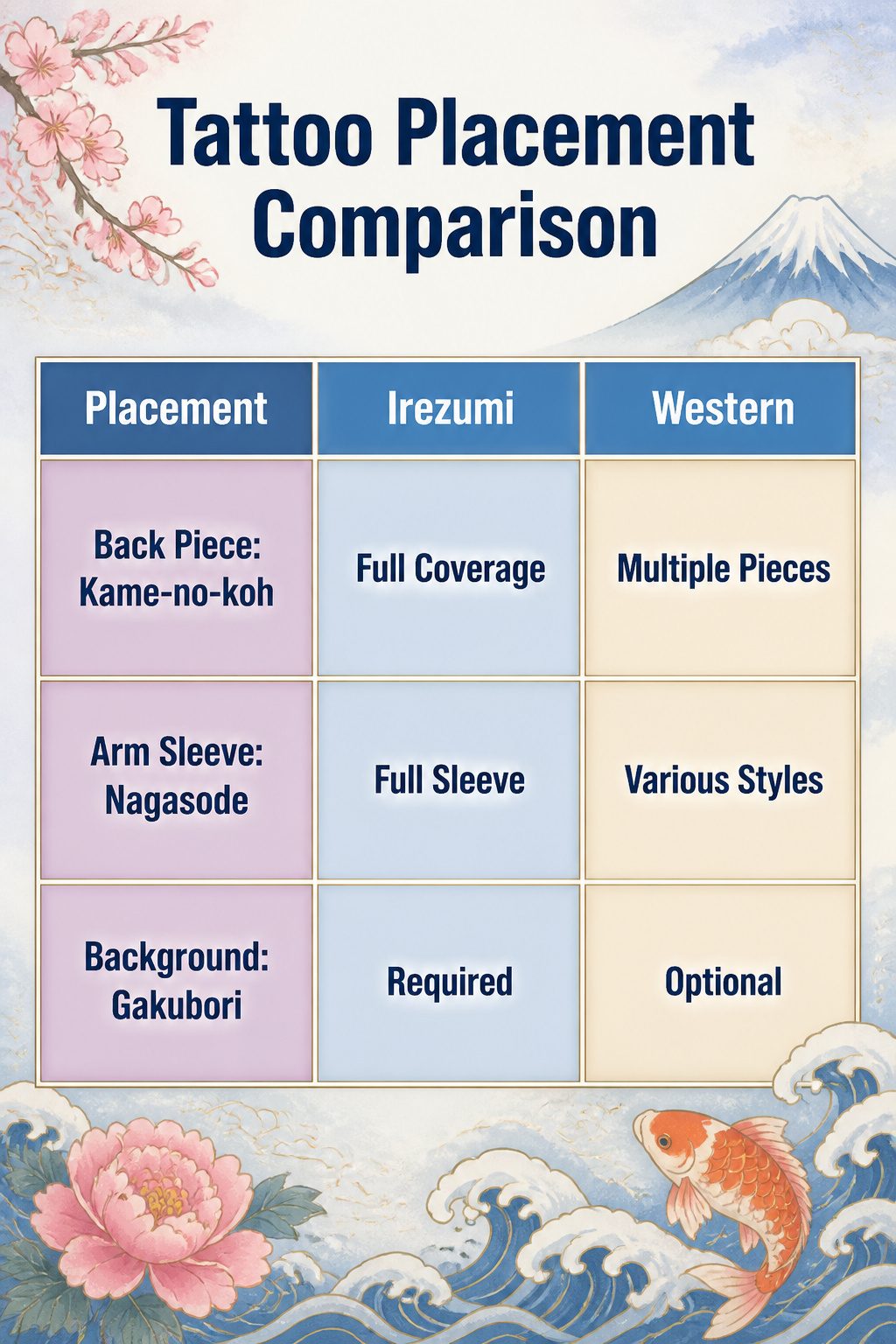
Japanese tattoo placement follows a logic most people miss until they see a bad example. The body has natural seams and slopes, and a design that ignores them looks pasted on rather than grown there.
A back piece, called kame-no-koh or "turtle shell," should run from the neck to the back of the thighs, covering the same ground a turtle’s shell would. Traditional body suits treat this as the anchor; everything else radiates from that center. Stopping higher, at the bottom of the butt or even the top, is less traditional but common now.
For arms, the terms matter because they set expectations. A nagasode is the full sleeve, with two breaks: kubu ends at the wrist bone, tobu just above the hand. The shichibusode stops below the elbow, like sleeves rolled up on a long shirt. The gobusode, less common, hits above the elbow like a short sleeve.
Larger pieces need gakubori, the background work that ties foreground elements together. Wind bars, or kaze, run vertical or swirl to move the eye; water and waves fill gaps between figures so the skin reads as one continuous scene rather than scattered images. Without this unifying layer, even beautiful single motifs look like stickers.
The Yakuza Stigma and Modern Views
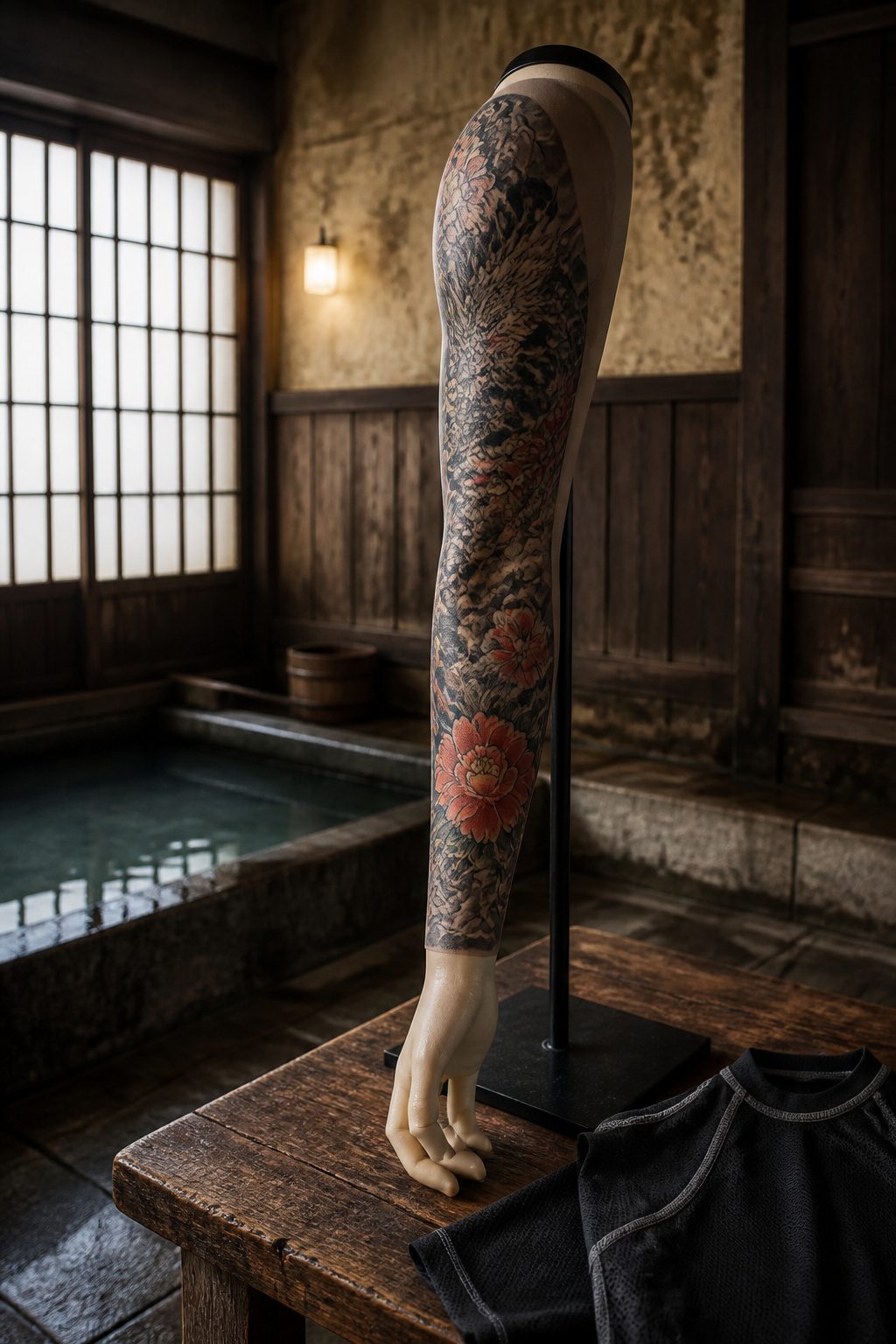
The stigma around Japanese tattoos traces back to 1870, the start of the Meiji period, when the government outlawed tattooing and irezumi became linked to the yakuza. Tattoos stayed illegal until the late 1800s, and even after legalization the association with organized crime stuck. Walk into a public bath or hot spring today and you may still be asked to cover up, rash guards required regardless of whether your ink depicts a criminal legend or a family koi.
Western wearers face a genuine tension here. The full-body horimono that yakuza members wear as marks of loyalty and strength share the same visual language, the same tebori hand-poking tradition, the same mythic imagery that draws many men to Japanese tattoo art in the first place. The design itself is not the problem; the context is.
What convinced me, reading through the history, is that appreciation hinges on knowing what you are carrying. A Japanese dragon or peony sleeve does not make you yakuza, but wearing it without understanding why pools still ban tattoos in Osaka is its own kind of blindness. The line between honoring the craft and treating it as exotic wallpaper is work you do before the needle touches skin, not after.
Frequently Asked Questions
What is a traditional Japanese tattoo called?
A traditional Japanese tattoo is called irezumi, which literally means inserting ink beneath the skin. Many Japanese tattoo artists today prefer the term horimono, which ties more closely to the craft itself and carries less of the historical stigma from the Edo period when tattooing became associated with criminal punishment.
How long does a traditional Japanese tattoo take?
A full back piece takes 30 to 50 hours of work spaced over 12 to 18 months, while a sleeve runs 6 to 10 months. Sessions need two to three weeks of healing time between them, so the calendar stretches well beyond the hours actually spent in the chair.
Is it okay to get a Japanese yakuza tattoo?
Yes, though in Japan tattoos remain associated with the yakuza and are still frowned upon in many settings. The outlawing of tattoos during the Meiji period around 1870 pushed the art toward organized crime, and that stigma persists in public baths, gyms, and some workplaces even though tattooing is no longer illegal.
What are the best Japanese tattoo symbols for men?
The Big Three masculine designs in irezumi are the tiger for raw power and protection, the dragon for strategic wisdom and good fortune, and the oni mask for guarding against evil spirits. Men who value discipline and honor above raw force often choose the samurai instead.