Tribal tattoos are dense black geometric patterns developed across separate cultures as genealogy, protection, and passage, not decoration. The catch is that most of what Western shops call "tribal" collapses dozens of unrelated traditions into one word, and some of those traditions are closed to anyone outside the lineage. Samoan tatau, for instance, requires a master whose authority passes through his own family line and cuts over days while family watches.
Polynesian Tattoos
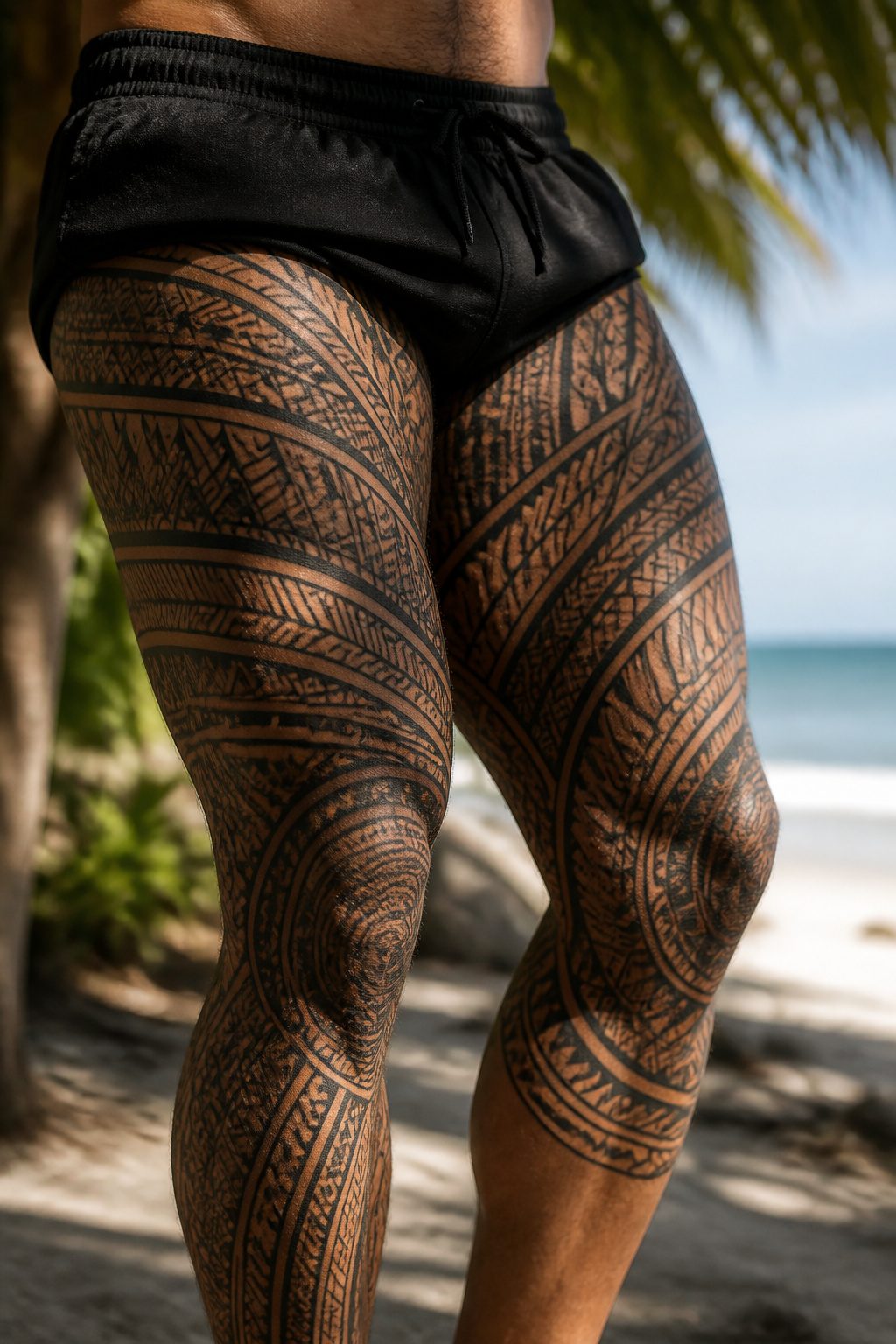
Polynesian tattoos carry some of the deepest family records still worn on skin. The Samoan tatau, practiced without break for more than two thousand years, covers a man’s body from waist to knees in the pe’a, dense geometry that flows with muscle and bone rather than fighting them. Women receive the malu, a lighter design on the thigh whose name itself means shelter and shade. Neither is purchased casually. A tufuga ta tatau, a master whose authority passes through his own family line, cuts the pattern with bone combs, boar’s tusk, or turtle shell, tapping each point home with a mallet over days while family watches the whole time.
The marks tell genealogy first, then passage and protection; decoration follows only after that. The Iban in Borneo work the same way differently. Their bunga terung, the eggplant flower, sits on the shoulder where a travel pack would rest, marking bejalai, the leaving of the longhouse to gather knowledge. At its center sits the tali nyawa, the rope of life, a spiral that grows as the traveler collects further marks for each place visited, until the body itself becomes the map of where he has been.
Maori Ta Moko
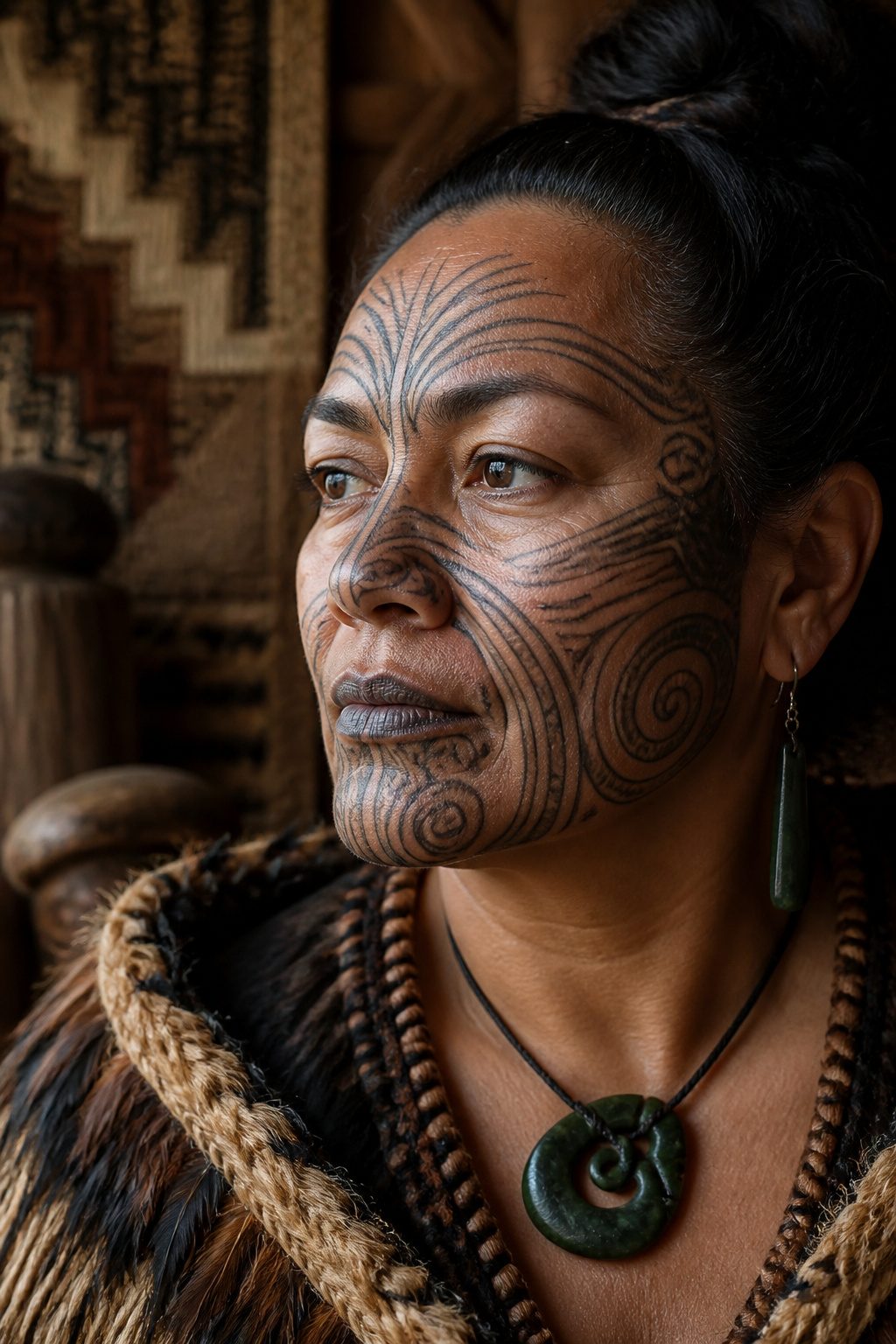
The curvilinear spirals of ta moko follow the muscle and bone beneath them, not the flat geometry of a stencil. Each koru, each double twist, carries whakapapa, the genealogy that places a person in a lineage of ancestors and fixes their social standing for anyone trained to read the pattern. Traditional application used bone chisels called uhi to carve furrowed grooves into skin, then stain them; the result sits closer to scarification than to puncture tattooing, which is why aged moko keeps that carved, dimensional quality rather than looking inked.
The design and the wearer are not separable. Facial moko in particular encodes personal history and rank so specifically that wearing it without the descent and ceremony to receive it is understood by Maori commentators not as imitation but as identity theft. The tradition itself drew the boundary: kirituhi, "skin writing," was created as a respectful alternative built from Maori visual elements but carrying no genealogical claim. It is the door the culture opened beside the closed one, and the honest choice for anyone outside the tradition who wants the aesthetic without the theft.
Celtic Tattoos
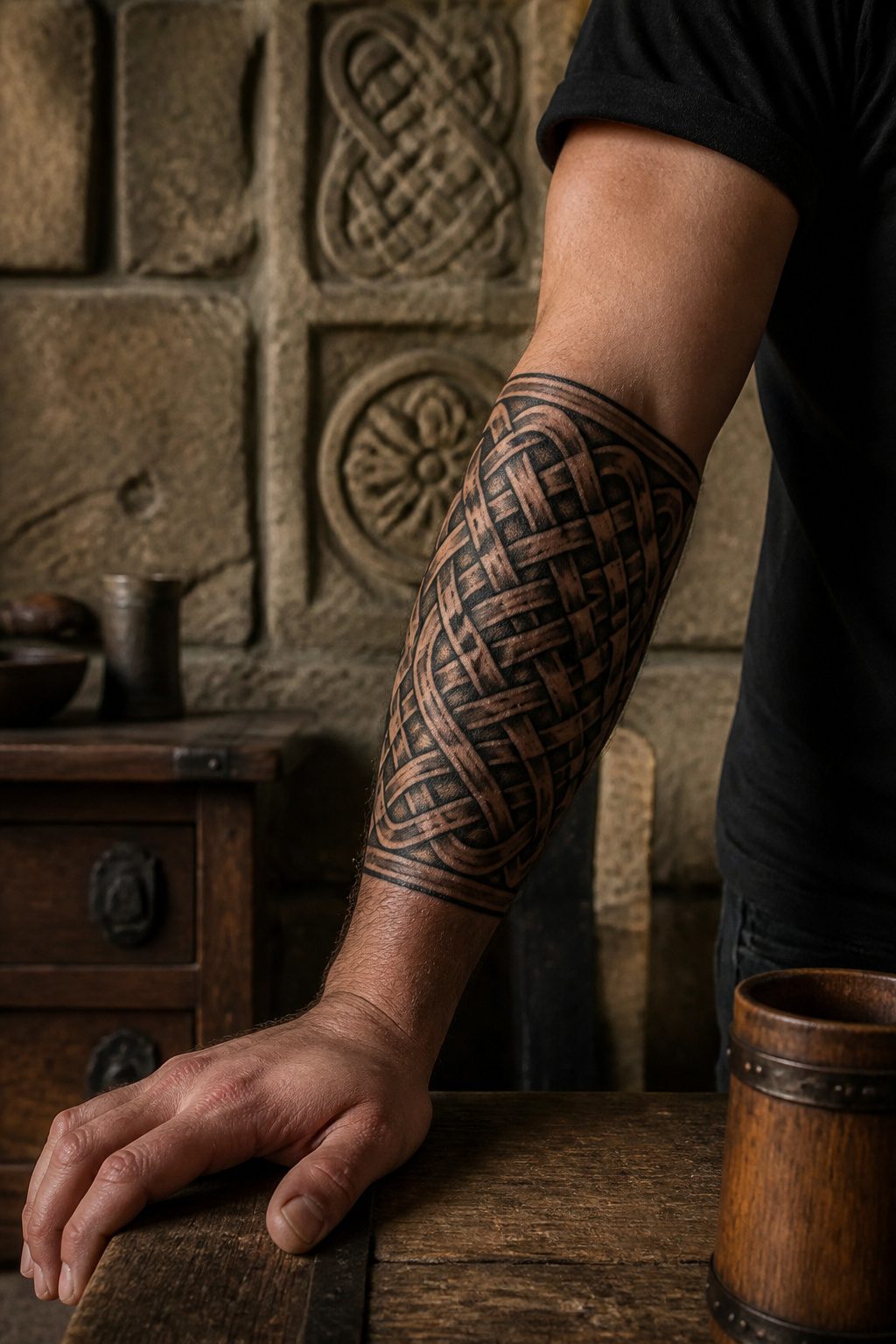
Celtic knotwork carries a visual logic you can read once someone shows you how. The lines interlace without beginning or end, forming what artists call continuous paths that stand for unbroken cycles: life, death, and return. A single knot may loop through itself four, eight, or twelve times, and the count matters less than the fact that no thread ever terminates.
These patterns migrated onto skin from older surfaces. Illuminated manuscripts like the Book of Kells kept knotwork confined to margins and initials until the 19th century revival pushed them larger. Stone crosses in Ireland and Scotland had already done the same work in three dimensions, carving the same interlace at scale. The adaptation to armbands, back pieces, and chest tattoos follows that precedent: the skin becomes another plane where the line refuses to break.
Animals and crosses often anchor the knotwork in modern pieces, a borrowing from the original sources. An armband may run pure interlace, but a chest piece usually needs a stag, a tree, or a cross to give the eye somewhere to rest. The interconnectedness the Celts emphasized in their mythology, that everything threads through everything else, translates literally into how the tattoo wraps a limb or spans a shoulder. Large-format sleeves carry it best because the pattern needs room to turn; small accents work only when the knot simplifies to a single loop or spiral.
Native American Tattoos
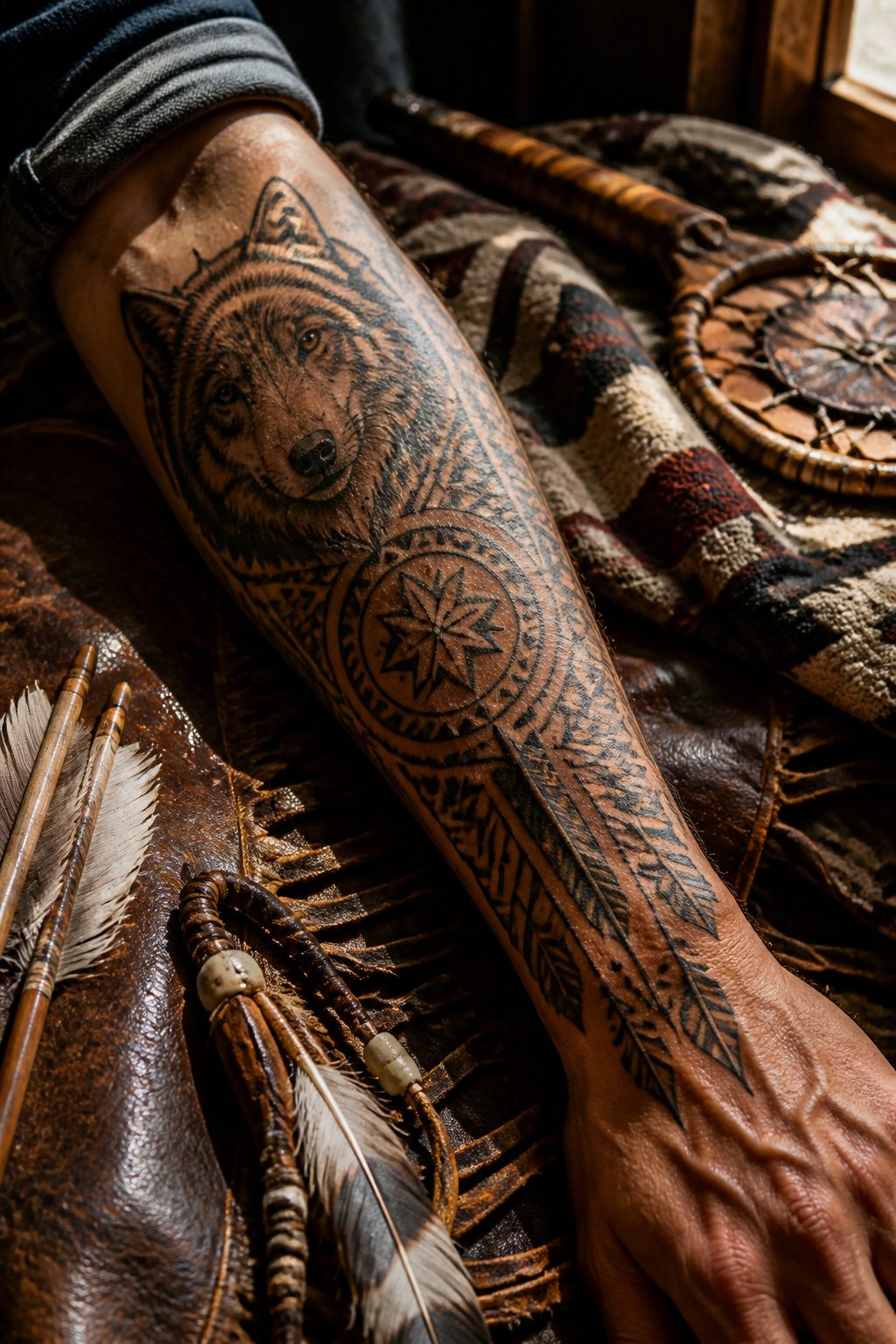
Wolves, eagles, and bears carried distinct powers in Native American tattoo tradition, and the animal you chose said something specific about what you were asking for. A wolf marked loyalty and pathfinding, an eagle carried vision and spiritual sight, and a bear brought strength rooted in healing, not just force. Feathers, arrows, and dream catchers joined these animal motifs as universal symbols across tribes, though the specifics shifted between regions and peoples.
Geometric patterns worked alongside the animals to balance the design and carry their own weight. Lines and shapes that repeated in symmetry stood for harmony, the kind of balance these cultures built their understanding of the world around. The placement on the body mattered as much as the symbol itself. A protective mark went where the body faced outward or met the world first: the chest, the forearms, the hands. Identity marks sat closer to the core, on the upper arm or the back, where they were seen by the community rather than flashed at a stranger.
If you are drawn to a specific tribe or region, research the exact symbols before you commit, because the same animal shifts meaning between nations. A standalone piece reads cleaner than a sleeve for this style, and most traditional Native American work was never designed to wrap a full arm. Build a patchwork of individual symbols with your artist rather than forcing continuity where the tradition did not intend it.
Aztec Tattoos
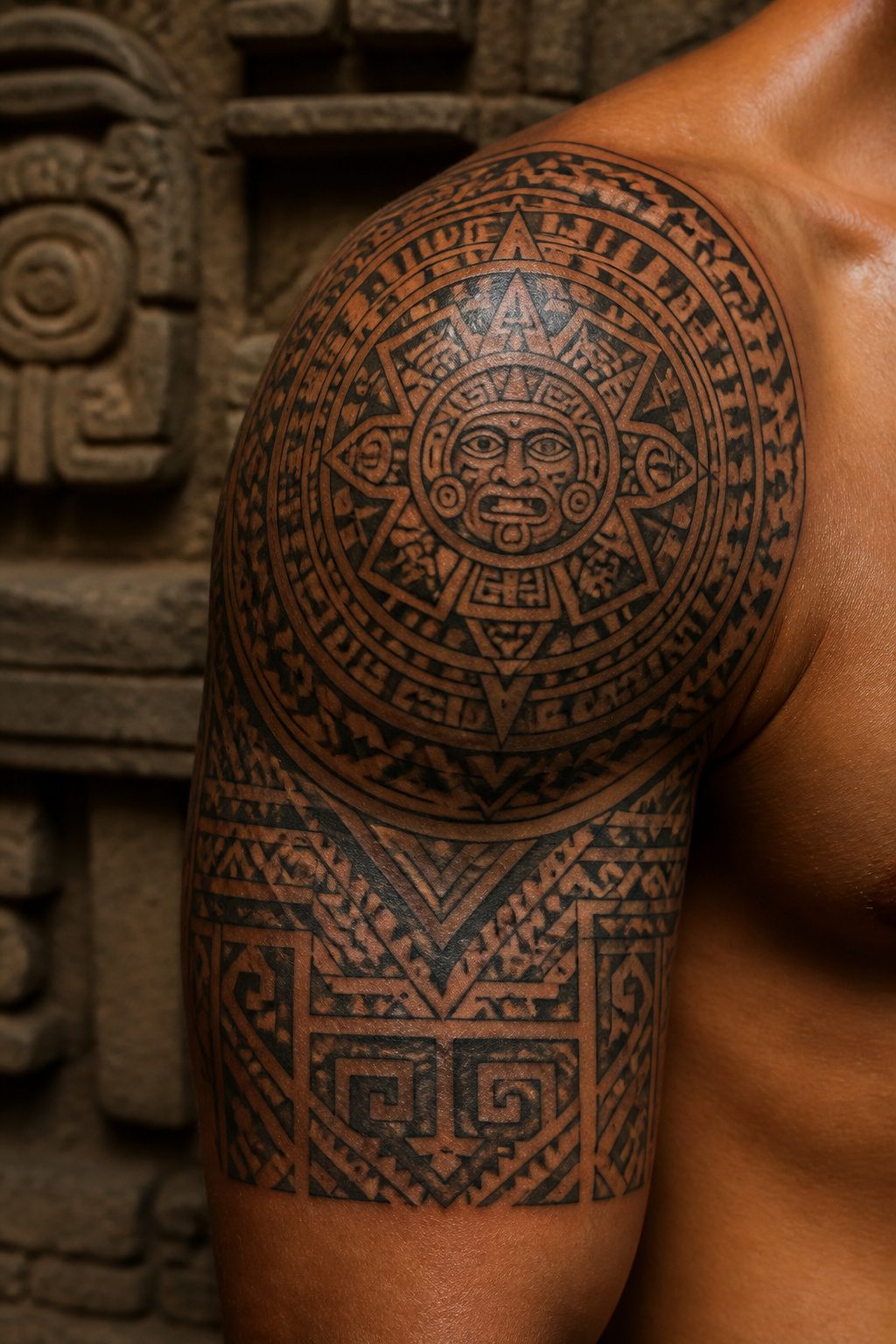
Aztec tribal tattoos carry some of the densest geometry in the tradition, built from interlocking triangles, squares, and circles arranged in strict symmetry. The sun stone ranks among the most requested motifs, its concentric rings mapping what the culture read as cosmic order and the cycles that governed warfare, agriculture, and ritual sacrifice. A sun-god piece reads as strength first, divinity second — the order matters if you are choosing between this and a more personal emblem.
Eagle warriors appear often in chest and sleeve work, the human figure merging with avian features to mark a military elite who drew their rank from battlefield captives, not birth. Serpents thread through the designs too, though the feathered serpent Quetzalcoatl carries a different register than the undifferentiated snake: wisdom, fertility, and creation, where a plain serpent might read only as danger or earth. Jaguars, maize, and water motifs fill out the vocabulary, but the balance of the whole composition weighs heavier than any single element. An Aztec sleeve lives or dies on whether the negative space between shapes holds its own tension; the patterns should interlock, not merely sit adjacent.
African Tattoos
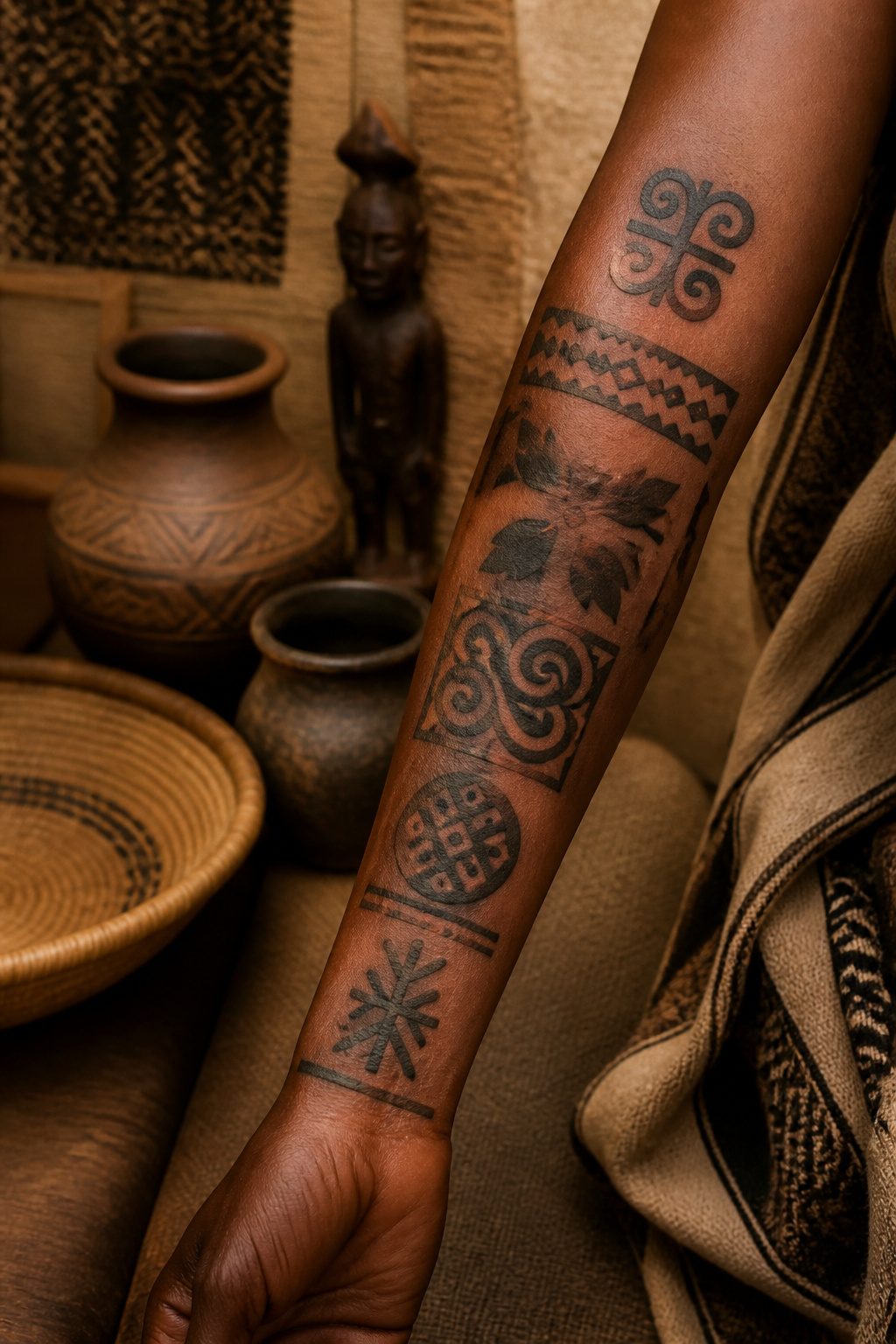
African tribal tattoos carry thousands of distinct traditions rather than one continental style, and recognizing that difference matters before any needle touches skin. West African Adinkra symbols convey wisdom, courage, and unity through geometric forms that read like compressed proverbs. The Aya fern, Ngwena crocodile, and Twiga giraffe each carry specific weight in Ashanti and related traditions, while the Duafe comb marks beauty and patience. Southern Africa brings Ndebele patterns that map fertility and social standing through house-painting geometries adapted to skin. North African work carries Arab and European design DNA, visibly different from western and southern regional marks.
Scarification and tattooing often overlap in practice, not in separate categories. Some traditions cut and stain rather than puncture ink, which changes how the mark ages and what it signifies. The tool and the ceremony are part of the finished piece; separating them strips meaning. If you are drawn to these designs, the honest work is tracing which specific culture holds the symbol you want, whether that tradition is closed or open to outside wearers, and finding an artist who knows the difference between borrowing respectfully and printing someone else’s lineage.
Norse Tattoos
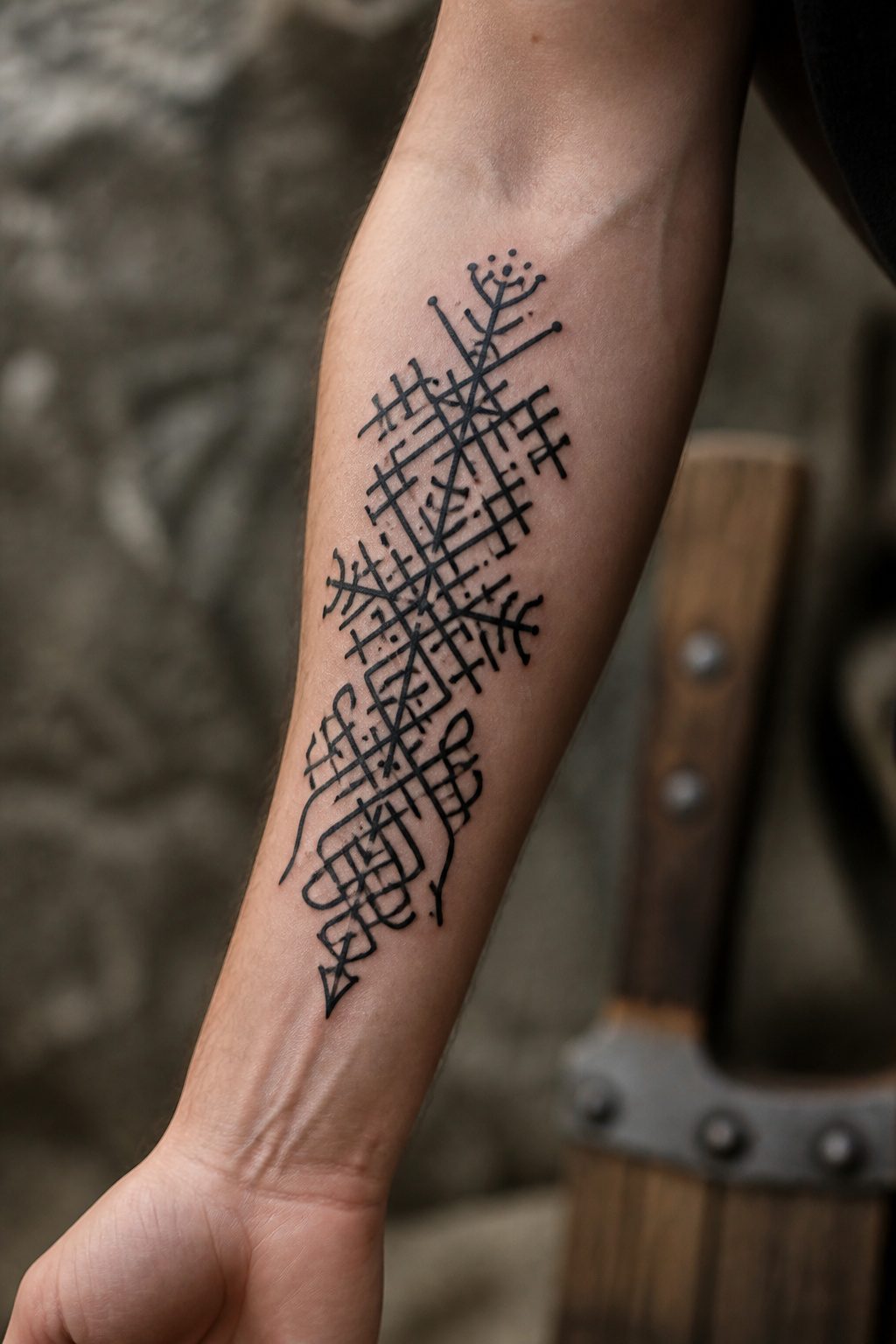
Norse tattooing sits on thinner ice than most traditions people ask for at the shop. The Vikings left no continuous tattoo practice we can trace the way Polynesian islands did. What survives are scattered saga passages, the odd archaeological find of needle-like bone tools, and a lot of modern interpretation filling the gaps.
The Vegvísir you see on Pinterest boards everywhere? That "Viking compass" only appears in one Icelandic grimoire from the 1600s, centuries after the Viking Age ended. It is a beautiful symbol, and I have tattooed dozens of them, but calling it ancient Norse requires that honesty up front. Same with the Valknut, those three interlocked triangles found on Swedish picture stones. The stones are real, the name "Valknut" is modern, and no text explains what it meant to the people who carved it.
Bindrunes interest me more as a tattoo artist because they demand actual study. Combining two or more runes into a single symbol was done historically on objects like the Björk rune stone, but the rules are specific and easy to get wrong. A client once brought me a bindruno he had designed himself that accidentally reversed one stave and changed the meaning entirely. We redrew it together from the Elder Futhark, checking each angle.
The work I respect most in this style admits what it is: modern Norse-inspired art grounded in historical fragments rather than pretending to a lineage that the evidence does not support.
Hawaiian Kākau
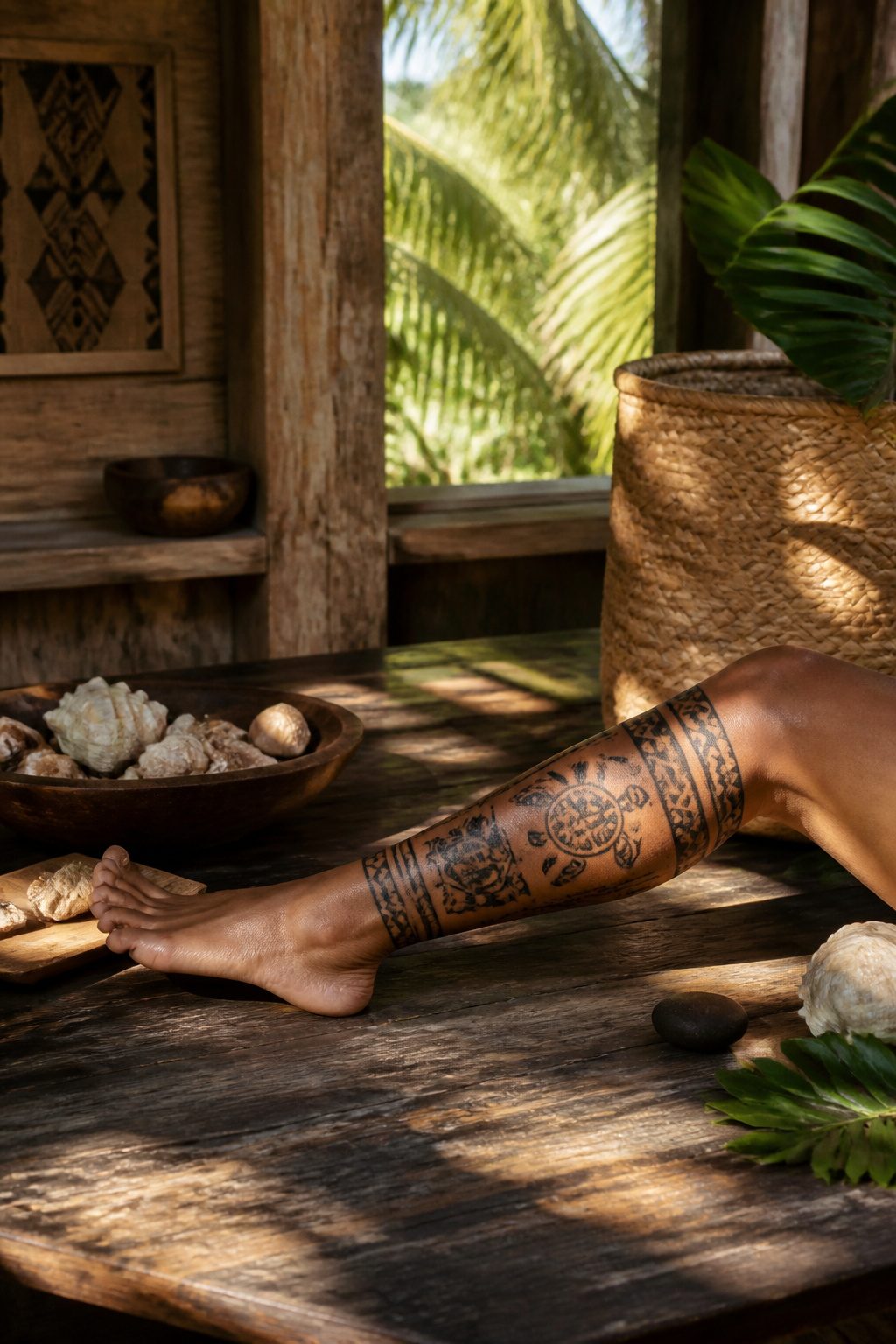
Hawaiian kākau carries a specific name for a reason, and that distinction matters the minute you start comparing island traditions. Where the broader Polynesian tatau covers a range of practices across the Pacific, kākau is the term tied specifically to Hawai’i, with its own motif vocabulary rooted in nature and personal history.
The designs hold shark teeth, fish hooks, sea turtles, and the honeycreeper bird, symbols that do not transfer cleanly to other island systems. Placement carried weight too; arm work traditionally signaled protection and strength, while leg marks spoke to connection with the land.
The kapu system once locked certain designs to chiefs alone, a restriction that made tattooing as much about social boundary as personal expression. When that structure collapsed under outside pressure, the practice went with it, suppressed along with the hierarchy it served. The revival that followed has had to reconstruct meaning from fragments, which is why genuine kākau today usually comes through hand-tapping methods with a chisel rather than modern machines. The tool choice is not aesthetic preference; it is how the tradition stayed recognizable enough to reclaim.
Japanese Irezumi

Japanese tattooing carries a different logic than the single-image pieces most Western shops produce. Irezumi, the traditional form, treats the body as a single canvas where flow and composition matter more than any individual motif. Dragons, cherry blossoms, lotus flowers, and waves do not stand alone; they interlock across sleeves, backs, and eventually full bodies in a planned progression that can take years.
The scale changes everything. A client might arrive wanting a samurai or a phoenix, but the artist maps how that image bends with the shoulder, how waves must carry the eye down toward the next session’s work. Hand-guided methods with specialized needles still happen on the island, though they take longer and demand more endurance than machine work.
Historically, this full-body aesthetic belonged to outcast groups, which is part of why visible irezumi still carries stigma in Japanese public life today. The Western appetite for discrete symbols, a geisha on a forearm or a mask on a calf, reads to traditional artists as missing the point. The body is the design.
Neo-Tribal Tattoos
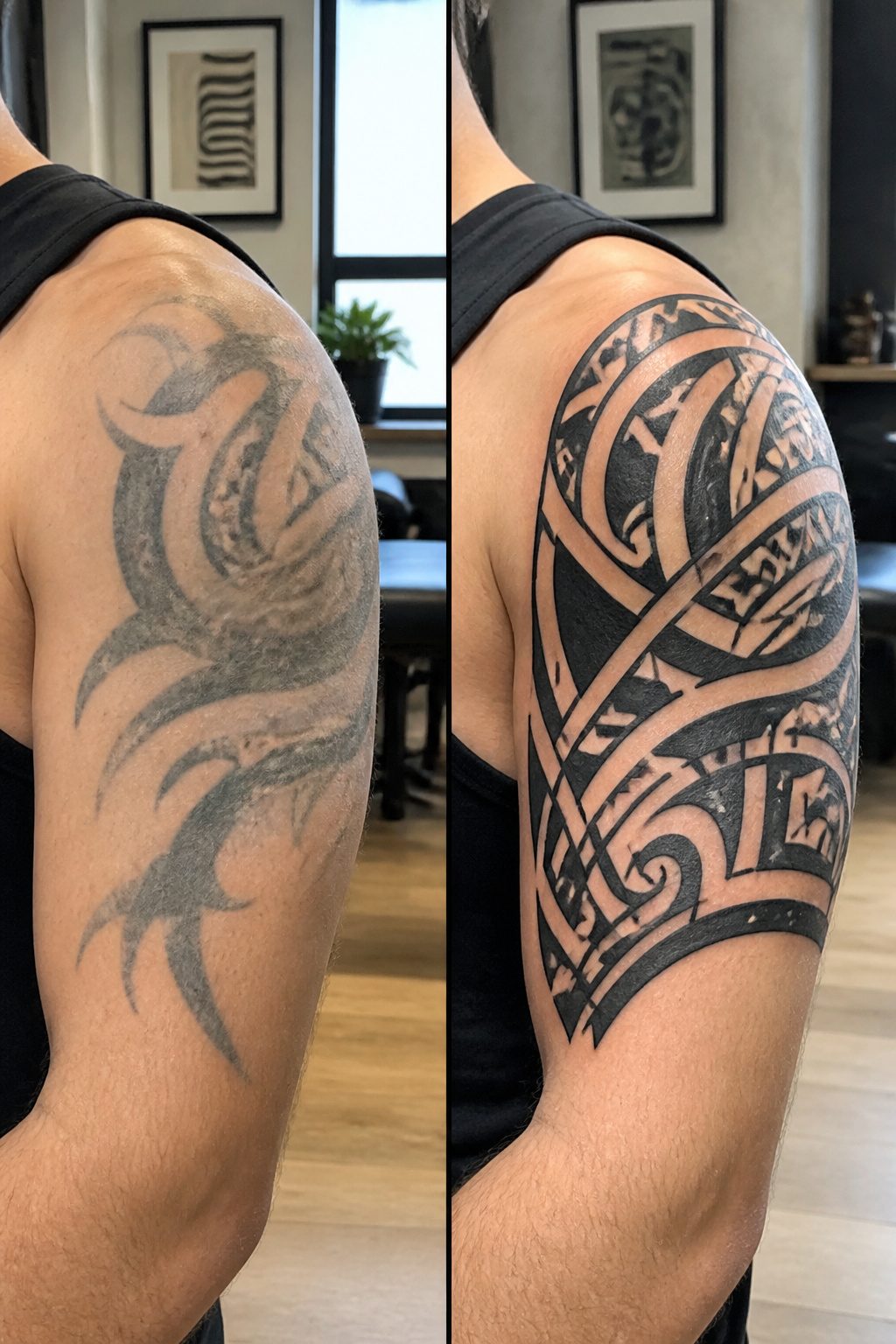
Neo-tribal tattoos broke from the rule that every pattern had to belong to a specific culture’s genealogy. Leo Zulueta, born in 1952 and often called the father of modern tribal tattooing, did the breaking. He grew up partly in Hawaii and California, developed an interest in Bornean Iban tattooing in the 1970s, met Don Ed Hardy in 1976, and began tattooing professionally in 1981. In the early 1990s he published a booklet of his tribal-derived work that helped set off the wider neo-tribal revival, and in 1992 he founded Black Wave Tattoo in Los Angeles. What he actually did was bring the bold-fill, high-contrast graphic logic of Polynesian and Bornean tattooing into a Western scene that had been running mostly on American traditional color work.
Contemporary neo-tribal keeps that same route alive. It takes the visual principles, solid black fills, graphic contrast, repeating pattern, and composes new designs that are not tied to any one culture’s genealogy. The style is descended from these traditions and in dialogue with them, without claiming to be any of them. That distinction remains the whole ballgame, and it is still controversial for exactly that reason: some see freedom from strict cultural rules, others see something taken without its meaning intact.
What the Lines Mean
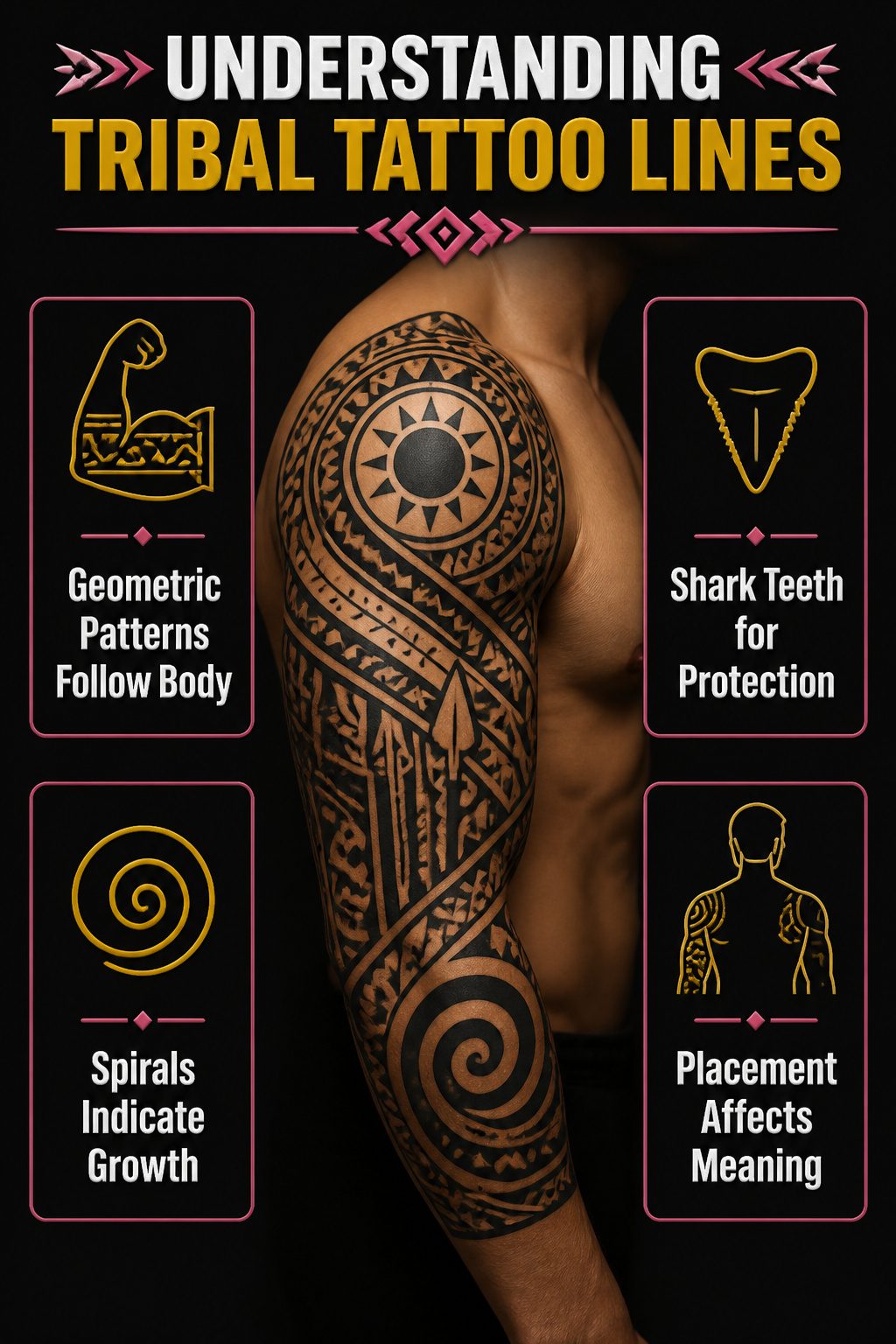
Bold black lines carry the weight, but negative space does half the storytelling. The untattooed skin between shapes isn’t leftover area; it’s deliberate, carved out to give the design depth and let the pattern breathe. A solid fill of black ink sits against bare skin, and that contrast is what keeps a tribal piece readable ten years down the line when softer styles have blurred.
Geometric patterns follow muscle and bone rather than fighting them. A band around the forearm swells where the muscle swells, tapers where the bone sits shallow. Curved lines and spirals create rhythm, and mirrored or radial symmetry gives the work its sense of balance, like the design completes itself without needing a frame.
The symbols carry specific weight. Shark teeth mark protection and strength, a common motif across Polynesian work. The sun stands for life and energy, the moon for intuition. Arrows point toward direction and focus, though in many traditions they also serve as protective marks. Spears carry warrior meaning, waves signal resilience, and spirals track growth or transformation.
Placement matters as much as the mark itself. A design wrapping a shoulder reads differently than one laid flat across the shoulder blade. The body becomes part of the composition, the tattoo moving when the body moves, still when it is still.
Where the Old Marks Came From
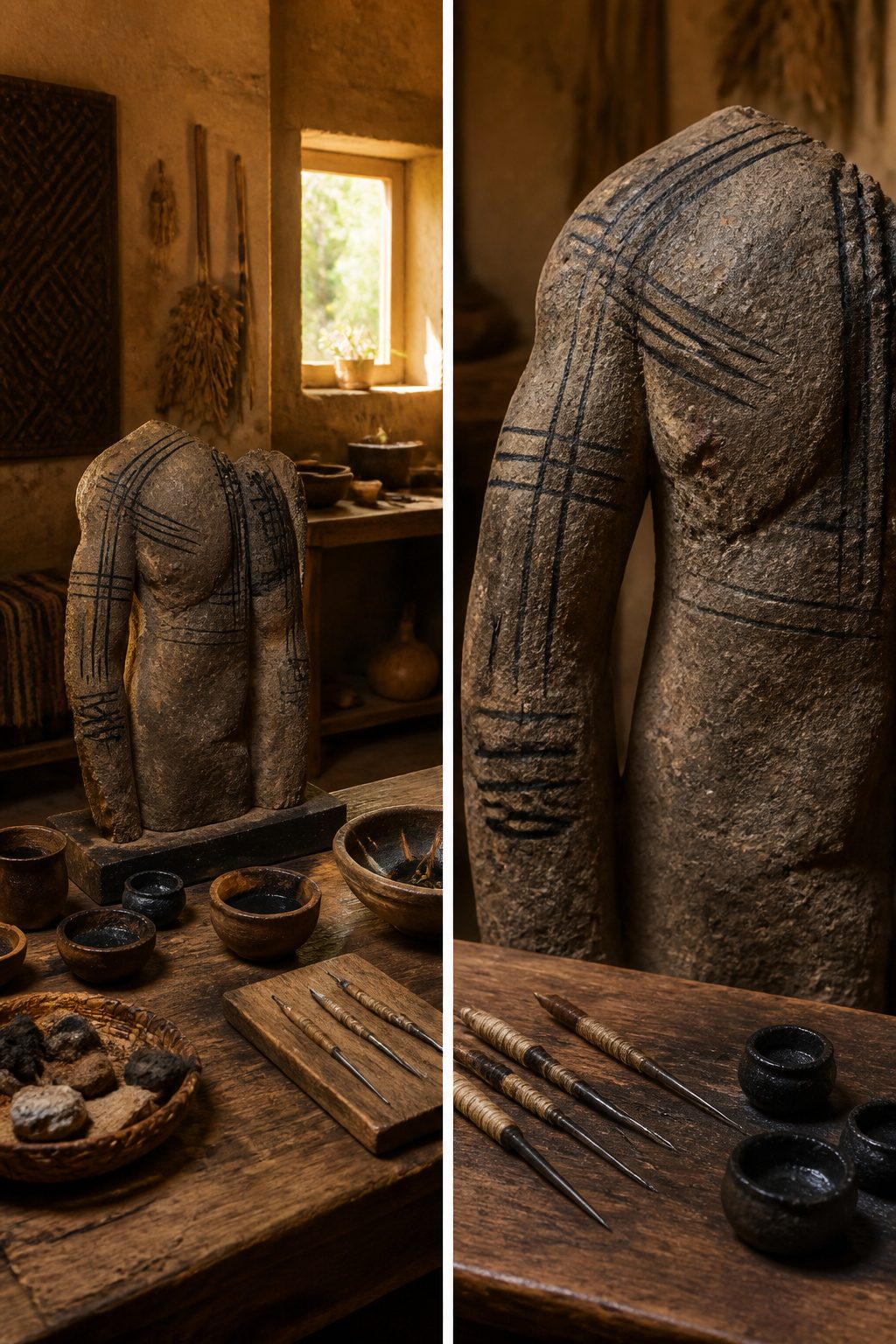
Oldest known marks on human skin belong to Ötzi the Iceman, a body roughly 5,300 years old pulled from Alpine ice with simple black geometric lines still visible. That date sits before written history in nearly every culture, which means tattooing started as wordless practice: lines and dots applied for reasons the wearers never wrote down.
The functions varied by place and era, often overlapping. Some marks were tried as medicine, placed where joints ached. Others carried spiritual weight, or signaled who you were to the group around you. No single meaning dominated because the practice developed separately across Polynesia, parts of indigenous North America, ancient Egypt, and pre-colonial Southeast Asia. Solid black kept recurring because it reads as mass: the skin left bare becomes half the design, the same logic as heavy print on natural cloth. The style looks unified now, but the shared visual language came later, mostly through 1990s Western artists adapting what they had studied.
Reading a Design Without Stealing It
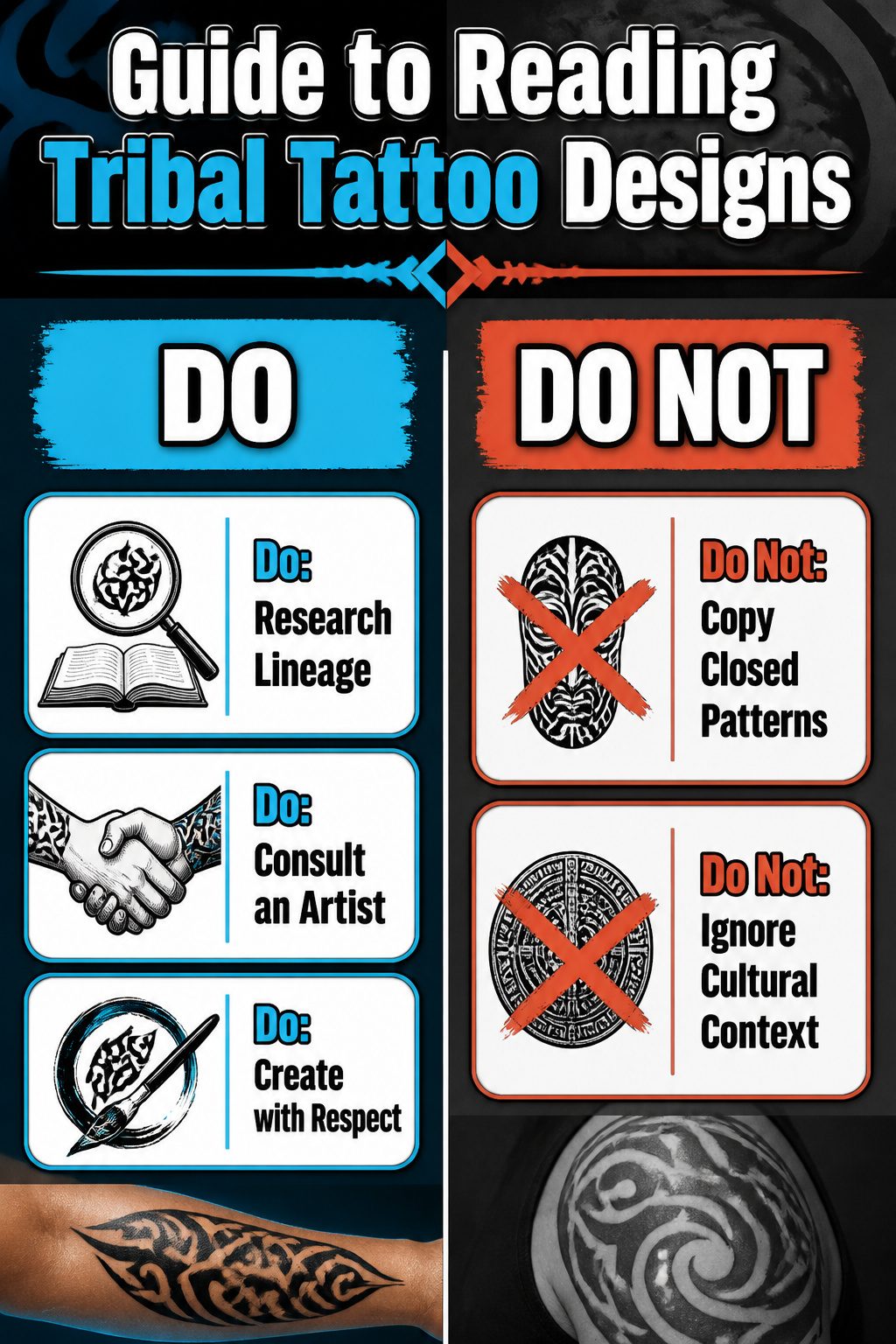
The word "tribal" is a Western catch-all laid over dozens of unrelated traditions, and each one carries its own name, its own motif grammar, and its own rules about what is open and what is closed. That distinction matters because a closed pattern is not a style to borrow; it is a genealogical mark that requires specific lineage or ceremony to wear. The line was drawn by the people who cut these marks into their own skin for two thousand years.
Reading a design before you wear it means asking what the ink is actually claiming to say. If it is composing black line and contrast into something new, that is an open lineage, genuinely yours to make. If it is reproducing the specific genealogical marking of a living culture verbatim, it is carrying a name, and the name was never on offer.
An artist who knows the difference will tell you which traditions your design can honestly draw from and which ones to leave alone. When they cannot name the origin of a pattern and explain whether it is open or closed, that is a signal to keep looking. The test does not need a policy document. It only asks that you look at what the ink is actually saying.
How Modern Work Keeps the Old Rules
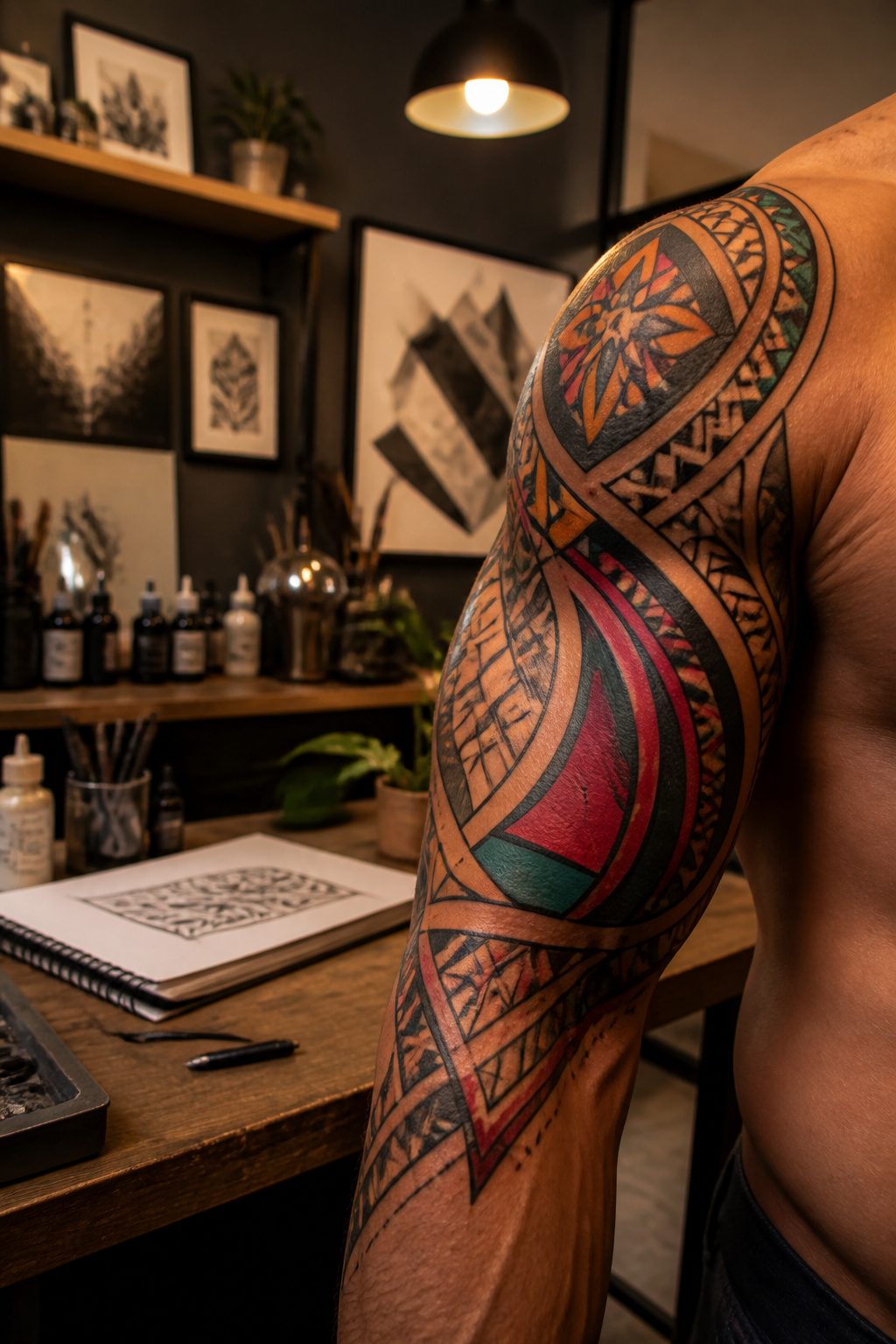
Neo-tribal tattoos keep the bold lines and geometric patterns that made traditional tribal work recognizable, but contemporary artists now fold in color, shading, and abstract designs that would not have appeared in older pieces. The fusion still reads as tribal because the structure honors the original aesthetic rather than replacing it.
Placement matters more with tribal work than with most other styles. The pattern must follow the body’s flow rather than fight it. A sleeve reads from every angle because the panels rotate around the arm’s cylinder. Chest and shoulder pieces use the natural frame for guardian and protection motifs, often extending onto the upper arm so the composition does not end abruptly. The back offers the largest canvas, suited to narrative compositions that map a full family or journey, while leg work runs in vertical bands following the calf and quad.
Frequently Asked Questions
What is a tribal tattoo?
A tribal tattoo is a design built from bold black lines and geometric patterns that draws on visual traditions developed independently by cultures worldwide, from Polynesia and Borneo to the Celtic world and pre-Columbian Mexico. The style is unified by heavy contrast, solid fills, and the use of negative space as an active design element rather than leftover area. Modern tribal work includes both designs tied to specific cultural lineages and neo-tribal pieces that apply those visual principles without claiming a particular genealogy.
Do tribal tattoos have meaning?
Yes, though the meaning depends entirely on whether the design belongs to a specific cultural tradition or to the open neo-tribal lineage. In Polynesian tatau, Maori ta moko, and many other indigenous systems, marks record genealogy, social rank, and personal achievement, and wearing them without proper lineage or ceremony is understood as identity theft rather than imitation. Neo-tribal work, by contrast, carries only the meaning the wearer and artist build into it, with no inherited claim.
How do I choose a tribal tattoo?
Start by deciding whether you want a design tied to a specific culture or a neo-tribal piece that honors the visual language without claiming a closed lineage. If you choose a cultural tradition, research whether its patterns are open or closed, what specific symbols mean in that exact context, and whether the artist can name the origin and explain the rules. For neo-tribal, look for an artist who understands how bold fills and negative space work together and how to make the pattern follow your muscle and bone rather than fighting them.