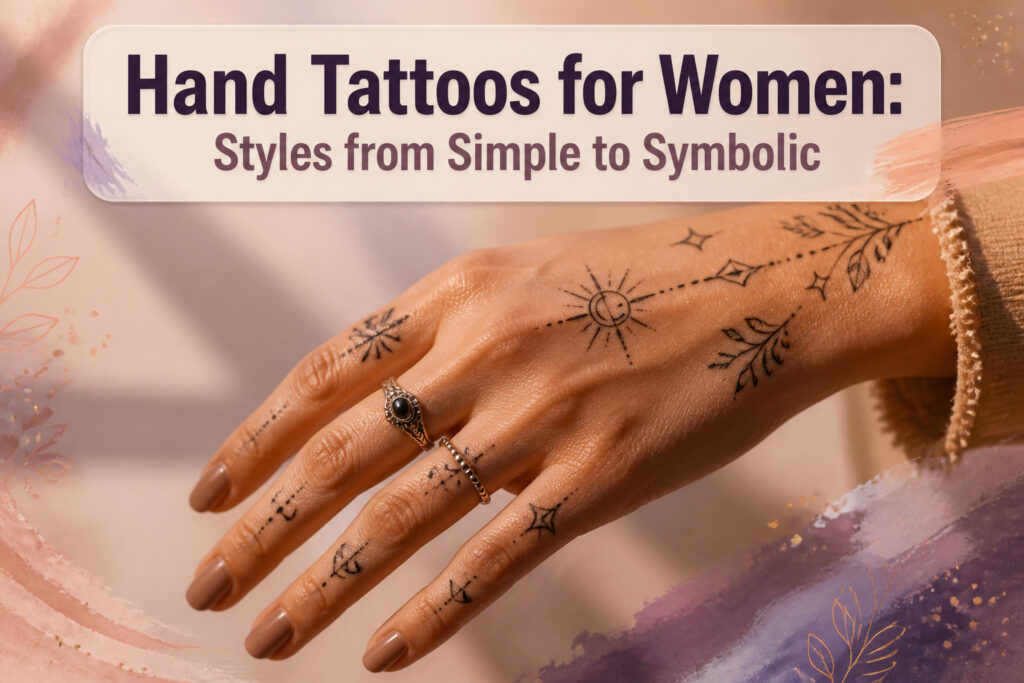
Hand tattoos for women range from single-needle dots at $150 to full ornamental sleeves, and the deciding factor is not design alone but how much maintenance you will accept. The outer hand sits at a 7–9 on the pain scale, heals for 3–4 months, and needs touch-ups every 3–5 years because friction and sun never stop working against the ink. That tradeoff, visible and constant, is what separates a piece you keep from one you regret.
1. Simple Hand Tattoos
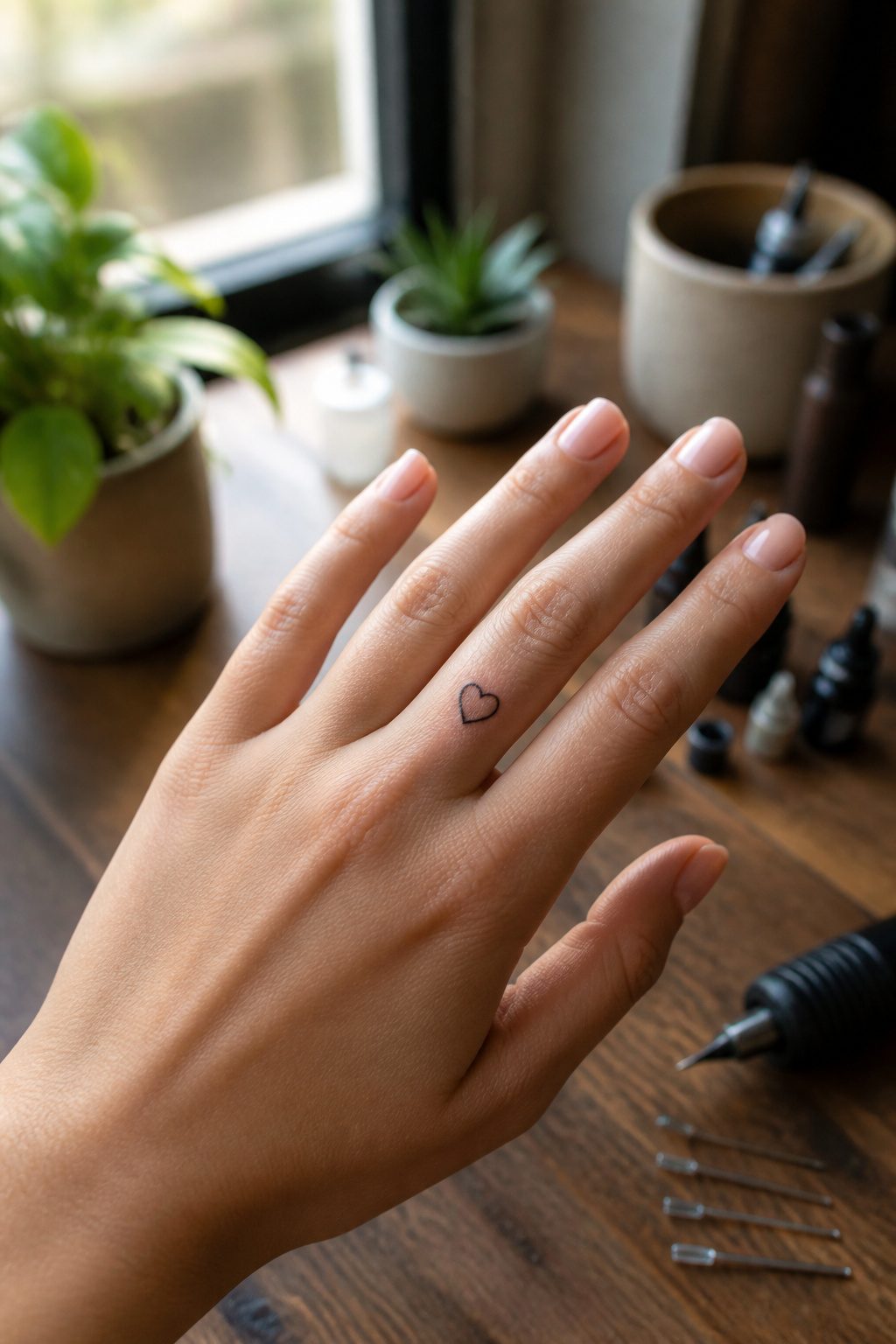
Single-needle work and limited linework are what make simple hand tattoos hold up under daily scrutiny. The hand is a smaller canvas than the back or thigh, so a clean design that does not crowd the space tends to read better at conversation distance and fits professional settings where something busier might distract.
A tiny heart, crescent moon, or a single delicate line can carry meaning without demanding it. $150 to $400-plus is the realistic range for quality simple pieces, with the upper end usually tied to an artist who specializes in precision work and bills hourly for it. The tradeoff is longevity: friction on the hands means touch-ups every three to five years, and the initial healing runs two to three weeks on the surface with full dermal settling closer to three or four months. For someone who wants the tattoo visible but not loud, that maintenance schedule is worth the understated result.
2. Small Hand Tattoos
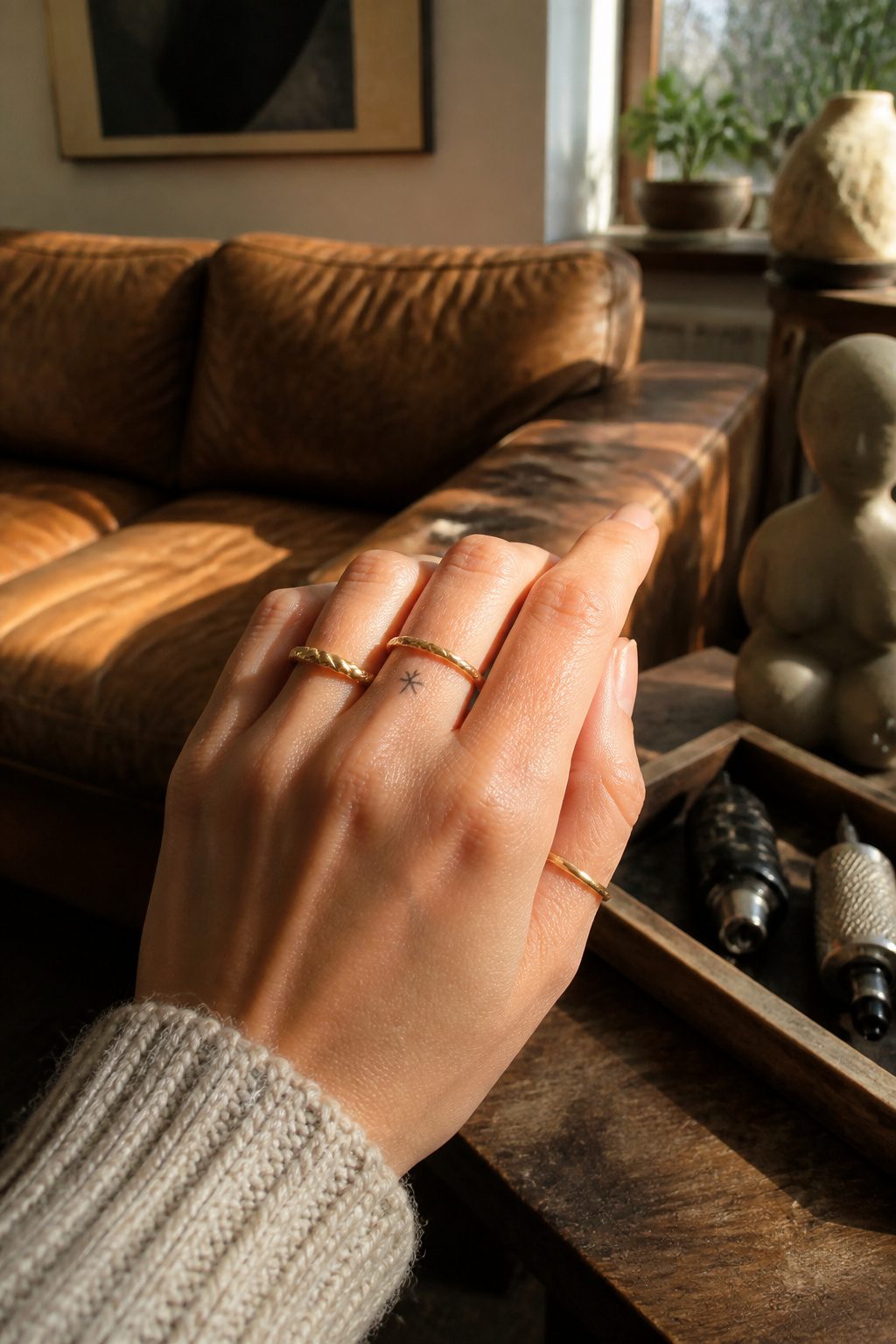
Finger skin stays in motion, which means micro designs between knuckles or along the hypothenar eminence blur faster than anywhere else on the hand. A single-needle star or tiny moon phase on the proximal phalanx looks elegant fresh, but the "disappearing ink" phenomenon can start within two years. Plan on touch-ups every 3–5 years, sometimes sooner for knuckle work.
Healing runs 2–3 weeks for surface closure and 3–4 months for full dermal settling, longer than most spots because the hand never truly rests. The cost lands at $150–$400 or more, often hourly, with a premium for the precision these small pieces demand. Keeping the design simple and clean, not crowded, is what extends the readable life.
3. Gorgeous Hand Tattoos
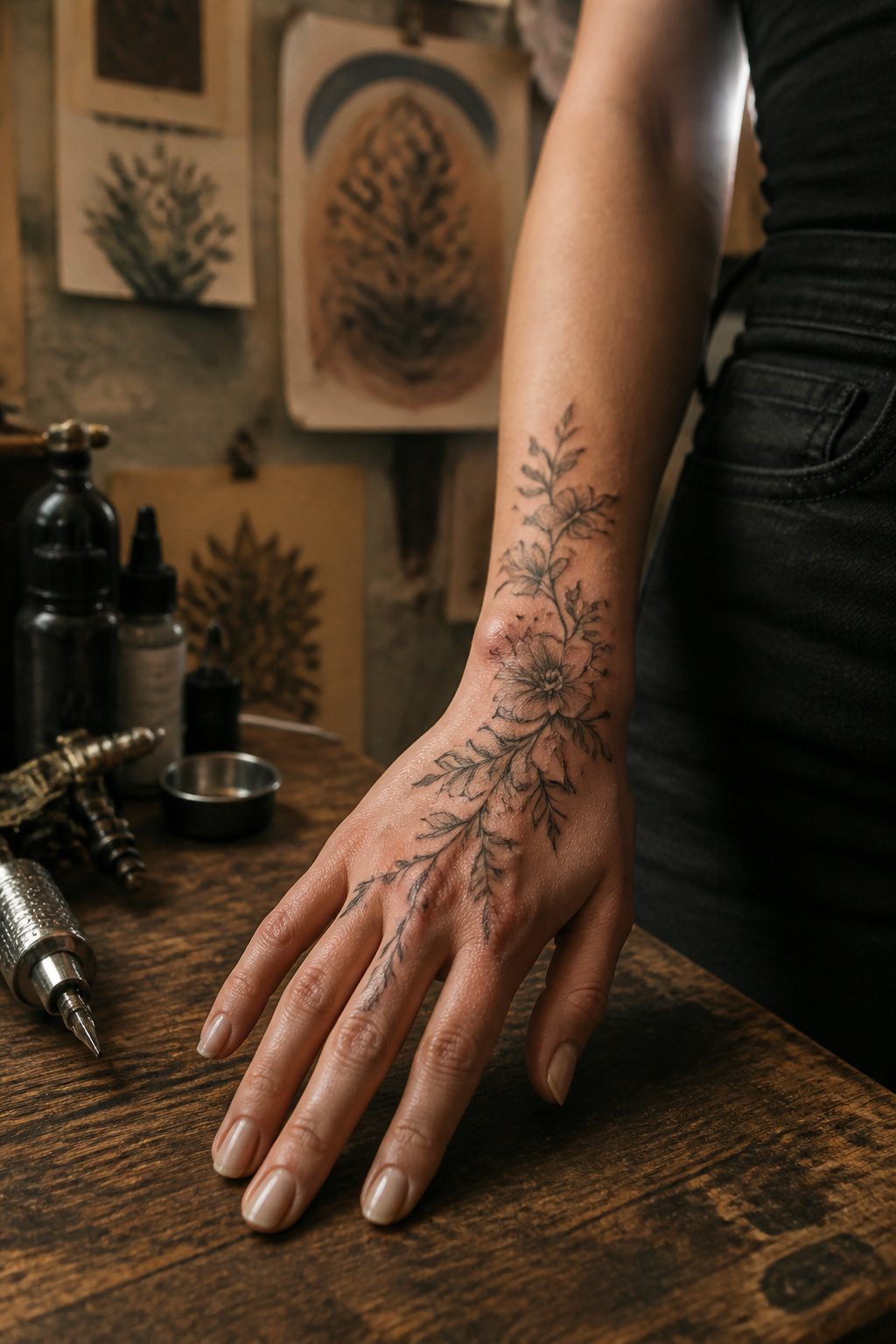
The back of the hand is flat, visible, and unforgiving, which makes it the right canvas for something deliberate. A full ornamental piece works when it moves with the bone structure rather than fighting it. Follow the metacarpals and the design feels like it belongs there; ignore them and the same density looks like a stamp.
Flow matters more than coverage. A blooming floral that trails from the wrist toward the knuckles, thinning as it travels, reads as elegant. The same flowers packed edge to edge lose their shape the moment the hand flexes. Geometric patterns and mandalas face the same test: symmetry is easy on paper, but the hand is not a flat plane. The best pieces let the pattern break or taper where the bones shift.
Henna-style work offers a useful reference. Those fine, continuous lines respect the hand’s architecture because they were drawn on a living surface that moved. Tattooing that same quality requires leaving negative space where the skin stretches most, between the fingers and across the knuckles. Without that breathing room, an intricate design blurs into noise within a few years.
Statement pieces here are high-commitment and high-maintenance. Sun exposure is constant, touch-ups are likely, and the visibility means no hiding a change of heart. The trade is worth it only if the placement is non-negotiable: the hand as the star, not an afterthought.
4. Full Hand Tattoos
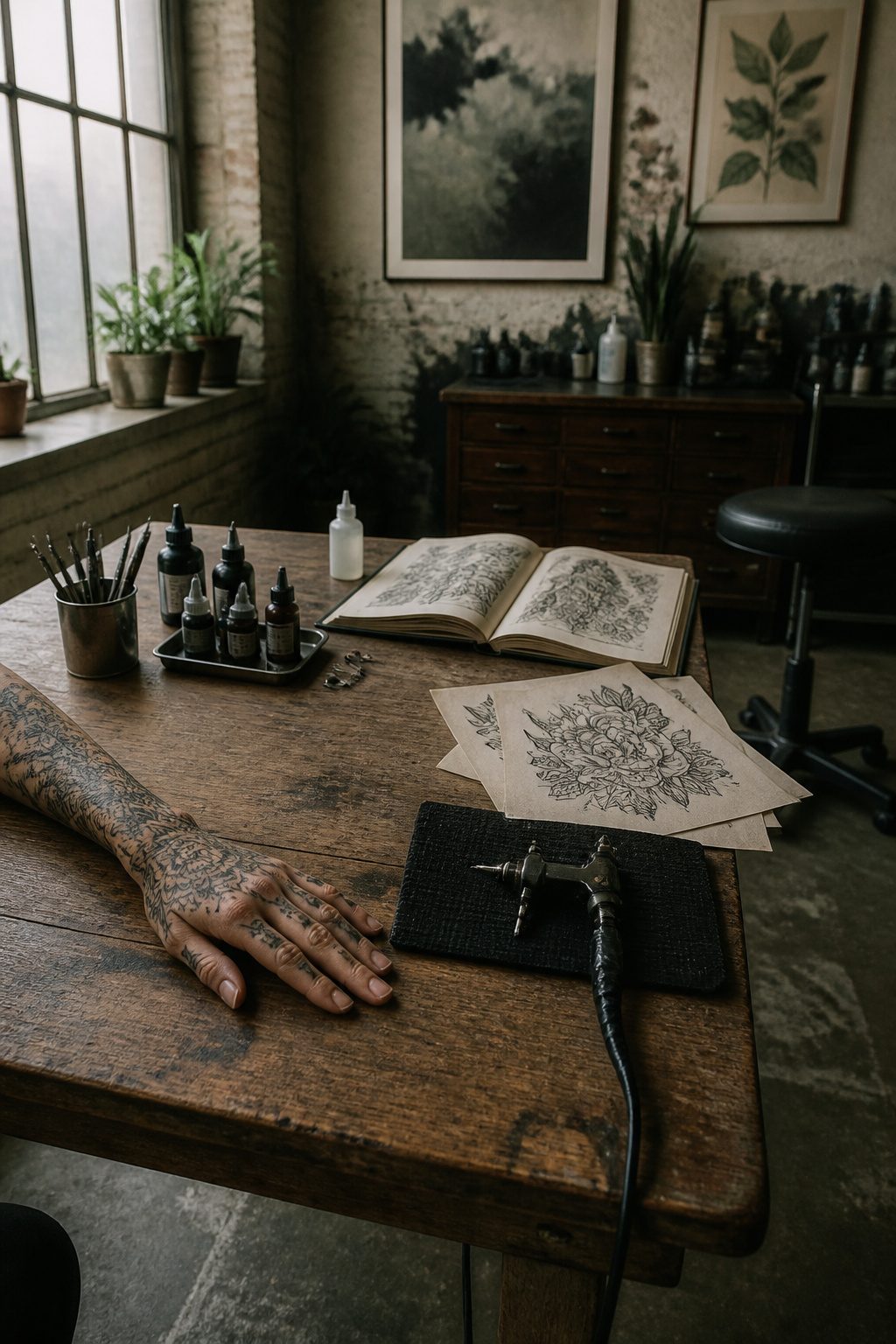
A full hand tattoo starts at the wrist and wraps every plane of the hand into one continuous piece, fingers and palms included. That coverage makes it the most visible commitment you can make, and the sources that track this placement treat professional perception as a real cost, not a vague risk. In fields with client-facing work or conservative dress codes, the hand reads before you speak. Planning has to account for how ink ages across the palm’s thicker skin and the fingers’ constant motion, since those areas fade faster and blur sooner than the back of the hand. The design needs to hold its structure even where the body works hardest against it.
5. Fine Line Tattoos
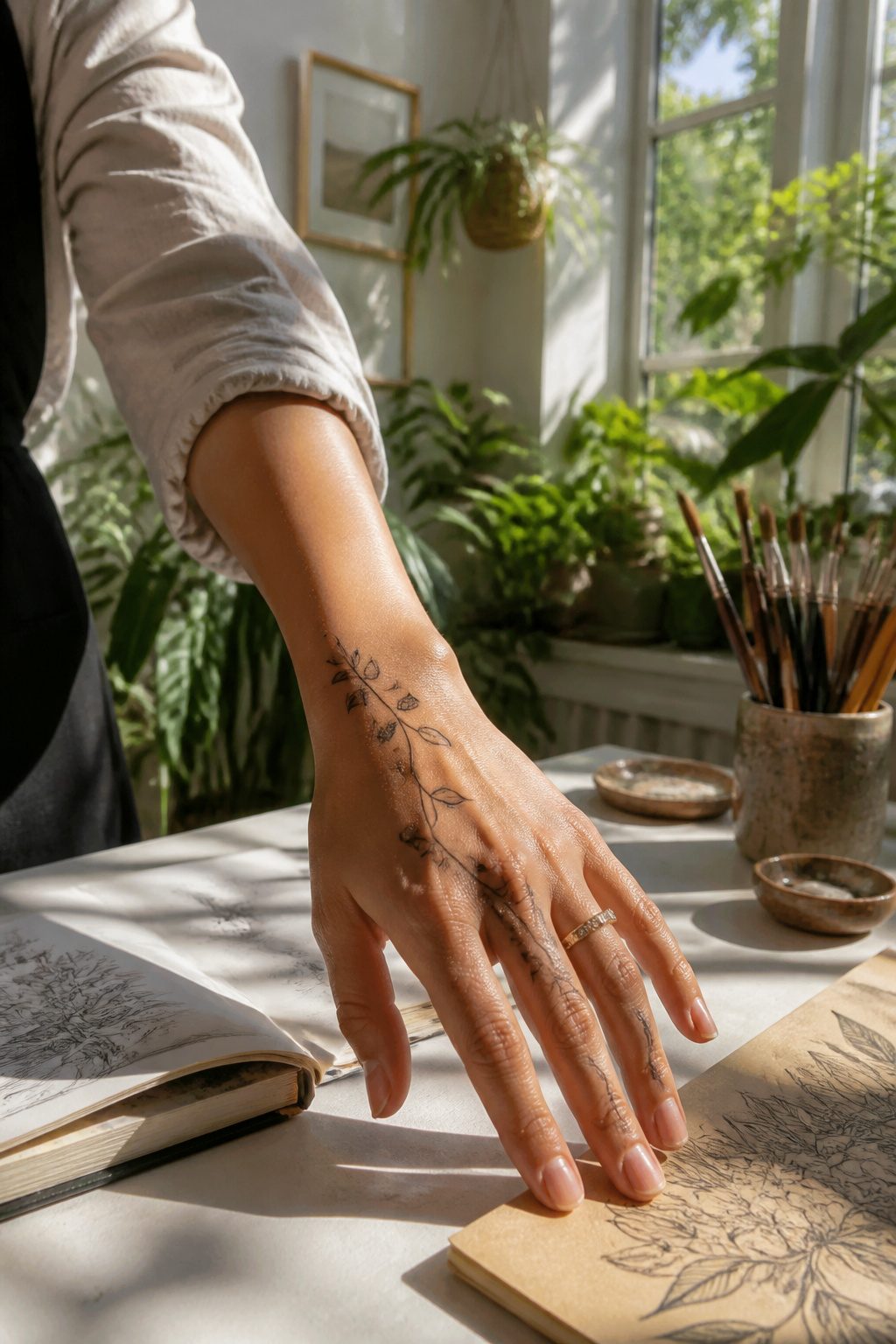
Fine line work owes its reputation on hands to a simple visual trick: thin strokes sit closer to the surface of the skin, so they read as delicate rather than declarative. A single-needle vine trailing across the knuckles or a 0.25mm symbol on the side of the hand looks like it grew there, not like it was driven in. The style flatters bone structure, following tendons and hollows instead of fighting them.
The problem is that hands are a 7–9 on the pain scale, and the same thin skin that makes the tattoo look subtle makes it leave faster. Constant friction from keys, steering wheels, and hand-washing blurs micro-lines within 18 months, while slightly heavier 0.35mm+ work can hold clarity for 5 years or more. I have watched artists steer clients toward bolder linework on this placement and seen the relief when the design still reads clean two years later.
Touch-ups every 3–5 years are standard for hand work, but fine line often needs its first refresh at 2–3 months just to settle in evenly. SPF becomes daily maintenance, not an option, since sun exposure accelerates the fade on already vulnerable ink. The tradeoff is real: you choose between the whisper of a thin line and the staying power of a slightly heavier one.
6. Black and Grey Tattoos
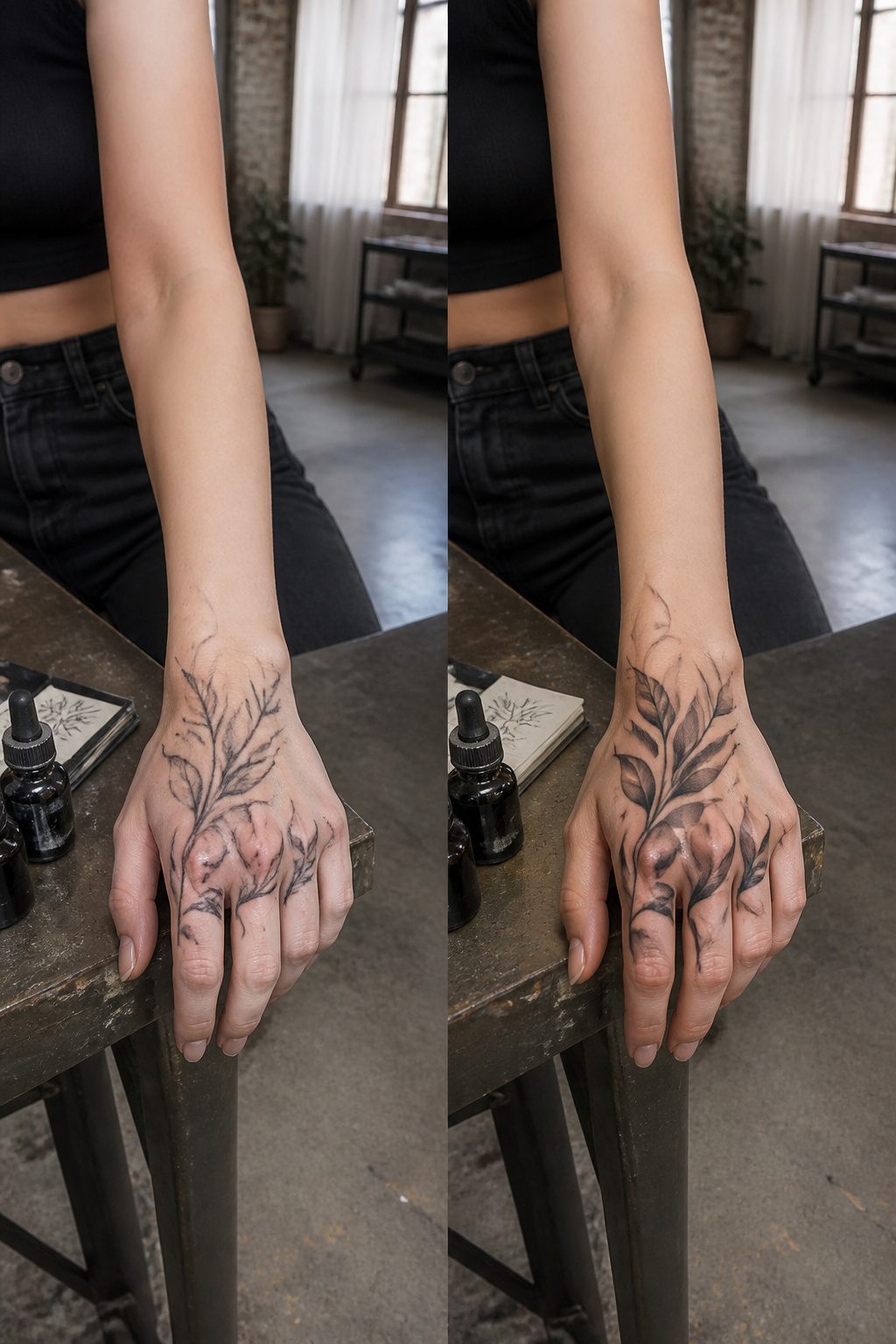
Black and grey shading builds depth through value gradation rather than pigment, which matters on a hand that bends and flexes all day. The technique reads as softer against bone and tendon, and the absence of saturated color means the design settles into skin rather than sitting on top of it. Lines at 0.35mm or thicker hold clarity for five-plus years, whereas finer work on hands can blur within eighteen months; greywash applied over those slightly heavier lines gives the realism without the fragility.
Color tattoos compete for attention with every outfit, every nail polish change. Black and grey does not. The palette narrows your focus to structure: how a rose wraps a knuckle, how a portrait catches light across the metacarpals. Heavy blackwork blocks read dense and can age into shapeless blotches as skin thins. Gradated grey allows the same coverage to breathe, to shift when your hand moves, to look intentional rather than imposed.
I have watched designs that followed tendon flow stay harmonious for years while dense patches on the same hand needed rework. Flow over density wins for longevity, and greyscale makes that choice visually obvious before the needle ever starts.
7. Minimalist Tattoos
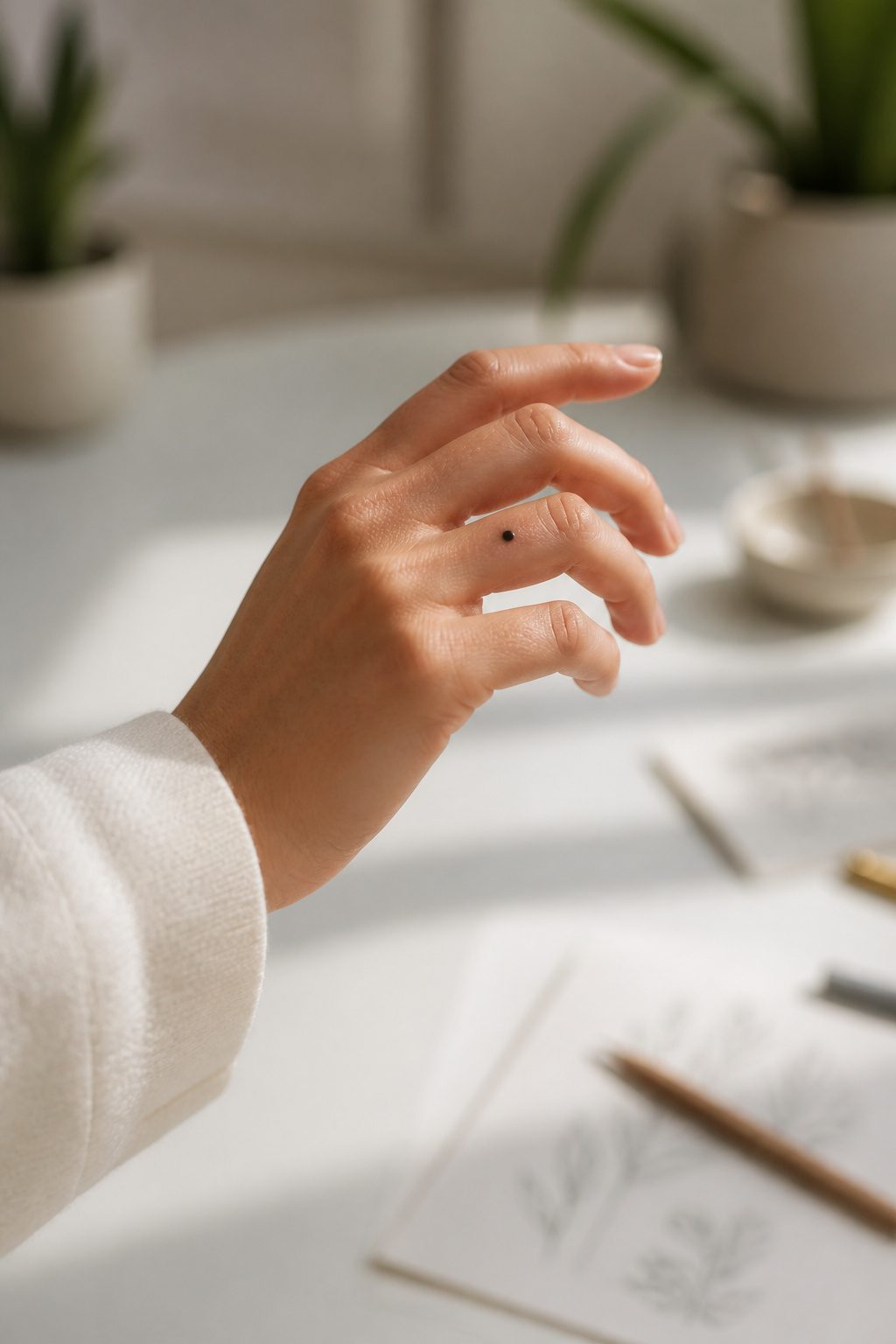
Minimalist hand tattoos earn their name through negative space and geometric reduction, not just small size. A single dot placed on the proximal phalange, a constellation pattern tracing the hypothenar eminence, or an abstract mark reduced to its essential lines all carry weight because of what surrounds them: bare skin becomes part of the design.
Single-needle stars and moon phases fit this restraint, though placement matters for longevity. Stars on knuckles fade faster than any other hand location, often within two years, so the "disappearing ink" phenomenon is real and worth planning around. Constellations running along the side of the hand or lower finger segments hold better and read as more deliberate.
The difference between minimalist and merely simple is intentionality. A straight line across the ring finger is clean, but its power comes from the decision to stop at one line rather than add embellishment. Tiny hearts and crescent moons work similarly when the surrounding skin is treated as active composition space rather than empty background.
8. Ornamental and Henna-Style Tattoos
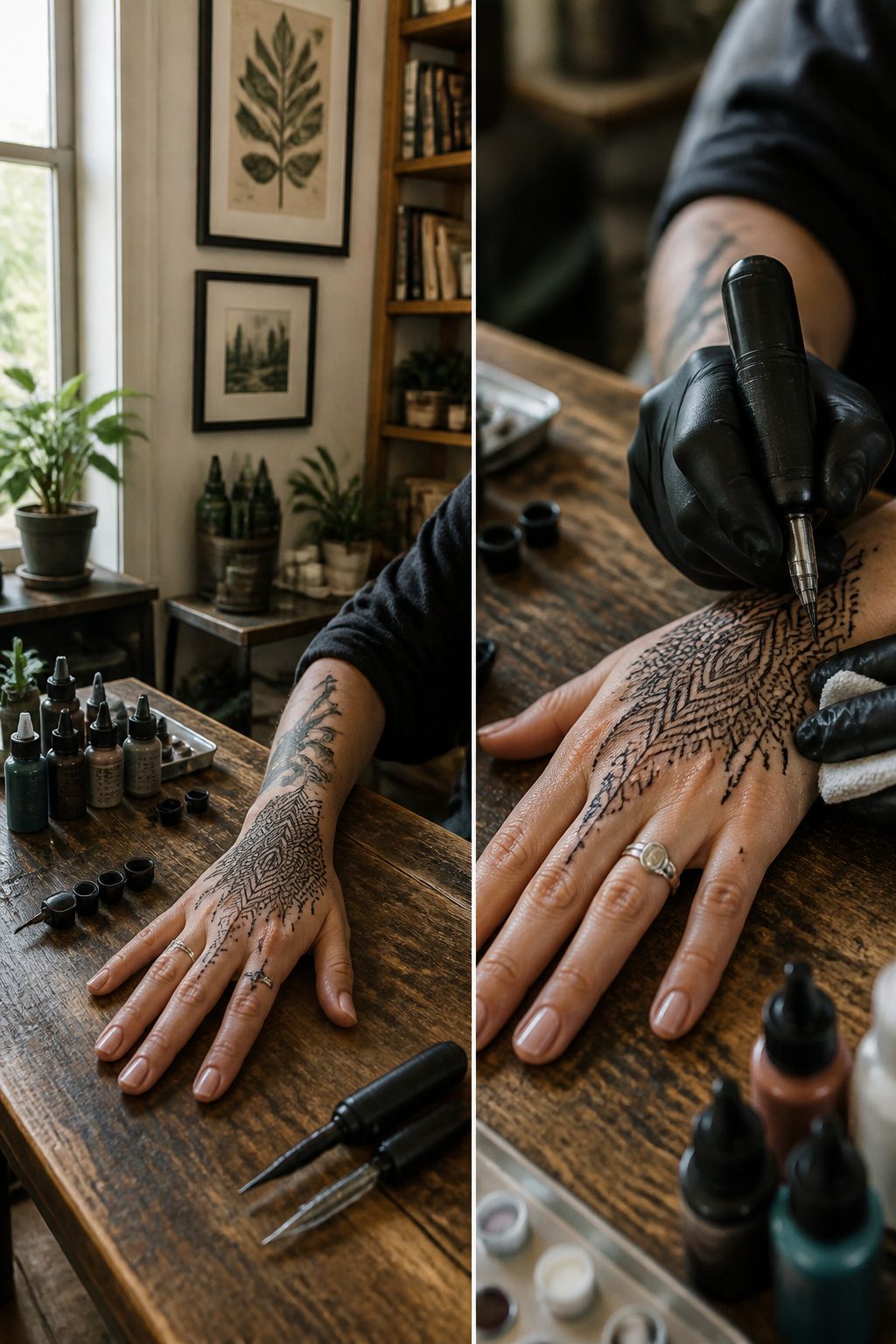
Henna paste from the Lawsonia inermis plant leaves a stain that lasts about two weeks, which makes it the safest trial run for anyone unsure about committing to a visible hand piece. I have watched clients use that window to test how a mandala feels at their knuckles or whether a wrist-to-finger vine interrupts their typing. The color sinks into the callused layers and fades from the palms first, so the lifespan is never uniform, but two weeks is the standard estimate for the full design.
Permanent ornamental work borrows the visual language without taking the sacred elements. Indian wedding mehndi fills the hands with paisley and floral mesh to symbolize joy and celebration for the bride. A tattoo artist can adapt that density of pattern into linework that respects the form while stripping the ritual meaning. Maori moko is a different boundary: the spiral koru and curved patterns are tied to genealogy and status, and copying them outright crosses into appropriation. What translates safely is the principle of flow, how ornament follows the tendons and valleys of the hand rather than fighting them. A good ornamental tattoo moves with the creases instead of anchoring a static image that distorts every time the fingers flex.
9. Color Tattoos
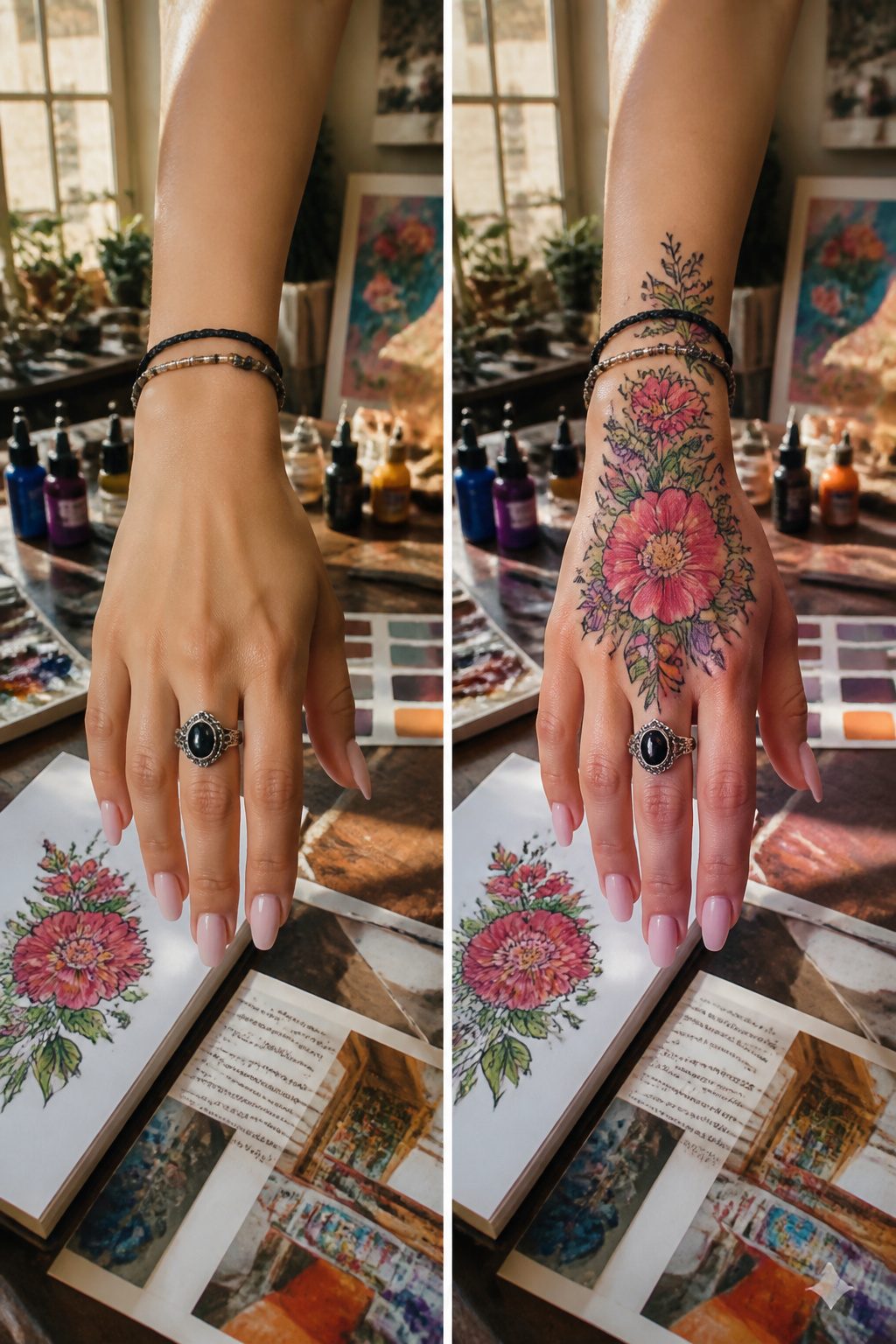
Color on hands lives a harder life than on a shoulder or thigh. The skin there is thinner, the sun hits it squarely, and every wash, every steering wheel, every door handle works against the pigment. What reads as a soft pastel on a ribcage can look muted on a hand inside two years, and bold tones hold longer than soft ones because there is more pigment density to lose before the eye notices.
Black and grey simply outlast color everywhere, but the gap is widest on hands. A solid black line at 0.35 mm or thicker can stay readable for five years or more, while color in the same spot often wants attention by year three. The pigment that tends to hang on longest is the denser, more opaque range: deep blues, brick reds, forest greens. Yellows and pale pinks are the first to ghost.
That does not make color a mistake. A floral piece or a butterfly with saturated wings can look alive in a way monochrome rarely manages. The trade is accepted: more frequent touch-ups, budgeted from the start, for an effect that reads as expressive now rather than safe later. If the budget or the pain tolerance is tight, black and grey is the longer bet.
10. Symbolic Tattoos
A rose on the hand carries weight across centuries of meaning, from Christian martyrdom to secular devotion, though most women who choose it now are drawn to the form rather than any single tradition. The same looseness applies to butterflies, which shift from Greek soul-symbol to Japanese marriage omen to straightforward personal reinvention depending on who asks and when. Geometric shapes break that pattern entirely; their meaning is usually assigned by the wearer rather than inherited, a private system of balance or proportion that reads as decoration to everyone else.
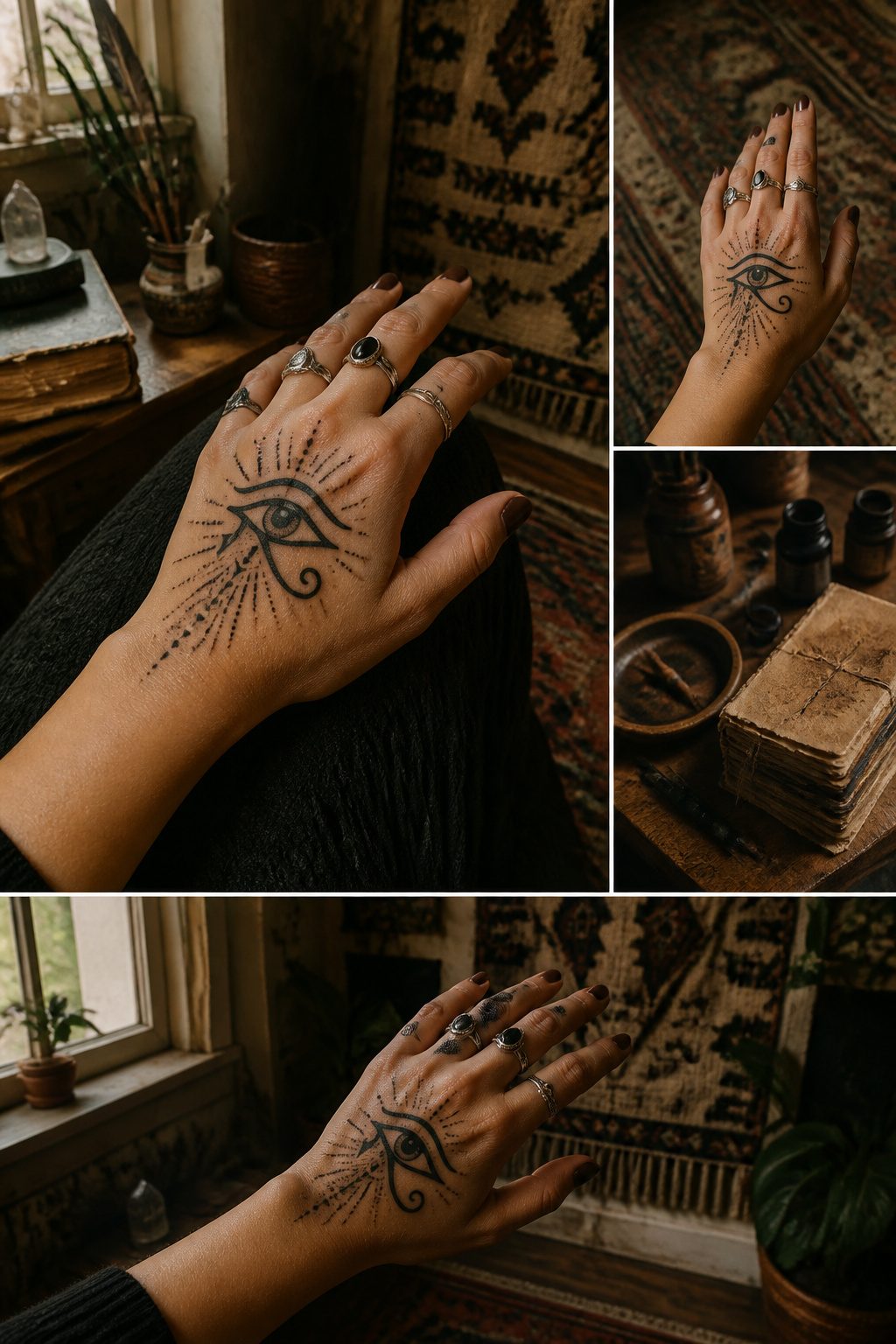
The Eye of Ra works differently. Ancient Egyptian sources treat it as active protection, the watchful eye of a sun god worn on jewelry long before it reached skin, and that specific charge, strength through difficulty, still draws women who want their tattoo to do something. An eye motif generally, across cultures, can serve as divine witness or as a talisman against bad energy, so the choice between Egyptian specifics and a more open design is really a choice between anchored tradition and adaptable guard.
What unites these four is that none of them settle for passive ornament. A symbol on the hand is seen by the wearer constantly, which means it is questioned constantly, and the women who last with their choice tend to be the ones who selected the questioning, not the easy answer.
Where It Hurts Most
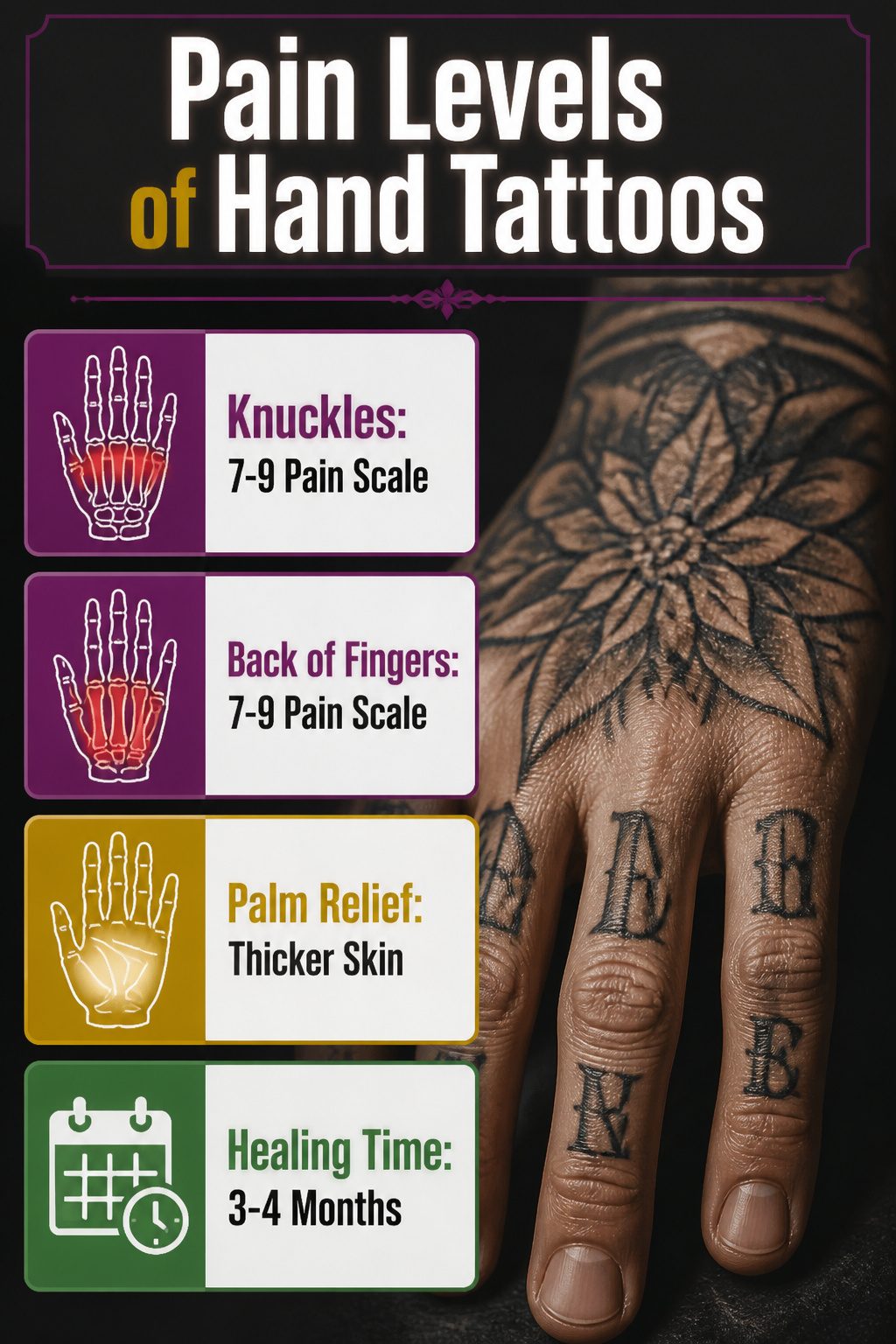
Knuckle work and the backs of fingers run 7 to 9 out of 10 on anyone’s pain scale, and that number holds for a reason. The skin there is thin, the bone sits right beneath it, and the needle has almost no give as it vibrates through. You feel every layer, every second. Move toward the palm or the fleshy base of the thumb and the sensation drops off noticeably; more tissue between needle and bone means more cushion, more distance from that sharp, vibrating quality that defines the outer hand.
The difference is anatomy, not toughness. Bone proximity is what turns a tolerable session into something you white-knuckle through. What surprised me, reading through the accounts, was how many people expect the palm to match the fingers and then find relief there instead. The palm’s thicker skin and softer structure distribute the sensation differently; it is still work, still close-up precision, but it does not land with the same immediate, electric sting.
Healing follows the same map. The outer hand, where the needle sat on bone, stays tender longer and sees more friction from daily use. The two-to-three-week surface timeline applies everywhere, but the full settling, the point where the dermal layer quits complaining, stretches toward three or four months anywhere the bone made itself known. Plan the placement knowing that the art you want and the sensation you get are rarely the same negotiation.
Healing a Hand Tattoo
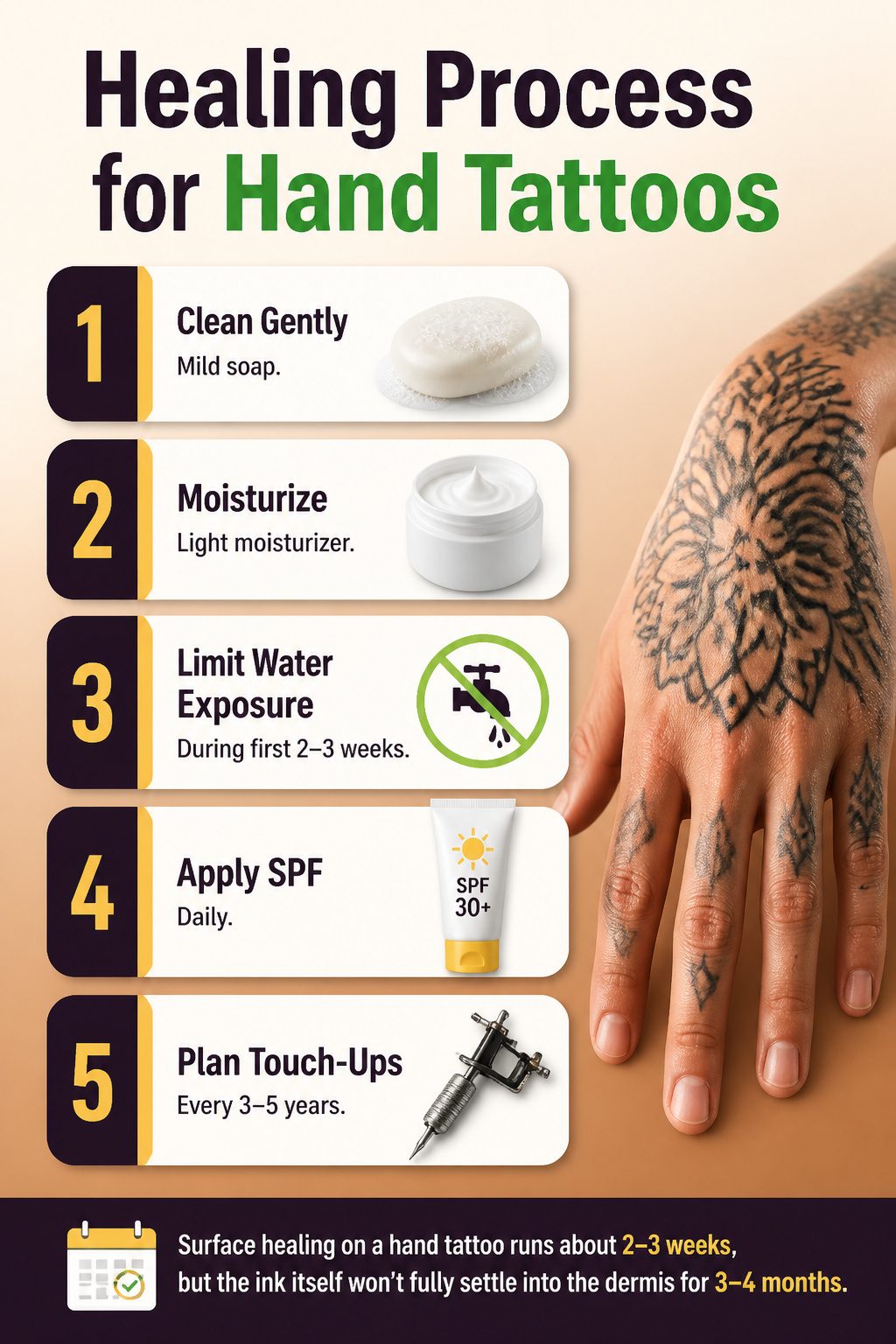
Surface healing on a hand tattoo runs about 2–3 weeks, but the ink itself won’t fully settle into the dermis for 3–4 months. That gap matters because your hands never really rest. Constant motion, repeated washing, and sun exposure all stress the area while it is still sealing, which is why friction makes touch-ups standard every 3–5 years.
The aftercare is less about special products and more about discipline. Mild soap and a light moisturizer are enough to keep the skin from drying and cracking, but limiting water exposure during that first stage takes planning. Once healed, daily SPF becomes the main defense against fading; hands see more sun than almost any other placement.
Some artists schedule a touch-up after a few months to correct any settling loss. Budget for that session from the start, since the high cell turnover on palms and fingers makes fading predictable rather than avoidable.
Placement by Visibility
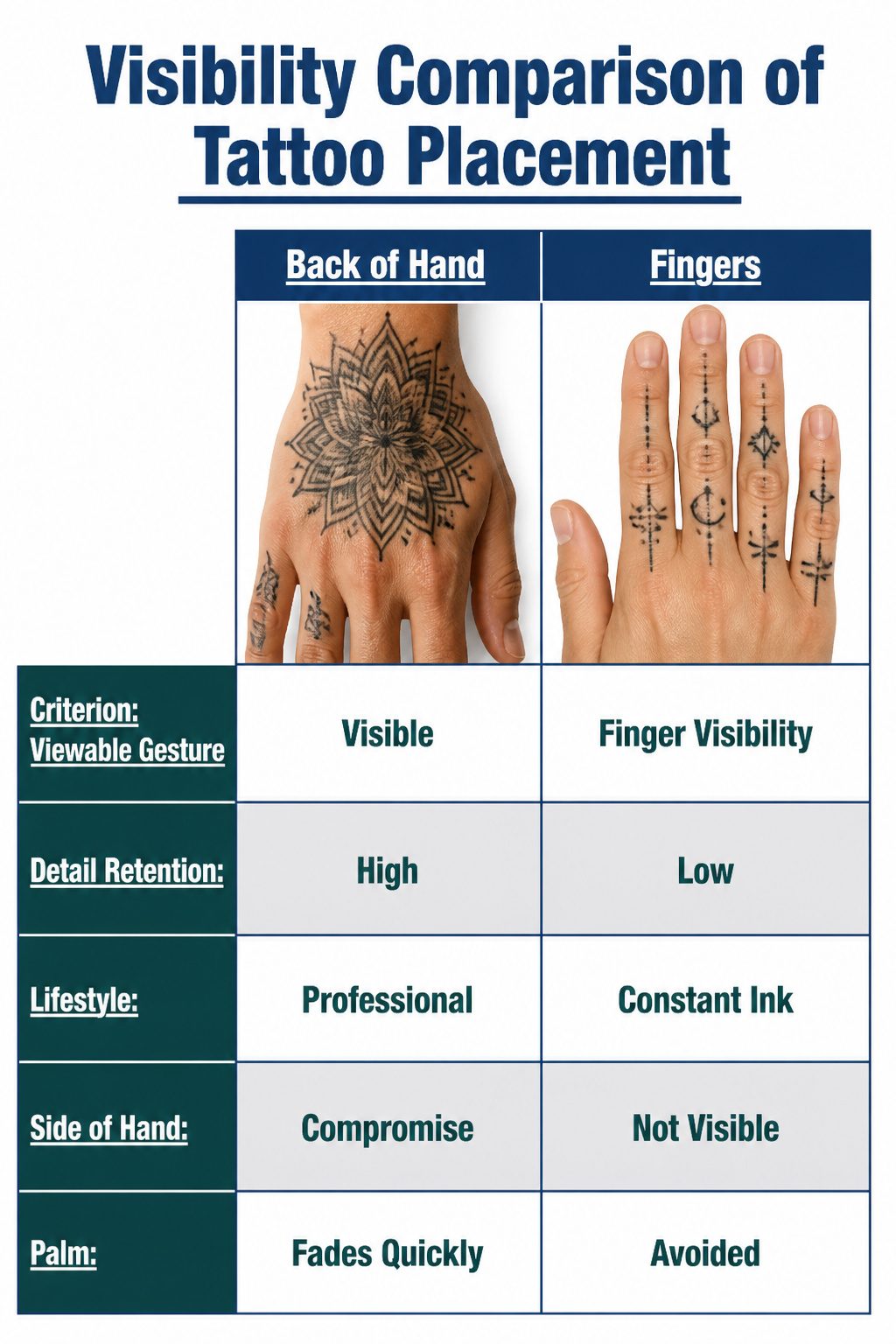
The back of the hand is what most people picture first, and for good reason. It is the only flat canvas on the hand, which means florals, geometry, or a mandala will keep their detail instead of warping across knuckles. Every gesture becomes visible, so this placement asks the most from your professional setting. A colleague sees it when you hand over a coffee; a client sees it in a handshake.
Fingers run the opposite way. Vertical lines from knuckle toward the nail bed lengthen the finger; horizontal bands do the opposite, making the hand look stubbier. The ink here is constant and impossible to hide, even more than the back of the hand, because gloves are the only cover and most daily routines do not include them.
The side of the hand offers the compromise. Visible during a handshake or when your hands rest on a table, but less aggressive than full coverage. For women in the 35–54 range who read ingredient lists and prefer natural products, this placement matches a measured approach: present, but not shouting.
The palm is where the sources agree you should stop. The stratum corneum regenerates too quickly for crisp lines to hold, so the result fades to something rustic whether you planned it or not. If your daily routine involves typing, cooking, or any repetitive palm contact, the wear accelerates further. Skip it unless faded ink is the aesthetic you wanted all along.
Frequently Asked Questions
What are the best hand tattoos for women?
The best hand tattoos for women range from minimalist single-needle designs and delicate florals to ornamental henna-inspired patterns and symbolic pieces like roses or the Eye of Ra. Simple designs tend to read better at conversation distance and fit professional settings, while statement pieces on the back of the hand work when they follow bone structure rather than fighting it.
How do I choose a feminine hand tattoo design?
Prioritize flow over density and let the design follow your bone structure. A floral that trails from wrist toward knuckles, thinning as it travels, reads as elegant; the same flowers packed edge to edge lose shape the moment your hand flexes. Geometric patterns and mandalas should break or taper where bones shift, since the hand is not a flat plane.
How long do hand tattoos last?
Hand tattoos typically need touch-ups every 3 to 5 years due to constant friction, sun exposure, and high cell turnover on palms and fingers. Fine micro-lines can blur within 18 months, while slightly bolder 0.35mm+ work holds clarity for 5 years or more. The palm fades fastest of all because the stratum corneum regenerates too quickly for crisp lines.
What is the healing time for hand tattoos?
Surface healing takes 2 to 3 weeks, but full dermal settling runs 3 to 4 months. Your hands never truly rest, so constant motion, repeated washing, and sun exposure stress the area while it seals. Some artists schedule a touch-up after a few months to correct settling loss, so budget for that from the start.
Do fine line hand tattoos fade quickly?
Yes, fine lines on hands blur faster than on the body. Micro-lines can fade within 18 months, while slightly thicker 0.35mm+ lines retain clarity for 5 or more years. The same thin skin that makes the tattoo look subtle makes it leave faster, and constant friction from keys, steering wheels, and hand-washing accelerates the fade. Many artists steer clients toward bolder linework on this placement so the design still reads clean two years later.