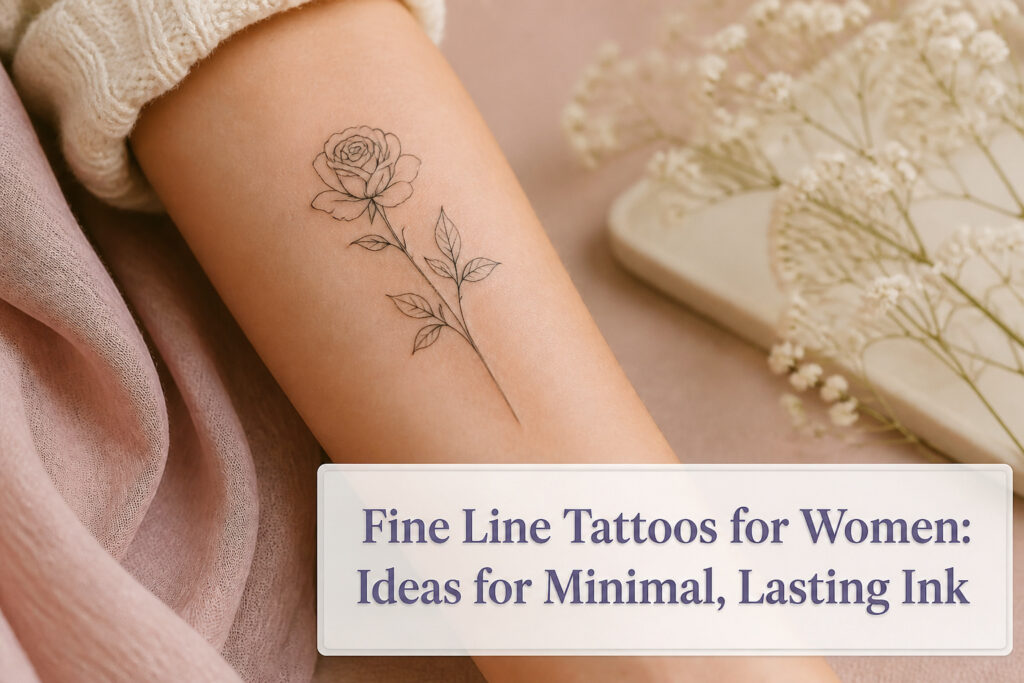
Fine line tattoos for women are single-needle work drawn at hairline width, a style that looks delicate on day one but blurs faster than bolder ink if you place it wrong. The difference between a piece that lasts six years and one that needs a touch-up in two usually comes down to where on the body the needle went. A fine-line rose on the inner forearm, for example, holds its detail roughly twice as long as the same design on a finger, where skin turnover and daily friction strip pigment fast.
1. Minimalist Florals
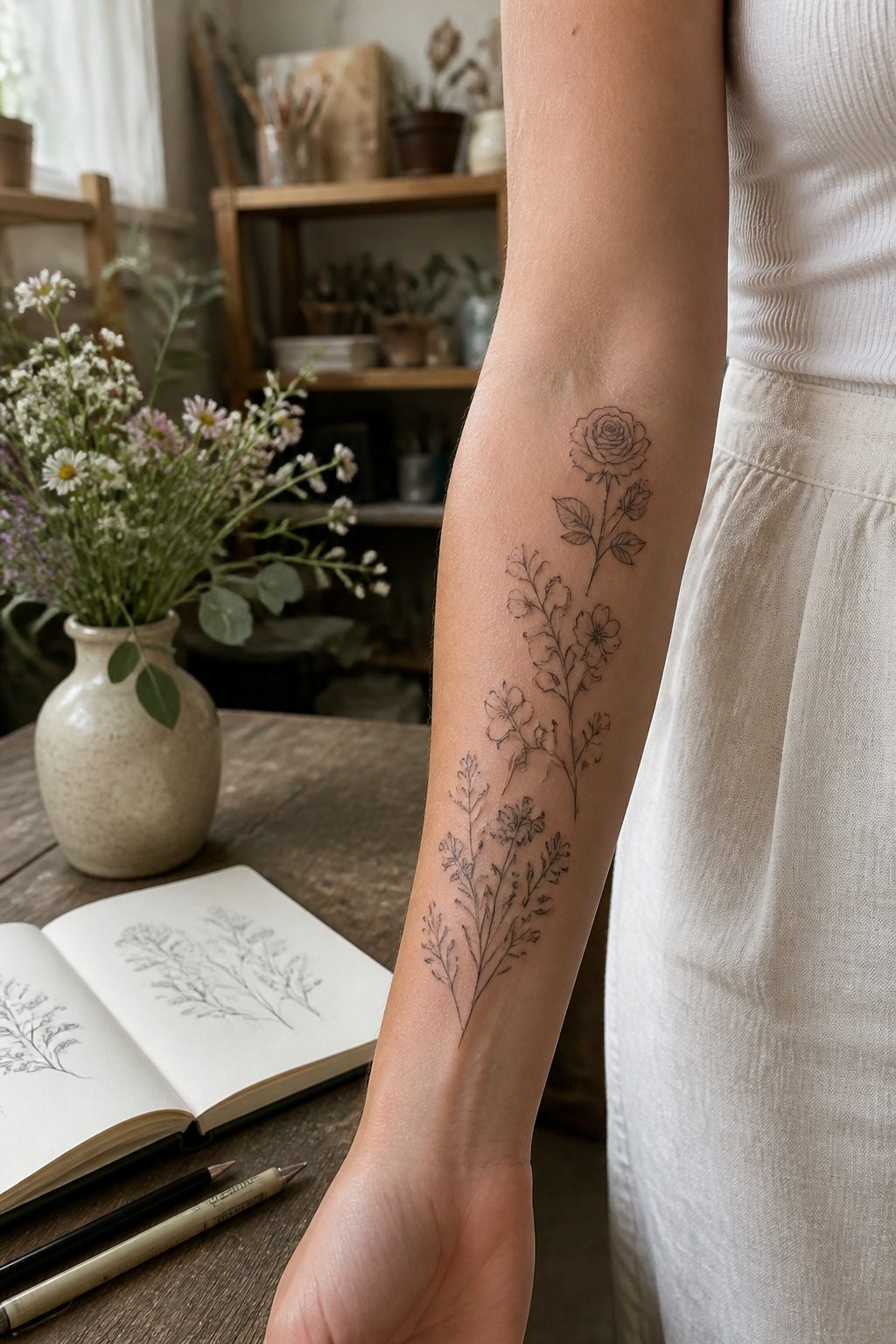
Single-needle roses, cherry blossoms, and wildflowers carry the kind of meaning that outlasts trend cycles. Roses read as love without needing color, cherry blossoms mark impermanence and the habit of present-moment living, and wildflowers keep the look loose enough that the tattoo ages like a sketch rather than a stamp.
Black ink holds detail longer than color on petals this thin. The pigment sits in a single pass, so there is less ink to spread under the skin over the years. Color demands more layers, and layers blur faster when the line itself is barely wider than a hair.
A session runs one to three hours depending on size and placement. That range comes from the nature of the work: the needle moves slowly, the skin tires, and the artist stops when the line starts to wander.
2. Zodiac and Celestial Tattoos

Celestial imagery lives or dies on the line weight. A single-needle pass gives constellations their airiness, but a shaky hand turns a crescent into a smudge after a year or two of settling. The moon phases especially depend on clean negative space; without it, the waxing and waning read as one gray blob.
Behind the ear and along the collarbone suit these designs because the body’s curve does part of the composition work. A small constellation trailing the ear’s natural hollow reads as intentional, not cramped. The collarbone offers the opposite effect: a zodiac glyph or lunar phase sits flat enough to photograph cleanly, but rises and falls slightly when the wearer moves, which gives the piece a quiet motion.
Birth signs work best stripped to their essential geometry. The full zodiac wheel with its color gradients and shading belongs to a different tradition entirely. What reads as elegant in fine line is the symbol alone, maybe bracketed by two tiny stars, drawn so lightly that it resembles a pen sketch that forgot to wash off. That is the effect these placements are after, and the needle either delivers it or it does not.
3. Tiny Word and Script Tattoos
Short phrases and coordinates in fine line lettering look effortless, but the needle has almost no room to wander. A single word might take an hour, while a longer phrase across the collarbone or ribcage can run to three. The real test is placement. Fingers and wrists move constantly, and that motion pulls at the healing skin beneath the ink. Black ink stays crisp for six to eight years on these spots; pastels start softening around year three or four and usually need a touch-up by then. I have watched enough faded scripts to believe the trade-off: color reads as gentle on day one, but grayed-out lavender lettering at year five rarely matches the original intention. If the phrase matters enough to live with, the font choice matters almost as much. A temporary version worn for a week will show you whether the letters hold together at small scale or collapse into a blur you are squinting to read.
4. Bird Tattoos
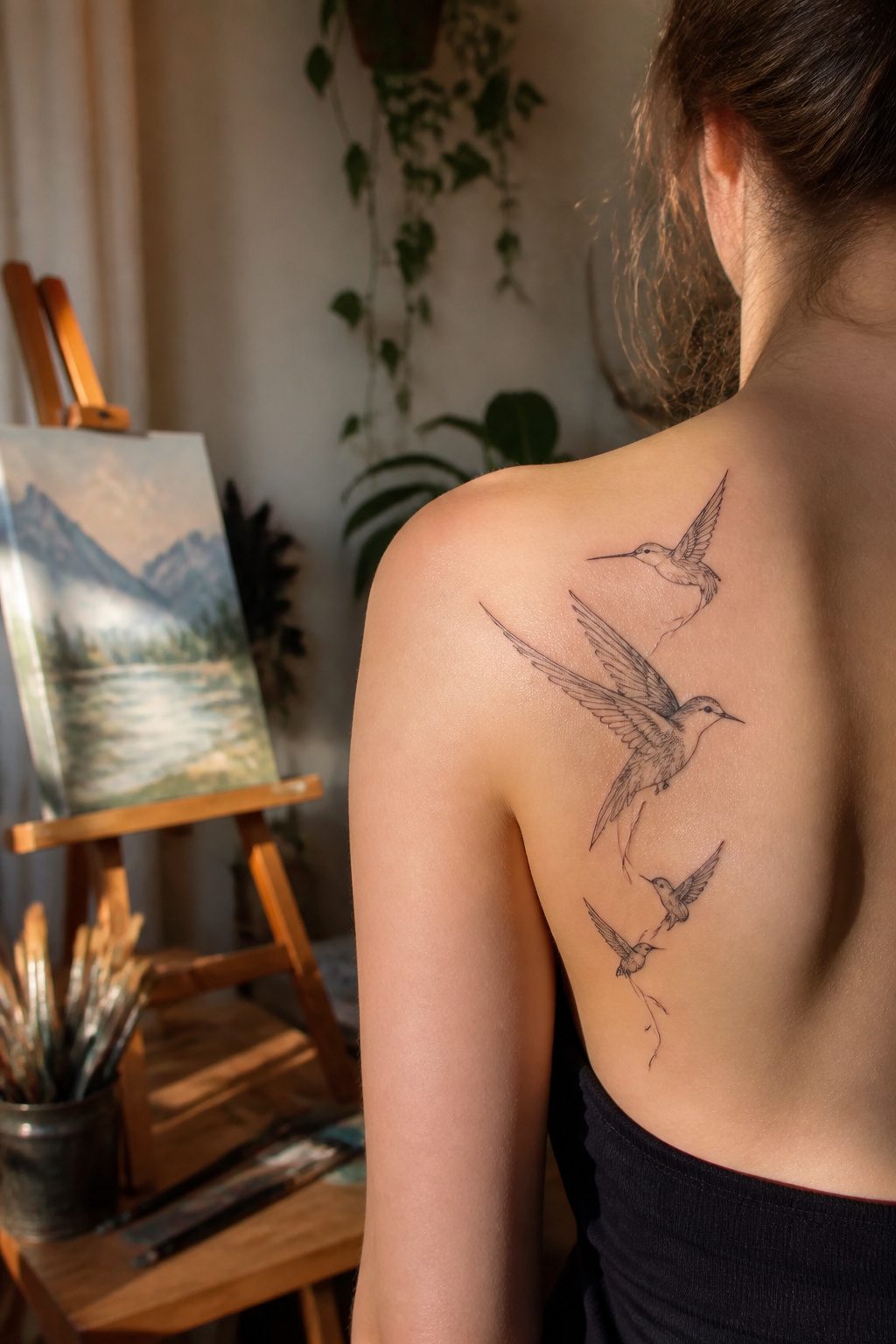
Birds in motion translate especially well to fine line work because the body stays compact while the wings demand movement. A swallow sketched in single needle across the collarbone carries the old sailor meaning, miles logged and return home, though plenty of women now choose it for the shape alone. The rib or shoulder blade gives the wings enough room to spread without crowding.
Hummingbirds need that same space to read as anything more than a blur. The body can stay delicate, barely heavier than a hairline, but the wing feathers take a slightly thicker stroke to catch light against skin. Without that contrast the whole piece flattens out. What reads as resilience in the symbolism, the hovering and the constant motion, depends on the artist varying pressure mid-line.
Sparrows work smaller than either, perched on a branch or mid-takeoff behind the ear. The species distinction matters less than the posture. A bird frozen in flight needs more detail to register; one settled on a twig lets the line stay minimal and still reads immediately. Wing feathers in heavier stroke against a single-needle body is the move that separates a bird tattoo from a smudge at six months.
5. Butterfly Tattoos
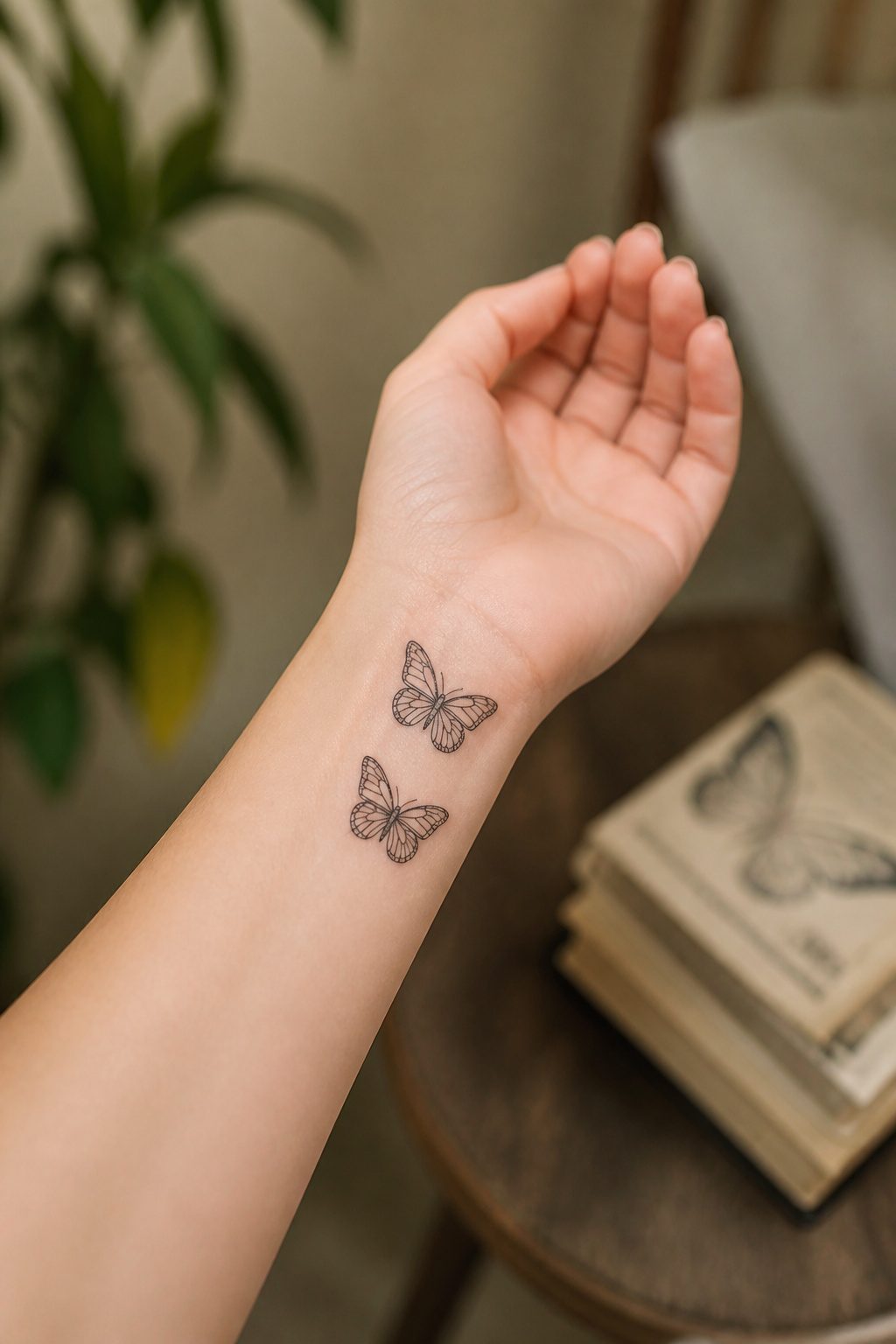
Butterflies rank second only to florals in fine line requests, and the meaning is where most clients start: metamorphosis, freedom, the visible evidence that a body can become something else entirely. The wing symmetry is where an artist earns the fee. A single needle has to carry the same weight and angle on both sides, and the margin for error is basically zero. Your eye catches the mismatch before your brain names it.
Color on those membrane-thin wing sections is a short-term bet. Pastel and watercolor washes fade to neutral within three to four years; black and grey hold crisp definition for six to eight. Wrist placement, a popular spot for the smaller designs, sees enough friction that a refresh may land inside the first year rather than the standard three-to-five window. The trade is simple: color for immediacy, black and grey for staying power.
6. Geometric Patterns
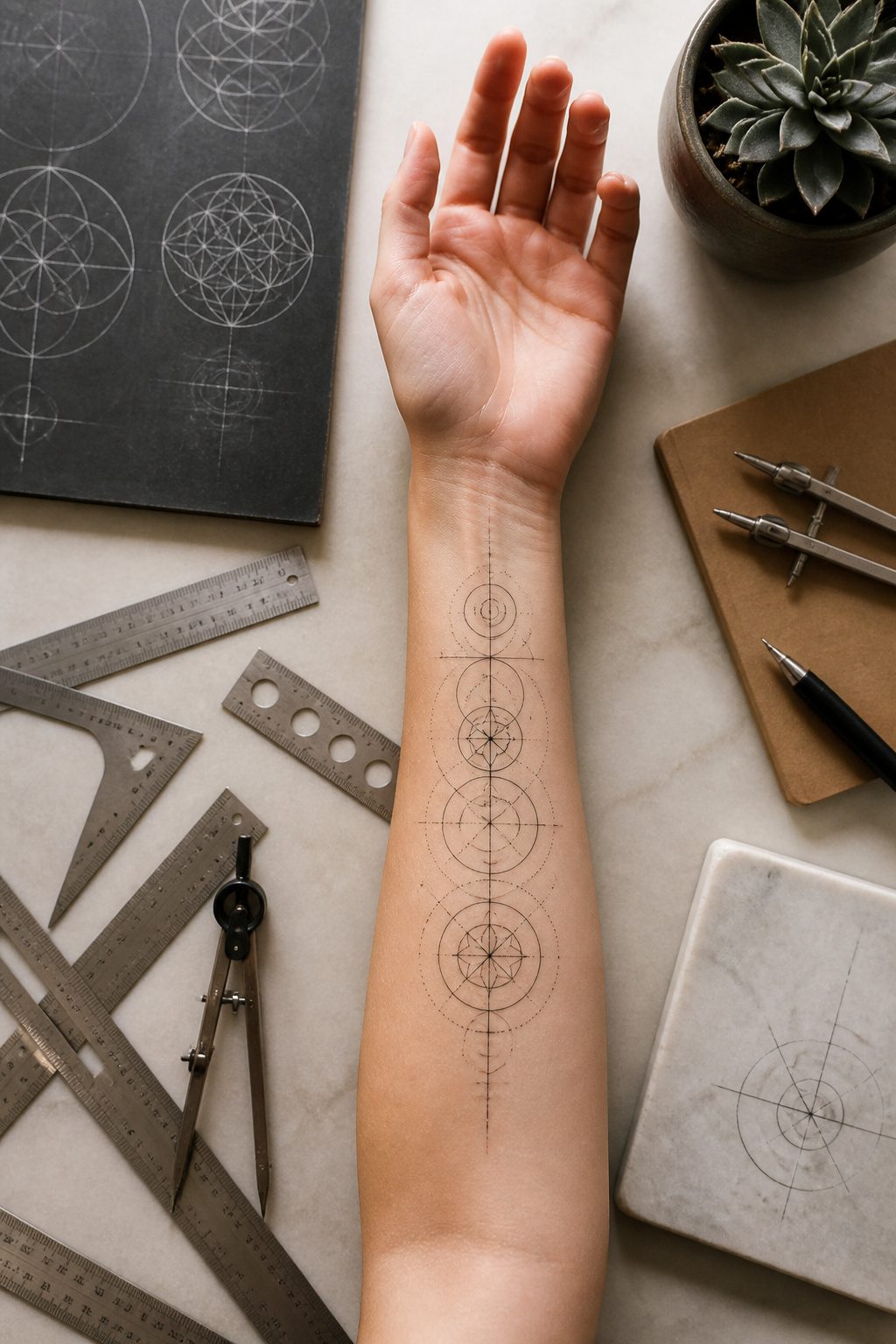
Circles, fine grids, and sacred geometry demand a needle that keeps to barely more than a hair’s width. A single waver in the stencil, one line that drifts by a millimeter, and the whole design reads crooked from ten feet away. The artist is working without cover: bold traditional work can bury a small flaw under saturation, but fine line geometry has nowhere to hide.
Flat planes give the cleanest result. Inner forearm, upper arm, calf. These spots keep the skin stable under the needle and, afterward, see less of the friction and sun that blur delicate work over time. Bone makes it harder. The forearm rates about a 3/10 for most, but the sensation sharpens considerably where the needle passes over ribs or shin. If you are considering one of these pieces, factor that into your placement choice, not just your design.
7. Abstract and Ornamental Designs
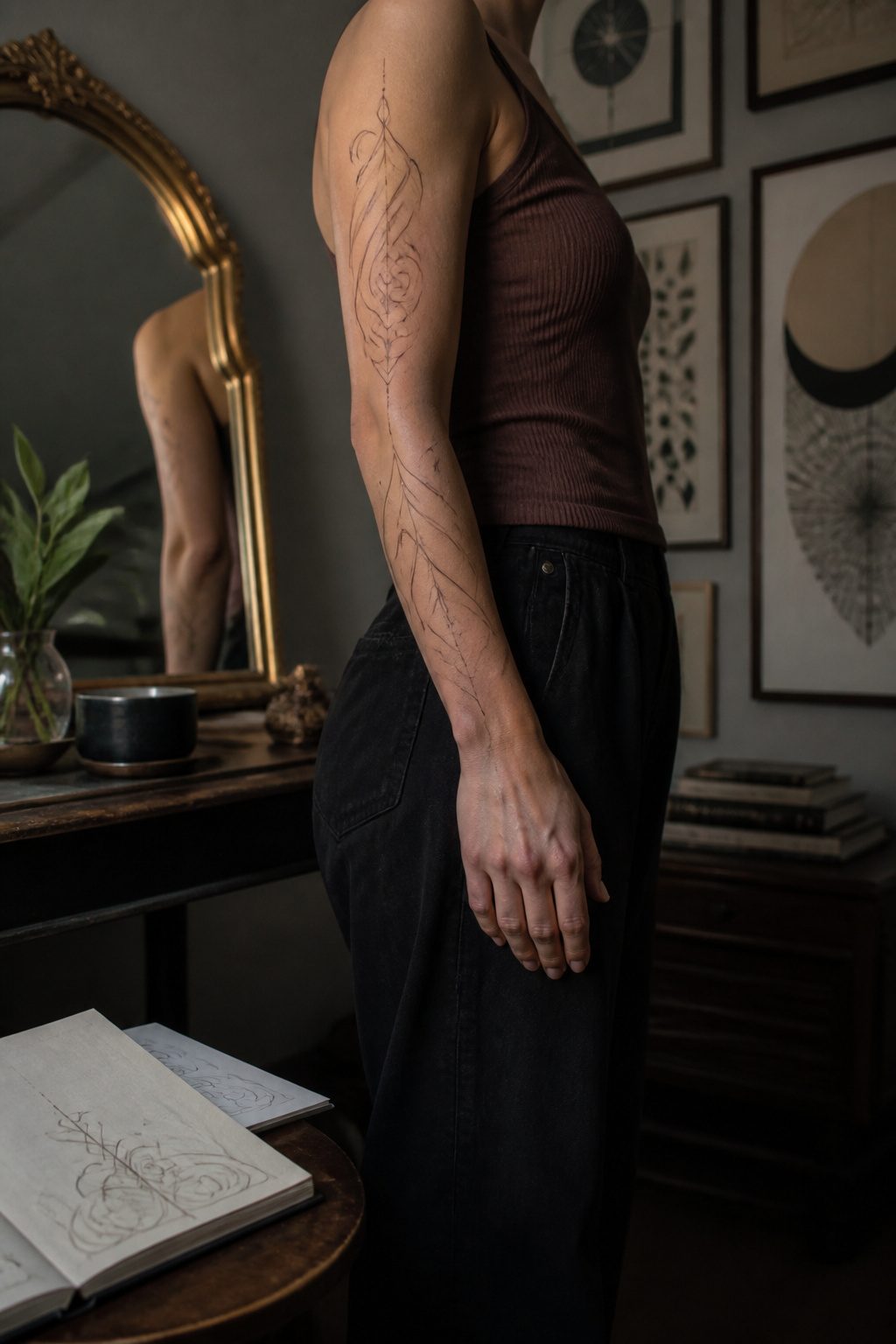
Abstract shapes and ornamental borders sit differently on the body than anything with a name. A curved line tracing the collarbone or a thin band wrapping the wrist reads as architecture, not illustration, and that matters for how it ages. A blurred curve is still a curve; a blurred rose is a brown smudge. Non-representational work forgives the spread that happens to any ink over years.
Placement becomes the whole decision. Lines that follow muscle or bone, like the groove between shoulder and bicep or the ridge of the hip, move when you move and settle when you rest. The tattoo becomes part of the body’s own geometry rather than sitting on top of it.
I have watched fine ornamental work hold up across decades in ways figurative pieces do not. The reason is simple: there is no symbol to fail. A line that wraps a finger or feathers along a rib needs no explanation to stay interesting. The less it represents, the less it has to lose.
The tradeoff is that these designs demand precise placement. A shifted centimeter throws the balance. The artist needs to map the line against your specific bone structure, not apply a template. Ask to see healed photos of ornamental work on the body part you have in mind, and judge whether the line stayed where it belonged.
8. Small Finger Tattoos
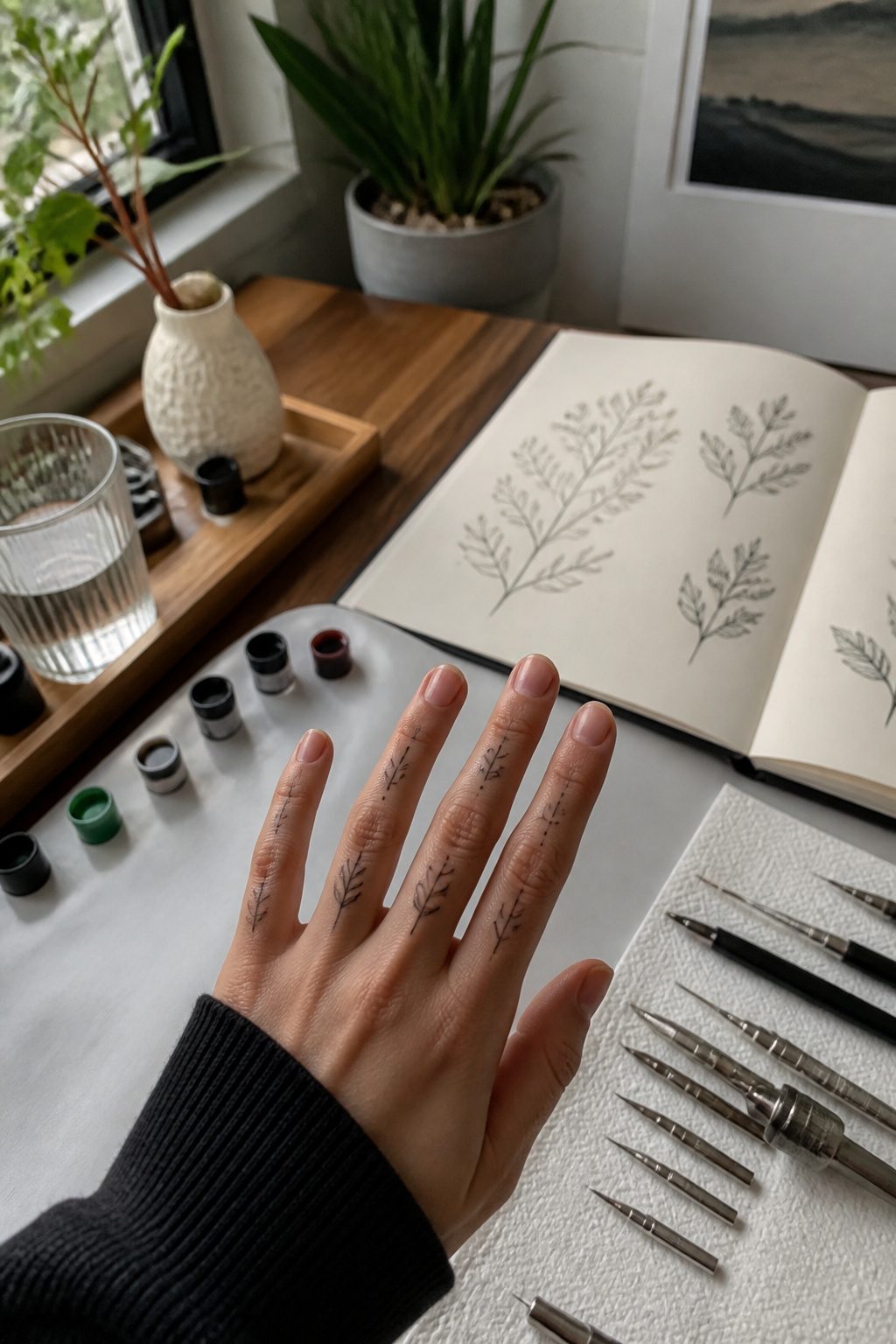
Finger skin turns over faster than almost anywhere else on the body, which makes it the most visible placement and the quickest to disappoint. Even solid black ink blurs within two to four years here, and color disappears faster. A touch-up every two to three years is the real maintenance schedule, not the three-to-five-year timeline that holds for quieter spots.
Pain sits at about a 5 or 6 out of 10 across most of the finger, but the skin between knuckles pushes higher, dense with nerve endings and thin on padding. Plenty of artists who love fine line work will still turn fingers down. The refusal is not about skill; it is about certainty. They know how the piece will look in year three, and they do not want their name on the result.
If you are set on a ring band, a tiny symbol, or a set of dots, test it first with a temporary version. Wear it through hand-washing, typing, and sunscreen application for a few weeks. The commitment is small; the evidence of how fast it wears off is useful.
What the Needle Does
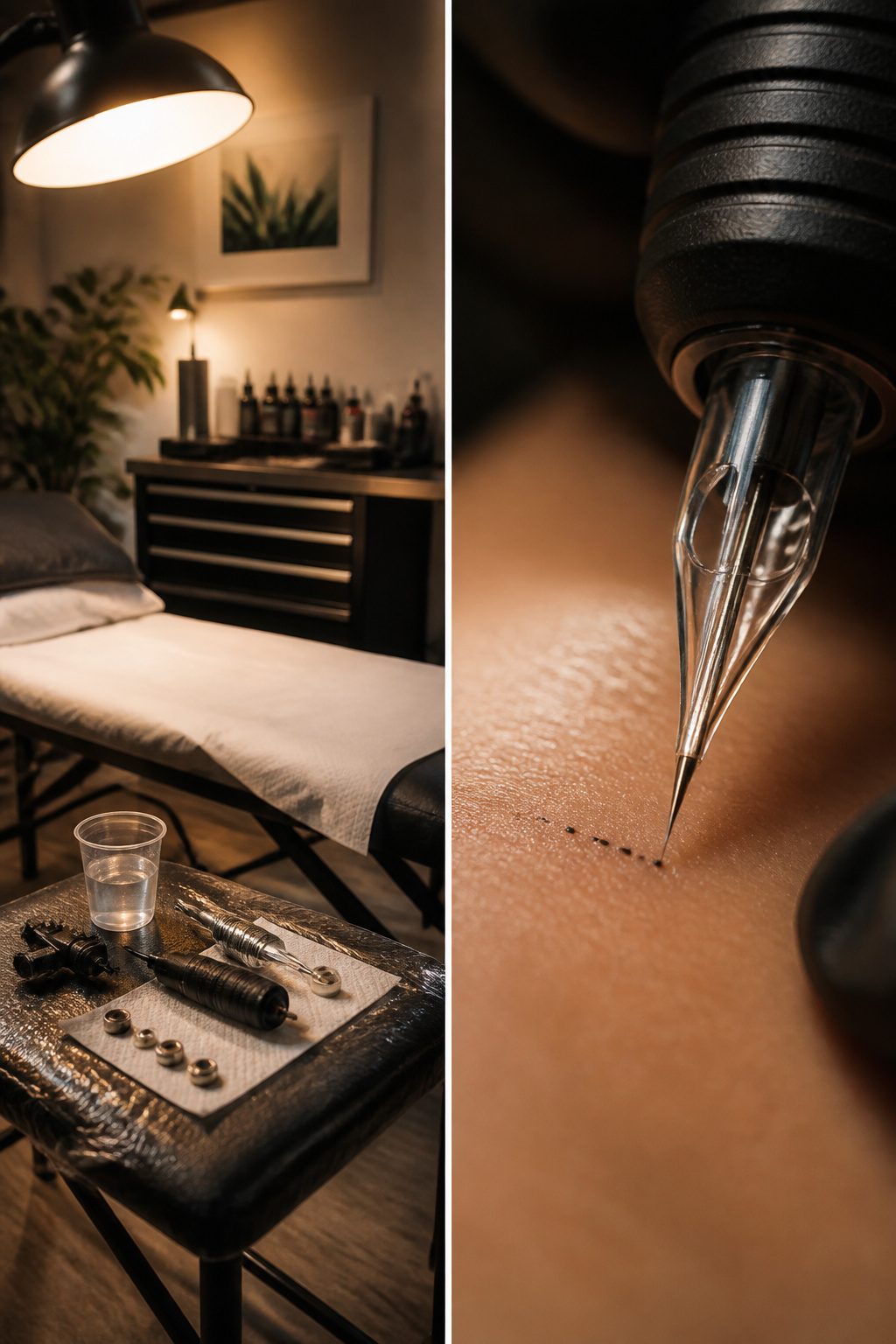
A standard tattoo runs a 3-round liner or a 7-mag shader, needles bundled together that drive in more pigment with each pass. Fine line work flips that to a single needle, one point depositing less ink and cutting less skin. The trauma is smaller, so the skin closes faster and the scab is thinner, but the margin for error shrinks with it.
Not every shop keeps liners this fine in stock, and not every artist has the hand speed to run them. A line blown out by a fraction of a millimeter heals blurry; a line too shallow falls out entirely. The ones who do this well charge for the discipline, and the sessions run long because of it. A piece that might take an hour in bold traditional work can stretch past several hours when every stroke is single-needle precision. Complex designs usually split across two to four appointments, letting the skin settle between passes so the final image stays crisp.
Placement and Pain by the Numbers
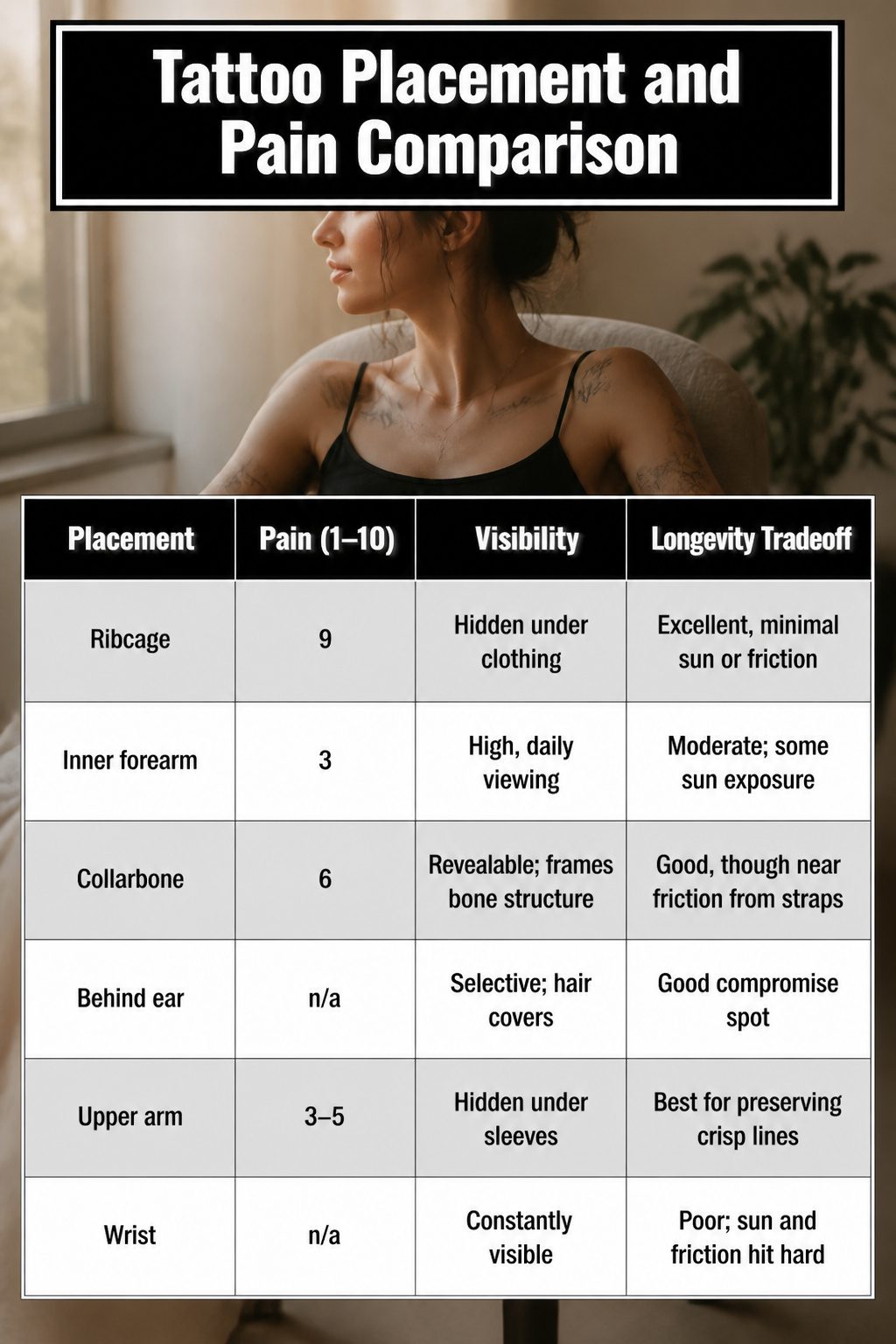
Fine line ink lives or dies by where you put it. The ribcage, for all its elegance, registers a 9 out of 10 on the pain scale and takes two to three weeks to heal loose-clothing-only. The inner forearm, by contrast, sits at a manageable 3/10, with nerves that barely complain and a surface you can admire without a mirror.
Visibility and longevity pull in opposite directions. Wrist and hand tattoos get seen daily but absorb sun and friction relentlessly; lines blur faster there than anywhere else. The upper arm hides under sleeves, which is exactly why ink stays crisp six to eight years instead of three to four. Behind the ear and along the collarbone split the difference, concealable when you want and showable when you don’t, with moderate pain at 6/10 for the collarbone’s bone-adjacent sharpness.
| Placement | Pain (1–10) | Visibility | Longevity Tradeoff |
|---|---|---|---|
| Ribcage | 9 | Hidden under clothing | Excellent, minimal sun or friction |
| Inner forearm | 3 | High, daily viewing | Moderate; some sun exposure |
| Collarbone | 6 | Revealable; frames bone structure | Good, though near friction from straps |
| Behind ear | n/a | Selective; hair covers | Good compromise spot |
| Upper arm | 3–5 | Hidden under sleeves | Best for preserving crisp lines |
| Wrist | n/a | Constantly visible | Poor; sun and friction hit hard |
After healing, SPF 50 or higher becomes non-negotiable wherever skin sees daylight. UV breaks down fine pigment fast, and touch-ups at three to four years on colored work, or six to eight on black, depend heavily on how much exposure you allowed.
Aftercare for Thin Lines
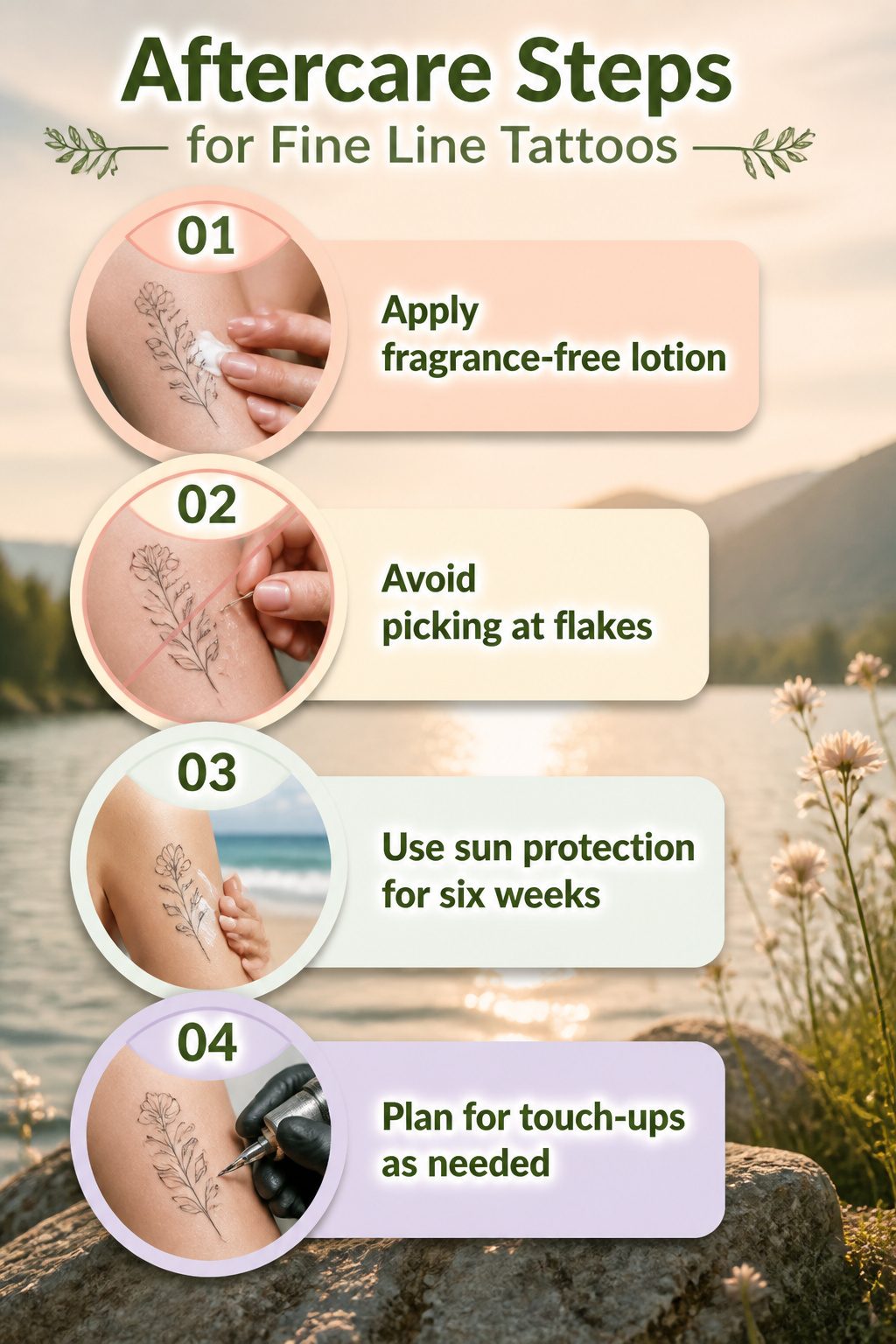
Fine line tattoos heal with less scabbing than bolder work, which feels like a win until you realize the same thin lines blur faster if the skin dries out. The balance is moisture without drowning it: a thin layer of fragrance-free lotion, applied whenever the area feels tight, keeps the skin supple without sealing in bacteria. No picking at flakes, no matter how evenly they lift, and sun protection for six weeks minimum — UV breaks down fine pigment rapidly, and a fresh tattoo is especially vulnerable.
Touch-ups come with the territory. Black ink on protected skin, like an upper arm or ribcage, stays crisp longer, while fingers and colored work need attention sooner — typically within three to five years for most placements, but sooner for high-friction spots and pastel tones.
What Lasts and What Does Not
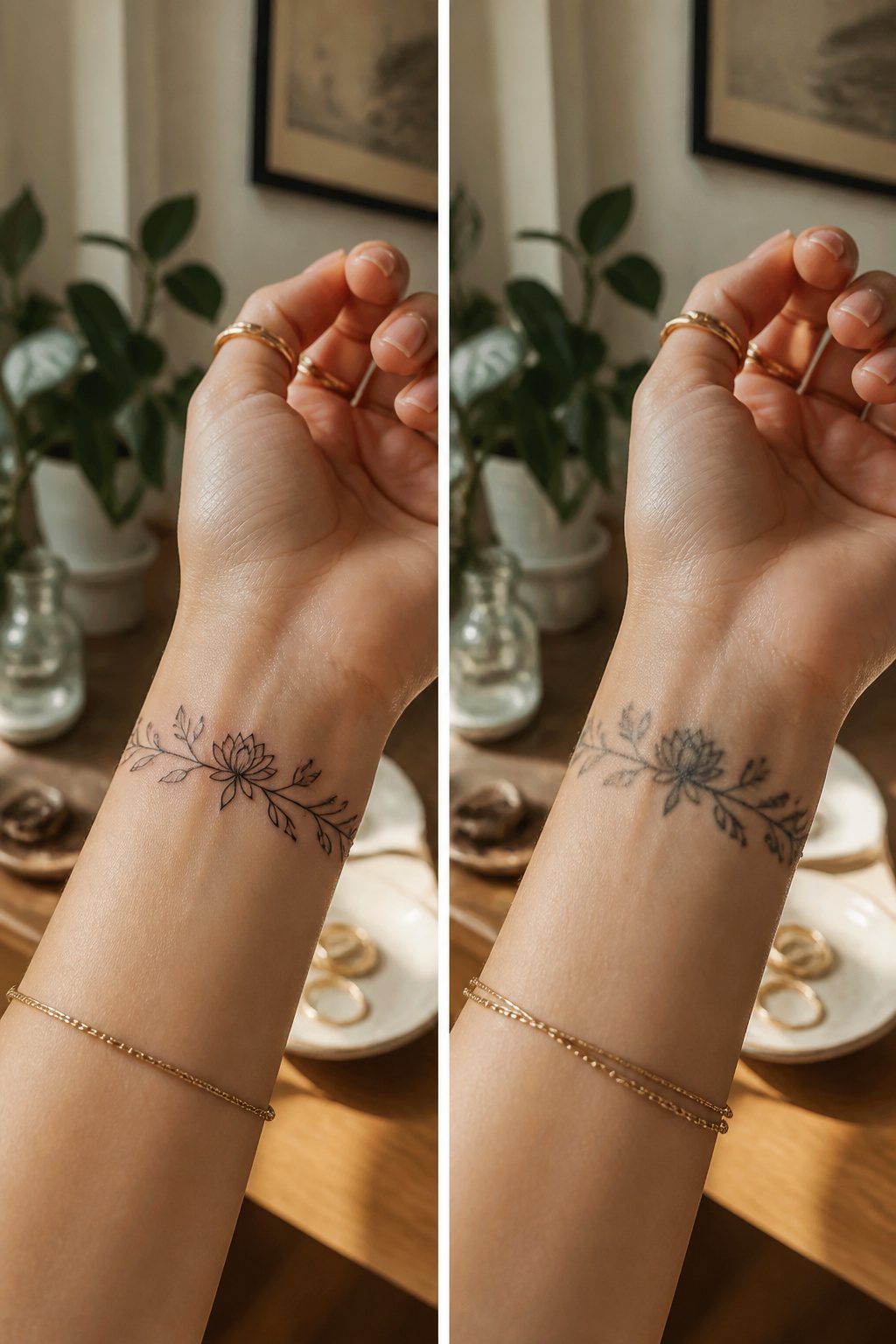
Black ink holds its edge for 6 to 8 years before the first real softening. Pastel tones, the ones that read so delicate on fresh skin, flatten toward neutral in about half that span, 3 to 4 years. Neither timeline is a secret in most shops, though it is not always volunteered.
Fingers, wrists, the tops of feet, anywhere skin meets surface through the day, shave years off both counts. Friction works the pigment out faster than UV does, and both arrive on schedule.
The minimalist look, the single clean stroke, has never been about outlasting biology. Skin sheds, scars, browns in the sun; that is what living tissue does. The appeal is the clarity on day one, the photograph, the visible proof that the work was done well. For plenty of clients, that visibility matters more than the decades-after story.
The fading of a tattoo is inevitable over time, thanks to our skin’s natural instinct to slowly remove foreign substances.
What follows from this: the question is not whether you will need a touch-up, but whether your artist offers one. Ask the retouch policy before the needle, not after the blur.
Frequently Asked Questions
How long do fine line tattoos last?
Black ink stays crisp for six to eight years on protected skin like the upper arm or ribcage. Pastel tones fade toward neutral in about three to four years. Fingers, wrists, and other high-friction spots shorten both timelines significantly.
Do fine line tattoos hurt?
Pain depends almost entirely on placement. The inner forearm rates about a 3 out of 10, while the ribcage hits a 9. Fine line work uses a single needle that cuts less skin, so the sensation is often less intense than bold traditional work, but bone-adjacent spots still sting sharply.
What are the best placements for fine line tattoos?
The upper arm, ribcage, and back preserve crisp lines longest because they see less sun and friction. The inner forearm offers a good balance of manageable pain and daily visibility. Fingers and wrists show wear fastest, often needing touch-ups every two to three years.
How often do fine line tattoos need a touch-up?
Most placements need attention every three to five years, though black ink on protected skin can stretch to six or eight. Fingers and colored work need refreshment sooner, typically within two to four years. Ask your artist’s retouch policy before the needle, not after the blur.
Are fine line butterfly tattoos considered cliché?
The motif is common but not automatically cliché if you personalize it. Customizing the wing pattern, adding geometric frames, or incorporating hidden dates turns a standard design into something specific to you. The real risk is color on those thin wing sections; pastels fade to neutral within three to four years, so black and grey hold definition longer.