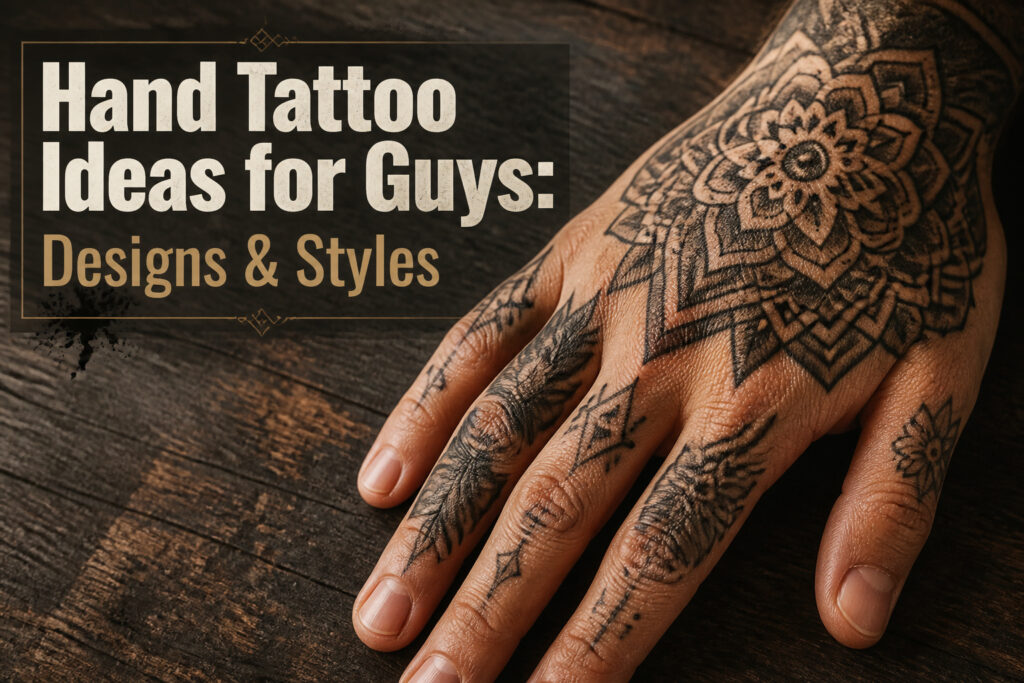
Hand tattoos for guys range from a single bold symbol to a full mandala wrapping the knuckles, and the choice usually comes down to how much upkeep you will accept. The skin here sheds fast and takes constant abuse, so fine detail in a lion’s mane or script phrase blurs within one to three years while heavy blackwork survives. Pain sits at 8 or 9 out of 10, with knuckles vibrating directly against bone, and the 3–5 year touch-up cycle is not optional.
1. Symbols and Icons
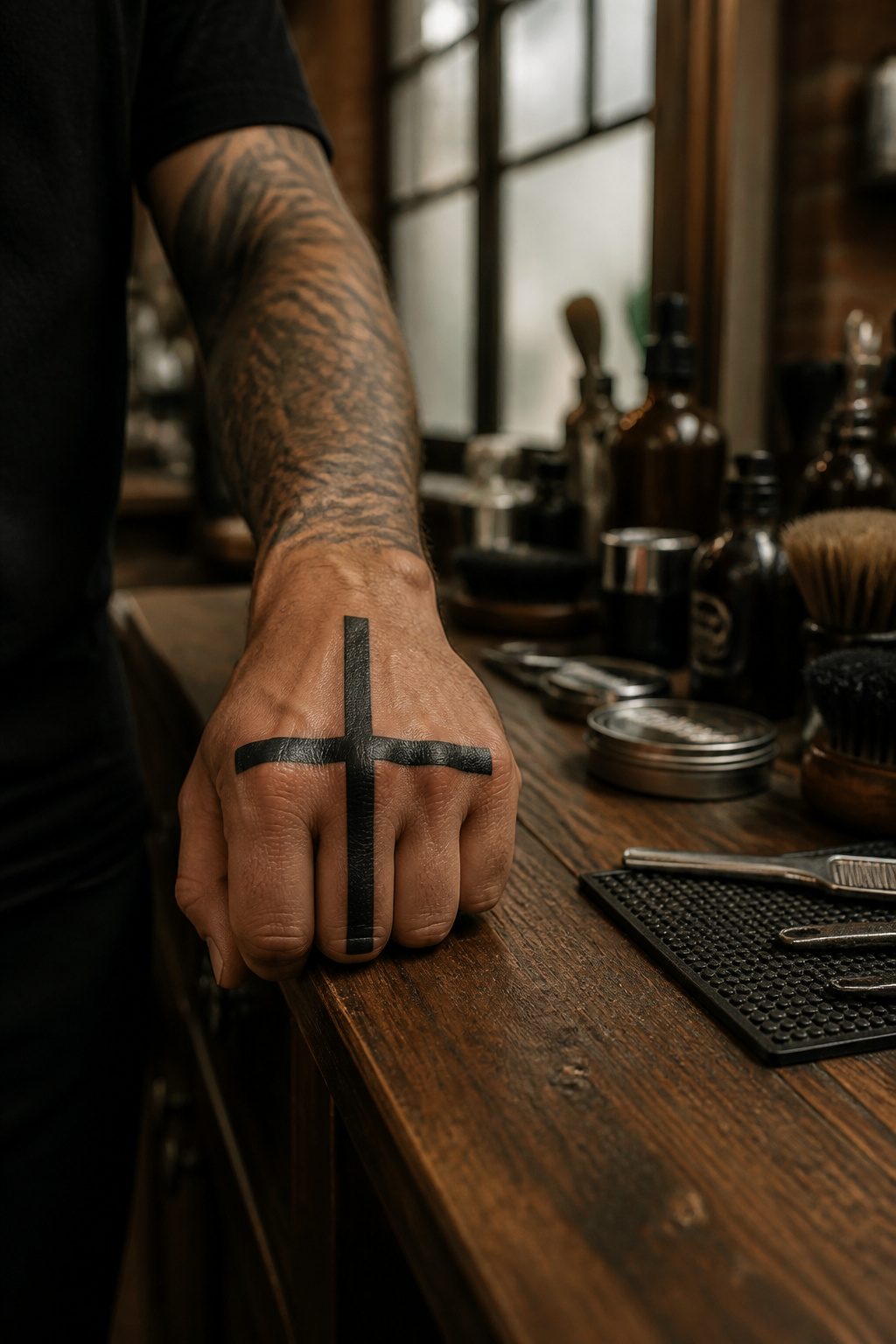
Crosses, anchors, zodiac signs, and Norse runes all share one trait that makes them sensible hand choices: they read instantly at a distance. A symbol does not need context. Someone sees an anchor and knows it is an anchor, which matters on a placement where you rarely get a second glance to explain the design.
Bold lines keep that readability as the tattoo ages. Hand skin turns over fast and sees constant friction, so fine detail inside a zodiac glyph or a rune tends to fall out within the first one to three years. The weight of the line does the work, not the intricacy. A thick black cross or a heavy rune survives the hand’s movement far longer than a delicate version of the same image.
The visibility is the point, and the cost. These symbols carry personal meaning, often tied to faith, family history, or identity, but they also broadcast that meaning to everyone you meet. A hand tattoo is not a private reminder. The same visibility that makes it meaningful makes it hard to step back from, which is why the symbol itself matters more than the surrounding ornament. Pick something you will still want to explain at fifty.
2. Animals and Predators
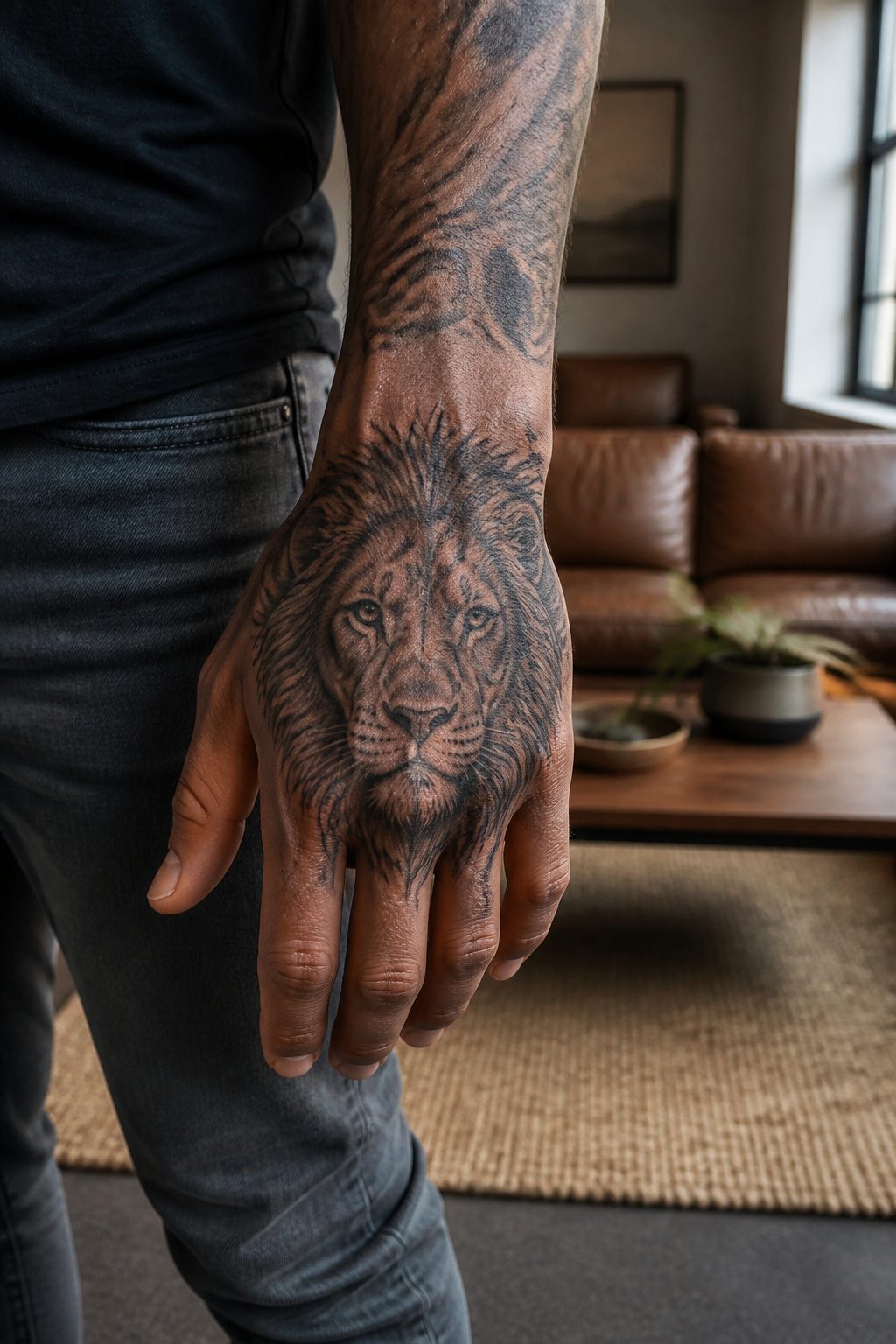
A lion on the back of the hand reads across a room before you ever shake hands. The same goes for wolves, snakes, and eagles: these are the designs men keep asking for because the placement itself becomes part of the meaning. Your hands are the first thing extended in a greeting, held up in work, laid flat on a table. A predator there is not decoration; it is a claim about who walks into the room.
The appeal is older than tattoo shops. Tribal warriors marked hands to signal status and identity, and that visibility still carries weight. A snake coiled across knuckles or an eagle spanning the back of the hand puts the symbol where no shirt can cover it. Thick outlines are what separate a design that lasts from one that blurs into a dark patch; fine detail in a lion’s mane or a wolf’s fur looks crisp for months, then softens as the ink settles and spreads. One artist I spoke with called lions especially risky: too much interior detail, and within a few years the face becomes unrecognizable.
Hands turn over skin fast and take constant abuse from sun, washing, and impact. The fade usually shows up first as gaps in thin lines and softened edges, somewhere between year one and year three. Plan on touch-ups. Most reputable artists bring this up before you sit down, and many charge little or nothing for that first refresh within the first year. A bold predator with heavy black lines and simplified detail gives you the longest runway before that appointment.
3. Skulls and Skeletons
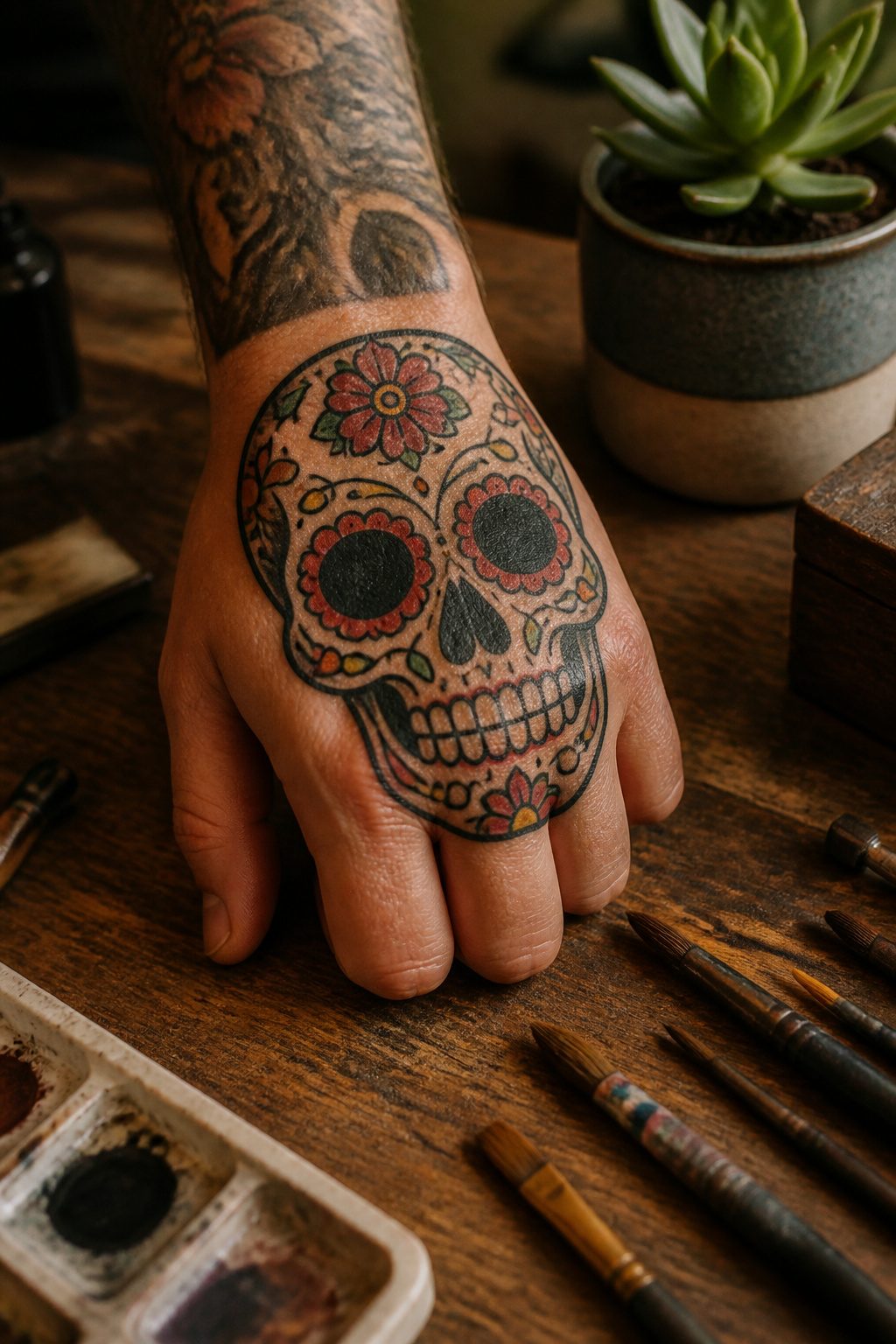
Realistic skulls and sugar skulls read as two completely different statements on the hand. A realistic skull leans on soft shading and anatomical detail, but grey-wash realism ages poorly on hands because that subtle shading drops out faster than any other approach. The flat plane across the back of the hand gives an artist room to work, yet the same placement that flatters a centered skull punishes the technique if you chase photographic accuracy.
Sugar skulls move in the opposite direction. Bold black outlines, limited color, and simple internal shapes are exactly what hand skin rewards. American traditional constraints were developed for exactly this kind of longevity without touch-ups. Heavy outlines are the reason skulls stay legible on hands.
The natural bold shapes of a skull already suit this approach. The eye sockets, nose cavity, and jawline read instantly even at hand-scale, so the design carries at a distance without needing the fine detail that will blur. If the motif appeals, a black-and-red or black-only palette outlasts traditional reds and yellows on this placement, which fade noticeably faster than black.
4. Floral Designs
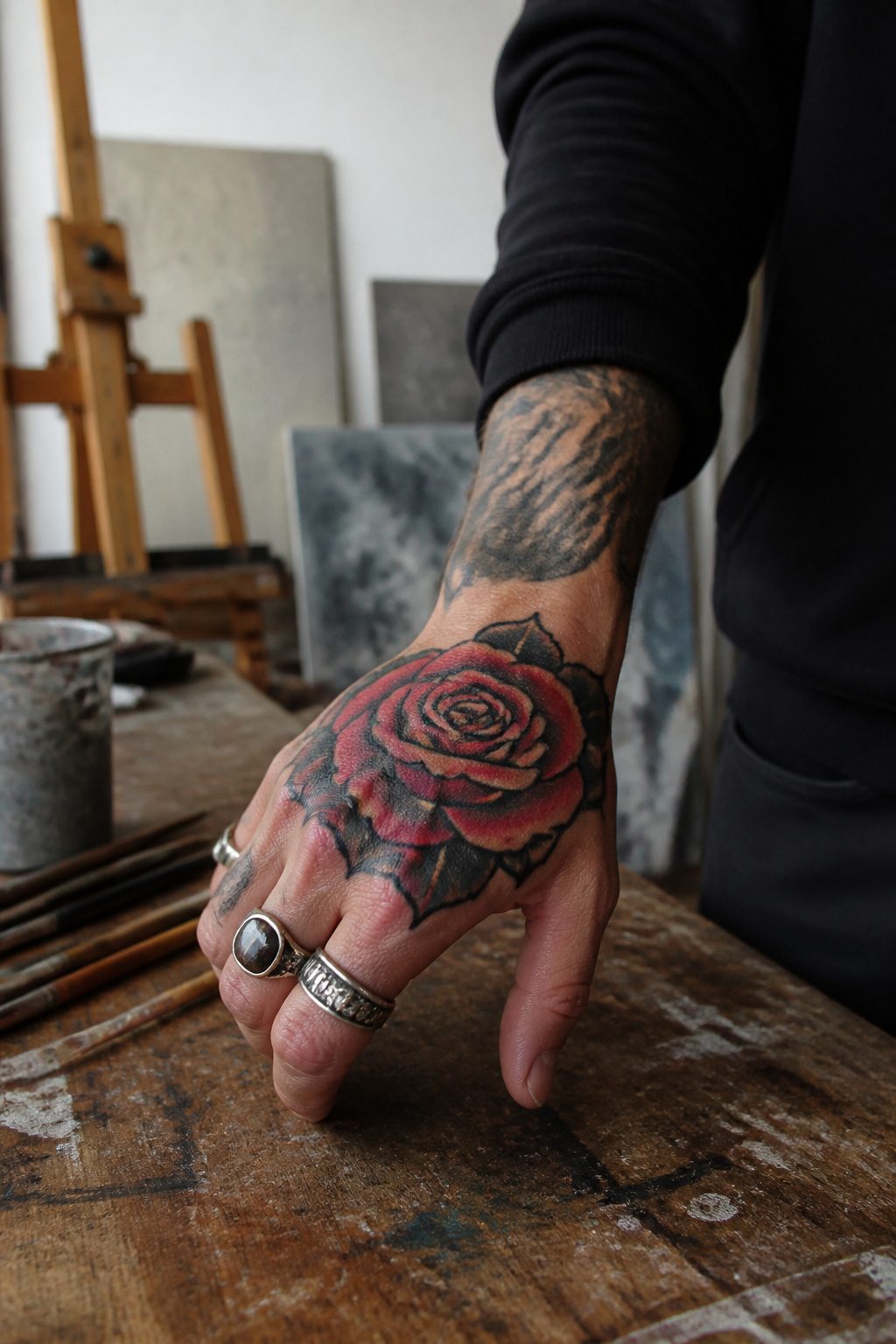
Floral hand work used to read as strictly feminine in most shops I walked into through the 2000s. That shifted somewhere around the mid-2010s, maybe after enough guys saw Japanese irezumi masters packing whole bodysuits with peonies and lotus without anyone questioning the masculinity of it. Now roses, lotus, and cherry blossoms land on men’s hands regularly, though the approach changes for the smaller canvas.
Roses work because the spiral structure compresses well. A tight bud or half-open bloom fits between knuckles without the petals blurring together as the skin ages, which happens fast on hands. Lotus holds up better than most flowers for the same reason: the layered geometry reads clearly even when line edges soften. Cherry blossoms are trickier. Their five-petal spread looks delicate and opens up nicely on a hand’s flat planes, but the fine lines in those petals need spacing that anticipates bleeding or they will mush into pink clouds inside five years.
What separates masculine floral work from the stuff I was doing on women’s ribs back in the day is usually the weight. Thicker outlines, negative space used as shadow rather than soft shading, and placement that treats the flower as an object rather than an ornament. The hand forces that choice anyway; there is no room for the airy backgrounds that let floral pieces breathe on a shoulder or thigh.
Petal details age poorly on hands because the skin there sheds faster and holds more sun. A rose that would hold for fifteen years on a calf might need touch-up in eight on a hand, with the red going muddy first. Planning for that means simpler petal counts, stronger contrast between light and dark areas, and accepting that the piece will look bolder in year ten than it did fresh.
5. Lettering and Phrases
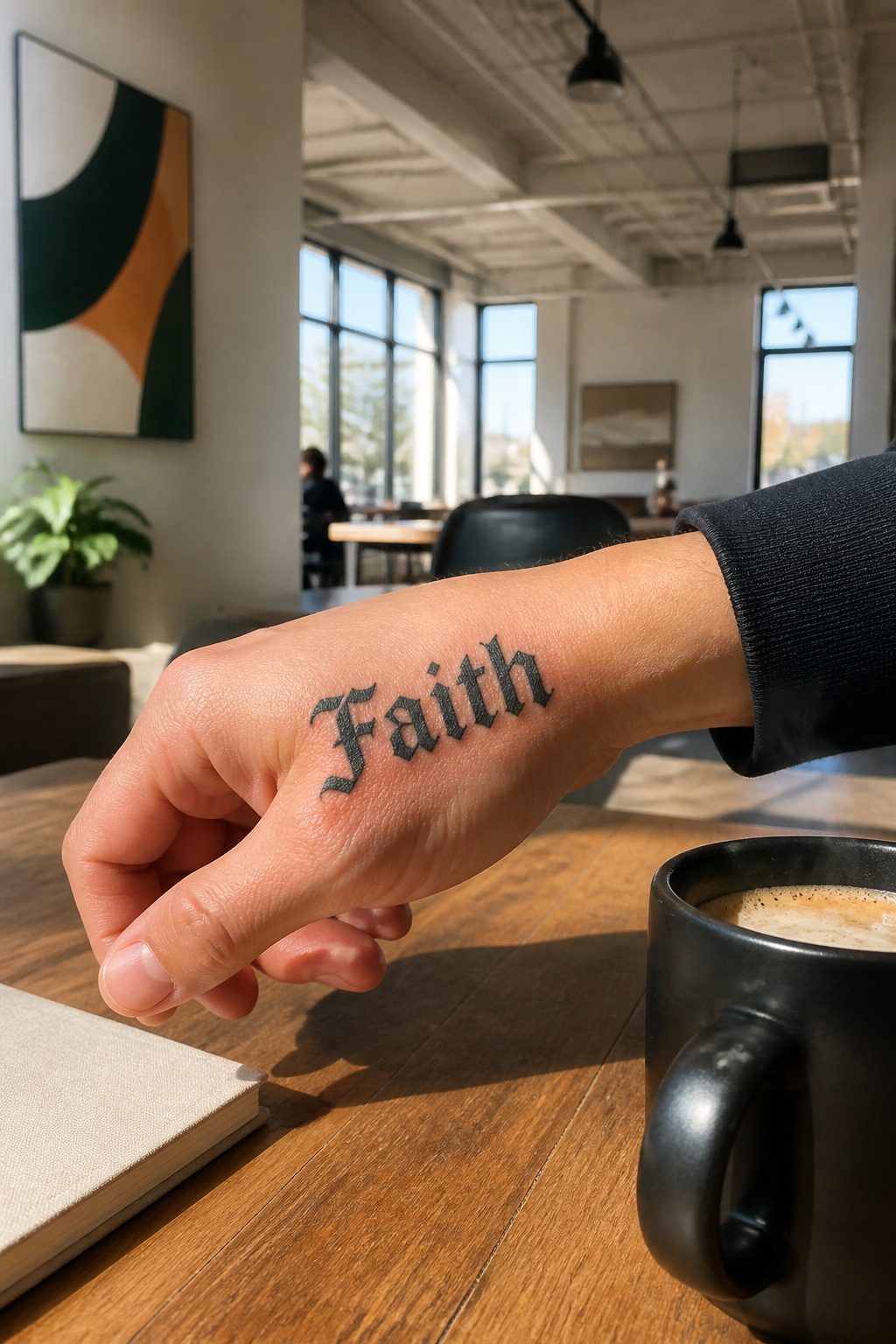
Short words win on hands because the canvas is small and the skin fights back. "Loyalty" or "Faith" in clean, heavy lettering will still read in five years; a full sentence across the knuckles starts blurring into illegible blobs as the ink spreads. I have watched fine script age into gray smudges on thin hand skin, especially between the main knuckle and the middle joint where the epidermis is at its thinnest. Serif and blackletter faces hold up better than delicate cursive because the strokes carry more weight to begin with. The side of the hand and the area below the thumb take lettering particularly well, and both sit where a cuff or watch strap can cover them when needed. Initials and Roman numerals work for the same reason: minimal text, maximum clarity, less room for the motion and sun exposure of daily life to erode the message.
6. Geometric Designs
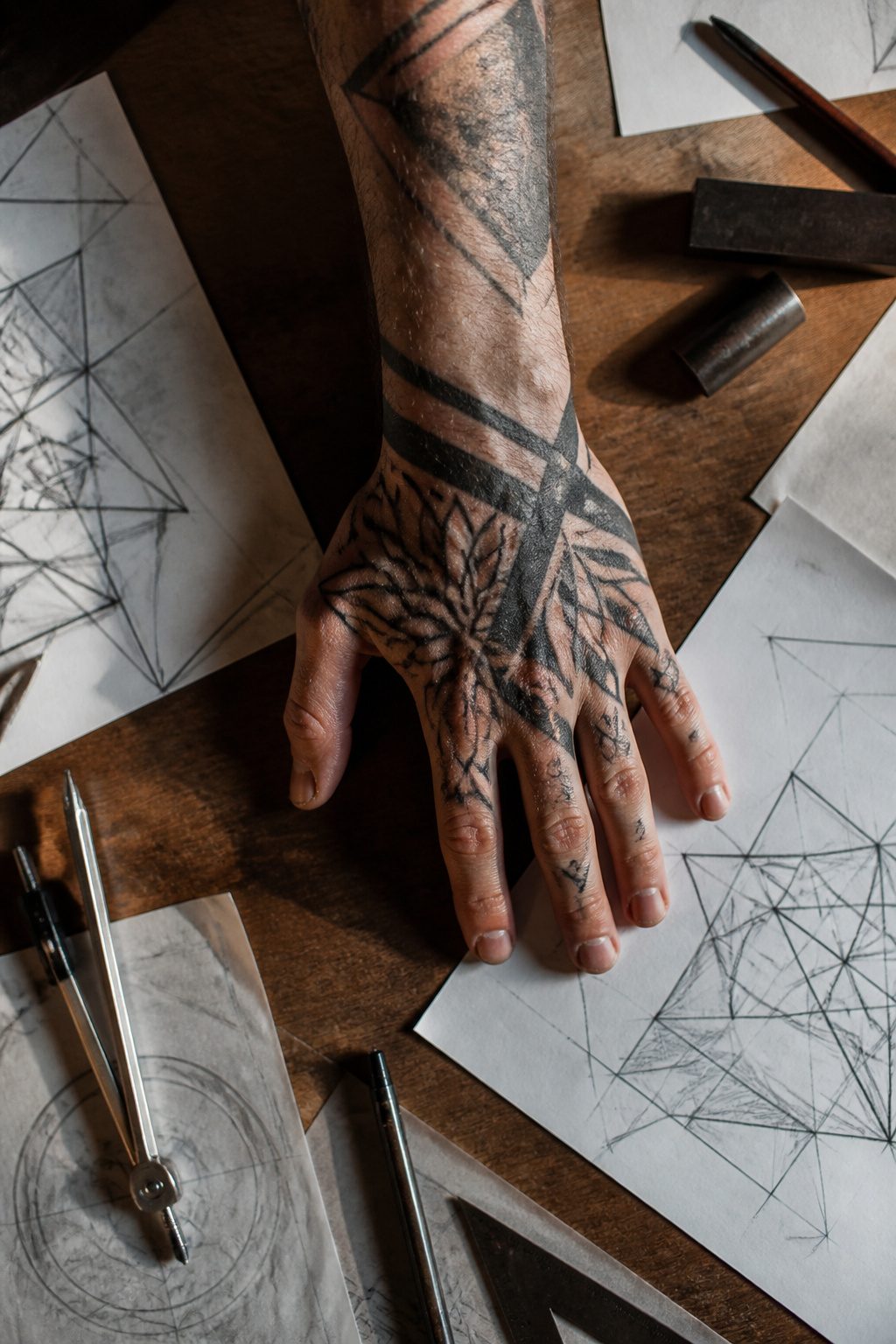
The flat planes of the hand and the ridgeline of the knuckles give geometric work built-in architecture. A good artist uses the metacarpals as anchor points so the pattern settles into the bone structure rather than fighting it. Symmetry matters because the eye travels fast across a hand; even a millimeter of drift in a mirrored shape reads as a mistake at handshake distance.
Line weight is where most geometric hand pieces go wrong. A design drawn at forearm scale looks crisp on the stencil and slightly mushy two years later. The fix every artist repeats is to draw it heavier than feels right in the moment. Straight lines are the hardest mark to hold on hands because the skin shifts under the needle, so ask to see healed geometric hand work specifically, not fresh photos, before you book.
The thumb webbing is one of the highest-friction spots on the whole hand, and dotwork stipple blurs faster there than on protected placements. Blackout geometric shapes will need the black re-packed every few years because sun exposure fades them unevenly. That upkeep is the trade for a style that reads as clean and deliberate even from across a room.
7. Minimalist Designs
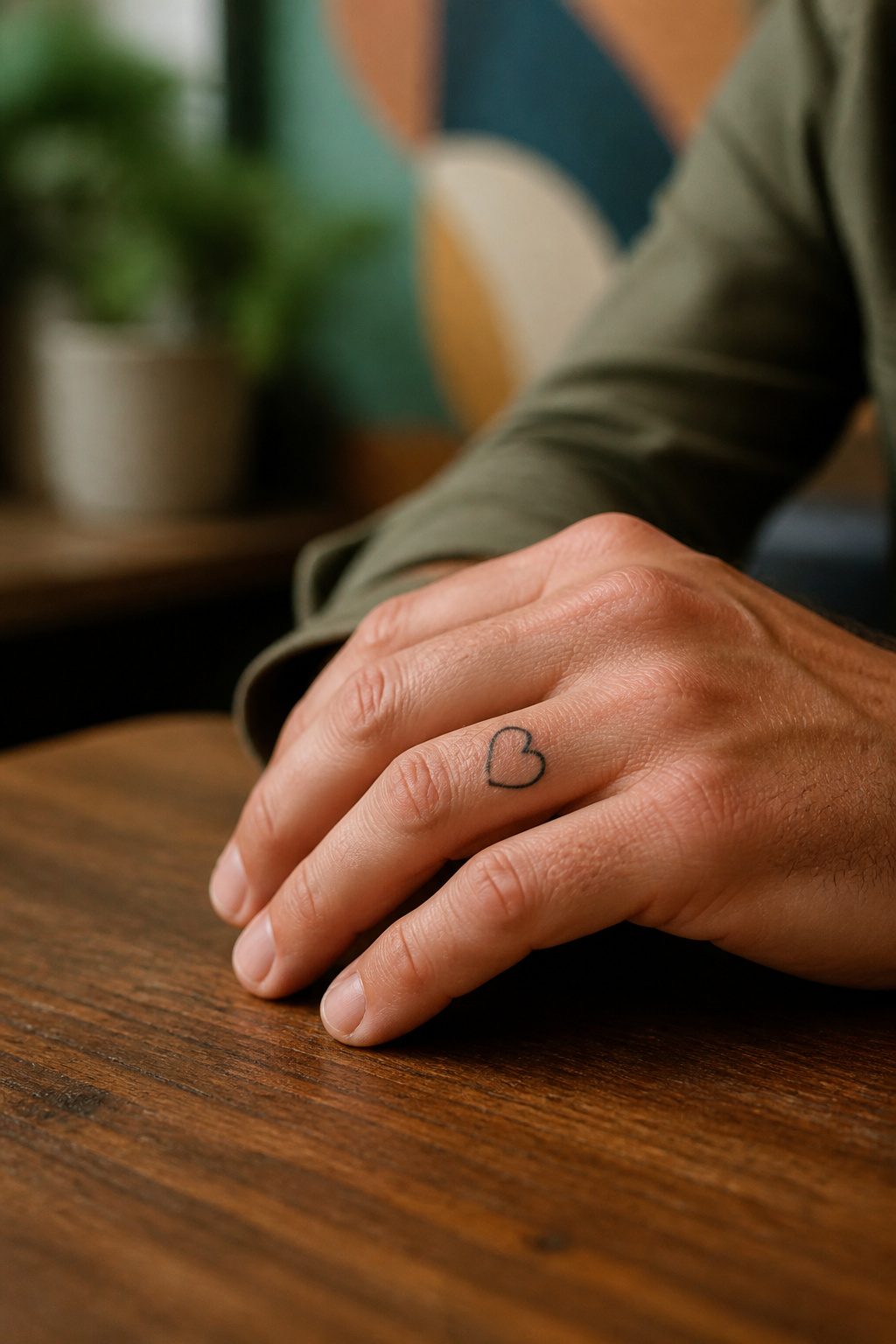
Thin lines on a hand fight the skin itself. The back of the hand and the fingers move constantly, regenerate fast, and blur fine work faster than almost anywhere else on the body. Tattoo ink expands slightly under the skin over time, so two lines placed too close together eventually merge into an indistinct shape.
That tension does not kill minimalism on the hand. It just changes where minimal pieces actually work. Clean symbols, single initials, or a small heart sit better on fingers than on the palm-side knuckles, where the skin is thicker and the wear is heavier. The back of the hand gives more stable ground for abstract linear designs, provided the linework stays open and the spacing is deliberate.
American traditional style and simple lettering hold up best on fingers. Realism or neo-traditional designs carry too much detail for the space, and the blur will swallow them first. The same rule applies to placement: a minimalist piece stays readable longer when it avoids the creases and high-friction zones rather than fighting them.
8. Tribal Designs
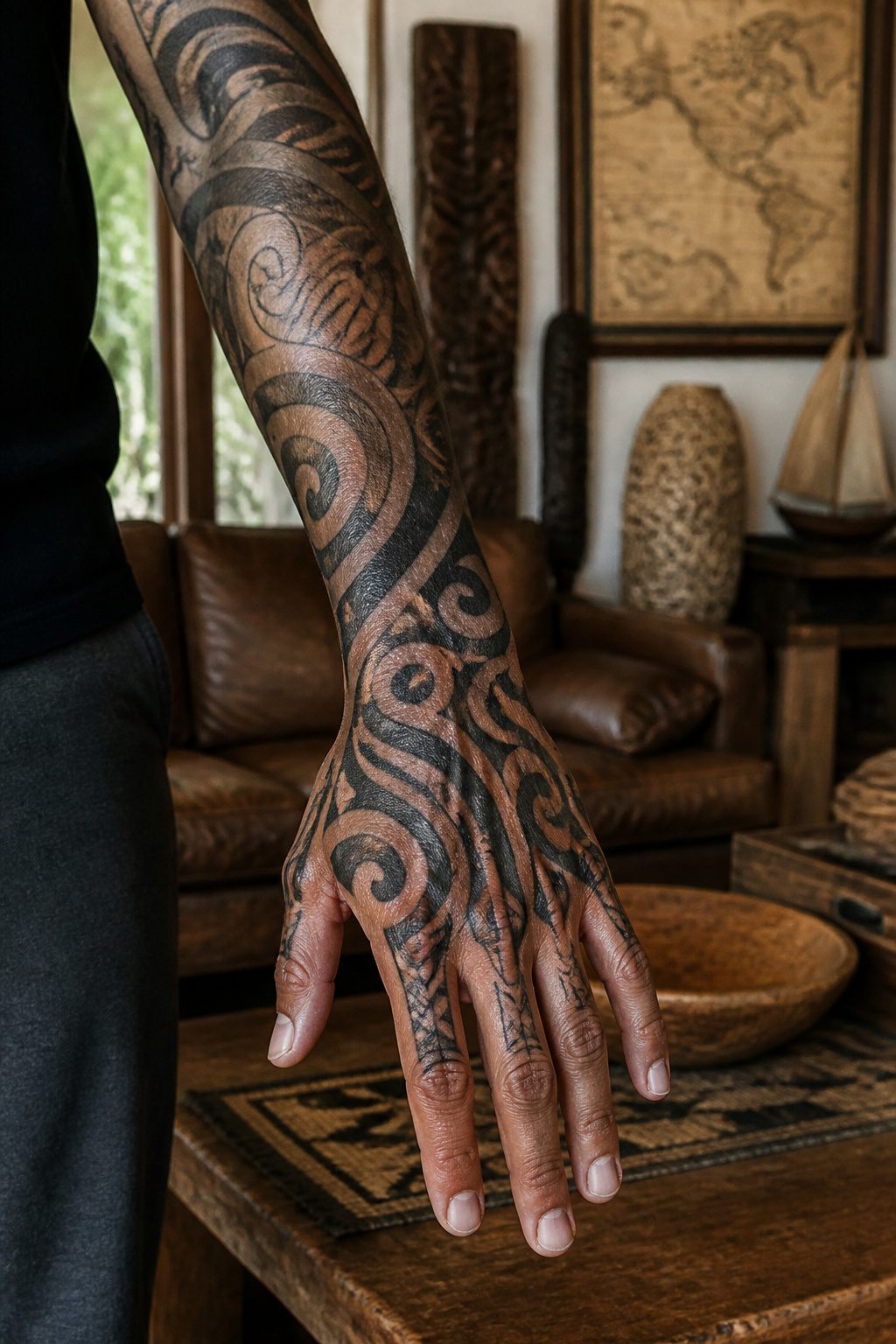
Polynesian hand tattoos carried lineage records and social rank long before Western shops ever set up near a beach. The motifs are not decorative shapes; they are a language where placement and pattern told a person’s achievements and genealogy. That weight still sits on the design when it moves to a modern hand, and the choice deserves more respect than scrolling for the boldest black band.
Traditional rules in Polynesian culture restricted certain marks to specific roles or completed rites. A hand piece was earned, not chosen from a wall. Modern tattooing loosens that structure, but the tension remains: wearing the style without the lineage risks reading as costume rather than connection. One strong central symbol reads truer on a hand than scattered small motifs ever will.
Bold blackwork happens to solve a practical problem the hand creates. Solid fill stays readable as the skin ages and the ink spreads, outperforming fine line or grey-wash realism that drops out fastest in high-wear zones. The flowing bands follow the hand’s contours instead of fighting them, and negative space does much of the visual work while holding its shape over time. Find an artist who actually specializes in the tradition; tribal work drawn by a generalist collapses into generic black shapes without the coherent design language underneath.
9. Portraits
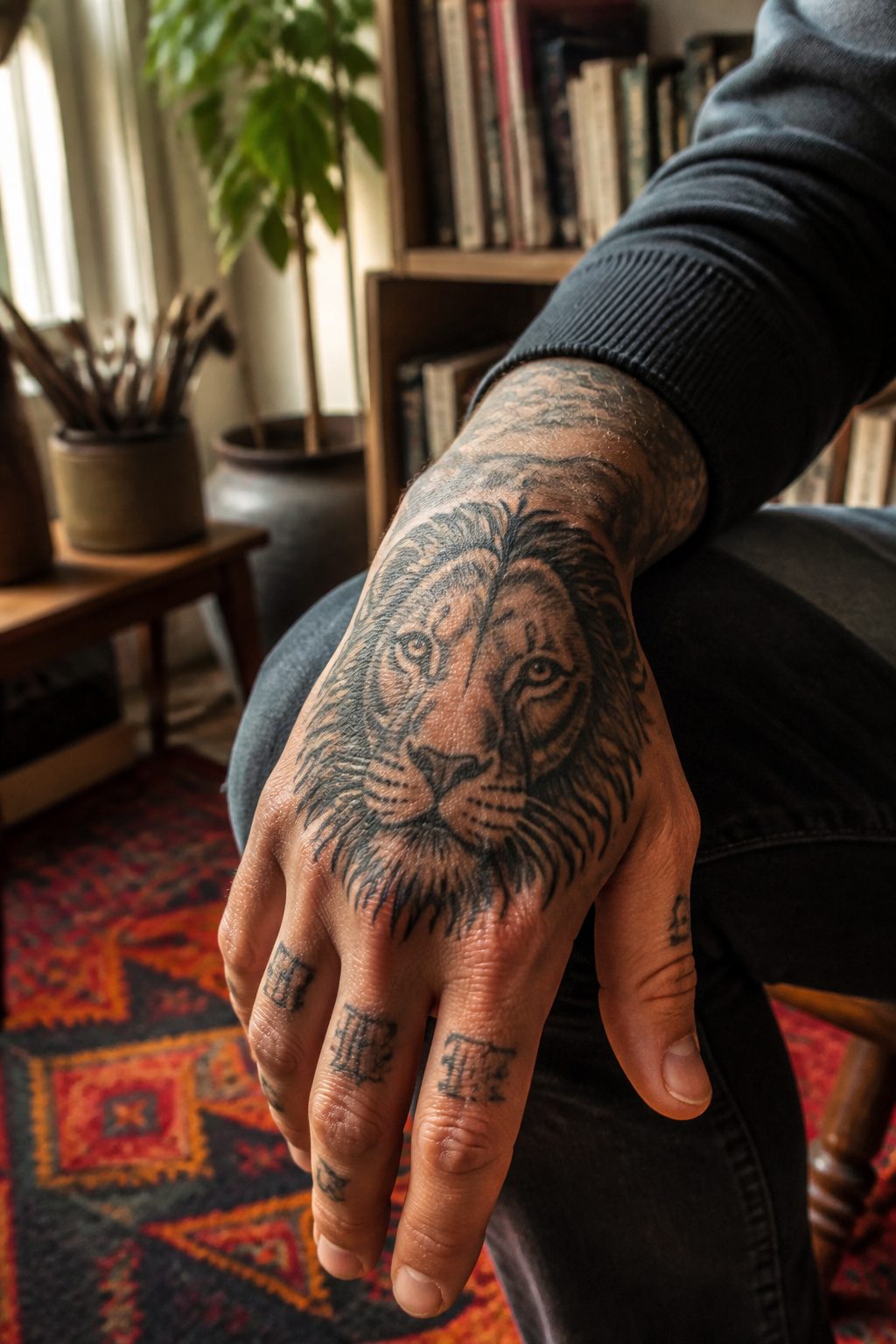
A portrait on a hand lives or dies by how the artist works the knuckles and tendons into the design, not around them. Ignore that bone structure and the face warps every time you make a fist.
The scale is brutal. A human face needs room for light and shadow to read as anything more than a smudge, and the hand offers inches, not acres. Bold line work and classic shading carry the image better than fine detail that will blur as the tattoo ages. That aging happens fast here: sun exposure, hand washing, and the friction of daily wear hit harder than on a shoulder or thigh. Some artists refuse hand portraits outright because the art simply will not hold its intended look, and clients blame the messenger.
What saves a portrait is commitment to the constraints. The best pieces simplify rather than miniaturize, letting the hand’s movement become part of the expression rather than fighting it.
10. Mandala Patterns
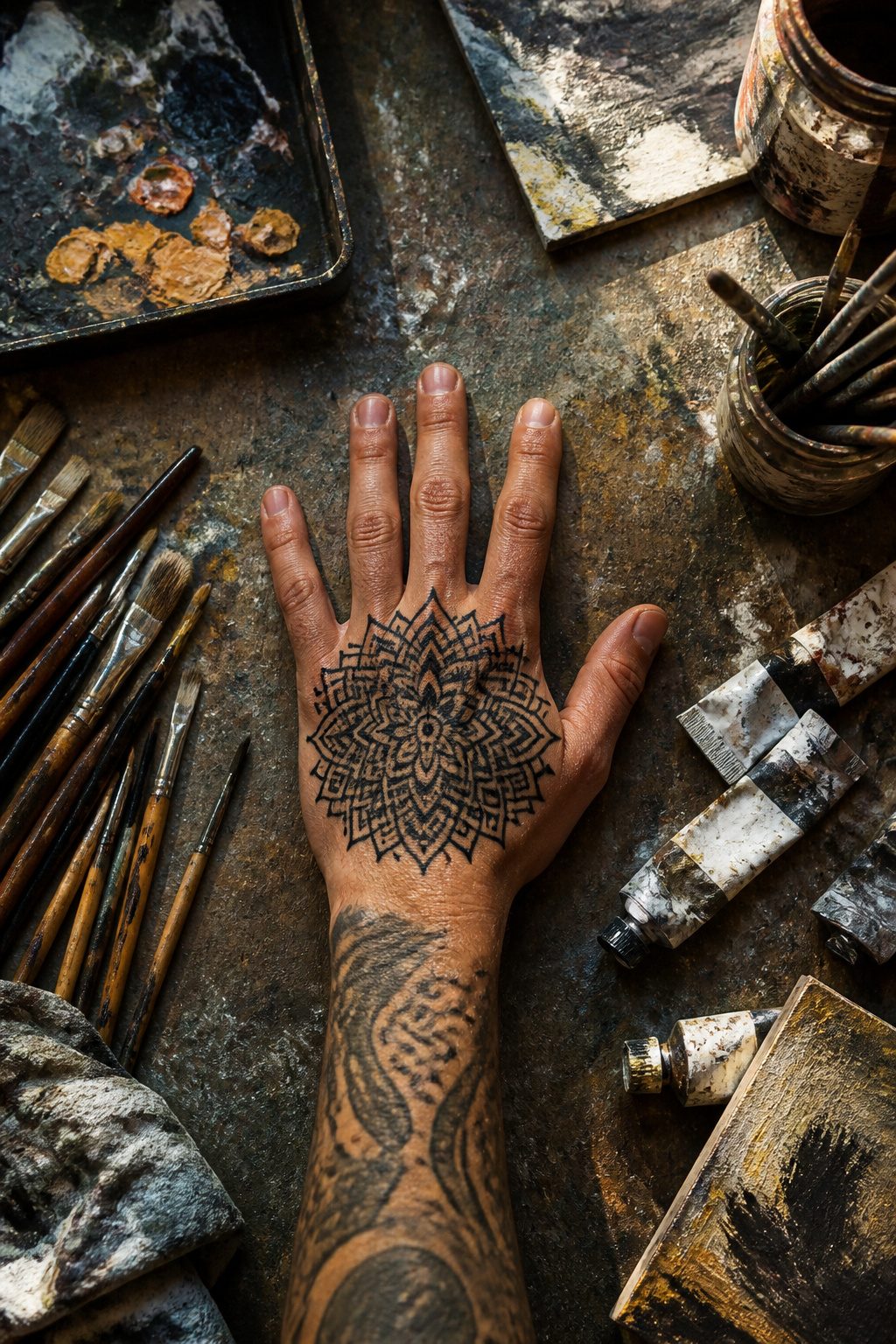
A mandala on the hand works because the palm and the back of the hand each offer a natural center, and the design radiates outward from there the way it was meant to. The geometric repetition draws the eye inward, then back out through the pattern, which is exactly what a hand does when someone looks at it: the eye settles, then travels.
The real problem is detail versus wear. Thin lines on the hand blur faster than on the forearm or shoulder because the skin here sheds and flexes constantly. What convinced me, reading through a dozen portfolios and watching healed work age, is that the mandala’s repeating structure disguises the damage better than a portrait or script ever could. One petal heals soft, and the eye reads it as texture in a field of similar shapes rather than as a flaw.
A good artist maps the pattern to your tendon lines so it moves when your hand moves. That mapping takes longer than a flat graphic on a stable surface; expect a longer sitting than you would for a comparable forearm piece. The artist works slowly here to avoid overworking thin skin, and the result is a design that wraps the hand’s contours instead of fighting them.
Why Hand Tattoos Fade Faster
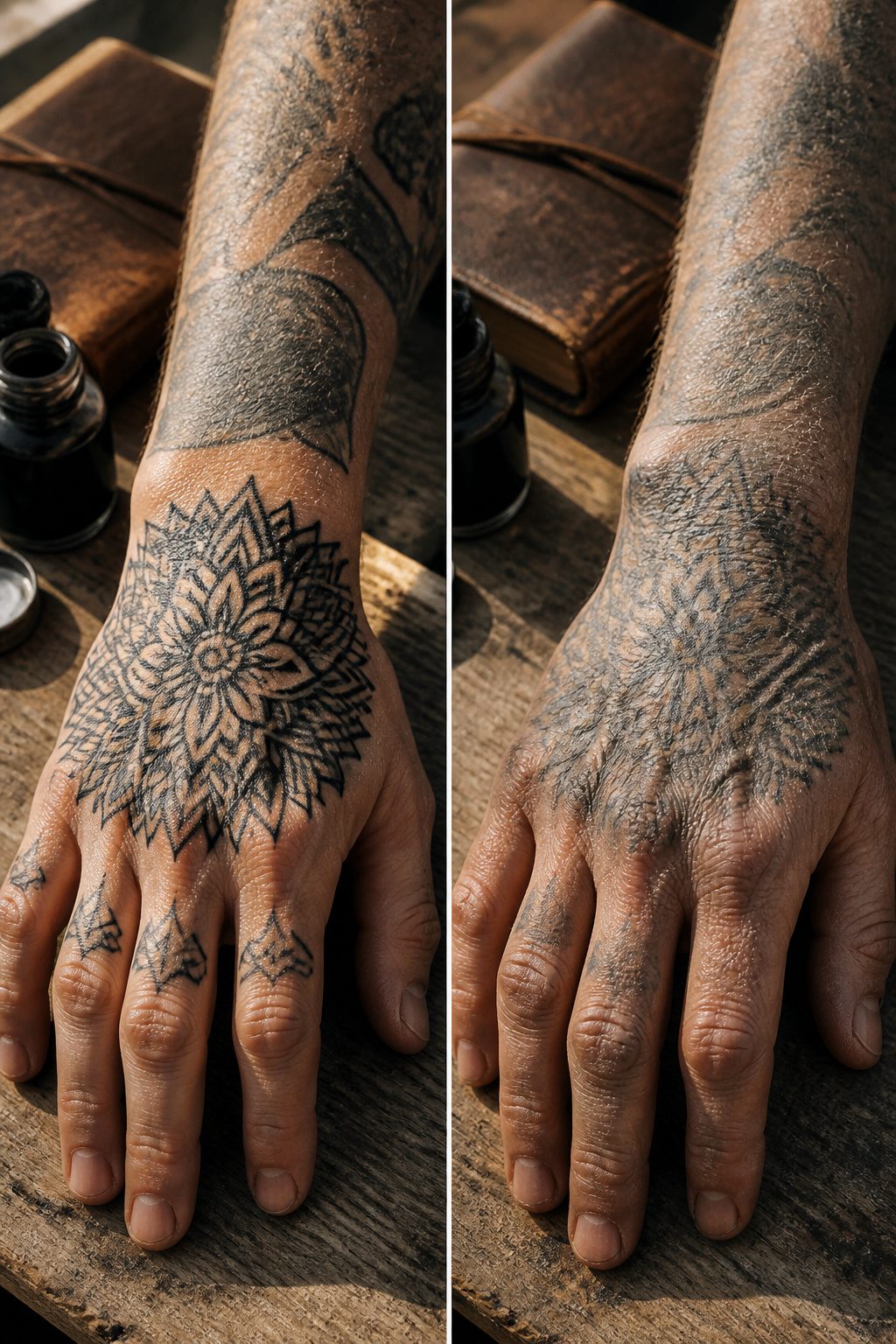
Hands catch more UV than almost anywhere else on the body, and the sun breaks tattoo pigment down faster than it does on a forearm or shoulder. Add frequent washing, which keeps skin cells turning over at a higher rate, and friction from pockets, keyboards, tools, and door handles, and the crispness of fine lines starts softening somewhere between one and three years. Bold blackwork and heavy outlines survive this environment considerably longer, which is why artists who know hand skin push toward weight over detail. The 3-5 year touch-up cycle exists because palms and fingers shed and regenerate faster than thicker-skinned areas; ornamental and tribal patterns age more gracefully because repeating designs disguise the minor unevenness that shows up first on isolated lines. Budget for that first touch-up when you budget for the tattoo itself, and ask to see healed hand work at two years or more before you pick an artist. Fresh photos lie; healed work tells the truth about what survives.
Pain Level and What Changes It
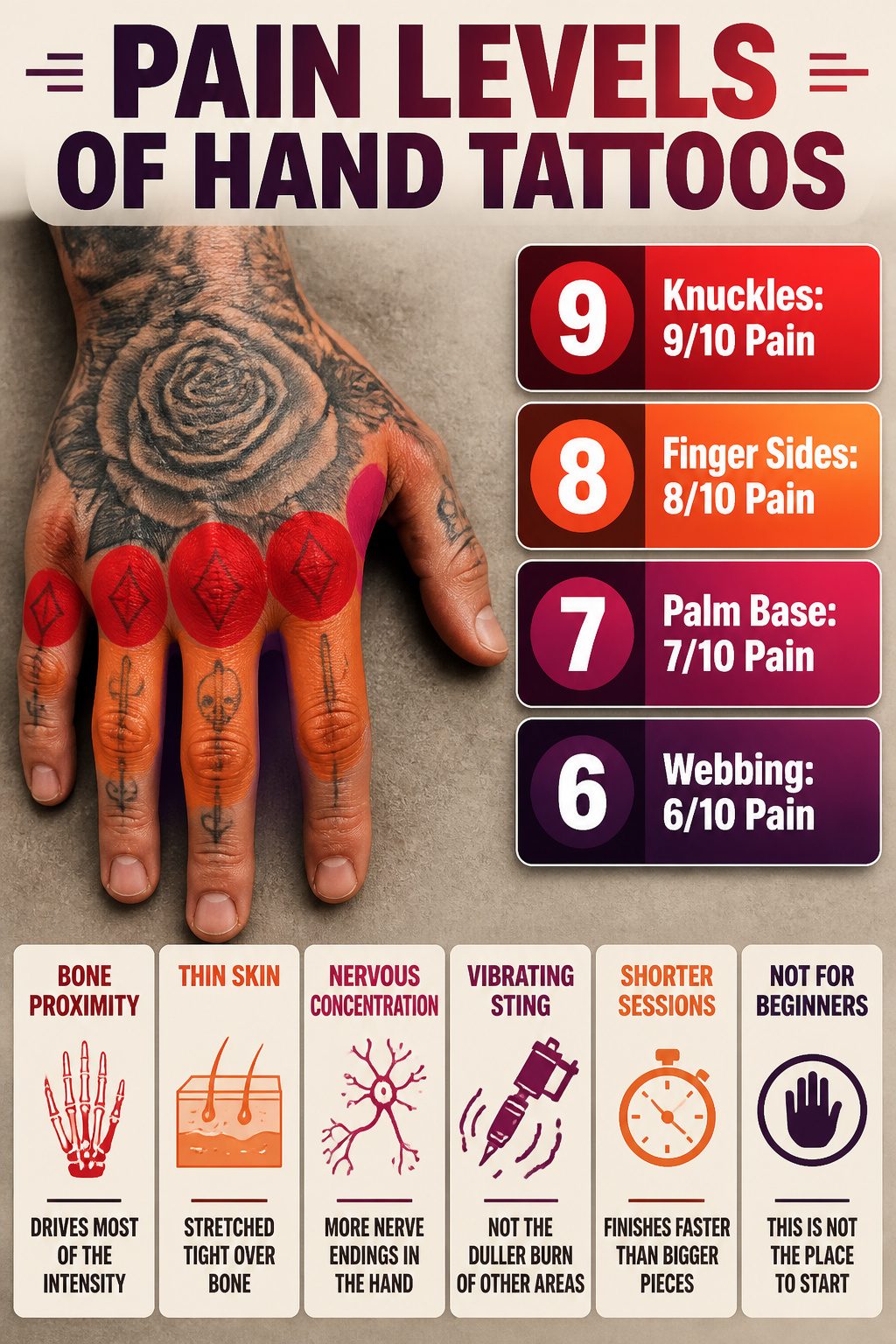
Hand tattoos for guys sit at an 8 or 9 out of 10 on the pain scale, and the location on the hand decides which end you hit. Knuckles rate highest. The skin there is thin and stretched tight over bone, so the needle vibrates directly against the metacarpals and the dense nerve endings clustered around them. That vibration often travels up the forearm. Finger sides, especially the palm-facing side, run a close second. More nerve endings sit there than on the back of the finger, and the skin is equally thin. The base of the palm and the webbing between fingers follow, still sharp but slightly more forgiving.
Bone proximity drives most of the intensity. Fat and muscle cushioning barely exist on the hand. What you feel is a vibrating sting rather than the duller burn of a shoulder or outer arm. Session length matters too. Hand work tends to finish faster than a back piece or sleeve, which helps. Pain tolerance drops as time passes, so a two-hour knuckle session hits harder in the second hour than the first. If you are new to tattoos, this is not the place to start.
Healing Hands
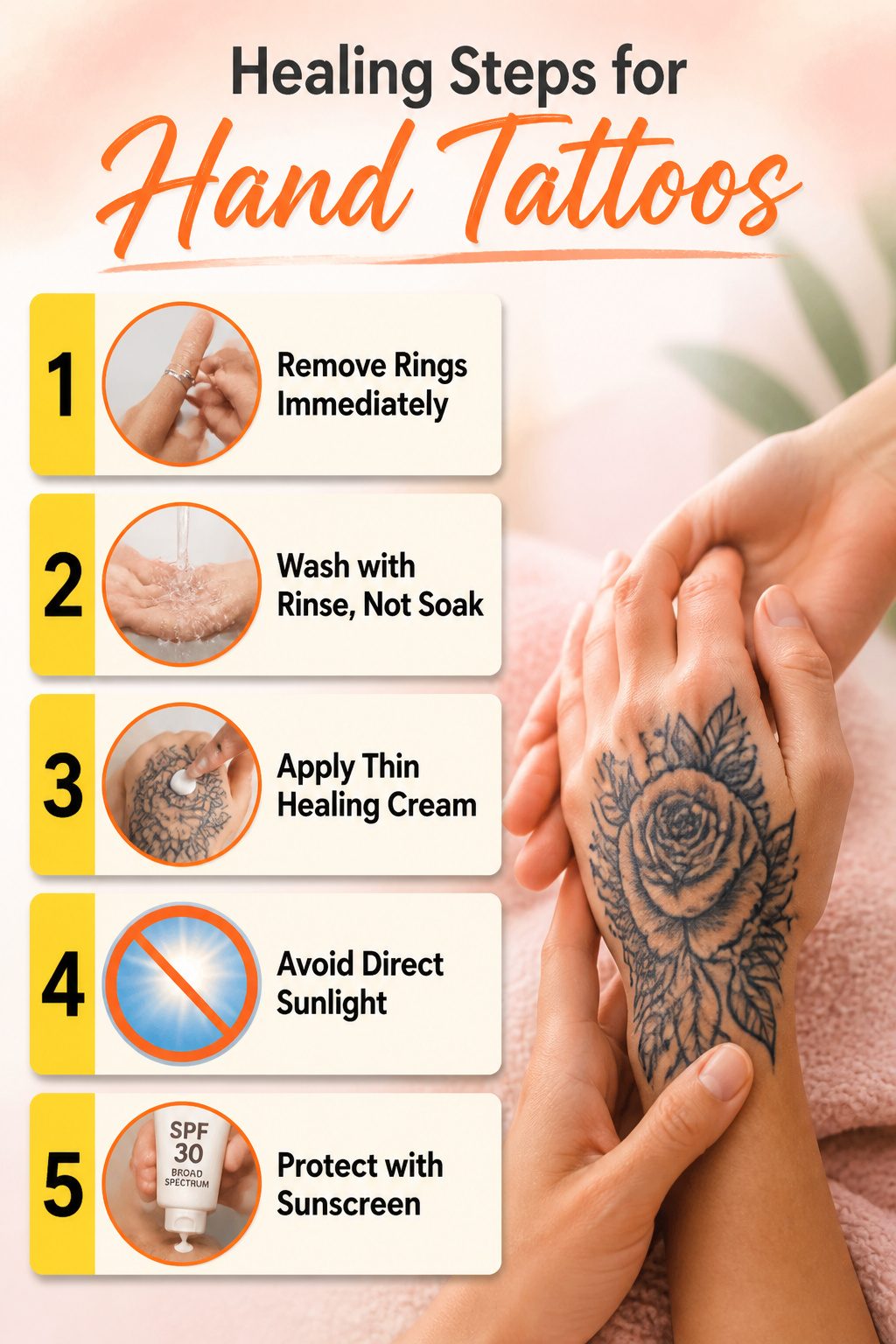
Surface healing on a hand tattoo runs 2–3 weeks, but the skin underneath keeps settling long after that. The real problem is you cannot stop using your hands. Every wash, every grip, every hour of sun through a car window works against the repair.
The first days bring swelling that can turn your hand puffy enough to trap rings, so those come off immediately. Washing has to happen, but soggy scabs lift ink out with them when they fall early; brief, frequent rinses beat long soaks. Moisturizing matters too, yet thick layers that seal the skin breed their own trouble. A thin coat of fragrance-free healing cream does the job without smothering.
Sun is the quiet killer. Hands catch more UV than almost anywhere else, steering wheel exposure included, and a fresh tattoo in direct light during that first month is asking for faded lines before the piece ever settles. The American Academy of Dermatology recommends daily broad-spectrum sunscreen on healed tattooed skin, but the first four weeks need shade and covering instead.
Full settling takes longer than the surface suggests. Lines that look settled at three weeks still shift and settle for months, and the constant movement of tendons beneath means hand skin never quite holds ink the way a shoulder or thigh does.
Job Stoppers and Visibility
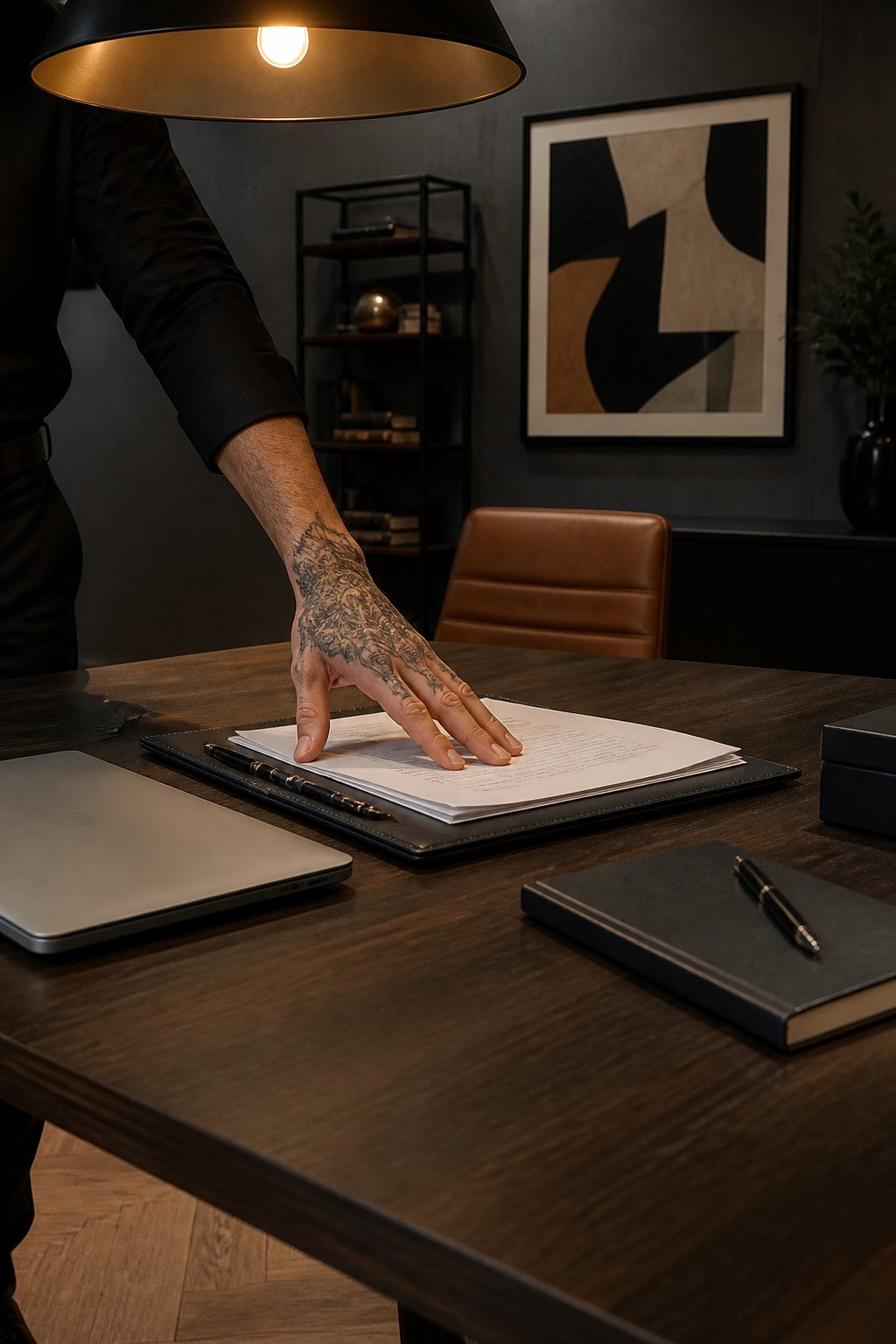
A hand tattoo sits where a long sleeve cannot hide it. Finance, law, and corporate sales still treat visible hand ink as a disqualifier, and that has not shifted as quickly as attitudes toward forearm pieces. Creative fields moved faster, but client-facing roles in conservative sectors judge the same placement differently than they did a decade ago.
The real calculation is your career path over the next ten years, not just your current employer. Temporary cover options exist, but reapplying concealer every morning before work is not a practical daily routine for most people. If your trajectory is uncertain, a 3D try-on tool can show you how the piece reads in a meeting room before the needle starts.
Cultural Roots of Hand Marking
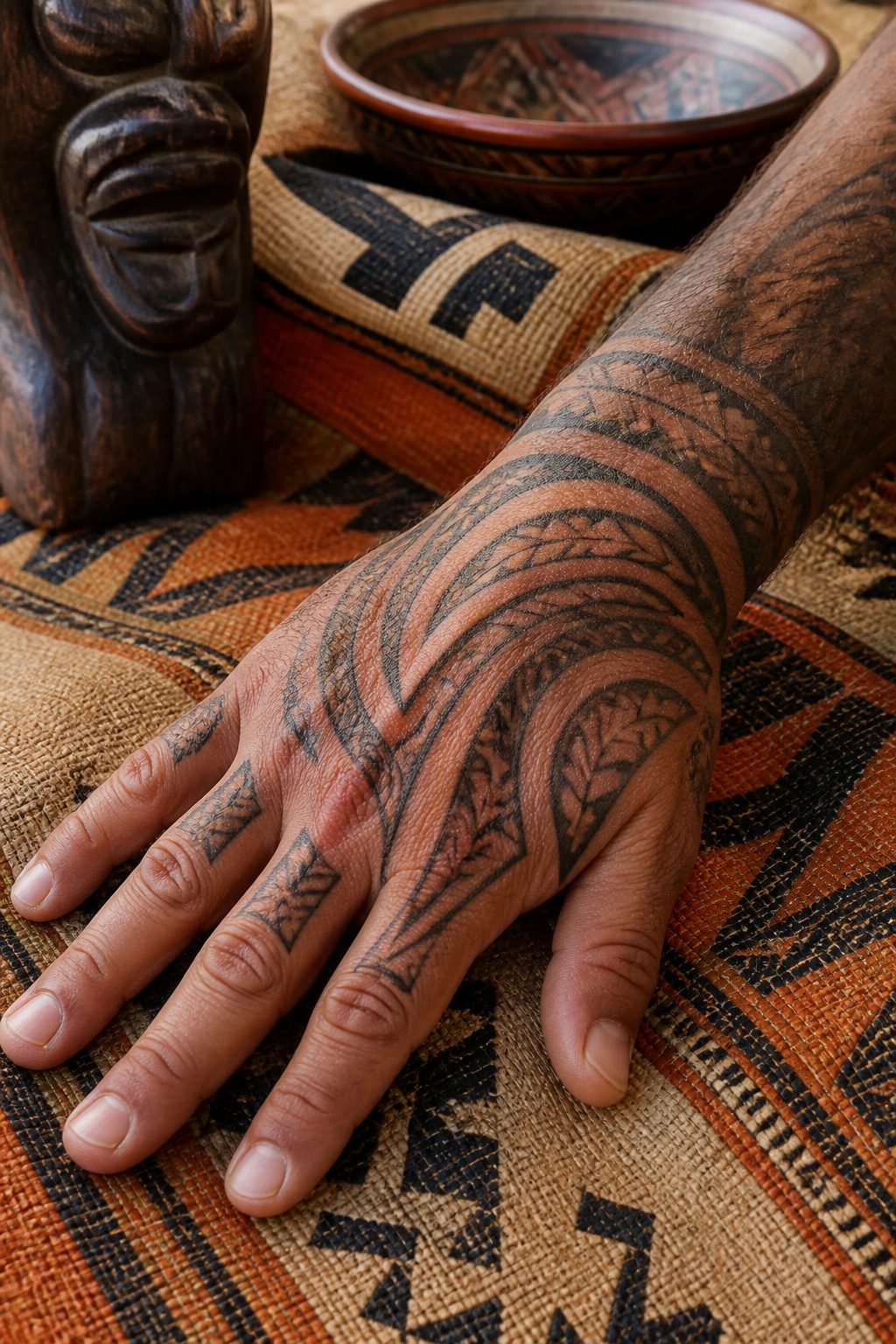
Polynesian societies marked the hand as a rite of passage, with placement and pattern recording lineage and achieved status rather than mere decoration. Sailors in the 19th and early 20th centuries carried the tradition forward, their hands serving as logbooks of ports and crossings. Japanese and Nordic warriors wore hand marks as identity and bravery badges, visible to opponents and kin alike.
Modern hand tattooing draws selectively from these roots. The Berber, Filipino, and broader tribal traditions that placed blackwork on hands before Western tattooing existed understood something still relevant: flowing bands follow the hand’s contours instead of fighting them, and negative space holds its shape as ink spreads over time. A generalist reproducing tribal motifs tends to produce generic black shapes rather than coherent design language. One strong central symbol on a hand usually outperforms scattered small ones.
Contemporary choices depart from origin cultures in one clear way. Where historical marking served group membership, modern hand tattoos function as individual self-expression, often selected for visibility rather than earned status. The permanence and placement still carry weight, but the meaning is authored by the wearer, not inherited from the tradition.
Frequently Asked Questions
What are the best hand tattoo designs for men?
Bold, simple designs survive best on hands because the skin regenerates fast and takes constant friction. Animals like lions or wolves, skulls with heavy outlines, crosses and runes, short words in thick lettering, and tribal or geometric patterns all outlast fine detail. The common thread is weight over intricacy; a thick black line stays readable years after delicate shading has blurred.
Do hand tattoos hurt more than other tattoos?
Yes, hand tattoos for guys rate an 8 or 9 out of 10, with knuckles hitting the top of that range. The skin is thin and sits directly on bone, so the needle vibrates against metacarpals and dense nerve clusters without any fat or muscle to cushion it. Session length matters too; pain tolerance drops in the second hour of a sitting.
How long do hand tattoos last?
The ink is permanent, but crispness fades faster than on a forearm or shoulder. Fine lines usually soften between one and three years, while bold blackwork lasts considerably longer before needing attention. Most people plan on at least one touch-up, with many artists expecting to refresh the piece within the first year.
Can hand tattoos be hidden?
Hand tattoos are difficult to hide because they sit where no sleeve reaches. Gloves work for short periods, and makeup cover exists, but reapplying concealer every morning is not practical for most people. The side of the hand and the area below the thumb are the easiest spots to cover with a cuff or watch strap.
What should I consider before getting a hand tattoo?
Visibility, pain level, healing demands, and job impact are the four main factors. Hand ink is nearly impossible to conceal, it hurts more than most placements, the two to three week healing period conflicts with daily hand use, and conservative fields like finance and law still treat visible hand tattoos as a barrier. Budget for touch-ups every three to five years as well.