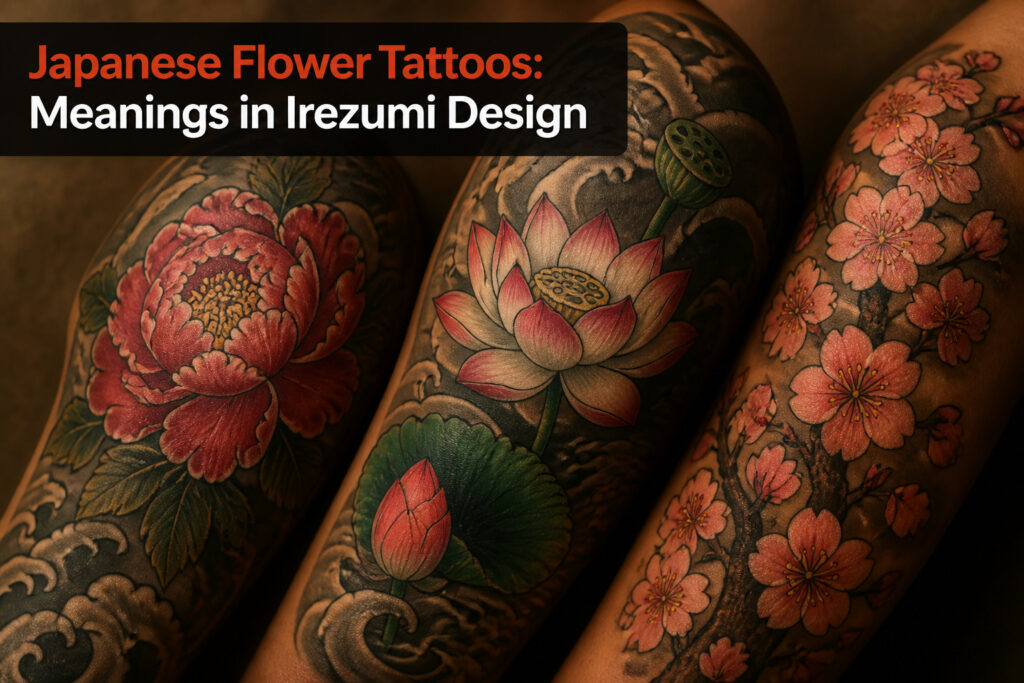
Japanese flower tattoos are botanical symbols rendered through the irezumi tradition, where a single bloom carries precise meaning based on its growth stage, color, and what surrounds it. The catch is that the same peony signals wealth in one composition and recklessness in another, so placement and pairing decide what the tattoo actually says. A lotus read as Buddhist purity of body, speech, and mind requires the artist to know why a half-opened pink bud means something different than a fully opened white flower.
Cherry Blossom
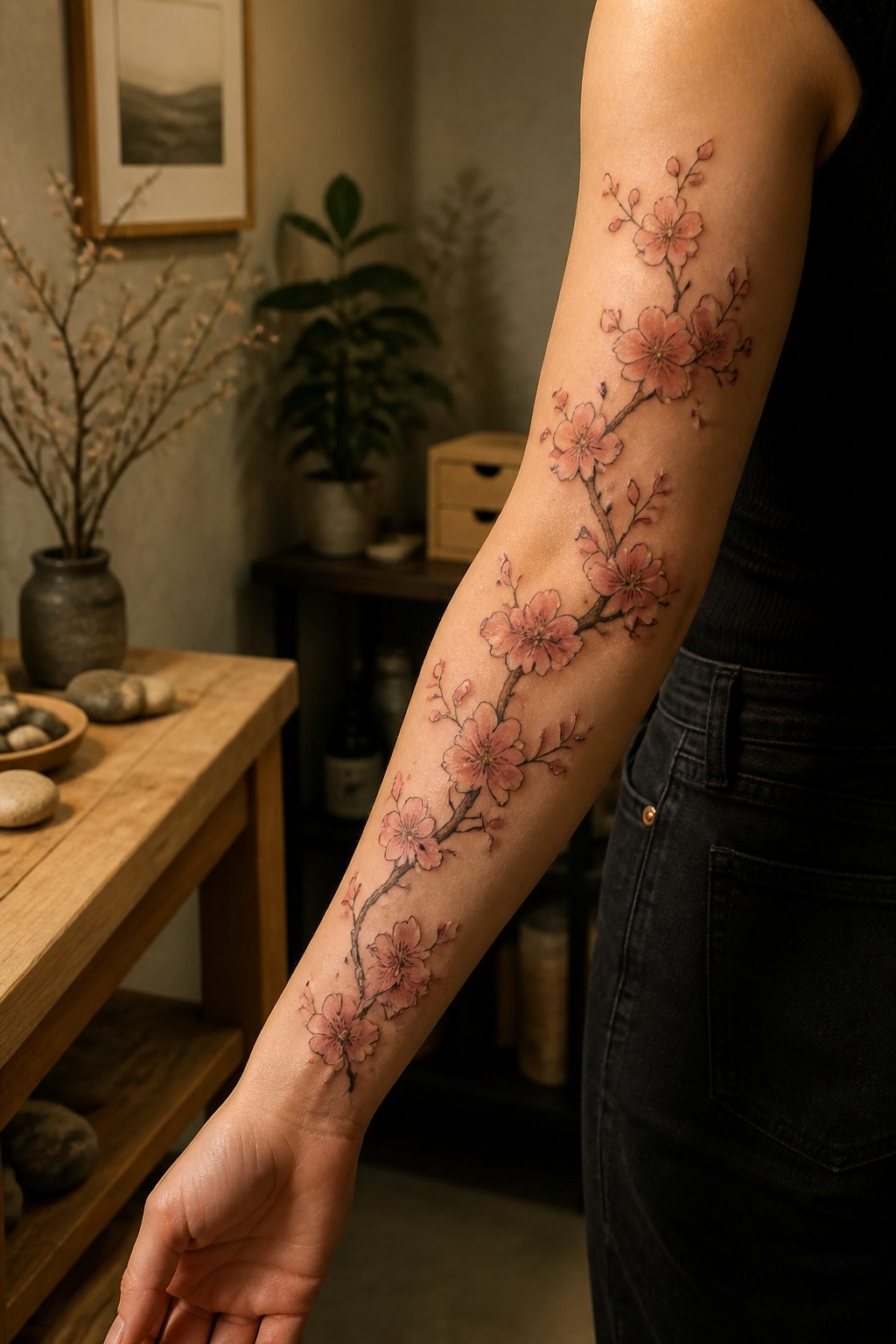
Sakura carries a meaning that shifts depending on whether you look at the whole tree or a single petal. The blossom itself lasts only a few hours, a fact that shapes every design choice I have seen work well. Artists who understand this keep the petals sparse and the branch active, letting the negative skin show through like the sky between flowers. Dense packing reads as wallpaper; the Japanese approach leaves room for the eye to notice each bloom before it falls.
The short lifespan connects to wabi-sabi, the acceptance of imperfection and transience. People drawn to cherry blossom over, say, peony or lotus usually want that specific tension: beauty that announces its own ending. Sleeve designs grow the branch across the arm so the flowers appear to move with the body, maintaining the concept of hanami, the custom of viewing blossoms in their brief peak. Chest and back extensions continue this growth pattern rather than repeating the same motif.
Spring renewal sits in the same symbol, which is why some clients pair sakura with a single falling petal or a bud still closed. Both read as time passing within one image. The pale pink is technically harder to hold in skin long-term than darker pigments, something worth discussing with an artist before committing to a large piece.
Lotus
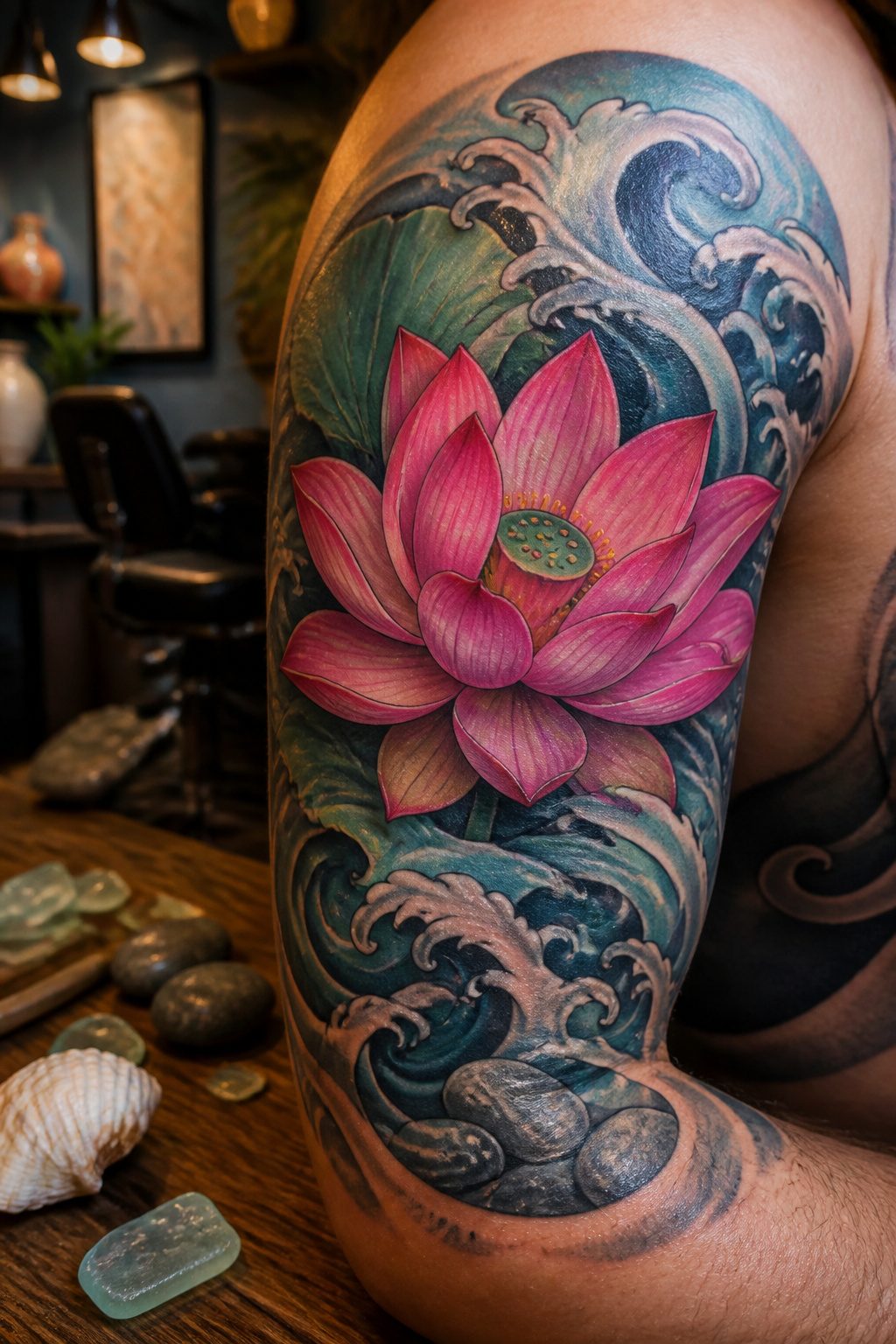
The lotus grows underwater in murky depths and still emerges fully open, which is why Japanese tattoo artists have used it for decades to mark a spiritual journey that took real work to finish. A closed bud, a partially opened bloom, and the fully open flower each read as a different stage, so the design itself becomes a timeline of whatever the wearer survived.
Buddhist symbolism gives the lotus its oldest meaning: purity of body, speech, and mind. That three-part framing separates it from simpler "new beginning" imagery you see in Western tattooing. Secular Japanese work borrows the same visual language without the religious commitment, often pairing the lotus with waves or wind bars to stress perseverance rather than enlightenment specifically. The masculine read on lotus tattoos in irezumi surprised me when I first noticed the pattern, since peonies and chrysanthemums carry more aggressive associations, but the endurance narrative clearly lands across gender lines.
Color and openness matter more than most clients initially realize. A fully opened white lotus reads differently than a half-opened pink one, and artists who know the tradition will push back if you choose for aesthetics alone.
Peony
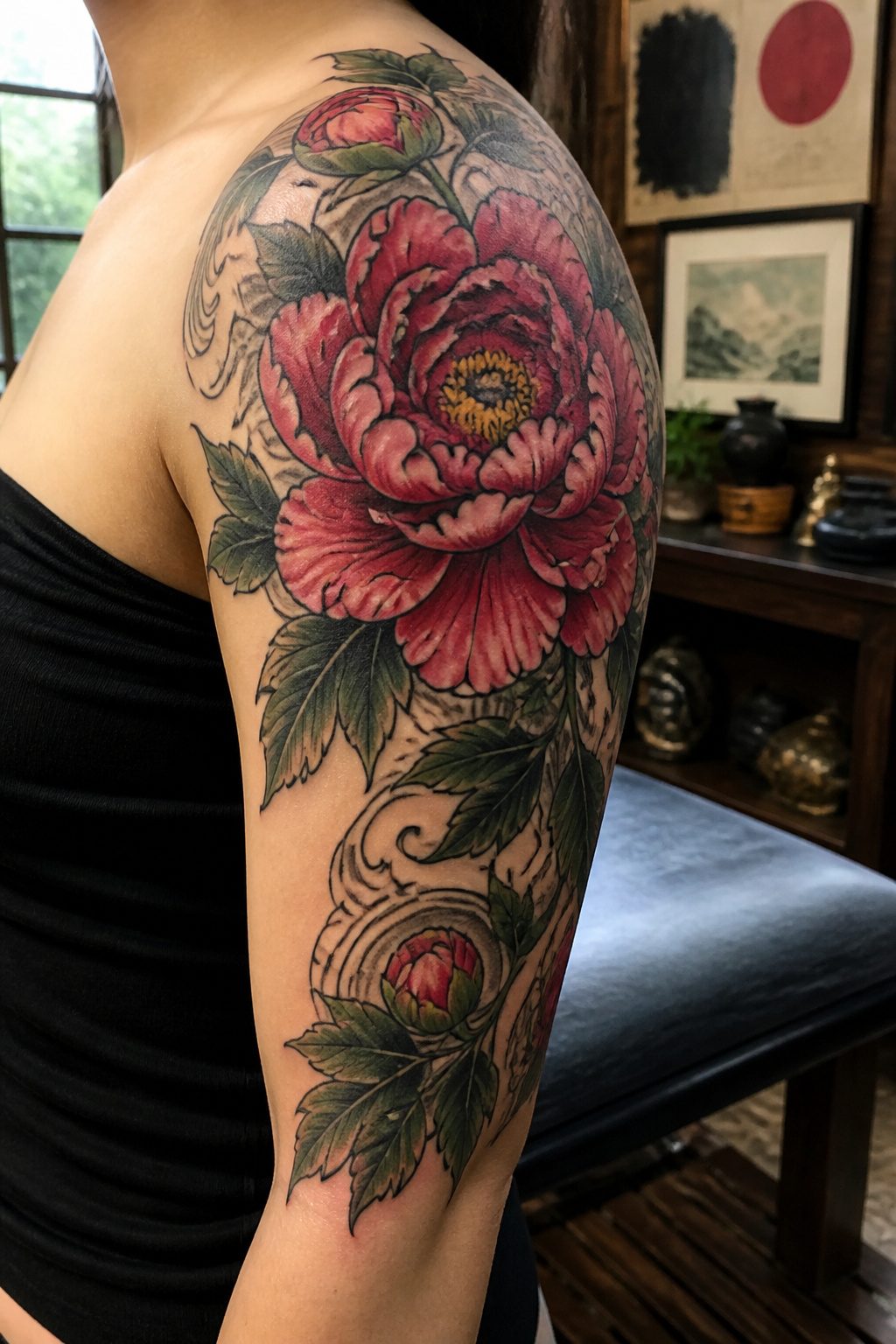
The peony, or botan, carries a meaning set that sits awkwardly at first: strength and femininity together, not in balance but in tension. That tension is what makes it worth choosing over a softer flower. In traditional irezumi hierarchy, the peony ranks as the "King of Flowers," a title that signals prosperity and nobility alongside its bolder associations with bravery and honor. The warlike edge matters here. A lotus or cherry blossom reads gentle by comparison; the peony does not apologize for either its muscle or its beauty.
Where this lands in practice depends on what you need the tattoo to say about you. The sources describe a "devil-may-care attitude," which tracks with how the flower gets placed, often as a counterweight to more fearsome imagery or as the main event when the wearer wants credit for both toughness and grace. I have seen this play out in client consultations repeatedly: women in particular gravitate toward the peony when they want visible results from their ink, a named concern that is not merely decorative but declarative.
The Western adoption of Japanese peony tattoos keeps the prosperity layer and usually drops the warlike one. That flattening is a loss, in my view, but it is also the choice you face. Go traditional and the courage stays central. Go contemporary and you get strength diluted to generic empowerment.
Chrysanthemum
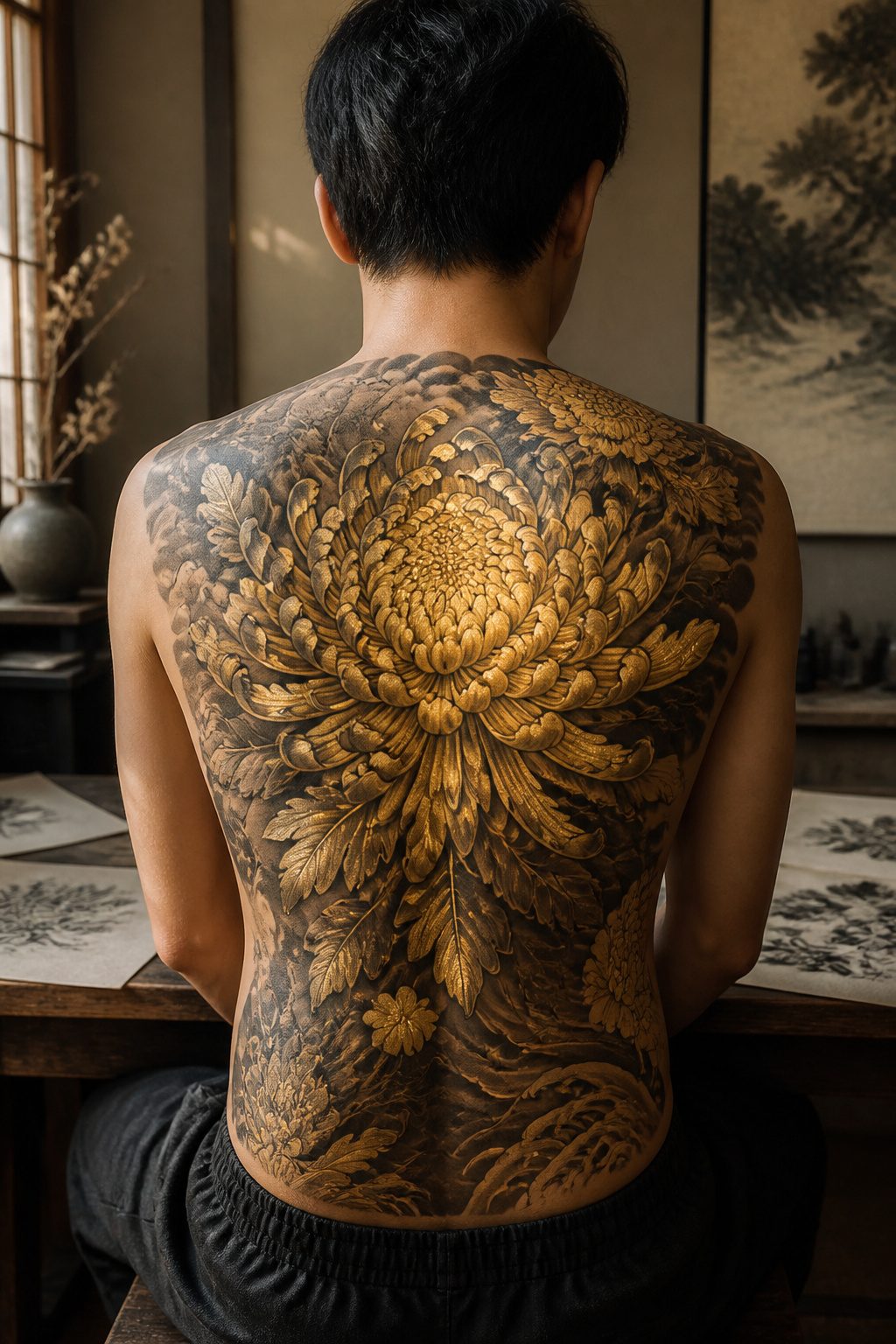
The chrysanthemum carries weight in Japanese flower tattoos that few other blooms match. Its delicate petals drew comparison to sun rays from the emperors themselves, and that royal eye turned the flower into the Imperial family emblem. The throne still carries its name: the Chrysanthemum Throne. That lineage gives the motif a gravity in ink that simpler "pretty flower" designs do not earn.
In tattoo culture, that royal association translates to meanings of honor, longevity, and rejuvenation. The wearer is not just selecting a flower but claiming a symbol of powerful headship and independence. Some artists pair it with other Imperial imagery; others let the bloom stand alone and trust the viewer to recognize the reference.
The symbol also carries well-being, prosperity, and joy, though in my experience those lighter readings sit more comfortably on flash sheets than on skin. A client serious enough to request a chrysanthemum usually wants the dignity, not the cheer. The design demands space: the layered petals need room to read as anything beyond a generic daisy. Too small, and the hours of lineage collapse into a blur.
Red Spider Lily
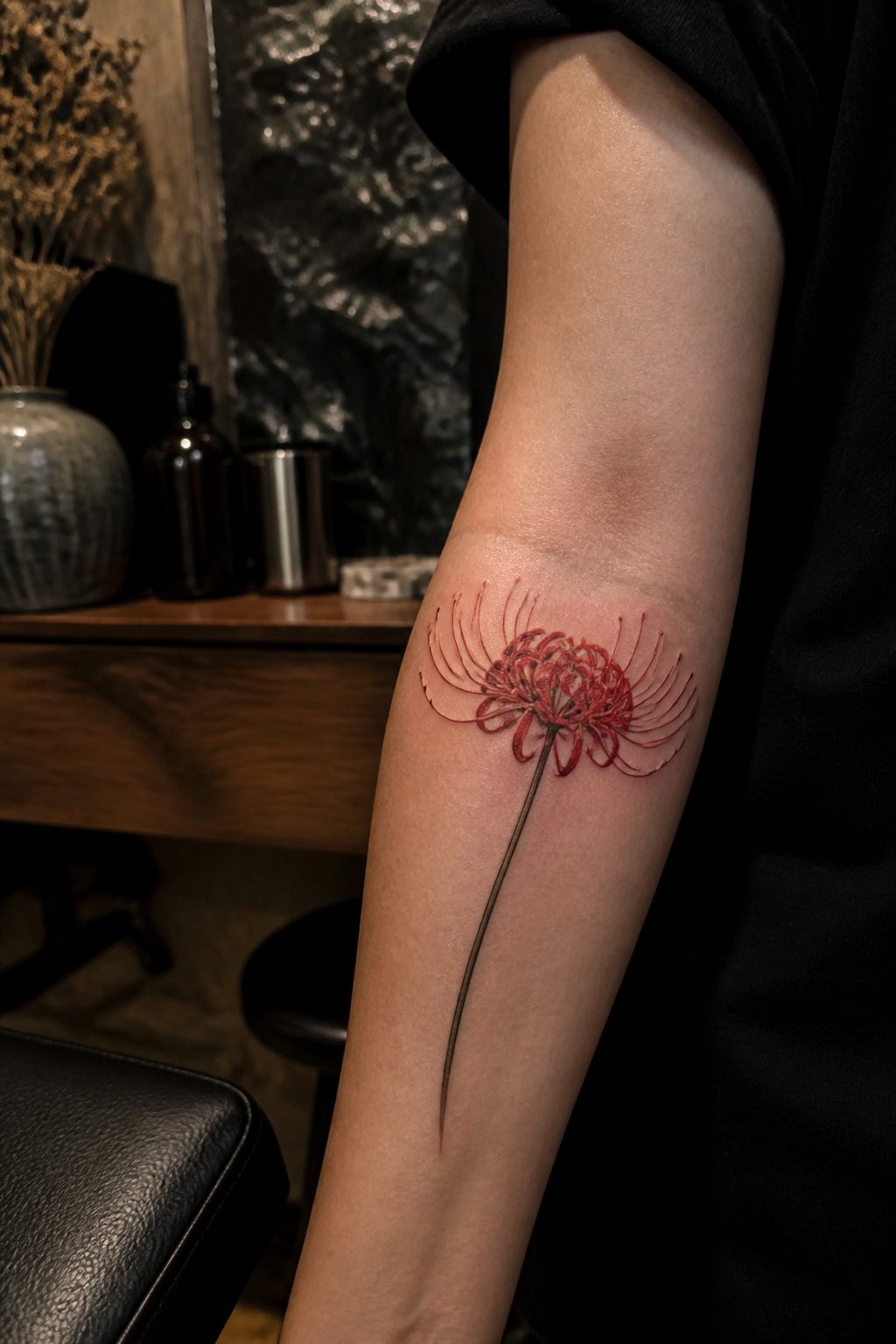
The red spider lily carries the heaviest symbolism in the Japanese flower tattoo vocabulary: final goodbyes, death, and the border between worlds. In old Buddhist writings, this flower is said to guide the dead through samsara, the cycle of rebirth, and legend holds that it grows wherever people part ways for good. That is a lot of weight for a single bloom.
Someone chooses it anyway, and usually for the same reason they would not choose a cherry blossom: the meaning is not decorative, it is the point. A red spider lily tattoo tends to mark a specific loss, a remembered person, or a period the wearer survived and left behind. The visual drama helps. The flower’s six long, curling stamens and sudden red flare against bare stem look like a warning even before you know the story, so the image carries its own weight without needing explanation.
There is a practical split worth noting. Red spider lilies are often used for funerals, but they are also used decoratively with no such connotations. In a tattoo, that choice belongs to the wearer. Placement and surrounding imagery steer the reading: paired with a memorial date or name, the meaning locks in; standing alone, it keeps some of that ambiguity, which some people prefer. The flower does the mourning work even when the words stay private.
Wisteria
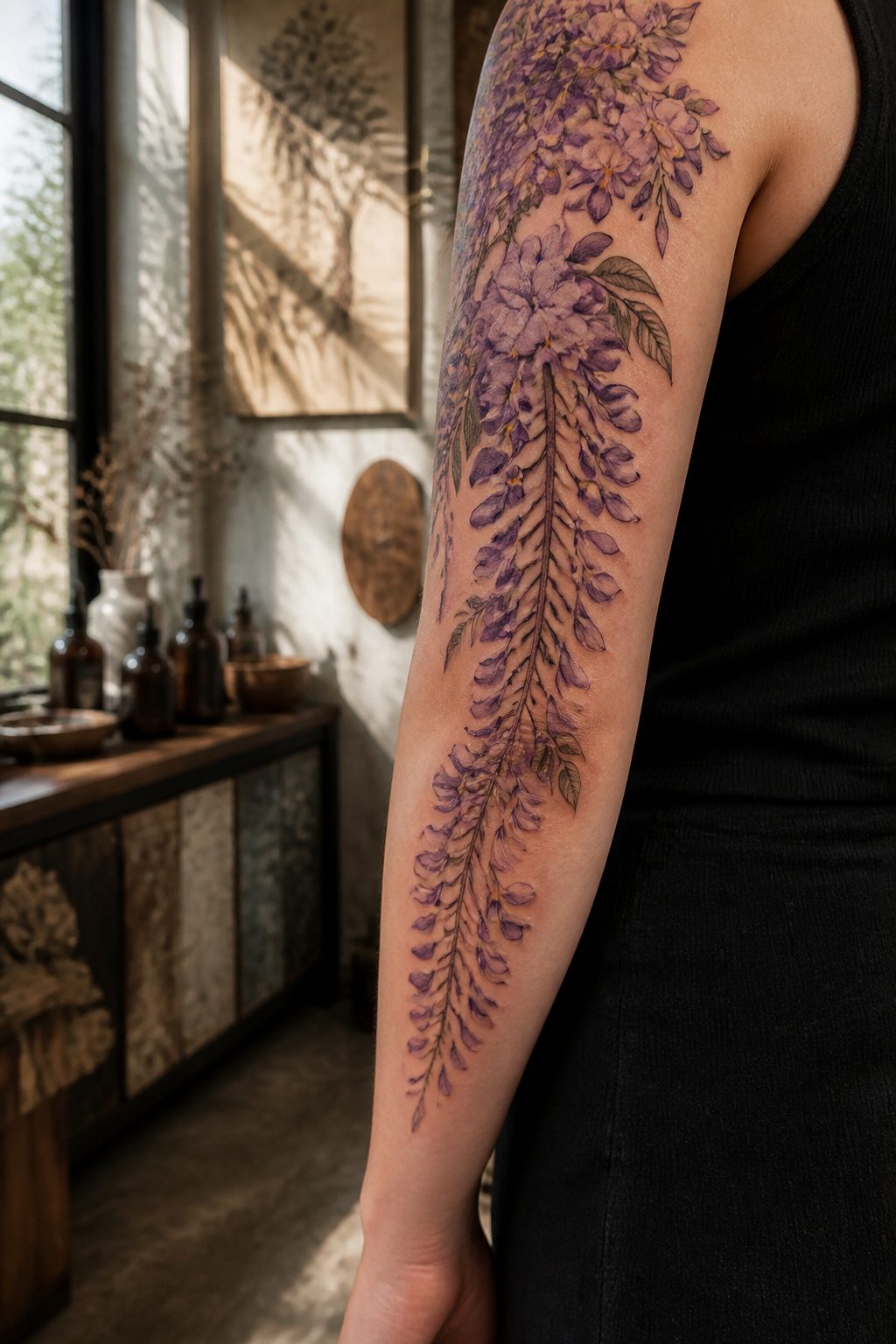
Wisteria carries the meaning of love and longevity in Japanese tattoo tradition, and its physical form opens design possibilities that more upright flowers simply cannot match. The hanging clusters, called racemes, fall in soft curtains that draw the eye downward along the body.
That downward motion makes wisteria a natural fit for placements with vertical space to spare. The spine, the outer edge of a thigh, or the full length of an arm from shoulder to wrist all let the vine trail as it would in nature. A skilled artist can use the negative space between hanging blossoms to frame other elements, a skull, a koi, or a figure, without crowding the composition.
The weight distribution matters too. Dense flower clusters read as heavy, so the eye expects them lower in the piece. Putting the thickest growth at the bottom and letting stems thin toward the top keeps the design from feeling upside-down. Tattoos that ignore this gravity look pinned on rather than grown, and the person wearing it lives with that wrongness every time they catch it in a mirror.
Color choices shift the mood significantly. Pale violet wisteria reads as delicate and romantic; deep saturated purple tips toward mourning or spiritual weight. A client once asked me to blend the fade from bud to open bloom across her shoulder blade so the flowers seemed to open as she moved her arm, and that living quality is what makes wisteria worth the extra sessions its detail demands.
Maple
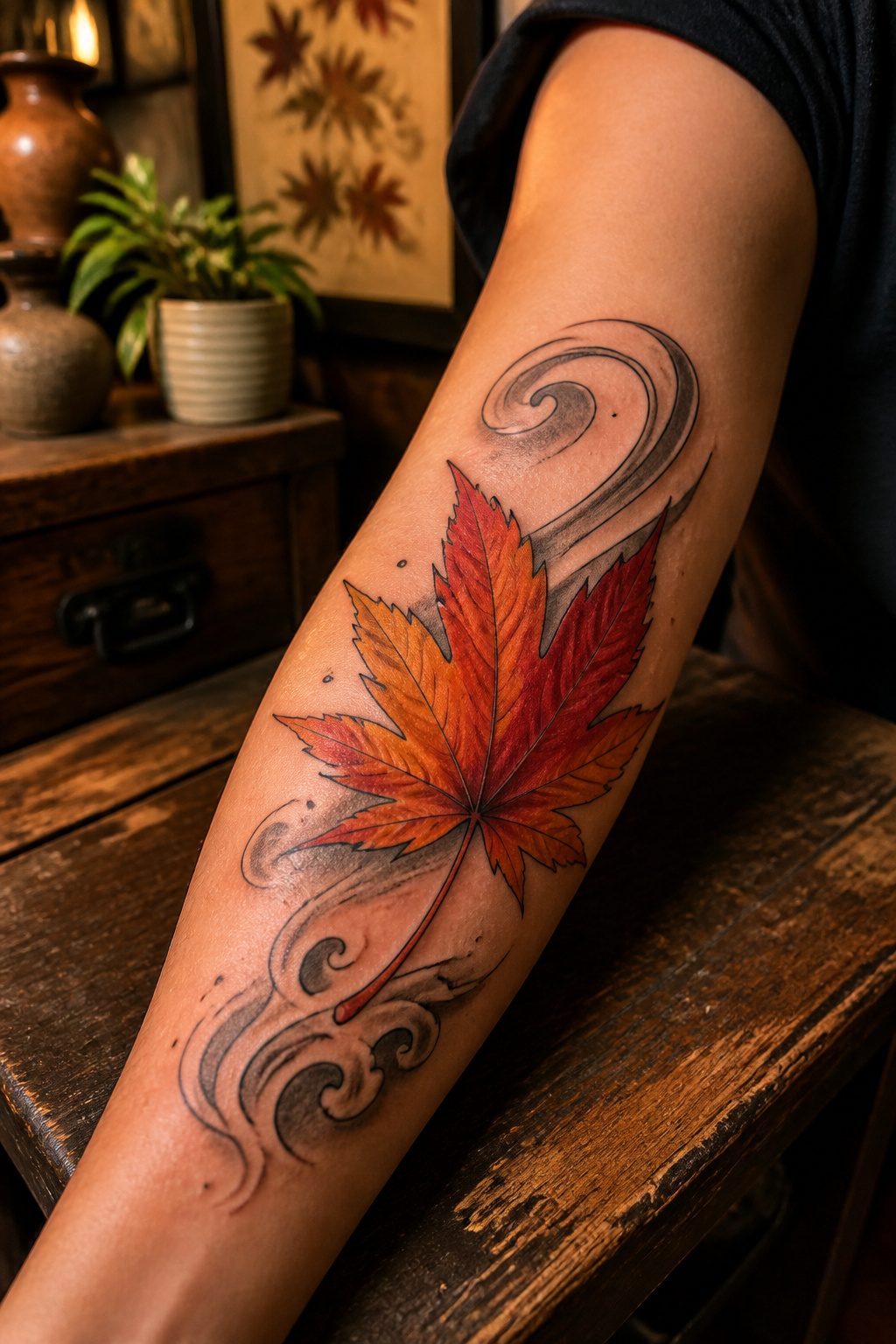
The Japanese maple leaf, or momiji, carries a weight that cherry blossom gets all the press for. Where sakura announces spring’s arrival, maple marks the turn, the moment after peak, the color shift that means something is ending so something else can begin. In irezumi, that makes it the symbol for time passing and for love tied to specific seasons.
Artists often draw the leaves in motion, drifting on wind or carried downstream, which changes the meaning depending on placement. A single leaf caught in current reads as a fixed point you are moving away from. A canopy of leaves falling across a shoulder or torso, the way they appear in traditional back pieces, builds a relationship between the body and the cycle itself. The leaf goes, returns, goes again.
The seasonal connection runs through old Buddhist writing on regeneration, leaves cycling from bud to fall to bud. For marking a marriage, a loss, a year that changed direction, maple does what a date stamp cannot. It names the type of time, not just the fact of it.
Orchid
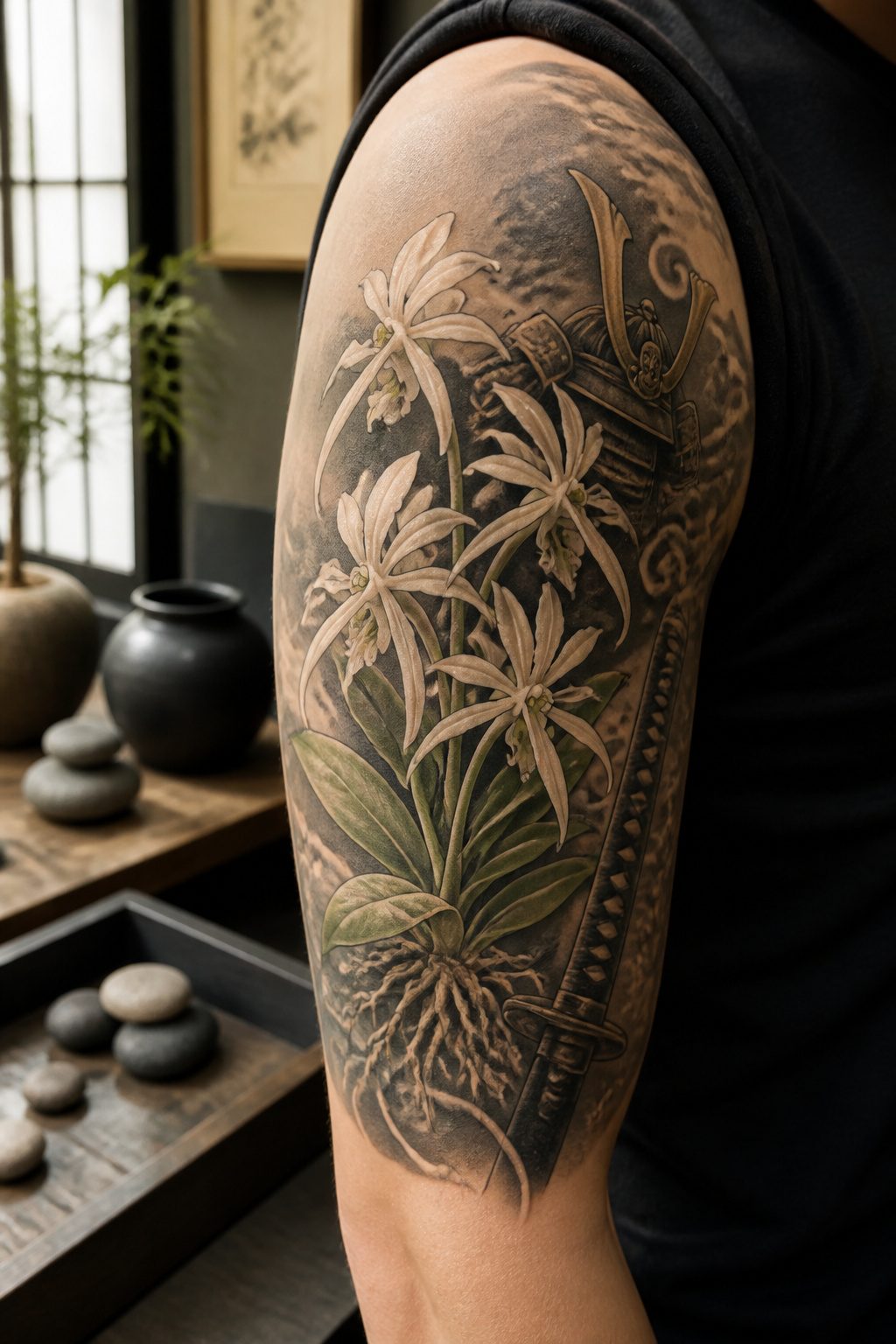
Neofinetia falcata carries a weight in Japanese tattoo work that surprised me when I first encountered it. The source passages trace this orchid to samurai culture, where warriors traveled miles to retrieve the tiny plant for royal court. Success marked bravery. Failure meant something else entirely. That quest narrative, embedded in the flower itself, gives Japanese orchid tattoos their anchor in wealth and nobility, a meaning specific enough that it pushes back against how most Western wearers read the flower.
In Western floral language, orchids signal delicate beauty or exotic luxury, often romantic. The Japanese framing shifts the center of gravity. Nobility here is earned through displayed courage, not inherited or decorative. Wealth attaches to a concrete object with a history of being guarded, sought, and presented as tribute. For someone choosing this motif, the question becomes whether they want the softer Western reading or the harder samurai one. Irezumi design tends toward the latter.
The tension matters in placement and pairing. An orchid floating alone on a shoulder reads differently than one worked into a larger back piece with clear historical reference. The wearer’s own background, body placement, and what surrounds the flower all tilt the meaning. Someone building a sleeve with other Japanese floral symbols has already signaled context. Someone dropping a single orchid into otherwise Western botanical work risks the nobility reading being lost entirely, the samurai quest story flattening into generic elegance.
Hibiscus
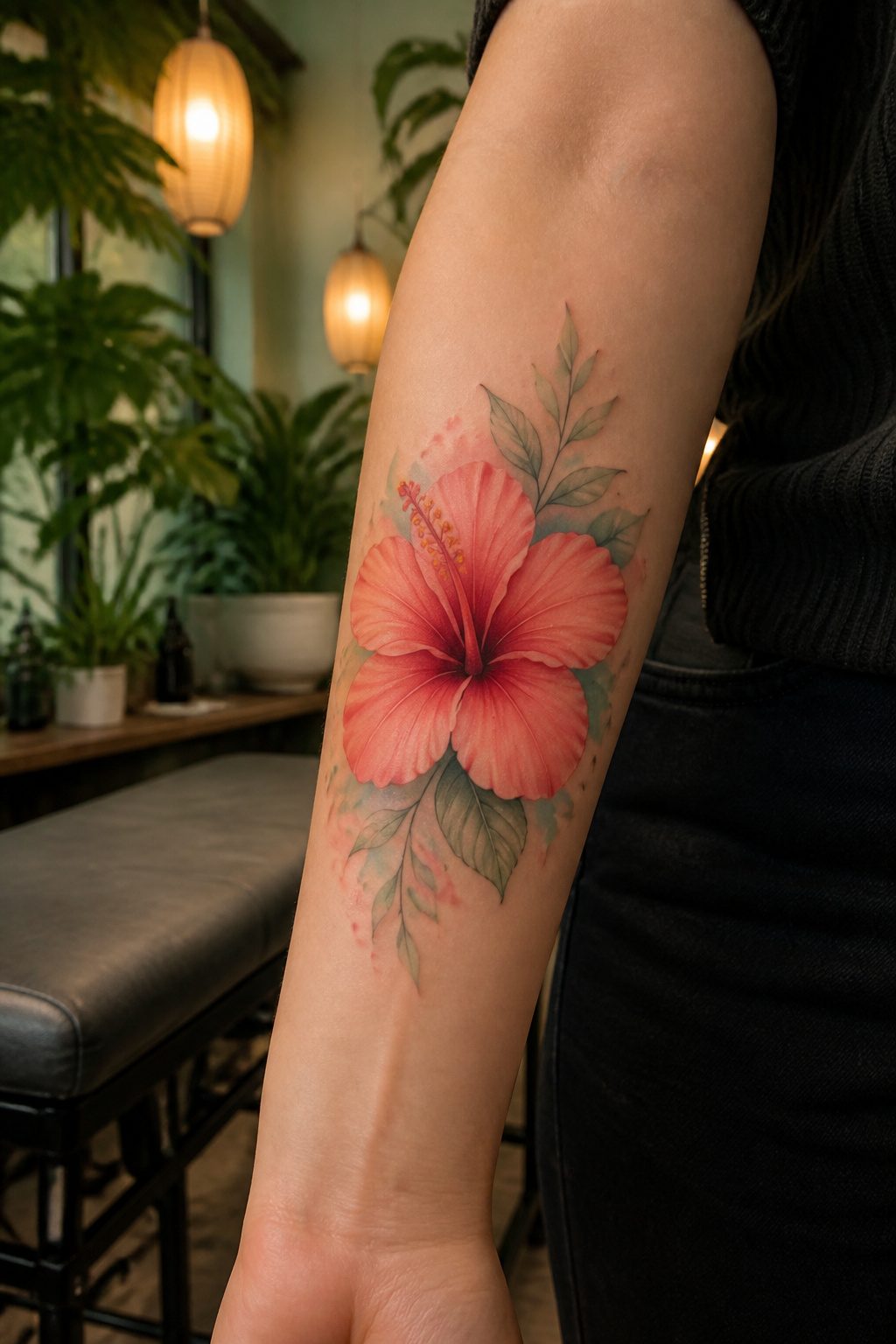
Hibiscus carries a meaning of gentleness in Japanese tattoo work, but it sits outside the core canon that most clients request. The flower does not appear with anything like the frequency of peonies, chrysanthemums, or cherry blossoms in classic irezumi reference books and traditional back-piece compositions. Where it does show up, it tends to enter through Okinawan and southern island influences rather than the Edo-period heritage that shaped mainstream Japanese tattooing.
That regional origin matters for placement in a larger design. A hibiscus works better as a supporting accent, filling gaps between heavier botanicals or softening the transition from a main subject to background waves, rather than carrying a sleeve or chest panel on its own. The petal structure is simpler and the silhouette less architecturally dense than a peony or lotus, so scale it modestly or it will read as an afterthought against bolder neighbors.
Most artists I have spoken with treat hibiscus as a personal or commemorative choice, not a traditional statement. A client might bring it in for a grandmother’s garden or a Hawaii memory, and the meaning of gentleness then gains private weight that the classic flowers do not carry for them. The tradeoff is recognizability: walk into most shops asking for Japanese flowers, and hibiscus will not be the first name the artist reaches for.
Peach Blossom
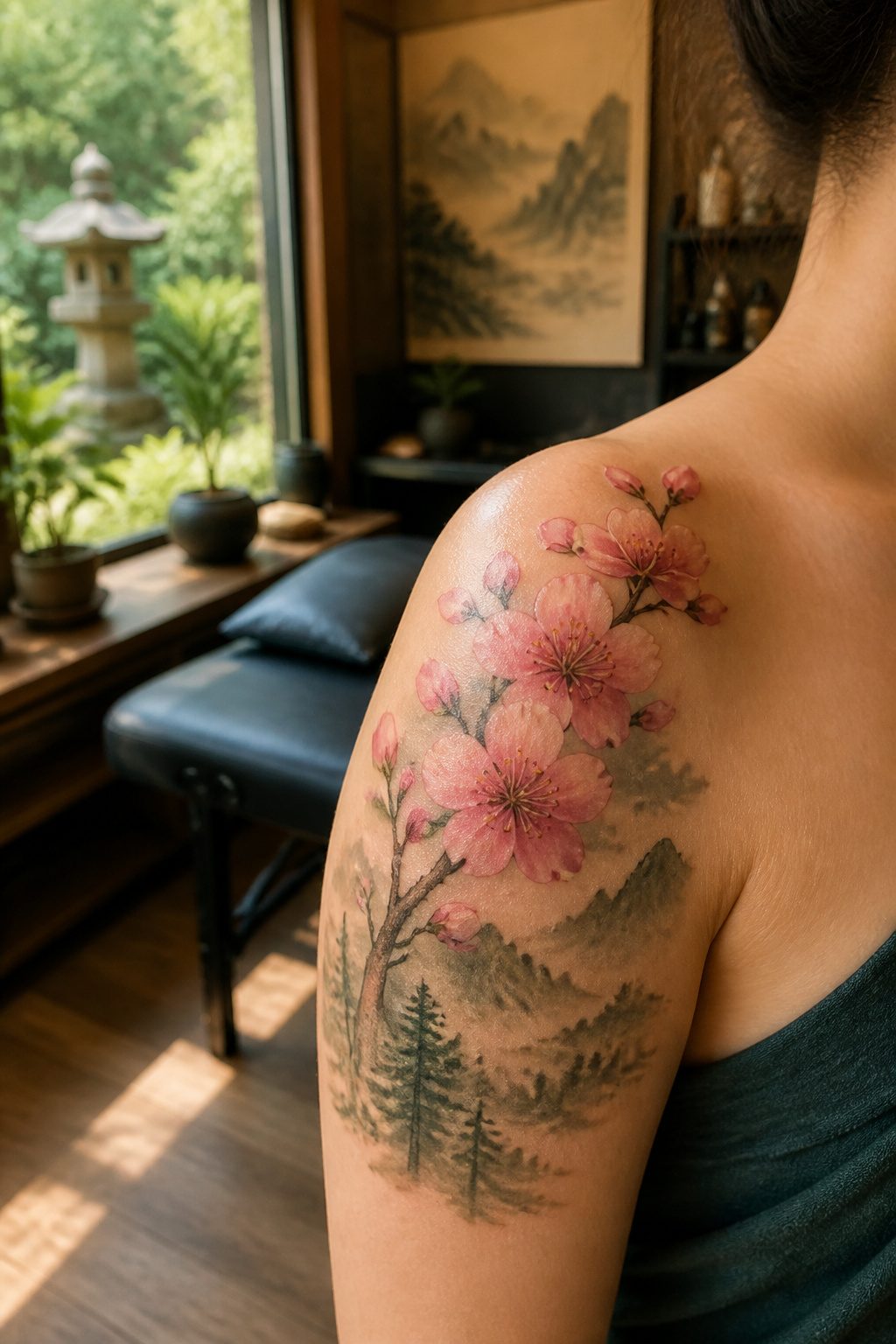
Peach blossom carries a quieter reputation in Japanese flower tattoos than the celebrated cherry, though its meaning runs just as deep. The bloom marks spring’s arrival with a specificity that shapes how it sits in a design. Festival calendars still pin the peach blossom viewing to a narrow window, and that tight seasonality makes the tattoo a deliberate choice for someone marking a particular moment rather than a general renewal.
The longevity connection comes from Chinese roots that Japanese irezumi absorbed over centuries. A tree that fruits for decades becomes a symbol for a life lived long and fully, not merely survived. In practice, this means the peach blossom pairs differently than the cherry: where sakura drifts toward transient beauty, the peach holds firmer ground in compositions built around endurance.
That festival link also limits placement in ways a collector might not expect at first. The seasonal reference reads strongest when the blossom appears as a focused motif rather than scattered filler, so a sleeve or back piece centered on the peach blossom tends to carry more weight than a single stem tucked among unrelated flowers. Artists working in traditional tebori often build the surrounding landscape to echo that spring setting, mountain mist and soft green rather than the autumn reds that would clash with the meaning.
Bamboo
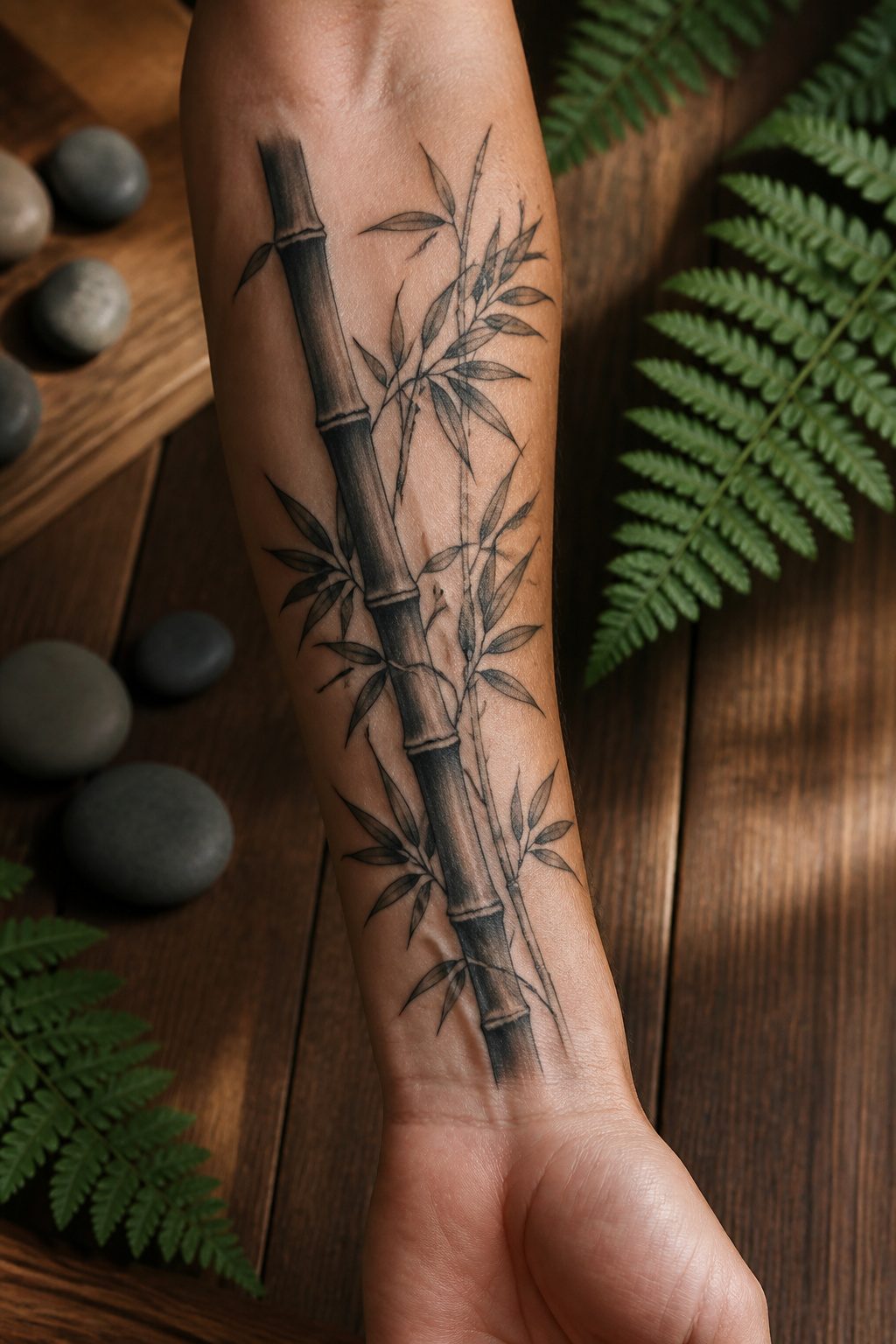
Bamboo is not a flower at all, which is worth stating outright since it keeps turning up in searches for Japanese flower tattoos. The plant’s hollow, jointed stalks and the clean geometry of its segments translate into ink better than most blossoms do. A bamboo shoot can run the full length of a forearm or snake across a shoulder with almost architectural logic, something petal-heavy designs struggle to match without looking crowded.
The meaning is straightforward: good fortune and resilience. In irezumi, that luck is not the lottery-ticket kind. It is the fortune of surviving what breaks other things. Bamboo bends until it nearly lies flat, then returns upright. A sleeve built around this motif often places the stalks under stress, weighted with snow or pressed by wind, to make that quality visible.
Designers borrow from bamboo even when the client asked for flowers. Its negative space, the gaps between the joints, lets a peony or chrysanthemum sit adjacent without competing. I have seen compositions where bamboo frames the named flower like scaffolding, letting the blossom read as the subject while the stalks do the structural work of holding the piece together.
Ume
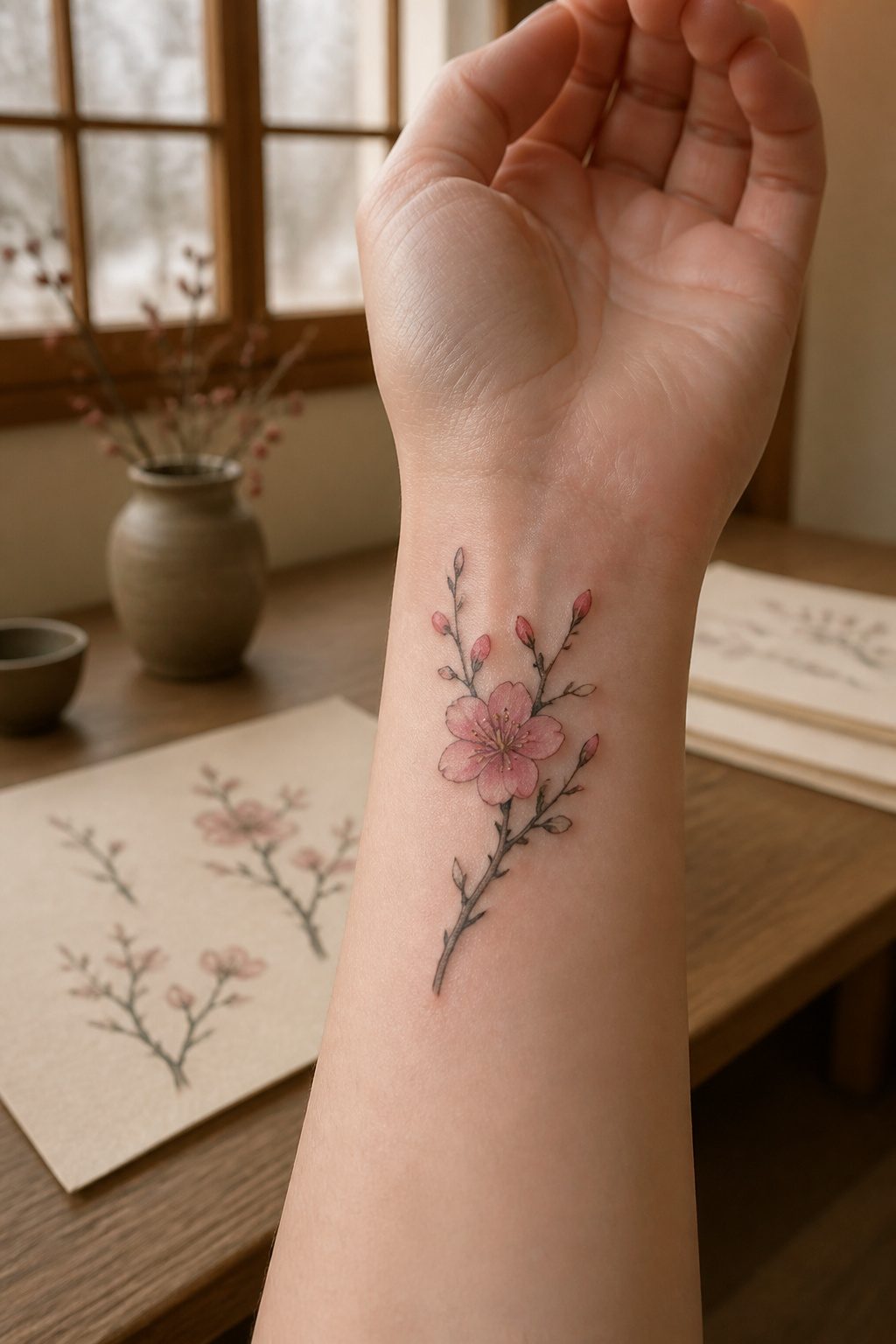
The ume, or Japanese apricot, carries its meaning in the calendar itself. Where the cherry blossom waits for spring’s arrival, the ume pushes through late-winter snow, blooming while the world still looks dead. That early timing is not decorative detail in irezumi; it is the whole point of choosing it.
That stubbornness against cold reads as elegance without fragility, and the faithfulness part lands because the ume keeps its promise to bloom before conditions look favorable. In a tattoo, this works for someone who wants the flower’s reputation for endurance without the cherry blossom’s more common association with life’s quick passage.
Color choice shifts the register. Pale pinks and whites keep the winter reference visible; deeper rose tones move the design closer to the cherry blossom’s territory and can confuse the meaning for viewers who do not know the shape difference. The five rounded petals of ume set it apart from cherry blossom’s notched tips, a distinction worth getting right if the specific symbolism matters to the wearer.
What These Flowers Mean Together
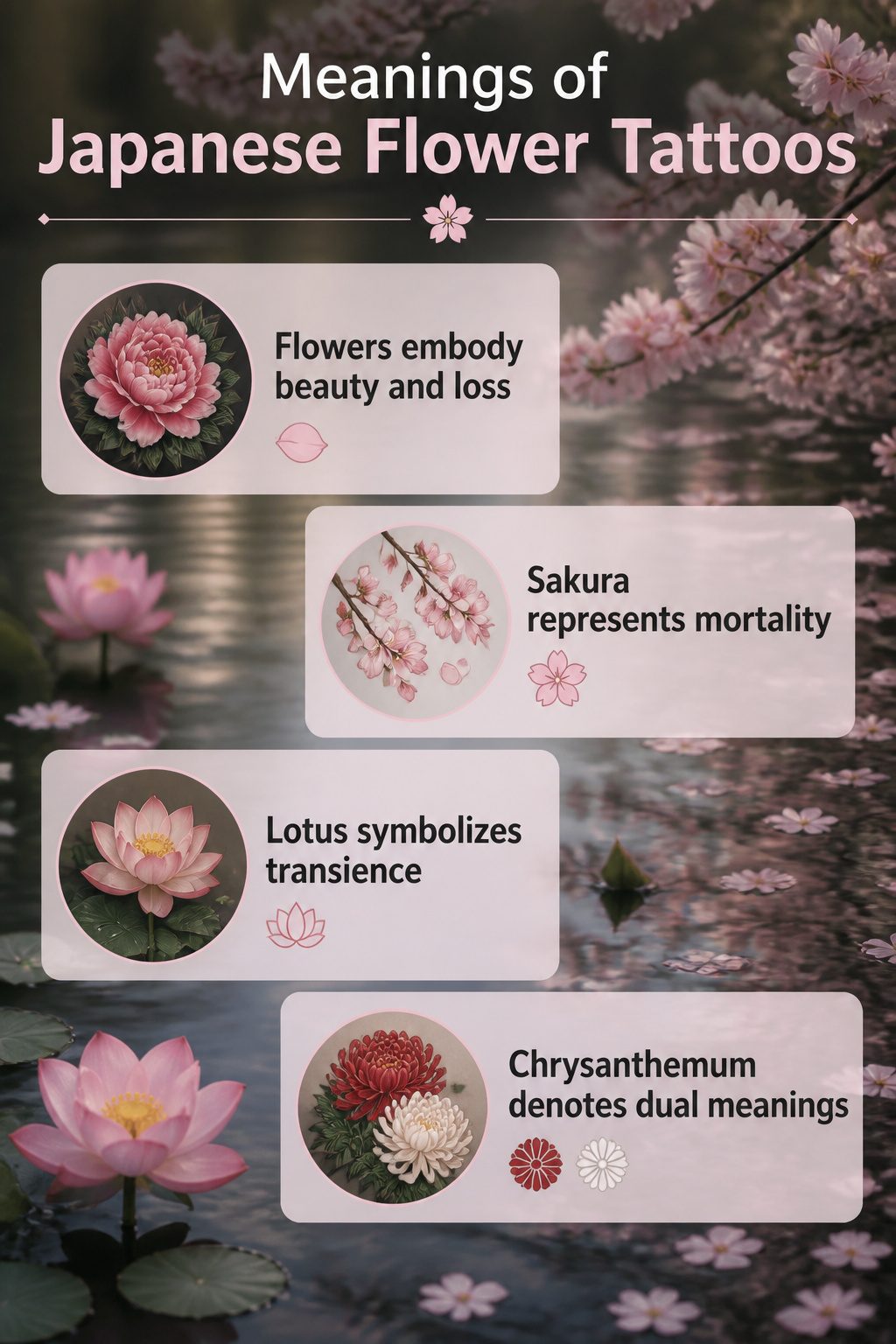
What ties Japanese flower tattoos together is a worldview that treats beauty and loss as inseparable. In the culture that produced irezumi, flowers mark the cycle of birth, death, and return: the lotus rising from murk, the cherry blossom dropping whole after a week of bloom. This is why a Japanese flower tattoo rarely carries a single, fixed meaning; the same peony that signals wealth in one composition may read as recklessness in another, depending on what surrounds it.
The unifying thread is impermanence itself. Sakura embodies it most nakedly, with pale petals that fall at peak beauty, a symbol so tied to mortality that white chrysanthemums go straight to funeral rites and graves. Yet the lotus, too, draws its power from transience, blooming above water that both sustains and swallows it. Even the chrysanthemum, emblem of longevity on the Imperial Seal and the 50-yen coin, carries its own shadow in that color divide: red for love, white for the dead.
People choose these designs because the framework lets personal struggle sit inside something larger. A flower that dies and returns, that prospers and mourns in the same breath, maps onto lived experience more honestly than a static emblem of triumph ever could. The tattoo becomes a way to wear that tension rather than resolve it.
Where These Tattoos Go
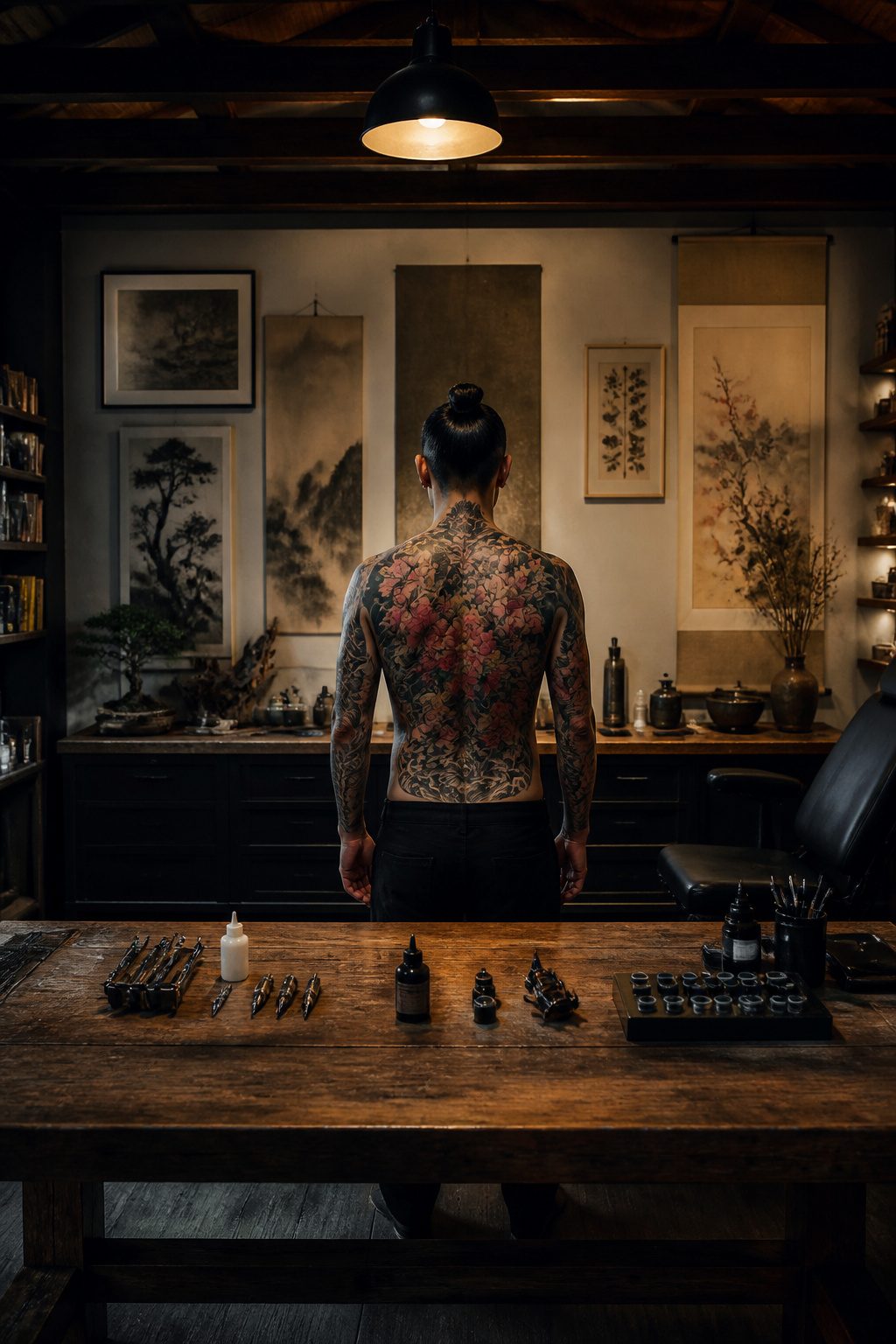
A full back piece or sleeve gives the artist room to build the kind of detail Japanese flower tattoos are known for: layered petals, wind lines, background elements like dragon scales or water that turn a single bloom into a scene. The shoulders and forearm work too, though the scale changes what the design can hold. Front-shoulder placement tends to read as public, something the wearer shows; the back carries more private weight, visible when the person chooses and hidden otherwise.
The commitment runs deeper than the hours in the chair. A large-scale irezumi piece signals that the wearer is buying into a system where each element carries specific meaning, not decoration alone. The ancients treated flowers as active forces, capable of influencing life or tipping fate. That belief lives on in the placement: a small wrist cherry blossom reads differently than the same flower sweeping across a shoulder and down the arm, where the transience it represents becomes part of the body’s architecture.
Most of the women I write for would want to know what they’re signing up for dimensionally. These are not single-session tattoos. A back piece can span multiple sessions over months; a full sleeve demands the same. The skin has to heal between rounds, and the design evolves as the artist works. Anyone considering this should budget the time as carefully as the money, because rushing the process shows in the finished line work.
How Irezumi Changes the Work
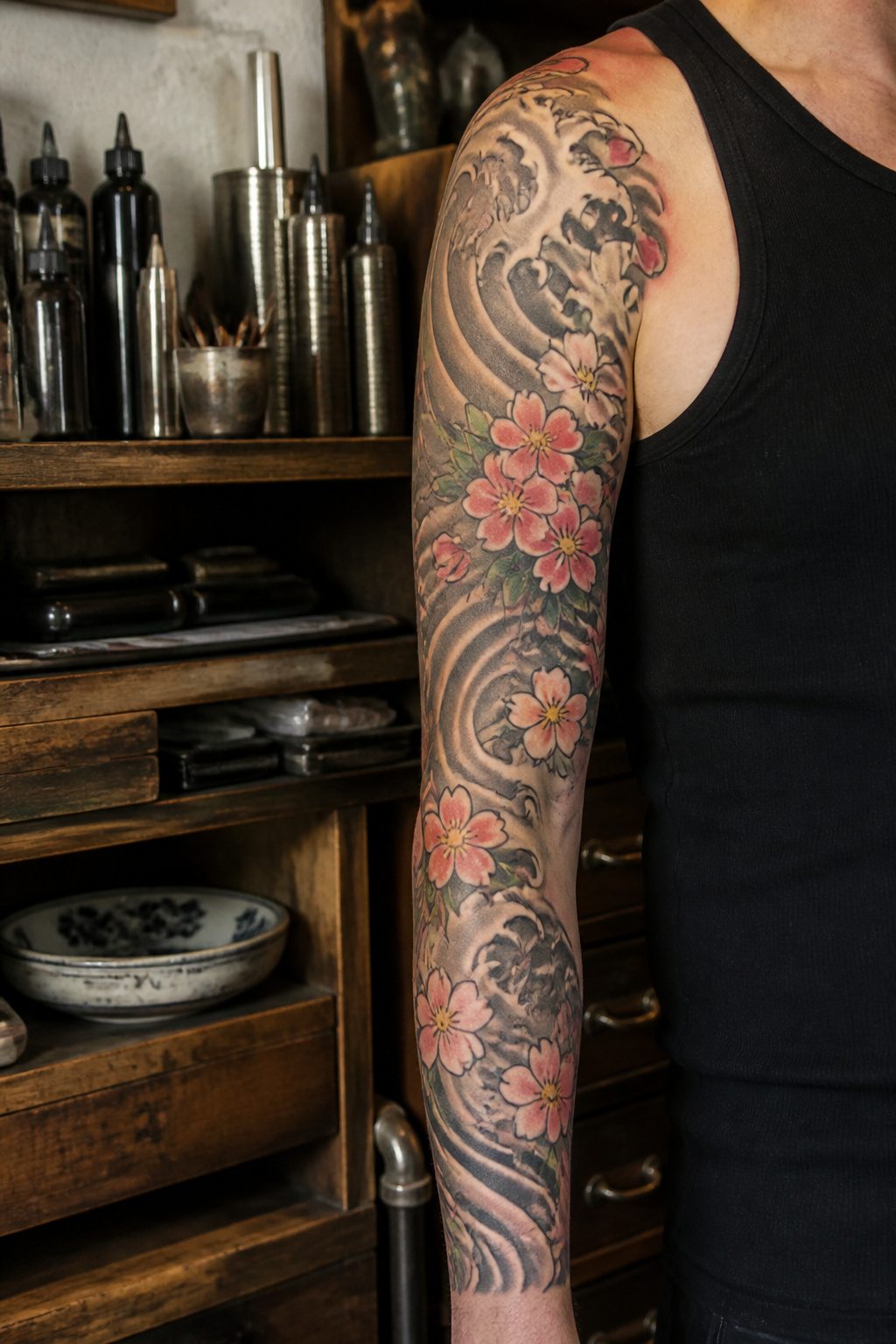
Irezumi is not a style you request from any artist with a Japanese reference book. The method itself reshapes what a flower can look like on skin.
Western tattooing typically drives ink straight down with a machine, building color in sessions that favor bold outlines and saturated fill. Irezumi works the skin by hand or with specific tools that create softer edges and living gradients; color sits in the dermis through a different rhythm of insertion. The result is a peony or lotus that seems to grow from beneath the surface rather than sitting on top of it.
This technique also changes scale. A peony sleeve in irezumi stretches from shoulder to wrist as one continuous composition, filled with black and bright red that emphasize movement through shadow rather than outline. The flower occupies space the way it might in a scroll painting, not as an isolated emblem.
The cycle the flowers represent, birth through death and return, is reinforced by how the skin itself ages with the work. Irezumi is designed to settle and shift as the body changes, which means the courage or perseverance the peony stands for is not frozen at the moment of completion. The tattoo continues its own cycle.
For women reading ingredient lists and judging by visible results, this distinction matters: the technique is inseparable from whether the final flower will look like a printed sticker or like something that belongs to the body it lives on.
Frequently Asked Questions
What do Japanese flower tattoos mean?
Japanese flower tattoos symbolize the cycle of birth, death, and rebirth, with specific flowers carrying distinct meanings: cherry blossoms represent beauty and impermanence, lotuses mark spiritual perseverance, peonies signal strength paired with femininity, and chrysanthemums carry imperial associations of honor and longevity. The unifying thread across all of them is impermanence itself; these designs let personal struggle sit inside something larger than a static emblem of triumph.
What are the different types of Japanese flower tattoos?
The core types include cherry blossom (sakura), lotus, peony (botan), chrysanthemum (kiku), red spider lily (higanbana), wisteria, maple (momiji), orchid, hibiscus, peach blossom, bamboo, and ume (Japanese apricot). Each carries specific symbolism rooted in Japanese culture, from the cherry blossom’s transience to the red spider lily’s association with final goodbyes. Some, like bamboo, are not flowers at all but appear in the same design vocabulary.
How should I choose a Japanese flower tattoo?
Start with what you need the tattoo to say about your own experience, not just which image looks best. A lotus suits a finished spiritual struggle; a peony fits someone claiming both toughness and grace; a red spider lily marks specific loss. Then talk through color and openness with your artist, since a half-opened pink lotus reads differently than a fully opened white one, and pale pink cherry blossom is harder to hold in skin long-term than darker pigments.