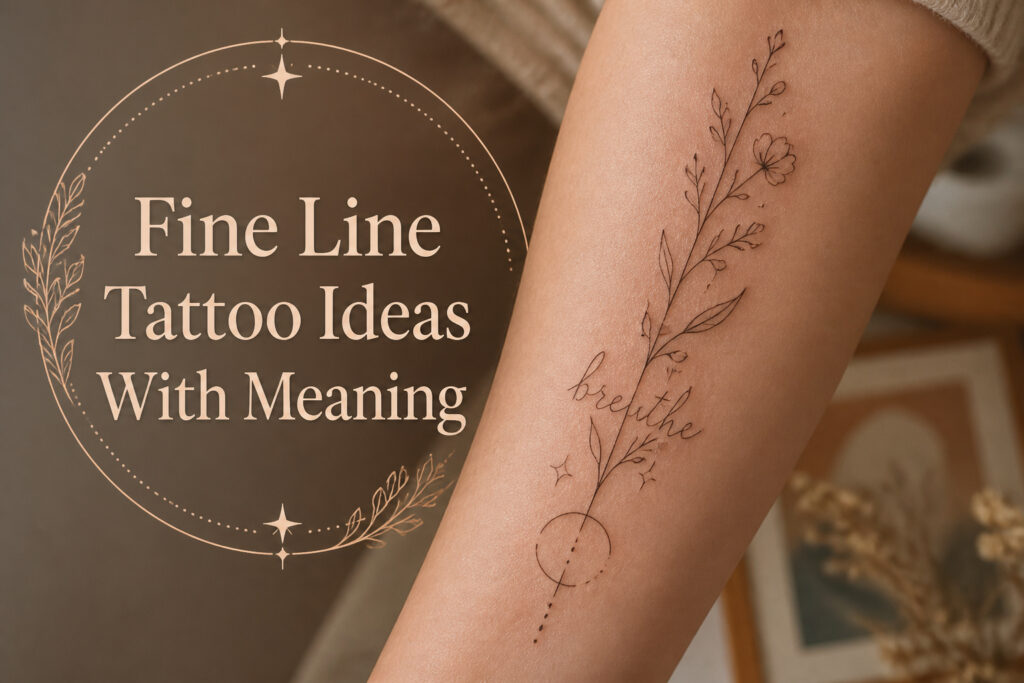
Fine line tattooing spans from a 30-minute minimalist star to a five-hour single-needle pet portrait, and the deciding factor is not budget but how much imperfection you can tolerate.
A wobble in hair-width script does not hide under bolder pigment; it sits there, visible.
The 1RL needle that makes micro-realism possible is the same tool that demands an artist with years of specialized training, not just a shop that advertises the style.
1. Micro-Realism
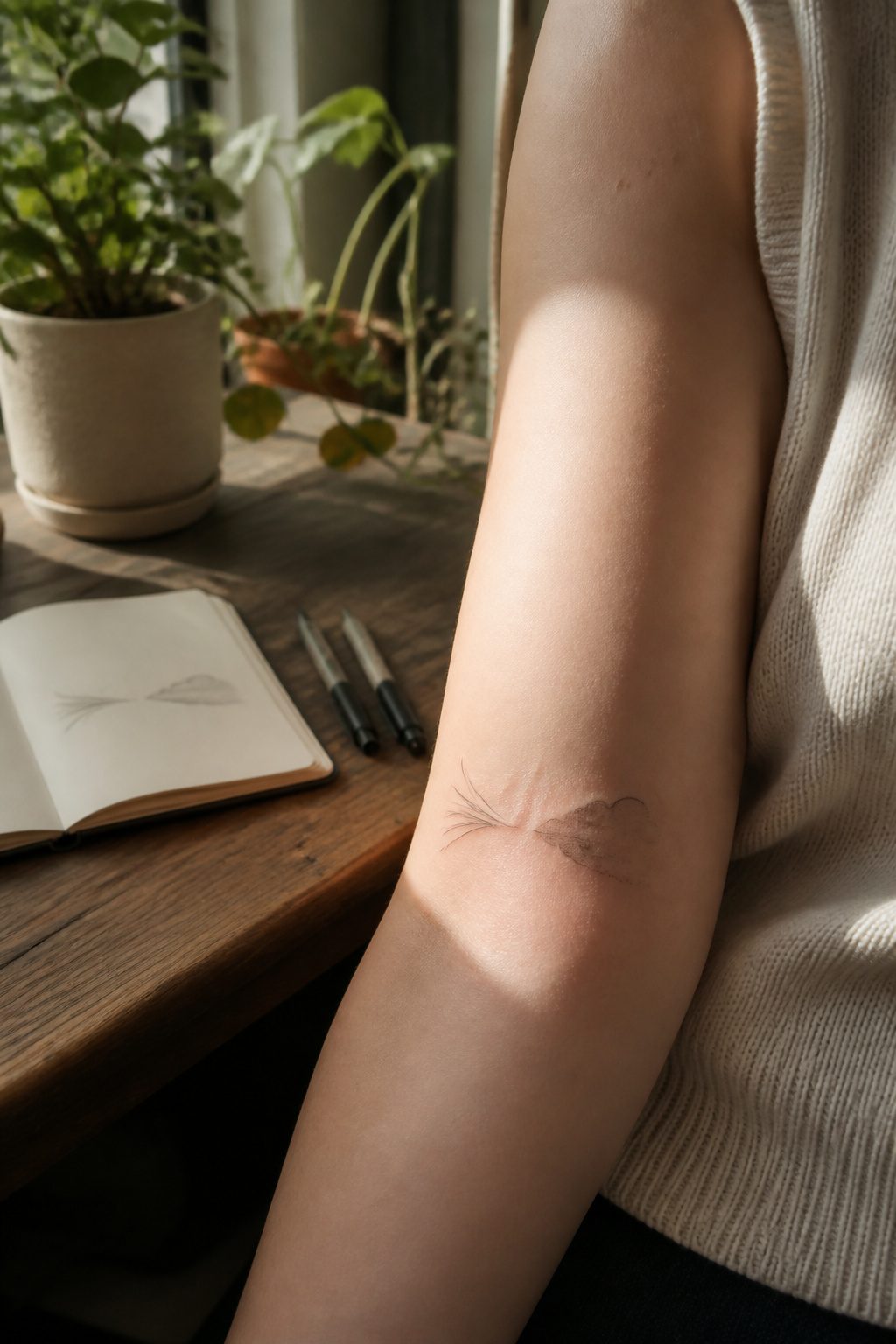
Single-needle work with a 1RL needle is what makes micro-realism possible on skin.
The line is thin enough to render a pet’s whisker or the soft edge of a cloud in a landscape at miniature scale, but that precision comes at a cost in time.
A piece that might take two hours in bolder styles can stretch to four or five when every shadow is built from hair-width strokes layered in slowly.
The artist’s training matters more here than with any other fine line category. Not every shop that advertises fine line will have someone who has put in the years this technique demands.
The passages note that many artists can approximate the look with multiple needles, but the control of true single-needle shading is different. A mistake in a line this thin does not hide under bolder pigment; it sits there, visible.
Pet portraits are the request I see most often in this style, followed by small landscapes. The meaning is usually direct: a specific animal lived, a specific place mattered.
The realism carries the weight so the design does not have to. For someone in the 35-54 range reading ingredient lists and judging on visible results, the parallel holds.
You are buying the evidence of skill, not the promise of it. Ask to see healed photos, not just fresh work.
Single-needle tattoos can settle softer than multi-needle lines, and how they age at six months is the only review that counts.
2. Ornamental & Fine-Line Botanicals

Botanicals dominate fine line tattooing for a reason that is visible in any garden: a leaf already carries thin veins and tapering edges, so the artist is not inventing delicacy but tracing what nature built.
A single needle run at low voltage can suggest a petal’s curve without filling it, letting the skin itself read as negative space inside the bloom. The same economy applies to ornamental mandalas.
Geometric centers hold with tight concentric lines, then the pattern dissolves outward into trailing stems or lace-like repeats that follow the body’s contours like fitted jewelry.
The risk is overworking the design. A botanical piece that tries to pack in too many species or too dense a mandala core loses the breathing room that makes fine line readable from a distance.
What convinced me, looking through portfolios, is that the pieces aging best after two or three years are the ones where the artist stopped while the plant still looked picked, not pressed.
3. Abstract & Cybersigilism
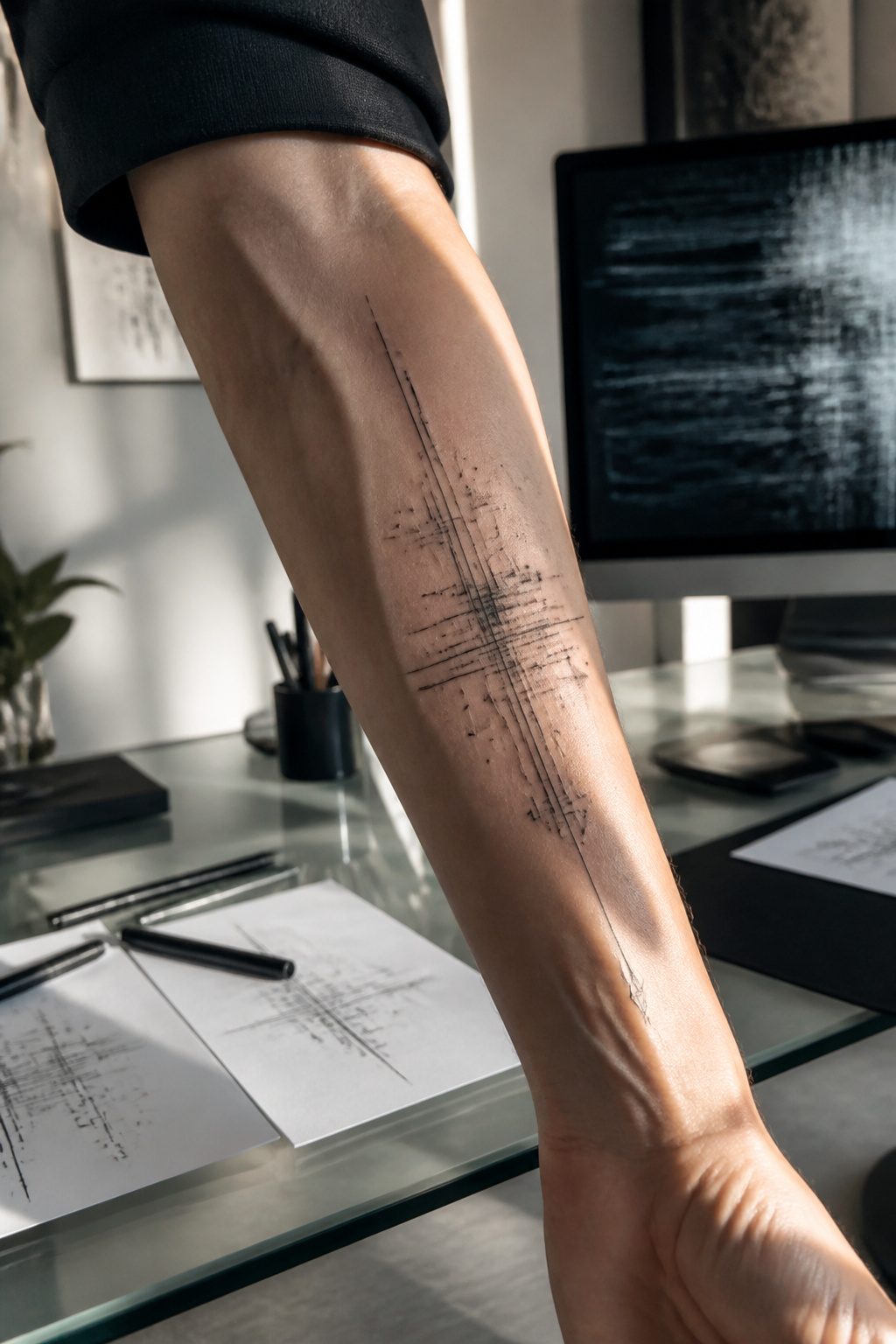
Sharp, glitch-like lines that look like corrupted data on a screen started showing up in my feed about two years ago, and the style has tightened into something worth considering if you want a fine line tattoo that carries weight without borrowing from old symbolism.
Artists call it cybersigilism: sigil-shaped marks drawn with the jitter of digital distortion, rendered in hair-thin needles so the whole thing stays light on skin.
The meaning here works differently than a rose or an anchor. These symbols gain significance through what you assign them, a birthday rendered as a corrupted file number, a coordinates string that glitches at one digit.
A friend of mine went with a distorted waveform of her daughter’s first cry, and the distortion itself became the point.
The line weight matters more than in traditional fine line work; too uniform and the digital feel dies, too chaotic and it just looks like a slip of the hand.
The artists who do this well usually come from illustration or graphic design backgrounds, not classic tattoo apprenticeships, so ask to see healed photos of their glitch pieces specifically. Fresh ink always looks crisper than it settles.
Placement shapes the effect. Inner forearm gives the horizontal distortion room to breathe.
Behind the ear, the compression into a small field can look accidental rather than intentional.
I have seen this style age poorly when the lines are placed too close together; what reads as pixel-crawl at first can blur into gray smear by year five. Keep the spacing open, the distortion deliberate, and the symbol personal.
4. Script & Typography
Whisper-thin cursive has a way of looking effortless while demanding the most from the artist behind it. A single needle, not the cluster used for bolder work, draws each hairline stroke, and that tool choice means any wobble shows.
The line cannot hide behind weight or shading. I have watched artists with twenty years of traditional experience hesitate before their first fine line script piece, and that hesitation is earned.
The hand must stay steady through curves that look casual but are not forgiving.
Short phrases age better than long ones in this style. A word or two, maybe initials tucked small against a collarbone or wrist, keeps the ink dense enough to hold as skin shifts over years.
Stretch a quote across six inches and those thinnest strokes will be the first to soften, the first to need a touch-up that a bolder piece might have skipped.
The reader looking for meaning here should choose restraint: the name, the date, the single verb that mattered. Let the needle’s precision carry the weight, not the word count.
5. Animals and Insects
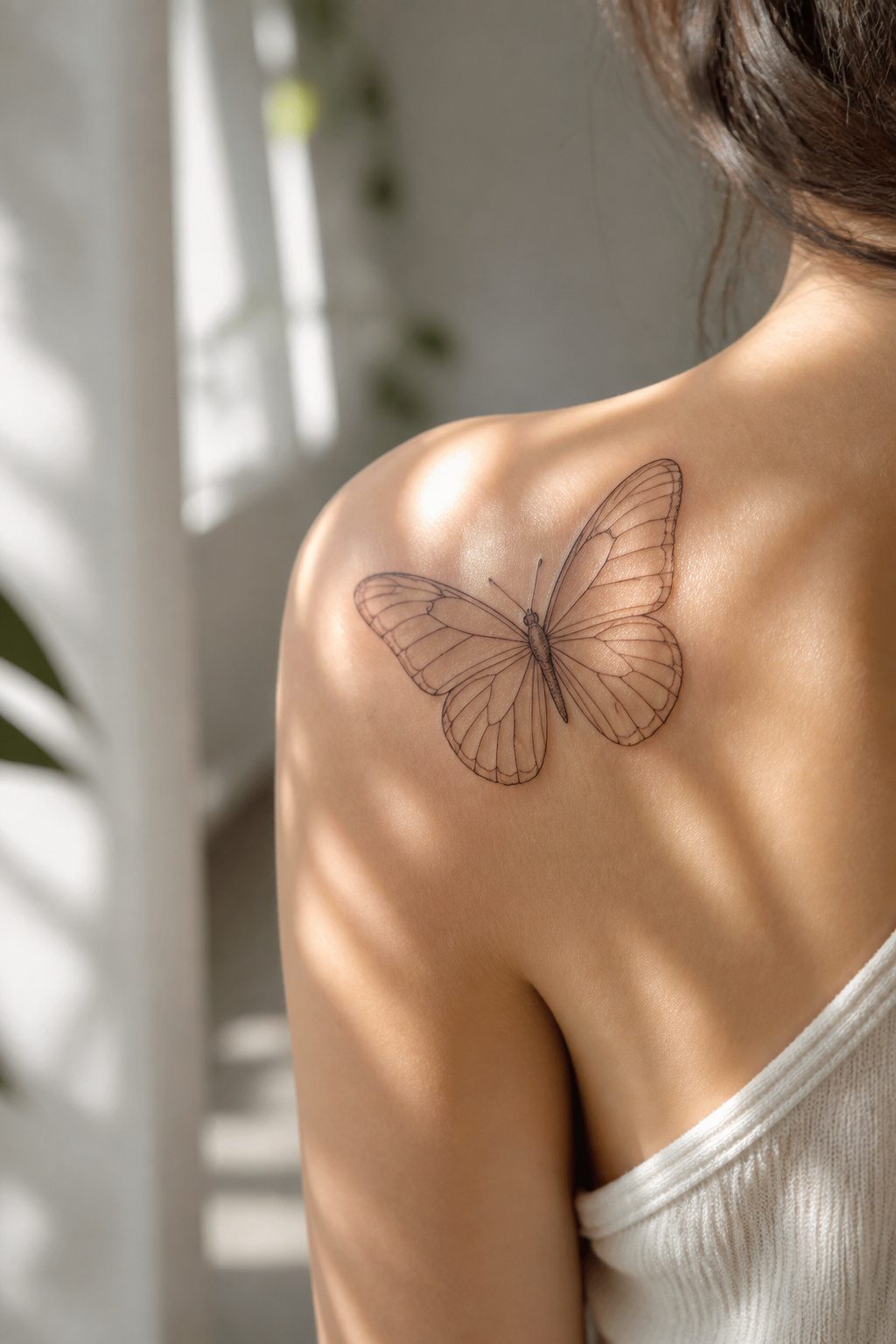
Butterflies rank among the most requested fine line tattoo ideas with meaning, and the reason is structural rather than sentimental.
Their wings are where single-needle technique proves what it can do: hairline strokes that trace every vein and scale without collapsing into a dark blob.
The transformation symbolism matters, but the real payoff is watching an artist render something that delicate and have it hold.
Bees carry a different weight.
Community and persistence are the usual readings, though what draws people to them in fine line work is almost opposite: the compact body and transparent wing edges let an artist show precision in a small footprint.
A bee reads clearly at two inches where a butterfly needs four to breathe.
Birds offer the third angle, perspective and distance, but the technical problem shifts. Wing feathers in flight require tapering lines that disappear to nothing at the tips.
Not every artist manages this; the needle has to travel at exactly the right speed or the line dots out and the bird looks moth-eaten. Ask to see healed photos, not fresh ones.
What unifies these three is the same thing that limits them. A single needle builds detail but not durability in the long term; the tradeoff is built into the method.
"Fine-line tattoos are daintier and less bold than a regular tattoo… There’s a sense of, Oh, this is actually for me and not necessarily for it to be shown off."
That privacy, the "for me" quality, is what makes animals and insects work in this style. Their meanings are common knowledge; the personal part is choosing which creature, which posture, which exact moment of wing position.
The tattoo stays readable without shouting, which is the whole point of fine line work.
6. Geometric Patterns
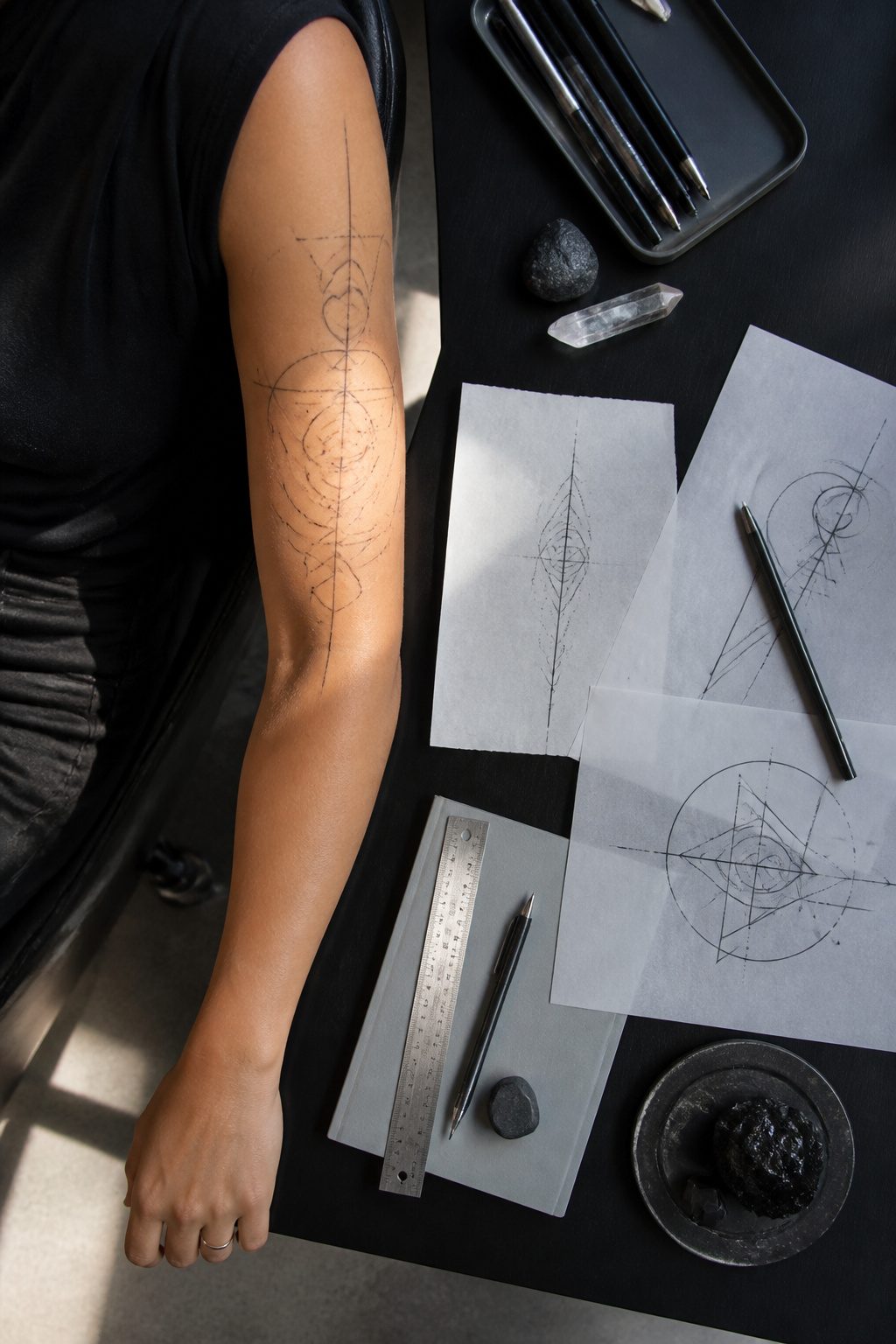
Constellations, mandalas, and abstract shapes sit at the intersection of personal meaning and technical ambition in fine line work. The geometry looks simple on paper: perfect circles, straight edges, repeating symmetry.
On skin that stretches and shifts, those same lines betray every microscopic wobble. A circle that closes cleanly on a drawing board can read as a soft oval by week three if the artist’s hand drifted even slightly.
Constellations carry the most direct mapping to lived experience.
Your birth date, an anniversary, the night sky above a specific city on a specific evening: the coordinates translate to dot-and-line star maps that read as abstract art to strangers and as precise coordinates to you. The risk is placement.
Ribs and shoulders move enough that those straight connector lines can distort into curves over time. The upper arm or calf holds steadier.
Mandalas demand the steadiest hand in this category. Intricate, radial designs built from repeated geometric units require precision that stands out visually, and any break in symmetry draws the eye immediately.
Artists who specialize in this style pay meticulous attention to detail, using precise lines and shading techniques to create intricate patterns.
Abstract shapes offer the most adaptability. Clean angles and minimal forms work across placements and scale well from small to moderate size.
The visual effect stays striking because the eye fills in the geometry’s logic even when the shape itself carries no literal meaning.
The harder a geometric design looks to execute, the harder it actually is. Straight lines and perfect circles are the first thing an apprentice practices and the last thing a master perfects.
7. Minimalist Symbols
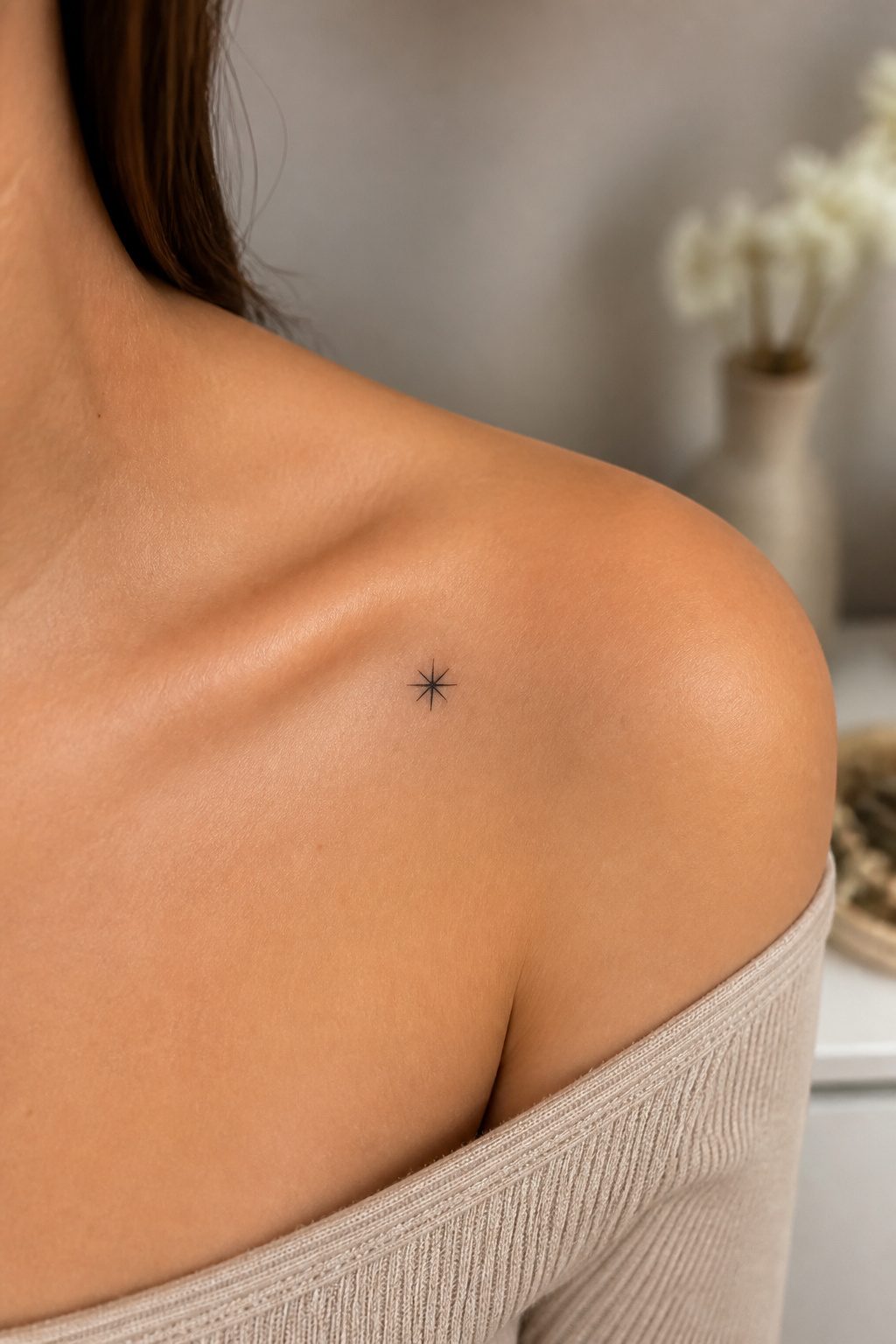
A single star behind the ear or a heart tucked along the collarbone carries meaning without taking up room.
These designs run small enough to finish in about 30 minutes, which matters when you are not sure how you will handle the sensation or the permanence.
First-timers often pick them for exactly that: the commitment stays low, the needle time stays short, and the result hides under hair or clothing when the occasion calls for it.
Placement shapes how long the lines stay crisp. Fingers look delicate but fade faster from daily friction and washing.
The wrist, the ankle, the rib cage, or that spot behind the ear weather better and still keep the design quiet. A small arrow on the inner wrist reads as a private reminder.
The same arrow on the forearm reads as a statement. Fine line work lets you choose which register you want.
The meaning stays yours because the symbol stays simple. A star does not have to explain itself.
Neither does a crescent moon or an arrow pointing forward. The spareness of the line leaves room for the wearer to attach a memory without the image shouting it.
That is the difference between a fine line symbol and a larger illustrative piece: the tattoo asks less of the viewer and gives more to the person wearing it.
8. Hidden Meaning Tattoos

A phoenix rendered in fine line work carries rebirth without the billboard effect of traditional flash.
The single-needle technique keeps the wing bones delicate, the ash lines barely there, so the meaning sits with the wearer rather than announcing itself across a room. That privacy is the point.
The same holds for a tree drawn from memory rather than clip art. One client of mine brought in the oak from her grandmother’s yard, not the generic "tree of life" every shop has taped to a mirror.
Fine line let us keep the silhouette spare enough that only she reads the specific branch where her brother’s swing hung. Bold work would have turned it into a statement piece; the whispered version stays hers.
Abstract forms work harder here than literal ones. A curve that references a coastline from a honeymoon, a repeated angle that mirrors a building where something ended and something else began, these need the viewer to already know.
The tattoo becomes a prompt, not a poster.
Placement follows the same logic. Wrist or ankle, the design catches your own eye daily without demanding anyone else’s.
Behind the ear, it is nearly invisible even to a partner. That control over who sees and when matters more than most artists admit.
Fine line’s gift is discretion you cannot get back once the needle goes bold.
What Fine Line Tattooing Means
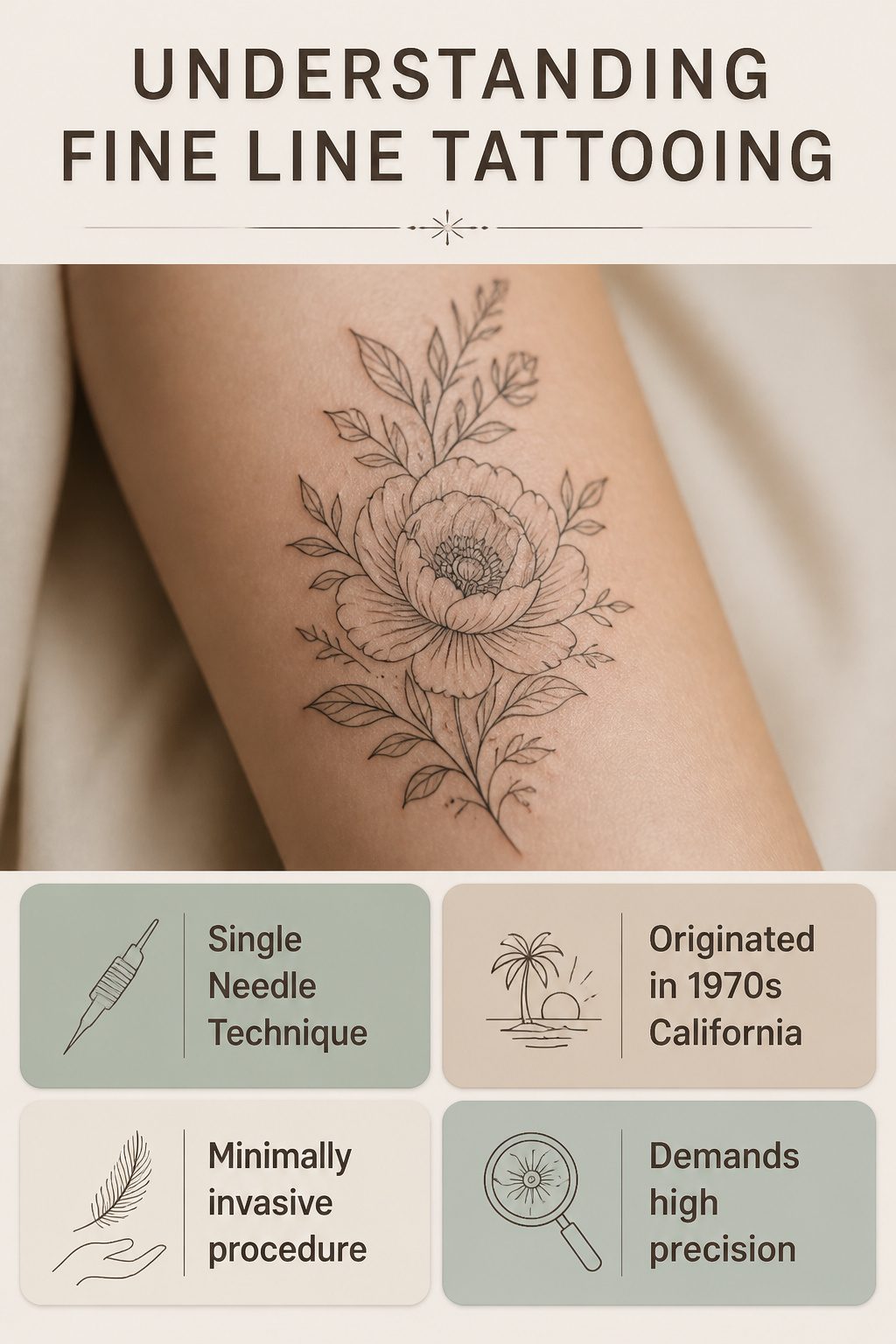
Fine line tattooing comes down to needles and restraint. A single needle deposits thin, precise ink lines that read more like pen drawings on skin than the bold outlines and heavy shading of traditional work.
The contrast is immediate: where older styles pack in multiple needles to build density, this technique strips everything back to delicacy and detail.
The style took shape in 1970s California through the Chicano art movement, where artists like Freddy Negrete and Mark Mahoney developed single-needle methods to replicate the fine marks of pencil and pen. Religious iconography, portraits, and black-and-gray realism came first.
Technology advanced. Machines grew more precise.
The look evolved from those documentary roots toward the minimalist aesthetic that dominates now, with artists like Okan Uckun and Oscar Akermo pushing the form into contemporary territory.
What draws people in is the same thing that makes it technically punishing. Thin lines forgive nothing.
A wobble shows. Ink spread ruins the fineness.
The skin itself becomes part of the design challenge in ways bolder styles simply do not.
Pain Levels and What to Expect
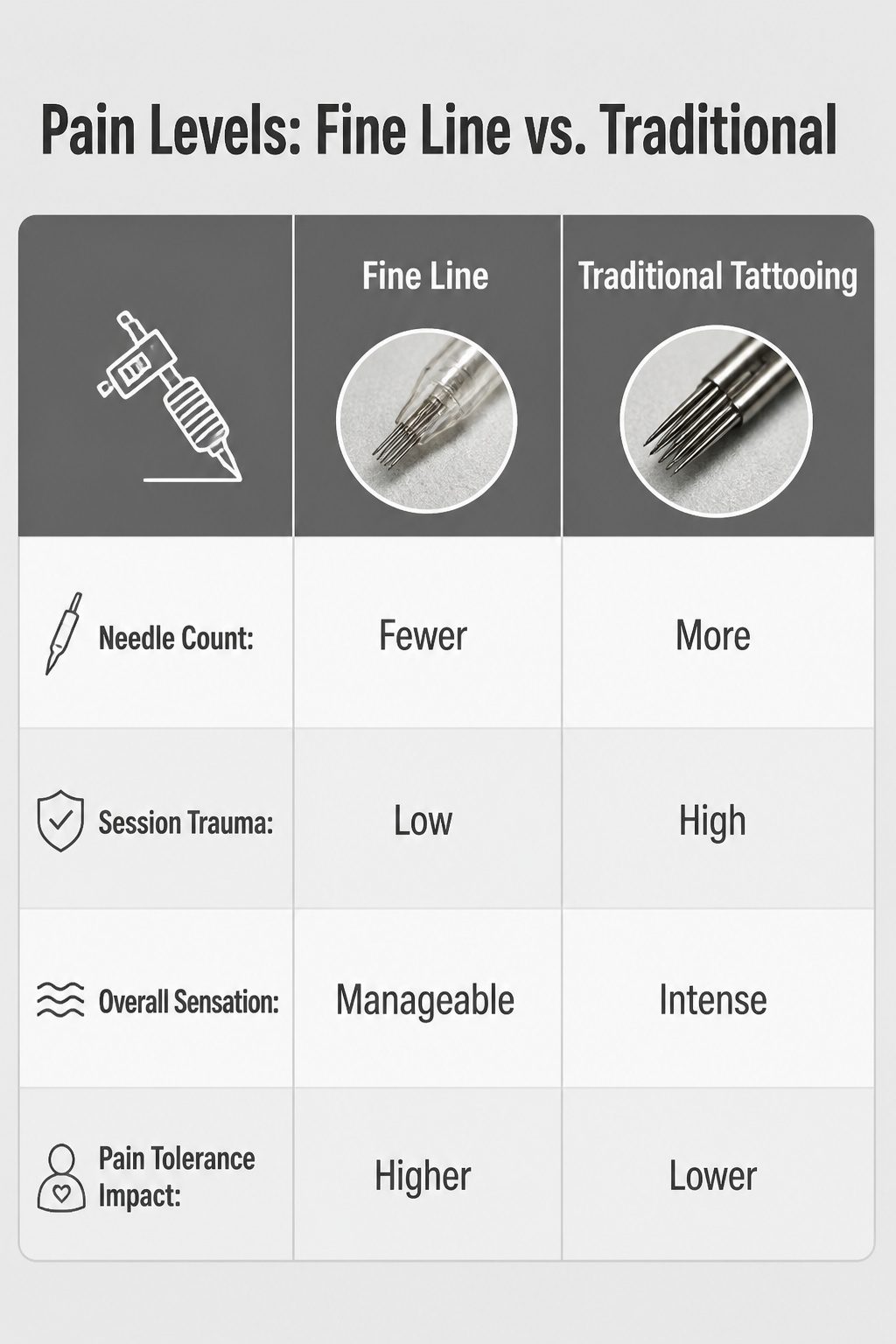
Fine line work runs with fewer needles and far less shading than traditional tattooing, which generally means less trauma to the skin and a more bearable session overall. The sensation is still there; nobody calls it painless.
Placement matters more than style, ribs and feet will test you either way, and personal pain tolerance still runs the show. What changes is the cumulative load.
Less time under the needle, less area saturated with ink, and the difference adds up. Someone nervous about their first piece often finds the fine line route manageable enough to actually sit through.
Longevity and Aftercare

Fine line tattoos age differently than traditional work, and the difference shows up fast if you let it.
The thin lines and minimal ink sit more shallowly in the skin, which means sun exposure will blur them faster than you’d expect from a bolder piece.
I moisturize mine daily now, something I skipped in my early years and paid for at the touch-up chair.
Plan on a refresh every 3 to 5 years. That timeline shrinks for spots that see friction, hands and feet especially.
Proper care extends the life significantly; neglect shows quickly in this style where there is no heavy shading to hide the fade.
Finding the Right Artist
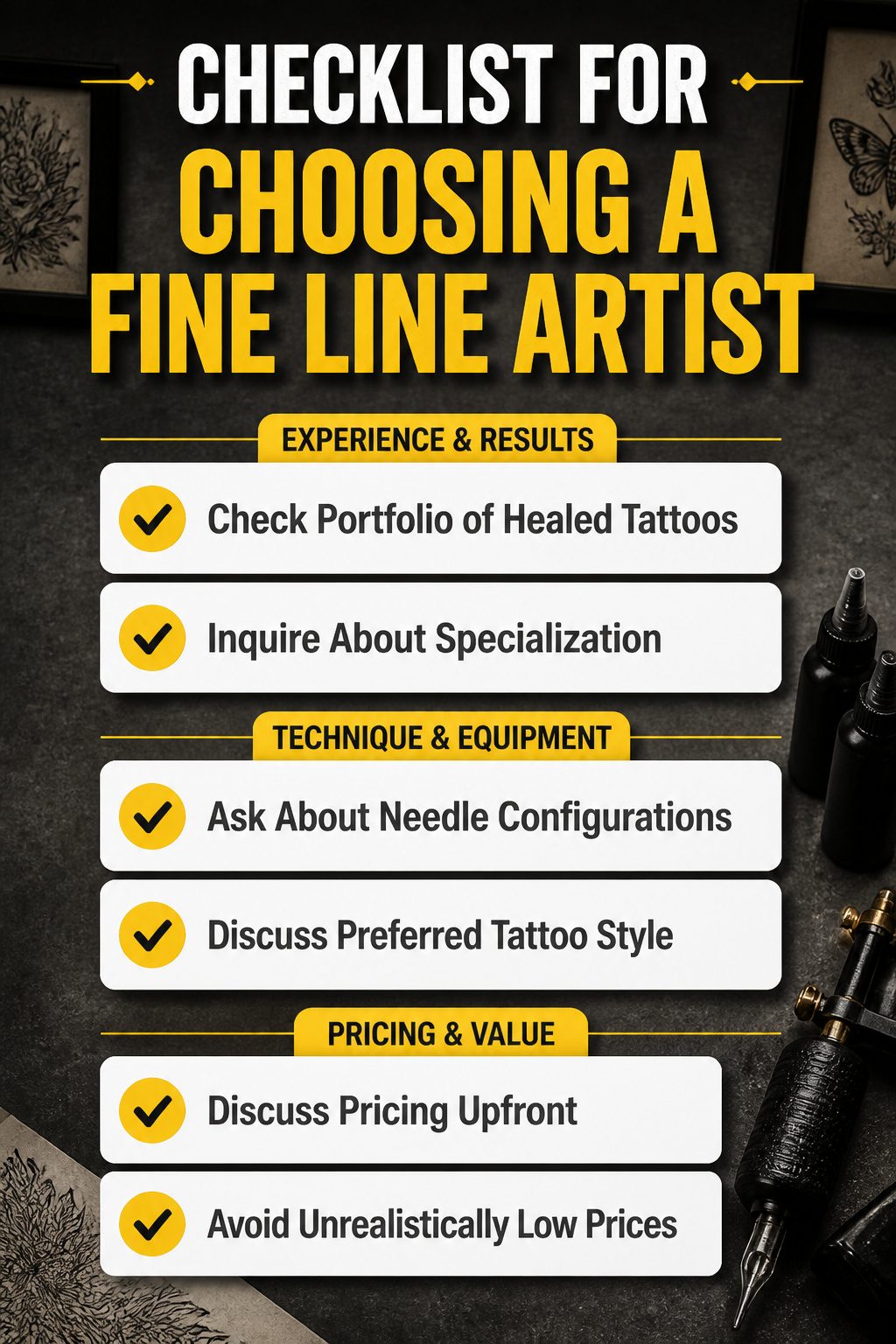
Fine line work lives or dies on the hand holding the machine. A portfolio of fresh tattoos looks impressive, but healed results are what separate an artist who understands the technique from one who simply hopes the lines hold.
Fine needles deposit less ink; without the right pressure and depth, those delicate marks fade or blur within months.
Ask to see photographs taken after the skin has fully recovered, not just the crisp, swollen work from the day it was done.
Specialization matters too. Single needle tattooing, the purest form of fine line work, demands extraordinary control and is not common.
Many artists who advertise fine line actually use grouped needle configurations that mimic the look without achieving the same precision. Ask directly about their preferred setup: a specialist will name specific needle configurations and explain why they suit your design.
The hourly rate stings less than a cover-up. Bargain pricing usually means someone building a portfolio or working outside their specialty, and corrections on blown lines cost far more than booking the right artist from the start.
Frequently Asked Questions
Do fine line tattoos fade faster than other styles?
Yes, fine line tattoos fade faster because their thin lines and minimal ink sit more shallowly in the skin. Sun exposure blurs them quickly, and spots that see friction, like hands and feet, age even sooner.
Daily moisturizing and smart placement help extend their lifespan.
How often do fine line tattoos need a touch-up?
Plan on a refresh every 3 to 5 years. That timeline shrinks for high-friction areas like hands and feet.
Proper aftercare, especially daily moisturizing and keeping the piece out of the sun, pushes that interval longer.
Are fine line tattoos more painful?
They usually feel less intense than traditional work because fewer needles and less shading mean less skin trauma. Placement and personal tolerance still matter; ribs and feet will test you either way.
The shorter needle time and smaller ink load add up to a more manageable session overall, which is why nervous first-timers often choose this style.