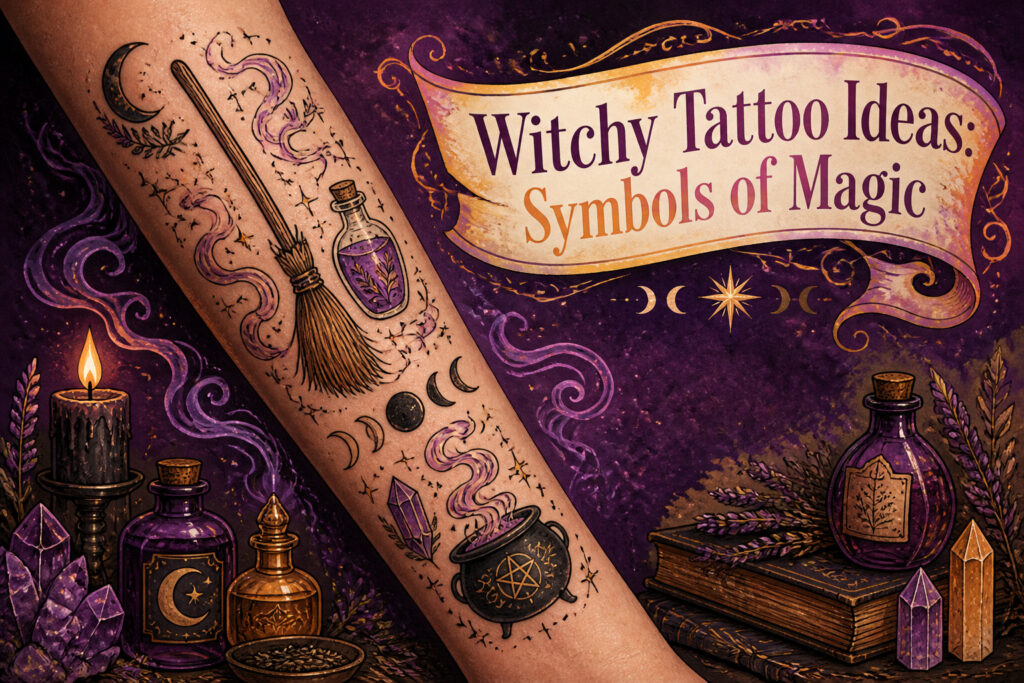
Witchy tattoo ideas in 2026 span from a single unbroken line to full sleeves of apothecary shelves and tarot spreads, but the difference between a piece that lasts and one that blurs into regret comes down to placement and scale. A broomstick whose bristles are drawn too small will lose its shape within five years as the ink settles; the same design at four inches, angled past vertical on a forearm, keeps the motion that makes it fly. The same rule governs every symbol in this list, from potion bottles behind the ear to triple moons across the ribs.
1. Broomsticks
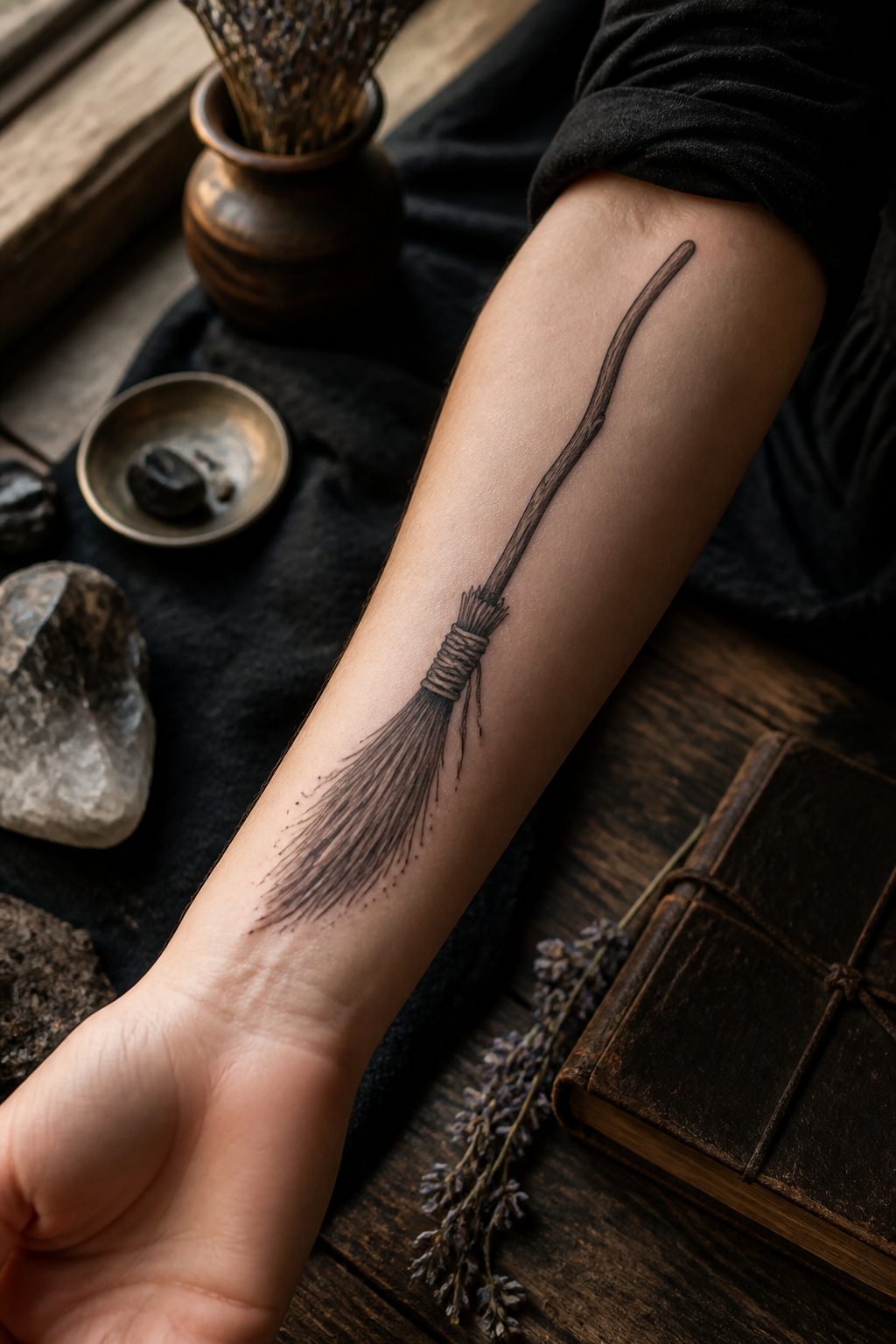
A broomstick tattoo carries the oldest visual shorthand for witchcraft there is, yet the design still leaves room to make it your own. The classic silhouette, a thin handle and splayed bristles angled like a slash mark, reads instantly from across a room. Historical woodcuts showed witches mid-flight, legs trailing, hair blown back; a good artist can compress that whole sense of speed into a single static image by tilting the broom just past vertical and letting the bristles fray outward like wind-caught straw.
Forearm placement works best when you want the broom to look like it is in motion, parallel to the bone, the handle seeming to push forward as you extend your arm. Ankle wraps do something different: the broom travels the curve of the leg, and the bristles can sweep down toward the heel so the design moves with your step. I have seen modern versions that strip the image to geometry, all triangles and negative space, and others that keep the folk-art detail of a hand-tied broom with visible twine. Either route works; the mistake is choosing a size too small for the bristles to hold their shape as the ink ages. Five or six years out, those fine lines blur, and a broom whose straws have melted together loses the very thing that makes it fly.
2. Potions
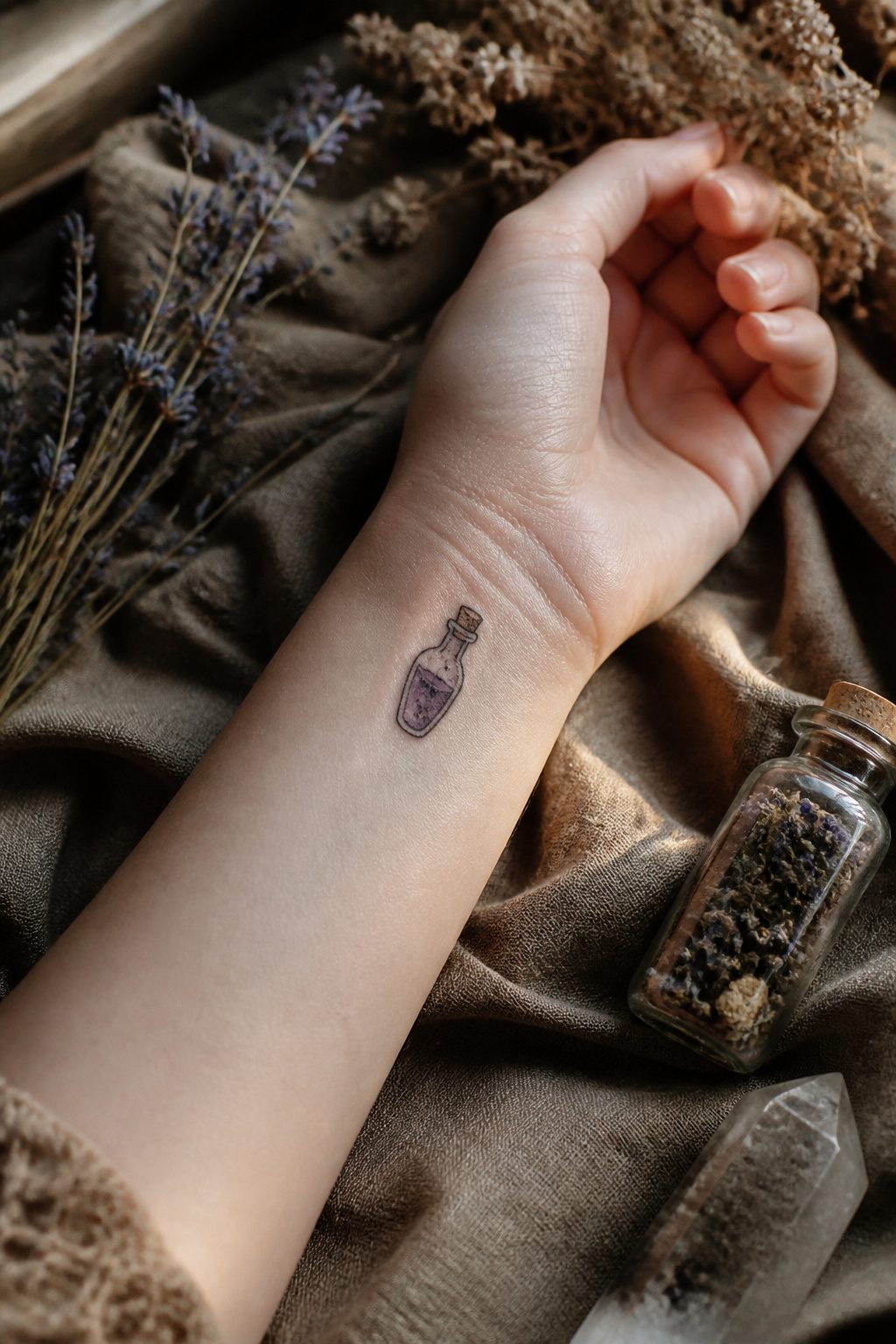
A tiny potion bottle on the wrist works because it stays personal, a private brew the wearer refills with intention rather than ink. I have seen these go two ways: the minimal outline, all glass and suggestion, or the fully shaded miniature with cork stopper and handwritten label. The second takes longer, costs more, and heals trickier on a spot that bends all day. Most people who sit for them choose the outline and add color later if the first round holds up.
Larger apothecary pieces, the rib-to-hip shelves of bottles and hanging herbs, read differently. They map an entire practice, not a single spell. The thigh carries them well, the flat plane letting an artist build depth between the rounded bellies of glass and the negative space of labels. Ribs work too but the bone movement makes fine line work settle softer over time, something to weigh if you are drawn to crisp lettering.
What the bottle contains matters less than what the wearer brings to it. Transformation is the usual reading, the liquid as potential before it becomes result. A client of mine, years back, wanted her mother’s handwritten recipe card worked into the label of a heart-shaped bottle behind her ear. The shape was awkward, the skin thin, but the meaning carried the design past what a stranger would see as simply pretty. That is where these tattoos earn their keep: in the overlap between witchcraft as aesthetic and witchcraft as something you do.
3. Black Cats
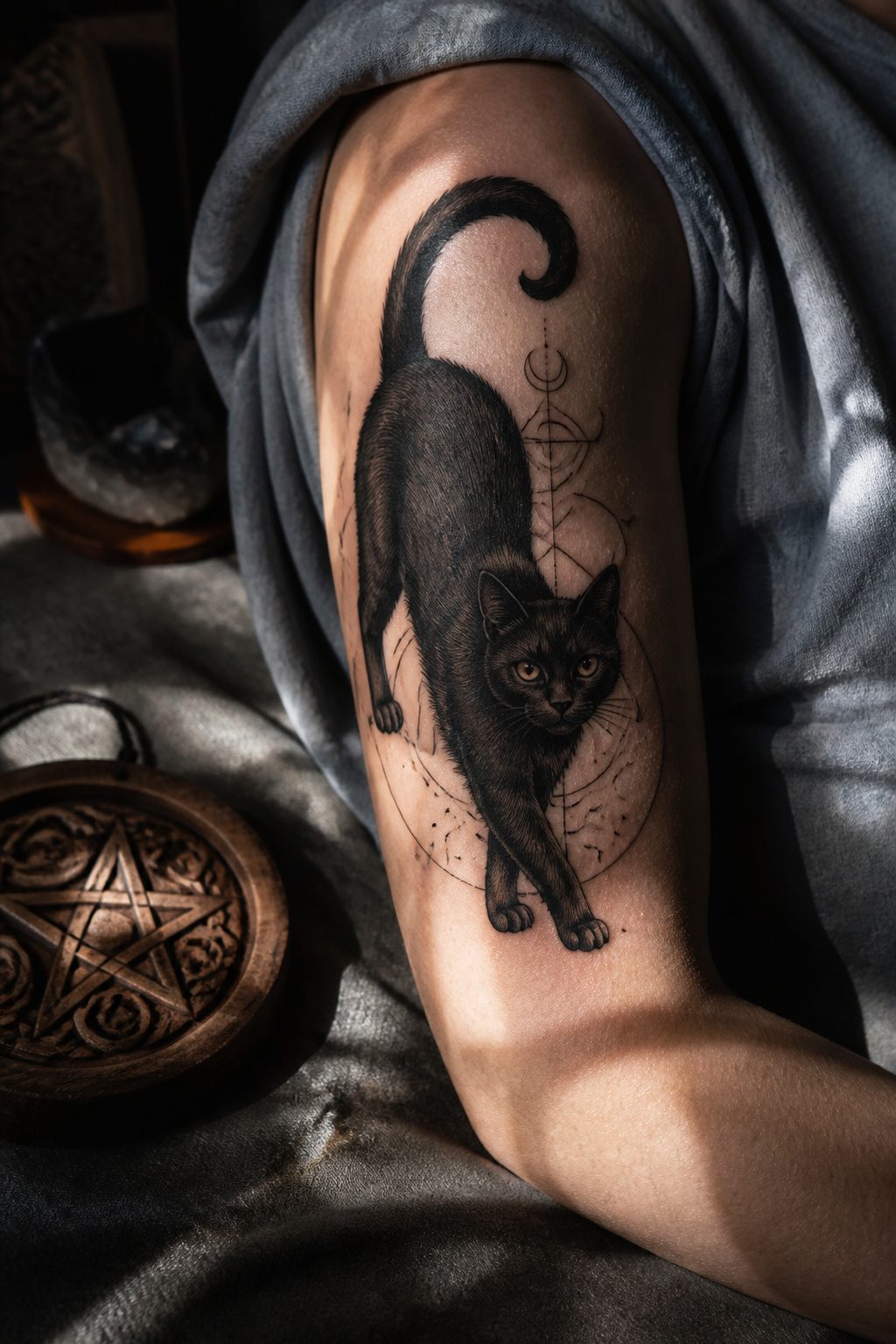
Black cats carried a heavy load in European folklore. For centuries they were tied to witch trials and midnight superstition, blamed for everything from bad harvests to worse. The old stories painted them as familiars, spirit companions sent to do a witch’s bidding or to hide her while she spied in feline shape. That history still lingers, which is exactly why the design works so well as a reclamation: the same symbol that once marked women for persecution now sits on skin as deliberate, proud choice.
The tattoo itself bends to whatever style you already wear. A sleek silhouette with a crescent moon collar reads as minimal and modern. A seated cat with arched back and slit-pupil stare, done in heavier blackwork, leans full occult. Some artists pair the figure with stars or a small broomstick shadow to underline the familiar connection without spelling it out.
Cat tattoos in general rank among the most requested animal designs, and the black cat specifically shows up again and again in collections of witchy tattoo ideas across shops and portfolios. The appeal is partly the flexibility, partly the weight of the story behind it. You get a pet memorial, a nod to Halloween, and a piece of feminist rewrite all in one image, depending on how you ask for it drawn.
4. Moons
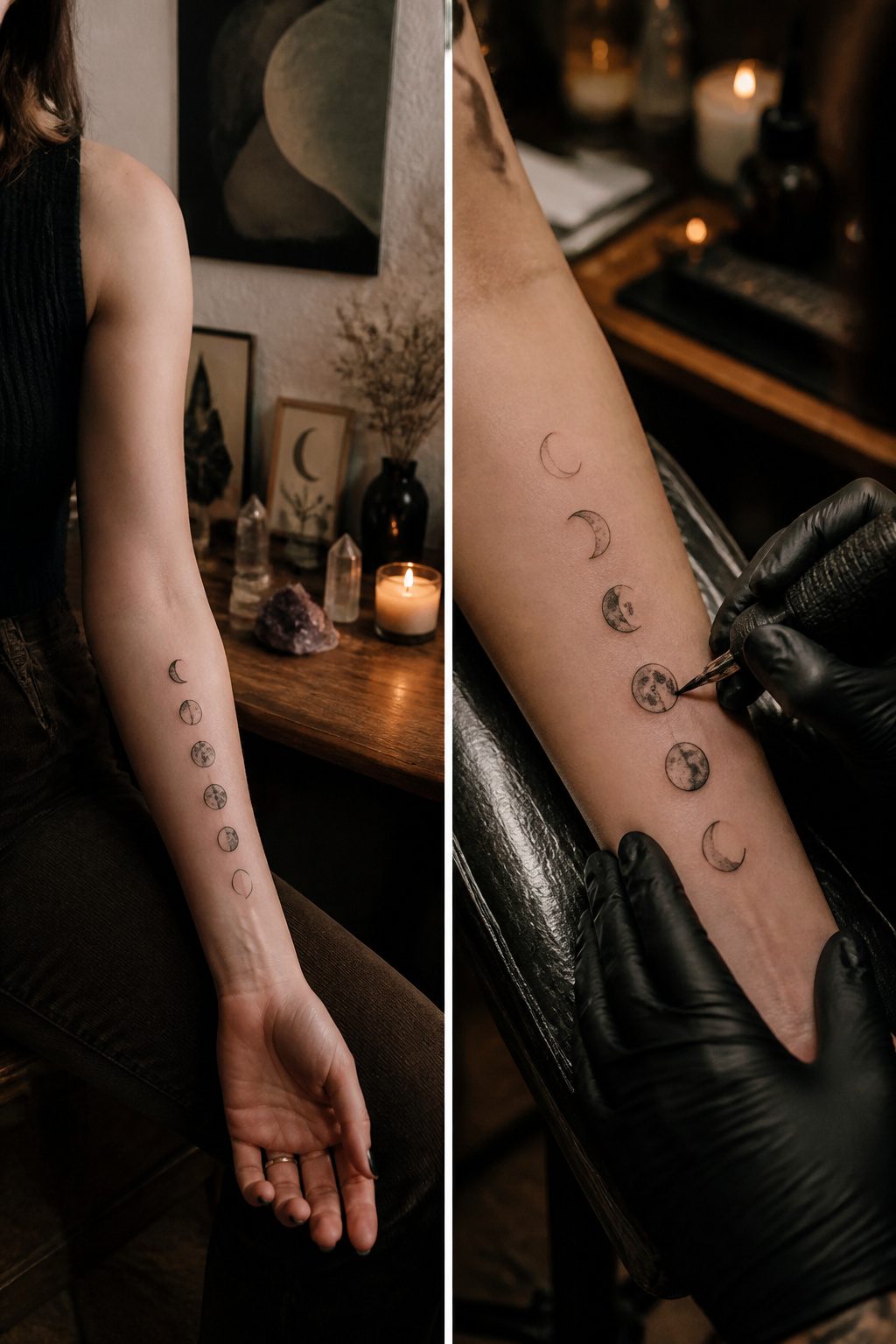
Moons show up in witchy tattoos more than almost any other single image, and the reason is straightforward: the phases map onto everything these designs are trying to say. A crescent, a full disc, the thin waning sliver, or the whole cycle in a line across skin, each marks time passing and returning, which is the root meaning most people want.
The triple moon, three phases in one symbol, carries the specific reading of Maiden, Mother, and Crone. That is a Wiccan framework, not universal, but it travels well because the three stages read clearly even without the names attached. The symbol binds feminine energy to a cycle that does not end, which matters when a tattoo is meant to outlast a phase of your own life.
A single moon works too, and often pairs with other elements. The sources show moons flanking pentacles, sitting with runes, or standing alone as a small piece. The common thread is duality, light and dark held together rather than resolved. That is the broader meaning of lunar imagery in this category: not just cycles, but the acceptance of both sides.
Placement shapes how much of the cycle you can carry. A line of phases needs length, forearm or calf. A single crescent fits smaller spaces, behind an ear or on a wrist, where it reads as a quiet signal rather than a statement.
5. Cauldrons
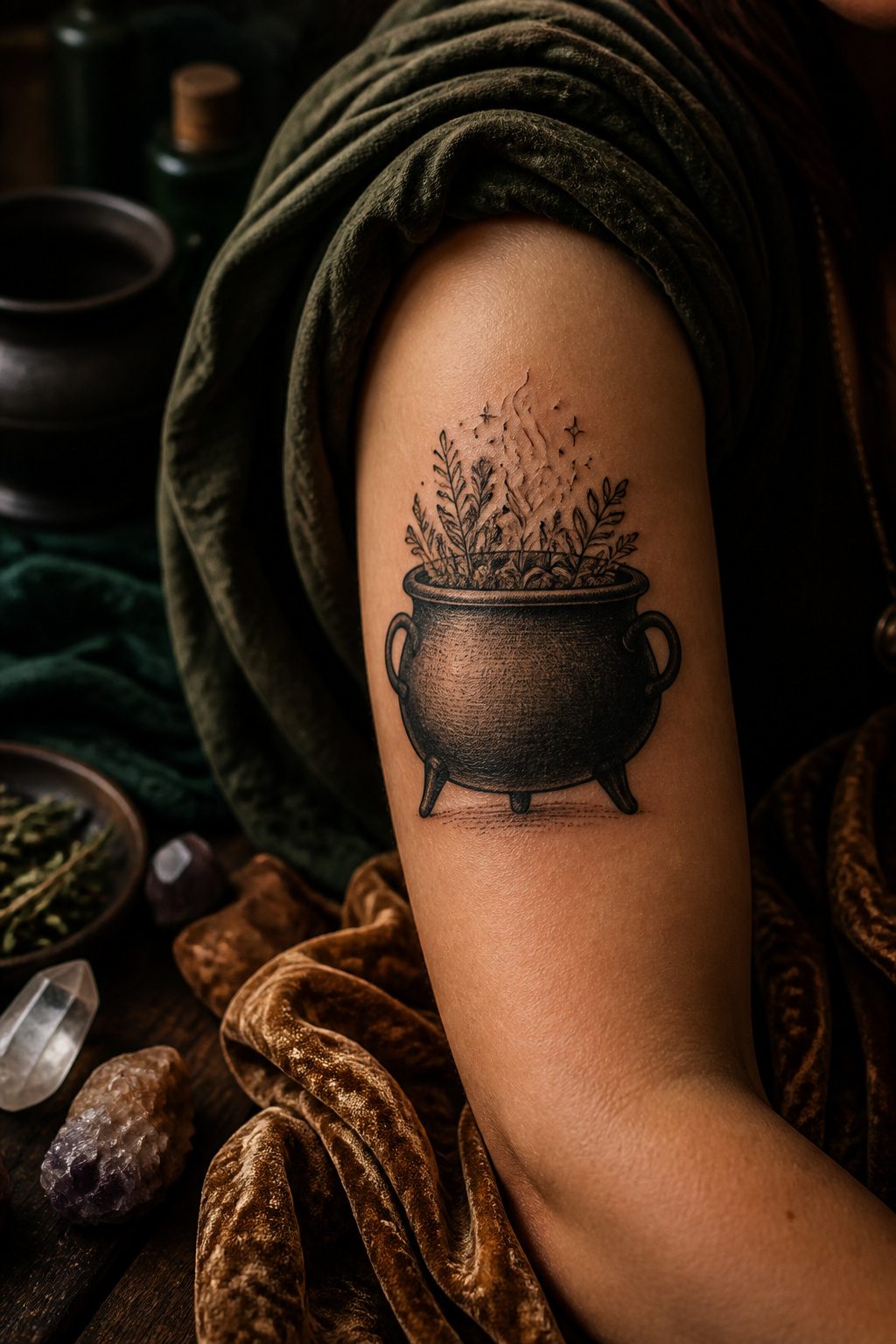
Cauldrons carry the oldest visual shorthand for witchcraft that still reads instantly on skin. The rounded belly and three legs show up in medieval woodcuts of the Witch of Endor and still sit at the center of modern Wiccan ritual, where the vessel holds water for scrying or herbs for spellwork. A cauldron tattoo works at any scale, which is what makes it so usable. At four or five inches across the upper arm or thigh, you can get the fire licking up from beneath, maybe a few ingredients floating in the brew, enough detail to tell a story. Shrink it to an inch behind the ear or on a finger and the silhouette alone still registers; the three legs and curved lip are that recognizable. The risk is going too dark with the linework and losing the shape in shadow. What convinced me, looking through portfolios, is that the cauldron designs that hold up best keep the interior lighter than the rim and legs, so the hollow reads as hollow. Black-fill everywhere flattens the thing into a lump.
6. Herbs
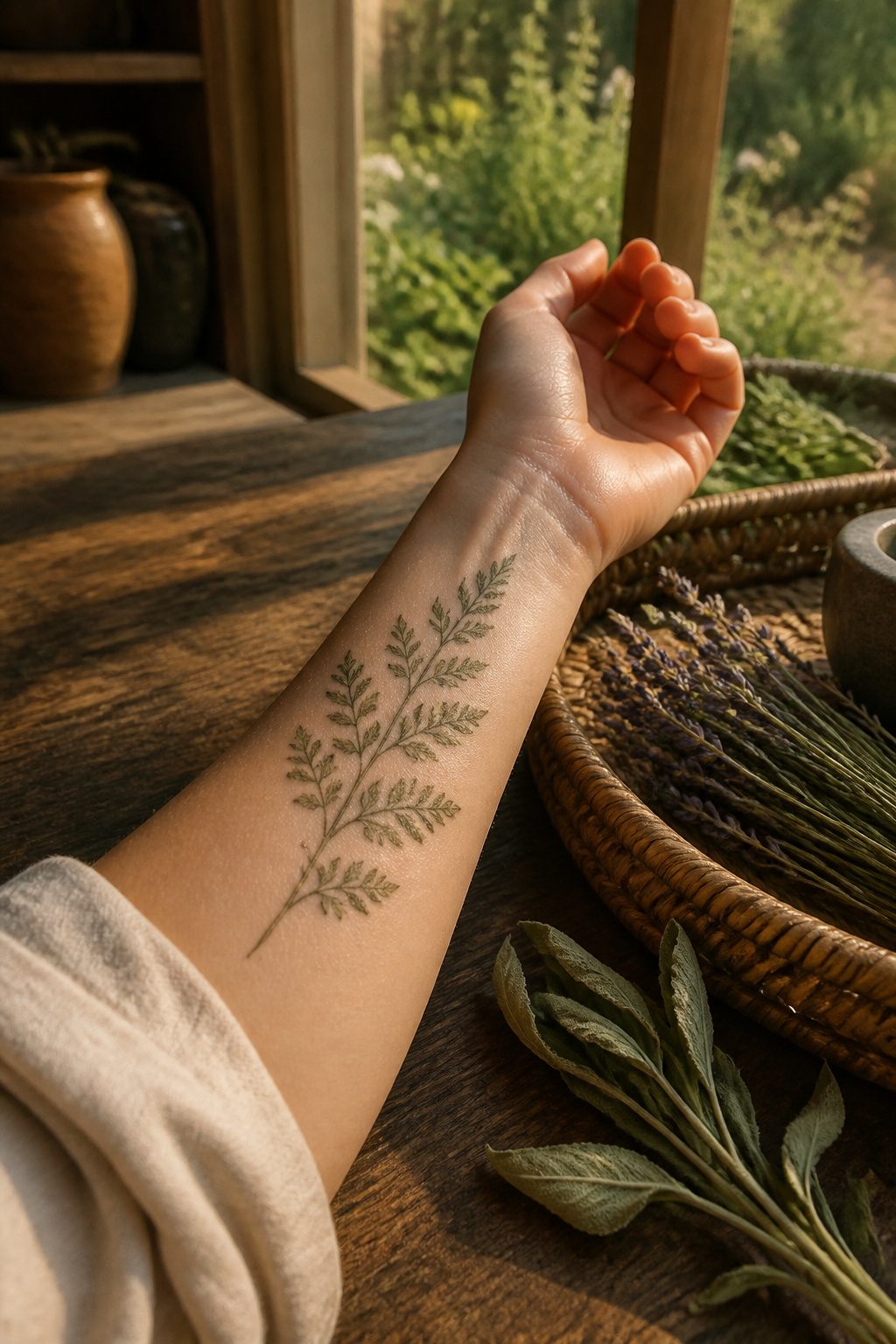
Herbs carry the quiet authority of something you grow yourself, and that patience translates into a tattoo that ages well. Lavender, mugwort, and mandrake each carry a weight beyond their looks. Mugwort is the one to choose if you want a plant tied to dreamwork and protection, though the root structure makes for a more interesting composition than the leaf alone. Lavender reads softer on the skin, which some clients regret later when they wanted edge. Mandrake demands technical skill; the humanoid root is easy to cartoon if the artist rushes. Green witches gravitate toward these not for the aesthetic alone but for the living connection, a reminder that the magic was always in the growing.
7. Spell Books
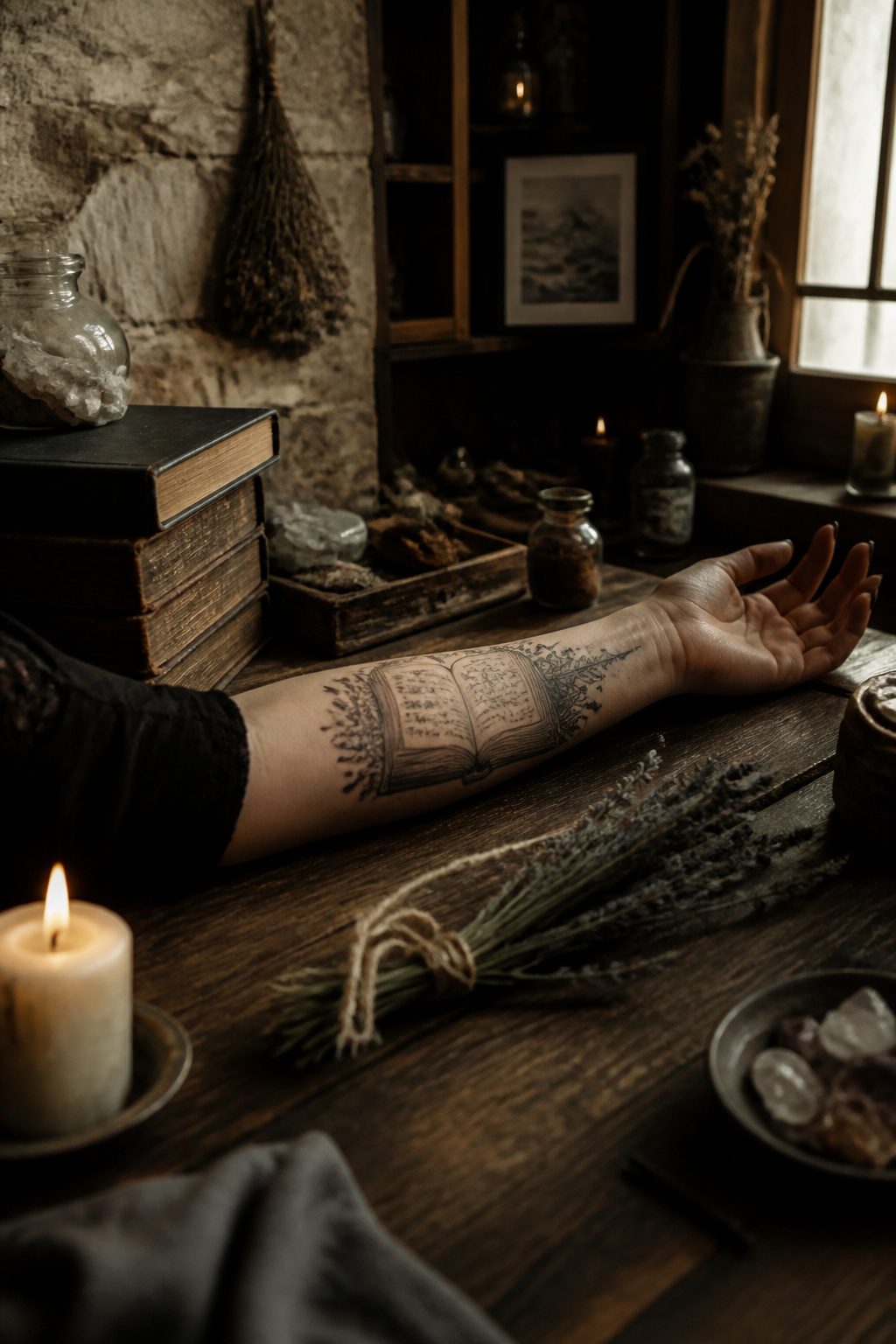
A single open spell book on the forearm reads as invitation: knowledge still in motion, pages the viewer can almost turn. Stack three or more volumes and the meaning shifts to accumulation, the years of practice that outlast any one spell. The spine detail matters more than people first assume. A cracked leather binding with raised bands catches light differently than a clean gothic arch on the cover, and that weathering is what separates a prop from a grimoire that looks lived-in.
Placement changes the weight too. A book lying flat across the shoulder blade feels like a surface you could write on; the same design vertical down the ribs becomes something carried, something with heft. The gap between pages, if the artist leaves it hollow or fills it with a glow, determines whether the book reads as record or as doorway. Most designs I have seen that failed missed this: they rendered the cover beautifully and treated the interior pages as blank space to rush through. The text does not need to be legible, but it needs to exist in suggestion, the way old manuscripts show layers of overwritten hands.
8. Skulls and Bones
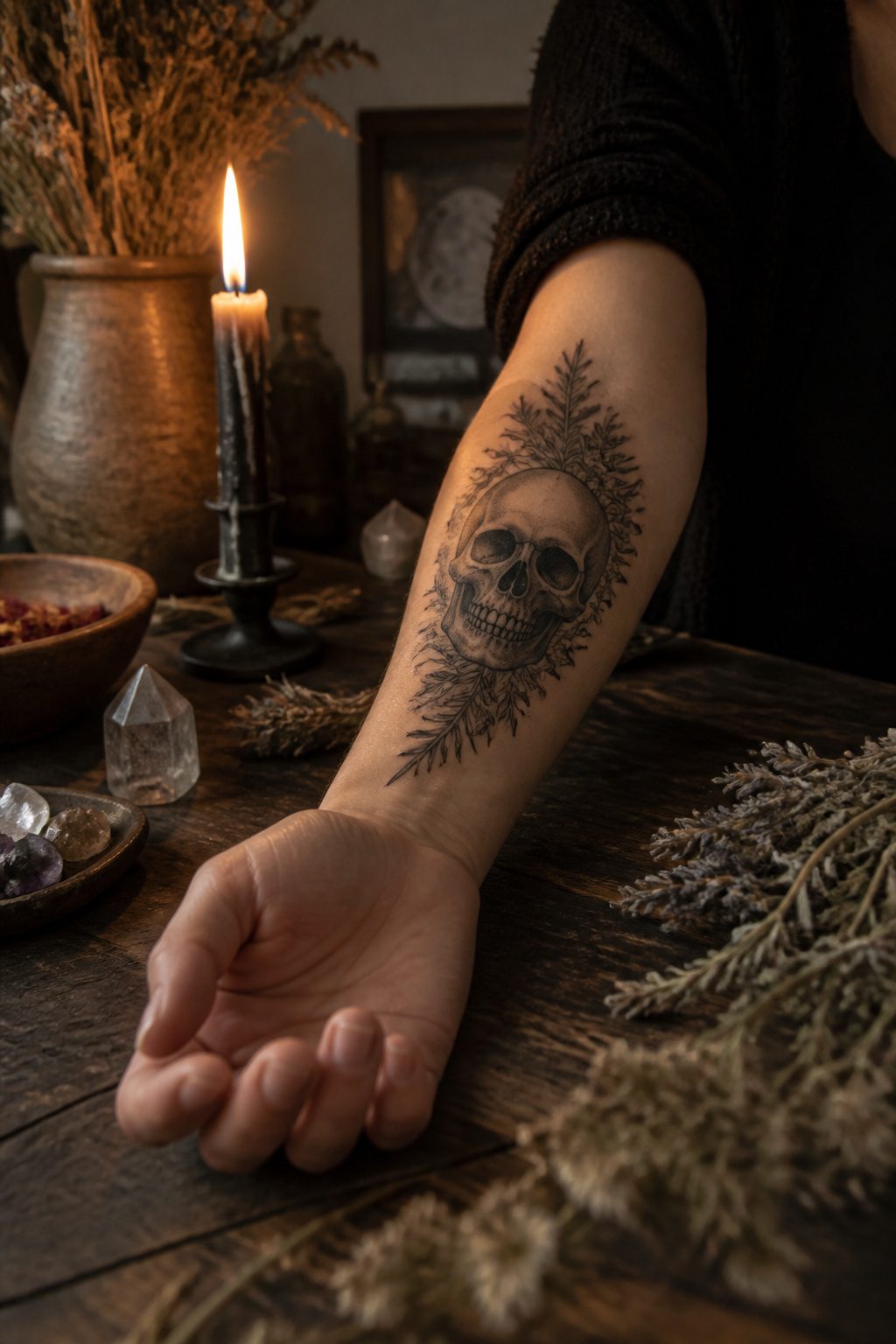
Skulls in witchy tattoo art carry a different weight than the ones you see on biker flash sheets or Halloween merch. The same bone structure becomes something else entirely when it sits beside a candle, a bundle of dried herbs, or a name rendered in a grandmother’s handwriting. Context is what separates ancestor work from edgy decoration.
I learned this the hard way after drawing a straight replica of a Mexican sugar skull for a client who wanted something "more witchy." She came back three months later for a cover-up. The piece had missed what she actually wanted: a way to carry her mother’s presence visibly, without the Day of the Dead tourism she had no claim to. We rebuilt it with rosemary she dried herself, placed behind the skull like a crown, and her mother’s initials in a script that matched an old recipe card. That context shift changed everything about how the image read.
Bones work the same way. A single femur, rendered anatomically and paired with nothing, reads medical or gothic. The same bone with a lit taper and a sprig of mugwort becomes a tool for spirit communication, a signal that the dead are approached with intention rather than aesthetic borrowed from heavy metal album art. The accompanying elements are doing the actual witchcraft signaling; the skull or bone is just the anchor.
Placement matters too. A skull on the hand, visible in every handshake, claims the work openly in a way a covered piece does not. That visibility is a choice some practitioners want and others deliberately avoid, depending on whether their spirit practice is shared or held close.
9. Tarot Cards
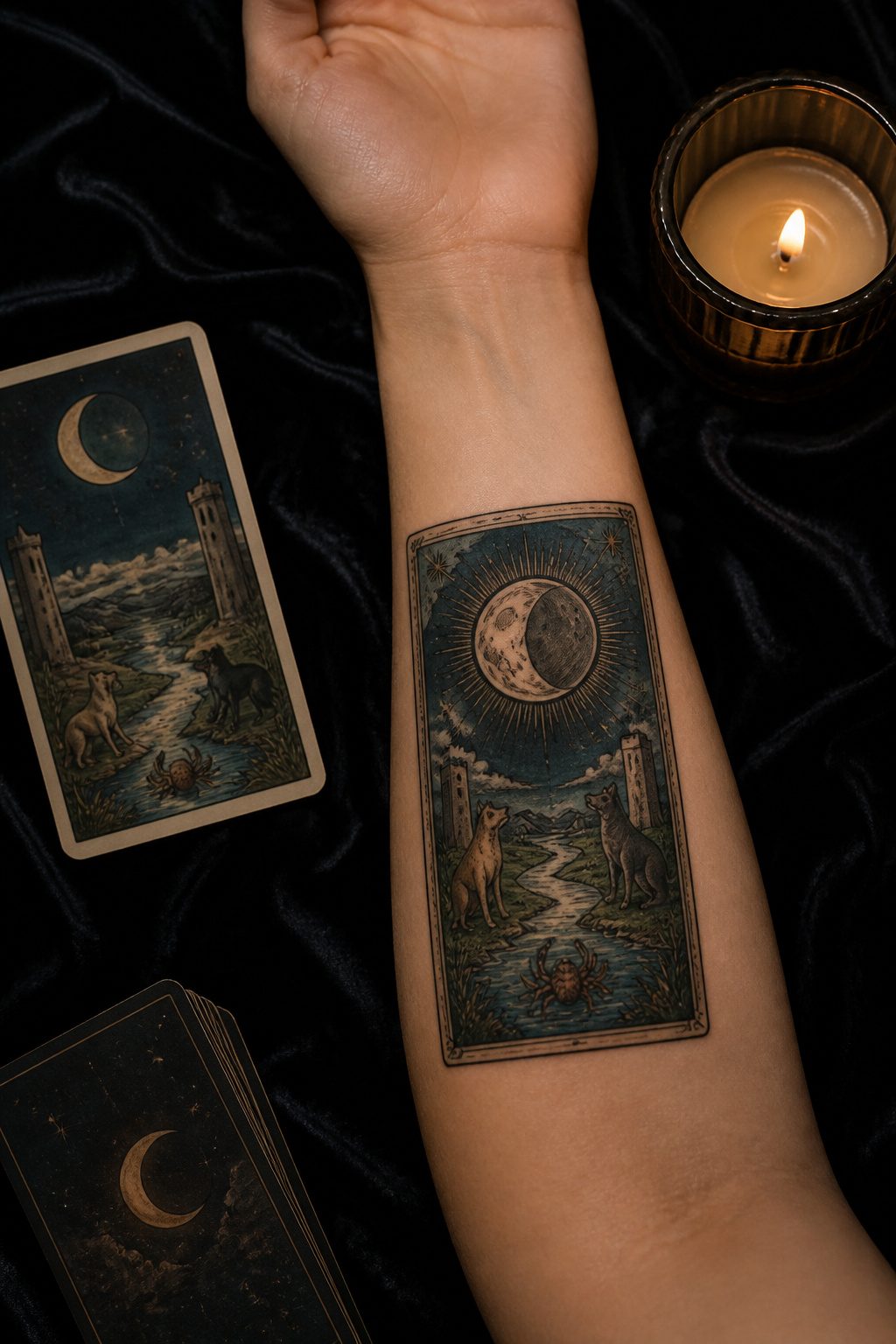
Tarot cards translate to skin better than most people expect. The High Priestess, Death, and the Moon are the three that come up again and again in shops, and each carries a weight that goes beyond the image itself. The High Priestess reads as quiet authority, a face-down book in her lap and that pillar between black and white. Death, despite the name, draws people who want the symbolism of ending and beginning rather than anything grim. The Moon card, with its dogs and crustacean and twin towers, gives an artist more visual material to work with than almost any other card in the deck.
A single card works as a focused piece on a forearm or ribcage, the detail kept large enough that the symbols stay readable. Multi-card spreads, two or three cards laid out in sequence, need more real estate but tell a fuller story. The placement matters with tarot in a way it doesn’t with simpler icons. A spread reads left to right on a leg or across the upper back, and the spacing between cards has to be deliberate or the whole thing collapses into clutter.
10. Wicca Symbols
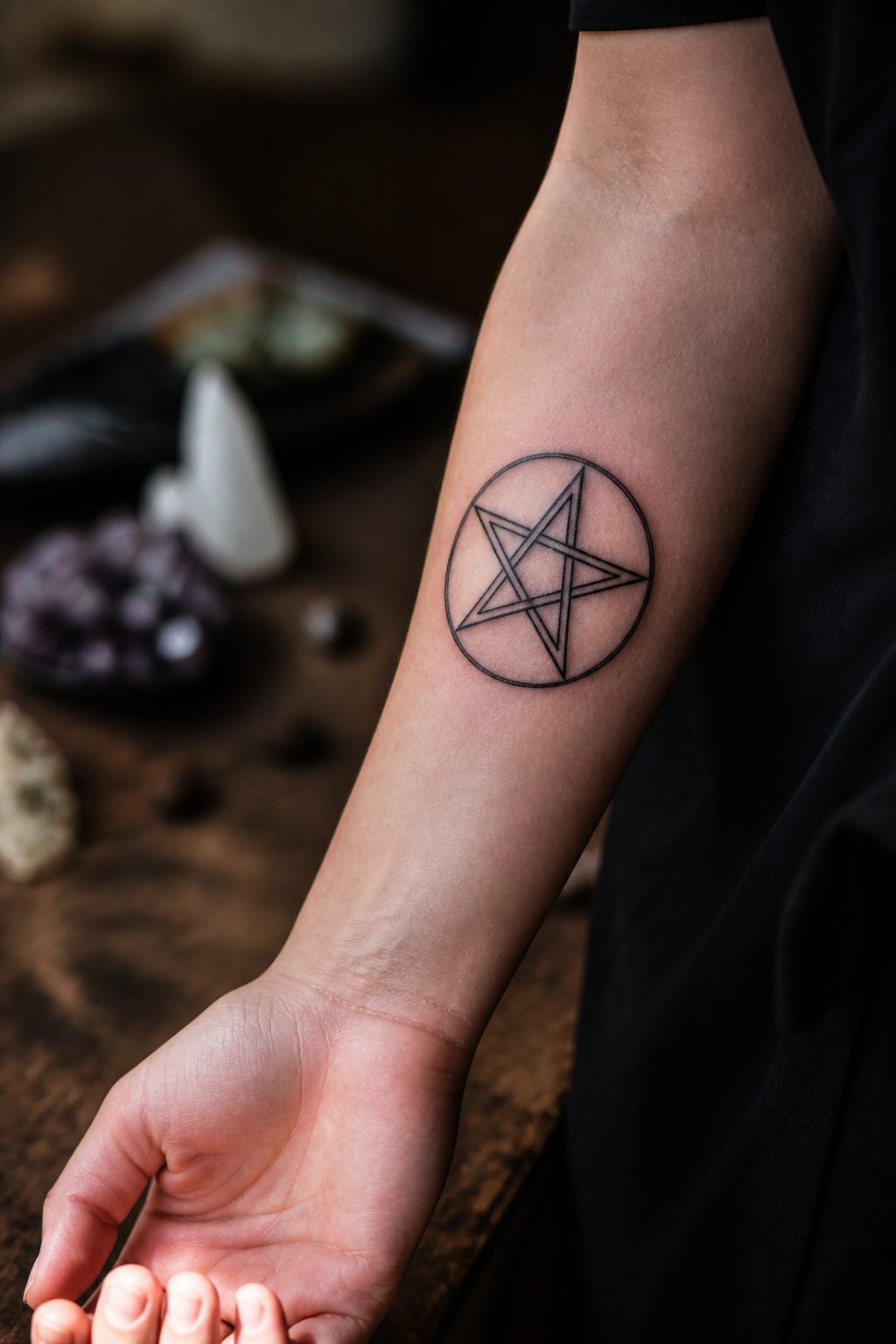
The pentagram remains the most requested Wicca symbol in shops that carry spiritual work, and the reason is structural, not decorative. Each of its five points locks to an element: earth, air, fire, water, and the fifth, spirit, which sits at the top. A circle drawn around it, the pentacle, turns the symbol into a container, a boundary, and some people want that enclosure; others leave the star open.
The choice matters because these marks are rarely picked for how they look on a flat sheet. What the wearer responds to is which element they feel short on, or which season of their life the tattoo needs to speak for. Earth and water read differently on a body than fire and spirit do, and the placement, the scale, the whether or not to add a moon phase nearby, all follow from that resonance rather than from what photographs well.
I have watched clients sit with the stencil for twenty minutes, moving it between shoulder blade and inner forearm, not because of visibility but because the body zone changes what the symbol guards. The pentagram is not alone here, though it is the one people know enough to ask for by name.
11. Triple Goddess
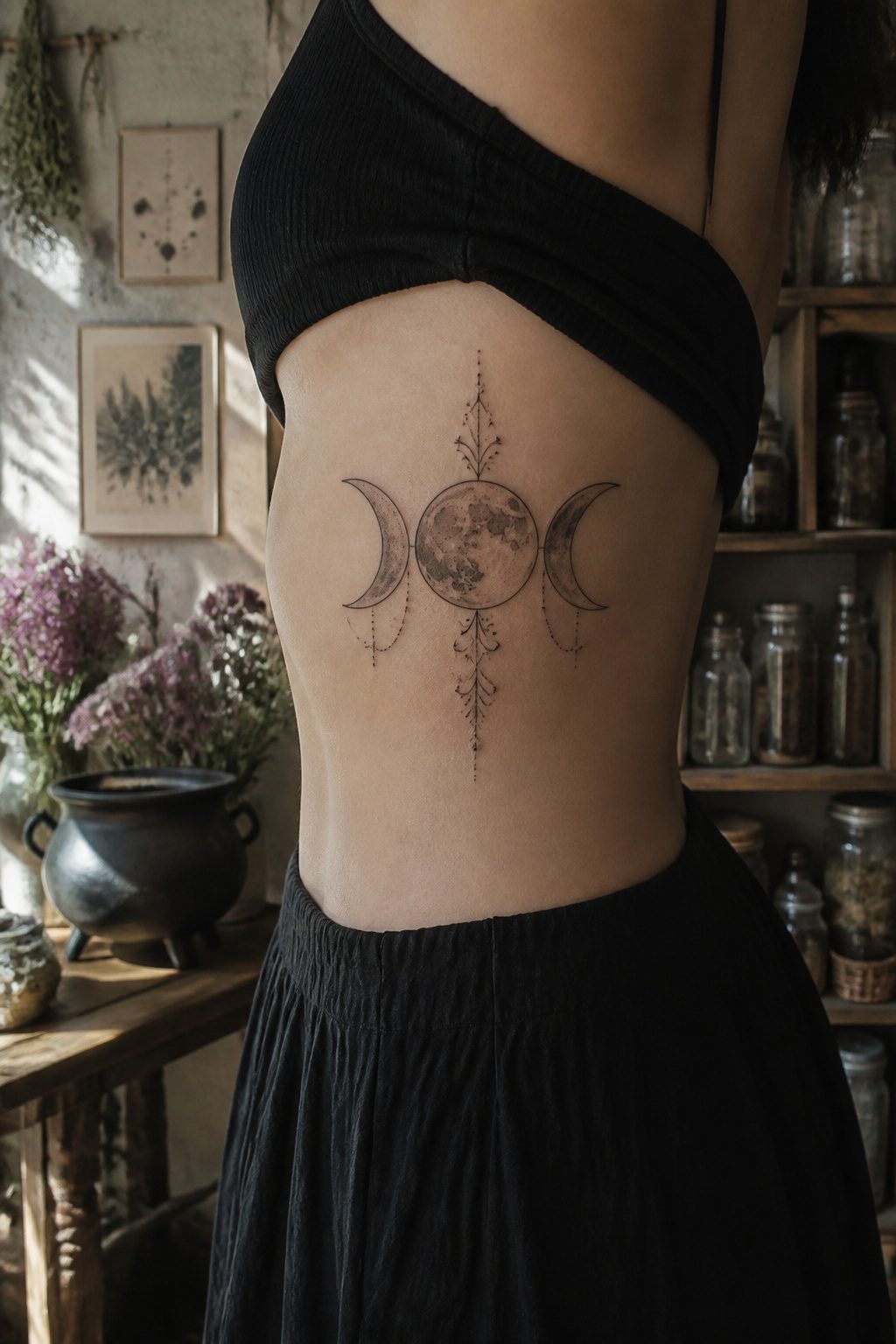
The triple goddess symbol, or the triple moon, strings together three lunar phases: waxing, full, and waning. In Wicca, these map onto Maiden, Mother, and Crone, and together they form a never-ending life cycle that centers female energy rather than framing it around male figures.
What draws people to this design is how it shifts meaning across decades. A twenty-three-year-old might wear the Maiden forward as a mark of beginnings; someone in the thick of career and family often gravitates toward the full moon at center. The Crone phase, sometimes feared in mainstream culture, reads differently in witchy tattoo work: earned knowledge, vocal honesty, the freedom to stop performing likability.
The 35–54 group I see in the shop tends to request this most often, and they usually come knowing exactly which moon they want emphasized. They have already done the maiden work. They want the symbol to acknowledge what came before without erasing it, and the triple form lets all three phases coexist on the same arm or ribcage. Clean line work suits it; so does dotwork that gives each moon its own weight. Some add a small pentacle beneath, or keep the moons bare and let the geometry speak.
12. Pentagrams
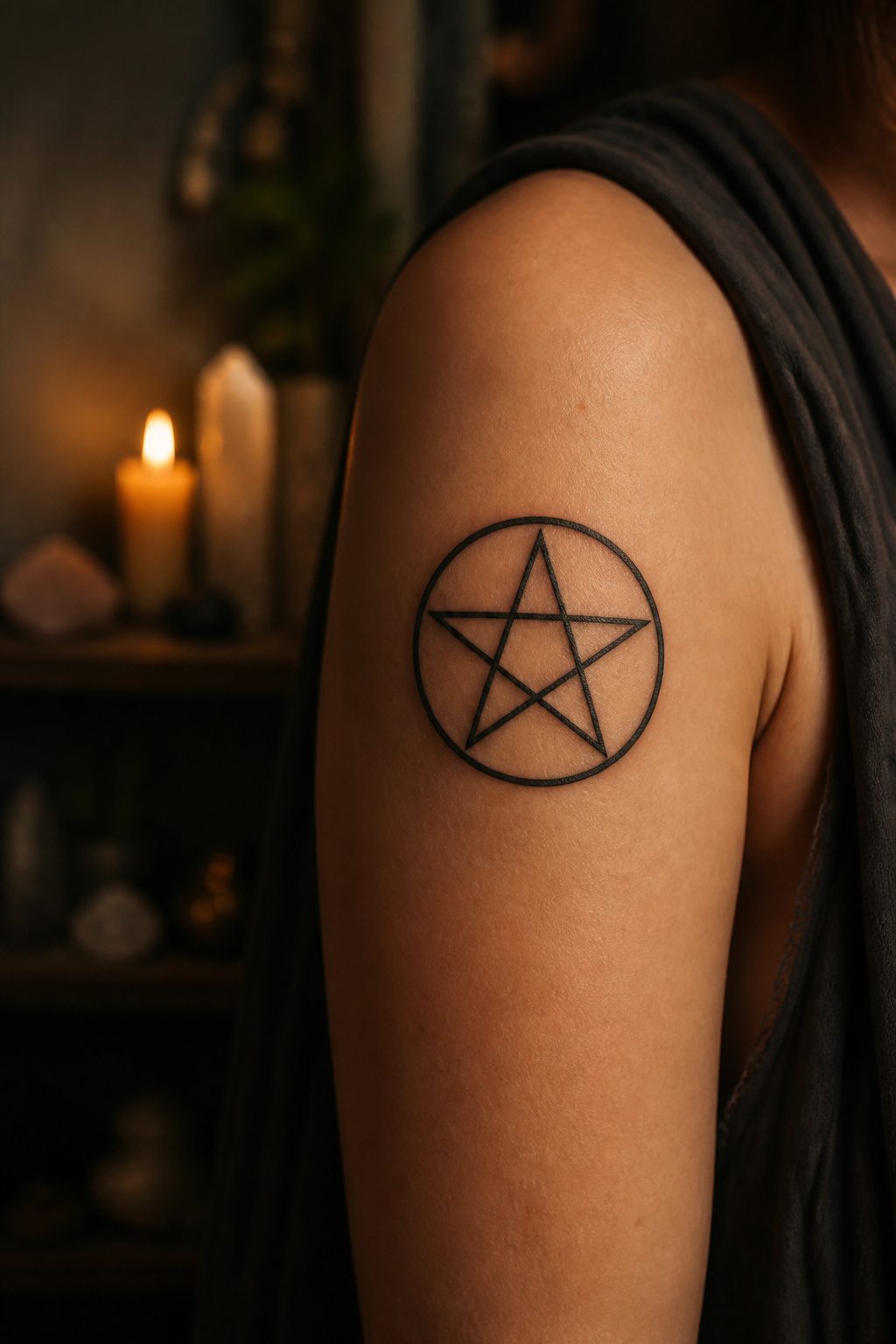
The pentagram has been sitting on witchcraft altars long enough that it reads as the default symbol of the craft. Five points, five elements: Fire, Earth, Air, Water, and Spirit at the top. The order matters, and so does the direction the single point faces.
Point-up, and the figure leans toward Spirit and protection. Flip it point-down, and you have entered an entirely different conversation, one tied to occult traditions that most tattoo seekers are not actually trying to summon. The orientation is not a detail to sleep on; it is the difference between a mark of personal practice and a banner for something else.
A pentagram sits apart from a pentacle, which wraps the same star in a circle. That distinction belongs to the Wicca symbols section. The star alone carries its weight without the ring, and in ink it tends to read cleaner, especially at smaller sizes where a surrounding circle can thicken into a dark blob over time. If you want the elements named, the points do that work without extra ornament.
What Witchy Tattoos Mean Now
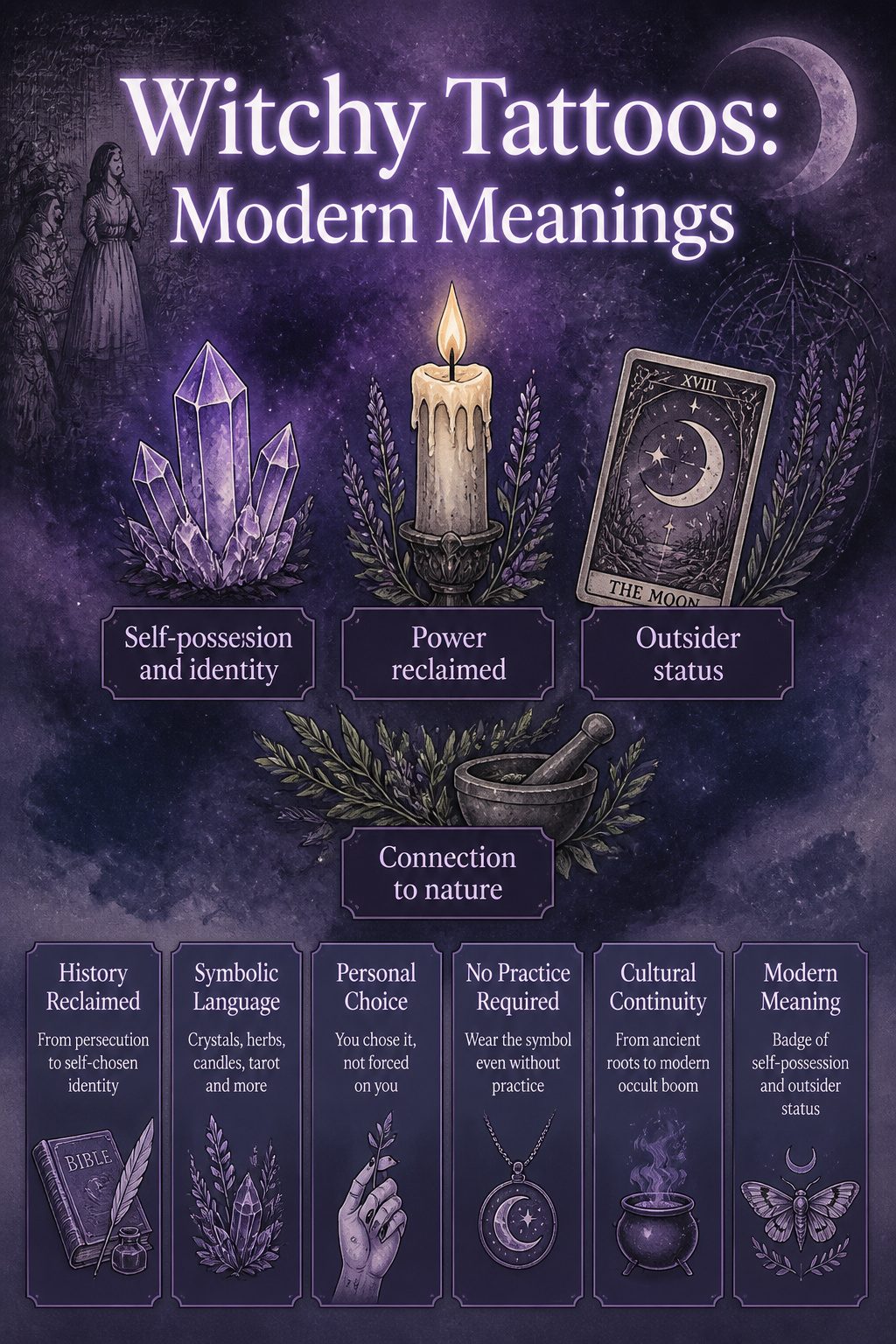
The word "witch" carried a different charge for most of history. Centuries of persecution, from biblical warnings to the Salem Witch Trials, turned the label into something to fear. That weight still sits in the background of any witchy tattoo, but the meaning has flipped. What was once a mark of danger to the community is now a badge of self-possession and deliberate outsider status.
Modern witchy tattoo ideas draw on three threads: power reclaimed, femininity outside mainstream approval, and a direct line to the natural world. Crystals, herbs, candles, and tarot cards are not just aesthetic props; they signal participation in something older and more personal than consumer identity.
Witches have been a part of our culture for hundreds of years, from mentions in the Bible to the pandemonium of the Salem Witch Trials to the modern occult boom. Now more than ever, people have been dabbling in witchcraft and have allowed it to shape their identity.
The shift is specific and recent. You do not need to practice anything to wear the symbol, but the symbol now means you chose it rather than had it forced on you. That distinction is what separates a witchy tattoo in 2026 from anything comparable even two decades ago.
Where to Place Them
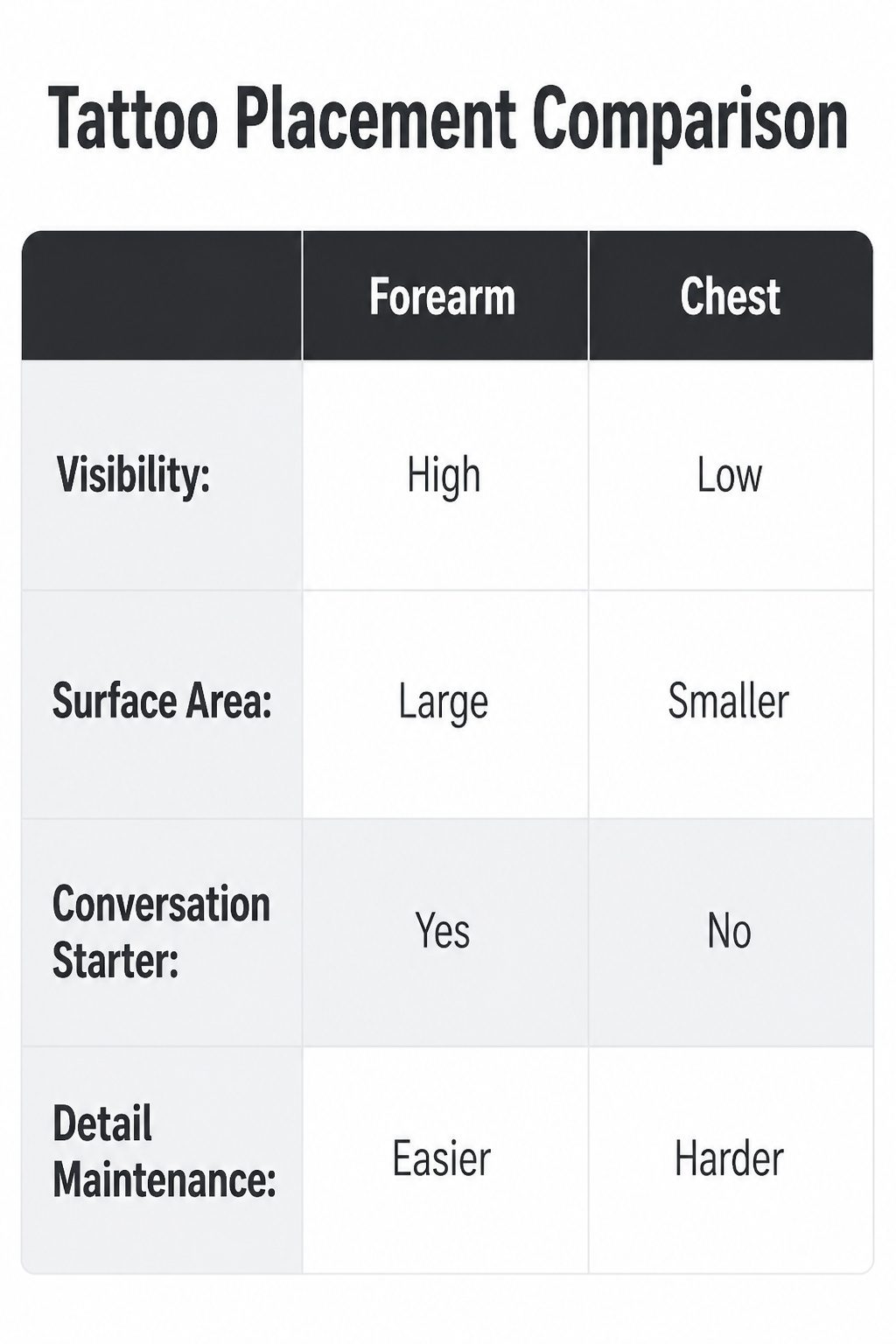
Arms and forearms tend to win out for witchy tattoo ideas because they give the work room to breathe without hiding it completely. A hexagram or layered mystical symbol needs enough flat surface for the line weight to stay consistent, and the forearm’s length handles that while still letting you cover it with a sleeve when the occasion calls for it.
The chest is the quieter choice, and the people who go there usually have a reason that is more private than practical. Fingers, wrists, and spots behind the ear work for small glyphs, the kind of Wicca symbols that read as personal shorthand rather than full compositions. The real decision is whether you want the tattoo to start conversations or end them. A hand placement does the first, obviously. A behind-the-ear piece does the second, visible only when you want it seen. Detail demands space; a moon phase wrapping a full sleeve reads as lore, while the same design shrunk to two inches turns into a smudge by year five.
Styles That Suit the Subject
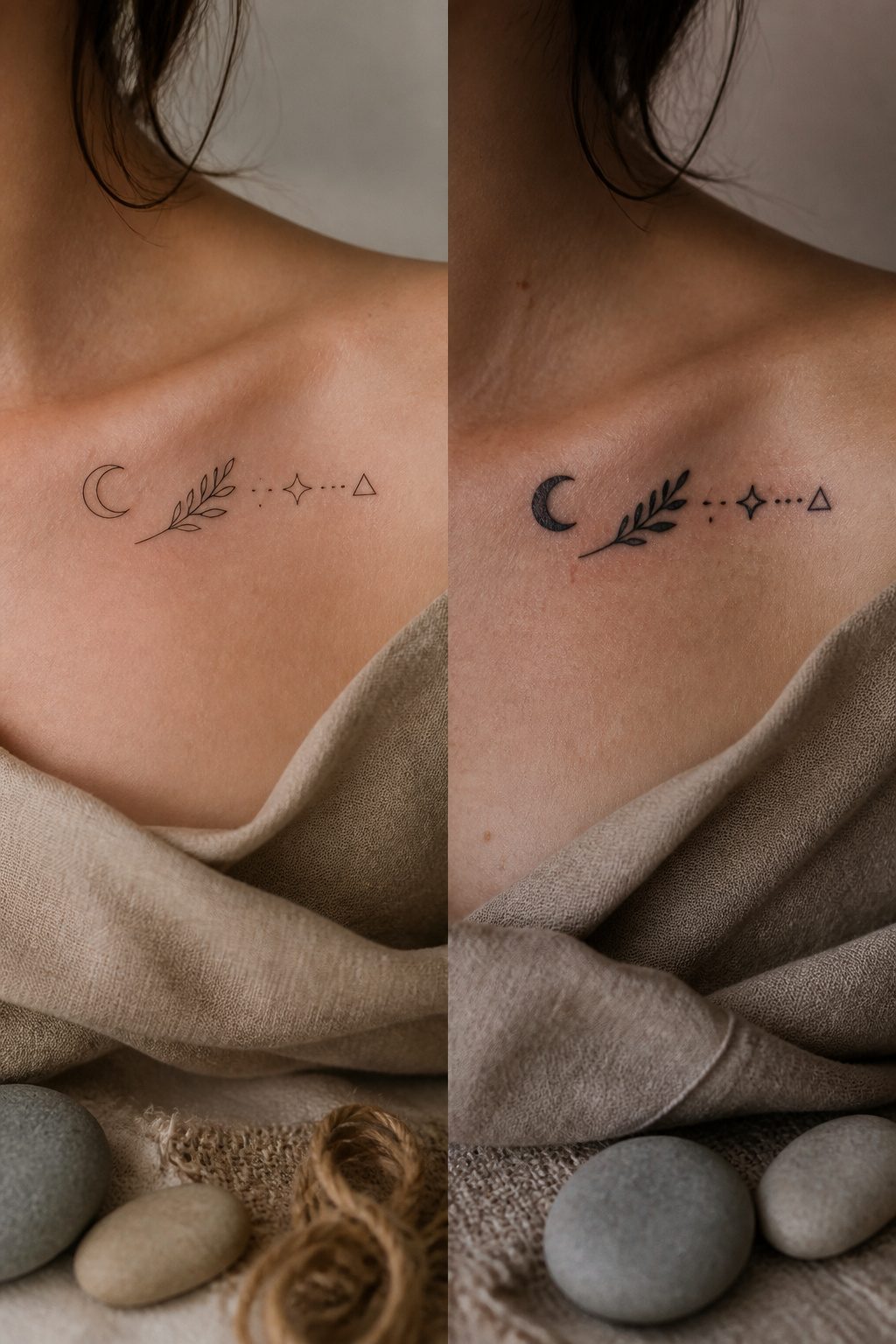
Minimalist linework carries witchy symbols better than most subjects because the imagery already reads as deliberate and ancient. A single unbroken line forming a crescent moon or a sprig of mugwort keeps the reference clear without crowding a wrist or collarbone. The style demands restraint; too many elements and the piece collapses into a tangle.
Neo-traditional bold color suits the theatrical side of the theme. Think crimson roses wrapped around a dagger, or a planchette rendered in saturated teal and gold. The heavy outlines keep the symbolism legible from a distance, which matters when the design includes layered elements like a skull floating above a candle flame. Color here does the work of shading in finer styles.
Watercolor washes are the riskiest match. The technique can turn a crystal ball into a lovely blur of violet and smoke, but it struggles with hard-edged symbols like pentagrams where geometry matters. What convinced me, looking through portfolios, was that watercolor witchy pieces succeed almost exclusively when the subject is organic and flowing: hair, flame, smoke, or aurora-like energy around a central figure. Ask for a mock-up before committing if the design includes any straight lines.
Frequently Asked Questions
What are some popular witchy tattoo ideas?
Broomsticks, potions, black cats, moons, cauldrons, herbs, spell books, skulls and bones, tarot cards, and Wicca symbols like the pentagram and triple goddess all rank among the most requested designs. Black cats and moons appear most frequently across shop portfolios because they adapt to almost any style, from minimal linework to heavy blackwork.
What do witch tattoos symbolize?
They mark self-possession, reclaimed power, and deliberate outsider status. The meaning flipped from historical persecution to modern identity; what once endangered women now signals femininity outside mainstream approval and a direct line to the natural world. The symbol means you chose it rather than had it forced on you.
What are the meanings behind specific witch symbols?
The pentagram’s five points lock to earth, air, fire, water, and spirit, with the top point facing up for protection. The triple goddess strings waxing, full, and waning moons into Maiden, Mother, and Crone, a cycle that centers female energy. Moon phases mark time passing and returning, while the cauldron holds transformation through brewing and scrying. Each symbol gains its exact weight from what the wearer brings to it.