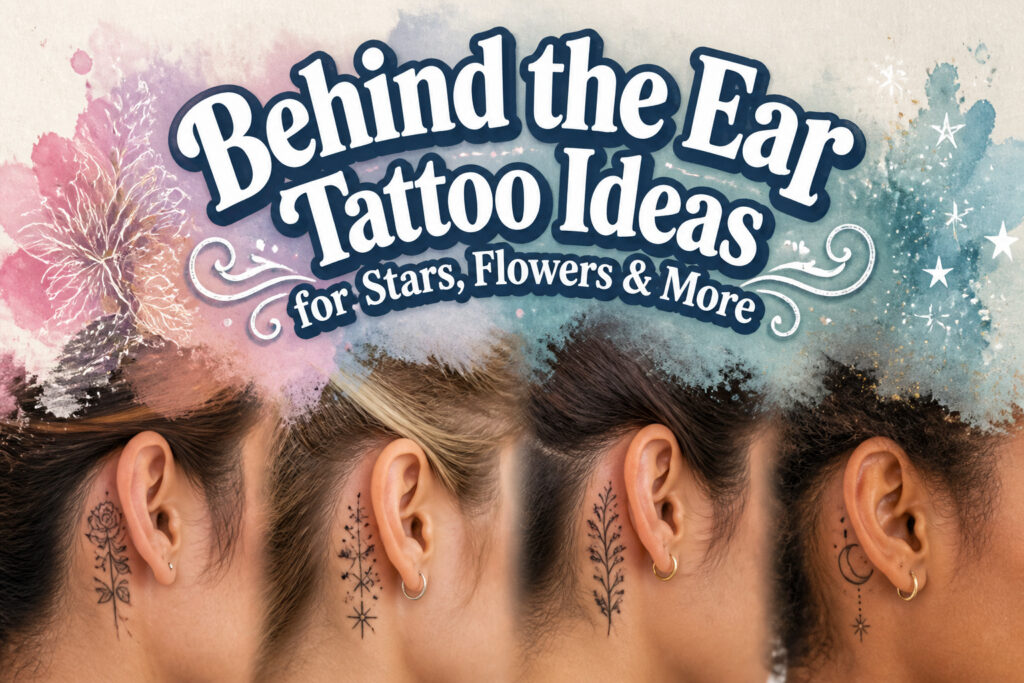
The right behind the ear tattoo depends on how much you want to reveal and when. Hair drops over the spot and hides it completely, or a quick updo exposes ink sitting inches from your face. That duality draws first-timers, but the catch is healing: dry shampoo, hairspray, and even residual conditioner collect in that hollow and can blur fresh lines. Most designs hit a shop minimum of $40 to $200 rather than hourly rates, though color packing or custom work can flip the pricing. Pain runs 7 or 8 out of 10, with the needle vibration carrying straight into bone, so small pieces that finish fast work in your favor.
1. Stars
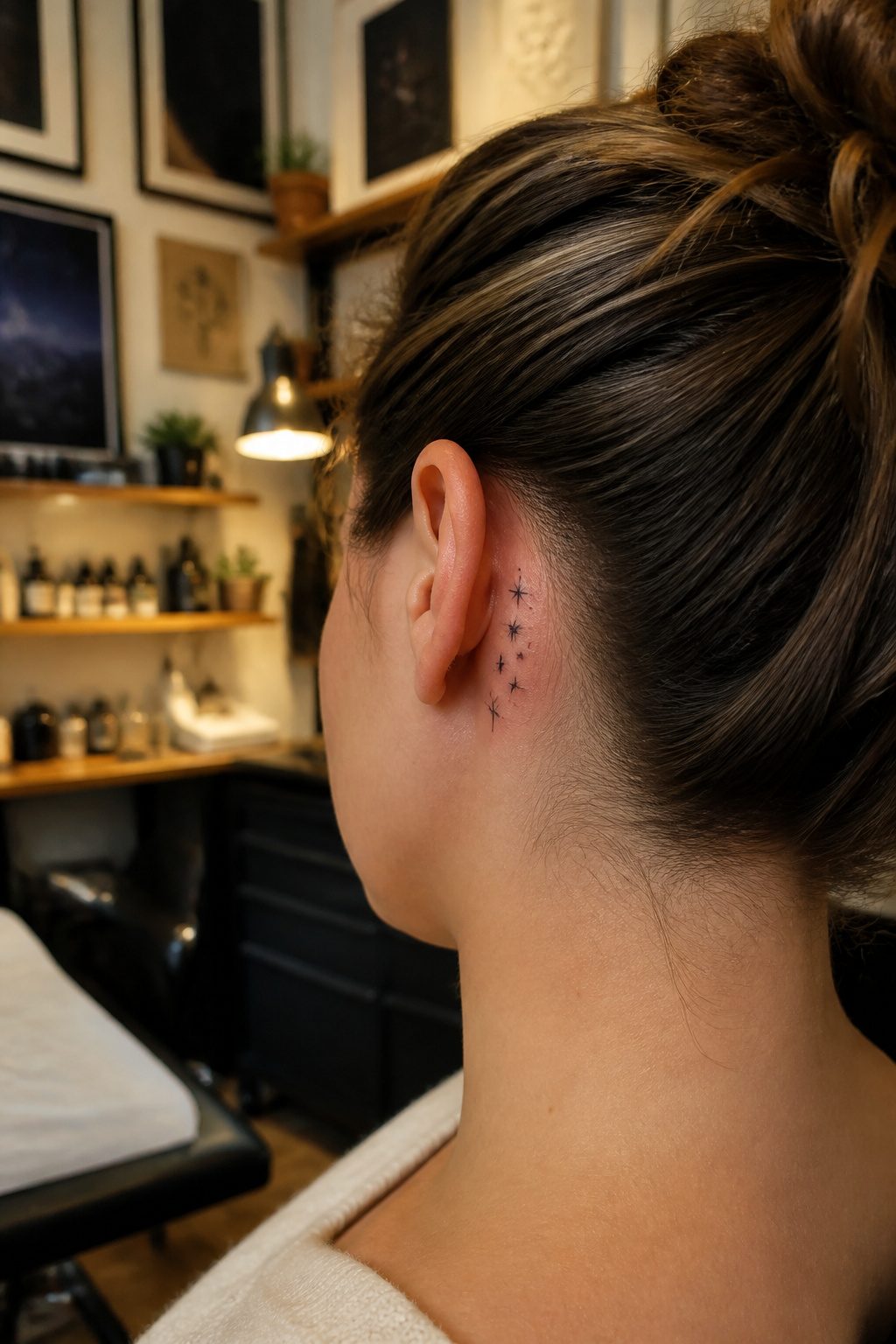
Small star clusters slide naturally into the hollow behind the ear because the bone’s curve traces the same loose scatter you see in actual constellations. A single star works too, though in my experience reading through these collections, the grouped designs turn up far more often, and five of the major roundups list stars among the most common choices for this placement. The size keeps the session short, which matters when the spot rates a 7 or 8 out of 10 for pain. You are not sitting there long enough for the noise of the machine to become its own problem.
"Clients that have had pieces done in that area have said that the pain is minimal. I’ve been told by many people that it’s actually the noise of the machine, the slight vibrations or the way they have to sit that can make it uncomfortable."
— Elle
What that means for a star design specifically: the vibration and the awkward neck angle outlast the needle time on larger pieces, so the small scale of most star work is doing you a favor before the artist even starts.
2. Flowers
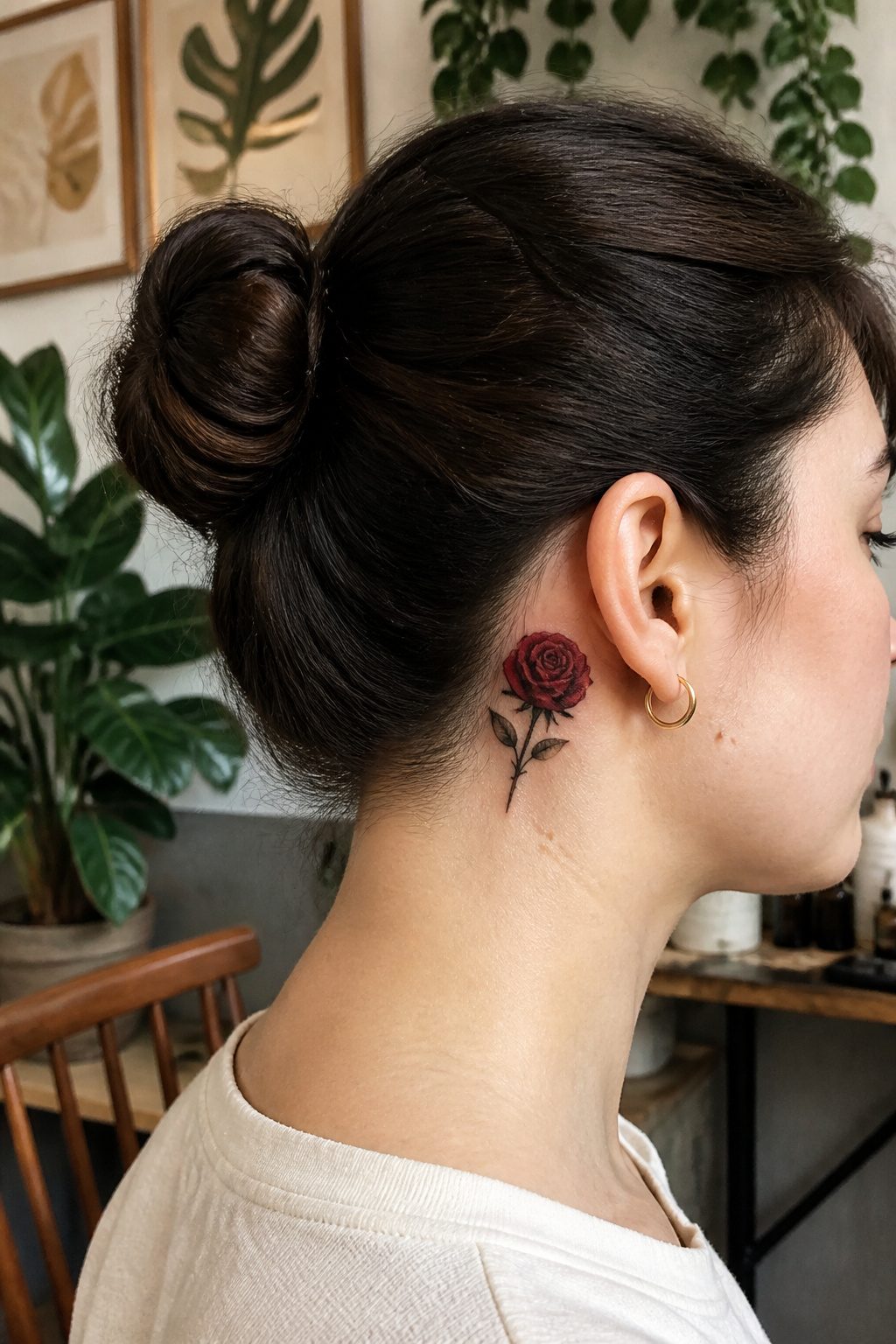
Roses and smaller blooms are the designs that actually work in the narrow vertical space behind the ear, not the sprawling garden pieces that look better on a shoulder. The stem matters more than people expect. A short-stemmed rose or a single bud sits cleanly against the skin without the wandering line that catches on hair during the two to three weeks of healing. I have watched clients learn this the hard way when a longer stem design snagged repeatedly on fine hair or got buried under dry shampoo residue.
The meaning most often attached to these floral pieces is growth, which fits the spot in a way that feels accidental but works. A rose opening behind the ear reads as something emerging rather than displayed, and that symbolism of unfolding or becoming sits well with women who chose the placement partly for its privacy.
Keep the stem short enough to stay clear of the hairline is the practical rule that saves the healing phase. Five of the reference collections I reviewed listed roses first among their floral options for this placement, and the consistency says something about what artists have learned actually heals well there.
3. Music Notes
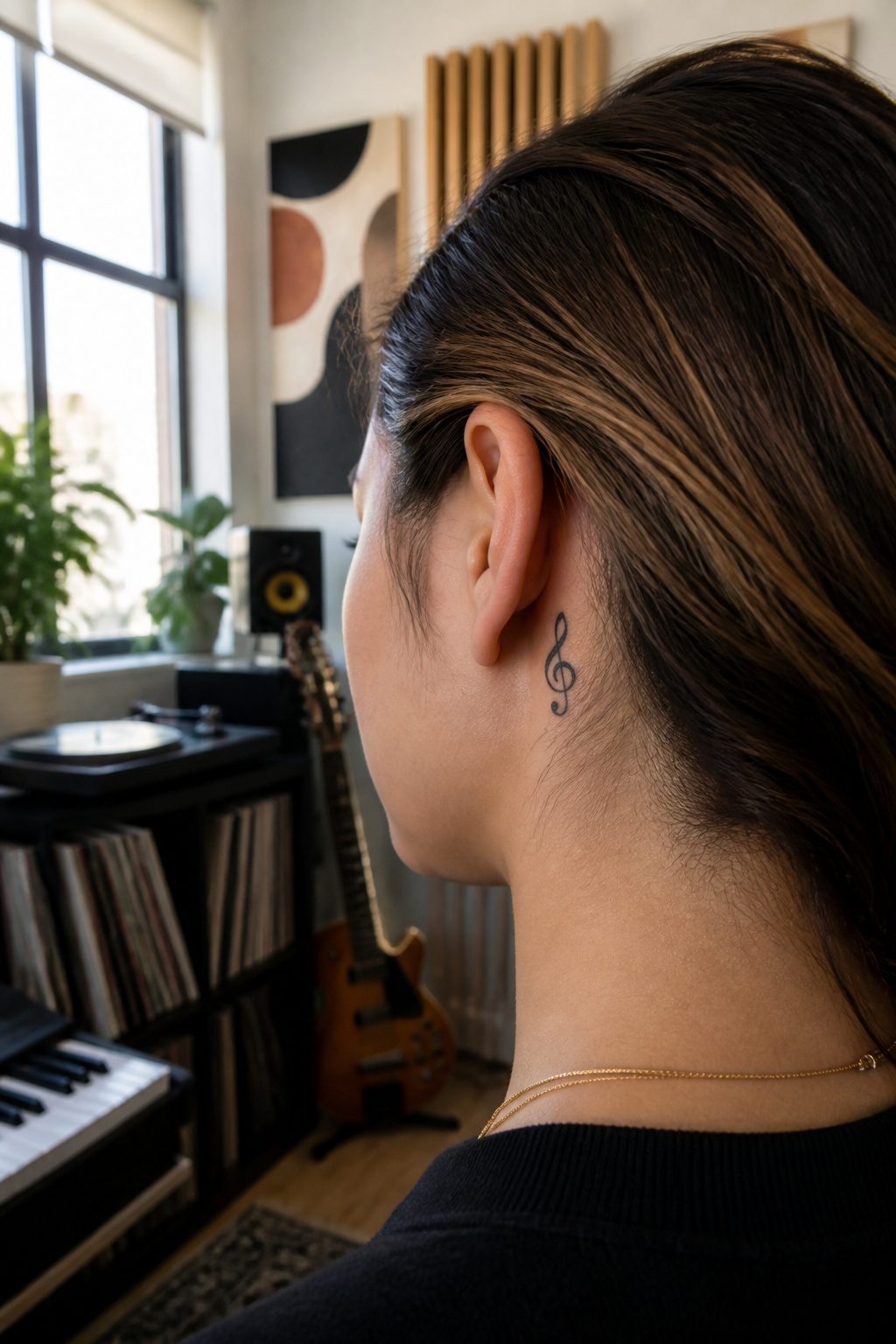
Single notes, treble clefs, and short phrases of staff line all suit the ear’s edge because the line follows the body naturally. The placement stays readable without fighting the curve, and the design stays small enough that a touch-up years later stays manageable.
Headphones and earbuds complicate aftercare for this placement. The pressure sits exactly where the skin is trying to heal, and sweat from a long session traps against the fresh work. I would plan to skip over-ear cans entirely for the first two weeks and keep earbuds to short stretches if you must.
A music note behind the ear shows your love of music openly, since the spot stays pretty visible unless you are actively trying to hide it. The combination with a flower stem works well too if you want something that reads as both music and nature rather than either alone.
4. Symbols
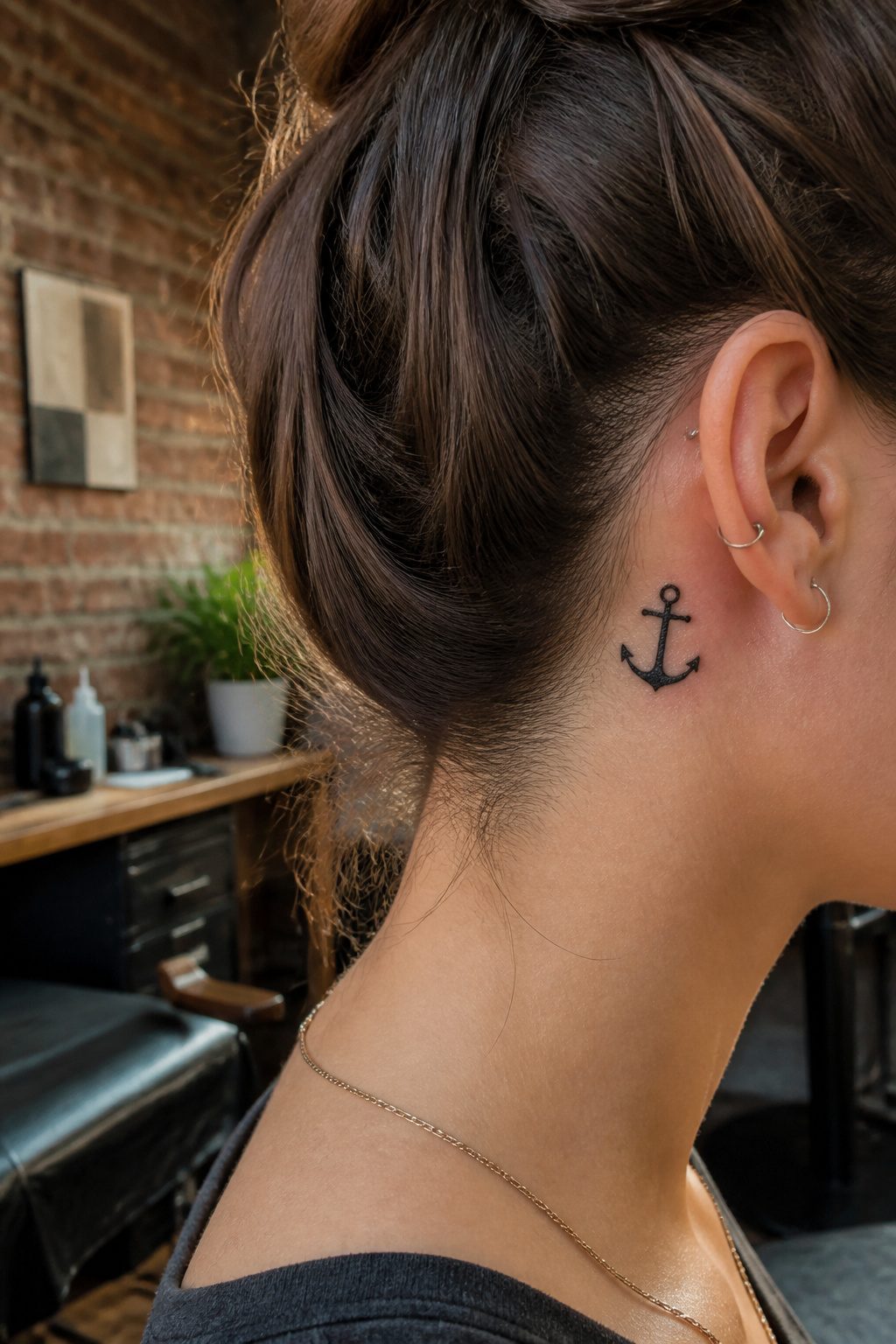
Compact symbols behind the ear carry meaning without carrying a heavy bill. Anchors read as stability and staying grounded, swords as courage, trees as growth with roots that can trail slightly onto the neck for effect. Crosses and arrows fill out the category, all of them small enough that a shop minimum may cover the whole piece.
That minimum lands anywhere from $40 to $200 total, and simple symbols often do. Hourly rates run $80–150 if the design edges past the threshold, but the tight geometry of an anchor or arrow usually keeps you under it. A sword with a plain hilt, a cross with clean lines, a tree reduced to its silhouette: each sits in the sweet spot where the meaning is thick and the line count is thin.
The tradeoff is real estate. A symbol packed with detail, like a tree where every branch forks three times, will blur as it ages in a space the size of a postage stamp. The better move is the bold outline: an anchor’s ring and flukes, a cross’s arms, an arrow’s straight shaft. Pick the meaning first, then let the shape simplify itself to fit the spot.
5. Animals
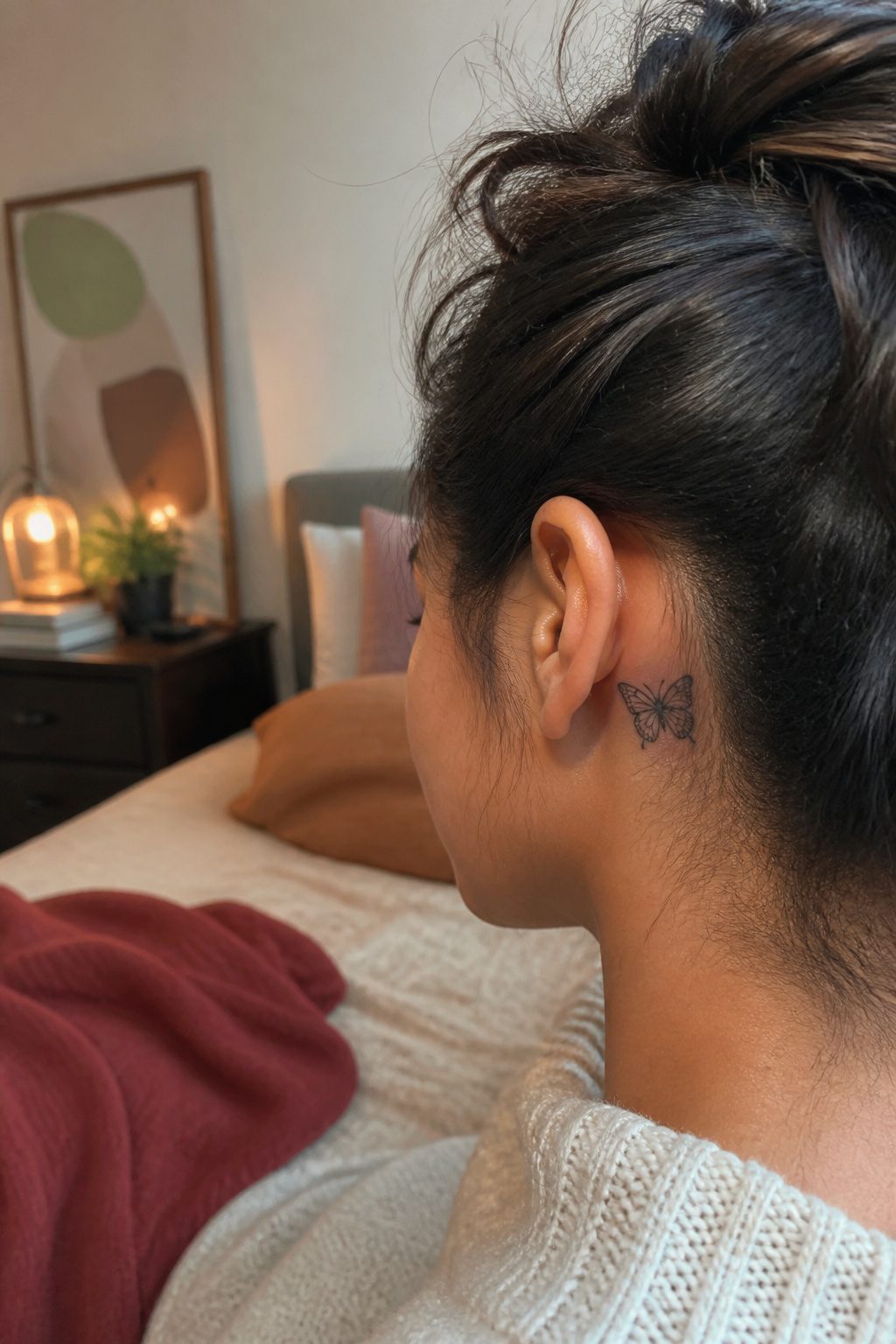
Butterflies and sparrows sit right where the ear curves inward, and that curve does half the work. The wing shape follows the natural line so the tattoo looks placed, not parked. Small creatures, a fox or a rabbit reduced to a few clean lines, do the same thing. They read bold because any figure with eyes pulls attention, but the placement keeps it polite. Longer hair drops over the spot and hides the work completely, which is the point for a lot of people who want control over when they show ink. The catch is regrowth. A butterfly with antennae or a sparrow with spread wings needs enough detail to read as what it is, and that detail sits close together behind the ear. Hair sticks to fresh work, so the first two weeks of aftercare mean either pinning the hair back or accepting some touch-up risk. I would skip anything with a long tail or dangling element; it fights the curve and ends up looking crammed. A compact body with wings or ears extended upward, that is the shape that works.
6. Words or Phrases
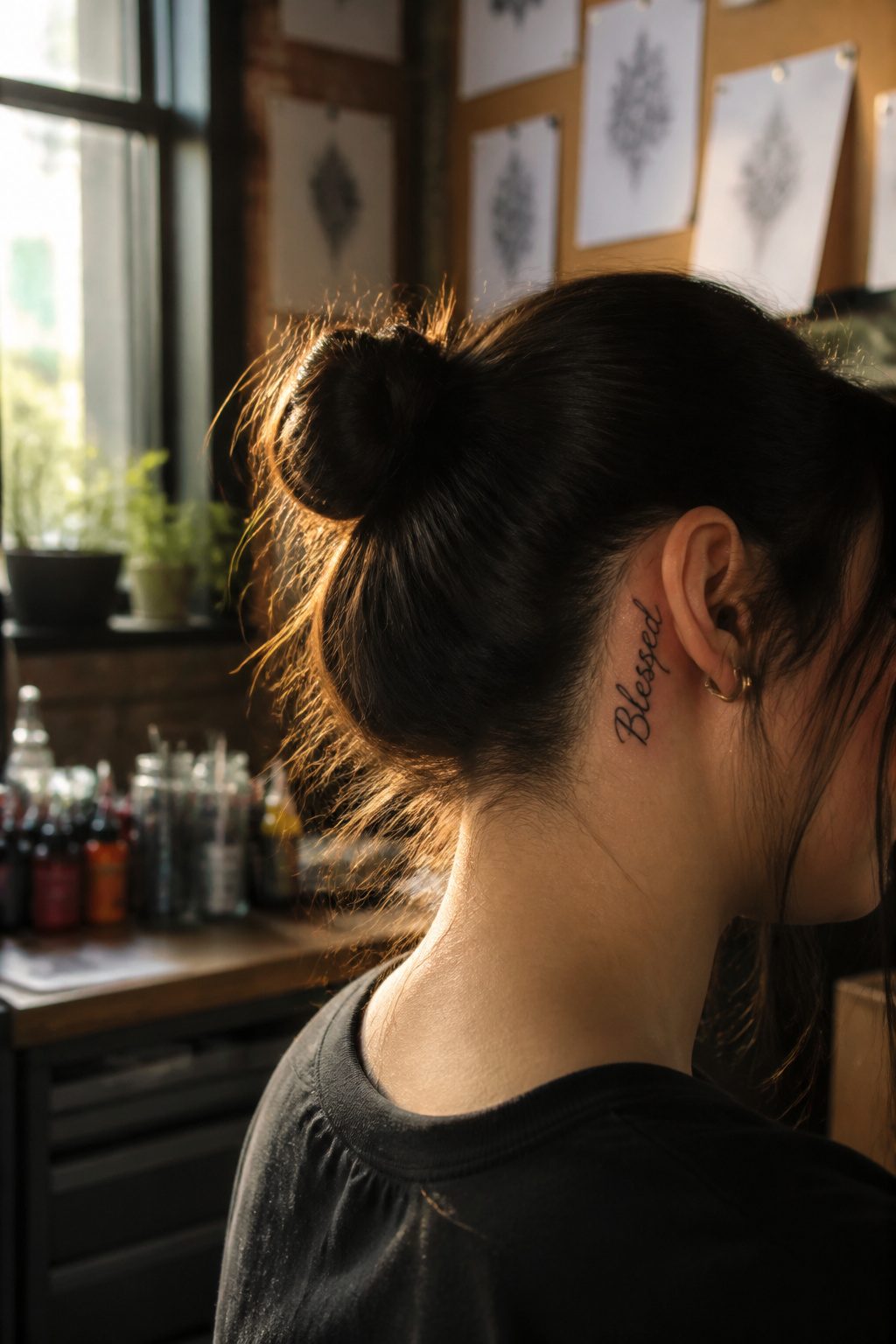
The narrow strip behind the ear demands vertical orientation if you want readable text. Horizontal lines fight the space and crowd the curve; stacked lettering follows the natural plane and stays legible as the skin moves.
Font choice matters more here than on larger pieces. Tattoo artist María Fernández González points out that short words work because they "represent a feeling or statement" in that tight zone, but the wrong typeface turns your meaningful term into a blur. Scripts with thin hairlines bleed together at small sizes. Block letters hold up better, but even they need enough spacing between characters so the word does not read as a solid bar.
I have seen "Blessed" or "Peace" go in clean and age poorly because the client picked a face with ornamental loops. The loops close up. Single meaningful terms, a loved one’s name, or concise phrases like "Stay True" survive longer with simple sans-serif or well-spaced serif fonts. The size is non-negotiable: the area behind the ear is small, so the tattoo must be small, and detail is what you sacrifice first.
Placement precision beats clever wording here. A term that reads beautifully on paper can twist unreadably around the mastoid bone. Your artist should stencil it, let you check it in a mirror with hair both up and down, and adjust before the first pass.
7. Geometric Shapes
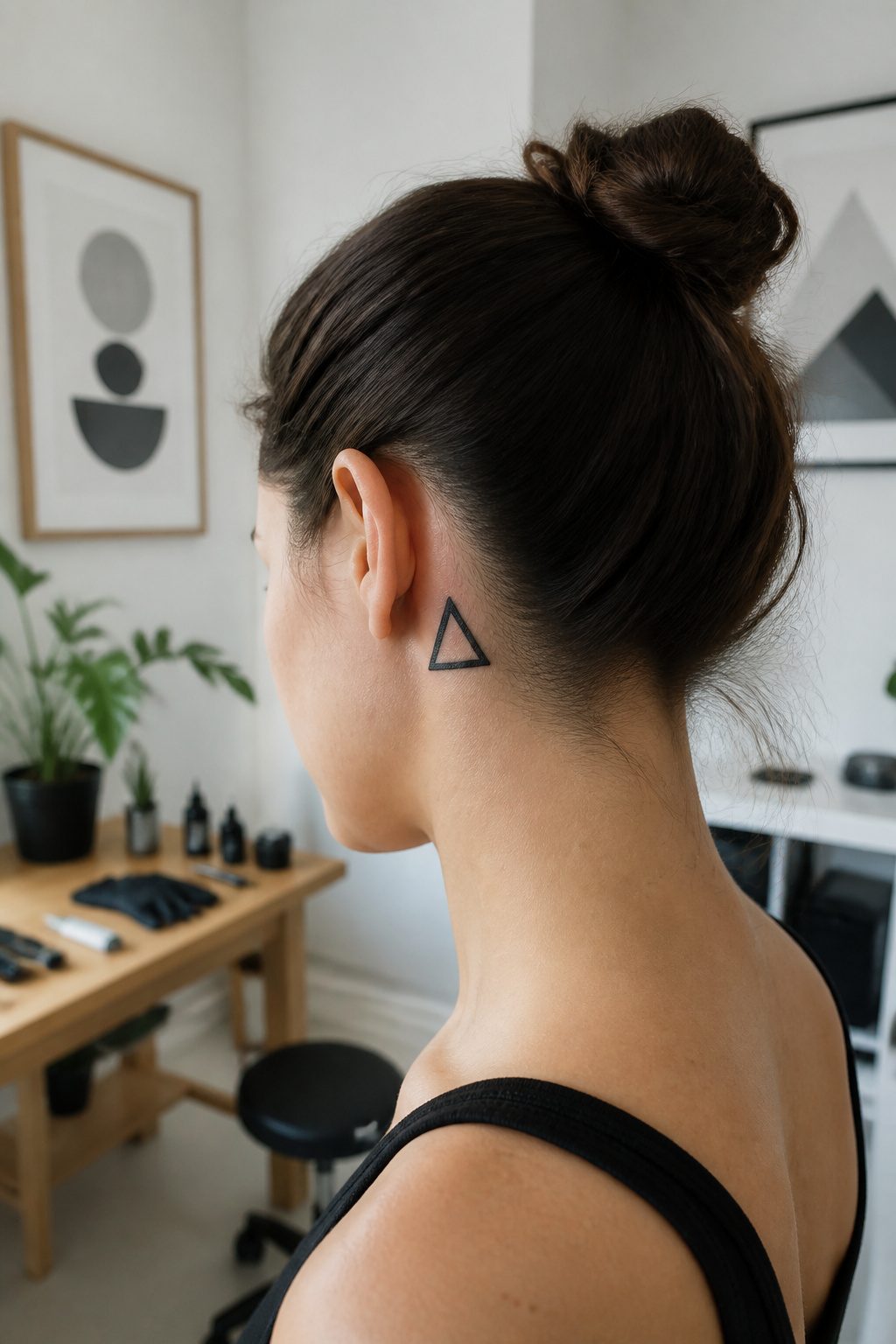
Clean edges are what make geometric shapes worth considering behind the ear. A triangle, a single circle, or three parallel lines sit flat against the mastoid bone and stay readable even as hair brushes past them dozens of times a day. The two-week healing window matters more here than with most placements, since that brush contact never really stops; twice-daily washing with antibacterial soap, morning and night, is what every artist emphasizes for getting through it without the lines blurring.
Minimal forms also mean shorter session time, which translates to less irritation in an area where the skin is thin and the needle noise echoes against your own skull. Wrapped cling film helps for the first few days, especially since shampoo and conditioner tend to pool in that hollow. Dry shampoo and perfume residue collect there too, so keeping the geometry clean during healing is as much about product discipline as it is about the ink itself.
8. Zodiac Signs
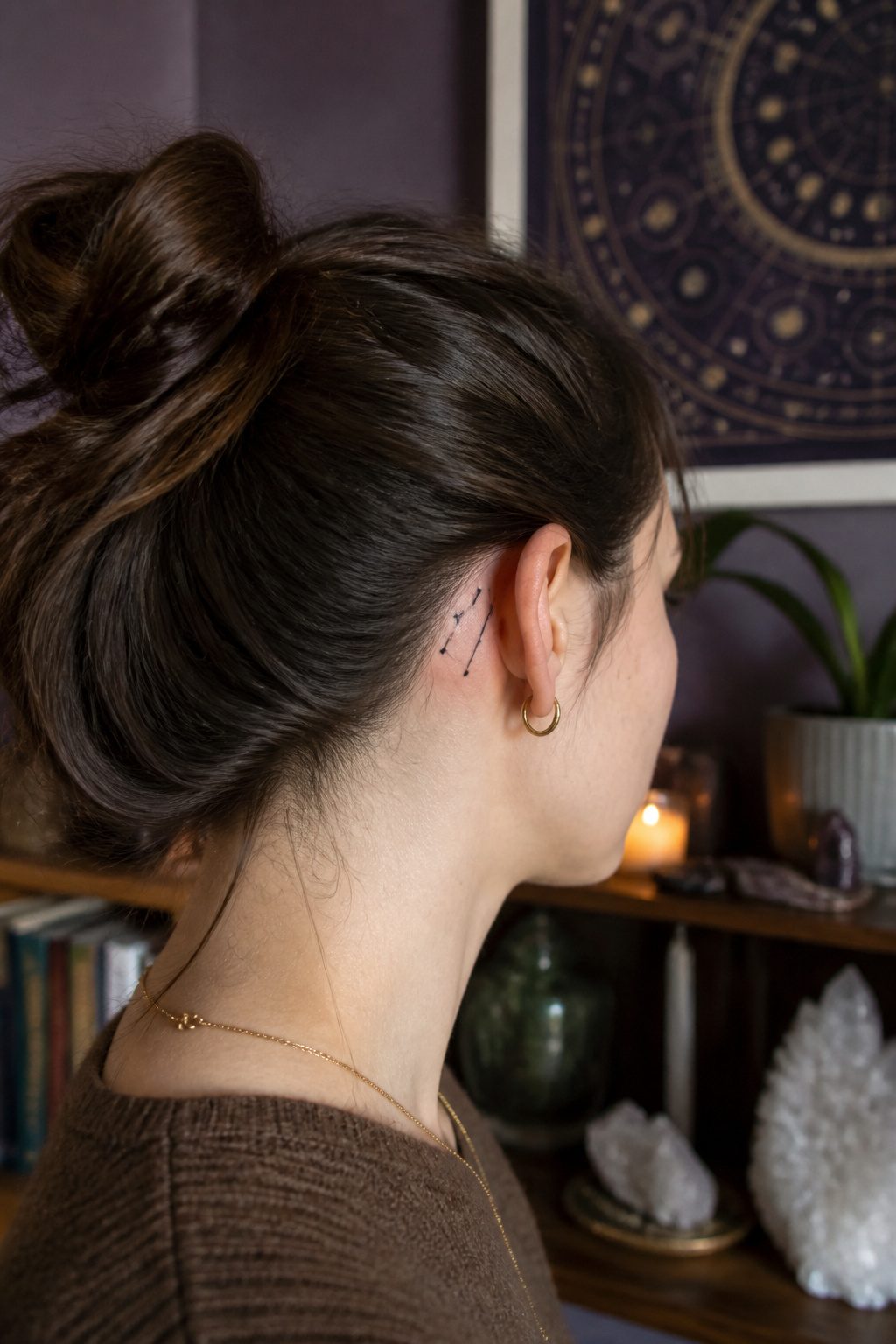
Constellation patterns behind the ear carry weight because this spot is often someone’s first and only tattoo. The personal connection runs deeper than decoration; a glyph for your own sign or a loved one’s becomes a private anchor you choose to reveal. A constellation design spreads wider than a single star or small symbol, which changes the math of the session. More stars mean more time under the needle, and the skin back there sits thin against bone. The vibration of the machine registers sharper in that hollow, and a longer sitting extends that discomfort. Gee Hawkes, a tattoo artist at Top Boy Tattoo, notes that clients often find the noise and positioning harder than the needle itself. A compact glyph keeps the work tight and the session short; a full constellation drifting toward the hairline or down the neck needs more planning and more breaks. Rosa Bluestone Perr advises keeping behind-the-ear work small and simple, since the skin there can distort an image over time. If you want the full constellation, a skilled artist can cluster the stars to read clearly even as they age, but that takes a lighter hand and a design that sacrifices some astronomical accuracy for longevity.
9. Numbers
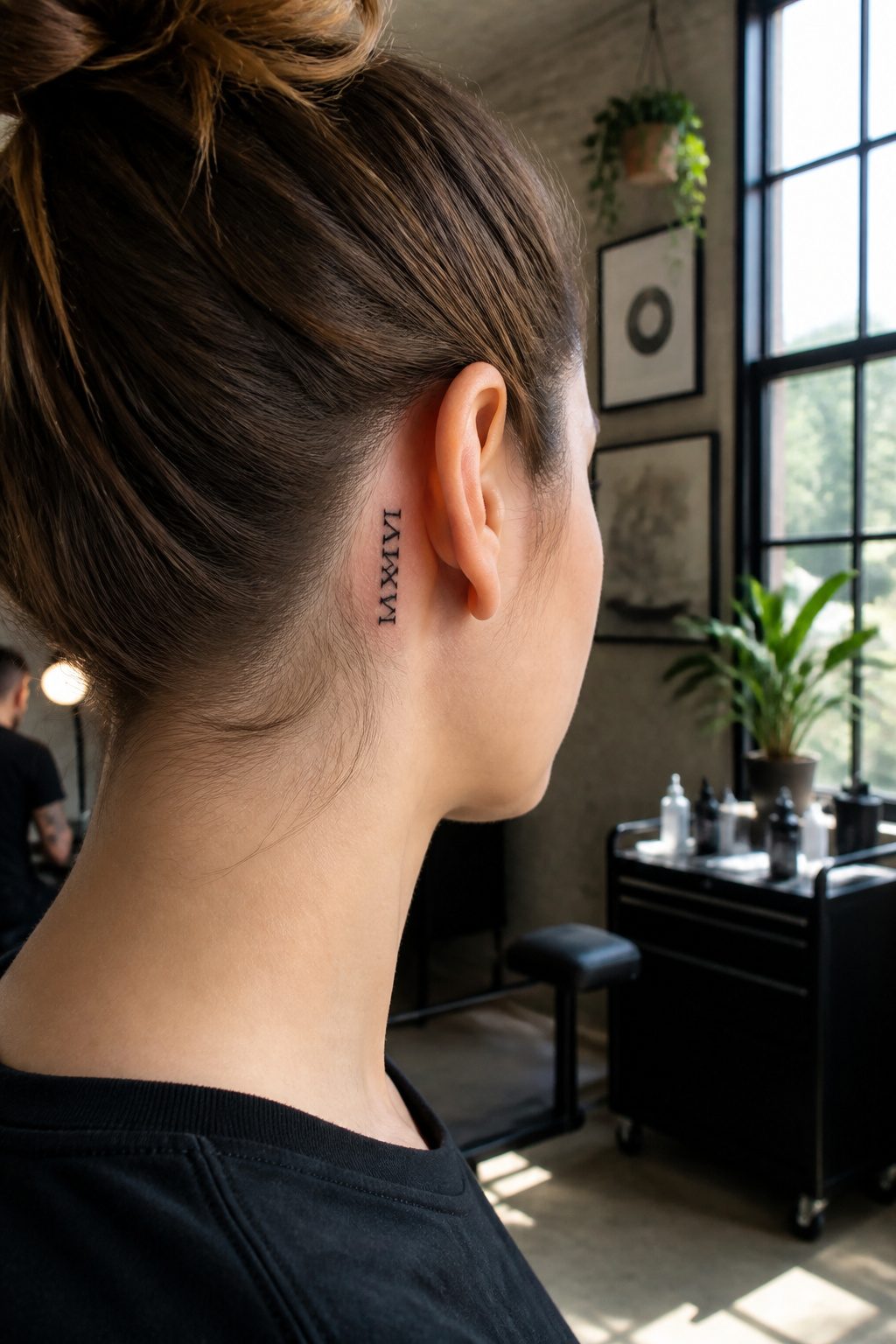
A birth year in Roman numerals sits well behind the ear because the character count stays low. MMXVI reads as four clean strokes where a longer phrase would crowd the curve. Arabic numerals work the same way. 11:11, the angel number, has turned up in this spot repeatedly, and the symmetry fits the narrow vertical space.
Single digits carry weight too. A 7 or a 3 can mark a lucky number, a jersey, a child’s birth order. The source pool pulls toward spiritual meanings for repeated sequences and personal dates for standalone years.
What sells this placement is the privacy. A date of loss, a sobriety year, a parent’s birth year, these sit where you see them in the mirror each morning and hide under an inch of hair for the office. The sources split on whether that morning mirror moment matters more for motivation or for comfort. Both readings hold. The tattoo does not announce itself, so the meaning stays yours to volunteer.
10. Abstract Designs
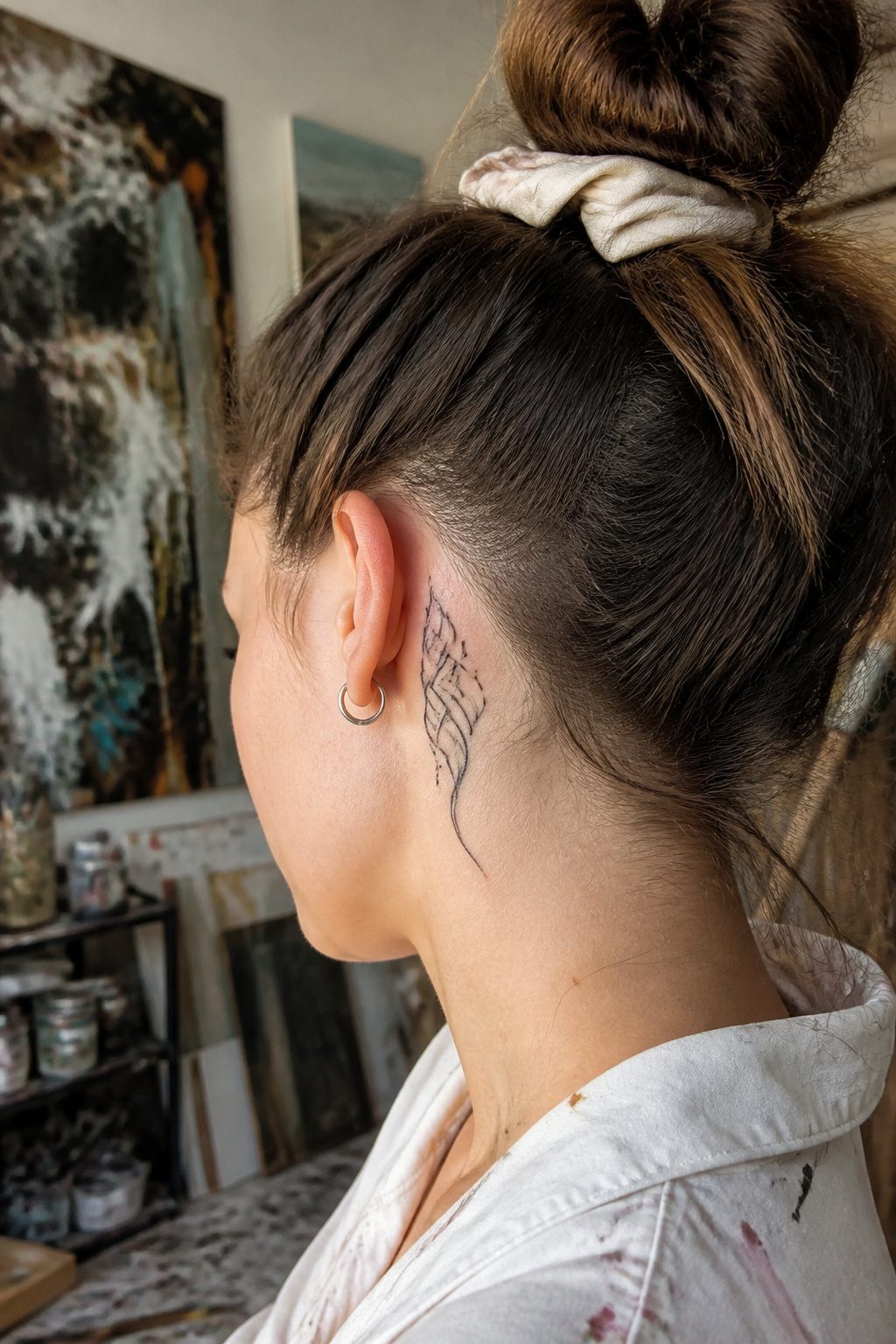
Abstract work behind the ear sits in a different category than the stars and flowers most people ask for. Question marks, loose brush strokes, and marks that don’t name anything specific make up the smallest slice of what gets requested back there, which is exactly why it reads as more individual once it is done. The open interpretation cuts both ways: a non-representational piece can feel like it belongs only to you, or it can leave you wondering what you are supposed to feel when you catch it in the mirror.
The real constraint is technical. Freehand work at this scale demands an artist who is comfortable improvising small, not someone who needs a stencil to stay steady. Behind the ear, the skin shifts, the angle is awkward, and the surface area gives no room to correct a line that wandered. I have watched enough portfolios to know that abstract pieces back there either look deliberate and alive or they look like a mistake someone is trying to name after the fact. The ones that work tend to come from artists who tattoo loose shapes regularly, not from people who usually do tight realism and are trying something outside their usual rhythm for your appointment.
What the Pain Actually Feels Like
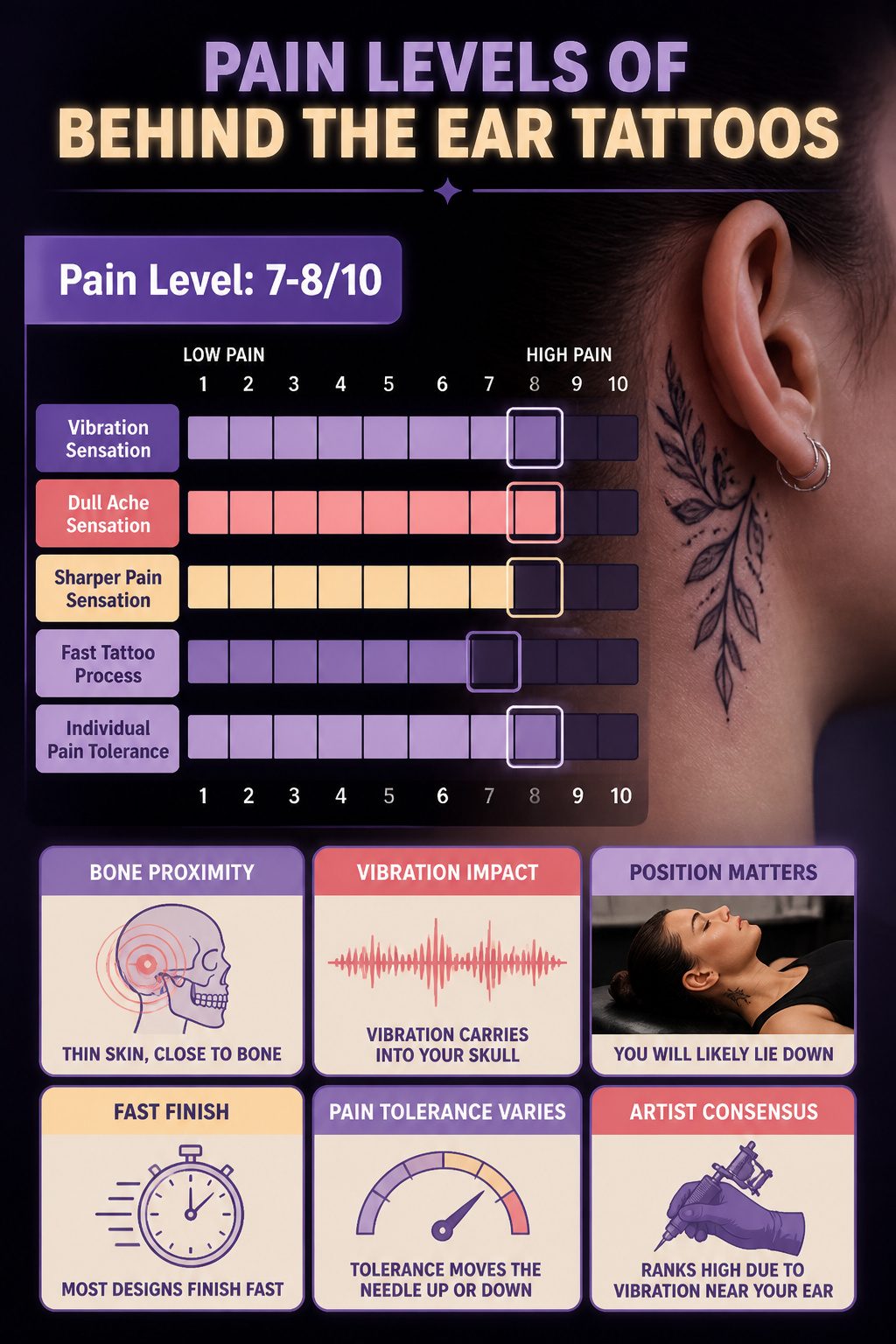
Thin skin and bone proximity make behind the ear tattoos land at a 7 or 8 out of 10 for most people. The needle vibration carries straight into your skull, a sensation some describe as a dull ache and others find harder to ignore than sharper pain on fleshier spots.
A small design works in your favor here. Most behind the ear pieces finish fast, which limits total exposure to that bone-buzzing discomfort. You will likely lie down for the work, and that position helps more than you would expect.
Individual pain tolerance still moves the needle up or down a couple of points. Someone who handles ribs or ankles fine might find this spot surprisingly rough; someone else will clock it as short and manageable. The consensus from artists who do these regularly: it ranks high relative to fleshier placements, and the vibration near your ear is the reason, not the needle itself.
Aftercare Where Hair Complicates Everything
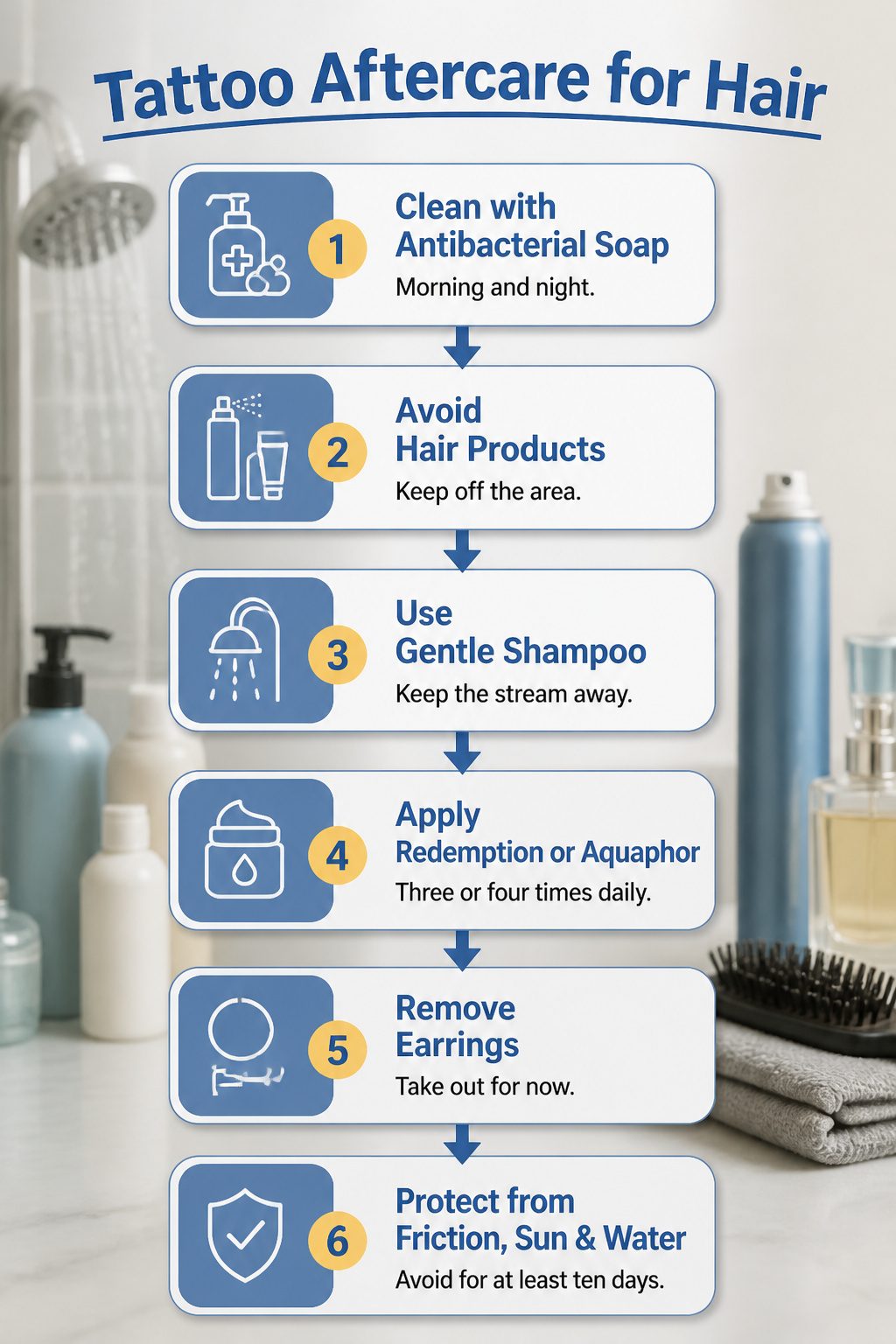
Antibacterial soap, morning and night, is the baseline for any new tattoo, but behind the ear the real work is keeping hair products off the area for the full two-week heal. Dry shampoo, hairspray, perfume, and even residual conditioner collect exactly where the ink sits, and that buildup can clog the skin or transfer bacteria.
Washing hair is possible, but the tattoo cannot soak. A gentle shampoo works if you keep the stream from pounding the spot, and some people tape cling film over the area as a temporary barrier in the shower, peeling it off immediately afterward to return to the usual wash-and-ointment routine. Redemption or Aquaphor, applied thinly three or four times daily after cleaning, keeps the skin from drying without smothering it.
Earrings that touch the back of the ear or upper neck should come out for now; metal holds germs you will not notice until the area reddens. A bandage from the artist can stay in place for about three days, and after that, the main threat is friction, from pillowcases, collars, or brush bristles. Swimming and sun exposure need a pause for at least ten days.
Redness that spreads, heat, or swelling that worsens rather than fades means contacting the artist first; they know how their work should heal and will say when a doctor is the next step.
Cost and Session Length
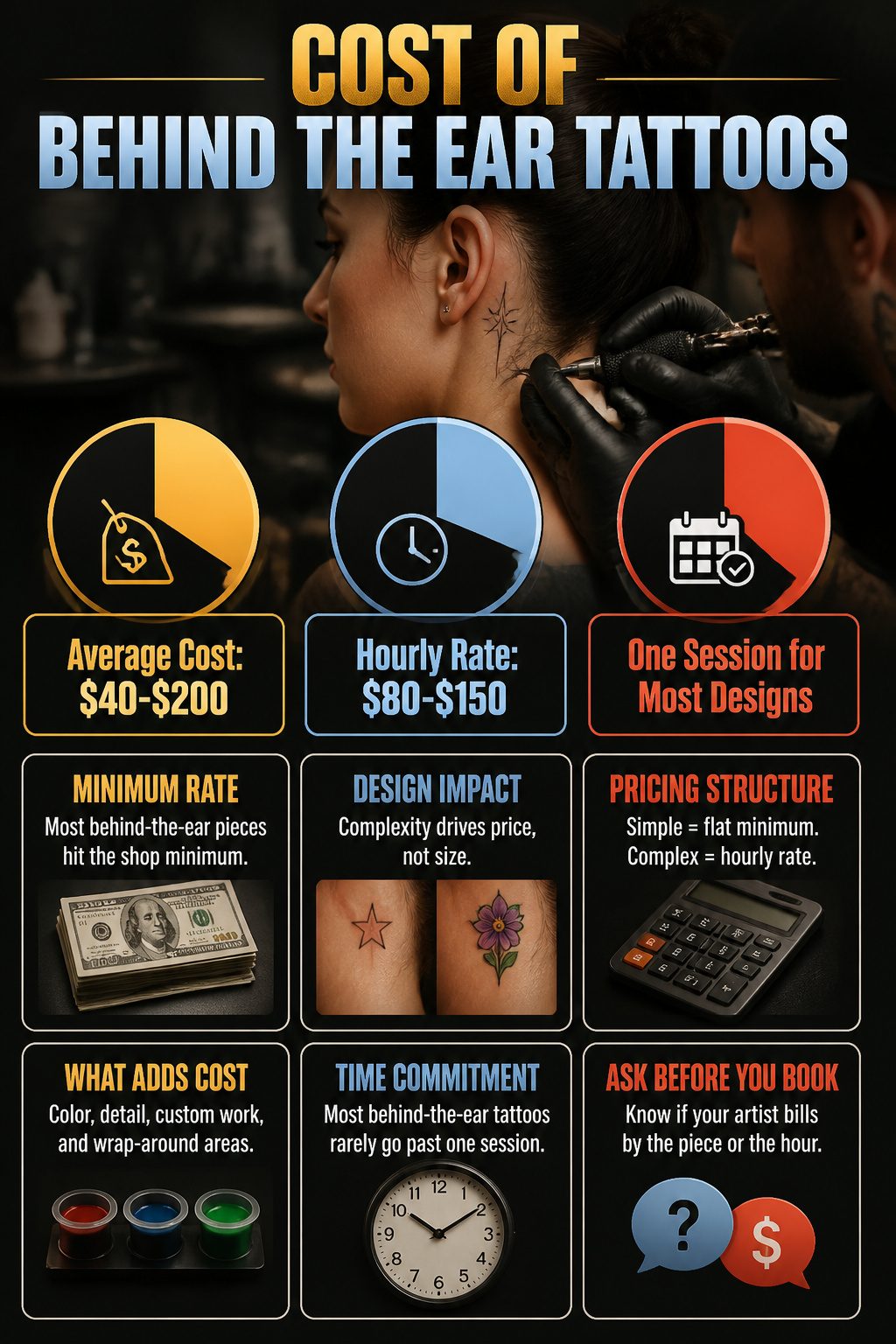
Most behind-the-ear pieces are small enough to hit a shop’s minimum rate rather than running up an hourly tab. In the US, that minimum usually lands somewhere between $40 and $200 for something simple: a star outline, a tiny flower, a single word in clean script. The artist’s reputation and city push that number higher or lower, not the design itself.
Complex work changes the math. Color packing, fine detail, or a piece that wraps slightly onto the neck or hairline can flip the pricing to an hourly structure, typically $80 to $150 per hour. For a behind-the-ear placement, that rarely stretches past one session unless you’re doing something unusually elaborate.
The honest mistake is fixating on the design’s physical size. A dime-sized tattoo with three colors and a custom sketch takes more chair time than a quarter-sized black outline pulled from flash. Ask whether your artist bills by the piece or the hour before you book, because the difference between minimum and hourly is where budgets slip.
Visibility and the Hair Variable
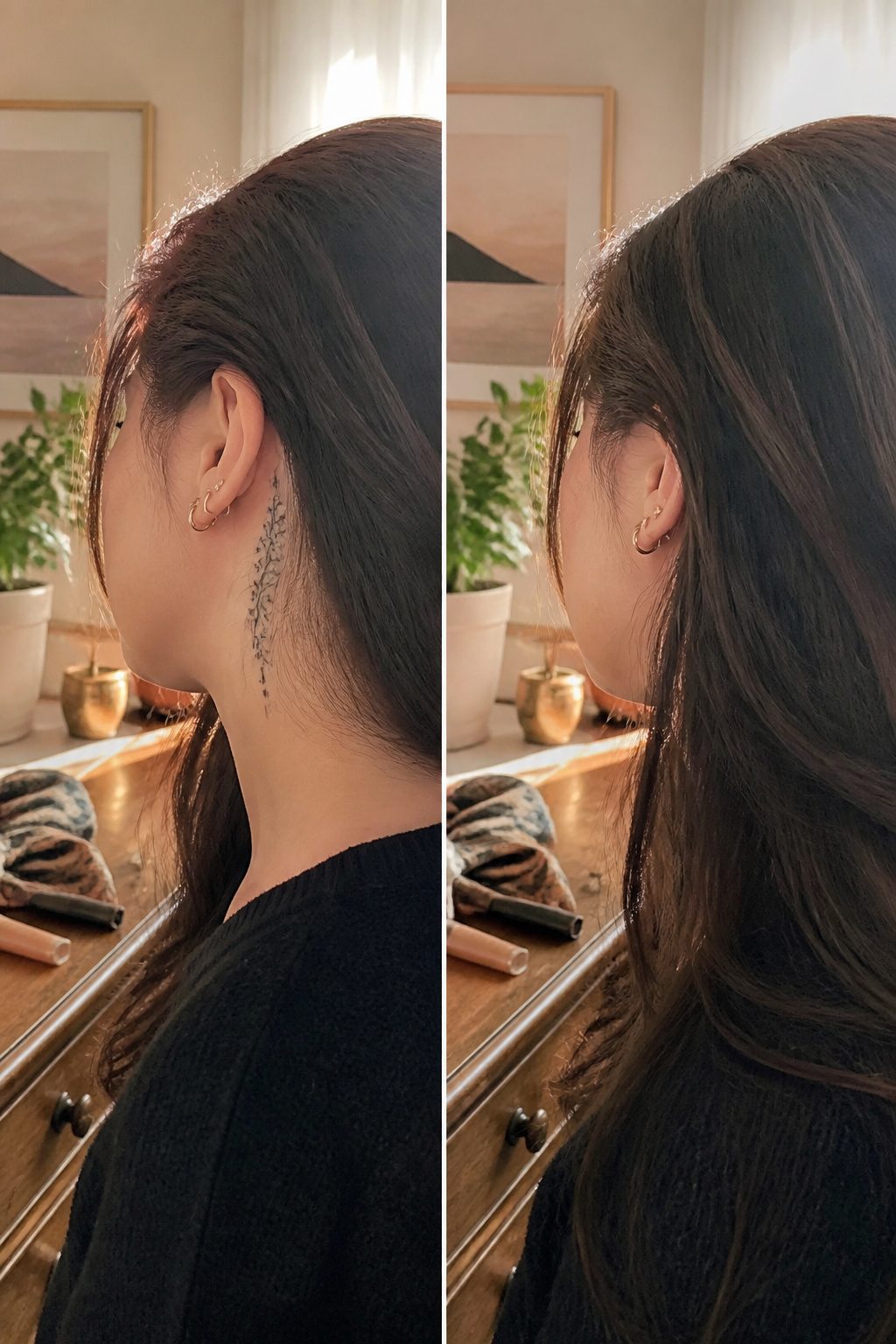
Longer hair drops straight over a behind the ear tattoo and it disappears. Pull that same hair into a side pony or an updo and the ink sits right there, fully visible, inches from your face. That proximity reads as bold whether the design is a single star or a string of letters, which is part of why the placement draws so many first-timers. The practical half matters just as much: a scarf works, foundation works, even a plaster if you are desperate. The duality of bold placement plus easy concealment is the draw. Short hair or a shaved side changes the math, making the tattoo a daily feature rather than an occasional reveal, so the commitment level shifts with your cut.
Frequently Asked Questions
Do behind-the-ear tattoos hurt?
Most people rate the pain at about a 7 or 8 out of 10 because the skin is thin and the needle vibrates against bone right beneath it. The sensation is less about sharp needle pain and more about that vibration carrying into your skull, which some find harder to tolerate than fleshier spots. Small designs help, since they keep the session short and limit total exposure to that discomfort.
How much do behind-ear tattoos cost?
Simple designs usually hit a shop’s minimum, running anywhere from $40 to $200 in the US depending on the artist and city. If the work turns complex, color-heavy, or wraps onto nearby skin, pricing may shift to hourly rates of $80 to $150 per hour. Most behind-the-ear pieces stay small enough to finish in one session at minimum rate.
Can you wash your hair after getting a behind-ear tattoo?
Yes, but keep the tattoo from soaking and avoid letting shampoo stream pound directly onto the fresh ink. Some people tape cling film over the area as a temporary shower barrier, peeling it off immediately after to return to normal cleaning and ointment. Residual conditioner, dry shampoo, and hairspray all collect in that hollow and can clog healing skin, so product discipline matters for the full two weeks.
Are behind-the-ear tattoos easy to hide?
Longer hair drops straight over the spot and makes the tattoo disappear completely, while an updo or side pony reveals it inches from your face. That duality of bold placement plus simple concealment draws a lot of first-timers. Short hair or a shaved side changes the equation, turning the ink into a daily visible feature rather than an occasional reveal.
What should I know about aftercare for behind-ear tattoos?
Wash morning and night with antibacterial soap, apply a thin layer of Redemption or Aquaphor three or four times daily, and keep hair products off the area for the full heal. Remove earrings that touch the back of the ear, since metal holds germs, and expect bandaging from the artist to stay in place for roughly three days. Watch for spreading redness, heat, or worsening swelling, and contact your artist first if those signs appear.