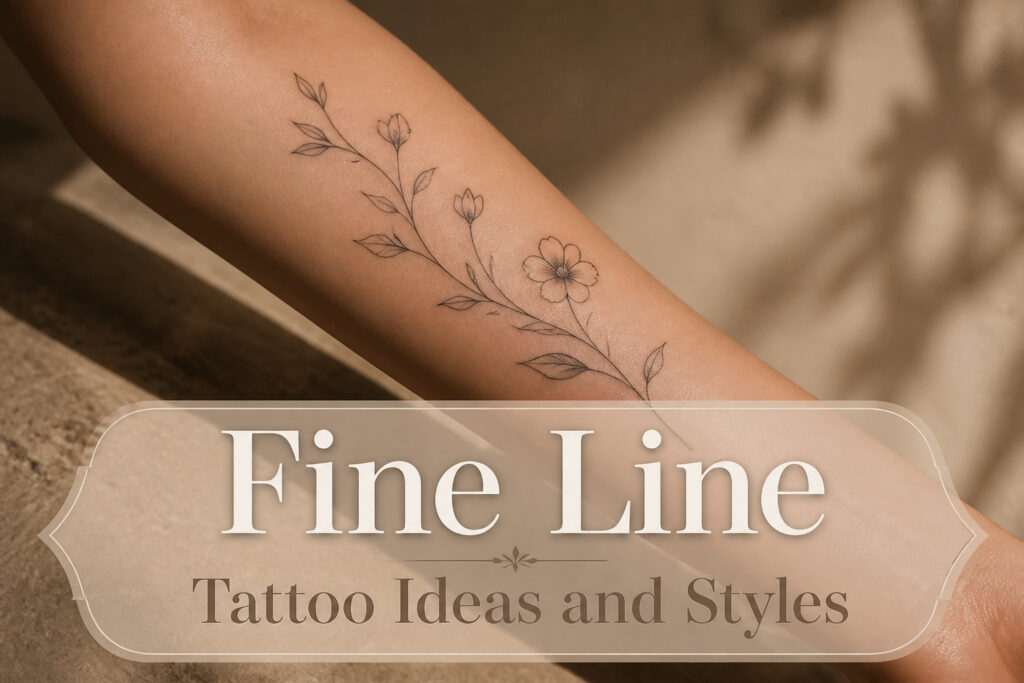
A fine line tattoo reads like a pen drawing on skin, but that delicacy costs you longevity.
The single-needle work that makes a 1RL butterfly wing look translucent also leaves pigment with no bold outline to hold it in place, so a collarbone constellation can blur within two years if a necklace rubs it daily.
What separates the pieces that last is breathing room between lines and placement away from sun and friction, not the artist’s hand alone.
1. Micro-Realism
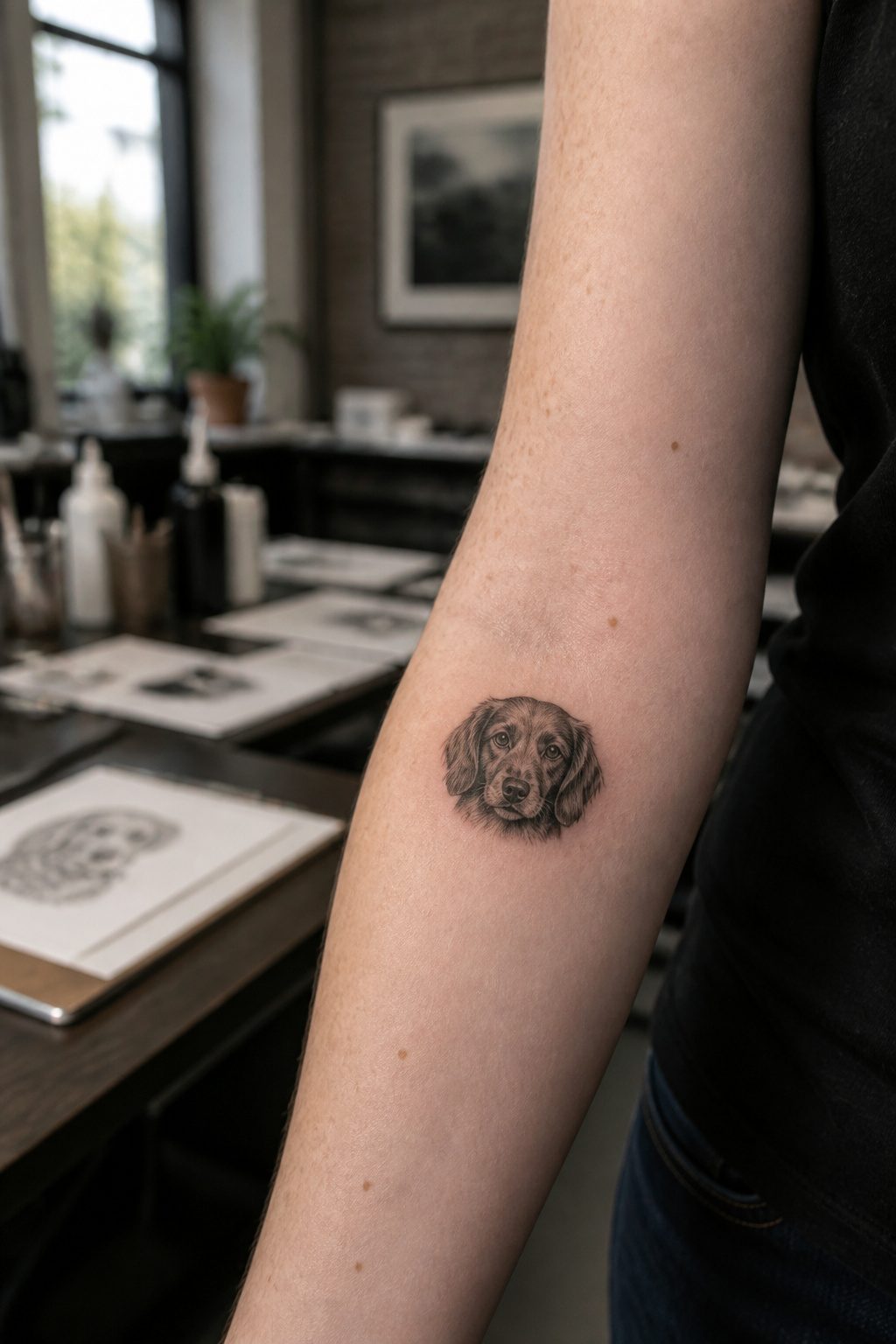
A fine line pet portrait the size of a matchbox still needs to read as your dog’s actual face, not a generic spaniel.
The artists who pull this off work with a 1RL needle, one round liner, to lay down single hairs and the soft gradation where shadow meets light on a muzzle.
That scale, usually 2×2 to 4×4 inches, is where the style earns its name: micro-realism, not just small realism.
The sitting time surprises people. A straightforward piece might run 30 minutes, but a detailed landscape with atmospheric perspective can stretch across several hours in the chair.
Single-needle work is slow by nature; the machine moves, the hand moves, and the eye checks every pass against the reference photo.
What healed badly in this style, from what I have watched in shops and portfolios, tends to share one flaw: too much detail packed too tight. Skin shifts and settles.
A 2-inch portrait with thirty distinct eyelashes at year one can look like a smudged thumbprint at year five.
The artists who last are the ones who leave breathing room, who let a suggestion of fur do the work that individual strands cannot over time.
2. Ornamental and Fine-Line Botanicals
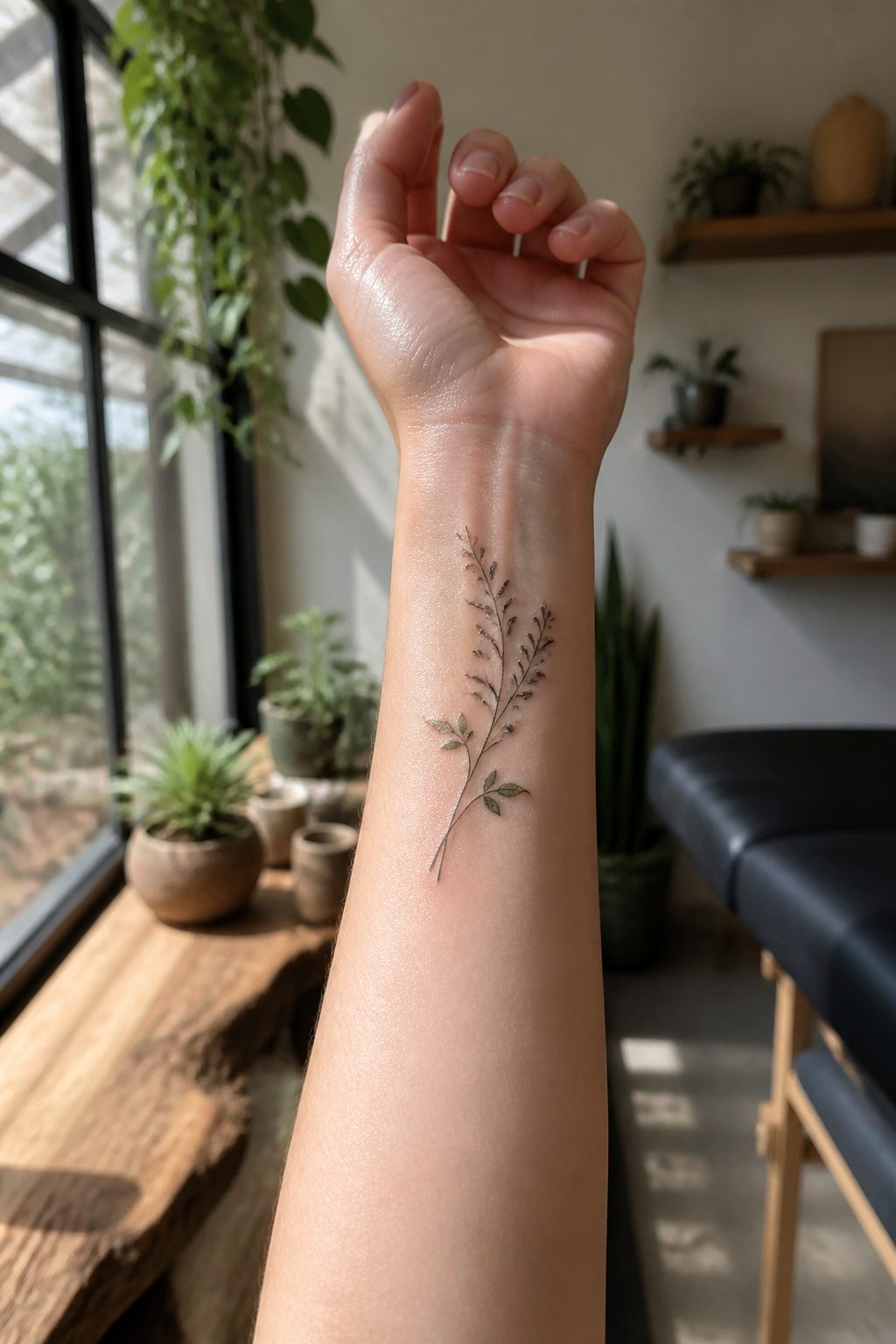
A wildflower stem drawn with a single 1RL needle can hold the same weight as a heavy blackwork piece if the placement is right, along a collarbone or wrapping a wrist like a strand of permanent jewelry.
The mandalas follow the same rule: the geometry keeps the eye moving, but the thin lines keep it from looking stamped on.
What separates the botanicals that last from the ones that blur into gray smudges inside two years is the spacing between those geometric points.
Leave at least a needle’s width of skin between every intersecting line, or the pigment will bleed across the gap during healing.
The balance works because the natural form gives the design somewhere to flow, and the geometry gives it a skeleton. A trailing vine without a frame just looks messy after the first summer of sun exposure.
A mandala without an organic break in the pattern looks like a sticker. The artists who do this well usually map the geometric grid first, then erase sections to let the petals or leaves interrupt the lines.
The result reads as lace from a few feet away, and reads as drawing up close.
That dual reading is what makes the style worth the extra session time, since single-needle work runs slower than traditional three-needle lining and the sitting stretches longer than the size of the piece suggests.
3. Abstract and Cybersigilism
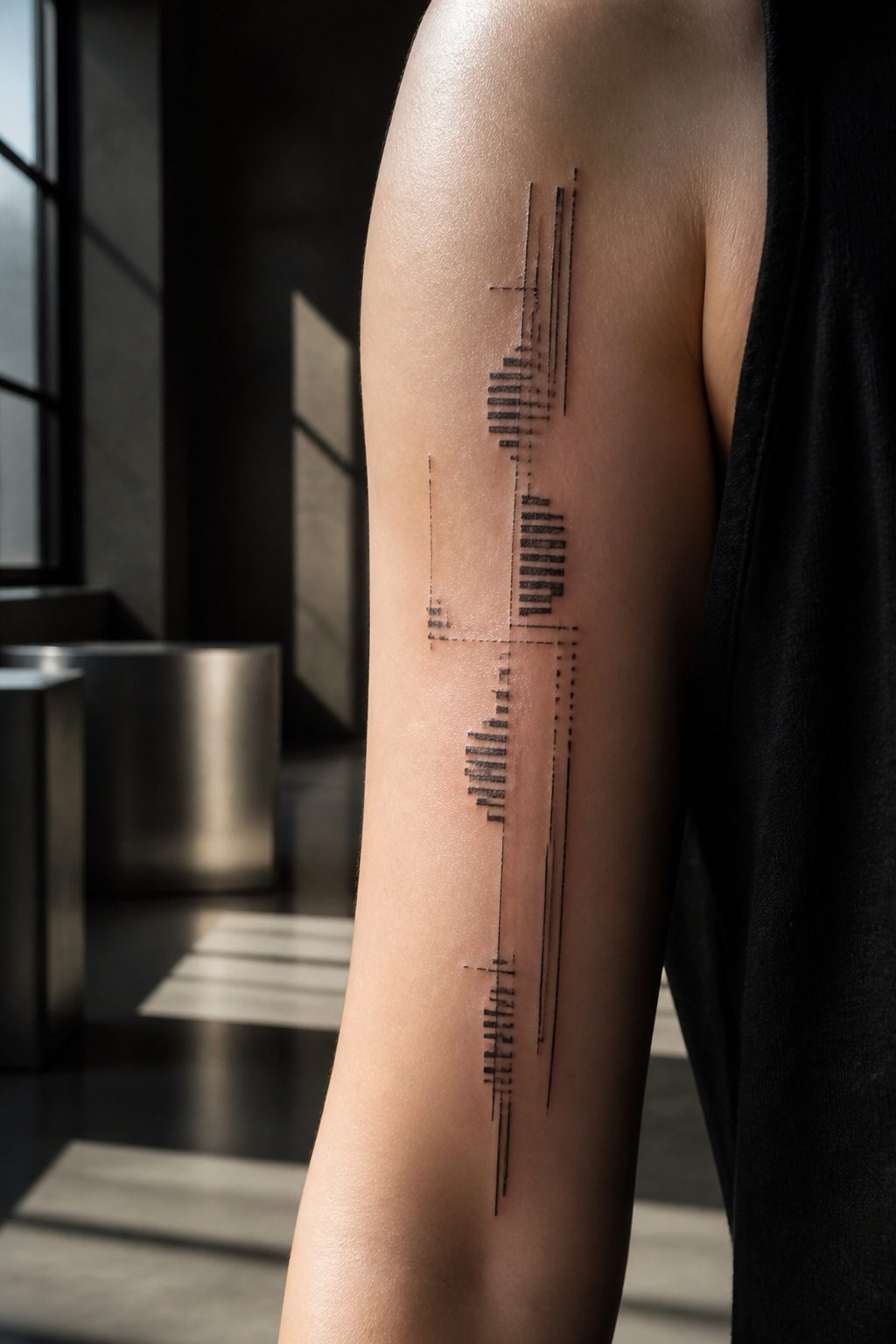
Sharp, glitch-like lines that look pulled from a broken screen are showing up more often in appointment books now, and the fine needle work is what makes them possible.
A single-pixel offset or a stuttered repeat pattern needs the steady hand and thin ink load that fineline technique was built for; anything heavier turns digital distortion into a messy blur.
The style borrows from early internet aesthetics, 8-bit residue, and the visual noise of compressed files, but the tattoo version lives or dies on restraint.
I have watched artists lose the effect by adding too much black fill around the edges, trying to make it read faster from across a room.
The better pieces stay light, let the skin breathe between the marks, and trust the viewer to step closer.
Placement matters for the same reason the lines do: a forearm or collarbone catches the light differently than a thigh, and those sharp angles need shadow to pop.
After healing, the finest glitched bars can soften into something that looks accidental rather than intentional, so the initial spacing has to account for that spread.
It is a style that rewards a long look over a quick read, which is a rare thing in a medium most people scan from three feet away.
4. Script and Typography
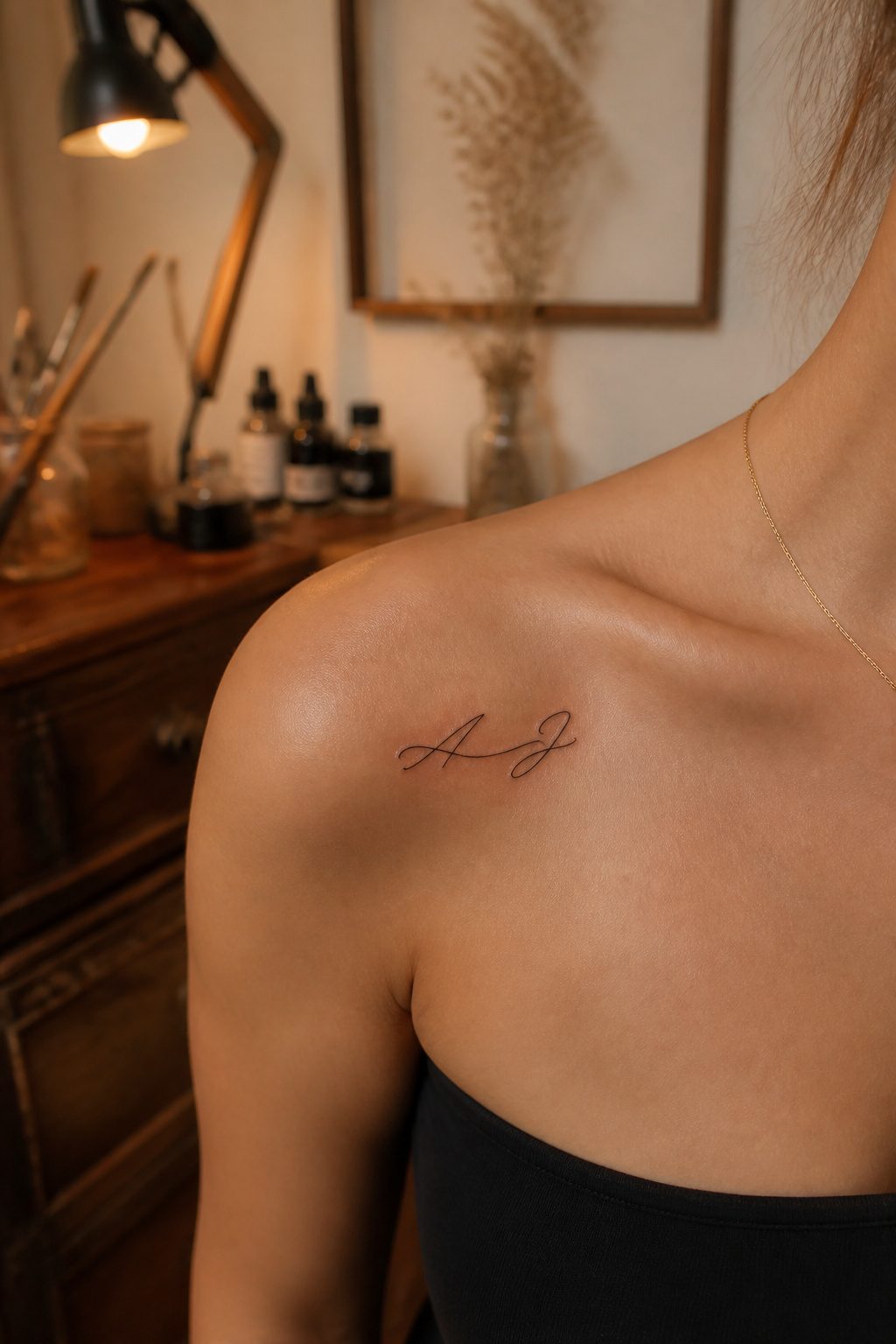
Whisper-thin cursive demands placement where skin shifts the least. The outer forearm and shoulder sit at a 3/10 pain threshold, barely registering against ribcage work that spikes to 9/10, but the real risk is motion.
Letters stretch where muscle flexes daily, so initials hold sharper than full quotes on the collarbone or wrist. Black ink carries the choice if longevity matters; it stays crisp 6–8 years while pastels drift toward neutral within 3–4.
Color matching by undertone helps some, cool skin keeping blues true longer, warm skin carrying reds and earth tones, yet nothing in the fine-line range outlasts plain carbon black.
The 2–3 week healing window is non-negotiable, and after that, SPF 50+ becomes the maintenance that keeps edges from blurring into soft gray.
5. Animals and Insects
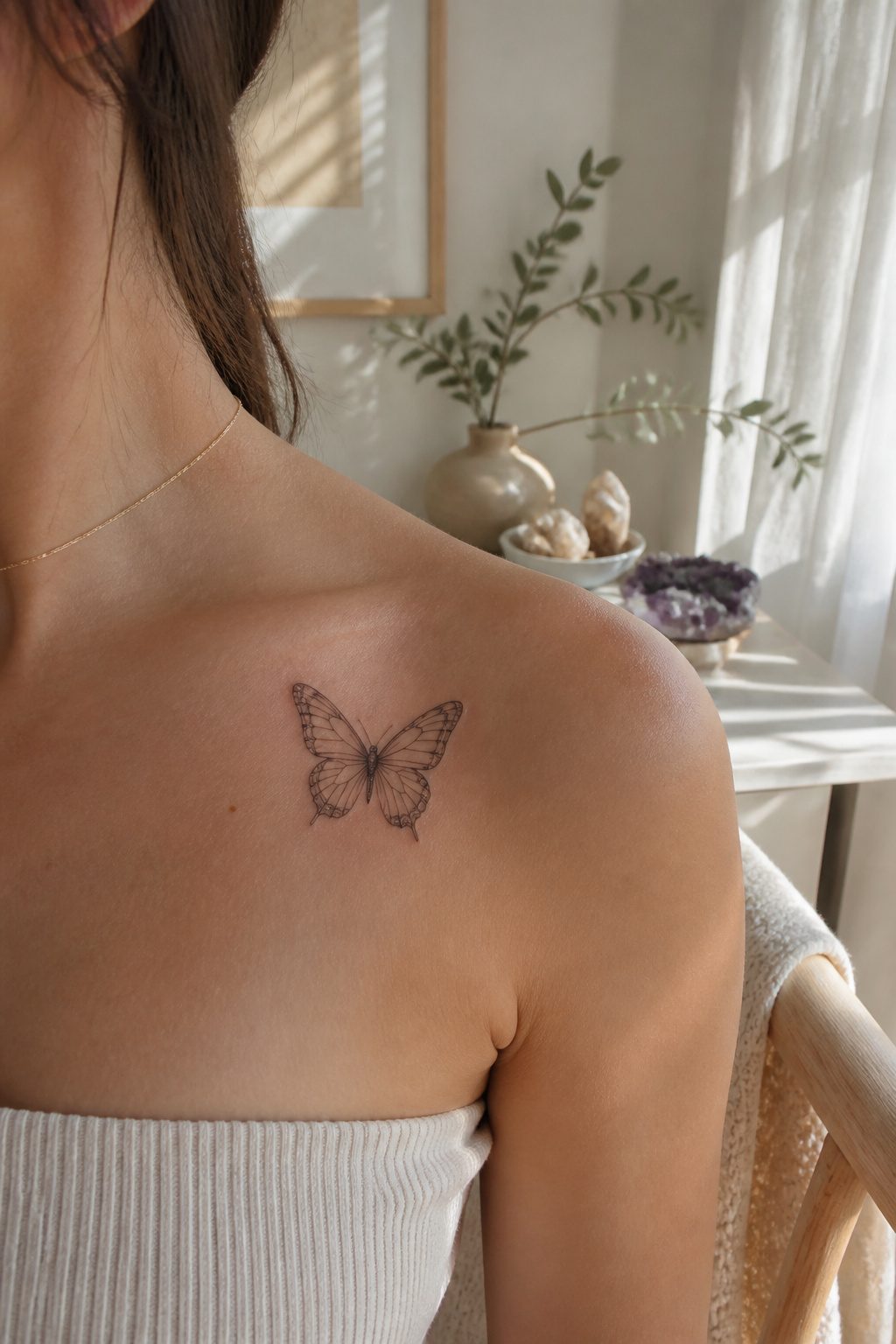
Fine line butterfly tattoos draw people back because the single needle can record what thicker work loses: the way light passes through wing membrane rather than sitting on top of it.
Hairline strokes trace the veins in a monarch’s forewing, and the negative space between them does the work of color.
A butterfly in this style reads as translucent even in black ink, which is why the design stays popular for collarbone and wrist placements where skin itself becomes the background.
Bees and birds push the same technique further. A bee’s wing in single needle work gets crosshatched so lightly it almost vibrates, and that vibration sells the hovering.
Songbirds benefit because fine line catches the layered structure of flight feathers without the heavy outline that would turn a sparrow into a decal.
The risk is overcrowding: a bird in motion needs enough open skin around it to read as movement, not as a static emblem. Three elements on a small bird tattoo is usually the ceiling before the piece goes muddy.
What convinced me, reading through the portfolios, is that insects and birds fail in fine line when the artist tries to add too much shading to compensate for the lack of bold line.
The single needle is already doing the job. Adding gray wash just kills the delicacy that made the client choose the style.
6. Geometric Patterns
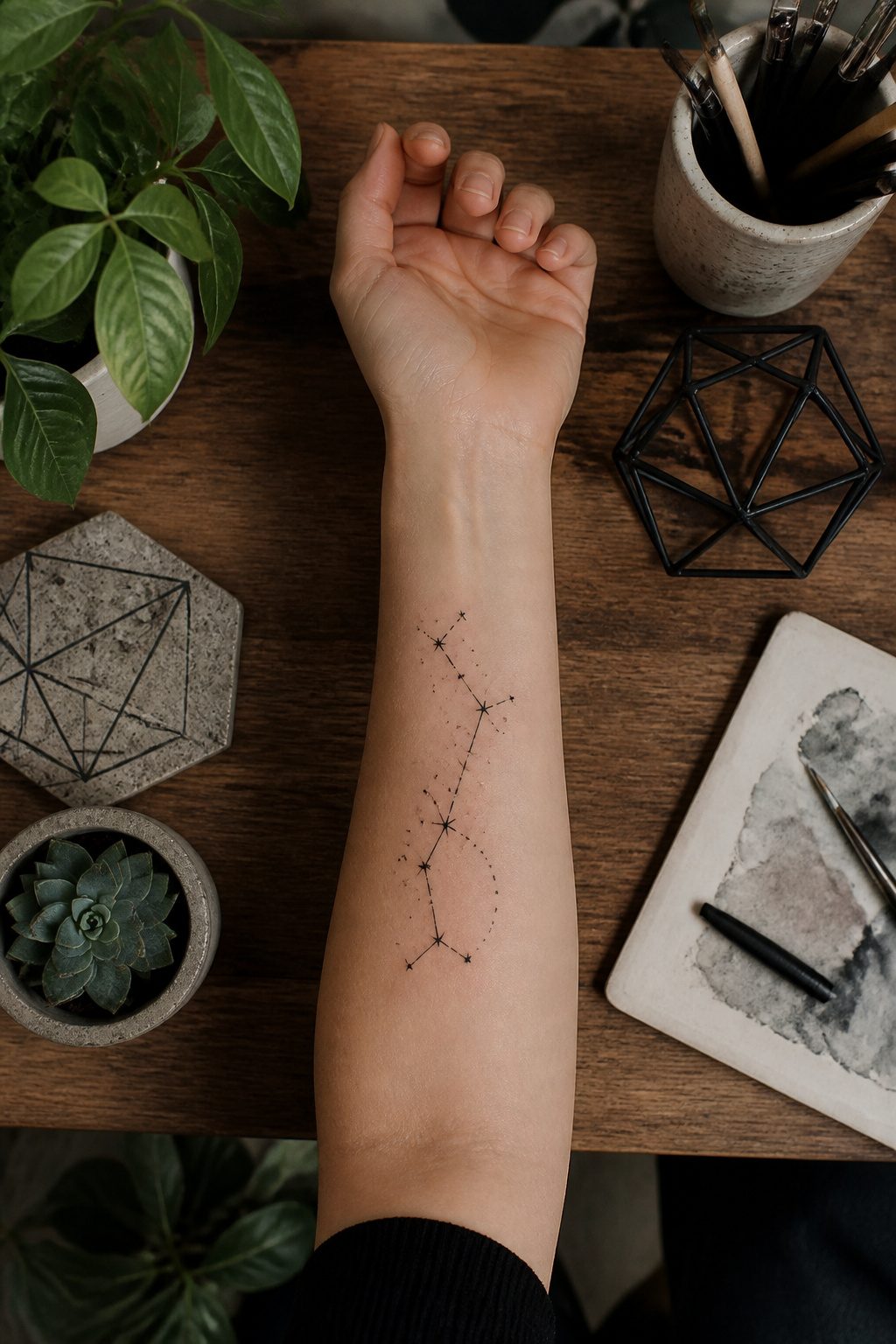
A fineline constellation needs single-needle work with almost no room for error; one wobble turns a star into a smudge and the whole map reads as a mistake.
Mandalas demand the same precision, but in repetition: the same petal shape, the same gap, mirrored across a circle that the eye checks instantly.
I have watched artists lay down guidelines in pale gray ink just to keep the geometry honest, then spend three sessions building the visible lines over that skeleton.
Abstract shapes give more freedom, which is not always a kindness. A crooked triangle can look intentional; a slightly off circle just looks wrong.
Placement tends toward flat ground: the inner forearm, the upper back between the shoulder blades, the sternum.
Curves fight these designs, and trying to wrap a mandala around a calf usually ends with the center drifting or the outer ring compressing on one side.
The back of the neck works for small constellations if you accept that hair and collars will half-hide it; some clients want exactly that, a private reference they know is there.
7. Minimalist Symbols
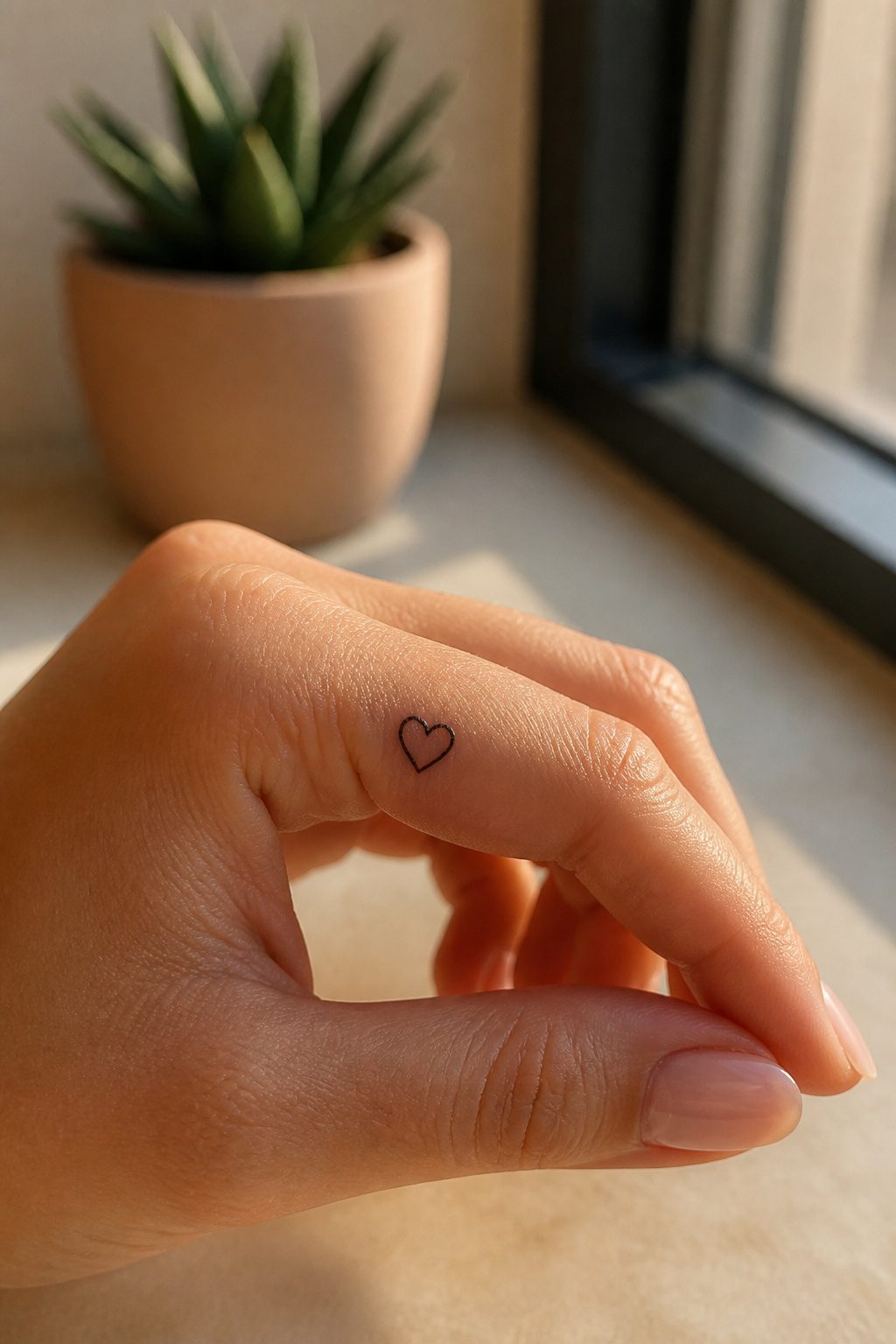
A single star, heart, or moon in fine line work carries meaning without asking for much skin.
These discreet placements suit first-timers because the commitment stays small: a finger, collarbone, or spot behind the ear hides easily and shows only when you choose.
The needle time runs short, the healing stays simple, and if you later decide the symbol belongs elsewhere, the original fades enough to build around.
Social media has pushed this style hard, with artists like Dr. Woo turning tiny marks into collectible work. That visibility cuts both ways.
A heart on Instagram looks effortless, but the same design on your own hand needs daily sunscreen to keep the lines from blurring into gray smudges within a few years.
Fine line on high-wear spots demands more touch-ups than bolder work.
For someone testing whether tattooing fits their routine, a minimalist symbol functions as a low-stakes entry point. The collarbone keeps it visible but professional; the rib cage keeps it entirely yours.
Either way, the design lives or dies on line weight: too heavy and the delicacy disappears, too light and it heals into a faint scar. Ask to see healed photos, not fresh ones, before you commit.
8. Floral and Botanical Designs
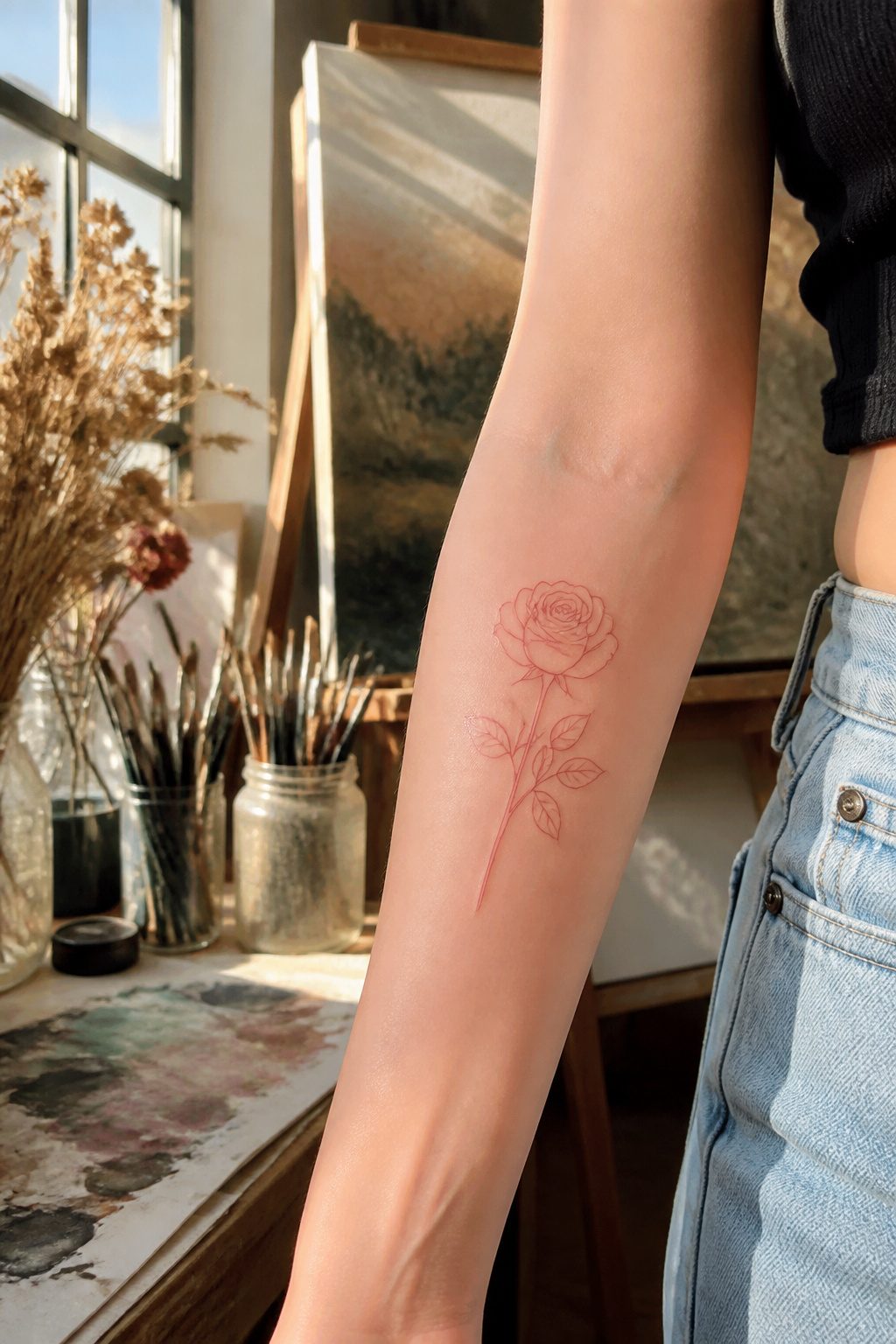
A rose in fineline work lives or dies by how the artist handles the negative space between petals. Too tight and the bloom collapses into a dark smudge; too open and it reads as a child’s outline drawing.
The tulip is more forgiving, its cup shape giving the eye a single clear read even when the line weight stays hair-thin throughout.
Hydrangeas are the harder commission, clusters of tiny florets that need spacing decisions most clients do not anticipate going in.
The naturalistic version of any of these skips the ornamental border and the geometric frame, letting the stem curve and the leaf tilt as they would in a garden bed rather than on a wallpaper pattern.
That freedom costs you the built-in symmetry that makes ornamental botanicals easier to place on wrists or ankles, but it gains you a tattoo that moves with the body instead of sitting on it like a sticker.
An experienced fineline artist will study the specific cultivar rather than defaulting to a generic bloom, and the difference shows in whether the finished piece still reads as alive six months later when the initial crispness has settled.
9. Celestial Bodies
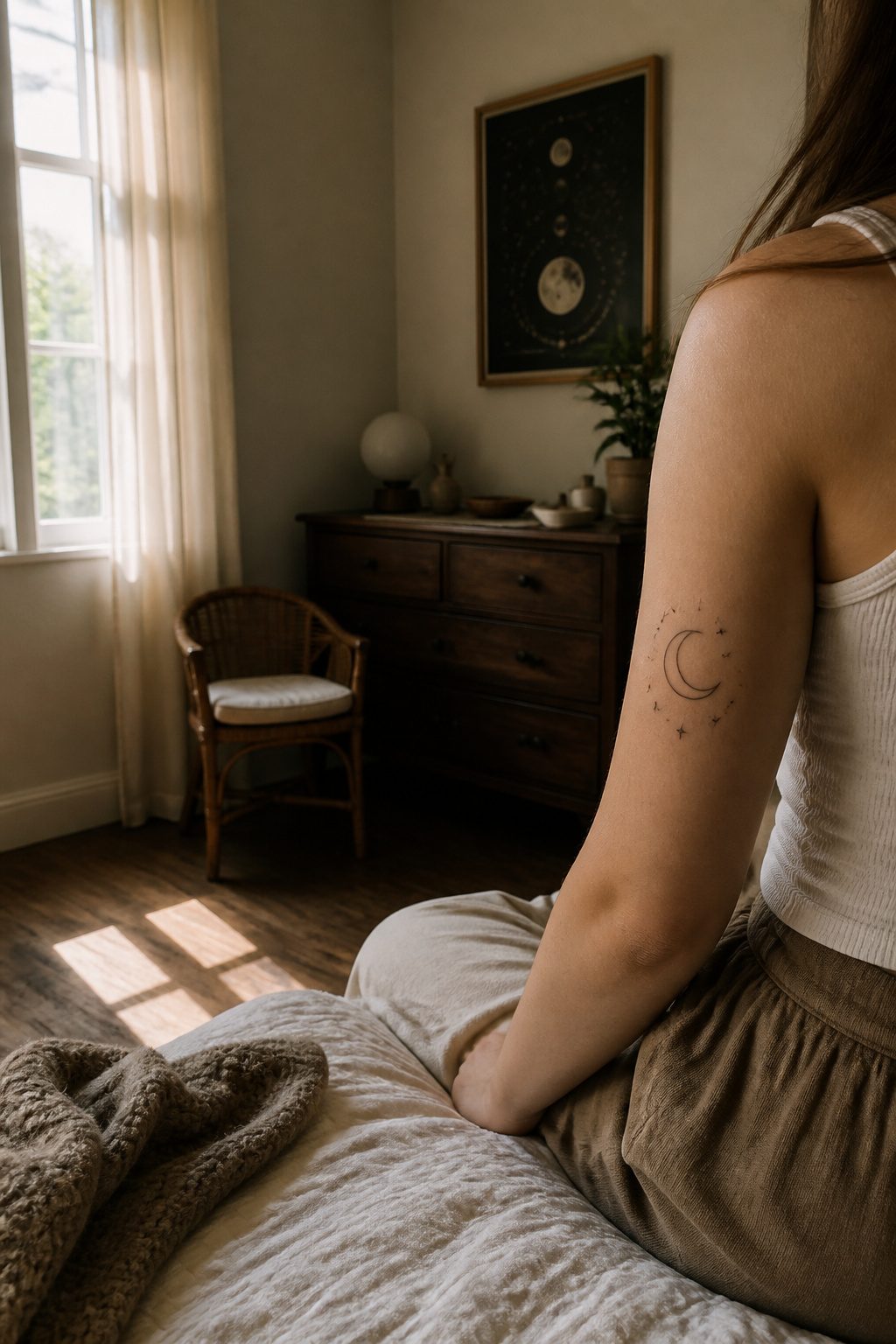
Celestial designs, suns and moons and scattered stars, rank high on most lists of fineline tattoo ideas because they carry meaning without demanding much space.
A small crescent behind the ear or a single star at the wrist reads as delicate, but those placements sit exactly where sun hits hardest. Placement away from sun exposure matters for longevity more than most first-timers expect.
Fine line work has no bold outline to hold pigment in place, so the ink that stays crisp on a ribcage or upper arm can blur or fade faster on a shoulder or hand.
Black ink, the standard choice for these celestial pieces, typically holds for six to eight years before a touch-up. Pastel tones sometimes threaded through moon phases fade to neutral within three to four, and sun-exposed skin accelerates both timelines.
I have watched clients who loved their collarbone constellation come back within two years asking what went wrong. The answer was usually friction from a necklace plus daily UV, not the artist’s hand.
For a piece you want to keep, the back, ribs, or upper arm buys you those extra years. If you are set on a forearm or ankle, protective clothing becomes part of the cost of owning it.
10. Personal Symbols
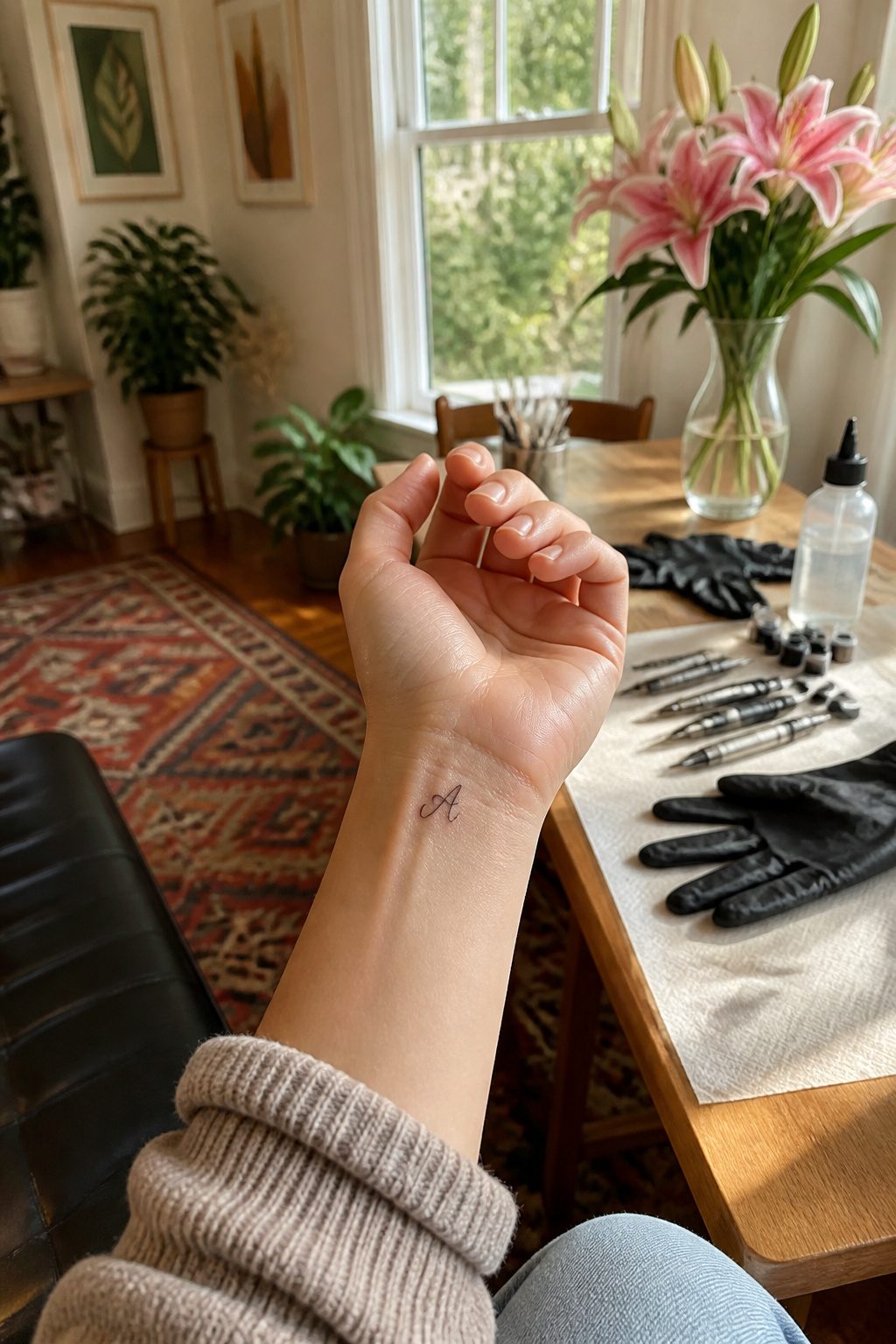
A single initial or a date that actually means something carries more quiet weight than any trending motif.
Fine line work keeps these small, usually between 2 by 2 inches and 4 by 4 inches, which is where the style holds its edge: the needle grouping is tight enough that a "7" or an "R" stays legible without blowing out.
On the inner wrist or along a collarbone, the skin sees less friction and the lines age slowly. Fingers are a different story.
The constant rubbing against pockets, keyboards, and steering wheels means a touch-up within the first year is common, and even then, most artists expect a refresh every 3 to 5 years to keep the symbol from blurring into a soft gray suggestion of what it once was.
If the number matters enough to wear forever, placement matters just as much as the design itself.
What Fine Line Tattooing Means
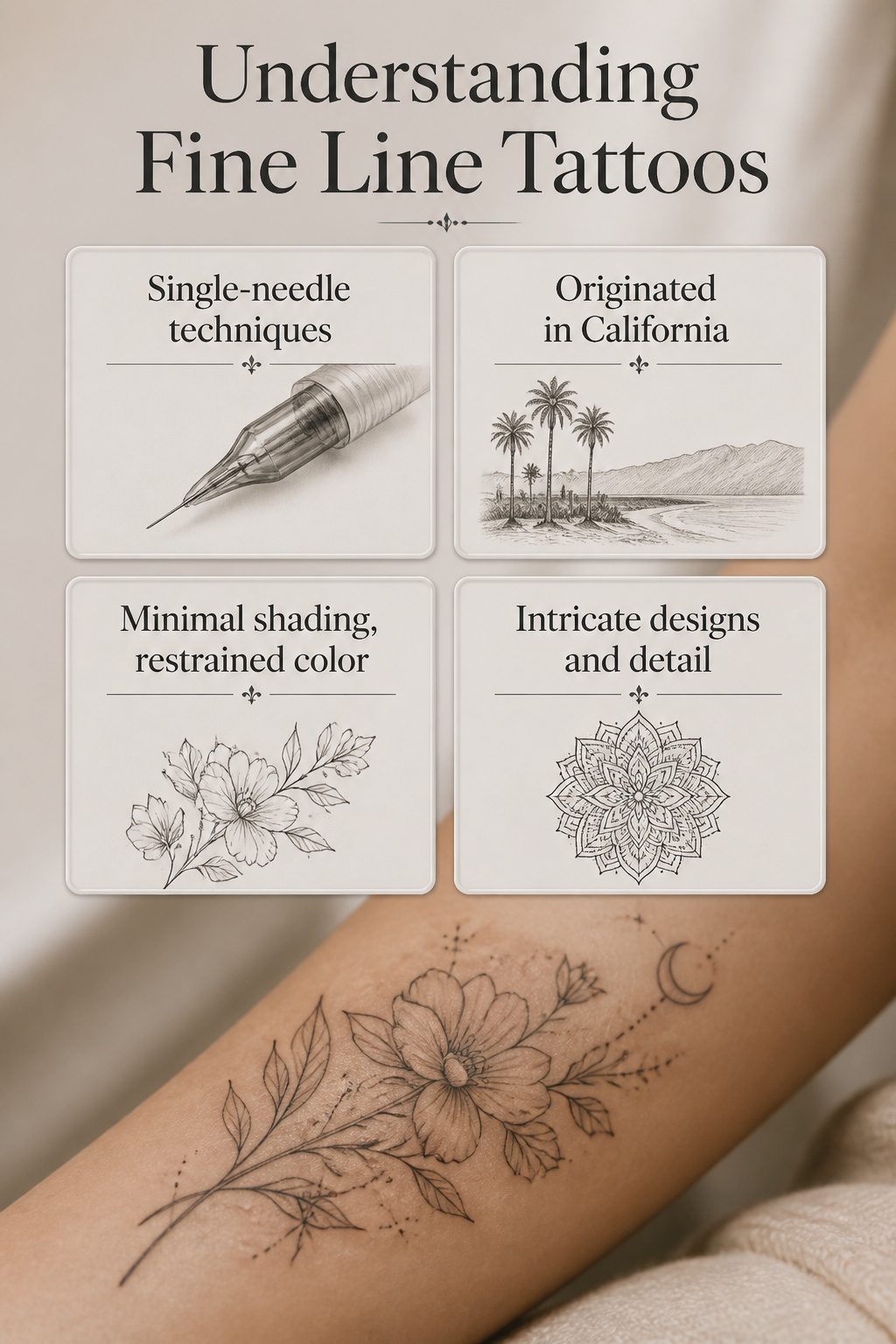
Fine line tattoos rely on single-needle techniques that lay down thin, precise lines rather than the heavy outlines most people picture when they think of tattooing.
The result reads more like a pen drawing on skin, subtle enough that some wearers describe it as something meant for them rather than for display.
The style took shape in California during the 1970s, emerging from the Chicano art movement.
Artists like Freddy Negrete and Mark Mahoney wanted to replicate the detail of pencil and pen work in tattoo form, and the single needle gave them that control. Early pieces focused on black-and-gray religious imagery and portraits that demanded intricacy.
Machine and needle technology kept sharpening from there, letting artists push line weight and detail further than those first decades allowed.
The style has since spread far beyond its origins, though the core remains unchanged: minimal shading, restrained color, and lines built to stay fine rather than bold.
Where Fine Line Tattoos Hold Up
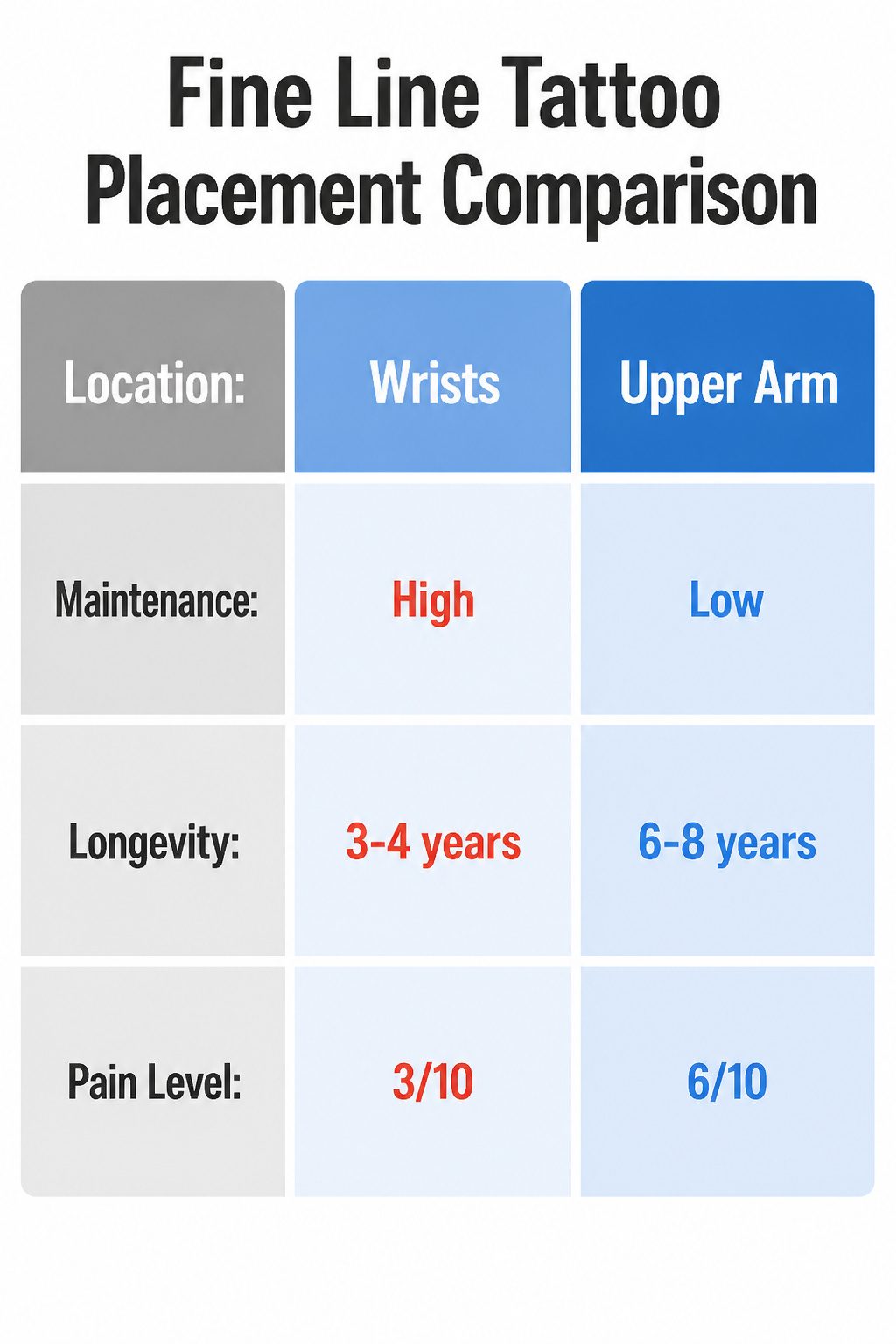
Wrists, ankles, behind the ear, and fingers draw the most requests for fine line work, and each choice carries a different maintenance bill. The wrist sees daily friction from desks and keyboards; fingers face constant washing and wear.
Neither keeps a design crisp past a few years without touch-ups.
The upper arm, ribs, and back age better. Less sun and less rubbing mean black fine lines stay readable for six to eight years, where pastel shades anywhere on the body want attention again in three to four.
Pain factors heavily into whether someone sits through a session or books two. The inner forearm rates a manageable 3 out of 10.
The ribcage, where skin pulls thin over bone with every breath, hits 9 out of 10 on the scale.
That placement demands loose clothing through a two- to three-week heal, since friction there does double damage: it hurts during and blurs the line after.
Aftercare and Touch-Up Timing
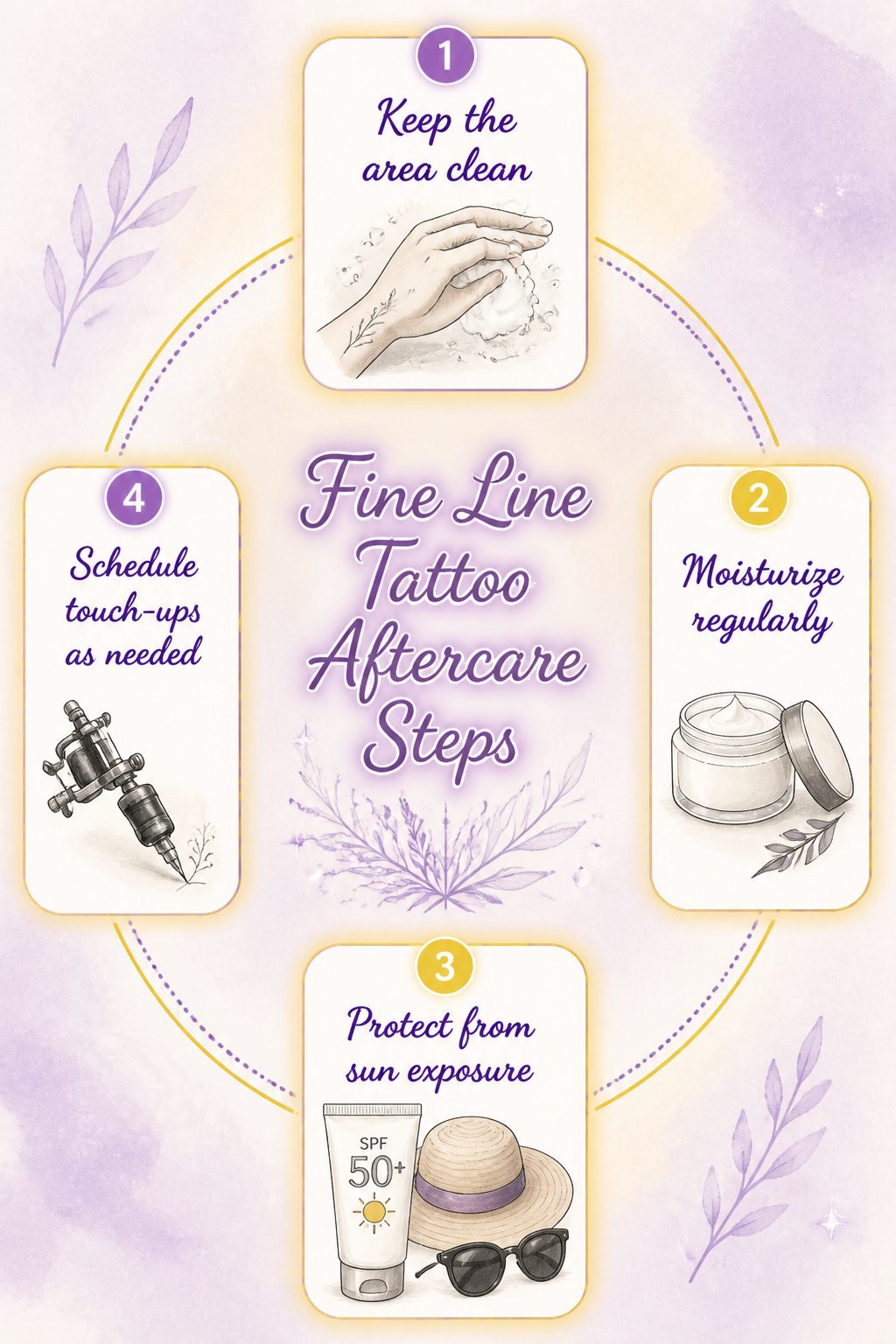
Fine line tattoos need the same healing basics as any other work, but the stakes sit higher. Keeping the area clean, moisturized, and protected from sun exposure matters more because the lines themselves carry less ink to begin with.
Thinner deposits blur faster when healing goes sideways, and UV exposure breaks down fine pigments rapidly enough that permanent SPF 50+ becomes mandatory once healing closes, not optional.
Black ink holds its crispness longest, typically six to eight years before a refresh. Pastels and lighter tones shift neutral faster, often within three to four years.
Touch-ups land in that same three-to-five year window for most pieces, though high-friction areas like hands and feet can need attention sooner.
The absence of bold outlines means there is no buffer zone; once the pigment migrates or fades, the detail simply disappears rather than softening gradually.
Pain and Session Length
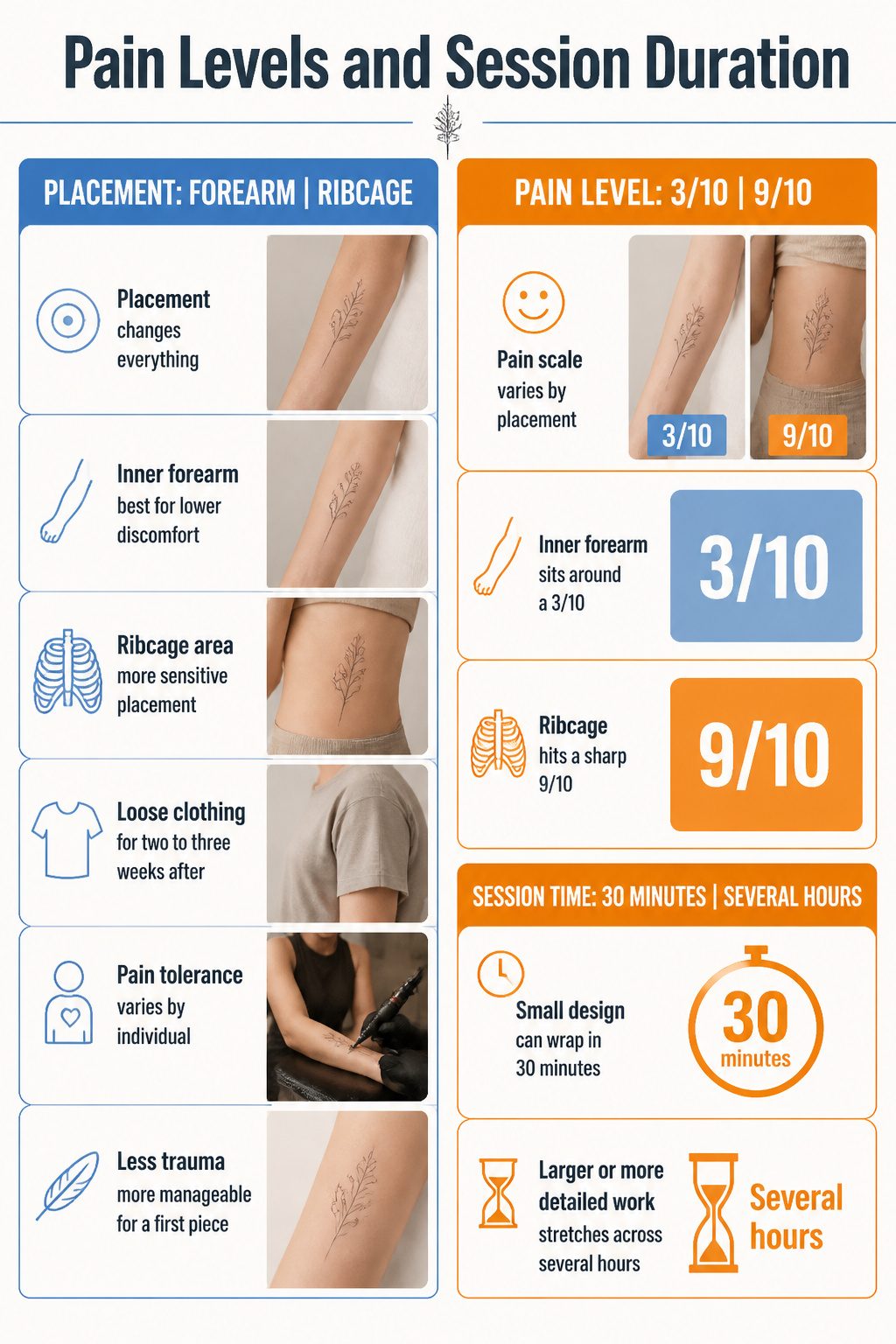
Single-needle work and lighter shading mean most fine line pieces run shorter and feel less intense than traditional sessions.
A small design can wrap in 30 minutes; larger or more detailed work stretches across several hours depending on what the artist is building. Placement changes everything.
The inner forearm sits around a 3/10 for most people, while the ribcage hits a sharp 9/10, loose clothing for two to three weeks after since friction there slows healing.
Pain tolerance varies, but less time under the needle and less skin trauma generally make the lighter styles more manageable for a first piece.
Frequently Asked Questions
Do fine line tattoos fade faster than other styles?
Yes. Fine line tattoos fade faster because they use less ink per line and lack the bold outlines that act as a buffer in traditional work.
Black ink typically stays crisp for six to eight years, while pastels shift neutral within three to four years, especially on sun-exposed skin.
How often do fine line tattoos need a touch-up?
Most fine line pieces benefit from a touch-up every three to five years. High-friction areas like fingers and hands can need attention sooner, sometimes within the first year, since constant rubbing accelerates blur.
Are fine line tattoos more painful?
They often hurt less, not more. Single-needle work involves less shading and shorter session times, so the overall trauma to skin is lower.
A ribcage placement still hits hard at around 9 out of 10, but an inner forearm sits closer to 3 out of 10.
What are the best placements for fine line tattoos?
The upper arm, ribs, and back age best because they see less sun and less friction. Wrists, fingers, and behind the ear draw more requests but demand more maintenance, since daily wear and UV exposure blur thin lines faster.