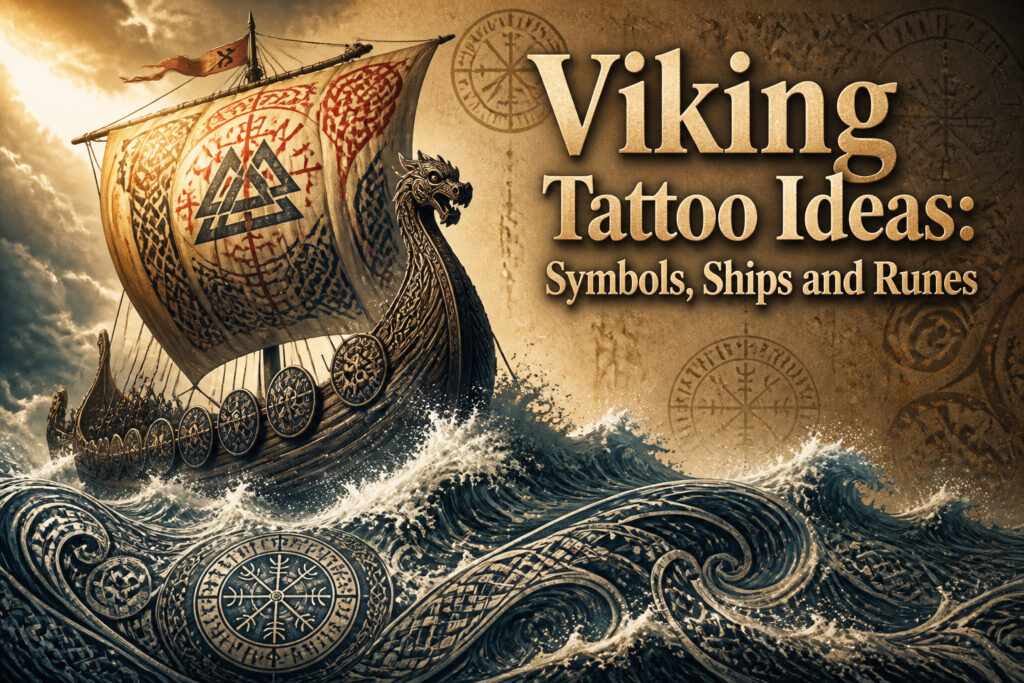
Viking tattoo ideas range from a single rune behind the ear to a full back piece of Yggdrasil, and the deciding factor is not symbolism but scale. A Valknut under two inches loses its interlocking depth entirely; the same design at chest size carries the geometry that made Odin’s knot survive a thousand years. Most people trip on placement, not meaning.
1. Valknut
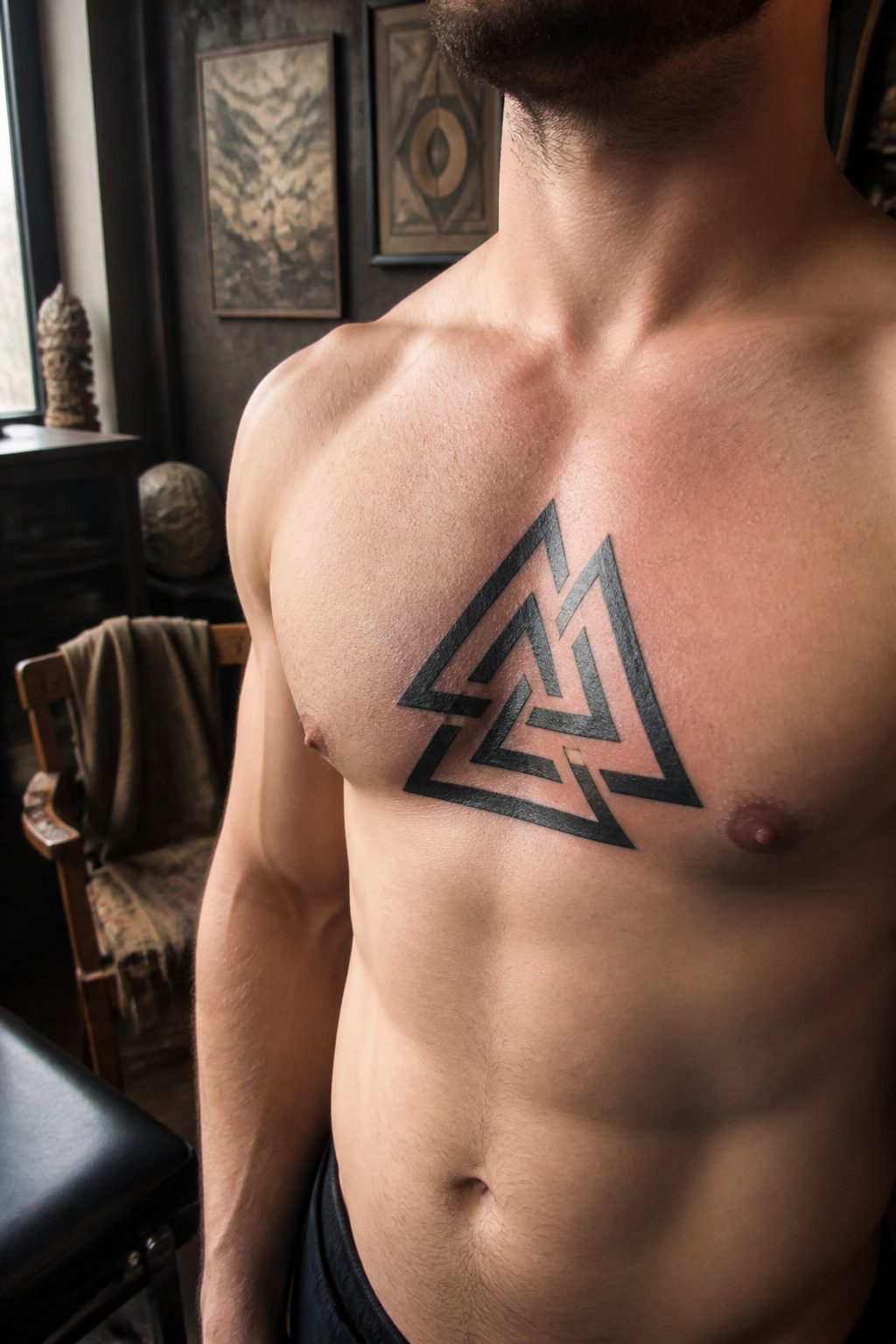
The Valknut sits at the top of most lists for a reason. Three triangles interlock to form a single knot, and the geometry alone reads clearly from a distance. Ancient carvings place it beside Odin, which tied the mark to warriors fallen in battle and the promise of Valhalla. That meaning still holds: the symbol carries weight for anyone who has faced hard choices and kept moving.
Modern wearers tend to split between two readings. One treats it as Odin’s knot, a call for resilience through life’s ups and downs. The other stays closer to the older sense, honoring sacrifice made for something larger than yourself. Both fit a tattoo, but the design works better when the wearer knows which story they are telling.
Size and placement matter more here than with simpler symbols. The interlocking lines need room to breathe; a chest piece or upper arm keeps the proportions intact, while a finger or wrist demands simplification that loses some of the knot’s depth. Six sources rank it among the most requested Viking tattoo ideas, and the split between large, detailed versions and small, compact ones shows up in shops regularly.
Color tends to stay minimal. Black linework emphasizes the geometry; shading can add dimension but risks muddying the interlock. The clean version wins if you want it readable at a glance for decades.
2. Mjölnir
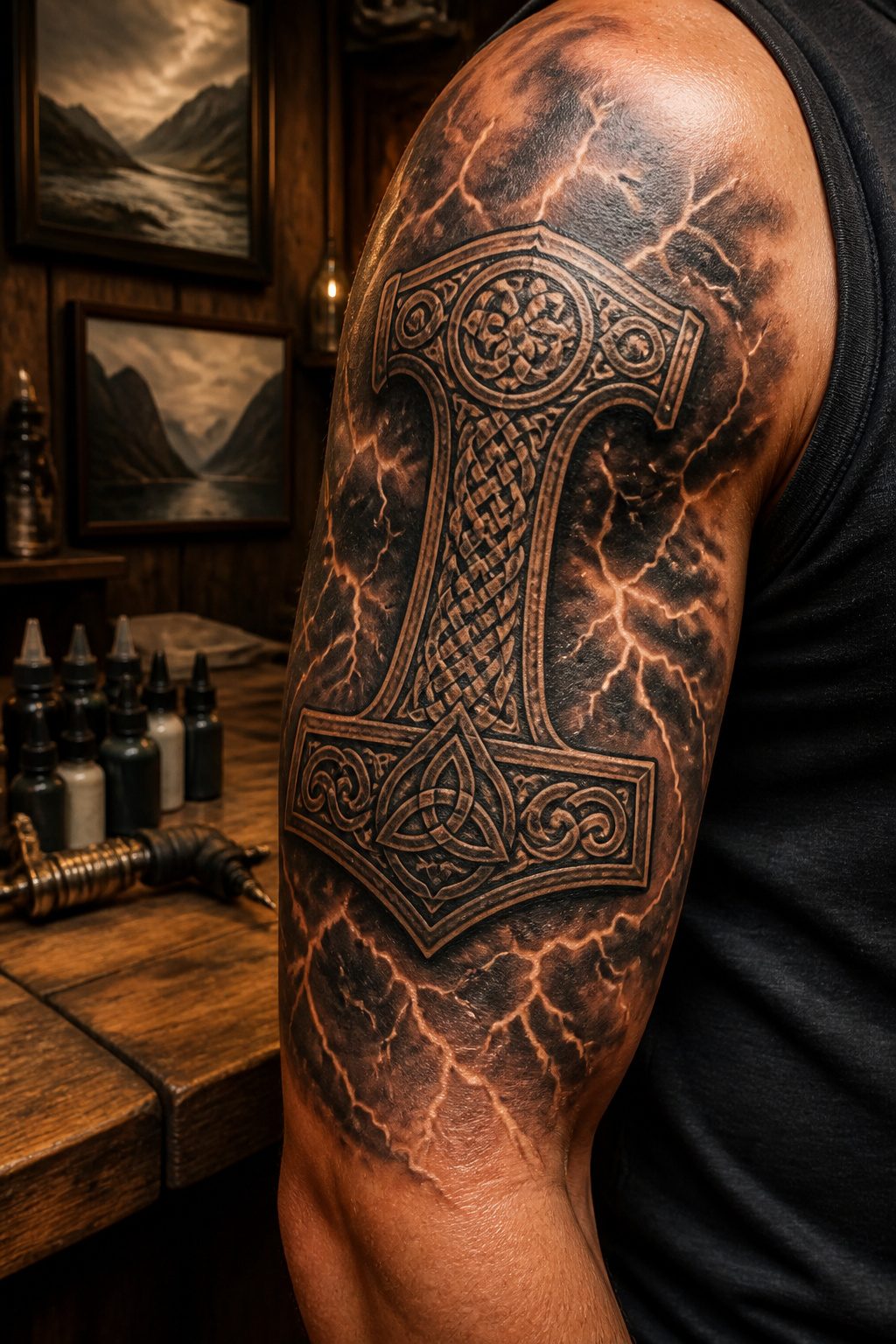
Mjölnir lands on skin with the weight its name implies. Thor’s hammer carries six distinct sources of meaning across Norse tradition: raw strength, protection in battle, the courage to strike first, generosity to allies, dominion over thunder and storm, and a bond to the old gods that Vikings themselves wore as amulets into combat. That depth is why the design crosses gender lines more cleanly than most Viking imagery. Women ask for Mjölnir now with the same frequency men do, and the symbol does not soften to accommodate them; the hammer stays blunt, the meaning stays intact.
The 2024 shift, if you want one, is combination work. Lightning bolts threading the haft, runes carved into the head, or Thor’s goat-drawn chariot implied in background shading. Forearm and upper arm carry it best for the detail work these additions demand; chest or back work only if you are building something larger around the hammer rather than letting it stand alone. A small Mjölnir isolated on a shoulder reads like jewelry, not commitment. The line I draw with clients: if the hammer is under three inches at its longest point, go simpler, not more ornate. The knotwork and texture that sell the piece at scale collapse into noise when compressed.
3. Vegvisir
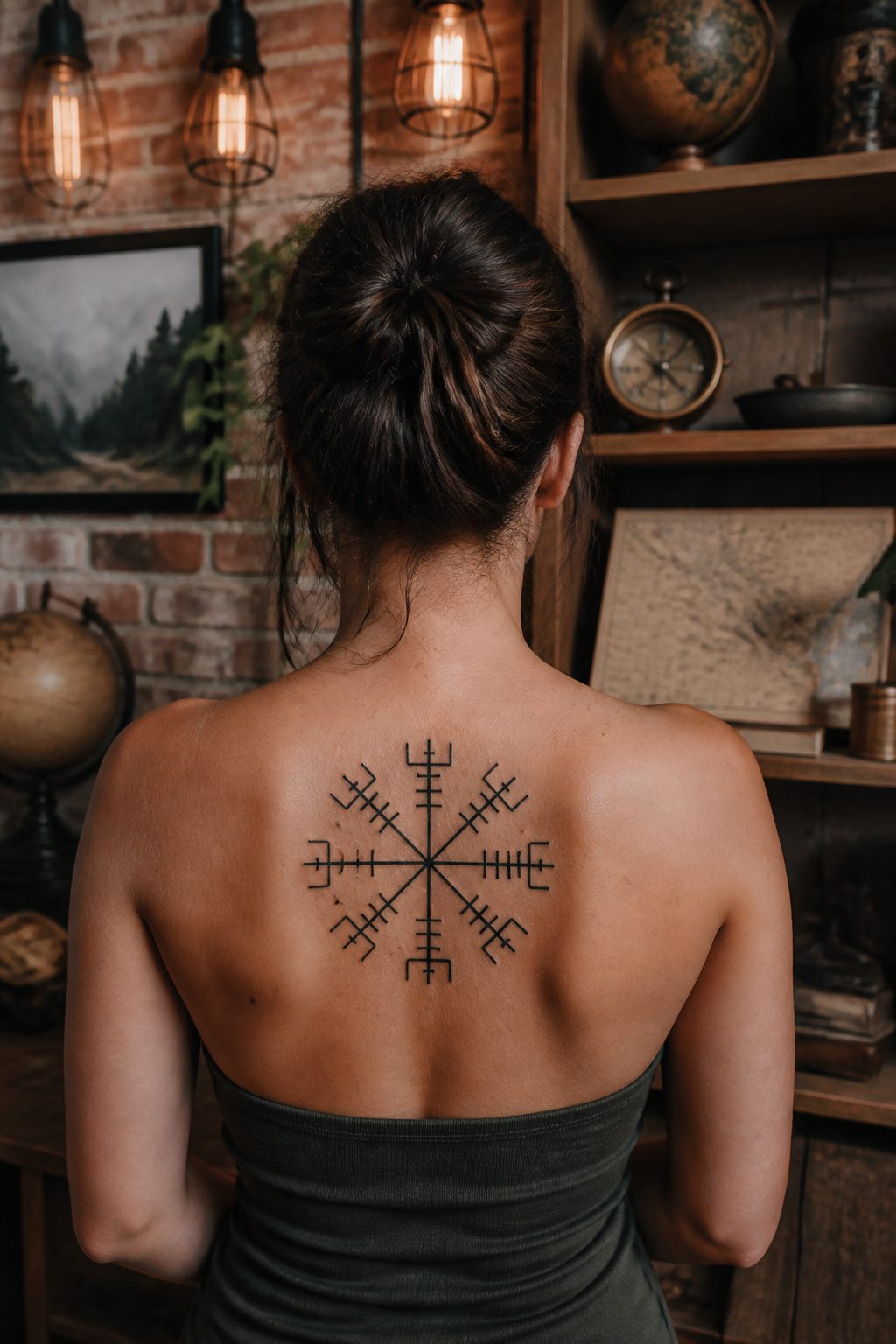
The Vegvísir carries a specific promise: if this sign is carried, one will never lose one’s way in storms or bad weather, even when the way is not known. That line comes from the Huld manuscript, one of six sources that preserve the symbol, and it is what separates the Vegvísir from generic compass tattoos. The name itself means "the Signpost" or "the Path Finder," and Norse carriers believed it would guide them to their desired destination whether they were at sea or on land.
Modern wearers tend to land on this design during life transitions, not because of the historical sailing connection but because the wording fits. A divorce, a career pivot, a move across the country, the symbol maps onto any situation where the route ahead is unclear and the weather is rough. The tattoo functions as a private reminder that the destination still exists even when you cannot see it.
Placement matters for readability. The eight staves radiating from the center need enough flat skin to keep their proportions; the upper arm, thigh, or across the upper back usually works better than curved spots like the ribs or ankle where the geometry warps. Artists familiar with the Huld manuscript’s specific construction will keep the staves distinct rather than ornamental, which is the difference between a Vegvísir that reads as the symbol and one that reads as a spiky circle.
4. Yggdrasil
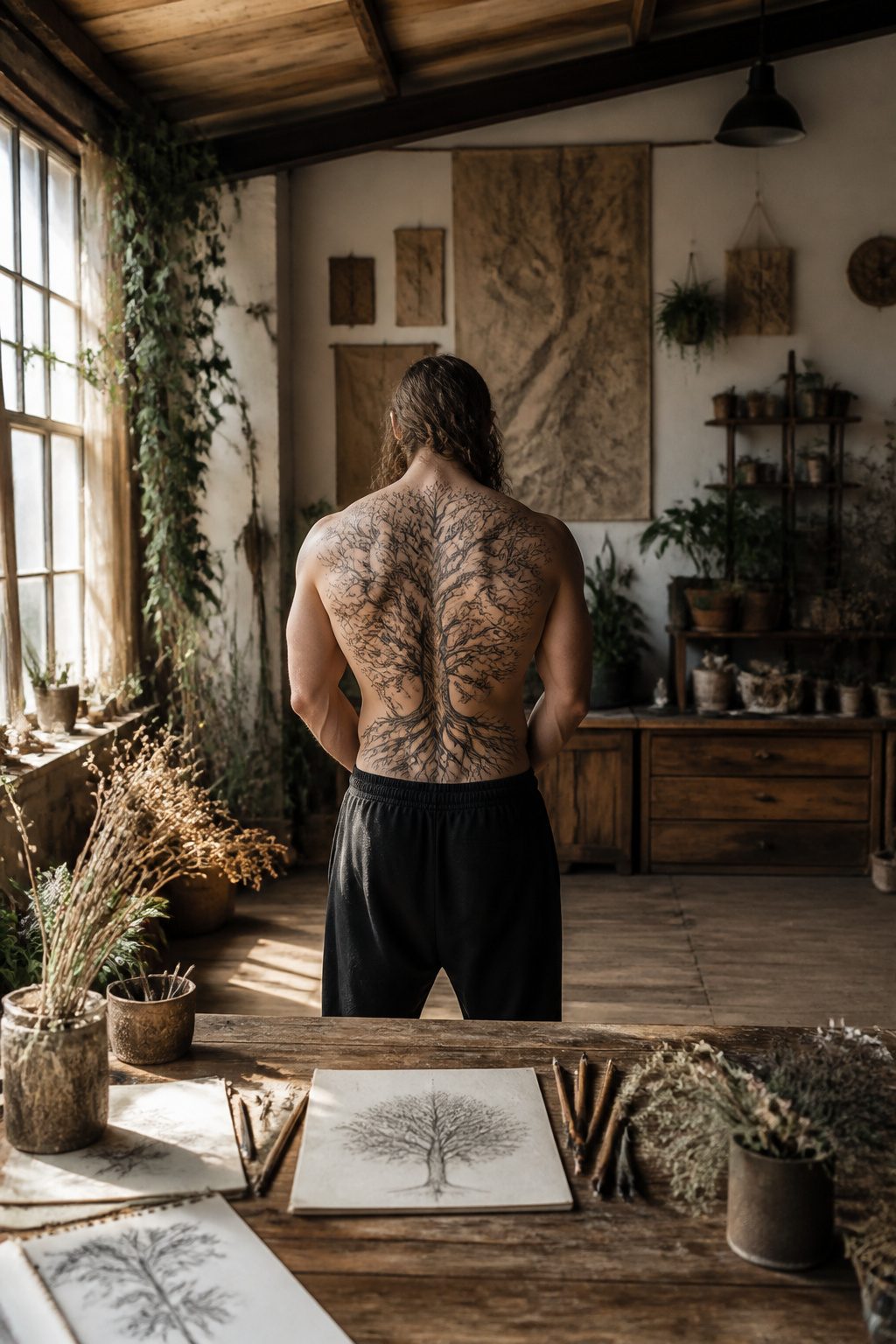
The Norse called it Yggdrasil, the ash tree that holds the Nine Worlds in its branches and roots. A tattoo of the World Tree carries that same sense of everything connected to everything else, which is why the design works best when it has room to spread. The back, chest, or a full sleeve give the branches and roots the vertical stretch they need to read as a single living system rather than a crowded emblem.
Sources recount creatures living in the tree: the dragon Nidhogg gnawing at the roots, the eagle at the top, four stags named Dainn, Dvalinn, Duneyrr, and Durathror moving among the branches. Some pieces include all of them; others strip the imagery down to the tree alone. The simpler version ages cleaner on skin. If you want the full cast, plan for multiple sessions and a budget that matches the hours.
5. Huginn and Muninn
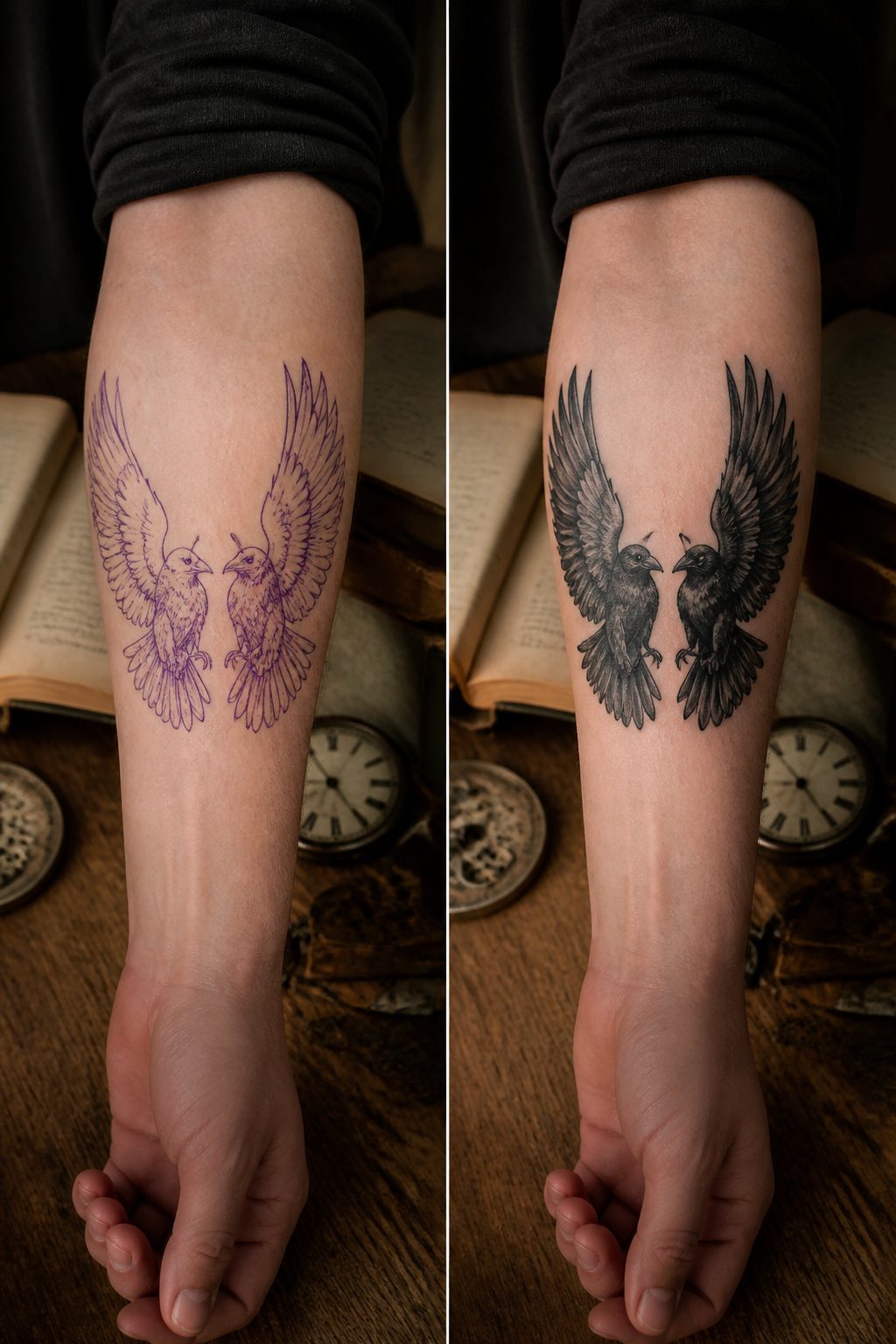
Odin’s two ravens, Huginn and Muninn, carry one of the more layered meanings in Norse tattoo work. Huginn translates from Old Norse as "thought" and Muninn as "memory," and the pair were said to fly across the world each day, gathering wisdom to bring back to their god. That gives the design a weight beyond simple bird imagery: it is about watching, returning, and what the mind keeps.
Placement shapes how the story reads. The shoulders and chest create a natural landscape for the wingspan, with the birds framing muscle or bone in a way that feels intentional rather than dropped on. Collarbones work well for a smaller pair in flight, just enough space to show motion without crowding. Forearms are more visible, which suits the symbolism; these are messengers, not hidden things.
Paired raven designs need balance. Two birds of equal detail, mirroring or in dialogue, read as the partnership they represent. One raven alone loses the point; asymmetry between the two, unless deliberate, can look like a mistake in the stencil rather than a choice. The style question is whether to render them in realistic feather and shadow, or lean into the stylized knotwork that ties them more explicitly to Viking art. Both paths rank, but mixing them without clarity tends to muddy the reference.
6. Fenrir
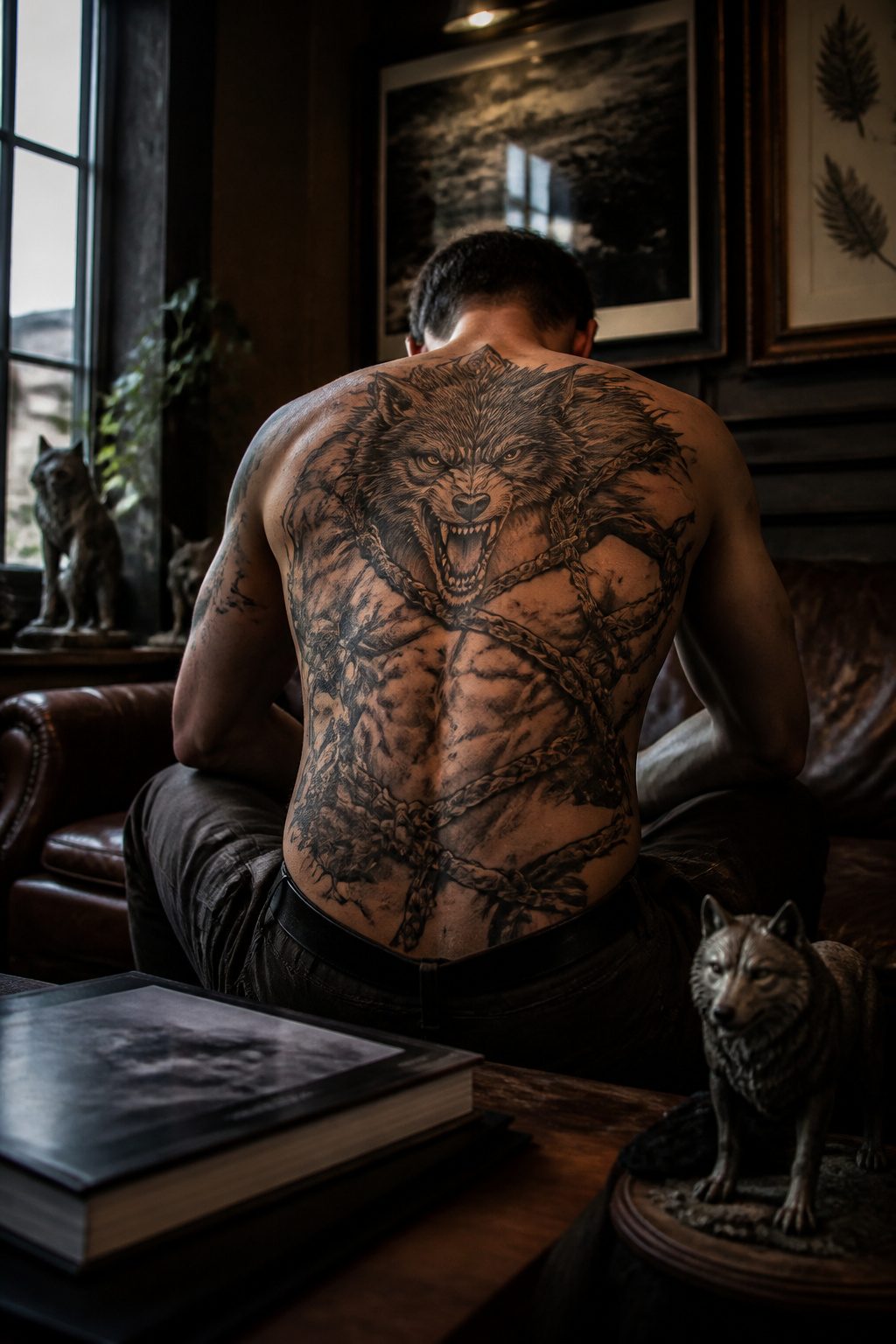
Fenrir carries a tension most Norse symbols do not. The wolf is bound, not conquered, and that distinction matters for how the image sits on skin. Some read him as the force that breaks every chain, the rebellion against order itself. Others treat him as inevitable, part of a cycle that returns whether anyone wills it. Both readings are defensible, and the tattoo lives in that gap.
The visual payoff comes at scale. A back piece gives room for the full scene, the cord Gleipnir straining, the god’s hand in the wolf’s jaw, the moment before the snap. Sleeves work too, though they compress the narrative into something more symbolic. What sells the image is the strain in the muscles, the sense that the binding is temporary. A small Fenrir loses that entirely. The symbol becomes a dog with anger issues.
The Helm of Awe sometimes rides alongside, eight trident arms radiating from a center point. It is a separate symbol with its own gravity, and pairing the two risks crowding the composition. My preference runs to letting Fenrir own the space. The wolf is already doing enough work, representing raw power and what lies beyond control. Adding more symbols often subtracts meaning rather than adding it.
7. Jörmungandr
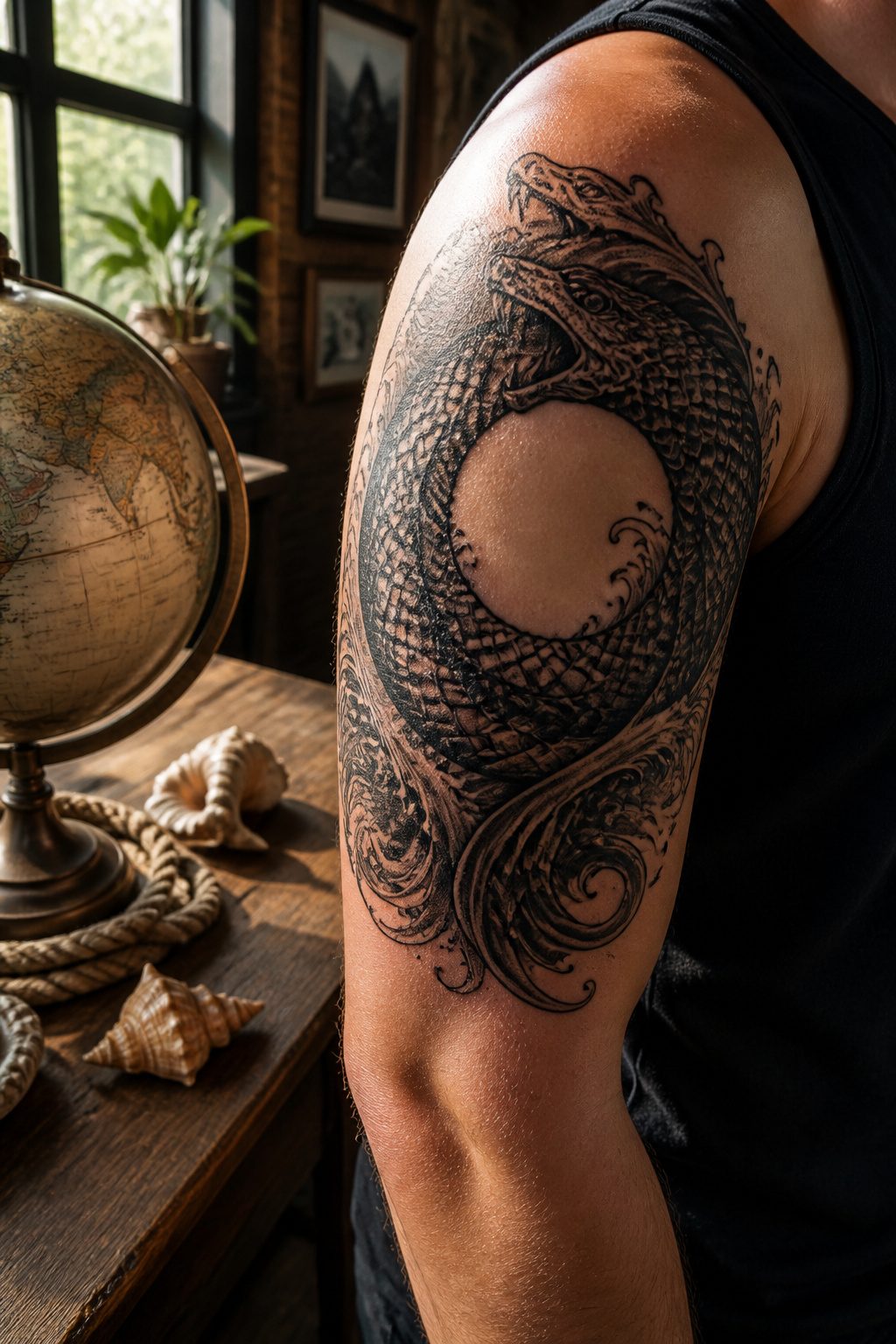
The ouroboros form, a serpent consuming its own tail, carries weight far outside Norse art. I recognized it first in alchemical manuscripts, then learned the same loop belongs to Jörmungandr, the Midgard Serpent who, in the sources, encircles the world beneath the ocean. Loki fathered this child, and the circle closes on itself in a way that feels inevitable once you know the story.
Three traditions back the symbol: the Greek ouroboros naming, the Norse myth of world-encirclement, and the broader cross-cultural use of the eating-tail form for cyclical time and renewal. That triple root is what separates a generic snake circle from a piece grounded in something.
For placement, the band or wrap asks for a design that reads from every angle. The ouroboros loop does this without strain; the head meets the tail at a point you can set at the wrist, the ankle, or the upper arm, and the eye travels around without finding a dead end. I have seen pieces where the scale pattern alone carries the hours, and others where the skull or a simple eye at the meeting point does the work. The band succeeds when the join is intentional, not hidden; pretending the head and tail were never separate breaks the logic that makes the symbol matter.
8. Ægishjálmr
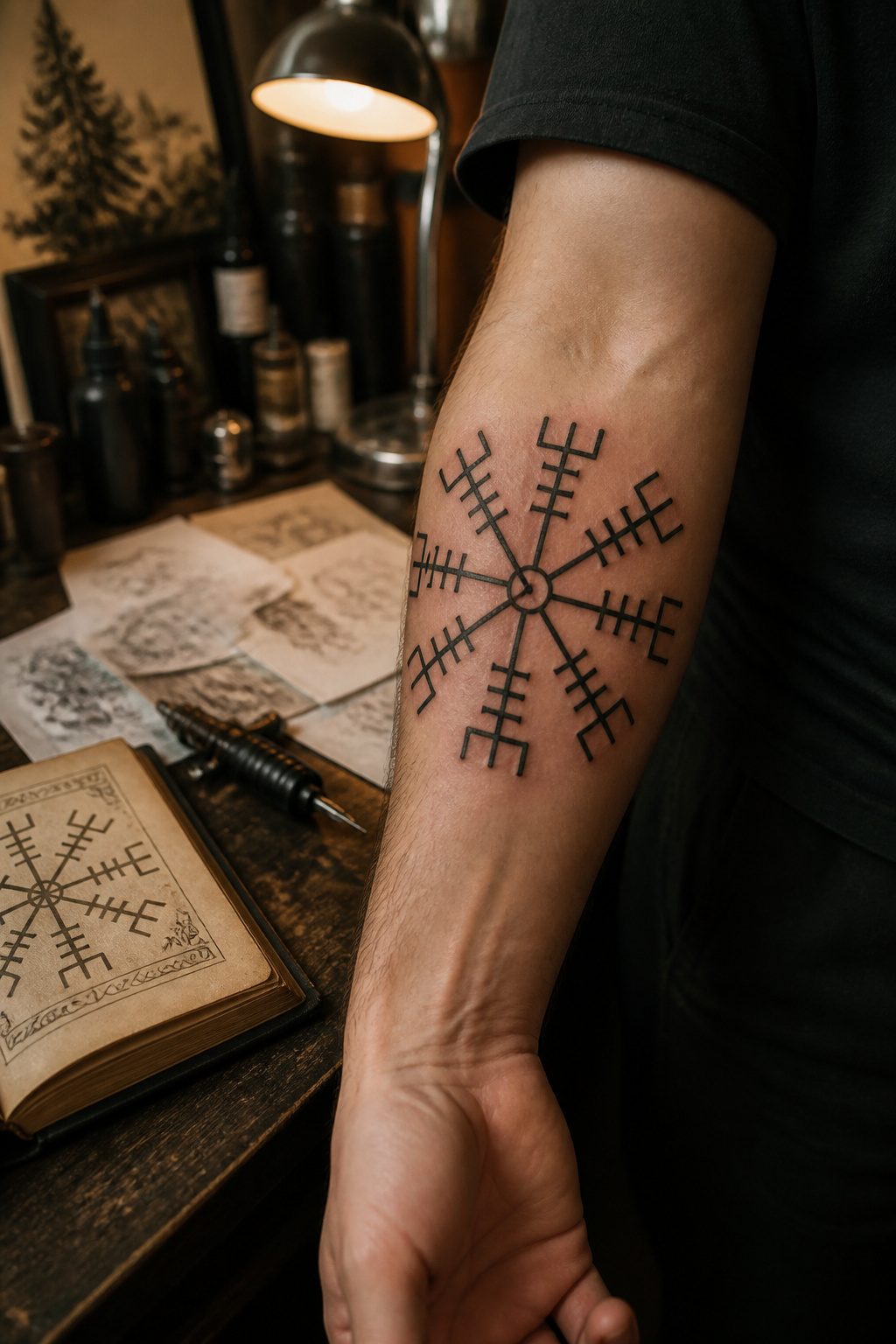
The Ægishjálmr, or Helm of Awe, carries its power in geometry alone: eight arms radiating from a center point like spiked tridents, each one reaching outward as if to strike before the enemy closes. That radial structure is what makes it read instantly as protection rather than decoration. I have watched this symbol work best in two placements where the body gives it natural anchor points. The forearm lets the center sit over bone, with the eight arms wrapping the radius so each spike travels along its own line of muscle. Between the shoulders, the center locks to the spine and the arms spread across the scapulae, turning the back’s natural V-shape into part of the design’s defense posture.
The sources split on what those eight arms actually do. One reading calls it pure protection worn into battle; another adds the element of terror, the symbol not just shielding the wearer but projecting fear outward toward anyone who opposes them. A third source pushes further, describing the form itself as enough to inspire awe without any prior knowledge of its meaning, the geometry doing the work before the mythology can. That disagreement matters for how you brief an artist. If you want the protective reading, the arms can stay clean and mathematical. If you want the terror, the spikes need sharpening, the trident points lengthening until they read as offensive rather than merely defensive. The symbol allows both; the tattoo cannot.
9. Viking Ship
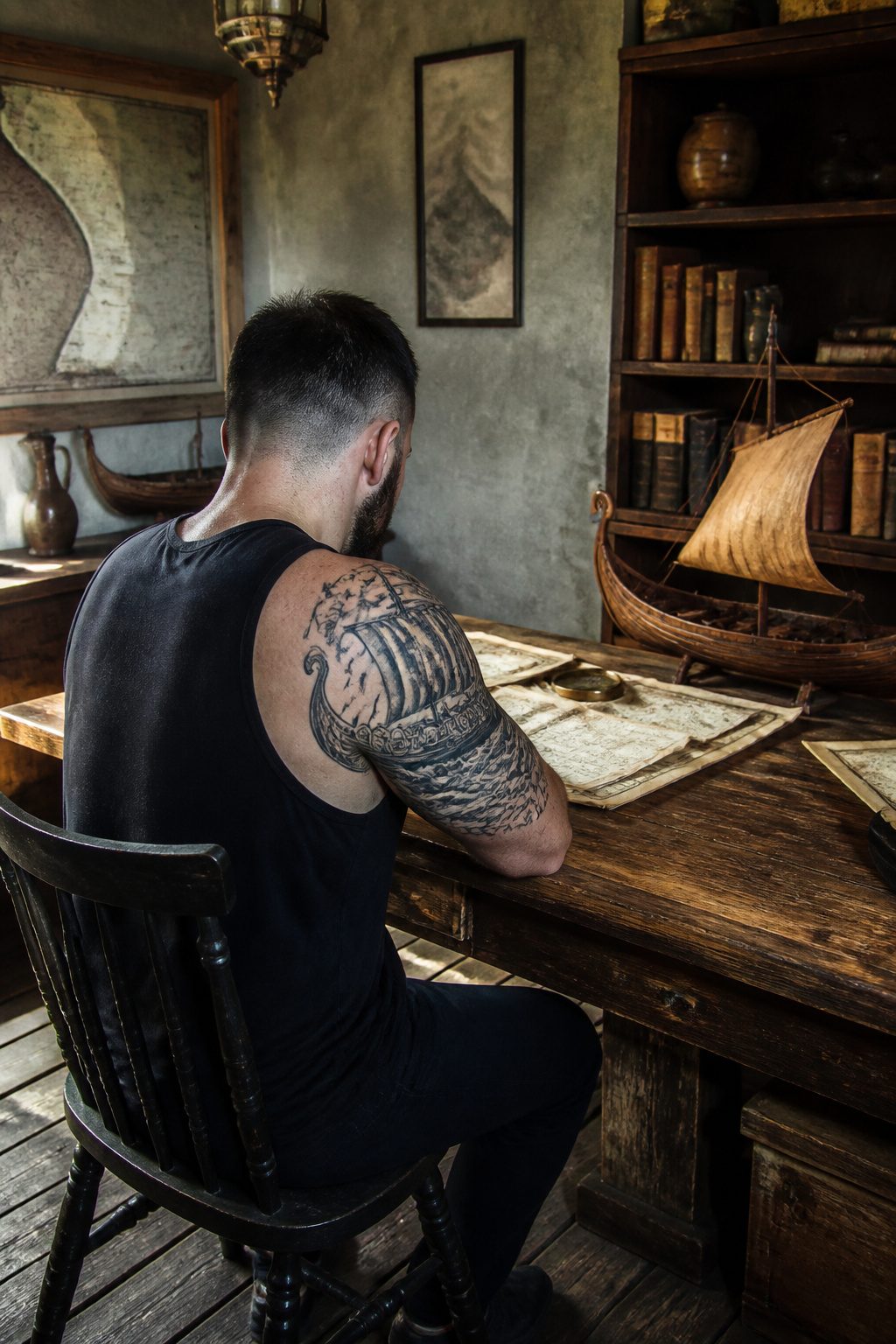
The longship carries three distinct meanings that make it more than decoration. Its graceful, long, narrow shape represented exploration and adventure for Vikings who relied on shallow-draft hulls built for speed, capable of sailing shallow waters and beaching for sudden landings. The same vessel also served as passage to the afterlife, which is why the Oseberg ship, with its famous curly carved bow, still resonates so strongly in tattoo work today.
The elongated form suits ribs, thighs, or full back pieces especially well, since the design demands space to read properly. A thigh placement gives the artist room to run the full length without crowding, while ribs follow the natural line of the hull. The Oseberg’s carved bow details reward a larger scale, and the narrow beam means the piece can stay relatively slim even at substantial size. Sources describe these hulls as all wood with cloth sails of woven wool, numerous carvings, and details worth including if your artist has the patience for them.
The adaptability helps too. A ship started on a forearm can extend into a sleeve later, or an ocean background, birds, land, or battle scene can fill in around a back piece over multiple sessions. One approach builds the vessel from Nordic symbols rather than literal depiction, which reads more abstractly and keeps the line work lighter. Either way, the longship works best when the artist respects the proportions: too compressed and the grace disappears, too wide and it stops reading as Viking at all.
10. Runes
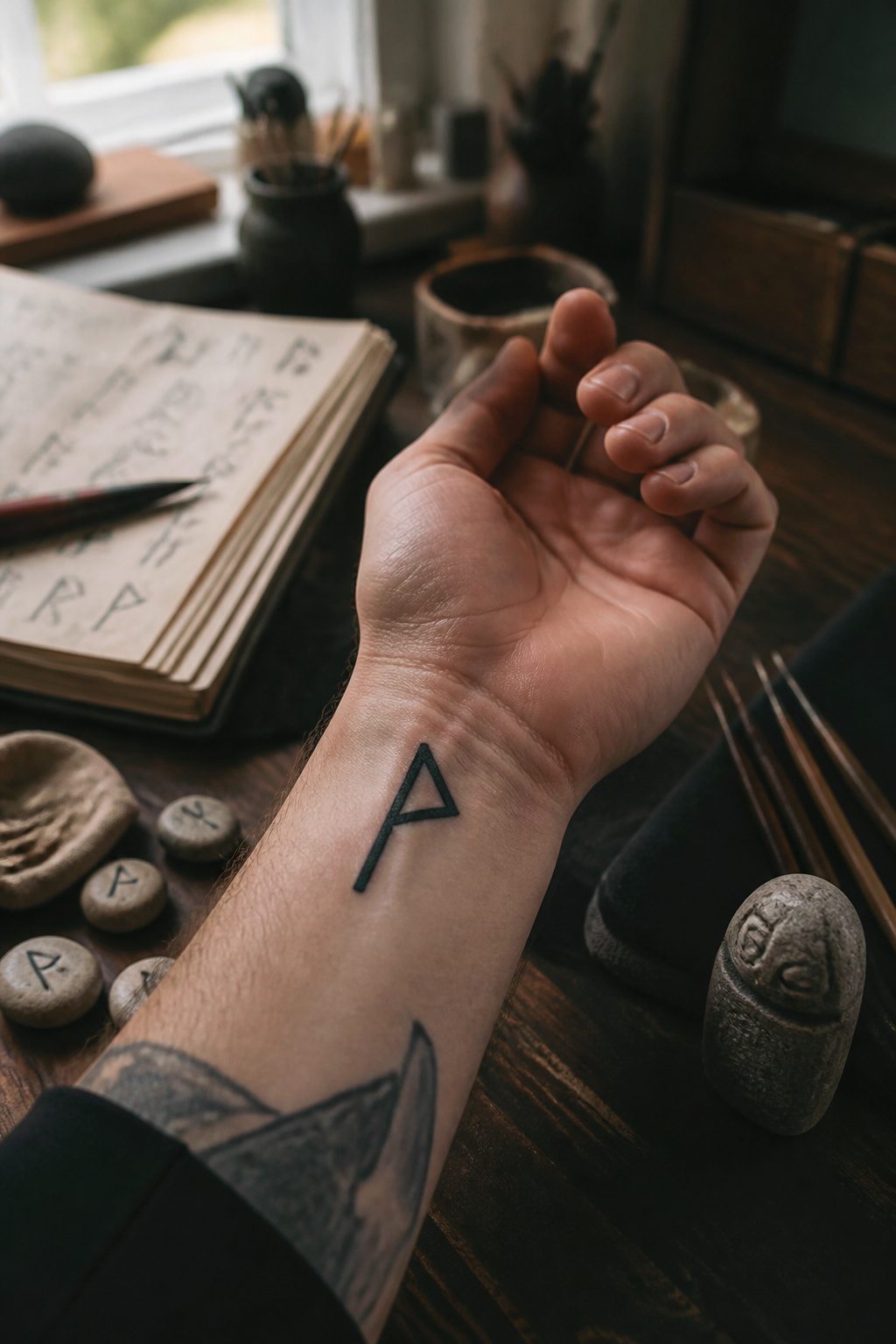
Runes carry more weight than most Viking tattoo ideas because each character in the Elder Futhark and related alphabets was understood as a channel for cosmic forces, not merely a letter. A single rune can stand alone as a working symbol, and many people choose that path: one sharp-angled mark for protection, journey, or strength, carved in the style that suited bone and wood rather than drawn curves.
Bind runes layer that further, linking two or more runes into one continuous design. They read as personal combinations, which sounds appealing until you face the actual risk. The sources disagree on which runic alphabet suits which era, and modern English letters rarely map one-to-one to any of them. Spell a name or word without checking the historical match, and the result is permanent nonsense on your skin.
I have seen this go wrong in consultation more often than clients expect. Someone brings a string of characters found online, and the angular forms look correct to untrained eyes but missequence the alphabet or drop a phonetic distinction that changes meaning entirely. The research burden sits on you, not the artist, because most tattooists know the visual style without knowing the linguistic rules behind it. If you want runes, commit to the hours of verification, or stay with a single, well-documented symbol whose meaning is fixed and harder to corrupt.
What These Symbols Actually Meant
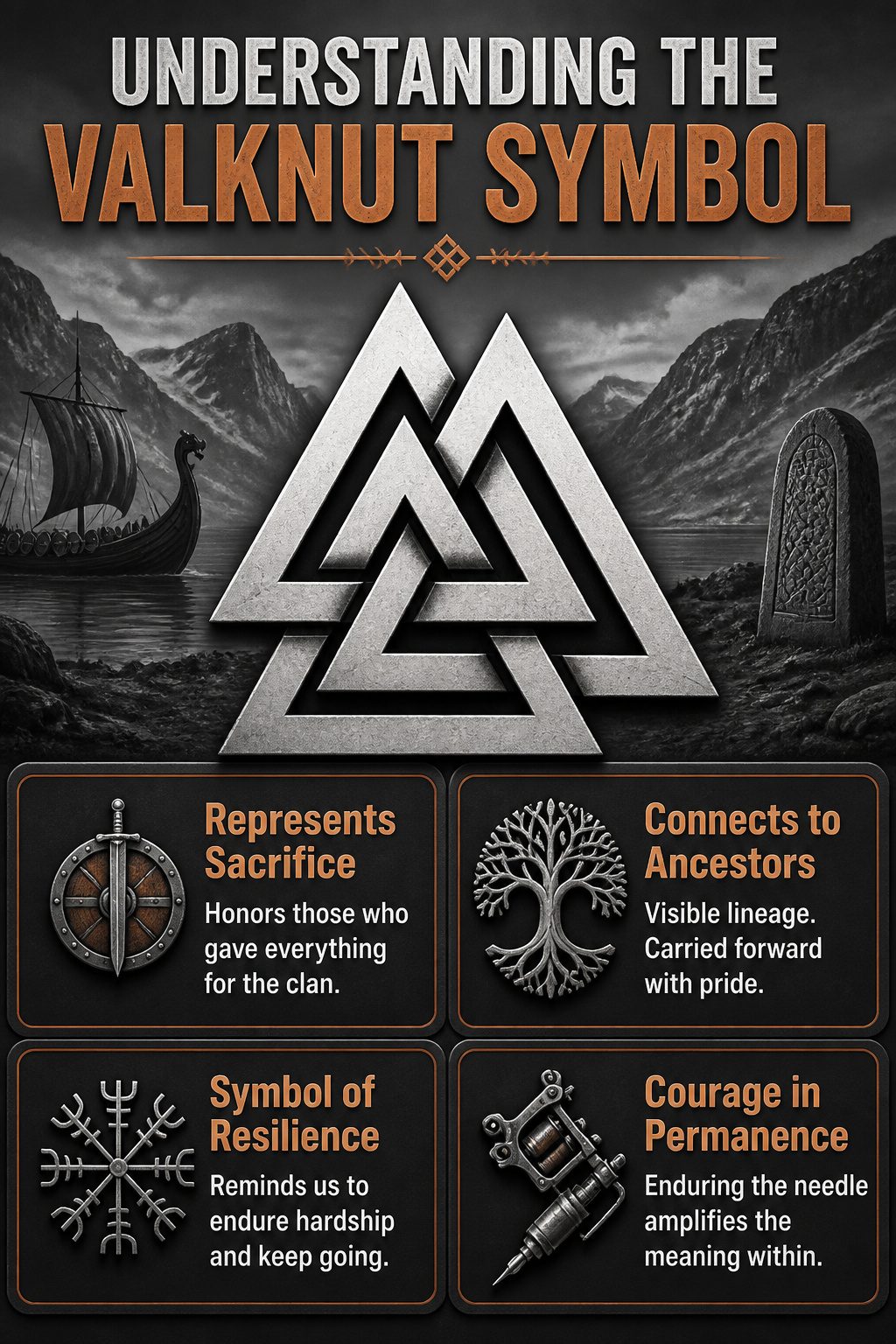
The Valknut, that interlocking knot of three triangles, carries weight most first-timers miss. Sources tie it to Valr (slain warriors) and Knut (knot), which lands many on a "cult of the dead" reading. The fuller picture is sharper: it marks recognition of those who sacrificed at their prime for the clan’s survival. That distinction matters if you are wearing it permanently.
Honor and ancestry run through nearly every symbol in this space. Men with Scandinavian roots often use these marks as visible lineage, but the resonance extends further. The Helm of Awe and certain runes function as reminders of resilience through hardship, not mere decoration. A Viking warrior image can signal inner determination rather than outward aggression.
The act itself carries meaning. Enduring the needle for something permanent already asks a measure of courage; layering that with symbolism tied to bravery amplifies the statement. What separates a lasting piece from dated flash is whether the wearer can articulate why this specific mark, why now, and what challenge it answers. The sources that hold up over time are the ones where personal significance connects to cultural weight rather than borrowing it.
Where the Art Goes on Your Body
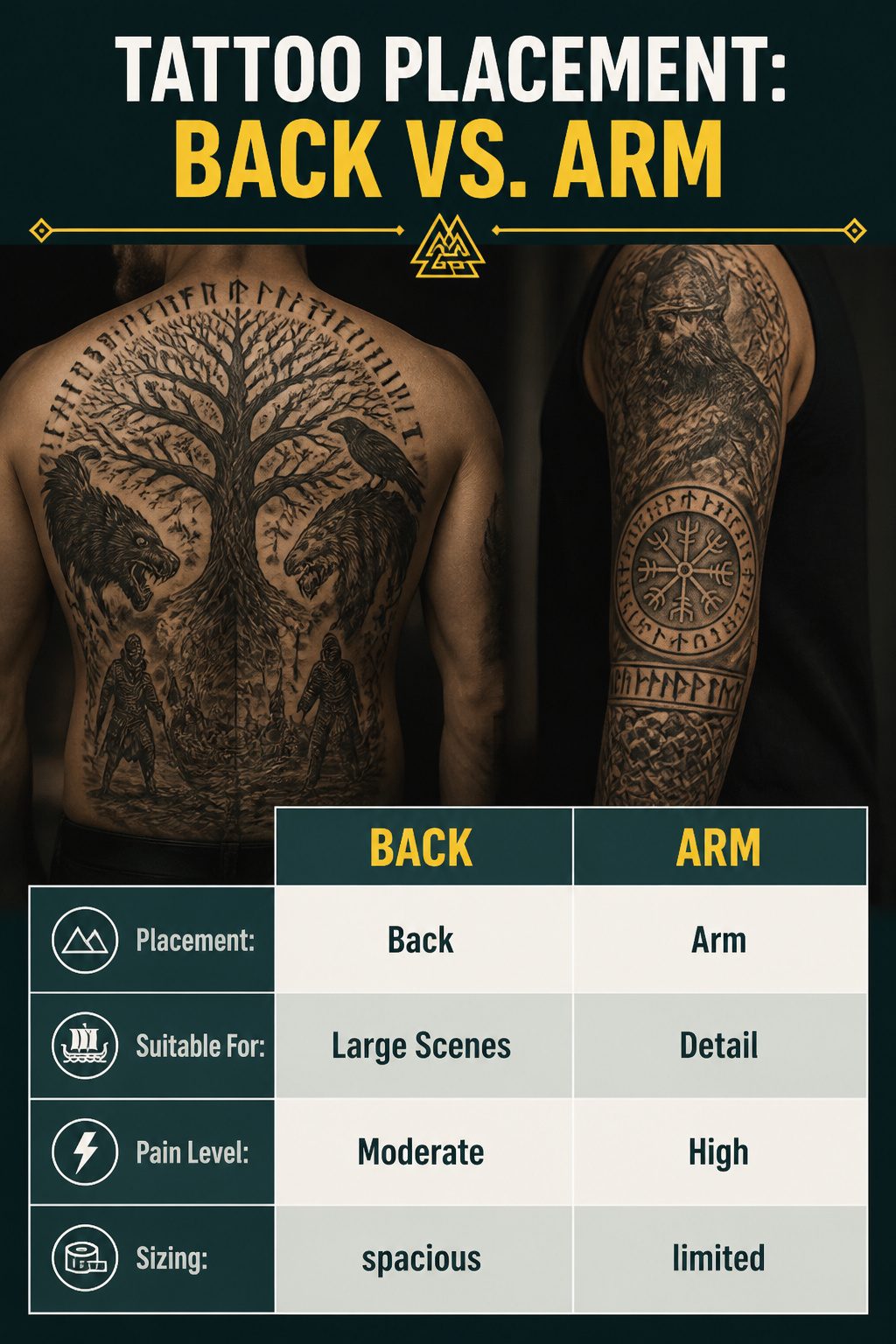
A full back or chest gives the Norse scenes room to breathe. Yggdrasil, Fenrir, or a full battle spread need that flat acreage to keep the linework from crowding, and the chest stays private enough that the meaning sits close rather than performing for strangers.
The arm breaks down into two territories. A sleeve handles the detailed scenes, but the forearm has become the practical choice for a single Vegvisir or a rune band. It sits where you see it without becoming a billboard, and shirts cover it when the context calls for quiet.
Sizing dictates placement more than symbolism does. A hand or knuckle piece forces you into small territory, a Valknut or Mjölnir shrunk to inches, and that scale changes what reads cleanly. Dark green and dark blue hold up on larger surfaces where the color has space to gradient; black and grey stay the safer bet for anything under four inches.
Pain levels follow the bone map. Chest and back spread the sensation across muscle, while fingers and knuckles deliver it straight to nerve and tendon. Most Viking work runs large, so the question becomes whether you will commit the real estate or shrink the concept to fit somewhere convenient.
Styles That Work
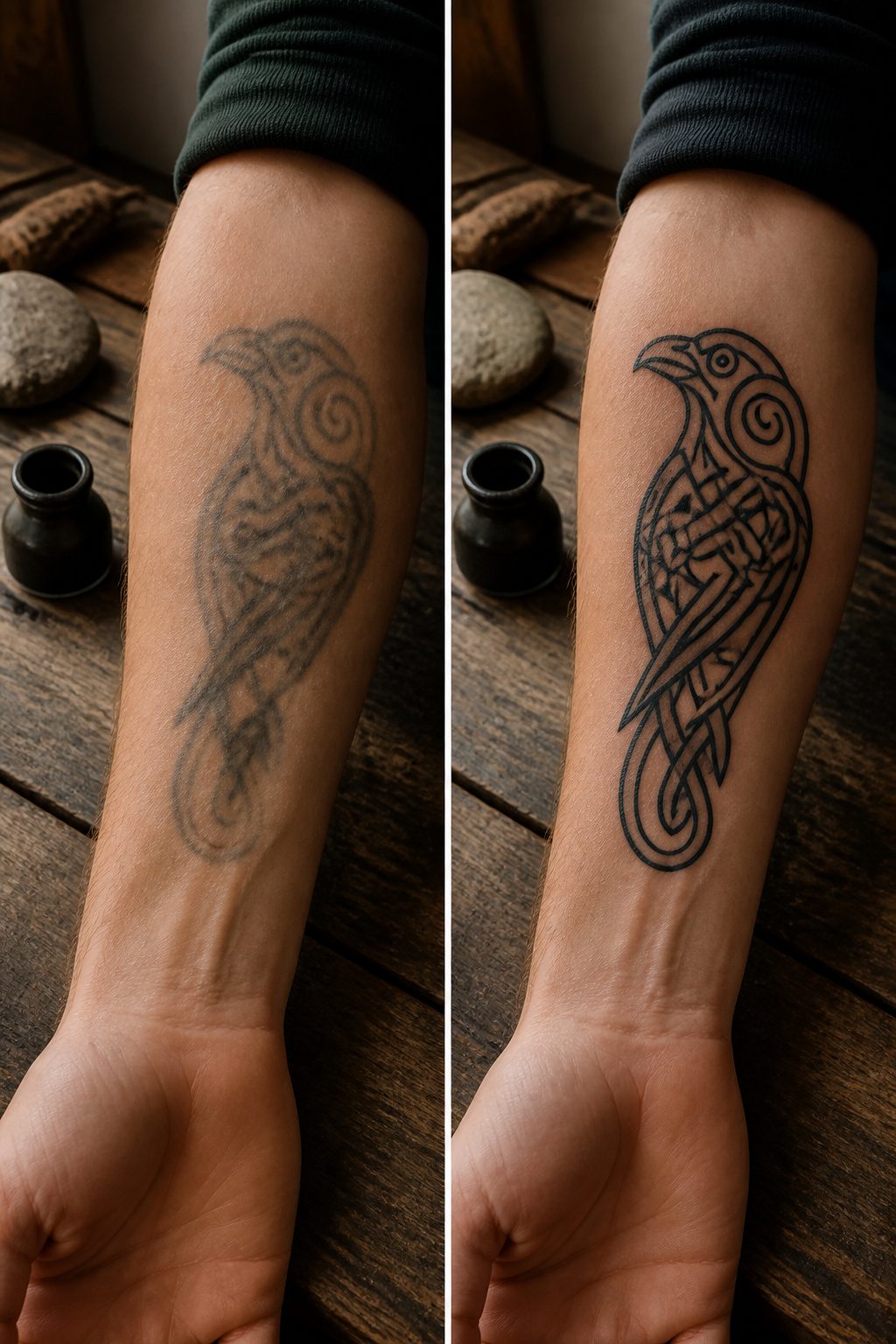
Traditional Norse art with its interlacing knotwork and animal forms translates to skin about as well as any historical style I have seen hold up over decades. The thick black lines age cleanly, and the geometry gives an artist something solid to work with even at smaller scales. A raven rendered in true Urnes or Borre style, beak laced back into its own wing, carries the weight without needing color or shading to keep it readable five years out.
The modern minimalist approach strips that same raven to a single continuous line or a rune to a few sharp angles. Runes were carved into stone and bone, not drawn with flowing ink, so their angular shapes already suit a light hand. A single ᛟ or ᚠ behind the ear or along a collarbone reads as Norse to those who recognize it and as clean geometry to everyone else. That dual legibility is part of what makes the style work.
Blending runes with figurative elements sits at the harder end of the technical scale. A warrior portrait framed by knotwork, or a ship whose sail carries a bindrune, demands an artist who can shift between precise line and organic form without losing either. I have watched designs like this fail when the runes get treated as decoration rather than as carved text, their edges softened until they read as almost-Latin almost-letters. Keep the angles sharp even inside a larger piece, or the runes become wallpaper.
The range runs from full backpieces in dense blackwork to a single rune no larger than a quarter. Most clients land somewhere between, and the adaptability means a Norse theme does not lock you into one aesthetic commitment.
Finding an Artist Who Knows the Difference
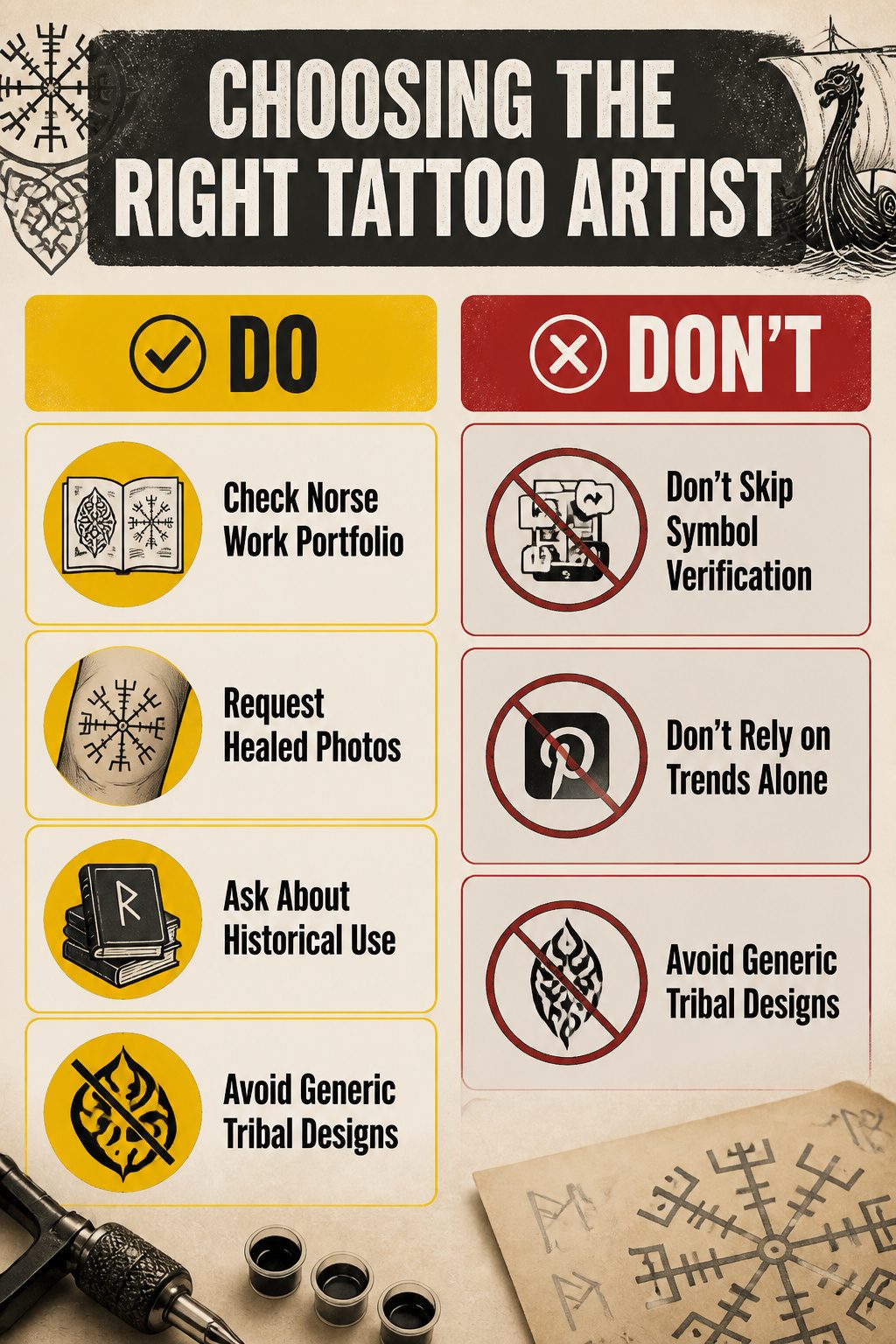
A portfolio of Norse work matters more than a friendly consultation. The linework in these pieces runs thin and precise, and shading builds depth through knotwork rather than solid black fill. An artist who has not spent time with interlace patterns will default to bold lines that flatten the design into something Celtic or generic tribal. Ask to see healed photos, not just fresh work; the fine lines in a Vegvisir or Ægishjálmr spread over time if the needle depth was off by even a fraction.
The cultural weight of these symbols is not decoration. Wearing a rune you chose because it looked sharp, only to learn it carries a meaning you did not intend, is a fixable mistake before the appointment and a permanent one after. Verify the symbol with sources that predate Instagram, not just the stencil the artist pulls from a Pinterest board. A consultation should include the artist walking you through why a particular bind rune or ship orientation reads correctly, not nodding along to your printout. If they cannot explain the difference between historical use and modern reconstruction, the needle should not touch your skin that day.
Frequently Asked Questions
Did Vikings have tattoos?
Historical accounts suggest some Vikings may have had tattoos, though no definitive archaeological evidence survives. The question matters less than whether the symbols carry personal weight now.
What do Viking tattoos symbolize?
They typically stand for courage, resilience, honor, and ties to Norse mythology. Specific marks layer on more precise meanings: the Valknut for sacrifice, Mjölnir for protection and strength, the Vegvisir for finding direction through difficulty.
What are the most popular Viking tattoo ideas?
Mjölnir, the Valknut, Vegvisir, and Yggdrasil rank at the top across shops and searches. Runes and raven pairs follow close behind, with longships and Fenrir rounding out the most requested designs.