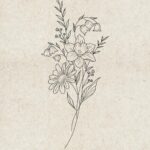
A half sleeve tattoo for a woman runs anywhere from $800 to over $2,500, and the deciding factor is not the size. It is whether you want the piece to hold its line weight in fifteen years or need refresh work every three to five. Watercolor and fine-line styles cost more upfront and keep costing; bold traditional work ages on its own terms.
I have watched clients choose floral designs more often than any other category, then expand a single flower into a sequence once they see how the botanical grammar builds across the arm.
1. Floral Designs
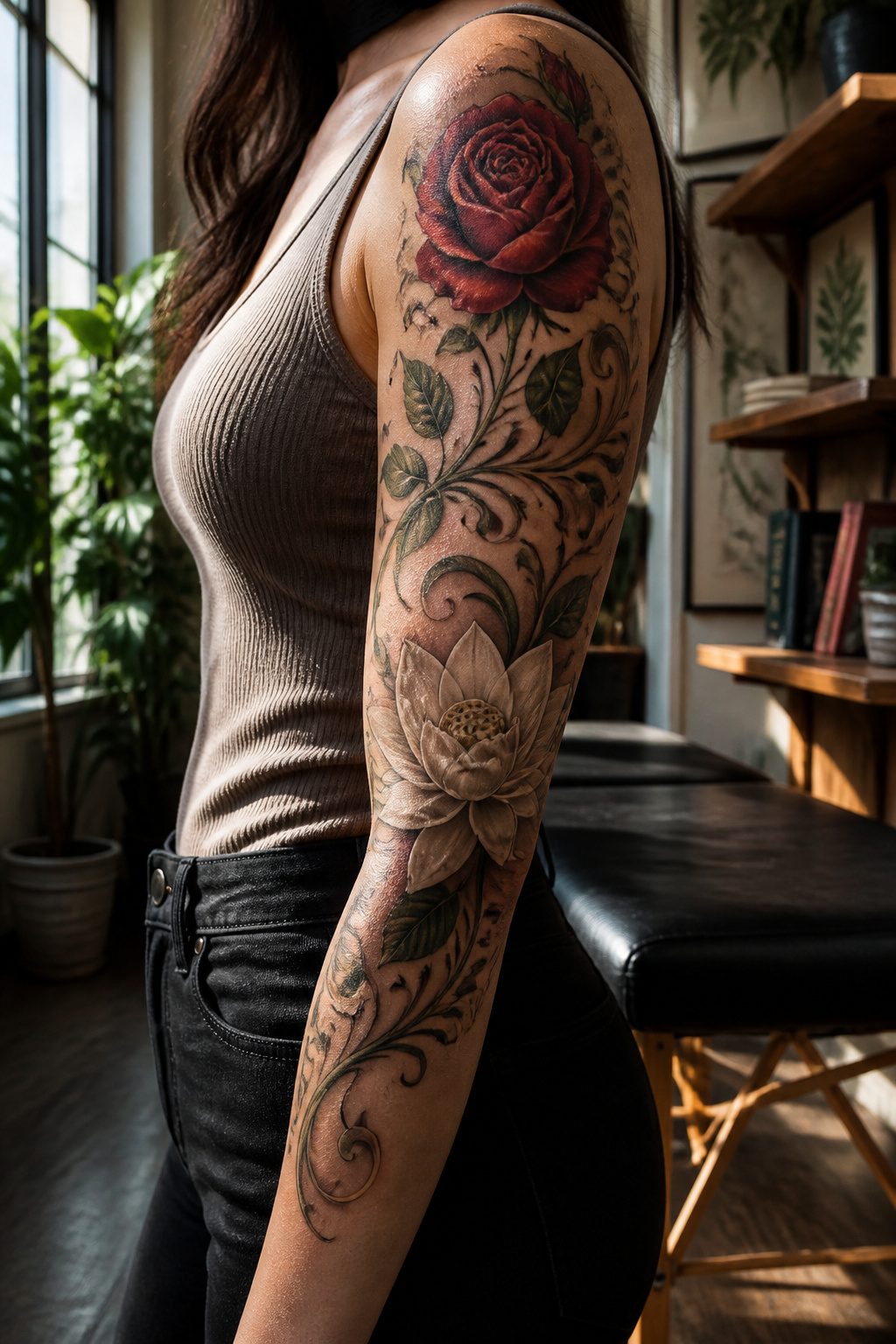
Flowers and botanicals still dominate when women plan half sleeve tattoos, and the reasons are practical as much as symbolic. A rose wrapped around the upper arm carries its meaning of beauty and passion without needing a caption. The lotus, rooted in mud but opening clean above water, reads as resilience and rebirth when it climbs from shoulder toward elbow. Peonies work for prosperity and honor, their full petals softening the muscle lines that run beneath.
The upper arm from shoulder to elbow gives these motifs room to grow. Vines can spiral with the natural curve of the arm. Buds can cluster near the shoulder cap and open into full blooms as they travel downward, or the reverse, so the design reads as movement rather than static image. Growth and femininity are the themes most women name first when they describe why they chose this style.
I have watched clients settle on floral half sleeves more often than any other category, and the pattern holds: they come in with a single flower in mind, then expand once they see how the botanical language builds. A rose alone says one thing. A rose passing into lotus into peony tells a sequence. The canvas is large enough for that grammar, and the placement keeps it visible without the full commitment of a sleeve to the wrist.
2. Mandala Tattoos
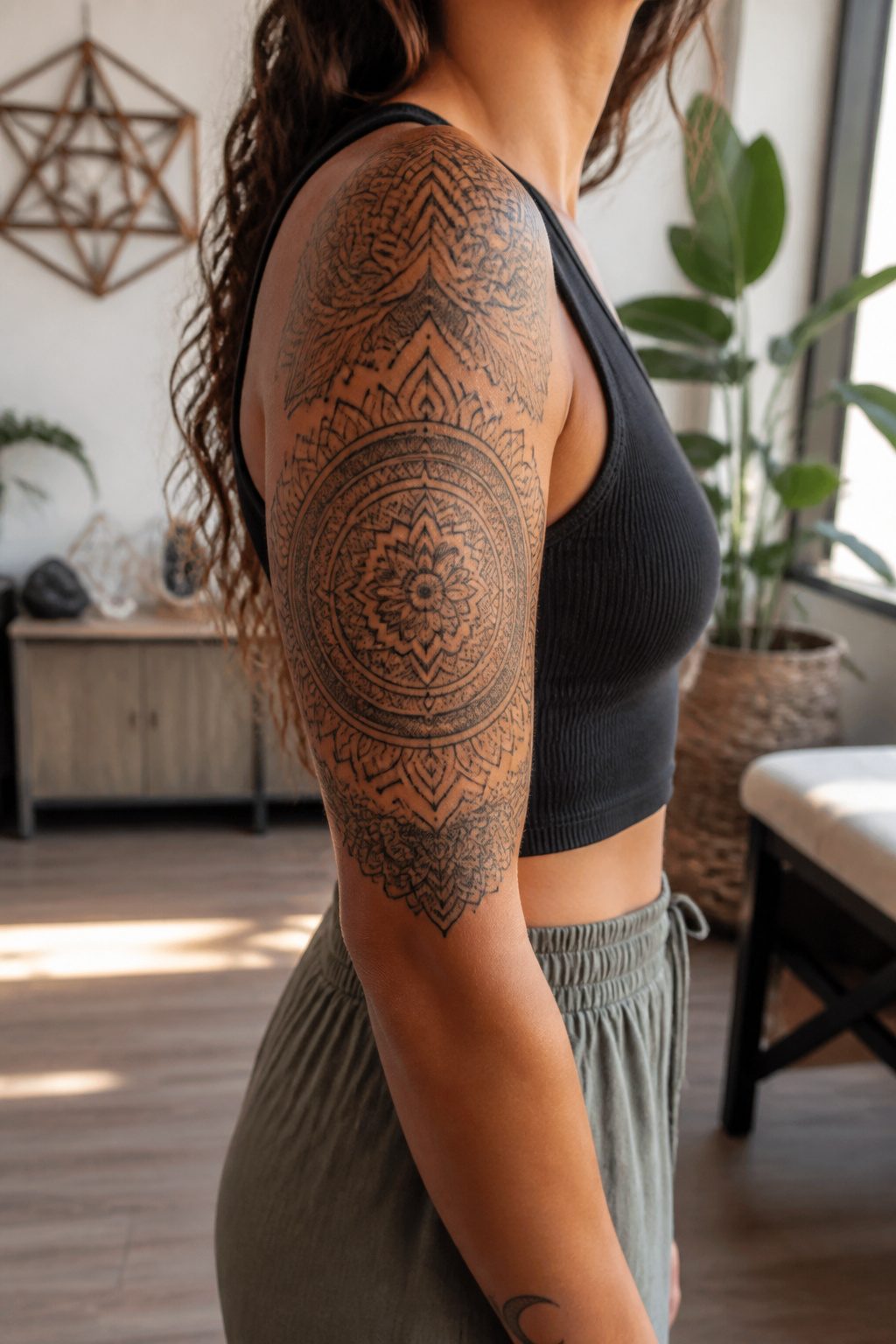
The mandala’s circular geometry carries a weight that predates modern tattooing by millennia. In Buddhist and Hindu practice, this form represents the universe itself, an ordered cosmos radiating from a center point that stands for balance and harmony. That same inward pull is what makes the design so effective on a woman’s upper arm, where the curve of the shoulder and the rounded muscle of the bicep echo the shape rather than fight it.
Modern wearers have adapted this spiritual framework into feminine pieces that draw the eye toward the center of the design, not away from it. The effect is contemplative even when the symbolism is personal rather than devotional.
The linework is the thing that makes or breaks the result. Mandalas demand precision at a scale that leaves no room for a shaky hand, and the repetition of fine detail across a half sleeve, typically spanning the shoulder cap to the elbow, requires an artist with specific experience in geometric work. A straight line that wanders on flat skin becomes unmistakable on the curved surface of the upper arm, where the cylinder of the muscle changes the viewing angle with every shift of position. The best pieces account for that movement in the initial design rather than forcing the body to accommodate a drawing meant for paper.
3. Animal Motifs
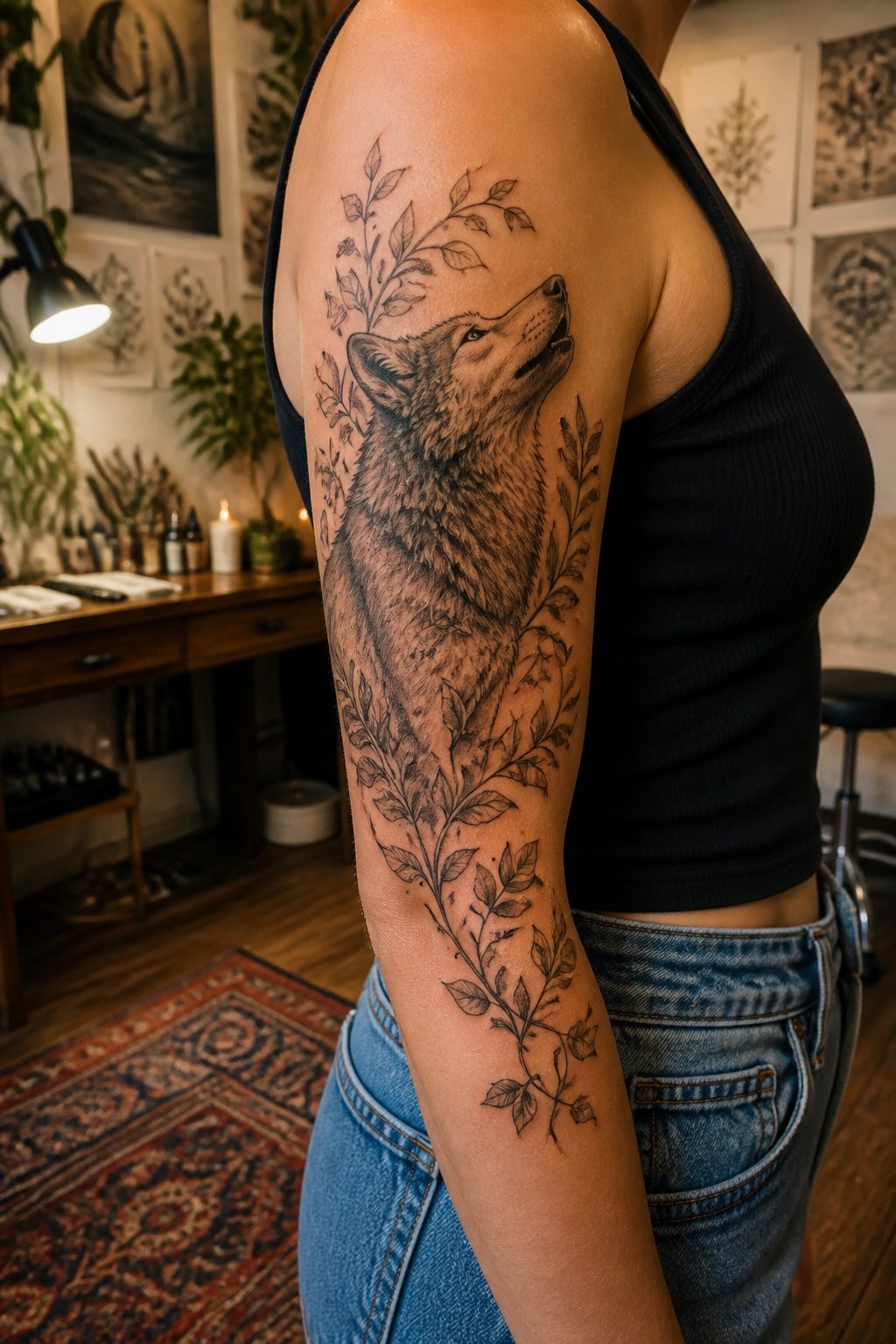
Wolves, butterflies, snakes, and birds each carry a weight that shifts depending on where they sit on the upper arm. A wolf facing forward reads as guardianship; turned profile and moving upward, it becomes instinct in motion. I have seen clients spend months deciding on the direction alone, and the ones who stick with the choice rarely regret it.
Butterflies work best when the wings break the edge of the shoulder, so the transformation feels incomplete, still happening. Birds need room to fly; compress them too tightly toward the elbow and the motion flattens. Snakes coiled around the bicep carry rebirth close to the heart, literally, while a snake descending toward the forearm reads more like shedding than healing.
The surrounding matter matters as much as the creature. Geometric frames can trap an animal into looking like a sticker; flora that wraps the same form lets it breathe. Most successful half sleeves I have watched develop over sessions layer the animal slightly off-center, then build vines or line work around it so the limb looks continuous, not collaged. The composition should move with the muscle, not fight it.
4. Abstract Art
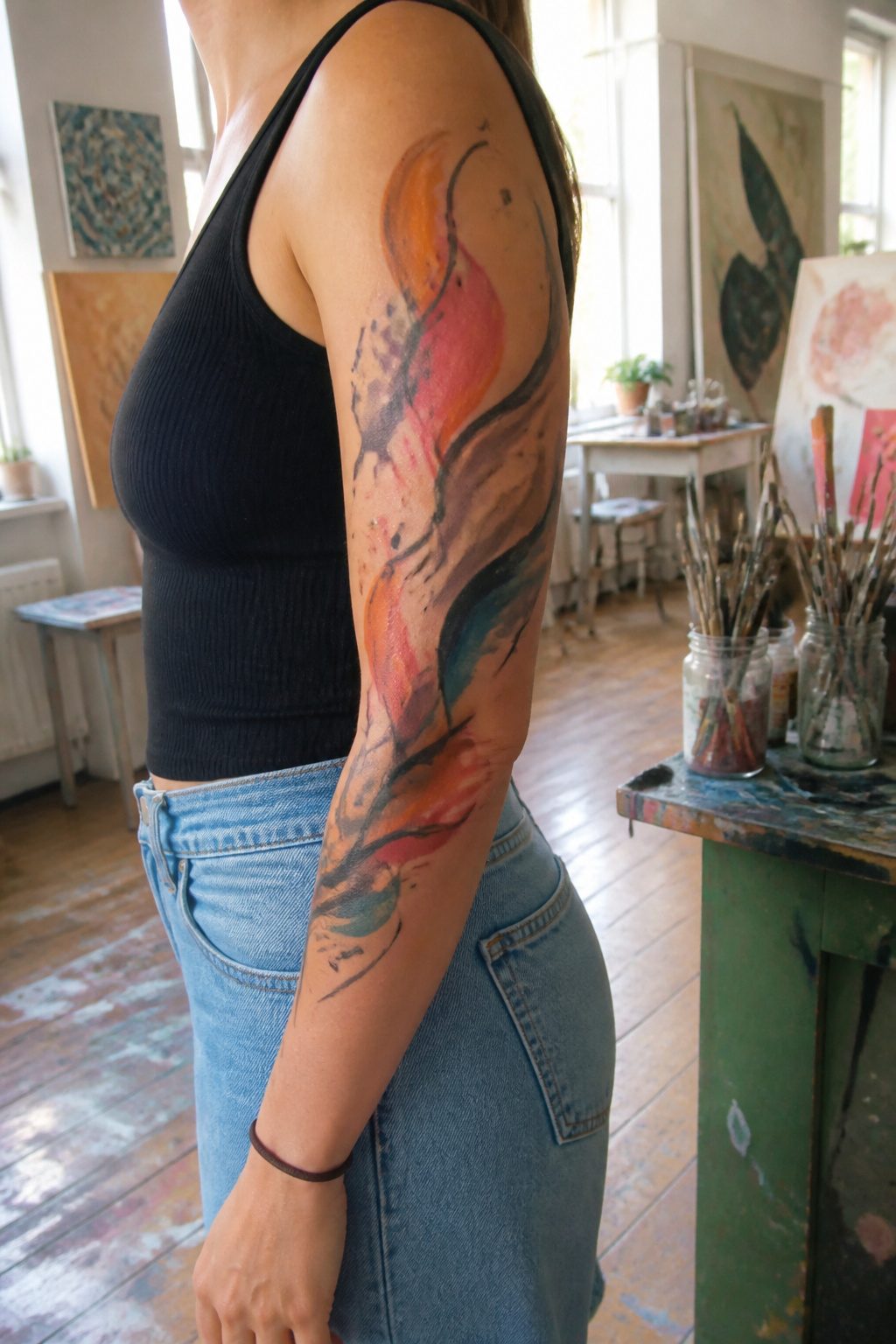
Abstract half sleeves for women trade the anchor or rose for shape, line, and color that do not resolve into anything you can name. The design might borrow from a Kandinsky canvas, the geometry of a building you walked past, or a sketch you made on a receipt and kept. That openness is the point: the tattoo reads as art first, story second, and the meaning stays movable.
Negative space does heavier lifting here than in figurative work. Where a portrait or floral piece fills the arm to describe something, abstract design lets the skin itself become part of the composition. A line stops not where the image ends but where the bare arm continues it. The result lives differently in motion, the shapes reconfiguring as the arm bends and the light shifts.
This style suits women who want the commitment of a half sleeve without wearing someone else’s symbolism. The absence of a recognizable object does not mean an absence of intent; it means the intent is carried by proportion, weight, and color temperature instead.
5. Cartoon and Whimsical Designs
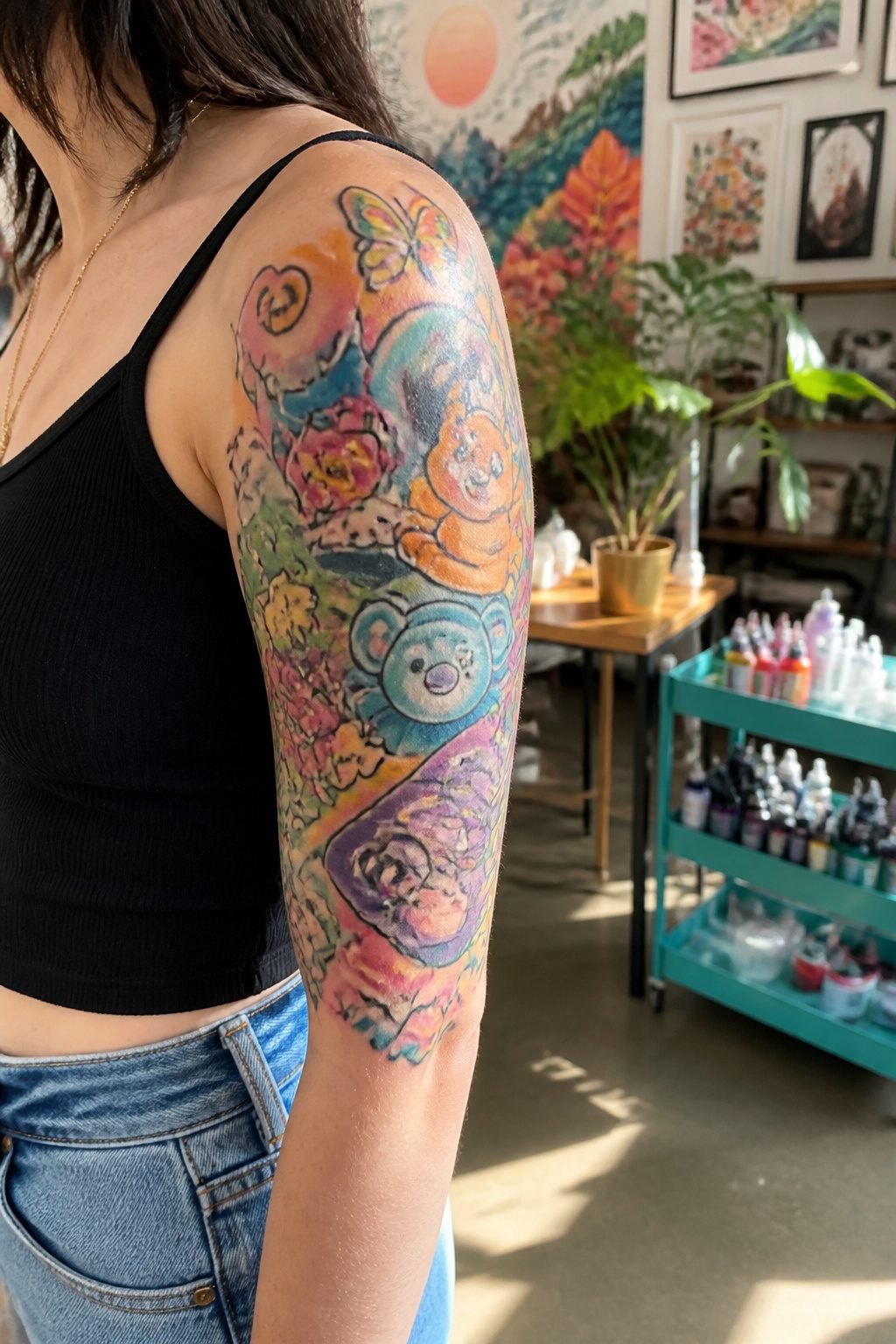
Cartoon and whimsical styles draw from animation, comic art, and personal fantasy in ways that feel deliberately light against the heavier history of tattoo culture. A half sleeve leaves enough room for a scene: characters from childhood stories, a frame from a Studio Ghibli film, or original doodle-style work that reads as illustration rather than icon. The format suits narrative pieces because the eye travels naturally up the arm, following action the way panels guide a reader through a book.
Bold outlines and saturated colors age better than fine-line alternatives, something I noticed comparing pieces on healed skin over the years. Pigment stays where the needle drove it deep, and black borders keep the image readable even as the softer details blur. Whimsical work does not read as less serious for being playful; it reads as chosen. Women who want this style usually arrive with reference images already saved, and the best outcomes come from artists who specialize in illustration rather than adapting their usual realism to a cartoon brief.
6. Realistic Portraits
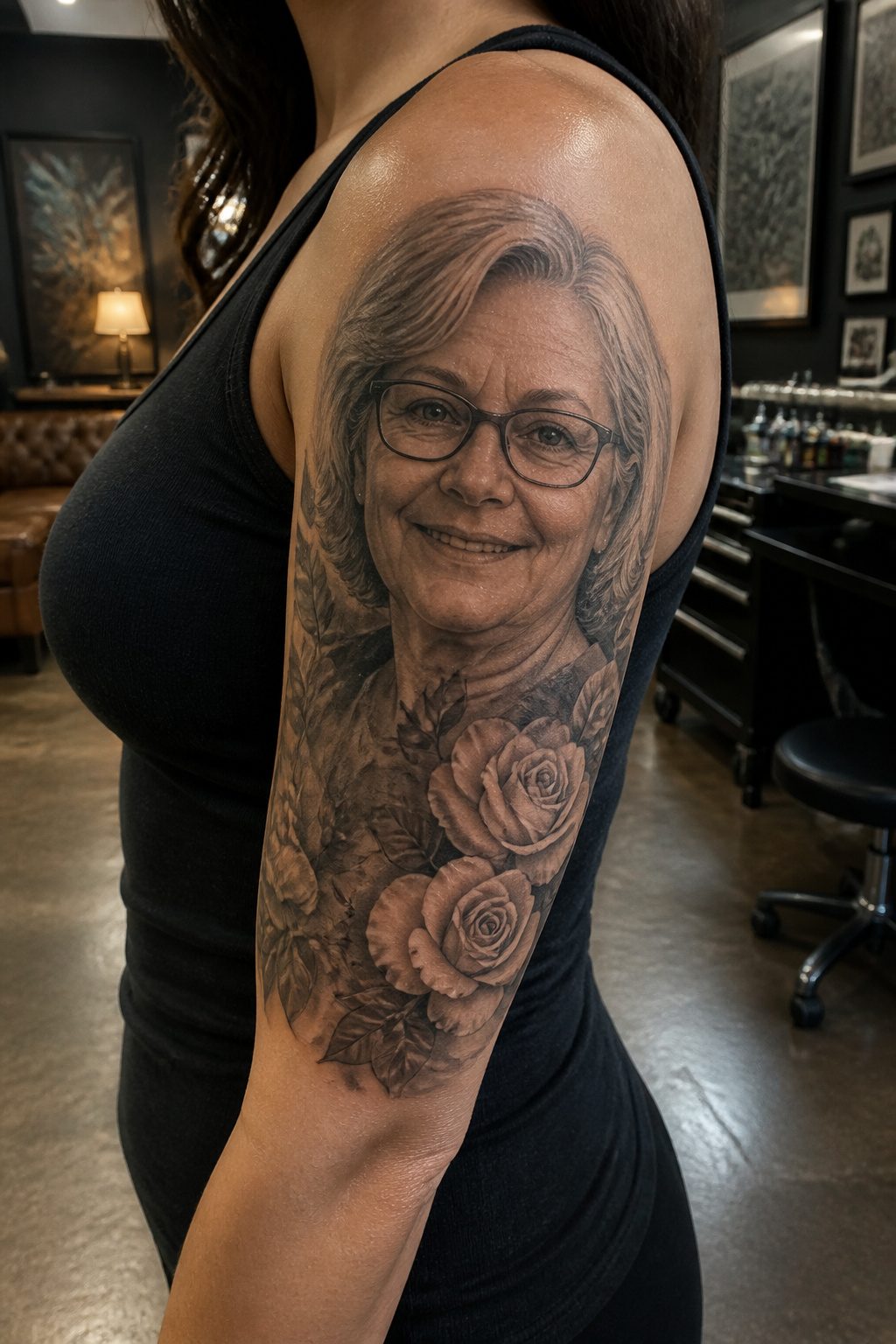
Realistic portraits on a half sleeve demand a specialist who works in photorealism, not just a strong generalist. The upper arm’s flat planes and curved transitions around the deltoid and bicep make facial accuracy difficult; skin stretches differently across those surfaces, and a face that reads correctly from one angle can distort from another. Most subjects fall into three categories: a loved one, a cultural figure, or a self-portrait. Each carries emotional weight that multiplies if the likeness misses.
A complex realism piece typically runs 3 to 5 hours per session, with most half sleeves needing 2 to 4 sessions total. The subtle shading that sells the illusion, soft gradients around the eyes and mouth, sits shallow in the dermis. That makes sun exposure a particular threat. If you drive with your left arm on the window or work outdoors, the upper arm placement will age faster than a forearm piece you can cover. Healing demands extra care: the scabbing phase is when those gradients are most vulnerable, and picking or early sun exposure can flatten the dimensionality you paid for.
7. Watercolor Tattoos
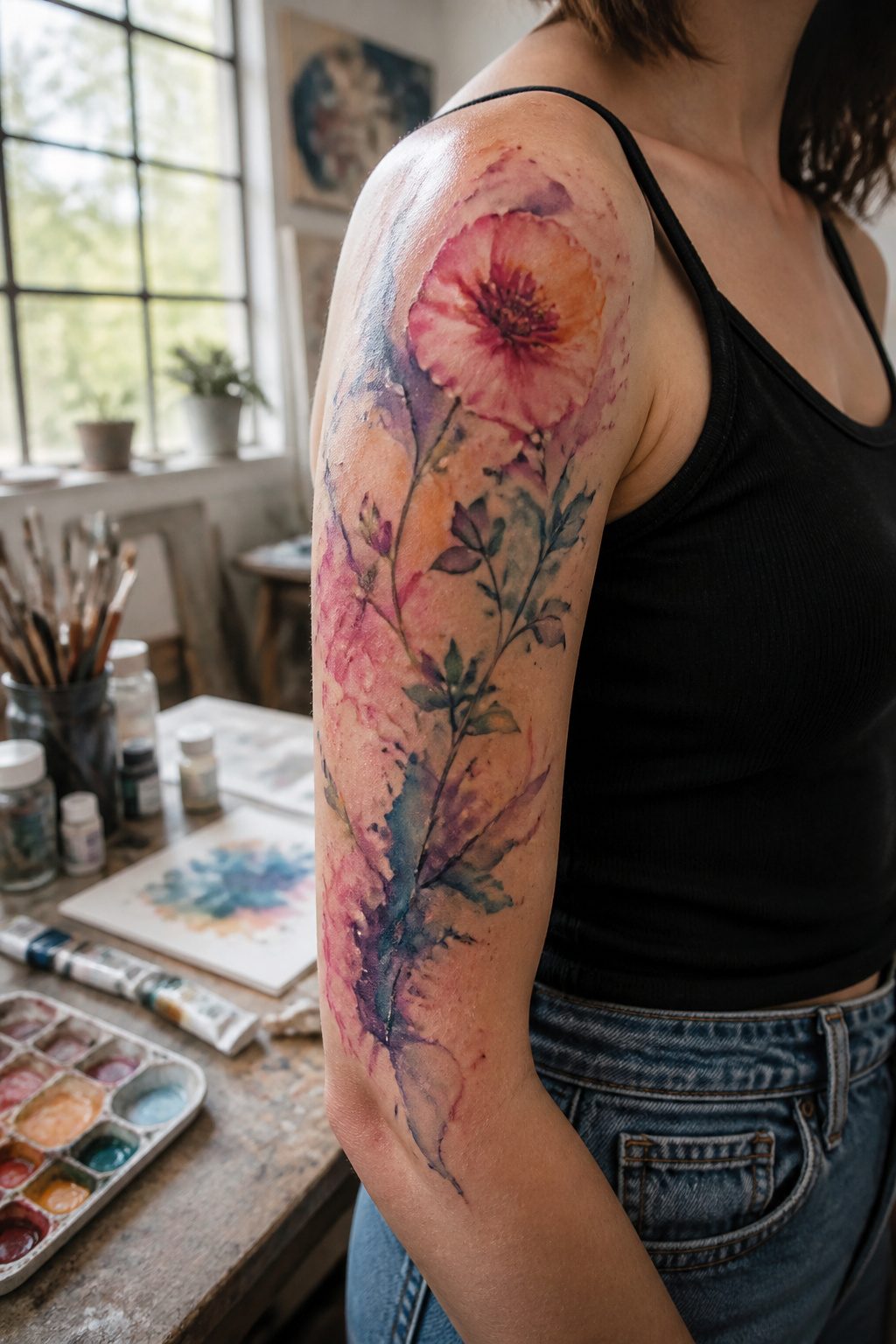
Watercolor tattoos borrow the soft, diffused look of pigment bleeding into wet paper, with visible brushstrokes and color gradients that pool and fade at the edges. The style usually skips black outlines entirely, which gives the piece its airy, painterly quality but also leaves it structurally vulnerable. Without those dark anchors, the ink disperses faster under skin, and the upper arm’s constant motion and sun exposure speed that process along. Most pieces in this style need refresh work every 3 to 5 years, sometimes sooner on the outer arm where UV hits hardest.
That maintenance rhythm is the part too many people overlook. Budget for periodic touch-ups from the start, not as a surprise five years in. For a half sleeve, watercolor works best as an accent or background wash behind more stable linework, not as the sole architecture holding the whole design together. The movement and scale of a half sleeve amplify every weakness in the style. I’ve seen full watercolor sleeves that looked stunning at six months and washed-out at two years. The ones that age well use color as atmosphere, not structure.
8. Traditional Styles
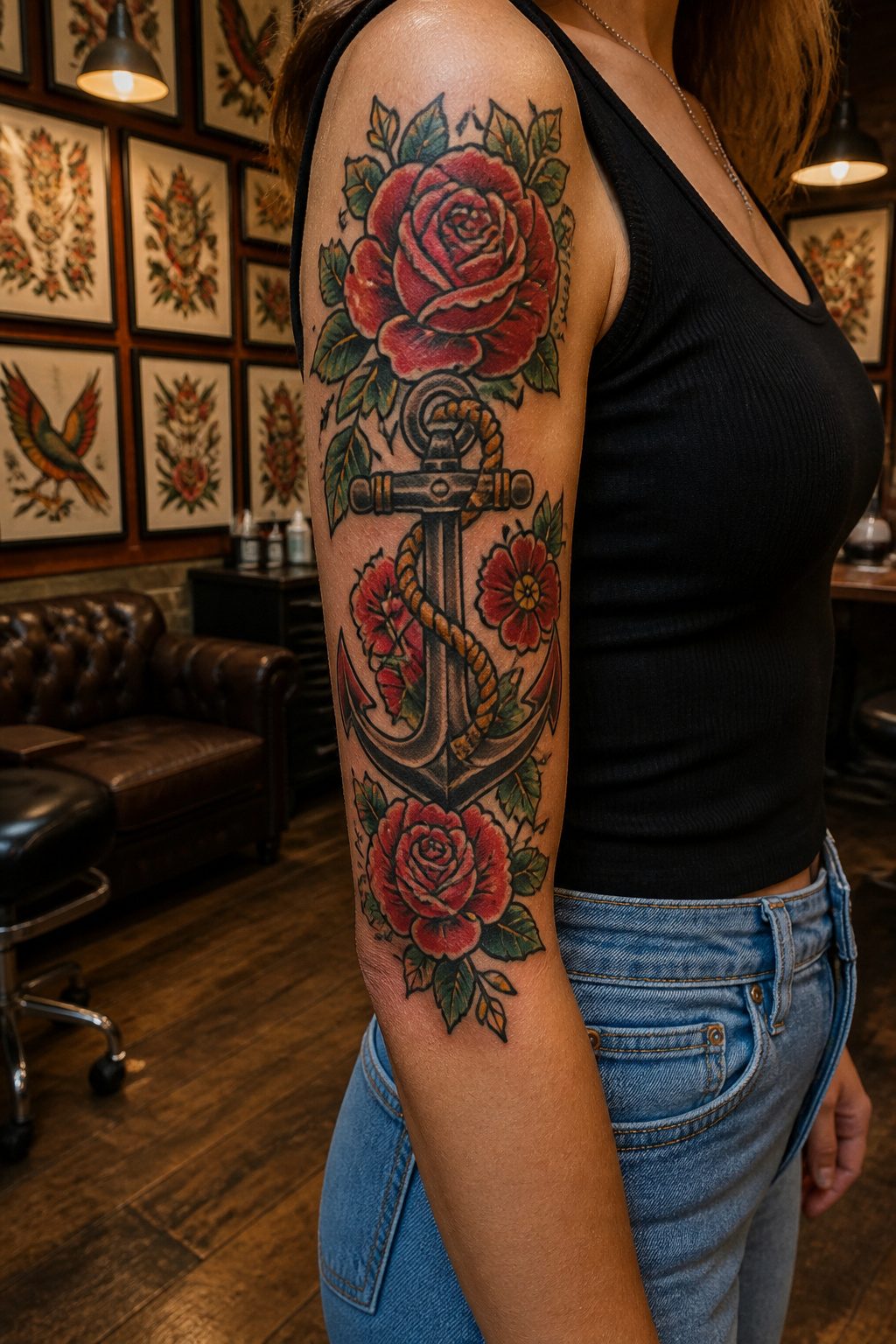
The thick black outlines and saturated, limited color palettes of American and Japanese traditional tattooing are built to last. Anchors, swallows, and roses on the American side; koi, cherry blossoms, and dragons on the Japanese: these icons hold up because the design logic prioritizes readability over decades, not seasons. Your skin changes. Traditional work accounts for that.
The upper arm has been the classic placement since sailor culture put it there, and shop flash still follows that geometry today. The half sleeve length sits exactly where the original skin art lived, which is why the style looks settled rather than adapted. I have watched pieces from the nineties hold their line weight against newer work that needed touch-ups inside five years. The difference is the discipline of the palette. Traditional artists limit themselves to a handful of pigments on purpose, because each color has proven how it ages.
The trade is commitment. These designs announce themselves across a room. For a half sleeve, that visibility is the point, but it also means the imagery has to carry weight you will not tire of.
Design Considerations and Placement
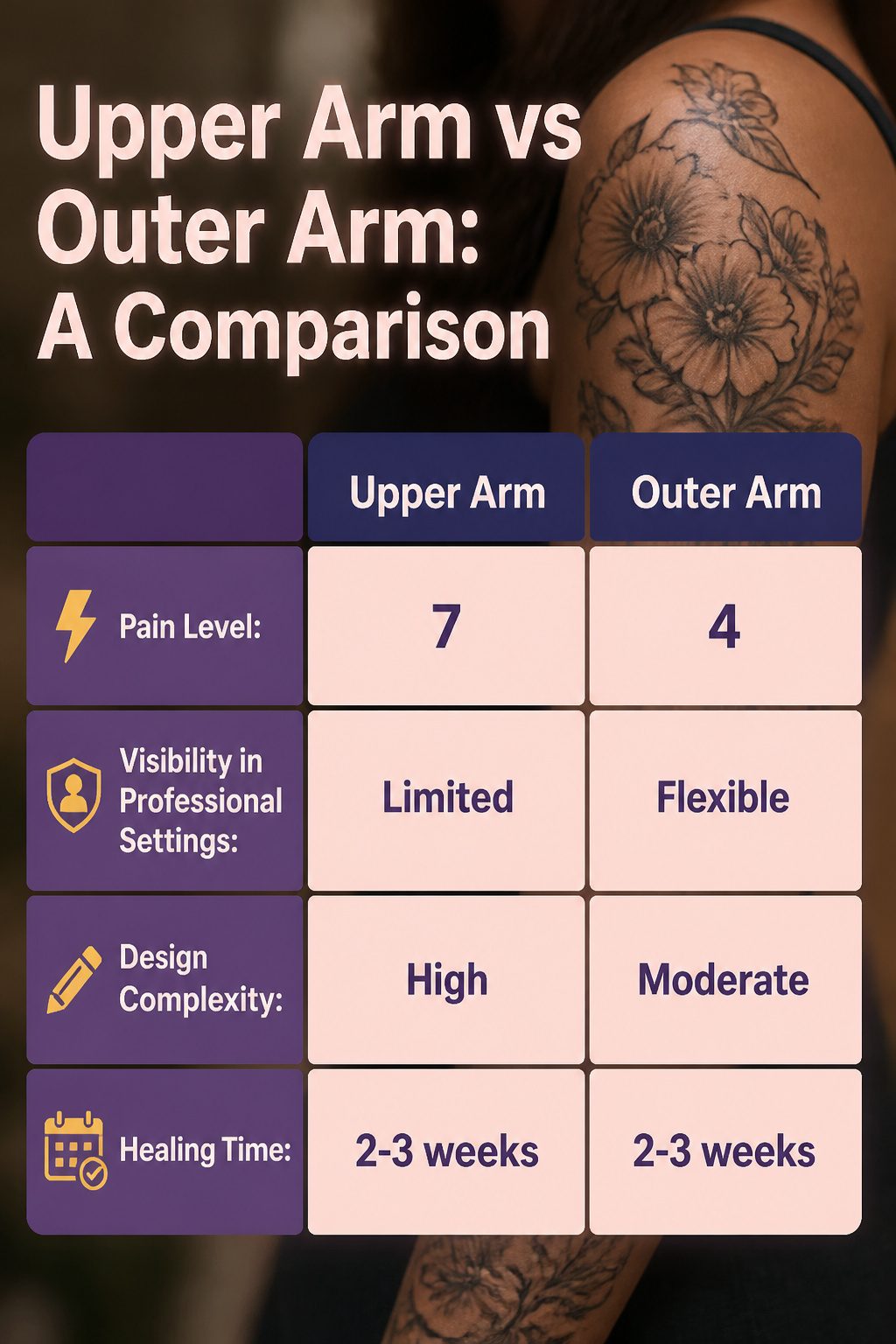
The upper arm from shoulder to elbow is the standard canvas for a half sleeve, and that placement choice matters more than most people expect going in. The inner bicep rates around a 7 out of 10 for pain, while the outer arm sits closer to 4 out of 10, which directly shapes how complex your design can be and how many sessions you’ll need. Two to four sessions at three to five hours each is typical, so planning around your pain tolerance isn’t weakness, it’s math.
Visibility in professional settings is another calculation. The upper arm hides under a short sleeve but shows in a tank or sleeveless dress, which gives you control a forearm placement doesn’t. That flexibility is why this canvas works for women who want the option of public display without constant exposure.
The curved, muscular surface of the upper arm changes how flat artwork translates to skin. A design that reads perfectly on paper can distort or lose detail as it wraps around the deltoid or follows the bicep curve. Working with the shape rather than fighting it is what separates a piece that ages well from one that looks crowded in five years.
Motif choice should come from your own identity and experience, not what’s trending in 2026. The half sleeve covers enough real estate that you’ll live with this decision daily for decades. My own preference, after years of watching what holds up, is to start with what you actually care about and let the artist solve how it fits the form.
Healing Timeline and Costs
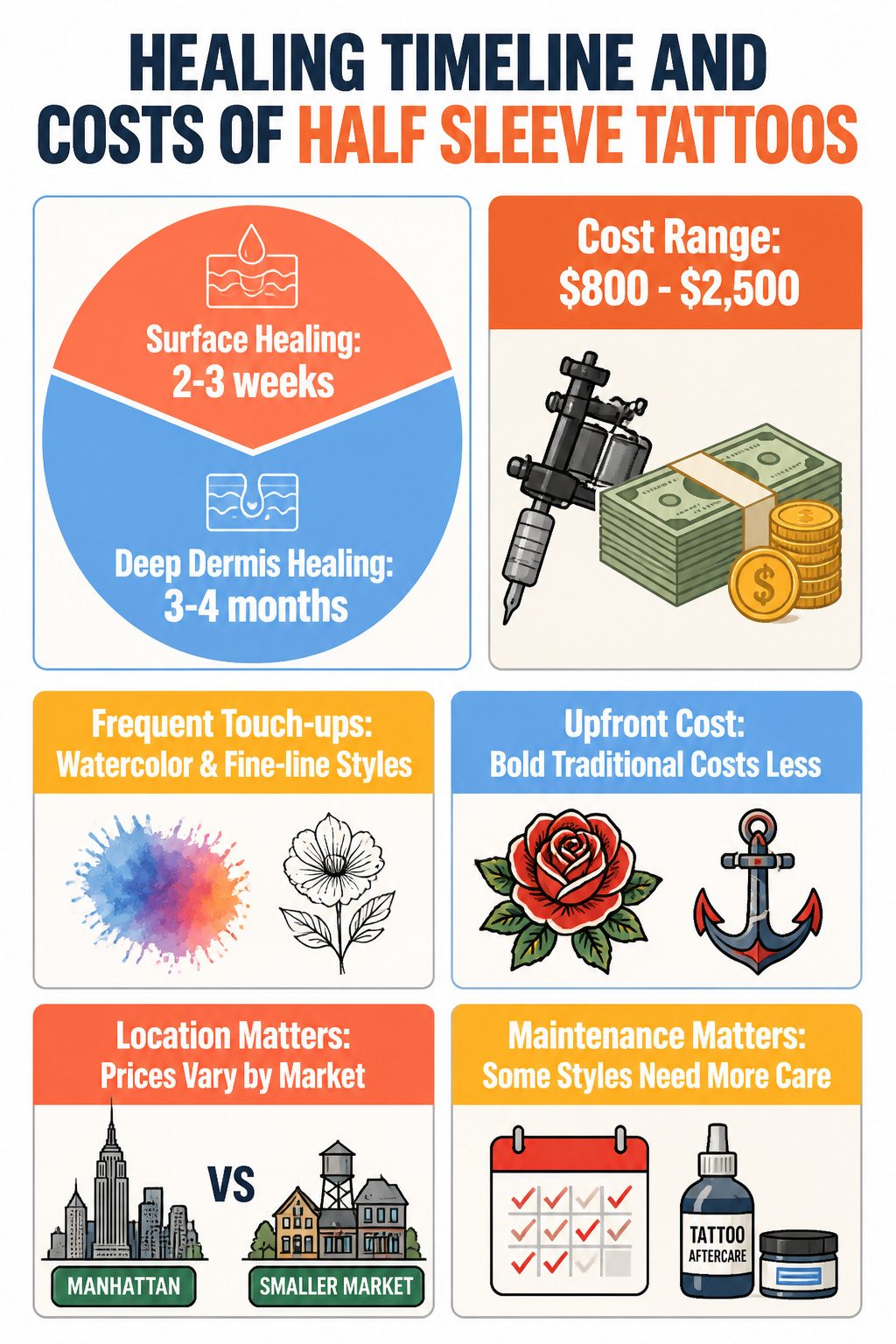
Surface healing on a half sleeve takes 2 to 3 weeks, but the deeper dermis needs 3 to 4 months before the ink has fully settled and the skin has rebuilt its collagen structure. I learned this distinction the hard way after my second session, when I assumed the flaking had stopped and went back to the gym too early. The color sat unevenly where the skin had still been vulnerable.
The cost range runs from $800 to $2,500 or more, and what pushes you toward the upper end is not size alone. Watercolor and fine-line styles demand artists who specialize in those techniques, and their hourly rates reflect that. Those styles also need more frequent touch-ups over the years, so the lifetime cost climbs higher than the initial quote suggests. Bold traditional work, with its heavier saturation and simpler color palette, usually costs less upfront and needs less maintenance later. Geographic location matters too, a studio in Manhattan or San Francisco sits at a different point on that range than one in a smaller market.
Cultural Roots and Modern Meaning
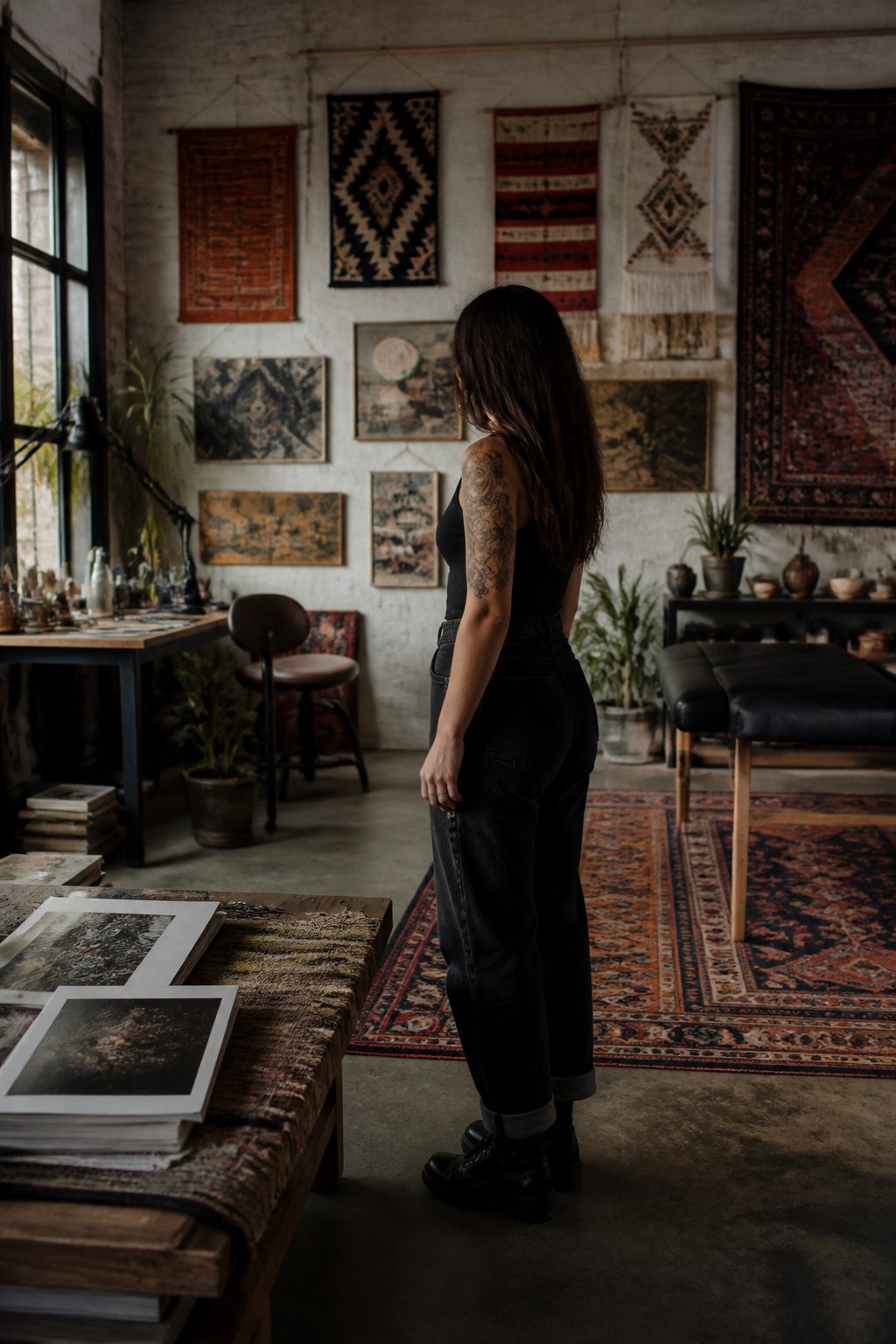
Tattoos once marked fixed roles. Polynesian skin carried genealogy and rank in patterns that priests alone could apply. Japanese tebori work identified firemen and laborers, while certain Indigenous North American nations used needlework to denote healing knowledge or warrior status. The needle was a threshold you crossed into a defined place in the group.
Contemporary half sleeve tattoos for women flip that function entirely. The same arm-span canvas now declares self-determined identity rather than inherited obligation. Feminist tattoo culture, active since the 1970s, explicitly claimed a practice that had shut women out as either canvas or artist. The shift matters when choosing imagery. Sacred motifs from closed traditions, those reserved for specific bloodlines or ceremonies, belong to their keepers. Borrowing them for aesthetic effect repeats the colonial pattern of treating living culture as raw material.
What reads as respectful research often stops short of asking who holds permission. Modern practice rewards this caution. The women I see in shops now tend toward personal symbols, hybrid styles, or collaboration with artists from their own heritage. The half sleeve becomes a document of autonomous choice, not a passport stamped by someone else’s ritual.
Frequently Asked Questions
What are the best designs for half sleeve tattoos for women?
Floral designs, mandalas, animal motifs, abstract art, cartoon and whimsical work, realistic portraits, watercolor, and traditional styles are the strongest options for women planning a half sleeve. Floral and traditional styles age best over decades, while watercolor and fine-line work need more frequent maintenance. The right choice depends on whether you want readable symbolism, personal narrative, or pure visual art.
How much do half sleeve tattoos cost?
Expect to pay $800 to $2,500 or more for a half sleeve, with the final price driven by artist skill level, style complexity, and geographic location. Watercolor and photorealism typically sit at the higher end because they require specialists, and those styles also carry higher lifetime costs from touch-ups. Bold traditional work usually costs less upfront and needs less maintenance over the years.
How long does it take to heal a half sleeve tattoo?
Surface healing takes 2 to 3 weeks, but the deeper dermis needs 3 to 4 months before the ink has fully settled and collagen has rebuilt. Rushing back to intense activity or sun exposure during that window can leave color sitting unevenly. The full timeline matters for planning follow-up sessions, since most half sleeves need 2 to 4 sessions total.
How often do half sleeve tattoos need touch-ups?
Fine-line and watercolor styles need refresh work every 3 to 5 years, sometimes sooner on the outer arm where UV exposure is highest. Bold traditional pieces with heavy saturation and limited palettes can last 10 years or more without major maintenance. Budgeting for touch-ups from the start prevents the washed-out look that hits watercolor-only architecture within a couple of years.