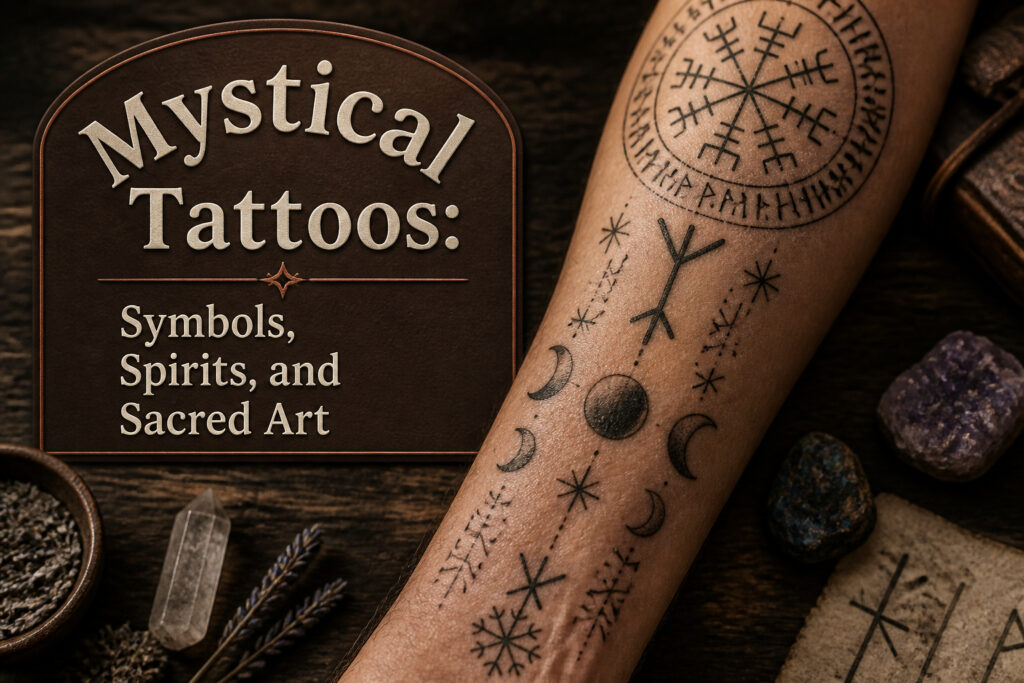
Mystical tattoos are symbols worn as talismans rather than simple decoration, chosen for spiritual function and personal meaning rather than pure aesthetics. The catch is that meaning collapses without proper lineage: a Norse rune pulled from Pinterest boards can turn out to be a cattle-plague charm, and a reversed Algiz mirrors protection into its opposite. A moon phase sequence needs two finger-widths between each stage or the crescents blur into indistinguishable blobs within two years.
Eye of Horus
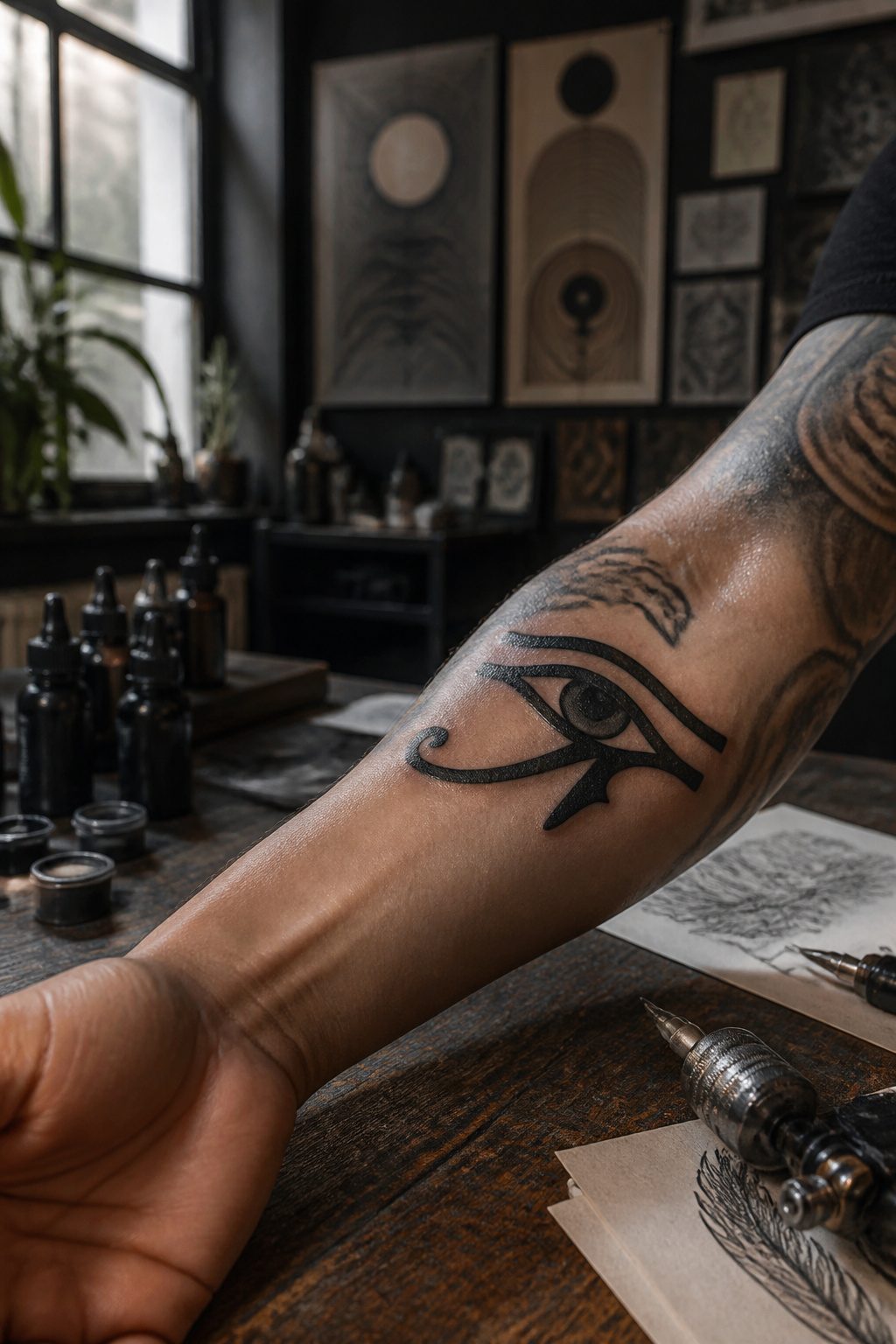
The Eye of Horus carries one of the clearest reading paths of any ancient symbol, which is why it still shows up in studios so often after thousands of years. Protection sits at the center of its meaning, drawn from the Egyptian myth of Horus restoring his own eye after battle, but the symbol also carries threads of wisdom and healing that give it more depth than a simple shield. Someone mourning a parent sometimes chooses it for the healing aspect; someone starting a business might lean toward the wisdom and protection together. The design reads as balanced rather than aggressive, a horizontal line with the distinctive teardrop curl beneath, so it works quietly on a wrist or more openly across a shoulder blade.
Skin aging treats this symbol better than most fine-line work because the bold outlines and geometric structure hold their shape. The curved elements can soften after a decade, but the overall form stays legible where more detailed pieces blur. Placement along the outer forearm, where sun exposure is constant, will fade the pigment faster than a spot under clothing; the linework itself gives you some forgiveness there, since the Eye of Horus does not depend on delicate shading to remain itself.
Flower of Life
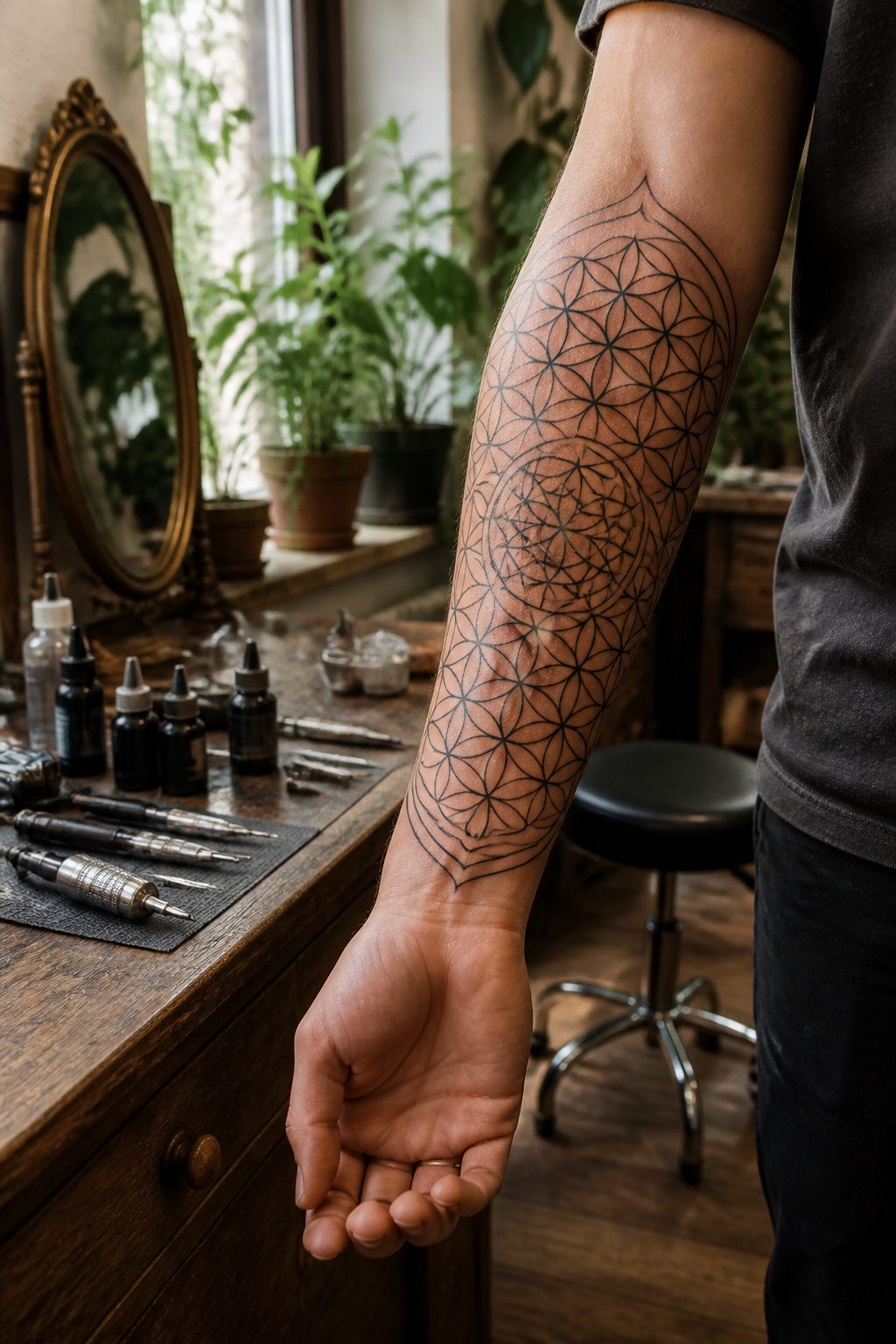
The Flower of Life builds outward from a single center circle, adding six more around it so their edges touch, then repeating that pattern until the grid fills with interlocking rings. Each new layer keeps the same radius, which means the lines stay clean and the spacing stays mathematically exact, a geometry that translates to skin better than most sacred symbols because the repetition hides small imperfections. A single broken circle would stand out; in a field of fifty, the eye reads the whole.
Where you place it matters more than with most designs. The back, chest, or thigh give the pattern flat ground to expand, and the circles read as continuous rather than warping over muscle or bone. Curved areas like the shoulder or calf work if the artist scales the cells larger so the distortion falls between rings instead of slicing through them. The upper arm sits in a middle zone: enough surface for a solid band, but the cylinder shape means the Flower reads as a wrap rather than a full field.
Color tends to fight the symbol. Black line work keeps the focus on the geometry itself, which is where the meaning lives for people who choose it.
Norse Runes
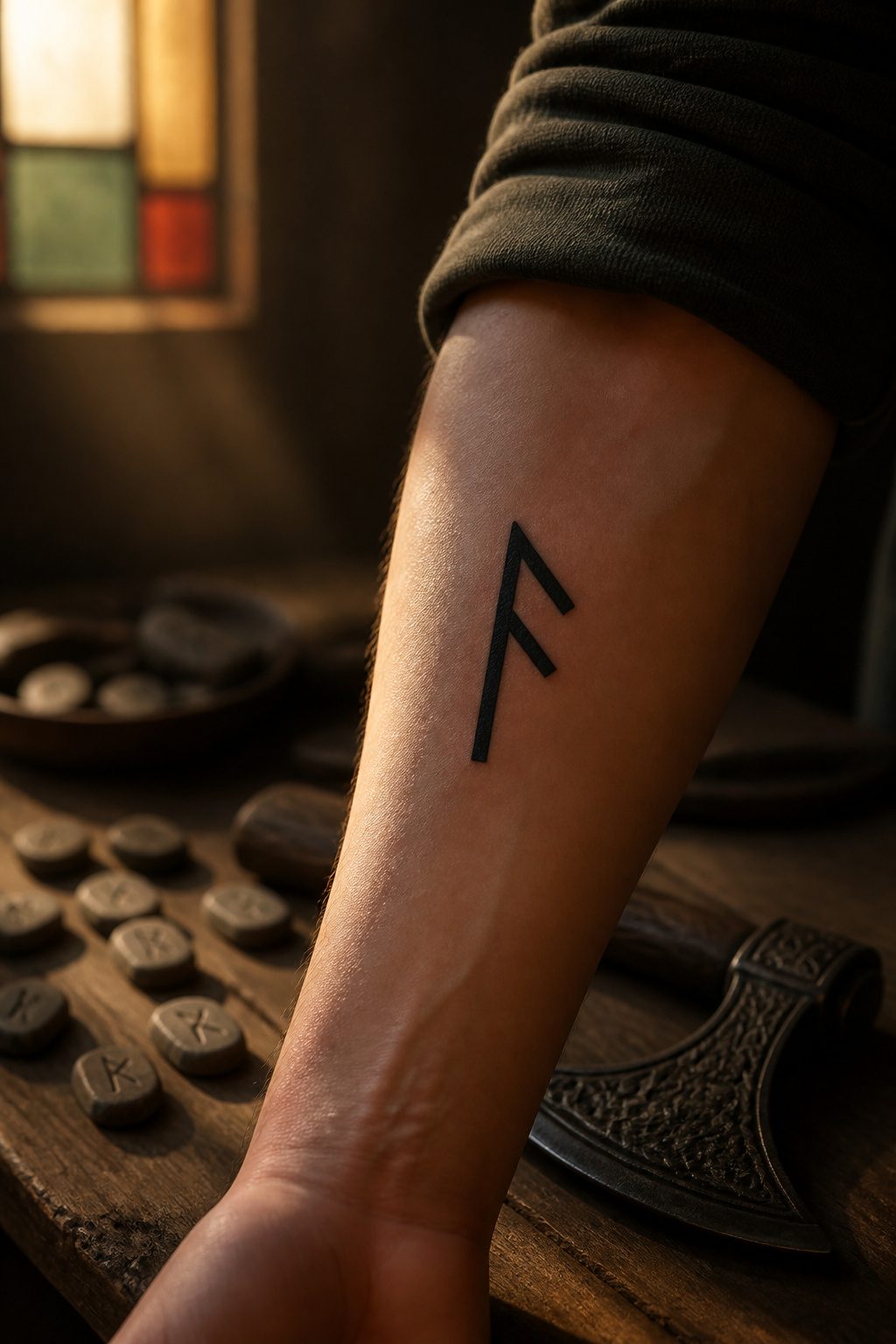
A single rune on the forearm reads clean and deliberate, but the real work sits in choosing which one. Each symbol in the Elder Futhark carries a fixed meaning: Uruz for raw strength, Algiz for protection, Othala for ancestral connection. Some people stop there, picking one rune that names the quality they want inked into their skin.
Bindrunes layer that further, overlapping two or more symbols into one combined mark. The technique is old, but the risk multiplies with each added stroke. A bindrune that looks right to an untrained eye can reverse or distort the core meaning, turning a shield into something unintended. I learned this the hard way when I asked an artist to ink Algiz without checking the source myself. The sketch came back mirrored, a common error that would have left me wearing the inverse of protection. Double-check the orientation against a verified Elder Futhark chart before the needle touches skin, especially with bindrunes where overlap hides individual strokes.
Triquetra
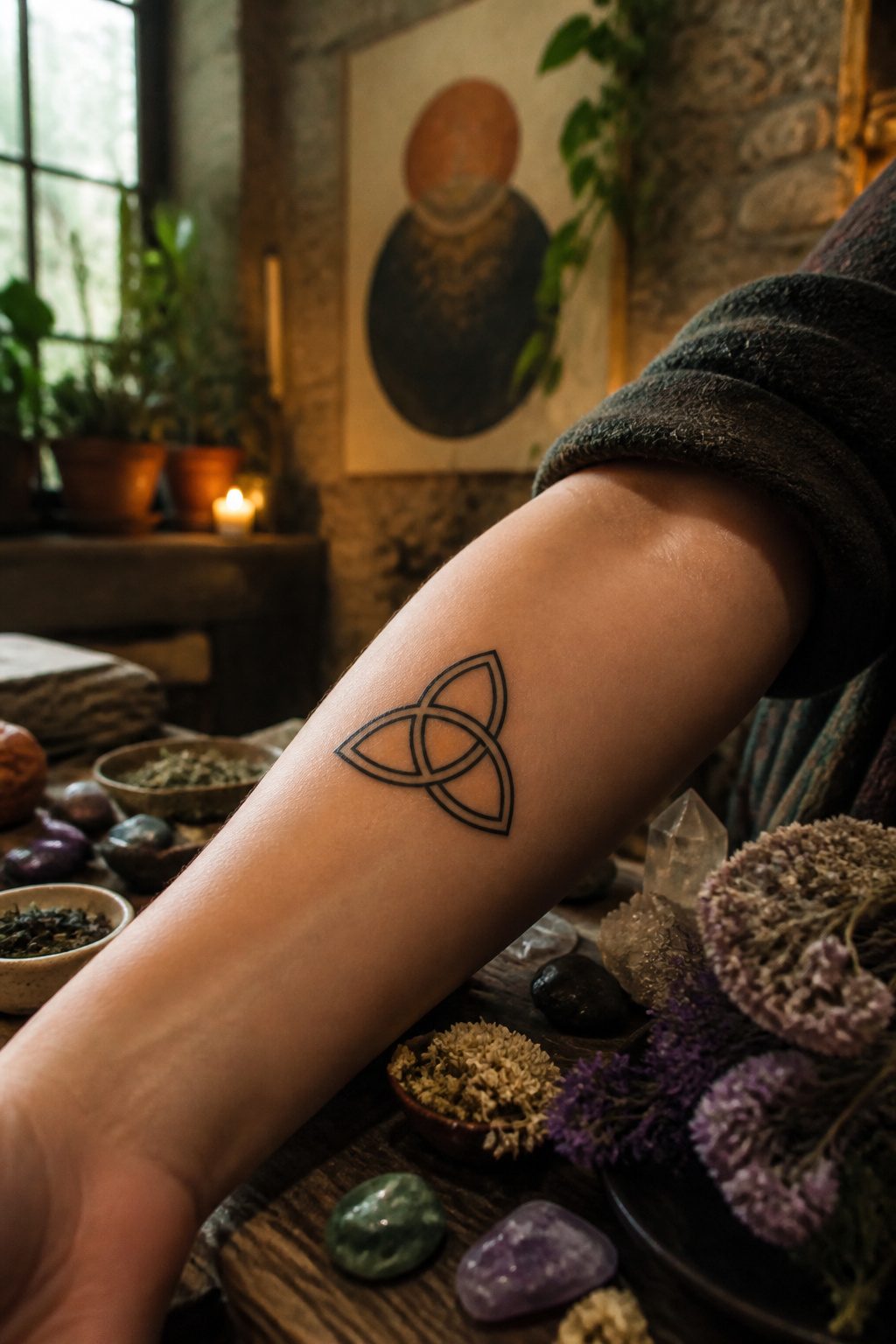
The triquetra’s three interlocked arcs carry meaning without announcing a creed, which is exactly why so many people end up choosing it. Celtic stone crosses and early manuscripts used the knot to mark the meeting of earth, sea, and sky; later hands added Christian readings, but the symbol never settled into one church or one story. That ambiguity is the point.
A client once sat in the chair wanting something for her sister’s memory and her own recovery, two separate griefs that somehow looped together. She kept showing me the triquetra and the triskele side by side, unsure which was which. The triskele’s three legs spiral outward, all motion; the triquetra’s points fold back into each other, a closed circuit. She picked the triquetra because it looked like holding rather than running. The lines can be drawn with or without the circle that sometimes binds them, and that circle changes the read: knot alone is personal cycle, knot ringed is connection to something larger.
Someone wary of religious branding gets the life-cycle reading without any doctrinal baggage. Birth, fullness, return; or past, present, future; or simply three people bound into one shape. The artist’s call is how heavy to weight the line, whether to let the points breathe or crowd them tight.
Moon Phases
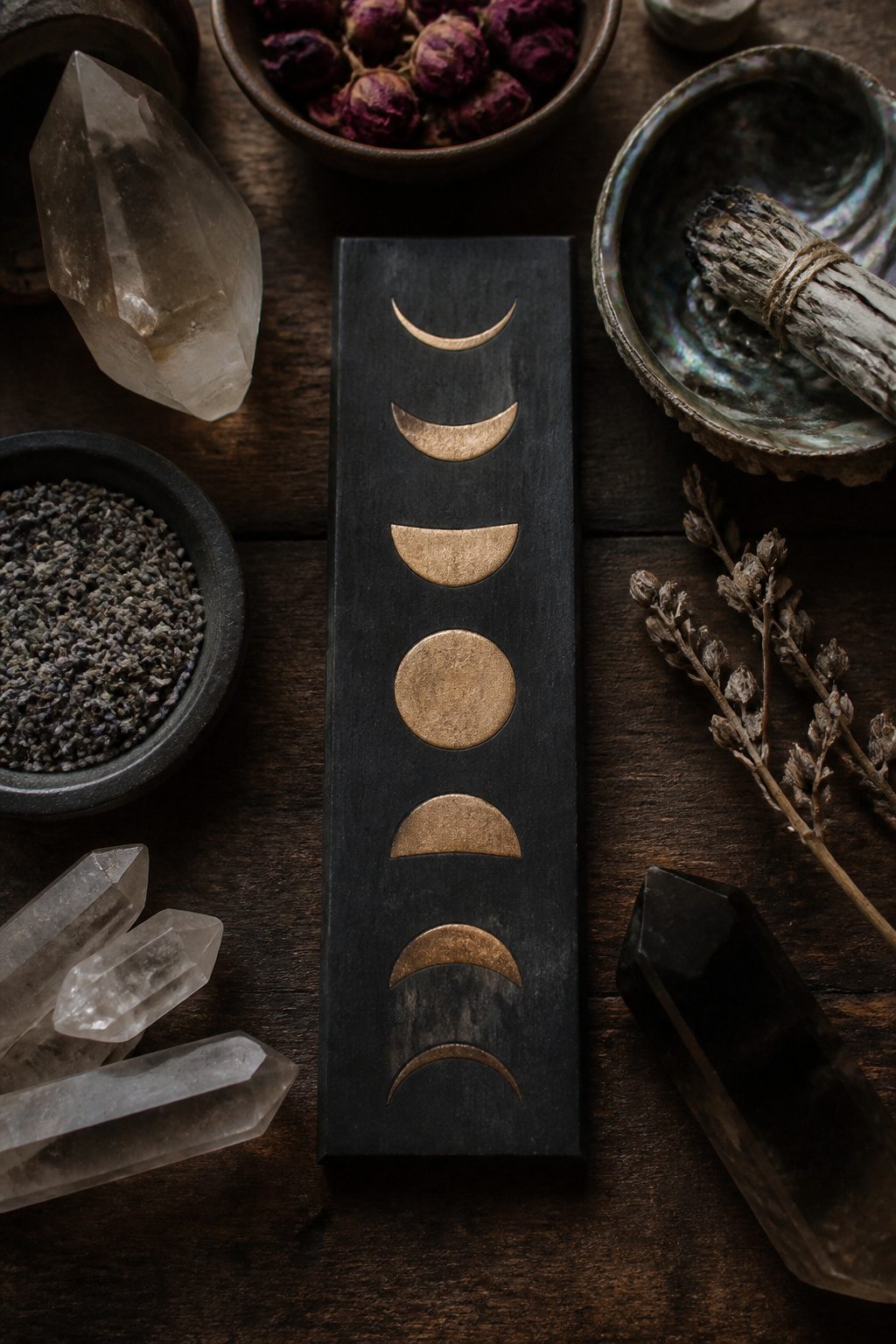
A moon phase sequence reads along the body like a sentence, and the direction matters. Most artists build them left-to-right for the viewer, which on your own body means right-to-left when you look down. The spine carries the full cycle well, each phase settling between vertebrae so the line stays straight even as you move. Collarbone placement works for shorter sequences, three phases maybe, since the curve there fights anything longer.
I watched one blur after two years because the sizing was off. The artist had kept each phase small, about the width of a quarter, thinking delicate would age better. Instead the ink spread slightly, as ink does, and the crescents softened into similar-looking blobs. The full moon held its shape longest because it had the most solid fill. Now I’d tell anyone planning this: space the phases at least two finger-widths apart, and ask the artist to leave the crescents with a little more interior line weight than looks right on day one. They’ll need it.
Pentagrams
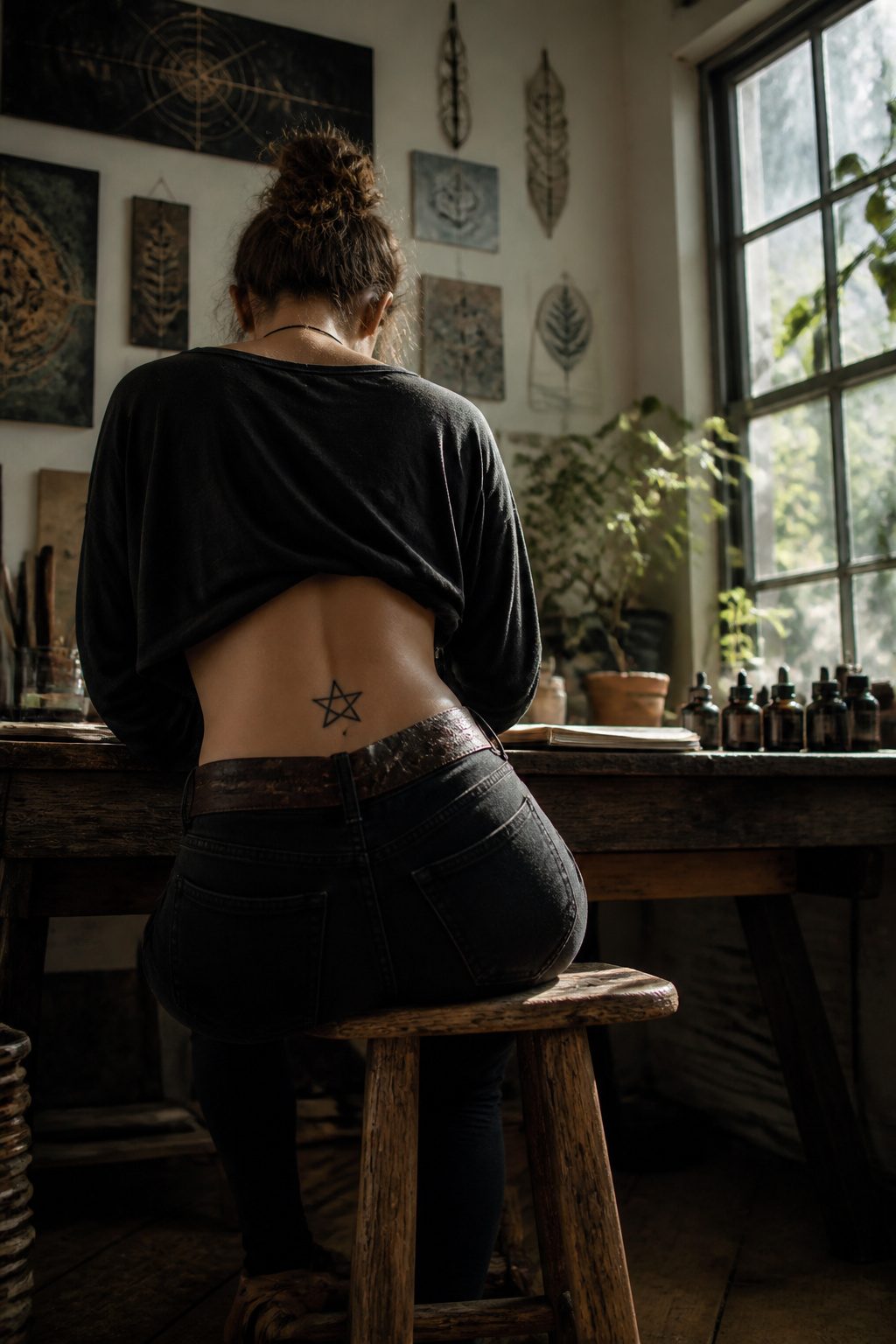
A pentagram with one point up is the orientation tied to protection and the five elements: earth, air, fire, water, and spirit. Flip it and the meaning shifts hard toward darker associations, enough that some shops will ask you to confirm which way you want the star facing before they stencil it.
I put mine where a swimsuit covers it. Not because I hide it, but because I got tired of strangers in grocery lines asking whether I "actually worship Satan." The questions come from people who have seen the inverted version in horror films and assume any five-pointed star in a circle works the same way.
The symbol itself is versatile in witchy tattoo art, often used for balance and spiritual connection. That range is exactly what drew me to it. But the cultural baggage is real, and placement became my way of controlling the conversation: visible when I choose, not when someone else decides to start one.
Mystical Tree of Life
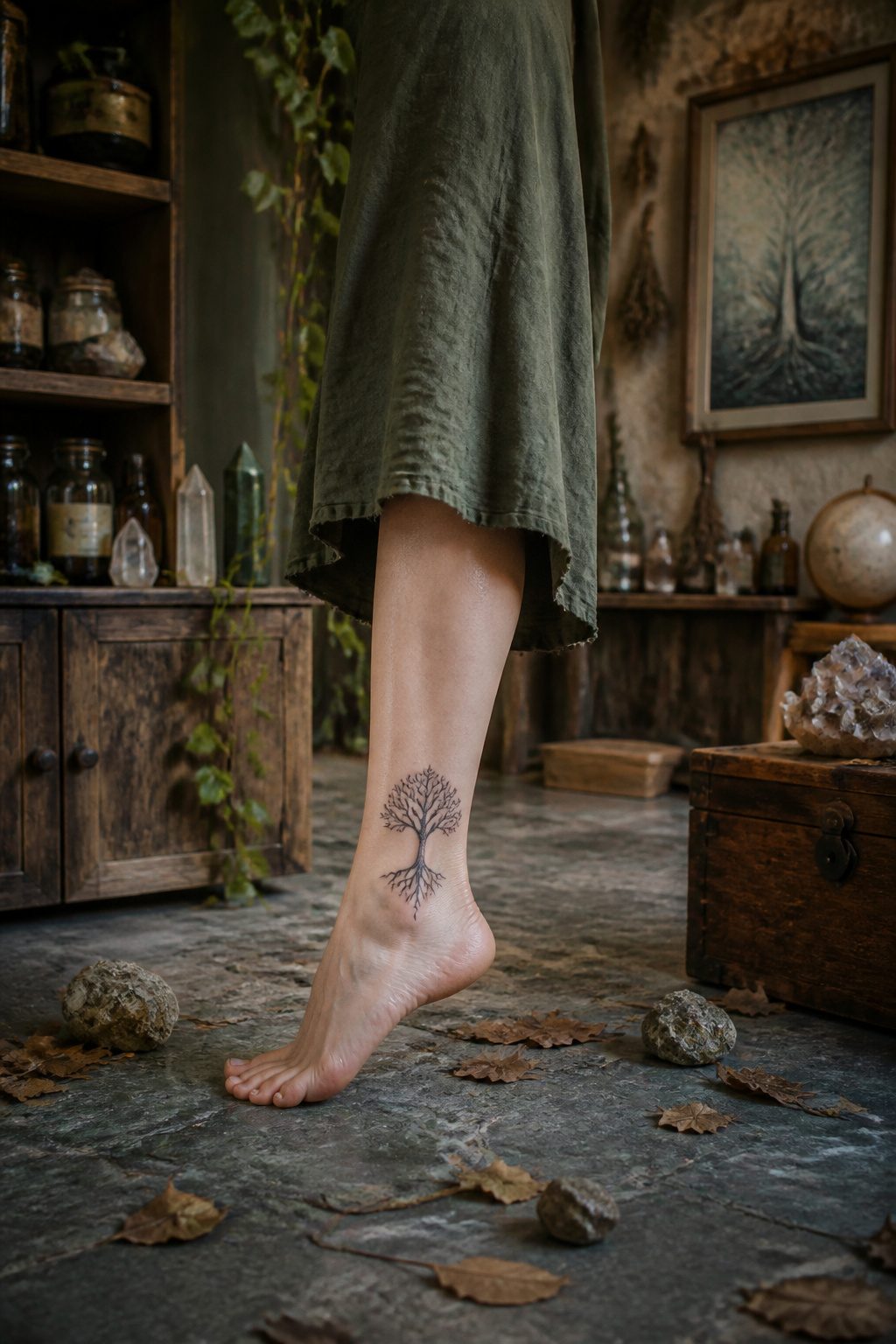
The Tree of Life lands in the mystical tattoo category because two completely separate traditions built the same symbol from opposite directions. Kabbalah maps the ten sefirot, divine emanations, onto a vertical tree where the roots reach upward into the unknowable and the branches spread downward into matter. Norse Yggdrasil does the physical version: an ash tree whose roots drink from three wells and whose branches hold nine worlds. Same shape, different physics. Either way, the roots-and-branches format demands tight skin to keep the fine lines readable.
That detail matters for placement more than most clients expect. Ankle skin stays relatively stable, but ribcage skin stretches and compresses with every breath, and weight fluctuation hits the torso harder. A Tree of Life with delicate root tendrils on ribs will blur inside five years where the same design on an outer ankle holds its geometry. Session length runs long for this piece whether you go minimal or dense; the branching structure just takes time to build symmetrically, and rushing the linework shows immediately in lopsided growth.
Mystical Snake
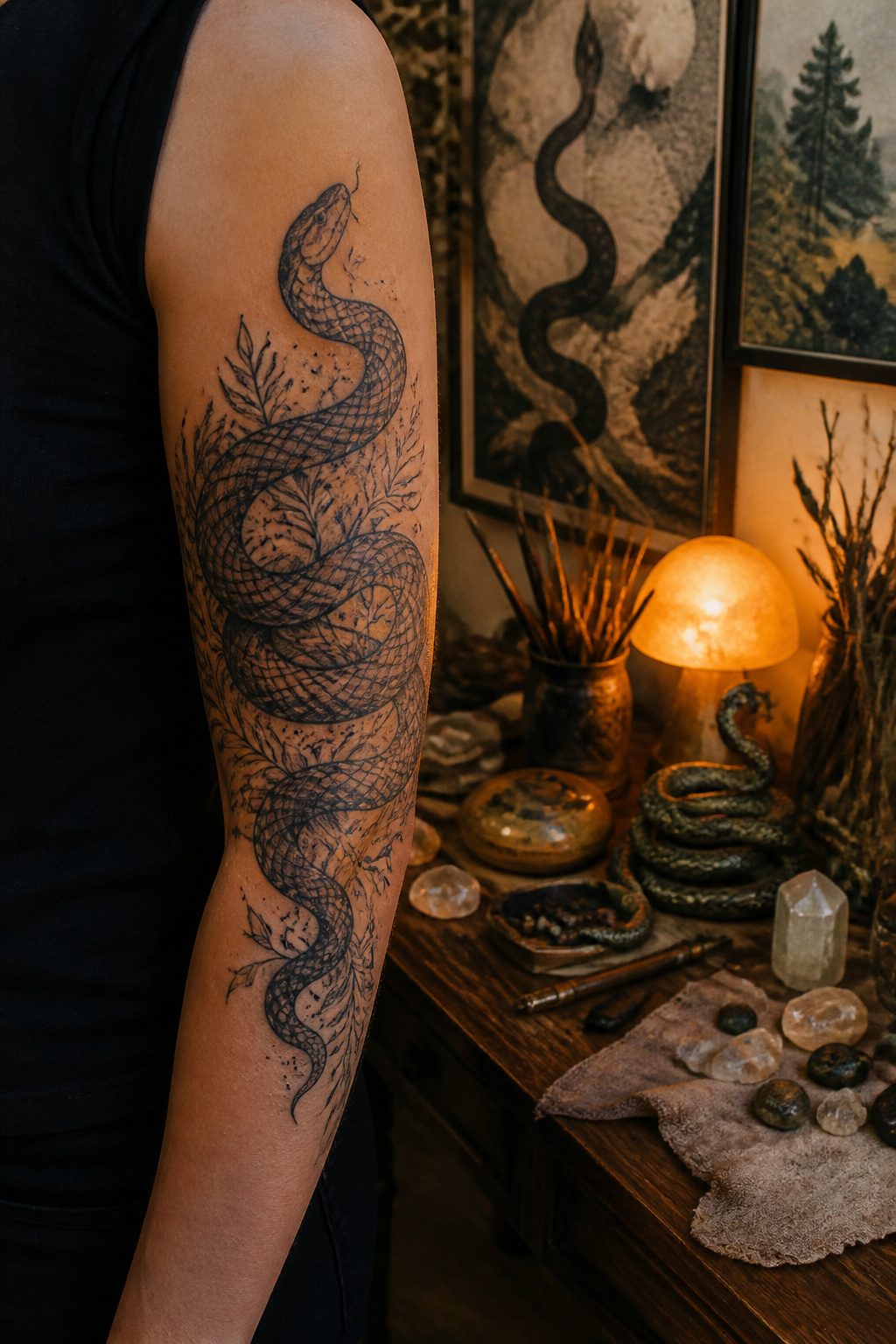
A snake coiled around a staff or its own tail carries the oldest meaning in tattooing: the shedding of one life for another. The ouroboros, the serpent swallowing itself, turns that idea into a loop without end. My artist warned me that coiled designs fade faster than straight ones because the needle packs pigment differently across overlapping curves; the skin gets worked harder in tight turns, and color drops out unevenly where the coils cross. Snake scales demand a magnum needle grouped tight, almost like chiseling texture rather than laying flat color. Straight segments let the machine run in long pulls with consistent depth. Coils force constant direction changes, and the hand has to slow down to keep saturation even. I had planned a full-color ouroboros wrapping my forearm and walked out with a black-and-grey study instead, the coiling too complex for the session budget and the color hold too uncertain for my sun-exposed line of work. The design still reads as transformation, just quieter now, and the scales catch light the way real ones do when the angle shifts.
Mystical Fairy
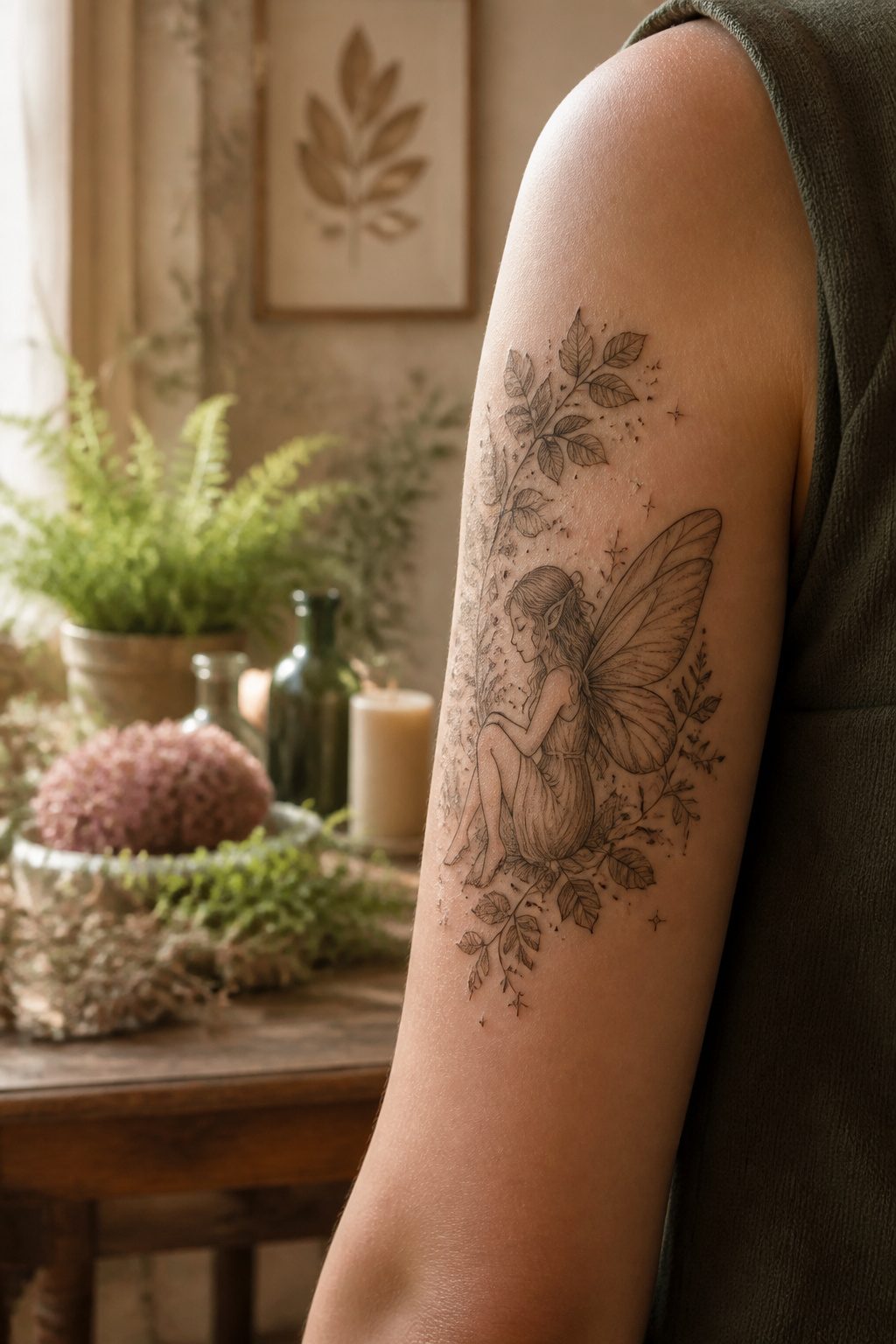
A fairy tattoo at twenty-five tends toward the full Disney: wings spread mid-flight, maybe a trail of glitter-stars looping toward the collarbone. By forty-five, the same symbol usually sheds the cuteness. The design keeps the magic, but the mood shifts to something more guarded, a figure half-hidden in leaves or perched at the edge of a mushroom cap, watching rather than performing. Fine-line work makes this transition workable. The same needle weight that keeps a fairy delicate at twenty-five keeps her from reading as costume at fifty, provided the linework stays tight enough to age as gray tone rather than blown-out blur.
That watercolor-style wing everyone wanted five years ago? The pink and teal fade to a bruised-looking haze faster than black ink, and a faded watercolor fairy looks less like magic and more like a skin condition you should have checked. If the color is non-negotiable, confine it to small accents, a wash on a single wing edge, something that can be read as intentional even when it softens. The linework underneath has to carry the design alone; color should never be doing the structural job.
Placement matters more with fairies than with, say, a geometric mandala. A fairy needs room to breathe. Too small and the wand becomes a stick, the wings blur to triangles. The ribcage or outer upper arm gives enough flat real estate for the figure to read at a distance, which is the only distance most people will ever see it from.
Mystical Dragon
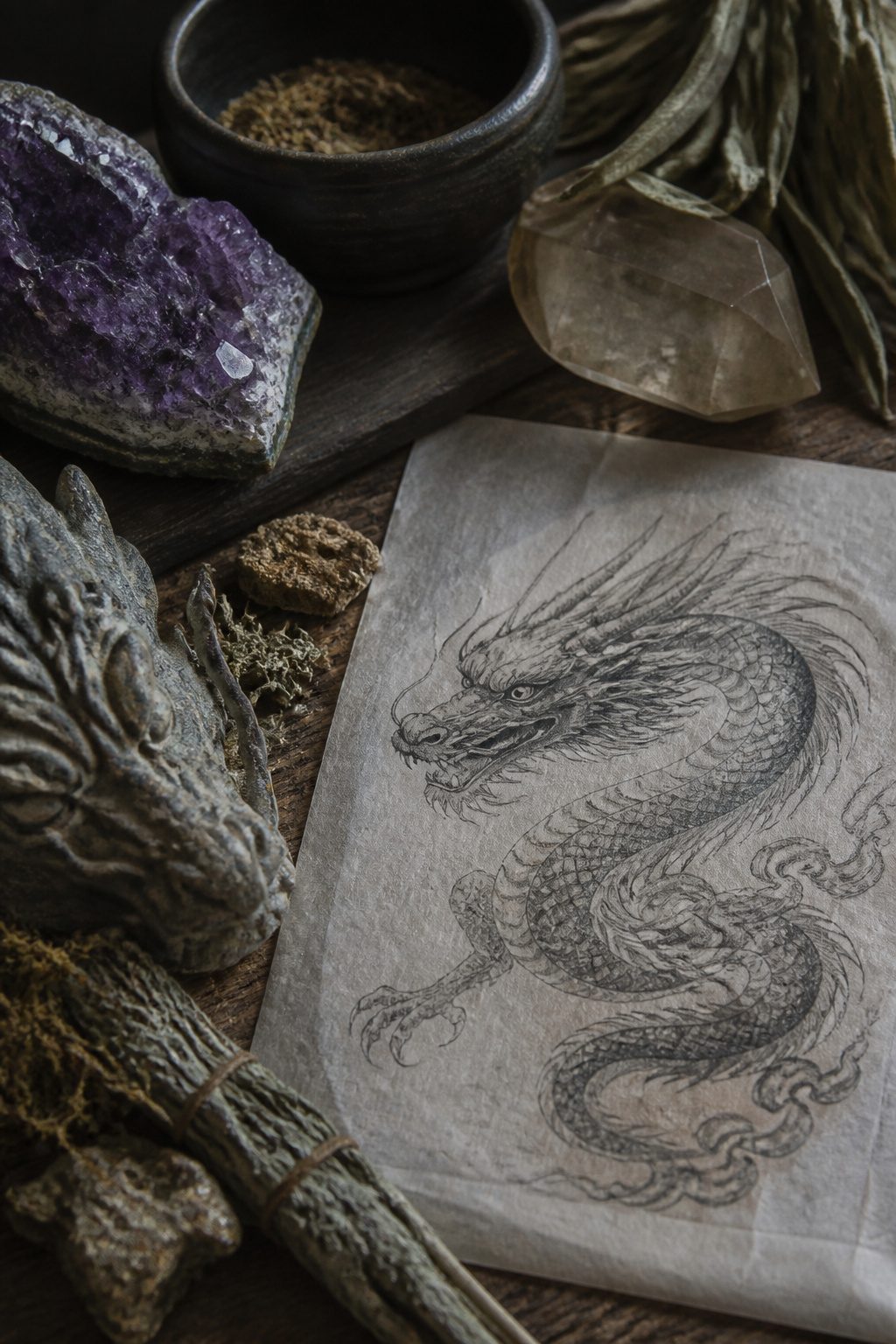
A dragon coiled across my chest took four and a half hours of continuous work, and the pose was the reason the artist pushed for that placement over a forearm band. Chest muscles shift and breathe in a way that lets a serpentine body look alive; a forearm cylinder freezes the same curve into a loop that reads as decoration, not motion. Eastern conventions favor slender, winding forms with whiskers and flowing manes that need that undulating space to read as wise rather than merely fierce. Western dragons, built heavy with bat wings and square jaws, fight the same wrap-around geometry even harder; their bulk turns a forearm into a belt buckle, not a hunt in progress.
The session itself broke into two hours of line work and the remainder for scale shading. Power and wisdom are the usual assigned meanings, but the pose does the actual talking. A claw raised and head turned reads as guardian; mouth open and wings spread reads as threat. My own sits with its neck arched back, eyes narrowed, more watchful than warlike. The difference between Eastern and Western approaches is not just geography but posture philosophy: one borrows from water and cloud, the other from armor and heraldry.
Botanical Elements
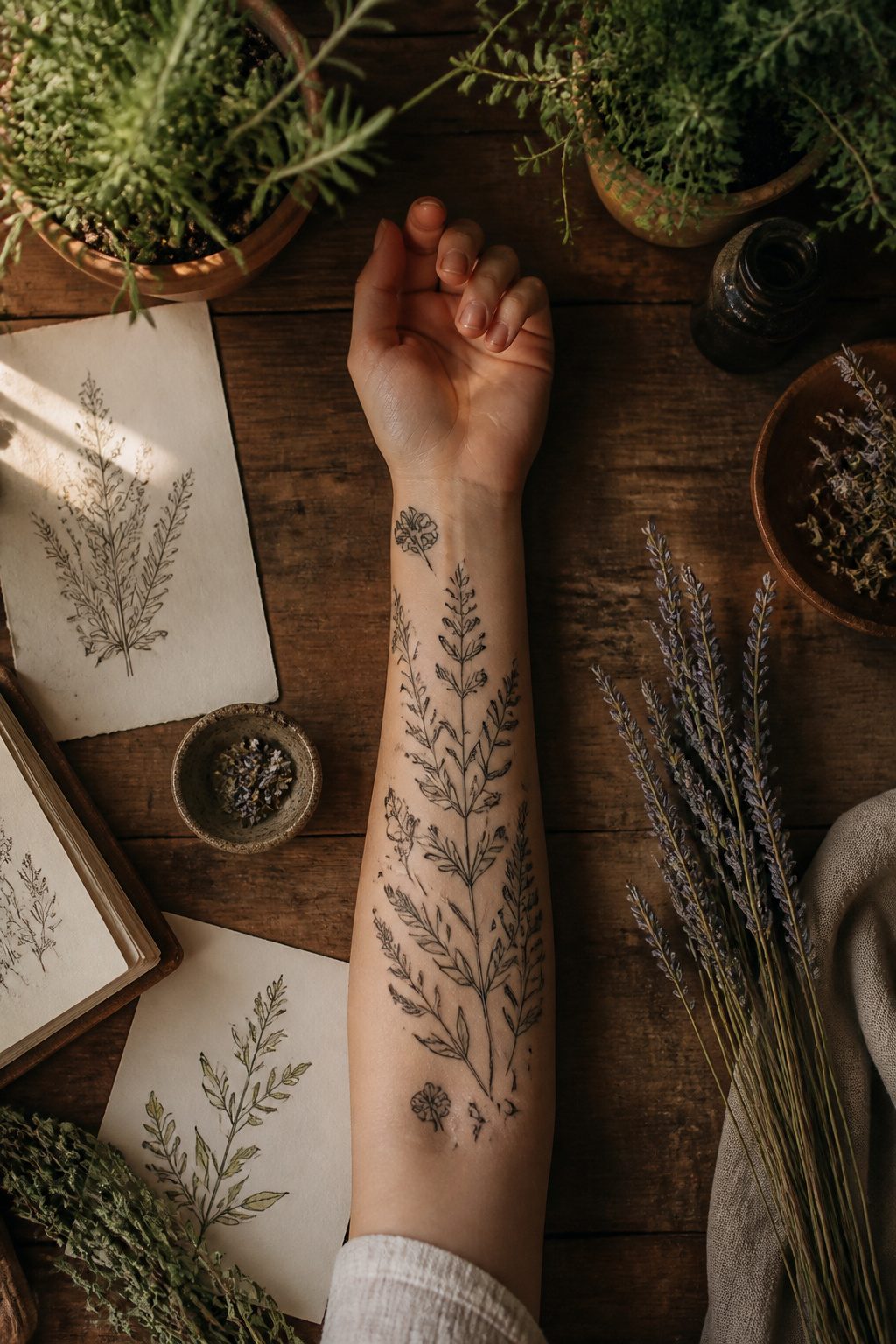
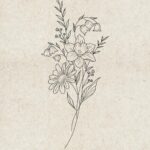
Lavender for healing, rosemary for protection, mandrake for mystical power. Plants carry their own language in ink, and building a custom piece starts with the ones that already matter to you. A sprig from a grandmother’s garden, the herb you burned during a rough winter, the flower that kept showing up in dreams. The 2023 trend toward dried-flower aesthetics, muted palettes and brittle stems rendered in fine line, works especially well here because it matches the weathered quality of memory itself.
My rosemary sprig healed faster than expected. Whether that was the placement, the aftercare, or coincidence, I still treat it as the piece that taught me to pay attention to which plants your skin seems to accept. Some people build full sleeves this way, combining multiple botanical elements into one narrative: protection beside healing beside growth, the whole garden telling one story rather than a single symbol standing alone.
What Makes a Tattoo Mystical
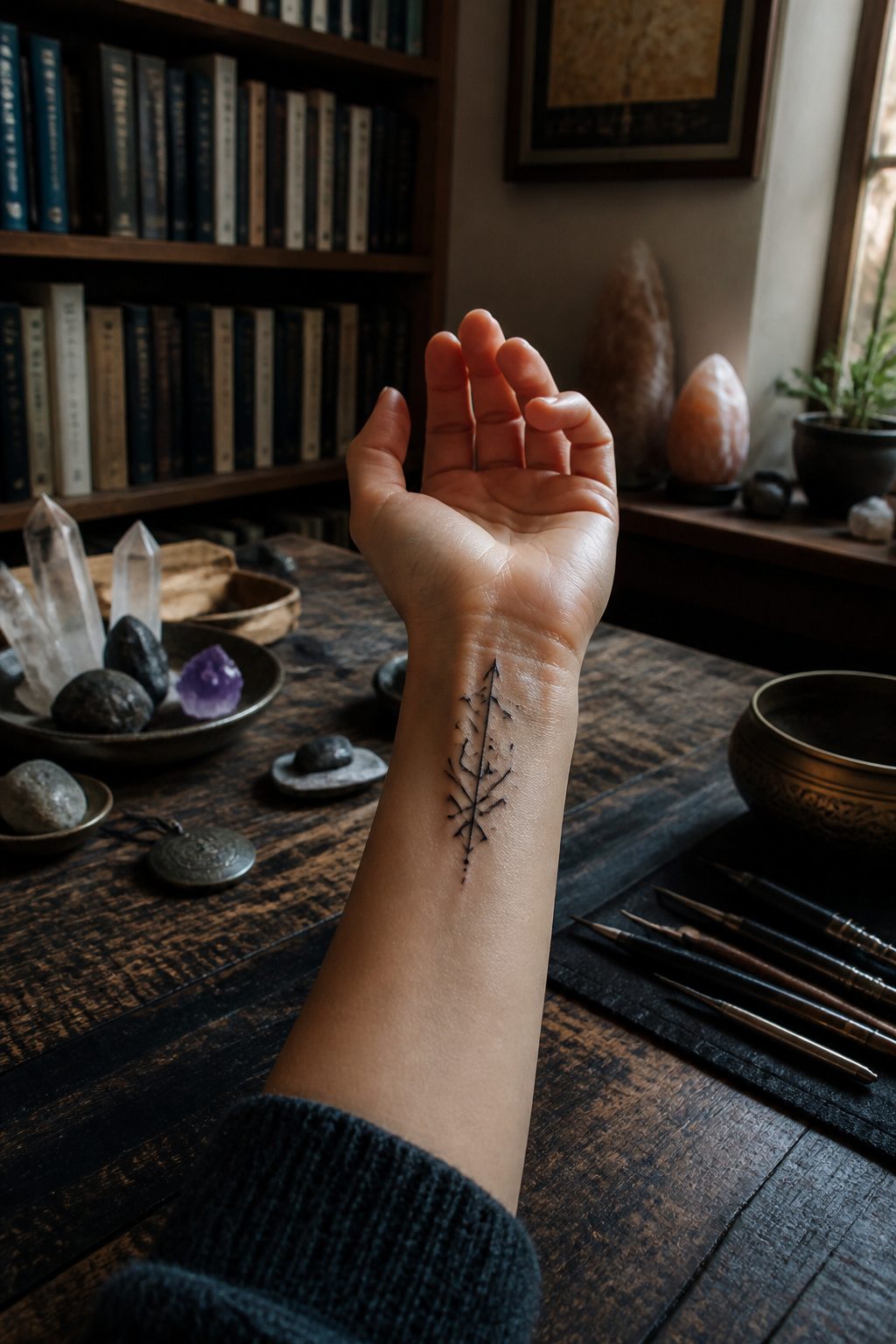
Mystical tattoos carry weight that decorative ink simply does not. The difference sits in function: a symbol worn as talisman rather than ornament. Historical marking across cultures followed this logic, from protective sigils to rites-of-passage scars that announced belonging to something larger than the self.
The current resurgence maps onto a measurable shift. Tattoo artists report more clients arriving with spiritual intent rather than aesthetic reference photos; the symbol’s protective or grounding purpose matters as much as its look. Social platforms accelerate this, but the driver is not trend-chasing. It is a cultural move toward visible self-definition through systems that predate mainstream religion, nature-based practice, and esoteric symbolism among them.
The distinction between talisman and decoration collapses sometimes, and that is fine. A moon phase band can mark menstrual tracking, spiritual practice, or both. The mystical label holds when the wearer assigns it function beyond adornment: confidence, protection, identity reinforcement. Without that internal frame, the same design is simply a style choice. The resurgence tells us more people are choosing the former, seeking connection in a visible, daily form.
Reading the Symbols Right
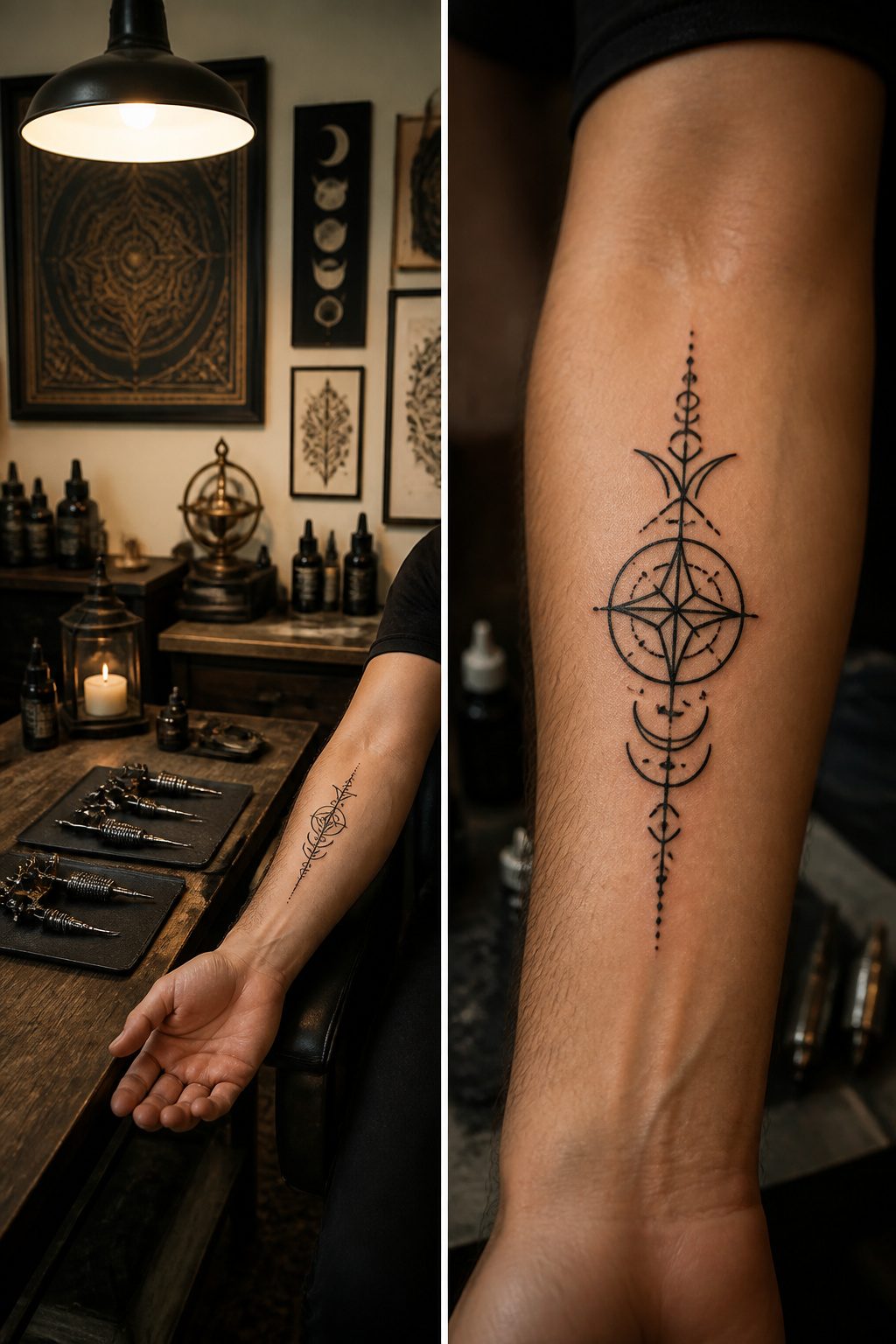
Borrowing a symbol without knowing its lineage can turn skin into a billboard for someone else’s trauma, or just make you look ridiculous. I learned this the winter I almost had a prosperity rune needled onto my ribs. The artist called it a safe choice, something Norse and positive. Hours later, flipping through an academic runology text in a used bookstore, I found the same mark: it was a veterinary charm against cattle plague. The shape was close enough to wealth sigils that a dozen Pinterest boards had them confused, and my artist had pulled from those boards, not from anything verified.
Asking the artist is not enough. Shops reference the same recycled flash sheets and Instagram compilations that pool errors until they look like consensus. Verification means tracing a symbol to its original context: academic publications on the culture, museum catalog entries, or direct consultation with practitioners from that tradition. For closed practices, particularly those tied to initiation, the respectful choice is to leave the mark alone entirely.
The time I spent cross-checking that rune cost me a deposit and some pride. It saved me from explaining livestock disease for the rest of my life.
Making It Yours
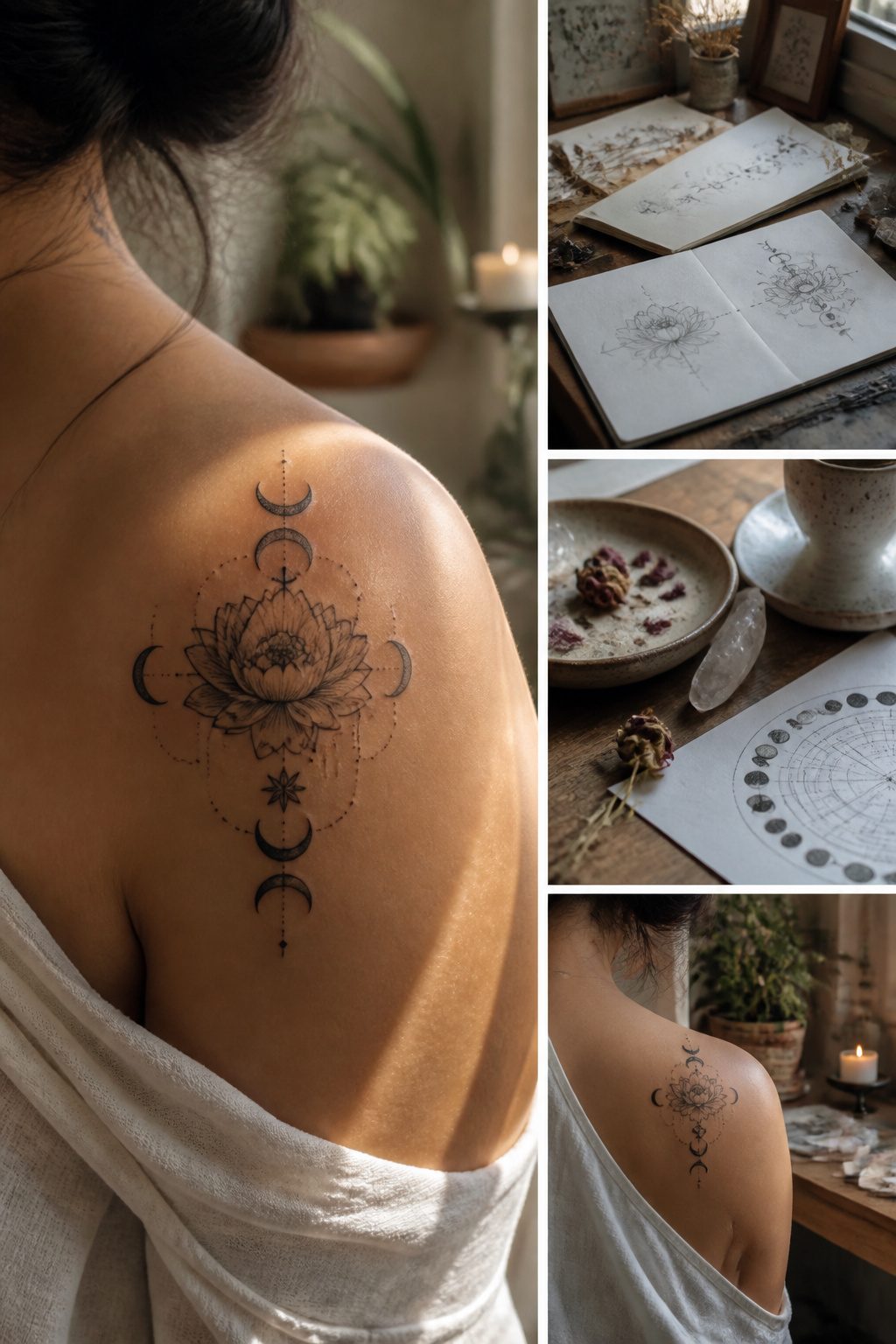
The best mystical tattoos start with a story rather than a Pinterest search. Symbols gain their weight from what they mean to the person wearing them, not from how many likes the design collected online.
Combining symbols works when the combination holds personal logic, not just visual balance. An experienced tattoo artist can adapt scale and placement to the body and to the wearer’s temperament: a rune paired with the Flower of Life becomes a coherent piece only when the two elements speak to the same period or struggle in the wearer’s life.
My own design merged my grandmother’s birth flower with a moon phase. The moon was not arbitrary; it was the phase on the night she told me the family story that changed how I saw her. The flower kept the tattoo rooted in her actual life, not an abstraction of "grandmotherhood." Together they created something no image search would have produced.
Adapting symbols from personal history, whether a birth flower, a rune from a grandmother’s heritage, or an esoteric mark tied to a specific memory, transforms the tattoo from decoration into invocation. The ancient purpose of these marks was protection, strength, or wisdom: that function returns only when the symbol carries genuine personal charge.
Frequently Asked Questions
What are mystical tattoos?
Mystical tattoos are body art that functions as talisman rather than ornament, carrying protective, grounding, or spiritual purpose beyond decoration. They draw from ancient symbols like the Eye of Horus, Norse runes, and the Flower of Life, chosen because the wearer assigns them meaning tied to identity, confidence, or connection to something larger than the self.
What do mystical tattoos symbolize?
They symbolize a connection to ancient wisdom, spirituality, and unseen forces that shape our lives. Specific symbols carry distinct functions: the Eye of Horus for protection and healing, the triquetra for life cycles and personal bonds, the pentagram for elemental balance, and the ouroboros for transformation and renewal. The meaning deepens when the wearer ties the symbol to a personal story or specific memory rather than choosing it for appearance alone.
How can I personalize my mystical tattoo?
Start with a story rather than an image search. Combine symbols that speak to the same period or struggle in your life, such as pairing a grandmother’s birth flower with the moon phase from a meaningful night. An experienced artist can then adapt scale and placement to your body and temperament, ensuring the design carries genuine personal charge rather than just visual balance.