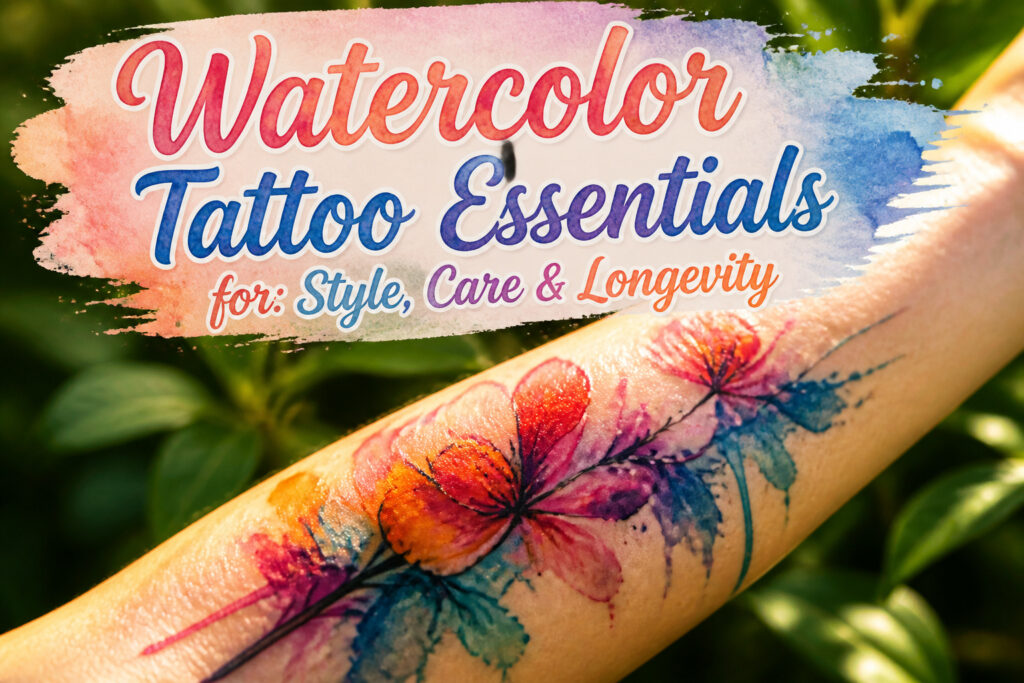
A watercolor tattoo only looks effortless when the artist knows how to build it. The same needles and inks every shop uses will turn to mud if the color is packed like traditional work, because the style lives in bleeding edges and transparent layers that take four to six separate passes to hold. That extra time and skill is why #watercolortattoos draws 1.4 million Instagram posts and still produces results that vary wildly from one portfolio to the next.
1. Characteristics of Watercolor Tattoos
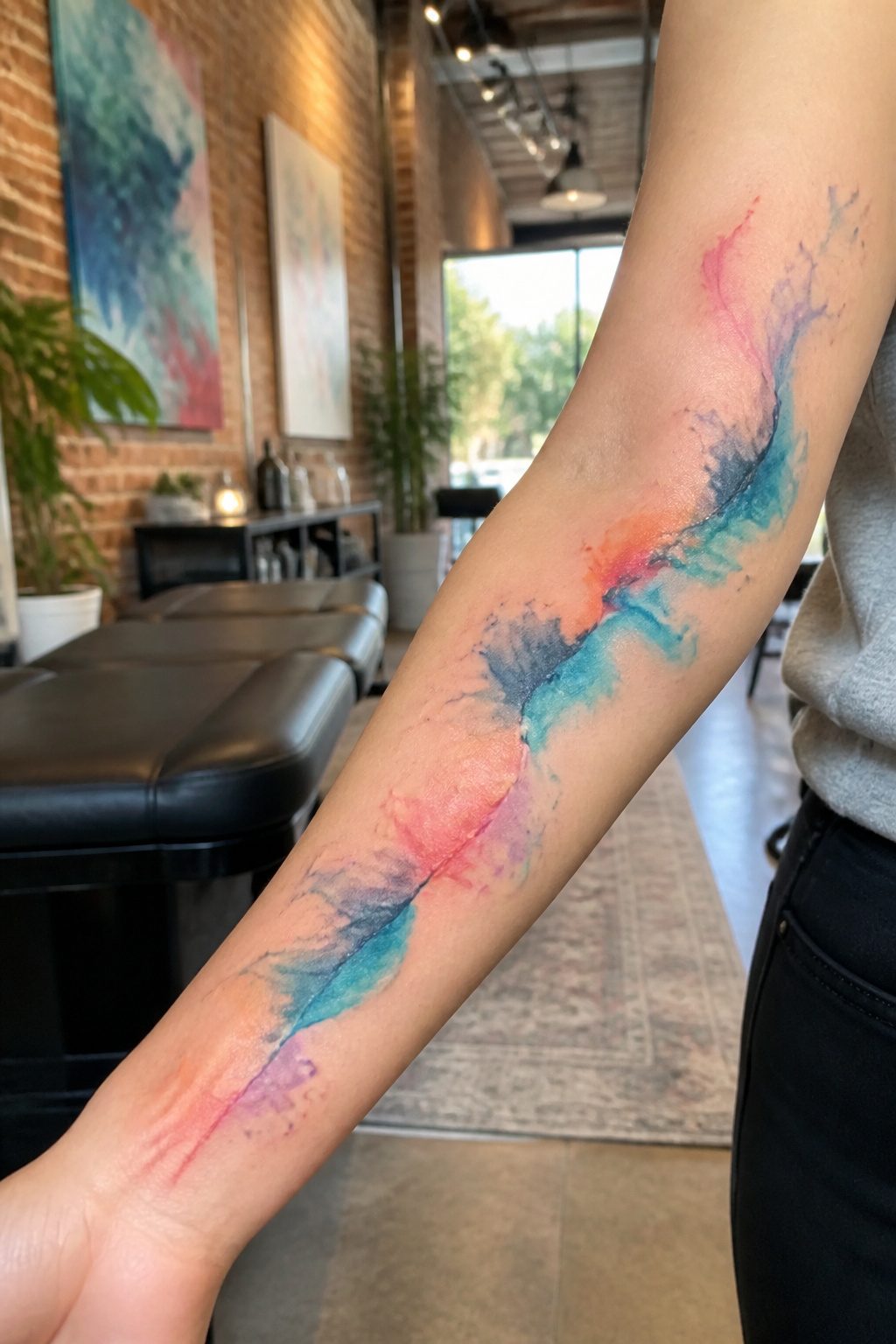
Watercolor tattoos read as paint first and ink second. The style drops the heavy black outlines that hold traditional work together and replaces them with color that bleeds and softens at the edges the way pigment does on damp paper. Brushstroke-like application builds the texture: short, directional passes of the needle that read as spontaneous rather than mapped. What you get is a dreamy, floating quality, the image half-resolved, as if the viewer caught it mid-dissolve.
The same inks and equipment sit in every tattooist’s tray; the difference is all in how the color is laid down. Artists fade one hue into the next rather than boxing each area off, so the transitions stay seamless. The result can run vivid or pastel, abstract or representational, but the ethereal handling is what marks it as watercolor.
A watercolor tattoo is a tattoo using textures that replicate the aesthetic of watercolor or brushstroke paint.
— Allure
That distinction matters when you are choosing an artist. Not every tattooist who handles color well can mimic the specific textures of paint on skin. The hashtag #watercolortattoos has over 1.4 million posts on Instagram, which tells you the audience is there but also means the skill level behind those posts varies sharply. The visual is unmistakable once you have seen it done right: color that looks washed, not filled in.
2. Techniques Artists Use
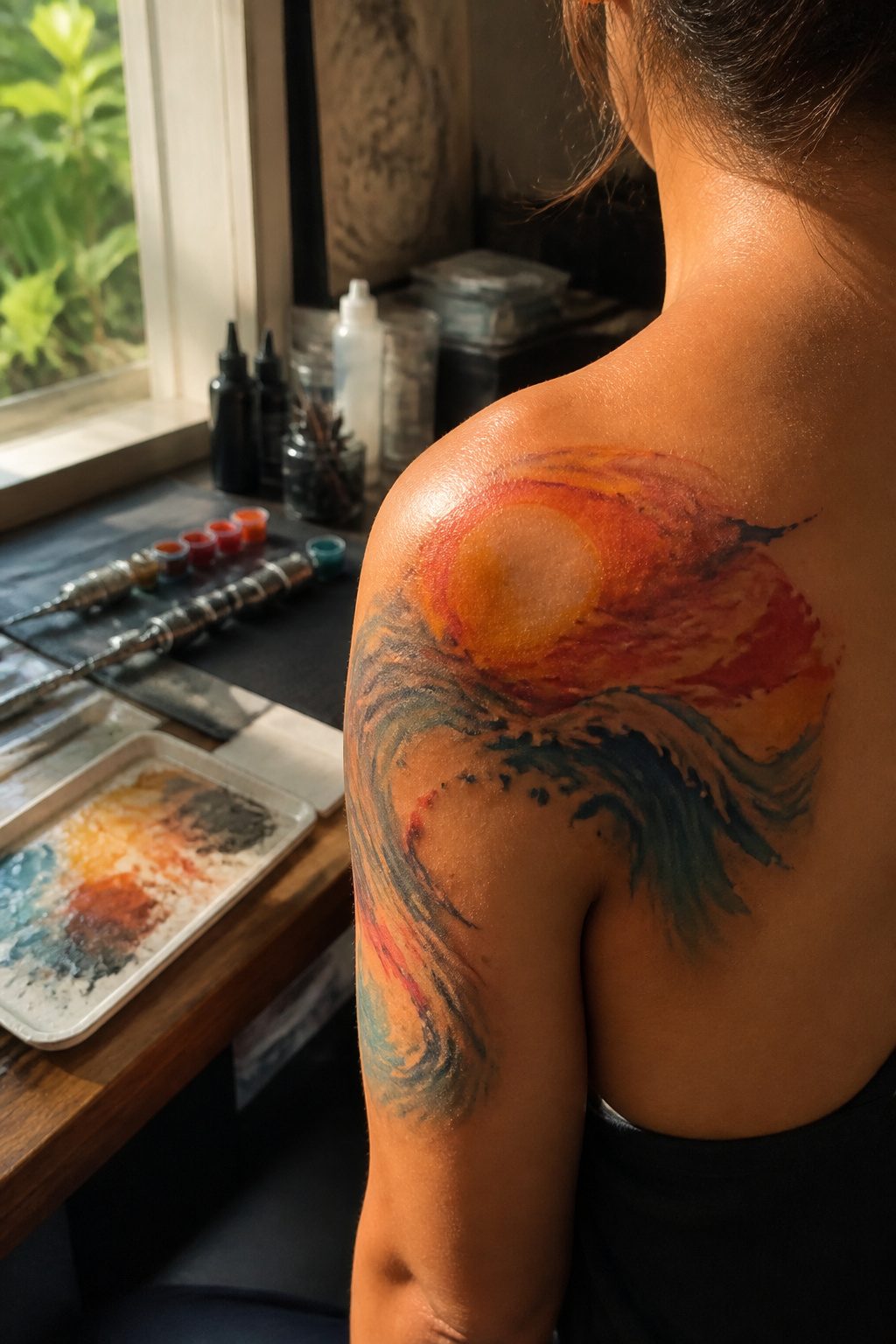
Blending sits at the core of every watercolor tattoo that actually reads like paint on skin. The needle becomes the brush, with strokes pushed in different directions and pressure dialed up or down to melt one color into the next. Layering builds the depth, whether the goal is saturated punch or soft pastel fade, and that repeated packing of pigment is why a watercolor piece takes longer than traditional work. An artist might run four to six separate pink inks to build a single splash that holds its tone as it heals.
Negative space does the same job the white paper does in a painting: it rests the eye and gives the color somewhere to breathe. Untinted skin, placed deliberately, keeps a design from turning to mud.
Lighter passages come from diluted ink or water-thinned pigment, applied with fast, light passes rather than the heavy saturation of a solid fill. Liners, shaders, and mag shaders each play a role, and the color is laid down to catch like brush marks rather than the uniform fields of a standard tattoo. The catch is placement is final. No lifting, no washing back, so the artist maps every gradient before the first pass.
3. Common Subjects
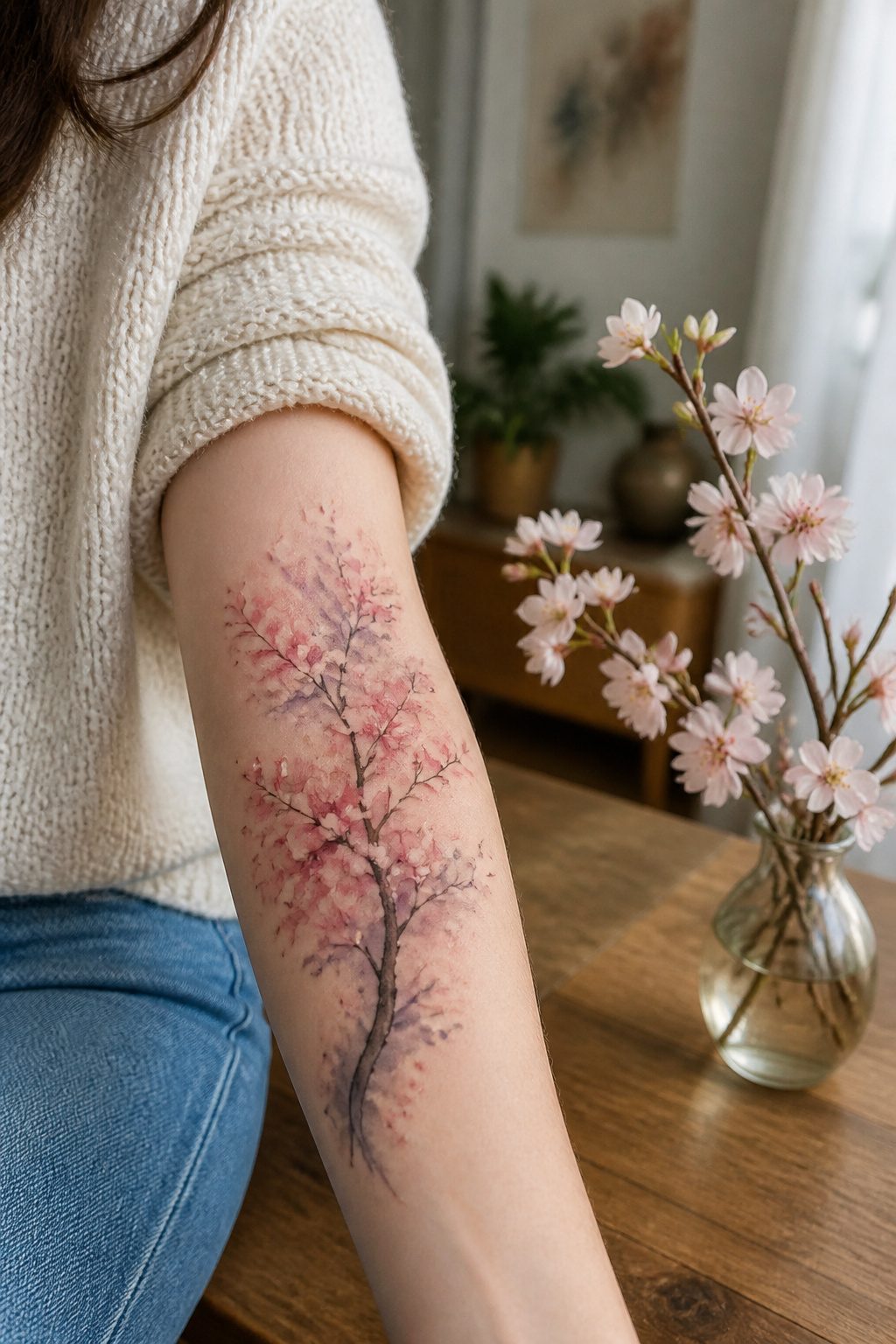
Flowers, animals, abstract designs, and celestial themes dominate watercolor tattoo requests, though the style bends far enough to cover nearly anything. A few subjects hold up especially well:
- Flowers carry built-in color gradients petals already fade from deep saturation at the center to near-transparency at the edges, so the tattoo follows nature’s own blueprint
- Animals, particularly birds and wolves, gain motion from splashed backgrounds that suggest fur ruffled by wind or wings cutting through air
- Abstract pieces work because the style forgives asymmetry; a blown ink wash that would ruin a geometric mandala becomes the point
- Celestial themes, moons, nebulae, star fields, were made for this: the night sky is already a watercolor painting
The personalization runs deeper than picking a subject. What convinced me, scrolling through portfolios for this piece, was how rarely two pieces look alike even when both artists tattoo the same flower species. The lack of hard outlines means your skin tone, the artist’s pigment choice that day, and how the color settles all become part of the design. That variability drove the Instagram surge around 2015, collectors started posting fresh work and healed work side by side, and the unpredictability became a feature people chased rather than a risk they feared.
4. Aging and Longevity
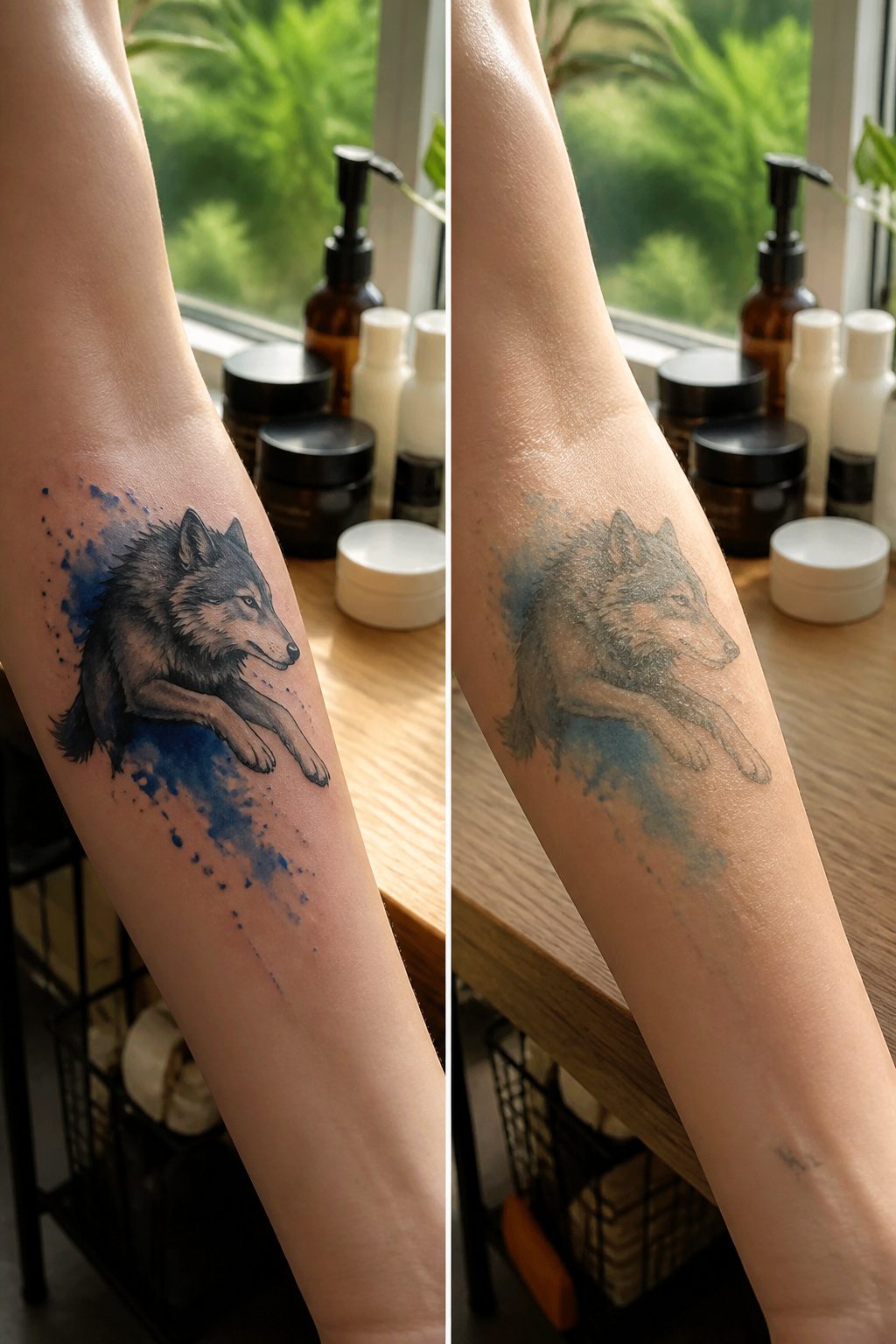
Lighter pigments in watercolor work carry a built-in disadvantage. Whites and yellows fade faster than blacks and dark blues because there is simply less pigment there to lose, and watercolor technique uses less ink overall than traditional saturation packing. The body breaks down foreign pigment over time; when the starting point is already subtle, that loss shows sooner.
Skilled artists counter this with two moves. Some build a black "skeleton" underneath, a carbon-based dam that keeps color from dispersing. Others layer in denser pigment where the design allows it, trading a little translucency for staying power. The needle work differs too: lower volume, fewer tips, lighter pressure, slower speed. Less ink goes in, but where it goes matters more.
What no one can hand you is a hard number for how many years a watercolor tattoo lasts versus a traditional piece. The comparative longevity data does not exist in measured form. What artists report is that a little fade can actually suit the style; the softening mimics real watercolor paint aging on paper. The risk is excessive fade, and that is where your aftercare and sun protection come in. The art is in controlling the inevitable, not preventing it.
5. Aftercare Recommendations
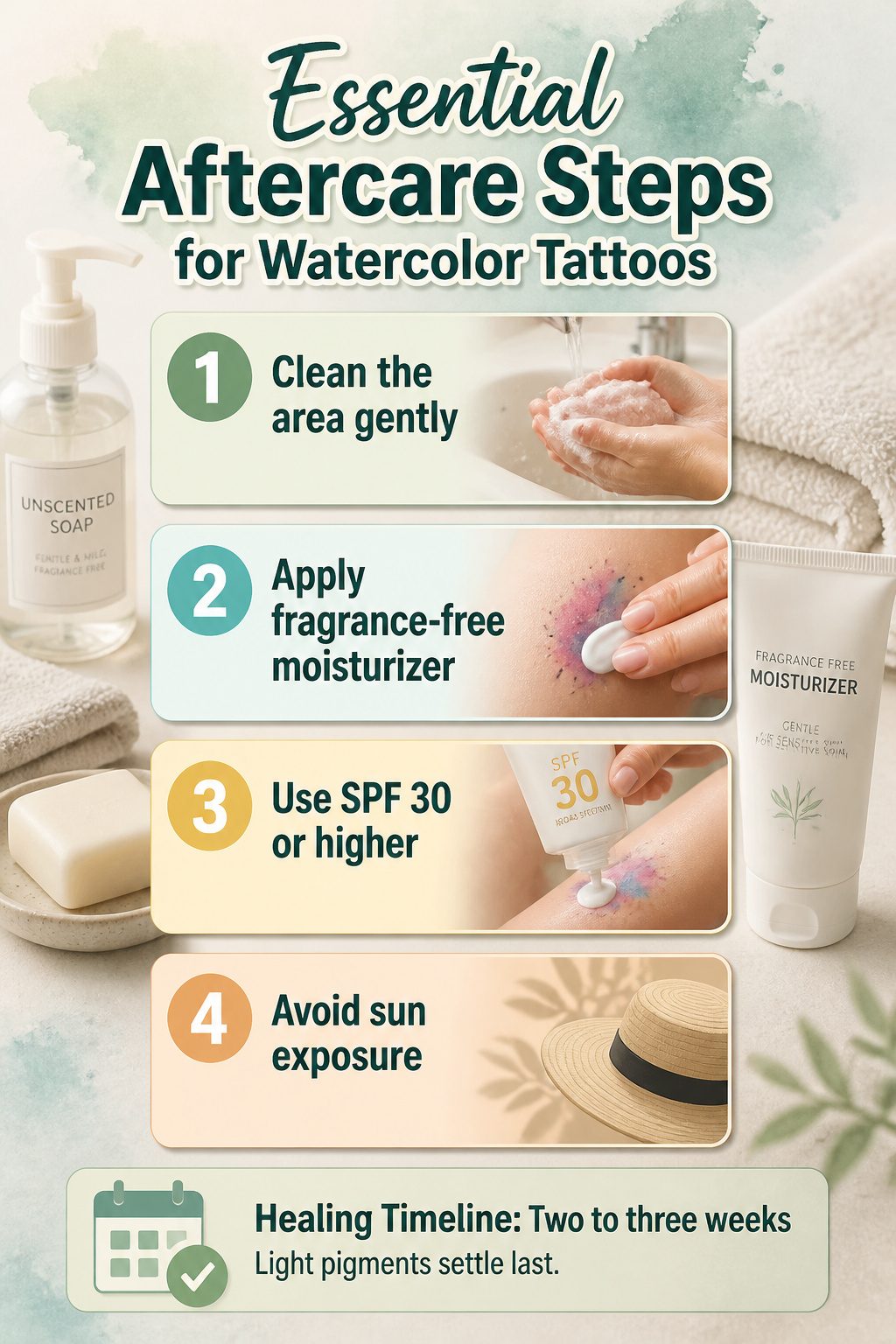
Aftercare for a watercolor piece follows the same three rules as any other tattoo: keep it clean, keep it moist, and keep it out of the sun. The difference is in how much that last one matters.
- Clean the area gently with unscented soap and lukewarm water, patting dry with a clean towel. No scrubbing, no soaking in baths or pools for the first two weeks.
- Apply a thin layer of fragrance-free moisturizer whenever the skin feels tight or flaky. The peeling phase usually hits around day three and can last through the end of the second week.
- Sun protection is where watercolor tattoos live or die. The lighter pigments, yellows and soft pinks especially, fade faster under UV exposure than the heavy blacks of traditional work. SPF 30 or higher, reapplied every two hours if the skin sees daylight. A healed watercolor tattoo left unprotected for one summer can lose definition that ten years of careful moisturizing won’t bring back.
The full healing timeline runs about two to three weeks, though the surface can look settled before the deeper layers have finished. Light pigments settle last.
6. Considerations for Skin Tone
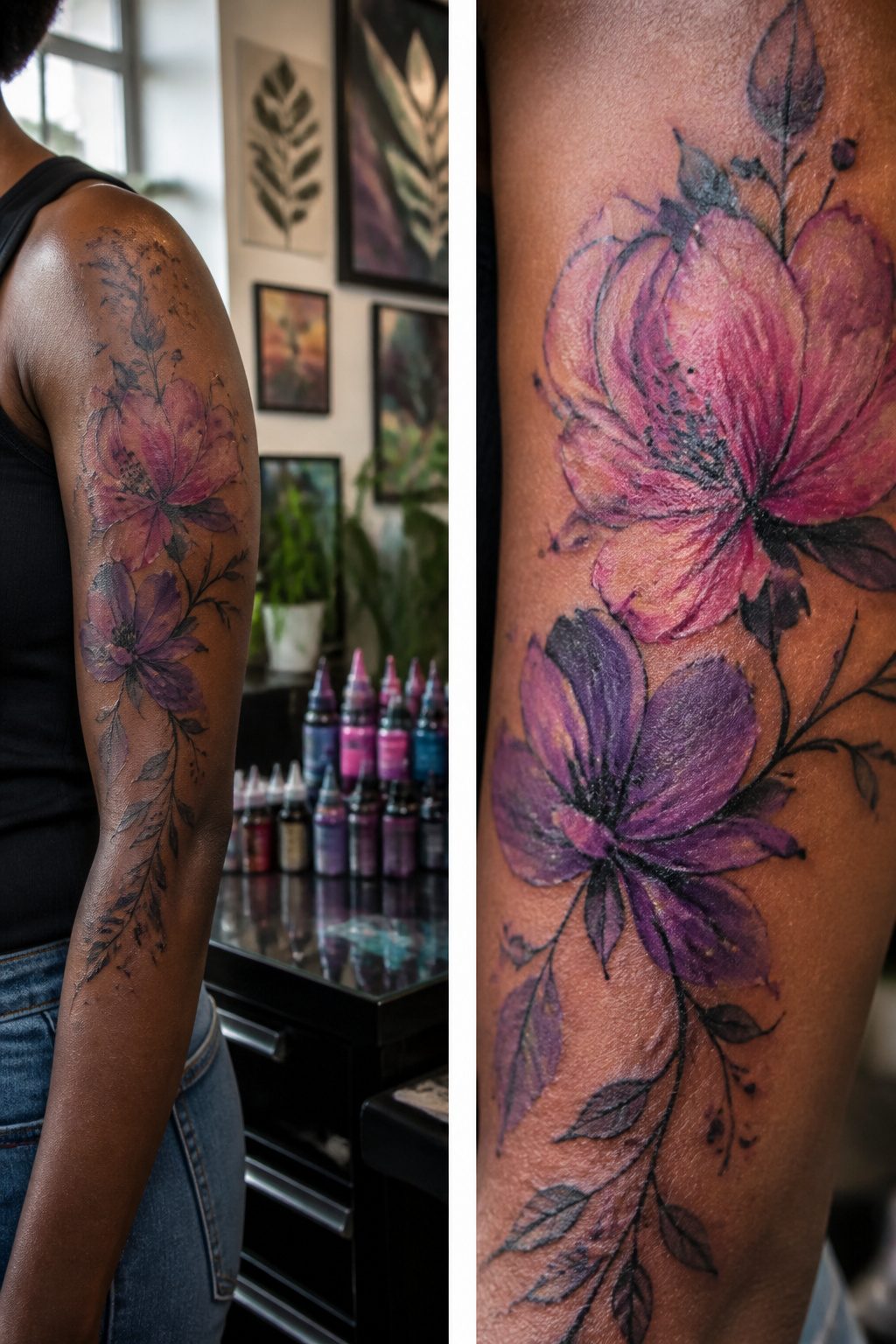
Darker skin carries watercolor tattoos differently, and the honest truth is that the same pastel palette won’t read the same way. Chibi, a Baltimore artist who posts as @shes_uneq, built her reputation partly on proving that bright pinks, yellows, and blues can stand out beautifully on brown skin, but achieving that took deliberate color choices rather than copying what works on fair skin.
The technical move is to pack more pigment and dilute less. Where a watercolor piece on lighter skin might rely on ink watered down for that transparent wash, darker skin often needs denser saturation and more passes to get the same visible result. Some tones that read as bright on fair skin, whites and lime greens especially, can heal muted or disappear entirely into melanin-rich skin. A color patch test on the actual area you plan to tattoo is the only way to know for sure what will heal like.
Olive skin presents its own wrinkle: yellows and light greens may not show up at all. An experienced artist adjusts by leaning into darker blues, deep reds, dark purples, and blacks that hold their own against the skin’s natural undertone. The style works on every skin tone; the technique just has to match the canvas.
Artistic Techniques in Practice
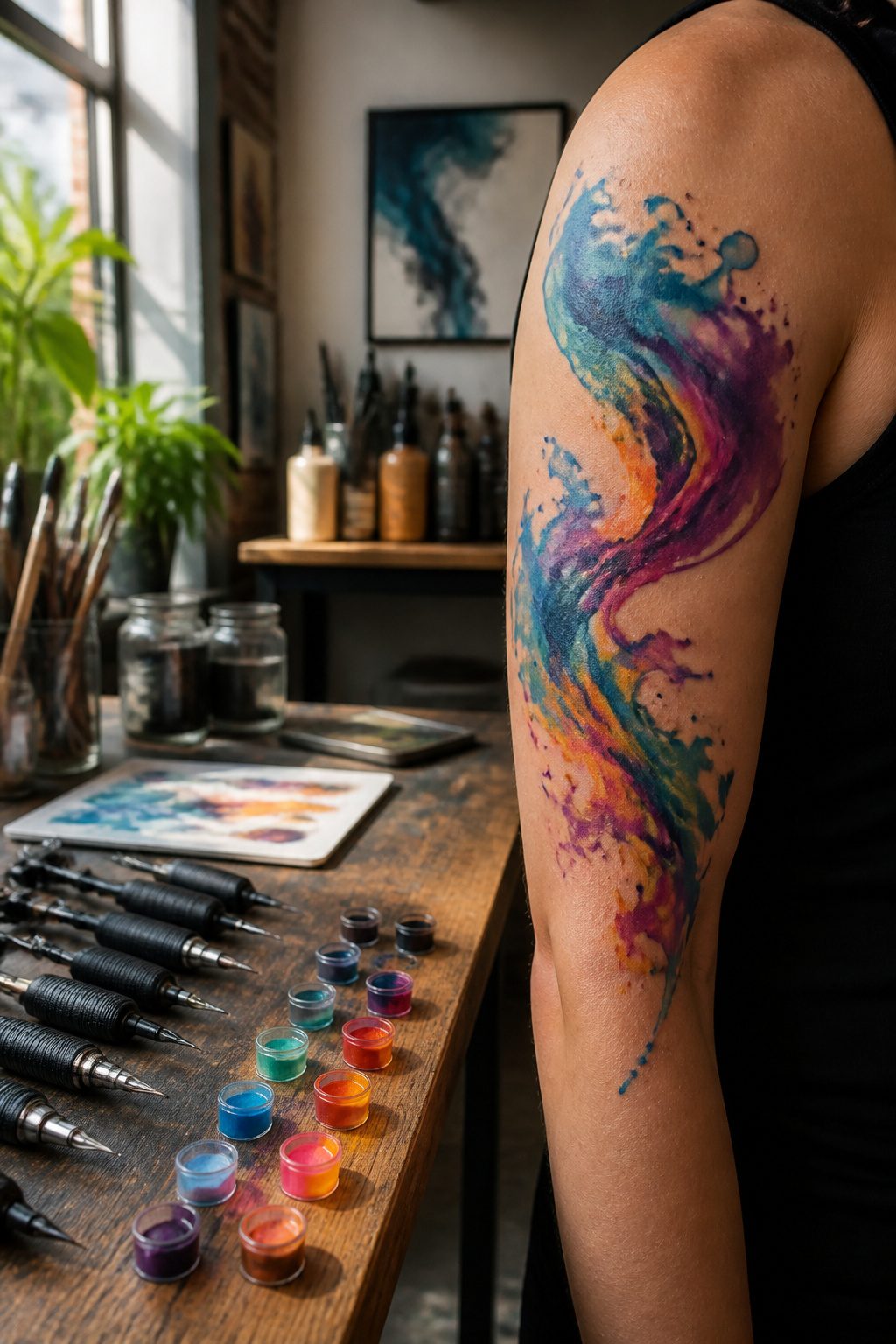
Watercolor tattoos borrow their look from paint on paper, but the tools are unforgiving. An artist dilutes ink with water to get those lighter washes, then works with light pressure and fast needle movement so the pigment sits in the skin like a stain rather than a solid block. The catch is timing: once the ink is down, it cannot be lifted, and splatter effects have to be planned before the first pass because there is no layering water over dried layers the way a painter might on canvas.
Some artists take a different route and skip dilution entirely, instead building color through multiple layers of full-strength ink, sometimes four to six pinks to create a single watercolor splash. That approach trades the transparent quality for longevity, since saturated pigment tends to hold better over years. The needle choice matters too: liners, shaders, and magnum needles each leave a different texture, and the artist switches between them to mimic brush strokes, smears, or the random edge of a paint splash.
The result is a style that ranges from sketch-like linework to full color realism, all filtered through the same watercolor vocabulary. What unifies them is the absence of heavy outlines; edges are built from pigment density alone, which demands a steady hand and a clear plan before the machine ever touches skin.
Design Versatility
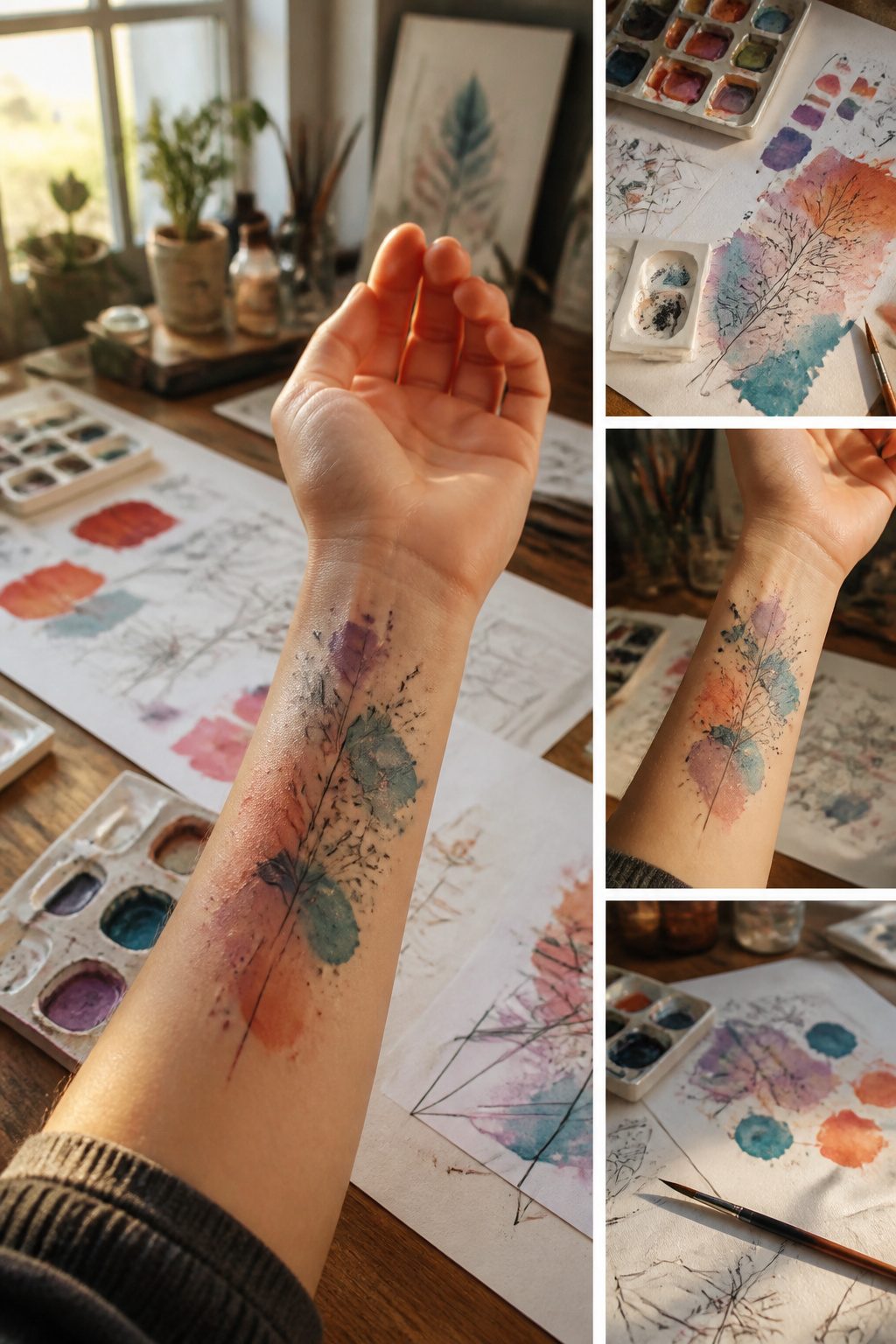
Watercolor tattoos carry almost any subject you bring them, which is the main reason the style kept my attention when I first started looking into what makes it different from traditional work. The absence of hard borders lets an artist translate personal imagery into something that reads more like pigment soaking into paper than ink sitting on skin.
Here is how that flexibility shows up in actual designs:
- Floral and botanical pieces are where the style started gaining traction, with petals and leaves rendered as transparent color washes that would be impossible to achieve with standard outlining.
- Animal portraits and nature scenes translate well because the technique can render fur, feathers, and sky gradients as layered, bleeding color rather than flat fills.
- Abstract and geometric work has grown more common as clients figure out that watercolor methods handle non-representational shapes better than most traditional approaches.
- Pop culture and graphic imagery, including the Where’s Wally-inspired designs that have circulated, prove the style is not locked into soft or feminine associations.
- Single-needle linework can be combined with watercolor fills, creating a hybrid where precise drawing meets unpredictable color spread.
The real limit is the artist’s skill with saturation and flow, not the category of image you want. A client walking in with a photograph of a family pet or a geometric pattern they drew themselves has equal standing with someone requesting roses.
Popularity and Social Media
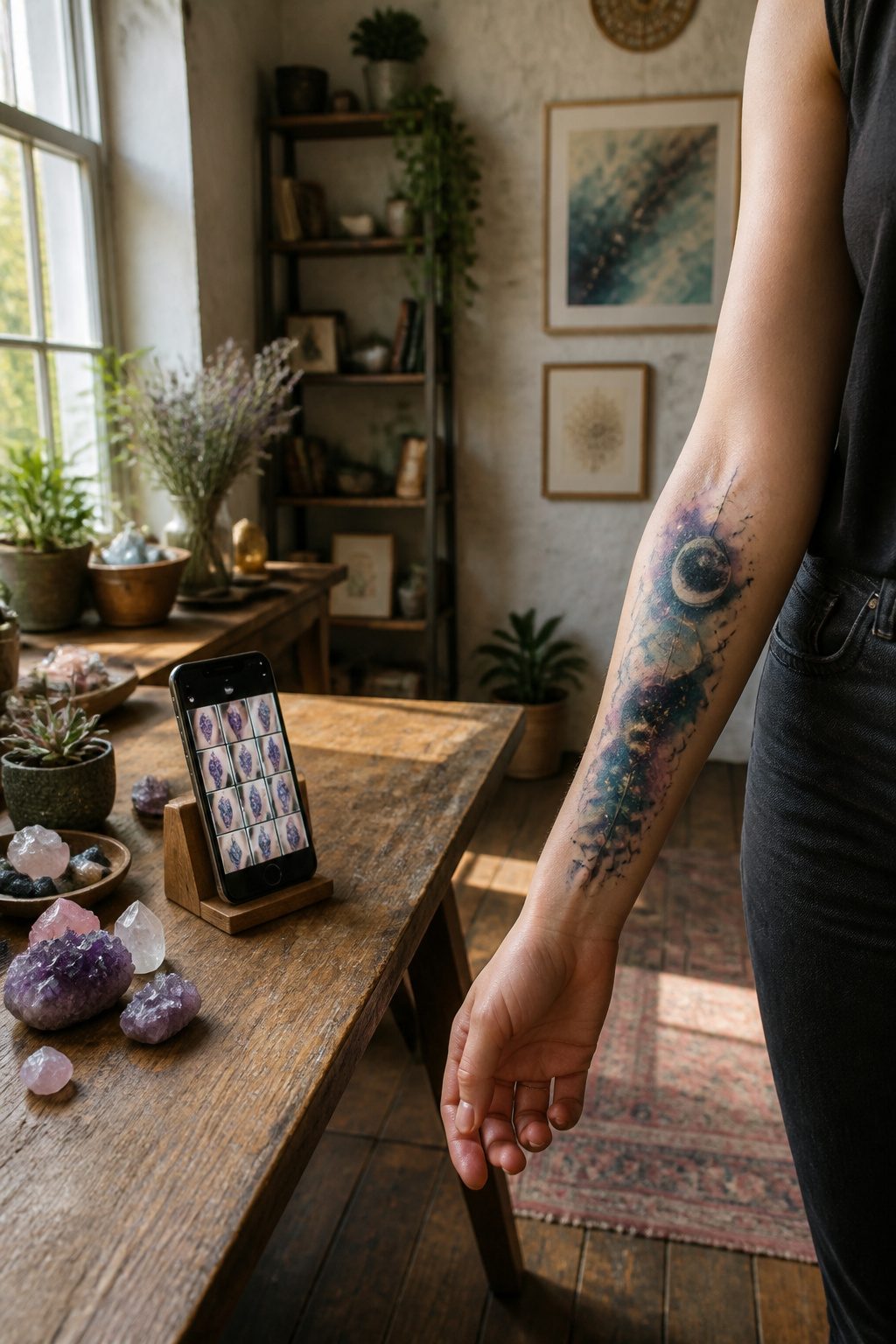
The hashtag #watercolortattoos now sits at over 1.4 million posts on Instagram, and TikTok’s combined tags for the style push close to 20 million views. Those numbers caught my attention because they track almost exactly with what I started noticing around 2017, when clients began walking into shops with screenshots instead of sketchbooks. The platform effect works both ways: artists gain visibility for work that photographs dramatically well, but the feed also trains viewers to expect a freshly healed look that real skin never holds permanently. I have watched talented tattooists turn down watercolor requests outright because the client brought a filtered photo with colors no needle can anchor. The style’s social media success has created a specific pressure, the expectation that skin should perform like paper, and that tension between viral image and biological reality shapes a lot of the consultations I read about now.
Historical Context
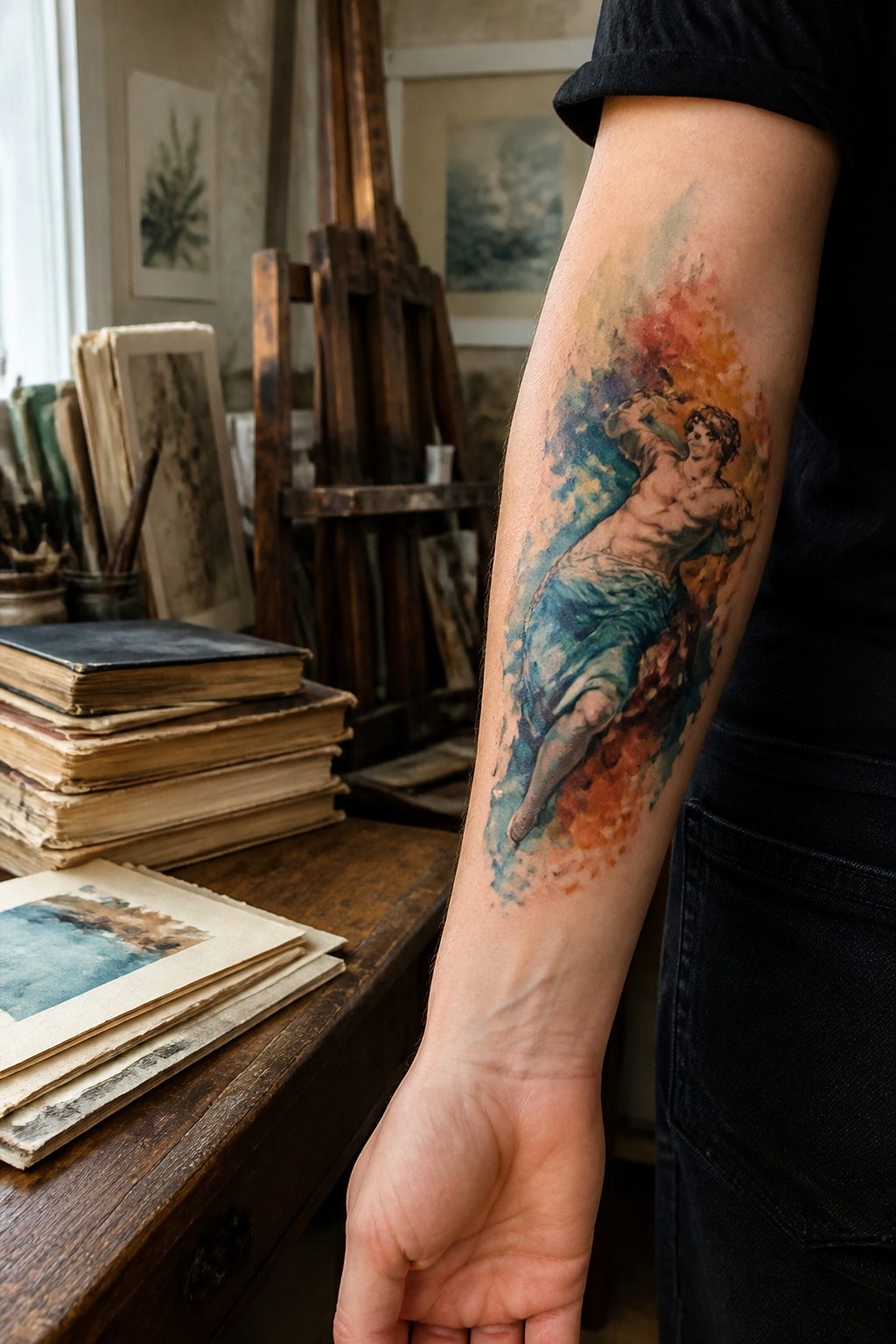
Watercolor painting carries a lineage far older than most people realize. The earliest pigments were ground from plants, minerals, charred bone, and earth itself, applied to paleolithic cave walls long before anyone refined the technique. Egyptian papyrus scrolls mark the first polished use, and medieval illuminated manuscripts kept the craft alive through centuries when it served more function than fine art. The Renaissance finally pulled watercolor into widespread, consistent practice, where it developed the fluid transparency that tattoo artists now translate onto skin.
The connection runs through craft, not just appearance. Thomas Gainsborough, J.M.W. Turner, John James Audubon, and John Singer Sargent all pushed watercolor toward serious artistic respect with methods that tattooists borrow directly: layered washes, controlled bleeding, negative space left breathing. Turner’s skies and Audubon’s plumage share DNA with the tattoos people book now, the same trust in pigment finding its own edge without a hard border containing it.
Artist Styles and Methods
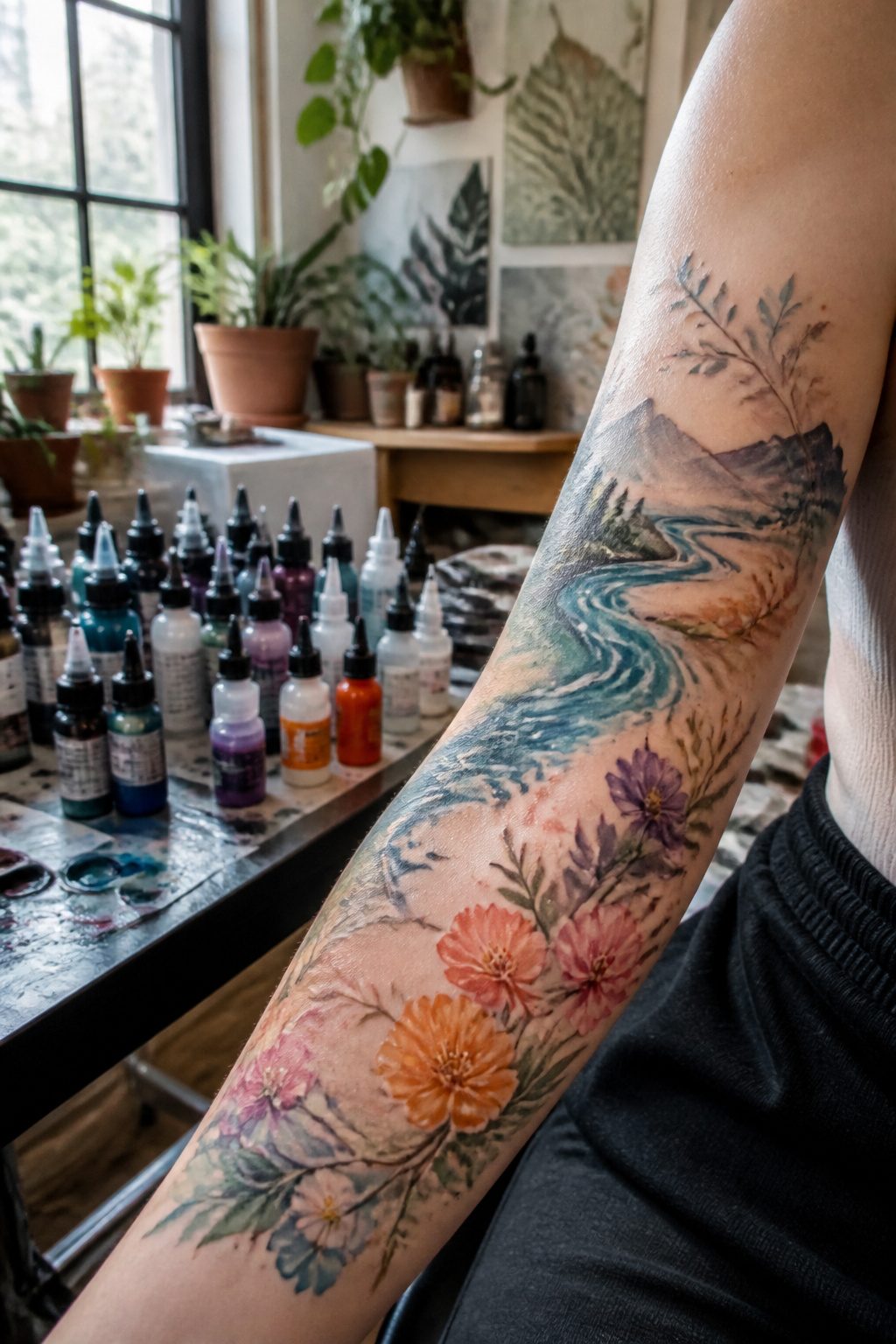
Amanda Wachob’s green-and-blue pieces are what pulled me into this style years ago, and the intricate colorwork still holds up. Her signature washes read like actual pigment on paper rather than ink forced into skin, which is harder to achieve than it looks. Brooklyn-based Edwin Delarosa approaches watercolor differently, building fades that blend into each other the same way wet paint would on a canvas. Where Wachob pushes fine detail, Delarosa lets the colors bleed and play without chasing saturation. Melody Mitchell, who defined the style for a lot of newer collectors, emphasizes that the real skill is mimicking textures that different paint mediums create, not just laying down bright color. Three artists, three ways to solve the same problem: Wachob controls the bleed, Delarosa invites it, and Mitchell builds the texture that makes the illusion hold.
Frequently Asked Questions
What is a watercolor tattoo?
A watercolor tattoo uses textures that replicate the look of watercolor or brushstroke paint on skin. The style drops heavy black outlines and instead builds color that bleeds and softens at the edges, with brushstroke-like needle application that reads as spontaneous rather than mapped. The result is a dreamy, floating quality where the image looks half-resolved, as if caught mid-dissolve.
Do watercolor tattoos fade easily?
Lighter pigments in watercolor work fade faster than the blacks and dark blues used in traditional tattoos because there is simply less pigment to lose, and watercolor technique uses less ink overall. Whites and yellows are especially vulnerable. Skilled artists counter this by building a black "skeleton" underneath or layering denser pigment where the design allows, trading some translucency for staying power. Controlled fade can actually suit the style, since softening mimics real watercolor paint aging on paper.
How do you care for a watercolor tattoo?
Keep the area clean with unscented soap and lukewarm water, pat dry, and apply a thin layer of fragrance-free moisturizer whenever skin feels tight or flaky. Avoid baths, pools, and scrubbing for the first two weeks. Sun protection matters most for this style; SPF 30 or higher, reapplied every two hours in daylight, because lighter pigments, especially yellows and soft pinks, fade faster under UV than heavy blacks. A healed watercolor tattoo left unprotected for one summer can lose definition that years of careful moisturizing won’t restore.